Last updated 2026-07-26
TL;DR
If you searched 'Avis car rental registration' looking for rental property help, you're likely trying to register a rental unit, not a car. This guide covers what landlord registration actually means: city rental licensing, tenant rights basics, inspection rules, and how to become a compliant landlord in a city that requires it.
Why am I seeing 'Avis car rental registration' for a landlord question?
This is a common mixup. "Avis" is a car rental company, and its registration process (renter's license, credit card, loyalty account) has nothing to do with residential rental property. If you own a rental unit, a duplex, or a few single-family homes you lease out, the registration you actually need to worry about is municipal rental registration or licensing, sometimes called a rental license, a certificate of occupancy for rentals, or a landlord registration ordinance. Cities use different names for the same basic idea: local government wants a list of every rental unit in town, who owns it, and often proof the unit meets basic safety code. Some cities pair registration with a mandatory inspection before a tenant moves in or on a renewal cycle. Others just want a form and a fee. If a notice landed in your mailbox about a rental license, inspection deadline, or a fine for an unregistered unit, that's a city or county ordinance question, not anything related to a car rental company. The rest of this article treats it that way.
How to become a landlord (the real steps)
Becoming a landlord isn't a licensed profession in most states the way becoming a real estate agent is. There's no national landlord license. But if you're renting out a unit, you generally need to handle five things before you hand over keys. First, confirm you can legally rent the property: check your mortgage for owner-occupancy restrictions, check your HOA rules if you have one, and check local zoning for any owner-occupancy or short-term rental limits. Second, register with your city or county if required. A growing number of municipalities mandate rental registration or licensing, and operating without it can trigger fines, sometimes back-dated to when the unit was first rented. Third, get proper insurance: a landlord (dwelling) policy, not a standard homeowner's policy, since most homeowner policies exclude rented properties. Fourth, learn your state's landlord-tenant law basics: notice periods, security deposit limits and return deadlines, habitability standards. Fifth, set up how you'll screen tenants, collect rent, and handle maintenance requests. The U.S. Department of Housing and Urban Development maintains state-by-state links to landlord-tenant law resources and fair housing rules that any new landlord should read before advertising a unit. Fair housing compliance isn't optional: the Fair Housing Act prohibits discrimination based on race, color, national origin, religion, sex, familial status, or disability in the rental process [1]. If your city requires registration or a rental license, that step usually comes before you can legally advertise or lease the unit. Confirm the exact requirement, fee, and inspection trigger with your city rental licensing office, since these vary block by block in some metro areas.
What is landlording, exactly?
Landlording is the day-to-day work of owning and operating a rental property: finding and screening tenants, signing and enforcing a lease, collecting rent, handling repairs, and staying compliant with local and state law. It's part small business, part property management, part legal compliance work. Most first-time landlords underestimate the compliance side. It's more than "find a tenant, collect a check." You're responsible for habitability standards (working heat, water, no serious code violations), for handling security deposits according to state rules, for giving legally sufficient notice before entry or termination, and in a growing number of cities, for keeping a rental registration or license current and passing periodic inspections. Landlording also means record-keeping. Keep copies of the lease, move-in condition documentation (photos help a lot here), rent receipts, and any inspection or registration paperwork from your city. If a tenant disputes a deposit deduction or a code inspector shows up, the landlord with organized paper wins the argument faster.
What is a landlord?
A landlord is the owner (or the owner's authorized agent) who leases real property to a tenant in exchange for rent. Legally, a landlord holds title or a controlling lease interest in the property and takes on specific legal duties toward the tenant: providing a habitable unit, respecting the tenant's right to quiet enjoyment, following state and local rules on notice, entry, and deposits. A landlord can be an individual owner with one rental unit, a couple who inherited a duplex, or a large management company with thousands of units. The legal duties scale with the size of the operation in some states (a few states exempt small owner-occupied buildings from certain rules), but the core habitability and fair housing obligations generally apply no matter how many units you own [1]. In cities with mandatory rental licensing, being a landlord also means being a registered landlord: your name and the property address go on file with the city, sometimes with a local agent listed if you don't live nearby.
What rights do tenants have without a lease?
A tenant without a written lease still has legal rights. Most states treat an unwritten rental arrangement as a month-to-month tenancy, governed by state landlord-tenant statutes rather than lease terms. That means the tenant still has a right to habitable housing, a right to proper notice before the landlord raises rent or ends the tenancy, and protection from illegal lockouts or utility shutoffs. Without a written lease, disputes over rent amount, who pays which utility, or what's allowed in the unit get harder to prove, but the underlying tenant protections in your state's landlord-tenant statute don't disappear just because nothing was signed. Many states require landlords to follow the same notice-to-vacate rules for month-to-month tenants whether or not there's a written lease. If you're a landlord operating without written leases, that's a real risk for you too, more than the tenant. A written lease is what lets you enforce specific terms (late fees, pet policies, guest limits) beyond the state's default rules. Cities that require rental registration sometimes ask for a lease sample or the lease term as part of the filing, so operating with no paperwork can also complicate registration compliance.
How to be a landlord day to day
Being a landlord day to day comes down to four repeating cycles: rent collection, maintenance response, compliance upkeep, and periodic re-leasing. None of it is complicated individually. The trouble is doing all four consistently, especially once you own more than one unit. Rent collection means having a system (bank transfer, a property management app, or at minimum consistent written records) and knowing your state's grace period and late fee rules before you charge one. Maintenance response means responding to habitability issues (no heat, plumbing failures, pest infestations) quickly, both because tenants expect it and because unresolved habitability complaints are what triggers code inspections and fines in licensed rental cities. Compliance upkeep is the part landlords forget. Rental registration and license renewals in most mandatory-licensing cities run on an annual or biennial cycle, and missing a renewal deadline is one of the most common ways a small landlord ends up with an unexpected notice or fine. Landlord basics guides and city-specific renewal checklists help here, since the renewal window, fee, and required documents differ by city and sometimes by unit count.
Who is responsible for a rental property walk-through inspection in California?
In California, the landlord is responsible for arranging the move-in and move-out walk-through inspections, though state law gives the tenant the right to participate. California Civil Code Section 1950.5 requires landlords, upon a tenant's request, to conduct an initial move-out inspection before the tenant vacates, giving the tenant a chance to fix issues that would otherwise cost them part of their security deposit [2]. The landlord must give at least 48 hours' written notice of the proposed inspection date and time, and the tenant can waive that notice period. After the inspection, the landlord must provide an itemized statement of any repairs or cleaning needed to avoid deposit deductions, giving the tenant the opportunity to address them before move-out [2]. This is separate from any city-level rental inspection program. Some California cities (for example, under local rental housing inspection or proactive rental inspection ordinances) also require periodic habitability inspections by a code enforcement officer, independent of the security-deposit walk-through under Civil Code 1950.5. If you own rental property in a California city, confirm with your city rental licensing office or housing department whether a separate proactive inspection program applies, since Civil Code 1950.5 only covers the deposit-related move-out walk-through, not municipal code inspections.
What can a landlord look at during an inspection?
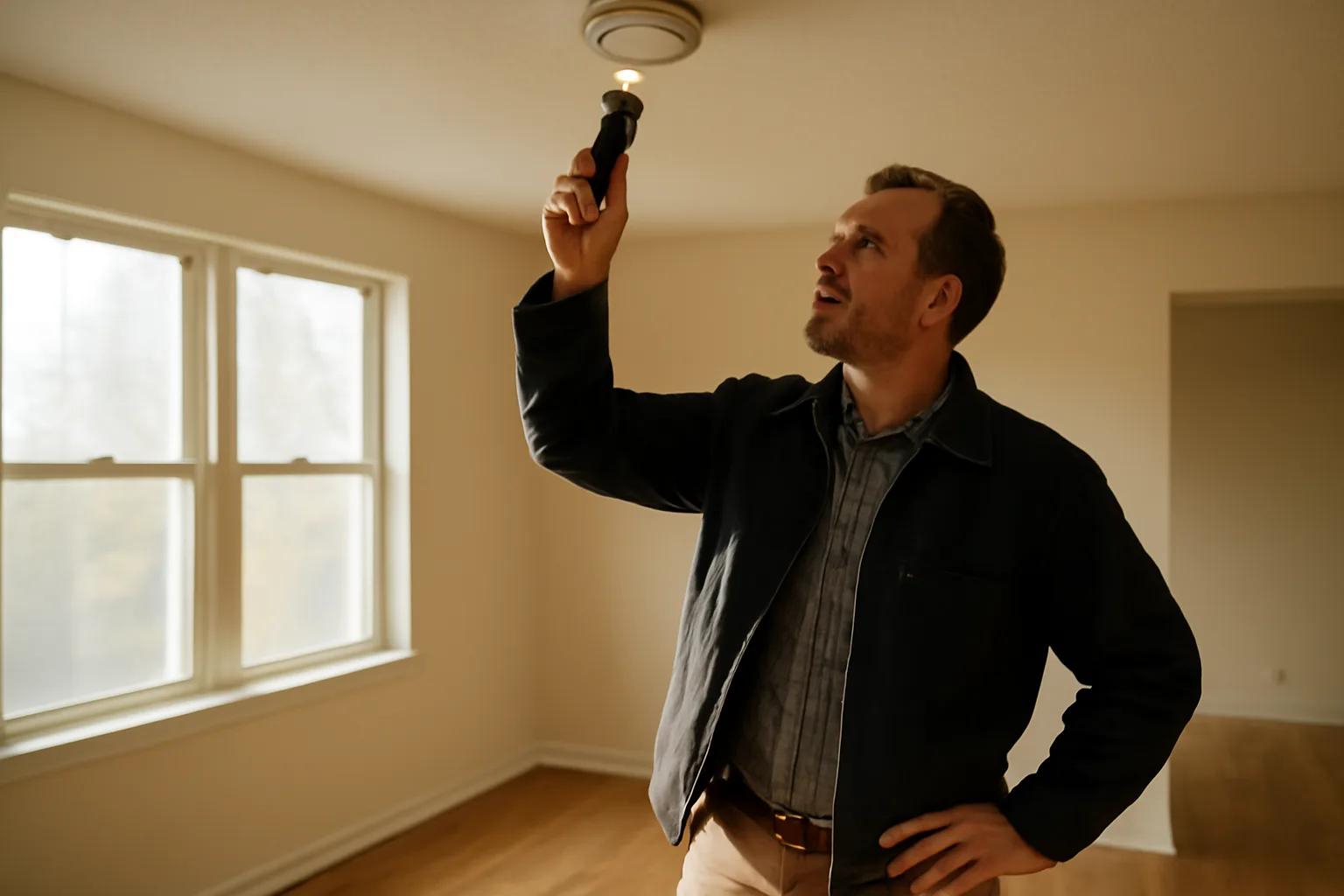
During a routine or code-compliance rental inspection, a landlord or city inspector generally checks for habitability and safety issues: working smoke and carbon monoxide detectors, functioning heat and hot water, no active leaks or mold, safe electrical wiring, secure locks on exterior doors, and no serious structural hazards. Most municipal rental inspection checklists mirror the local housing code's minimum habitability standards. Inspectors are not there to judge how clean your closets are or count your dishes. A city rental inspection focused on licensing typically covers: means of egress (windows and doors that open properly, no illegal bedroom conversions), functioning plumbing and no sewage backups, adequate heating source, properly installed smoke and CO detectors (often required within a specific distance of bedrooms under local fire code), and no exposed wiring or overloaded electrical panels. A landlord doing their own inspection or pre-inspection walk-through before a city visit should check the same list, plus anything the tenant has flagged in maintenance requests. It's worth walking every room, testing every detector, and photographing anything questionable before the official inspection date. This is also where a lot of first-time landlords get caught off guard: a $79 City Rental License & Inspection Prep Packet style checklist built around your city's actual inspection form saves a failed-inspection re-inspection fee, which in many cities runs $50 to $150 or more per re-visit (confirm the exact re-inspection fee with your city rental licensing office, since it varies widely).
Why do landlords require renters insurance?
Landlords require renters insurance mainly to shift liability for the tenant's own belongings and for tenant-caused damage or injury away from the landlord's policy. A landlord's dwelling insurance policy covers the building structure, not the tenant's furniture, electronics, or clothing, and it typically doesn't cover a tenant's liability if they cause a fire or a guest gets hurt in the unit. Requiring renters insurance (often a policy with liability coverage in the $100,000 range, sometimes higher) means if a tenant's negligence causes a kitchen fire or a dog bites a visitor, the tenant's own policy responds first instead of the landlord's insurer fighting a subrogation claim. It also protects the tenant financially: a basic HO-4 renters policy nationally averages well under $200 a year for meaningful coverage, according to typical industry rate surveys, which is cheap protection against a total loss of belongings. Requiring it is legal in nearly every state as a lease condition, as long as it's applied consistently to all tenants (to avoid fair housing issues) and disclosed clearly in the lease. Some cities with rental licensing programs also ask landlords to confirm insurance is in place as part of registration paperwork, though this varies by city.
How much notice does a landlord have to give?
Notice requirements depend entirely on what the landlord is doing: entering the unit, raising the rent, or ending the tenancy, and every state sets its own minimums. There is no single national notice period, so "how much notice" always needs a state-law answer, not a general one. For routine entry (repairs, showings, inspections), many states require 24 hours' written or verbal notice, though a few states specify 48 hours and some have no statutory minimum at all, leaving it to the lease. For ending a month-to-month tenancy, most states require 30 days' notice, though some require 60 days once a tenant has lived in the unit past a certain length of time (California, for instance, requires 60 days' notice to end a tenancy where the tenant has resided for a year or more) [2]. For rent increases, many states tie the notice period to the size of the increase or simply require the same notice as for ending a month-to-month tenancy. Because these numbers vary so much by state and sometimes by city (rent control jurisdictions often layer extra notice requirements on top of the state minimum), the safest move is checking your specific state's landlord-tenant statute before sending any notice, rather than relying on a national average. HUD's state law resource page is a reasonable starting point for finding your state's specific statute.
What a landlord cannot do in Ohio
Ohio law spells out several things a landlord cannot do, mostly under Ohio Revised Code Chapter 5321, the state's Landlords and Tenants Act. A landlord in Ohio cannot shut off utilities, change the locks, or remove a tenant's belongings to force them out without going through the court eviction process; this is generally referred to as a prohibition on "self-help" eviction. Ohio Revised Code 5321.02 also prohibits a landlord from retaliating against a tenant, meaning a landlord cannot raise rent, decrease services, or threaten eviction because a tenant complained to a housing authority, joined a tenants' union, or asserted a legal right under the chapter [3]. Ohio Revised Code 5321.04 requires the landlord to keep the unit in a fit and habitable condition, comply with building and housing codes, keep common areas safe, and maintain electrical, plumbing, heating, and appliances supplied by the landlord in good working order [4]. Ohio landlords also cannot enter a rental unit without reasonable notice except in a genuine emergency; Ohio Revised Code 5321.05 requires tenants to allow landlord access at reasonable times after reasonable notice, which courts and practitioners generally interpret as requiring the landlord to respect that same reasonable-notice standard rather than entering at will [5]. Cities within Ohio, including several with their own rental registration or point-of-sale inspection ordinances, can layer additional local rules on top of these state minimums, so confirm any city-specific rule with your local rental licensing office.
How rental registration, licensing, and inspections actually connect
How rental registration, licensing, and inspection typically fit together
| Registration | File owner info and property details with the city | Owning any rental unit in a covered jurisdiction | |
|---|---|---|---|
| Licensing | City issues a permit/license number, usually renewed periodically | Required before legally leasing in many cities; renewal cycle set by ordinance | |
| Inspection | Code officer checks habitability and safety items | New tenancy, renewal cycle, or tenant complaint, depending on the city | Because fee amounts, renewal cycles, and which of these three apply (some cities require all three, some just registration) differ so much city by city, there's no honest single number to quote here. Always confirm the specific fee, renewal deadline, and inspection trigger with your city rental licensing office before assuming a neighboring city's rules apply to you. If you're dealing with an actual notice, deadline, or violation fine right now, start by reading it carefully for the ordinance section number it cites, then call the office listed on the notice. That's a faster path to a correct answer than searching generally, since the exact requirement is written into your specific city's code, not a national standard. For a broader look at tenant-facing obligations that often show up in these same ordinances, see tenant rights and tenants rights resources, and for landlord registration basics generally, see landlord and renters rights. |
Rental registration, rental licensing, and rental inspection are three related but distinct requirements, and cities mix and match them differently. Registration usually just means filing the owner's name, contact info, and unit details with the city, often for a small annual fee. Licensing usually means the city issues an actual permit or license number tied to the unit, often renewed annually, sometimes contingent on passing an inspection. Inspection means a code enforcement officer physically walks the unit checking for safety and habitability issues, sometimes before the initial lease, sometimes on a recurring cycle (every one, two, or three years is common), sometimes only triggered by a complaint. | Requirement | What it involves | Typical trigger |
Frequently asked questions
Is 'Avis car rental registration' related to renting out a house or apartment?
No. Avis is a car rental company, and its registration process covers renting a vehicle, not residential property. If you're a landlord dealing with a rental license, registration form, or inspection notice for a house or unit you own, that's a city or county housing ordinance issue, completely separate from any car rental company's registration system.
How to become a landlord if I've never rented a unit before?
Confirm you can legally rent the property (check mortgage and HOA terms), register with your city if it requires rental licensing, get a landlord (dwelling) insurance policy instead of a standard homeowner's policy, learn your state's notice and deposit rules, and set up a lease, screening process, and maintenance system before advertising the unit.
Who is responsible for a rental property walk-through inspection in California?
The landlord is responsible for scheduling it, but California Civil Code Section 1950.5 gives the tenant the right to request an initial move-out inspection and requires at least 48 hours' written notice, letting the tenant fix issues before move-out to avoid deposit deductions. Some California cities also run separate proactive inspection programs on top of this.
What is landlording as a general term?
Landlording is the ongoing work of owning and operating rental property: screening and leasing to tenants, collecting rent, handling repairs, following state landlord-tenant law, and, in many cities, maintaining a rental registration or license. It's part legal compliance and part small business operations.
What is a landlord legally?
A landlord is the property owner or their authorized agent who leases real property to a tenant for rent, taking on legal duties like maintaining habitability, respecting the tenant's quiet enjoyment, and following state notice, entry, and deposit rules. Landlords range from single-unit owners to large management companies.
What rights do tenants have without a lease?
A tenant without a written lease is usually treated as a month-to-month tenant under state law, still entitled to habitable housing, proper notice before rent increases or termination, and protection from illegal lockouts or self-help eviction. State landlord-tenant statutes fill the gap a written lease would normally cover.
Why do landlords require renters insurance?
Requiring renters insurance shifts liability for the tenant's belongings and tenant-caused damage or injury off the landlord's own dwelling policy, which typically doesn't cover a tenant's personal property or liability. It also protects tenants cheaply, since basic renters policies commonly cost well under $200 a year.
How much notice does a landlord have to give before entering a unit?
It depends on the state; many states require at least 24 hours' notice for routine entry, though a few specify 48 hours and some leave it to the lease with no statutory minimum. Always check your specific state's landlord-tenant statute rather than assuming a national standard applies.
What can a landlord look at during a rental inspection?
A landlord or code inspector typically checks habitability and safety items: smoke and carbon monoxide detectors, working heat and hot water, safe electrical systems, functioning plumbing, secure doors and windows, and no structural hazards. It's not a general cleanliness check, it's a code-compliance check.
What a landlord cannot do in Ohio specifically?
Under Ohio Revised Code Chapter 5321, a landlord cannot use self-help eviction (shutting off utilities, changing locks, removing belongings), cannot retaliate against a tenant for complaints under section 5321.02, and must keep the unit in fit and habitable condition under section 5321.04, including working plumbing, heat, and electrical systems.
Does every city require rental registration or licensing?
No. Rental registration, licensing, and inspection requirements are set city by city (sometimes county by county), and plenty of municipalities have no such program at all. Where they exist, the fee, renewal cycle, and inspection trigger vary widely, so always confirm the specific rule with your city's rental licensing or housing office.
What happens if I miss my rental license renewal deadline?
Consequences vary by city but commonly include late fees, an escalating fine schedule, or a temporary bar on legally leasing the unit until you're back in compliance. Some cities also flag unregistered or unlicensed units during tenant complaints, which can trigger back fees. Confirm your city's specific penalty schedule with its rental licensing office.
Sources
- HUD, Fair Housing Act Overview: The Fair Housing Act prohibits discrimination based on race, color, national origin, religion, sex, familial status, or disability in rental housing
- California Legislative Information, Civil Code Section 1950.5: California landlords must provide at least 48 hours' written notice for an initial move-out inspection and an itemized statement of needed repairs
- Ohio Laws, Revised Code Section 5321.02: Ohio law prohibits landlord retaliation against tenants who complain to authorities or assert rights under the landlord-tenant chapter
- Ohio Laws, Revised Code Section 5321.04: Ohio landlords must keep rental units in a fit and habitable condition and maintain code compliance, electrical, plumbing, and heating systems
- Ohio Laws, Revised Code Section 5321.05: Ohio tenants must permit landlord access at reasonable times after reasonable notice, implying landlords cannot enter at will