Last updated 2026-07-26
TL;DR
A "booth rental license" almost always refers to a cosmetology or barbering booth rental agreement, regulated by a state cosmetology board, not by a city rental housing office. If you're renting out a house or apartment, the license you actually need is a rental registration or rental license from your city, a completely separate system covered below.
what does "booth rental license" actually mean?
If you searched "booth rental license" hoping for information about renting out a house, apartment, or duplex, you've landed in the wrong category, and it's worth clearing that up before you waste time chasing the wrong paperwork. In most states, "booth rental" refers to a salon or barbershop arrangement where a licensed cosmetologist, barber, or nail technician rents a chair or station inside someone else's shop. States like California require the shop owner and the booth renter to have a written booth rental agreement, and cosmetology boards (not city housing departments) regulate the license required to cut hair or do nails in that booth [1]. There is no such thing as a "booth rental license" for residential property. Cities license or register rental housing units, not booths. If you own a house, condo, duplex, or small apartment building that you rent to tenants, the license you need is a rental registration, rental license, or certificate of occupancy issued by your city's housing or code enforcement department. That's the real topic this article covers from here forward, because that's what almost every reader who ends up on a site like this actually needs. One more note on terminology: some landlords use "booth" loosely to mean a rented room in a shared house (a "room rental"), which is a different animal again, generally governed by your state's landlord-tenant law and, in many cities, still subject to rental registration rules if you rent rooms for money. Confirm with your city rental licensing office whether room-by-room rentals trigger registration; many do.
what is landlording, and what is a landlord?
Landlording is the business of owning residential property and renting it to tenants in exchange for rent, along with the ongoing responsibilities that come with that: maintaining habitability, following state and local law, and managing the landlord-tenant relationship day to day. A landlord is simply the owner (or an owner's authorized agent) who leases real property to someone else, called a tenant, under a lease or rental agreement. That legal relationship creates real obligations. Most states impose an "implied warranty of habitability," meaning a rented home has to be fit to live in regardless of what the lease says. California's version of this rule requires that residential rental property have effective waterproofing, functioning plumbing, hot and cold water, heating, and working locks, among other things [2]. Landlording isn't passive. You're responsible for repairs, for following fair housing law, for handling deposits correctly, and, increasingly, for registering or licensing your rental unit with the city where the property sits. Cities like Los Angeles, Baltimore, and Minneapolis all require landlords to register rental units and, in many cases, pass a habitability inspection before renting legally [3][4]. Treat it like a regulated small business, because in dozens of U.S. cities, that's exactly what it is.
how to become a landlord (the real steps, not the fantasy version)
Becoming a landlord takes more than buying a property and putting an ad online. Here's the sequence that actually keeps you out of trouble. 1. Buy or already own residential property in a location zoned for rental use. Some cities cap the number of rental units allowed per block or require a conditional use permit for certain rental types. 2. Check your state's landlord-tenant statute for baseline rules on deposits, notice periods, and habitability. Every state has one; California's is Civil Code sections 1940 to 1954.1 [2]. 3. Check whether your city requires rental registration or a rental license. This is the step most new landlords miss, and it's the one that triggers fines when code enforcement finds out later. Many cities require registration within 30 days of a unit becoming a rental, and some, like Baltimore, require an inspection every two years as part of license renewal [4]. 4. Get landlord insurance (different from a standard homeowner's policy) and decide whether you'll require tenants to carry renters insurance. 5. Screen tenants consistently and legally, using the same criteria for every applicant to avoid fair housing violations. 6. Draft a lease that matches your state's required disclosures. (We don't draft lease language here, that's a job for a local attorney or a solid state-specific lease template.) 7. Register your rental with the city, schedule any required inspection, and keep proof of licensing on file. If you want a structured way to gather what your city's inspector will ask for, a rental packet builder can save you a weekend of digging through your city's code enforcement website.
what is a landlord responsible for that a booth-rental shop owner isn't?
A salon owner renting out a booth is mostly worried about a cosmetology license, a booth rental agreement, and possibly business liability insurance. A residential landlord carries a heavier, more government-facing load. Residential landlords answer to at least three layers of law: state landlord-tenant statutes, local building and housing codes, and, in mandatory-licensing cities, a rental registration or license ordinance with its own inspection schedule and fee. Booth renters generally answer to a state cosmetology or barbering board and a private contract with the shop owner, a much thinner regulatory stack. The practical difference shows up at renewal time. A landlord in a licensing city might face a rental license renewal every one to three years, tied to a physical inspection of the unit (Baltimore's cycle is every two years, per its rental license ordinance) [4]. A booth renter typically just renews a state cosmetology license, often every one to two years depending on the state board, with no property inspection involved at all.
who is responsible for a rental property walk-through inspection in California?
In California, the landlord (or the landlord's property manager) is responsible for scheduling and coordinating the move-in and move-out walk-through inspection, but the tenant has a legal right to participate. California Civil Code section 1950.5(f) gives tenants the right to request an initial inspection before move-out, conducted no earlier than two weeks before the tenancy ends, so the landlord can point out deficiencies the tenant could fix to avoid deposit deductions [5]. The landlord must give the tenant at least 48 hours' written notice of the date and time of that initial inspection unless the tenant waives that notice in writing [5]. After the walk-through, the landlord must give the tenant an itemized statement of any repairs or cleaning proposed as deductions, giving the tenant a chance to address them before move-out. Separately, when a city requires a rental license inspection (a health-and-safety compliance check, not a security deposit walk-through), the landlord is responsible for scheduling that inspection with the city's housing or code enforcement department and for granting the city inspector access, sometimes with tenant consent required for occupied units. Those two kinds of "walk-throughs" (deposit-related and code-compliance) are handled differently, so don't confuse a city rental inspector with your own deposit inspection process.
what can a landlord look at during an inspection?
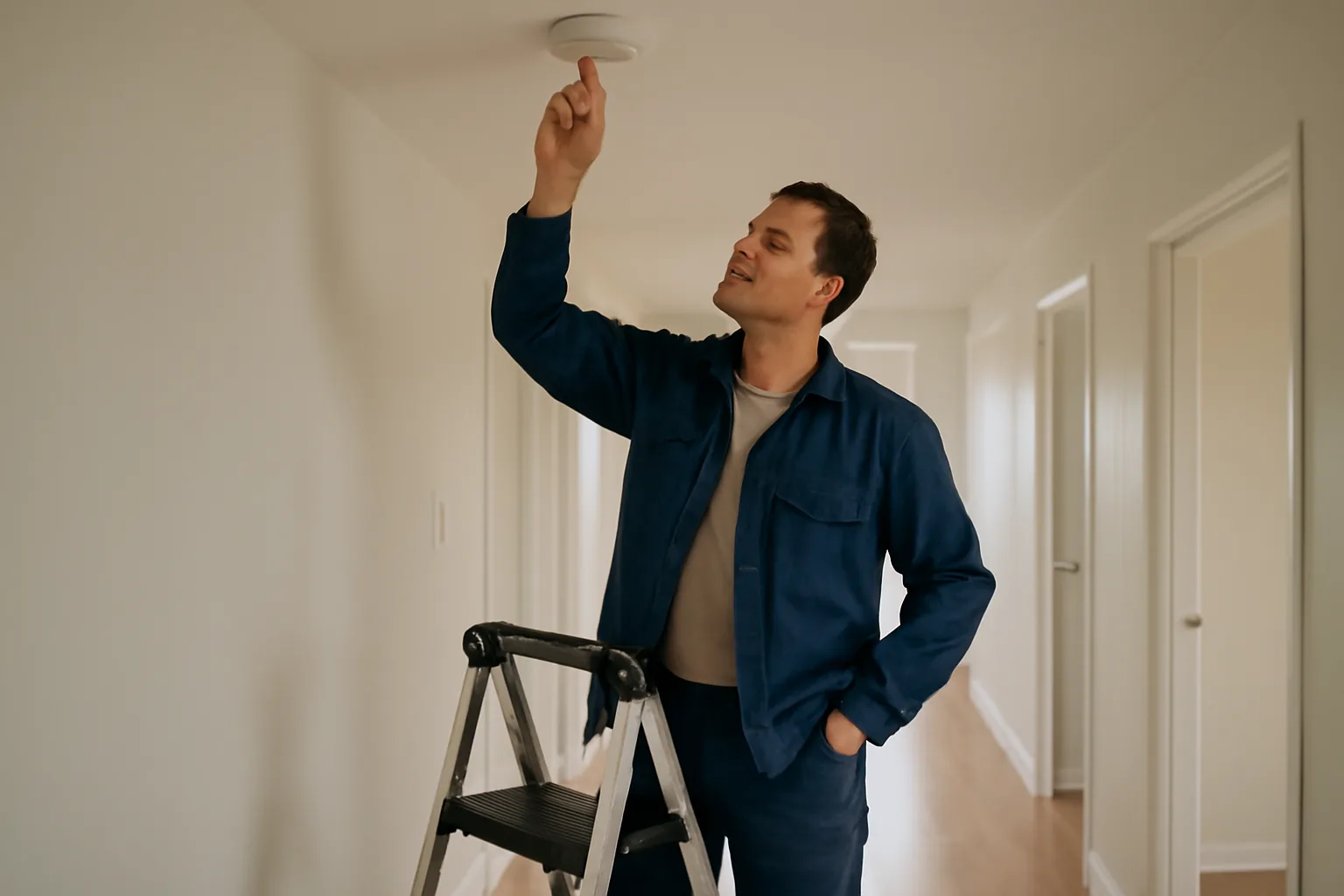
During a routine or move-out inspection, a landlord (or a city inspector, if it's a license inspection) can generally look at anything related to the condition, safety, and habitability of the unit: walls, floors, ceilings, plumbing fixtures, electrical outlets, smoke and carbon monoxide detectors, window locks, HVAC function, signs of pest infestation, and mold or water damage. What a landlord can't do is treat an inspection as a search of the tenant's personal belongings or a pretext to enter without proper notice. Most states require landlords to give notice before entering an occupied unit for a non-emergency inspection, commonly 24 hours, though the exact number varies by state and by the reason for entry. California requires "reasonable notice," which the statute defines as 24 hours in the absence of an agreed-upon shorter period [6]. City rental license inspectors typically check the same basic health-and-safety items: working smoke detectors, secure railings, functioning heat, no exposed wiring, and no active leaks. Some cities also check for unpermitted units, illegal room conversions, or overcrowding. What they generally don't check: your tenant's furniture, personal items, or lease terms unrelated to habitability.
how much notice does a landlord have to give before entering or ending a tenancy?
This depends on the reason for entry and your state, so there isn't one universal number, but here's the general shape. For routine entry (repairs, inspections, showings), most states require 24 to 48 hours written notice. California's default is 24 hours "reasonable notice" under Civil Code 1954, delivered by mail, personal delivery, or posting and mailing [6]. Some states, like Oregon, also require 24 hours' notice for entry under ORS 90.322 [7]. For ending a month-to-month tenancy, notice requirements are longer and vary by how long the tenant has lived there. California requires 30 days' notice to terminate a tenancy under one year and 60 days' notice for tenancies of one year or more [8]. Other states set flat 30-day rules regardless of tenancy length. Always check your specific state statute before sending a termination notice; getting the number wrong can invalidate the notice entirely and restart your clock. For rent increases, many rent-control or just-cause cities layer on additional notice requirements beyond the state minimum, sometimes 60 or 90 days for larger increases. This is exactly the kind of detail that varies enough by city that you should confirm with your city rental licensing office or local rent board before sending any increase notice.
what rights do tenants have without a lease?
A tenant without a signed lease still has real legal rights. Living somewhere and paying rent, even informally, generally creates a month-to-month tenancy under state law, which comes with the same basic protections as a written lease, just without lease-specific terms. Tenants without a written lease still have the right to habitable housing, protection from illegal lockouts or utility shutoffs, the standard notice period before termination or entry (state-dependent, as covered above), and protection under state security deposit law if they paid one. What they generally lose, compared to a written lease, is clarity: no agreed rent amount in writing, no specified lease term, and often no documented move-in condition, which makes disputes over deposits and repairs harder to resolve for both sides. Landlords should be cautious here too. Operating without a written lease doesn't exempt you from rental licensing requirements, habitability law, or notice rules. Cities that require rental registration or licensing generally require it regardless of whether the tenancy is under a written lease or a verbal month-to-month arrangement.
why do landlords require renters insurance?
Landlords require renters insurance mainly to shift liability and property-loss risk off their own policy and onto the tenant's, and to reduce disputes after a fire, water leak, or theft. A standard landlord or dwelling policy covers the building structure, not the tenant's personal belongings, and it often doesn't cover liability if a guest is injured due to something the tenant did (an unattended candle, a dog bite, a burst aquarium). Renters insurance typically covers the tenant's personal property and gives the tenant their own liability coverage, meaning claims get routed to the tenant's insurer instead of becoming a fight over the landlord's deductible. The Insurance Information Institute notes that renters insurance is "generally inexpensive," often a modest amount per year for meaningful coverage, which is part of why many landlords now require it as a lease condition . Requiring renters insurance is legal in most states as a lease condition, though a few jurisdictions limit how landlords can enforce it. It's not a substitute for the landlord's own dwelling policy, and it has nothing to do with rental licensing at the city level, those are two entirely separate compliance boxes.
what can't a landlord do in Ohio?
Ohio landlord-tenant law, found in Ohio Revised Code Chapter 5321, spells out several things a landlord cannot do, and violating them can expose you to tenant lawsuits or statutory damages. An Ohio landlord cannot shut off utilities, change the locks, or remove a tenant's belongings to force them out (a "self-help eviction"); the only lawful way to remove a tenant is through the court eviction process. Ohio law also prohibits retaliatory conduct: a landlord cannot terminate a tenancy, raise rent, or decrease services because a tenant complained to a government agency about a building or health code violation, or because the tenant joined a tenant organization, under ORC 5321.02 . Landlords also cannot enter a rental unit without reasonable notice except in an emergency; Ohio's statute directs landlords to give reasonable notice and enter only at reasonable times under ORC 5321.05 . Ohio landlords also have affirmative duties they can't skip: keeping the unit in compliance with health and safety codes, keeping common areas safe, and maintaining working plumbing, heating, and hot water, all required under ORC 5321.04 . Skipping these isn't just risky, it can give the tenant a legal basis to withhold rent through Ohio's rent escrow procedure.
residential rental licensing vs. booth rental: a quick comparison
| Residential rental license | Booth rental (salon/barber) | ||
|---|---|---|---|
| Who regulates it | City housing/code enforcement department | State cosmetology or barbering board | |
| What's licensed | The unit or the landlord | The individual practitioner (cosmetologist, barber) | |
| Inspection involved | Often yes, health/safety inspection of the unit [3][4] | Rarely a government inspection; contract-based | |
| Renewal cycle | Commonly 1 to 3 years, city-set | State license renewal, commonly 1 to 2 years, state-set | |
| Governing law | Local ordinance plus state landlord-tenant code | State cosmetology/barbering statute plus private booth rental agreement | |
| Fee range | Often two figures to low three figures per unit, city-set | State license fee plus private booth rent, shop-set | If your city appears in this table's left column and you haven't registered your rental yet, that's the gap most likely to cost you a fine. Fines for unlicensed rentals vary widely: some cities charge a flat penalty per violation, others charge daily accruing fines until you register. Confirm with your city rental licensing office for the exact number, since this is one of the details that changes fastest across jurisdictions. |
how do I find my city's actual rental registration or license requirement?
Start with your city's building department, housing department, or code enforcement office, since "rental licensing" sits in different departments depending on the city. Search your city's name plus "rental registration" or "rental license" and look for a .gov domain; avoid third-party sites that resell outdated fee schedules. When you call or check the page, ask five specific things: is registration mandatory for my property type, is there an inspection requirement and how often, what's the fee and renewal cycle, what's the penalty for operating unregistered, and is there a grace period if I register late voluntarily versus getting caught. Write down the answers with the date you got them, because rules change and "the person on the phone told me" isn't a great defense two years later. If you manage rentals across more than one city, or you're getting ready for a first inspection and don't want to miss an easy-to-fix item like a missing smoke detector cover or an unlabeled electrical panel, a structured prep resource helps more than another Google search. That's the gap the $79 City Rental License & Inspection Prep Packet is built for: a one-time packet to organize what most city inspectors actually check before your inspection date, not a replacement for your city's own rules.
Frequently asked questions
Is a booth rental license the same as a rental property license?
No. A booth rental license, when the phrase gets used at all, generally refers to a cosmetology or barbering arrangement regulated by a state cosmetology board. A rental property license or registration is a city-issued requirement for landlords renting out housing units, governed by local ordinance, not a state beauty board.
How do I become a landlord for the first time?
Own or buy residential property zoned for rental use, learn your state's landlord-tenant statute, check whether your city requires rental registration or licensing, get landlord insurance, screen tenants consistently, use a lease that matches your state's disclosure rules, and register with your city before advertising the unit.
Who is responsible for the rental property walk-through inspection in California?
The landlord schedules and conducts the walk-through, but California Civil Code 1950.5(f) gives tenants the right to request an initial pre-move-out inspection, with at least 48 hours' written notice from the landlord unless the tenant waives it in writing.
What is landlording?
Landlording is the business of owning residential property and renting it out, including maintaining habitability, following state and local landlord-tenant law, managing tenant relationships, and, in many cities, registering or licensing the rental unit with local government.
What is a landlord, legally speaking?
A landlord is the owner of real property (or their authorized agent) who leases that property to a tenant under a lease or rental agreement, taking on legal duties like habitability maintenance and following notice and deposit rules under state law.
What rights do tenants have without a signed lease?
A tenant paying rent without a written lease generally has a month-to-month tenancy with the same core rights as a leased tenant: habitable housing, protection from illegal lockouts, standard notice before termination, and security deposit protections, just without lease-specific terms in writing.
Why do landlords require renters insurance?
Landlords require renters insurance to cover the tenant's personal belongings and give the tenant their own liability coverage, so claims after a fire, leak, or injury go to the tenant's insurer instead of becoming a dispute over the landlord's own policy and deductible.
How much notice does a landlord have to give before entering a rental unit?
It varies by state, but 24 hours is common for routine, non-emergency entry. California requires 24 hours' "reasonable notice" under Civil Code 1954; Oregon requires 24 hours under ORS 90.322. Always check your specific state statute before entering.
What can a landlord look at during a rental inspection?
A landlord or city inspector can check condition and safety items: plumbing, electrical, smoke and carbon monoxide detectors, window locks, heating, signs of pests or water damage. They generally cannot search personal belongings or use an inspection as a pretext for unrelated entry.
What can't a landlord do in Ohio?
Ohio landlords can't shut off utilities or change locks to force a tenant out, can't retaliate against a tenant for reporting code violations (ORC 5321.02), and can't enter without reasonable notice except in an emergency (ORC 5321.05). They also must maintain habitability under ORC 5321.04.
Does renting out a spare room require a rental license?
Often yes. Many cities that require rental registration apply it to any unit rented for compensation, including a single room in an owner-occupied house. Confirm with your city rental licensing office, since room-by-room rules vary more than whole-unit rules do.
What happens if I rent out my property without a required city license?
Penalties vary by city: some charge a flat fine per violation, others charge daily accruing fines until you register, and some can bar you from collecting rent or evicting a tenant until you're licensed. Confirm the specific penalty structure with your city rental licensing office.
Sources
- California Legislative Information, Civil Code Section 1941.1: California's habitability standard requires effective waterproofing, working plumbing, hot and cold water, heat, and working locks
- California Legislative Information, Civil Code Section 1950.5: Tenants have the right to request an initial move-out inspection with 48 hours' written notice from the landlord
- California Legislative Information, Civil Code Section 1954: California landlords must give reasonable notice, defined as 24 hours absent agreement otherwise, before entering an occupied unit
- Oregon State Legislature, ORS 90.322: Oregon requires landlords to give at least 24 hours' notice before entering a rental unit for non-emergency purposes
- California Legislative Information, Civil Code Section 1946.1: California requires 60 days' notice to terminate a tenancy of one year or more, and 30 days for shorter tenancies
- Ohio Legislature, Revised Code Section 5321.02: Ohio law prohibits landlords from retaliating against tenants who report health or building code violations
- Ohio Legislature, Revised Code Section 5321.05: Ohio landlords must give reasonable notice and enter at reasonable times except in an emergency
- Ohio Legislature, Revised Code Section 5321.04: Ohio landlords have a statutory duty to maintain habitability, safe common areas, and working plumbing and heat