Last updated 2026-07-25
TL;DR
Boston requires most rental units to pass an Inspectional Services Department (ISD) inspection at least once every five years under the city's sanitary code enforcement program. Owner-occupied buildings with fewer units and certain condos get exceptions. Inspectors check smoke and CO detectors, egress, plumbing, heat, and general sanitary conditions. Failing items usually get a re-inspection window, not an automatic fine.
What is the Boston housing inspection program, exactly?
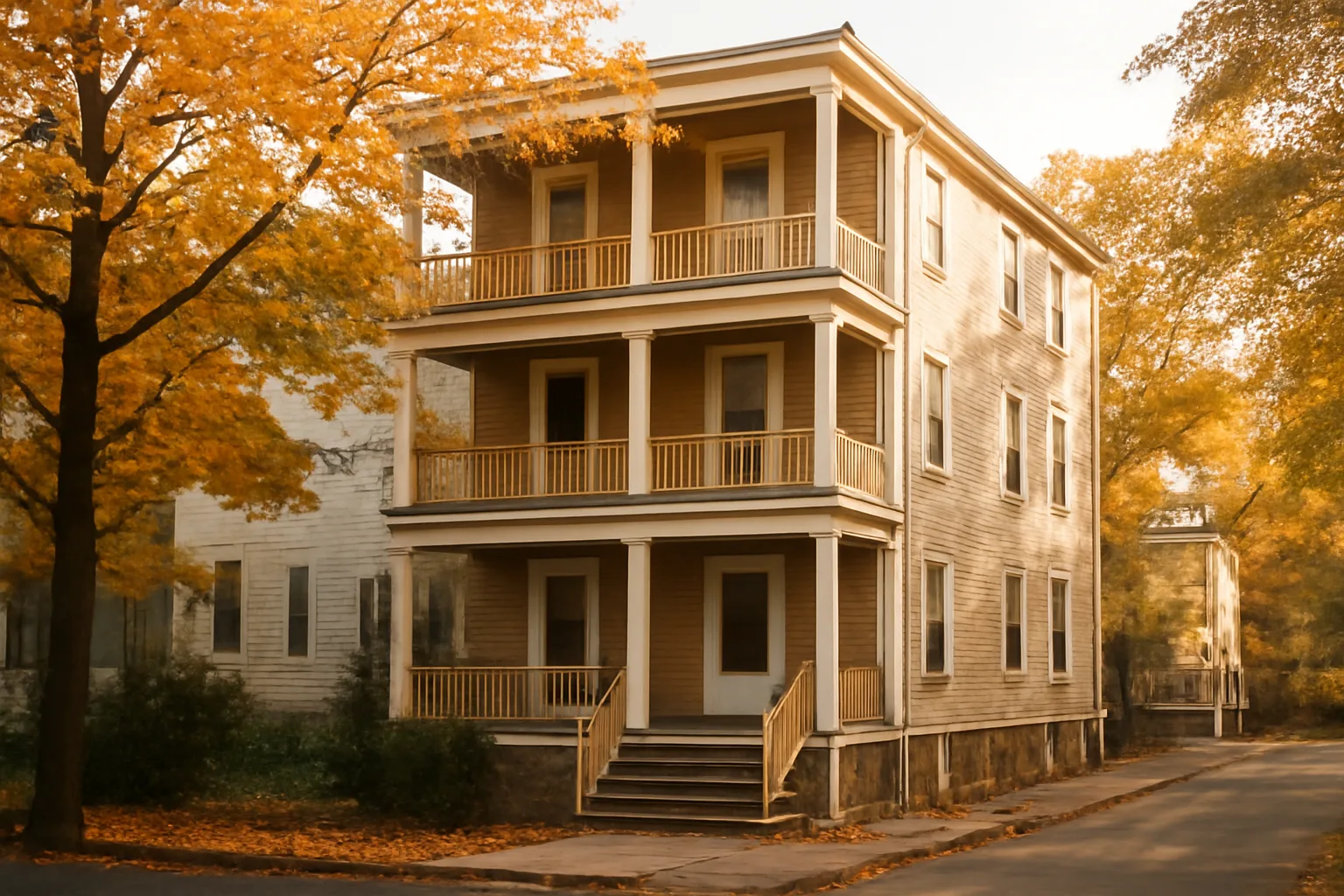
Boston doesn't run a single unified "rental license" the way some cities do. Instead, the city enforces mandatory periodic inspections of rental units through the Inspectional Services Department (ISD), tied to the Massachusetts State Sanitary Code (105 CMR 410) and Boston's own building and health regulations [1][2]. The city's rental inspection ordinance requires owners of most rental properties to have units inspected at least once every five years, with inspections tracked through ISD's rental registration and inspection system. This is different from a lot of the cities we cover. There's no separate "rental license" application fee paid annually just to operate. What Boston has is a recurring inspection cycle, plus a registration requirement for certain property types (notably properties covered by the city's Rental Registration ordinance for buildings with rental units). If you own a triple-decker in Dorchester or a six-unit building in Allston, ISD expects you to get on their inspection schedule, not wait for a complaint. Owner-occupied properties with a small number of units sometimes qualify for reduced inspection frequency or self-certification options under the sanitary code, but the rules are technical enough that you should confirm your building's exact status with ISD rather than assume. Confirm with your city rental licensing office for your building's specific inspection interval and any owner-occupancy exemption paperwork.
Who has to register a rental property in Boston?
If you rent out residential units in Boston, in most cases you need to register with ISD's rental registration program, separate from and in addition to the inspection cycle. This applies to landlords of one unit and up, though the exact scope of mandatory registration (and any owner-occupied small-building carve-outs) is something to verify directly with ISD, since city ordinances get amended and thresholds shift. Registration typically asks for the property address, unit count, owner or managing agent contact information, and sometimes a designated local contact if the owner lives outside Massachusetts. Some cities charge a per-unit or per-building registration fee; Boston's fee structure (if any applies to your building type) should be confirmed with your city rental licensing office rather than assumed from a template. A practical note: registration and inspection are two different compliance tracks that both feed into the same enforcement system. Missing registration can trigger its own violation notice even if your units are in good physical condition. Landlords who've been managing a Boston rental for years sometimes assume they're grandfathered in. Don't assume. Call and confirm your current status.
What can a landlord look at during an inspection?
During a Boston housing inspection, the inspector is checking the unit against the State Sanitary Code (105 CMR 410.000), which covers a specific list of conditions rather than a vague "is this a nice apartment" judgment [1]. Expect the inspector to check smoke detectors and carbon monoxide detectors (required under Massachusetts General Laws Chapter 148, Section 26F for smoke alarms and Chapter 148, Section 26F1/2 for CO alarms), working heat that can maintain at least 68°F during the heating season per 105 CMR 410.201, adequate hot and cold running water, safe electrical outlets and wiring, secure locks on doors, unobstructed egress routes (a second exit or fire escape where required), and general sanitary conditions like absence of pest infestation, mold, or structural hazards. Inspectors will also look at common areas in multi-unit buildings: hallways, stairwells, basements, and shared mechanical rooms. Trash storage, lighting in common areas, and handrail condition on stairs come up often in violation notices. The inspector generally has legal authority to enter with reasonable notice, and Massachusetts sanitary code enforcement gives local boards of health (which ISD effectively administers in Boston) authority to inspect "upon request of the occupant or owner, or upon a determination by the board of health that an inspection is necessary" under 105 CMR 410.830 [1]. As a landlord, you can and should walk your own units before the official inspection to catch obvious problems: dead detector batteries, a loose handrail, a leaking faucet. That single walkthrough often prevents the majority of common violations.
What happens if my Boston rental fails inspection?
A failed item almost never means an immediate fine. Standard practice under 105 CMR 410 enforcement is that the inspector issues a written notice of violation listing the specific defects, along with a compliance deadline, typically ranging from a few days for emergency hazards (no heat, no smoke detector) to 30 days or more for non-emergency repairs [1]. You then fix the items and request a re-inspection. Fines come into play if you ignore the notice or miss the deadline without a reasonable explanation. Massachusetts law allows local boards of health to pursue court action and civil penalties for uncorrected sanitary code violations, and specific per-day or per-violation fine amounts vary by city ordinance and by the severity of the defect (emergency hazards like no heat carry much faster escalation than a cosmetic paint issue). Confirm current fine schedules with ISD directly, since the specific dollar figures get updated periodically and vary by violation class. The realistic sequence for most landlords looks like this: inspection happens, you get a list, you fix what's listed, you call for re-inspection, you pass. The landlords who get into real trouble are the ones who let notices sit in a drawer. If you get a notice, read it the day it arrives and start scheduling repairs immediately, especially for anything heat, detector, or egress related, since those are the categories inspectors escalate fastest.
How do I prepare for a Boston rental inspection?
Walk the unit yourself first, ideally within a week or two of your scheduled inspection date. Test every smoke detector and CO detector (replace batteries even if they seem fine; a chirping detector is an automatic flag). Run every faucet and check under sinks for active leaks. Check that windows open and close, especially any that serve as a required means of egress. Confirm the furnace or boiler is functioning and that the thermostat can actually hit 68°F, since heat-related violations get treated as emergencies under 105 CMR 410.201 [1]. Walk common areas too if you own a multi-unit building. Clear stairwells of stored items, make sure exit signage and emergency lighting work if your building has them, and check handrails for wobble. Keep basic paperwork accessible: your registration confirmation, prior inspection reports if you have them, and any permits for recent work (a new furnace, an electrical panel upgrade). If ISD asks for proof that a prior violation was corrected by a licensed contractor, having that paperwork ready saves a second visit. This is the kind of prep that a lot of landlords underestimate until they're standing in front of an inspector with a dead smoke detector battery and a $79 fix (or, if the packet organizes this ahead of time, zero cost and zero delay). Our Rental Packet Builder is built around exactly this kind of pre-inspection checklist for cities with mandatory rental inspection programs, organized by what inspectors in code-enforcement cities actually check, not generic advice.
What rights do tenants have without a lease in Massachusetts?
A tenant without a written lease in Massachusetts is a tenant-at-will, and tenants-at-will still have real legal protections. Massachusetts law doesn't strip tenants of rights just because there's no signed lease. A tenant-at-will has the right to a habitable unit under the sanitary code, the right to proper notice before eviction, and the right to the same anti-retaliation and anti-discrimination protections as a tenant with a lease. For ending a tenancy-at-will, Massachusetts General Laws Chapter 186, Section 12 generally requires notice equal to the rental period, so for a standard month-to-month tenancy that means at least one full rental period's notice (commonly interpreted as 30 days, though it must align with the tenancy's payment cycle) [3]. This applies both ways: a landlord ending a tenancy-at-will and a tenant giving notice to leave. Without a lease, rent amount, due date, and any rules typically default to whatever was previously agreed verbally or by pattern of payment, which is exactly why verbal-only arrangements create disputes. If you're renting month to month without paperwork, both sides are more exposed than they realize. For general background on tenant protections, see tenants rights and tenant rights.
How much notice does a landlord have to give before entering or ending a tenancy?
For entry to inspect or show a unit, Massachusetts doesn't set one single statewide statutory notice period the way some states do (some states specify 24 or 48 hours explicitly), but the sanitary code and general landlord-tenant practice call for "reasonable notice" for non-emergency entry, and many leases specify 24 hours in writing. For a code inspection specifically, ISD or the board of health typically coordinates a scheduled date with the owner and tenant in advance rather than showing up unannounced, except in emergency or complaint-driven situations. For ending a tenancy, the notice period depends on the tenancy type. A tenancy-at-will (no lease, or an expired lease that rolled to month-to-month) generally requires notice equal to the rental period under M.G.L. Chapter 186, Section 12, which in practice usually works out to a minimum of 30 days [3]. Fixed-term leases end on their own terms at lease expiration unless renewed, though local eviction procedures (including Boston's own processes) still require formal notice to quit before filing for eviction in court. None of this is legal advice, and eviction notice requirements especially have gotten more complex since 2020 with various emergency measures that have since expired or been amended. If you're facing an actual eviction scenario, that's a conversation for a landlord-tenant attorney or Massachusetts Legal Aid, not a blog post.
Why do landlords require renters insurance?
Landlords require renters insurance mainly to shift liability and property-damage risk away from the owner's own policy. A landlord's property insurance covers the building structure, but it typically doesn't cover a tenant's personal belongings, and it often doesn't fully cover liability if a tenant's negligence (an unattended stove, an overflowing bathtub) causes damage to the unit or to a neighboring unit. Requiring renters insurance, commonly with a minimum liability coverage amount (landlords often specify $100,000 or $300,000 in liability coverage, though there's no single universal industry standard figure and requirements vary by landlord and by state law where applicable), gives the landlord a policy to point to if a tenant causes damage. It also protects the tenant: without it, a kitchen fire that destroys their furniture and electronics means a total loss with no recovery. Massachusetts doesn't have a statewide law mandating that landlords require renters insurance, so this is a landlord policy choice, typically written into the lease, not a legal requirement imposed by the state. If you require it, be consistent, apply the requirement to every tenant, and keep proof of coverage on file, since inconsistent enforcement across tenants can become a fair housing problem.
What is landlording, and what does a landlord actually do?
Landlording is the day-to-day work of owning and operating rental property: finding and screening tenants, signing and managing leases, collecting rent, handling repairs and maintenance, staying current on local registration and inspection requirements, and responding to tenant complaints and legal notices. It's part property management, part compliance work, part customer service. A landlord, in the plain legal sense, is the person or entity that owns rental property and leases it to a tenant in exchange for rent, taking on the legal responsibilities that come with that ownership: maintaining habitability, following state and local housing codes, handling security deposits according to state rules, and respecting tenant rights around notice, privacy, and non-discrimination. In a city like Boston, landlording also specifically means tracking your unit's position in the five-year inspection cycle, keeping registration current with ISD, and knowing which sanitary code sections apply to your specific building type (triple-decker vs. large multifamily vs. owner-occupied two-family). Landlords new to the business often underestimate how much of the job is administrative rather than physical. For a broader look at the role, see landlord and landlord landlords.
How do you become a landlord, and what do first-time landlords need to know?
Becoming a landlord starts with owning (or having legal authority to rent out) residential property, but the practical steps go well beyond the closing date. You need to know your state's landlord-tenant law basics (security deposit limits and handling rules, notice requirements, habitability standards), register with your city if it requires rental registration or licensing (Boston does, through ISD), and get your unit ready to pass any mandatory inspection before you advertise it. Before your first tenant moves in: confirm smoke and CO detector compliance (Massachusetts requires specific placement and type under M.G.L. Chapter 148 Section 26F and 26F1/2), understand security deposit rules under M.G.L. Chapter 186, Section 15B (which caps deposits at one month's rent and requires specific handling, including a separate interest-bearing account and a receipt with specific disclosures), and decide on your screening criteria in writing so you can apply it consistently across applicants. Most first-time landlords underestimate two things: how much time code compliance and inspection prep actually take, and how unforgiving security deposit rules are if you get the paperwork wrong (Massachusetts courts have awarded tenants up to three times the deposit amount plus attorney's fees for certain deposit violations under Chapter 186, Section 15B). Get the compliance basics right before you get the first tenant in the door, not after.
Who is responsible for a rental property walk-through inspection, and does this vary by state?
Responsibility for a routine rental walk-through inspection (move-in, move-out, or periodic condition check) generally falls on the landlord or their property manager, since it's the landlord's obligation to document unit condition, especially at move-in and move-out for security deposit purposes. This is true broadly across states, including California, where state law (California Civil Code Section 1950.5) requires landlords to conduct an initial move-out inspection if requested by the tenant, giving the tenant the right to be present and giving the landlord the obligation to provide an itemized list of expected deductions before the tenant actually moves out. For code-compliance inspections (the kind this article focuses on for Boston), responsibility sits with the local inspection agency, ISD in Boston's case, but the landlord is responsible for scheduling access, being present or providing access, and correcting any violations found. The tenant generally has to allow reasonable access for code inspections since these protect health and safety broadly, more than the individual unit. Regardless of state, keeping written or photo documentation of a walk-through inspection protects both sides. Landlords who skip this step tend to lose deposit disputes; tenants who skip it tend to get blamed for pre-existing damage they didn't cause.
What can't a landlord do (using Ohio as a comparison point)?
Every state restricts landlord behavior differently, but Ohio's landlord-tenant law (Ohio Revised Code Chapter 5321) is a useful comparison because it spells out specific prohibited actions clearly. Under Ohio Revised Code Section 5321.04, a landlord must maintain the premises in a fit and habitable condition and comply with building, housing, and health codes, and landlords cannot retaliate against tenants for exercising legal rights (like reporting a code violation) under Section 5321.02, which prohibits retaliatory eviction, rent increases, or service reductions within a specified period after a tenant complaint. Ohio law also restricts self-help eviction: a landlord cannot lock out a tenant, shut off utilities, or remove a tenant's belongings without going through the formal court eviction process, a rule that mirrors similar prohibitions in most states including Massachusetts, where "self-help" eviction (changing locks, removing possessions, shutting off utilities to force a tenant out) is illegal regardless of how much rent is owed. The broader point for any landlord, in any state: code compliance, non-retaliation, and the formal eviction process aren't optional extras, they're baseline legal requirements. A landlord frustrated with a non-paying or difficult tenant still has to go through the court process. Cutting corners here (locking someone out, shutting off heat) tends to turn a legitimate grievance into a landlord's legal liability instead.
How does Boston's inspection cycle compare to other Massachusetts cities?
Massachusetts doesn't have one statewide rental licensing law that applies uniformly; instead, individual cities layer their own registration and inspection ordinances on top of the baseline State Sanitary Code (105 CMR 410) that applies everywhere [1]. That means Boston's five-year inspection cycle through ISD is a local ordinance choice, not a state mandate, and neighboring cities set their own schedules and registration rules. Somerville, Cambridge, and Worcester, for example, each run their own rental registration and inspection programs with their own fee schedules, timelines, and enforcement staff, separate from Boston's ISD program. If you own property in multiple Massachusetts cities, don't assume compliance in one transfers to another. Confirm each city's specific rental licensing office requirements separately. The baseline sanitary code violations (heat, detectors, egress, pest control, structural hazards) are consistent statewide since 105 CMR 410 applies everywhere, but registration deadlines, inspection frequency, and fee amounts are set locally. This patchwork is exactly why a lot of landlords with units in more than one city end up needing a system to track deadlines by property, more than a mental checklist.
What's the fastest way to get ready for an ISD inspection notice?
If you've got an inspection notice in hand right now, prioritize in this order: life-safety items first (working smoke and CO detectors, functioning heat, clear egress paths), then structural and plumbing issues (active leaks, broken windows, damaged stairs or handrails), then cosmetic or lower-severity items. This order matches how inspectors and the sanitary code itself treat urgency, with heat and safety-equipment violations escalating fastest under 105 CMR 410.201 and related sections [1]. Document what you fix. Photos with timestamps, contractor invoices, and permit numbers for anything requiring one all help if you need to demonstrate compliance at re-inspection or in the (hopefully rare) case of a dispute. If you're managing this across multiple units or multiple cities, a structured pre-inspection checklist saves real time compared to reconstructing requirements from memory each cycle. That's the specific gap our $79 one-time Rental Packet Builder is built to close: a City Rental License & Inspection Prep Packet organized around what inspectors in mandatory rental-licensing cities actually check, so you walk in already knowing what's going to get flagged.
Frequently asked questions
How often does Boston require rental unit inspections?
Boston requires most rental units to be inspected at least once every five years under city ordinance layered on top of the Massachusetts State Sanitary Code (105 CMR 410). Some owner-occupied small buildings may have different rules. Confirm your building's exact inspection interval and any exemption status with ISD directly, since ordinance details and thresholds can change.
What is landlording?
Landlording is the ongoing work of owning and operating rental property: screening tenants, managing leases, collecting rent, handling repairs, and staying compliant with local registration and inspection rules. It's part physical maintenance and part administrative compliance, and in mandatory-inspection cities like Boston, tracking your inspection cycle is a core part of the job.
What is a landlord?
A landlord is a person or entity that owns residential or commercial property and rents it to a tenant in exchange for payment, taking on legal responsibilities like maintaining habitability, following state and local housing codes, handling security deposits correctly, and respecting tenant notice and privacy rights under state law.
What rights do tenants have without a lease?
A tenant without a written lease is generally a tenant-at-will and still has full legal protections: the right to a habitable unit, protection from retaliatory eviction, and required notice before the tenancy ends. In Massachusetts, ending a tenancy-at-will generally requires notice equal to the rental period under M.G.L. Chapter 186, Section 12.
How do I become a landlord?
You become a landlord by owning rental property and taking on the legal obligations that come with it: learning your state's security deposit and notice rules, registering with your city if required (Boston mandates rental registration through ISD), and preparing your unit to pass any mandatory habitability inspection before advertising it.
Why do landlords require renters insurance?
Landlords require renters insurance to shift liability for tenant-caused damage and personal property loss away from the landlord's own policy. It also protects the tenant, since a landlord's building insurance typically doesn't cover a tenant's belongings. It's a landlord policy choice in Massachusetts, not a state-mandated requirement.
How much notice does a landlord have to give before ending a tenancy?
For a tenancy-at-will in Massachusetts, notice must generally equal the rental period, commonly interpreted as at least 30 days, under M.G.L. Chapter 186, Section 12. Fixed-term leases end at expiration per the lease terms. Formal eviction still requires a separate notice to quit before filing in court.
What can a landlord look at during an inspection?
A code inspector checks smoke and CO detectors, working heat capable of reaching at least 68°F, safe electrical and plumbing systems, clear egress routes, secure locks, and general sanitary conditions like pest control and structural safety, per the Massachusetts State Sanitary Code (105 CMR 410).
What can't a landlord do in Ohio?
Under Ohio Revised Code Chapter 5321, a landlord cannot retaliate against a tenant for reporting code violations (Section 5321.02), cannot ignore habitability and code-compliance duties (Section 5321.04), and cannot use self-help measures like lockouts or utility shutoffs to remove a tenant instead of going through formal eviction court.
Who is responsible for a rental property walk-through inspection?
The landlord or property manager is generally responsible for scheduling and conducting move-in and move-out walk-through inspections, since documenting unit condition protects both parties in deposit disputes. In California, Civil Code Section 1950.5 requires landlords to offer an initial move-out inspection if the tenant requests one.
Does Boston charge a fee for rental registration or inspection?
Boston may charge registration or inspection-related fees depending on property type and unit count, but the current fee schedule changes periodically. Confirm exact current fees with the Boston Inspectional Services Department rather than relying on older published figures.
What happens if I miss my Boston inspection appointment?
Missing a scheduled inspection typically means rescheduling, but repeated no-shows or ignored notices can escalate into formal violation proceedings. If you get a notice with a scheduled date, confirm attendance or request a reschedule with ISD promptly rather than letting the date pass silently.
Does a triple-decker in Boston get inspected differently than a large apartment building?
Both fall under the same State Sanitary Code (105 CMR 410) baseline, but owner-occupied small buildings like some triple-deckers may qualify for different inspection frequency or self-certification options under city ordinance. Confirm your specific building's classification and inspection schedule directly with ISD.
Sources
- Massachusetts Executive Office of Energy and Environmental Affairs, 105 CMR 410: State Sanitary Code Chapter II: Massachusetts State Sanitary Code minimum habitability standards including heat, egress, and inspection authority
- City of Boston, Inspectional Services Department: Boston's ISD administers housing inspection and code enforcement for rental properties
- Massachusetts General Laws, Chapter 186, Section 12: Notice to terminate a tenancy-at-will must equal the length of the rental period
- Massachusetts General Laws, Chapter 186, Section 15B: Security deposit rules including one-month cap, interest-bearing account requirement, and penalties for violations
- Massachusetts General Laws, Chapter 148, Section 26F: Smoke detector installation and maintenance requirements for residential units
- Ohio Revised Code, Section 5321.04: Ohio landlord obligations to maintain habitability and comply with housing codes
- Ohio Revised Code, Section 5321.02: Ohio prohibition on retaliatory conduct against tenants who report violations
- California Civil Code, Section 1950.5: California landlord obligation to offer an initial move-out inspection if requested by tenant