Last updated 2026-07-26
TL;DR
California doesn't have a mold-specific numeric fine, but Health and Safety Code 26147 and Civil Code 1941.1 mean landlords who know about mold and don't disclose or fix it face habitability lawsuits, rent withholding, repair-and-deduct claims, and potential retaliation penalties up to $2,000 per violation under Civil Code 1942.5.
Does California require landlords to disclose mold to tenants?
Yes, but only once you actually know about it. California's mold statute, Health and Safety Code section 26147, says a landlord who has actual knowledge of mold that exceeds permissible exposure limits (or that poses a health threat) has to disclose that condition to prospective and current tenants [1]. The catch is that California never finished the second half of its own law. The statute directs the Department of Public Health to develop permissible exposure limits and a standard disclosure form, and that never happened. Health and Safety Code 26103 makes clear the disclosure duty doesn't fully kick in until those standards exist [2]. So in practice, there's no California-specific mold disclosure form landlords are required to hand over, and there's no numeric spore count that triggers a legal violation. What still applies is the general rule: if you know your unit has a mold problem serious enough to affect health or habitability, and you rent it out without telling the tenant, you're exposed under ordinary landlord-tenant law, not the dormant mold statute. Courts and juries don't care that the state never finished its exposure-limit rulemaking. They care whether you knew and stayed quiet. This is different from lead paint, where federal disclosure law (42 U.S.C. 4852d) is fully active and enforced with real penalties. Mold disclosure in California is a half-built statute layered on top of a fully-built habitability system. That combination trips up a lot of landlords who assume 'no specific mold form' means 'no mold liability.' It doesn't.
What is the actual legal standard for mold as a habitability issue?
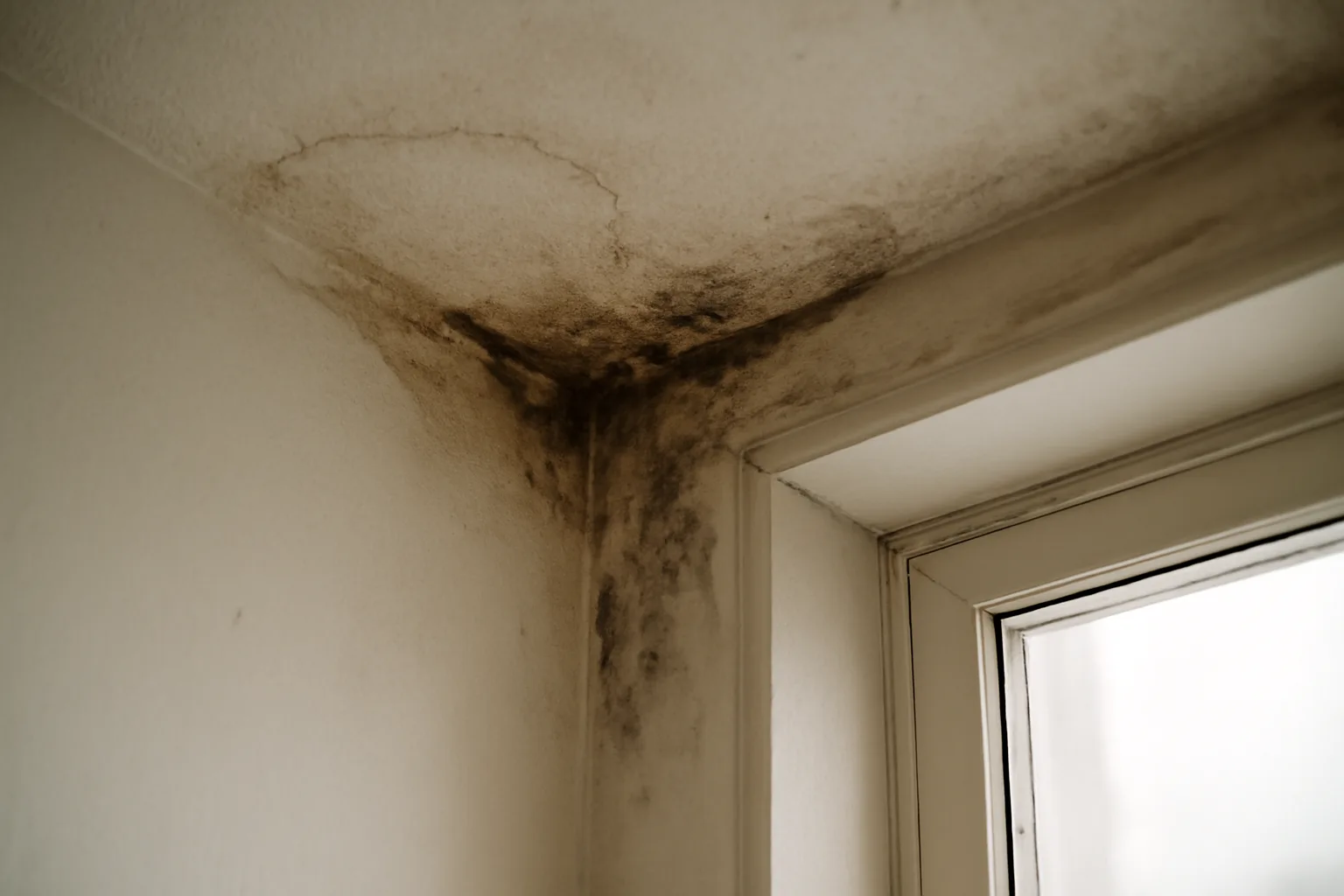
Mold becomes a legal problem in California mainly through the implied warranty of habitability, not through the dormant mold statute. Civil Code section 1941.1 lists the conditions that make a rental unit legally habitable, including effective waterproofing, weatherproofing, and plumbing that doesn't leak into walls or floors [3]. Chronic moisture intrusion, the root cause of almost all indoor mold, is itself a habitability defect even before mold visibly appears. Civil Code 1942 gives tenants two remedies when a landlord fails to fix a habitability problem after notice: they can move out and terminate the lease, or they can repair the defect themselves and deduct the cost from rent, capped at one month's rent and usable twice in any 12-month period [4]. Tenants can also raise habitability as a defense in an unlawful detainer (eviction) case if you're trying to remove them for nonpayment while mold or leaks go unaddressed. There's no California statute that says ' X spores per cubic meter equals an automatic violation.' The CDC and California Department of Public Health both say visible mold or a persistent musty smell is enough to require remediation, and that indoor mold testing is rarely necessary to justify cleanup [5]. That guidance matters practically: you don't need a lab report to be on the hook. A tenant photo of black mold creeping up a bathroom wall, paired with a written repair request you ignored, is usually enough evidence in small claims or habitability litigation.
What happens if a landlord ignores a mold complaint?
Ignoring a documented mold complaint opens you up to several different tracks of liability, and they can stack. First is the repair-and-deduct and lease-termination path under Civil Code 1942, described above. Second is rent withholding, where tenants stop paying rent based on the implied warranty of habitability; this isn't a separate statute so much as case law (Green v. Superior Court, 10 Cal.3d 616 (1974)) establishing that a landlord can't collect full rent for an uninhabitable unit [6]. Third, local building and health departments in many California cities can issue notices of violation and impose their own fines through municipal code, separate from state civil remedies. San Francisco, Los Angeles, and Oakland all have local habitability enforcement units that can red-tag units or issue citations for unresolved mold-related conditions like leaks and inadequate ventilation. Fourth, and often the most expensive, is a straight negligence or breach-of-warranty lawsuit for property damage or health effects, where damages aren't capped at one month's rent. Landlords sometimes assume mold cases are junk science; that's outdated. Courts have grown more sophisticated about linking specific mold species to respiratory harm, and juries tend to punish landlords who had actual written notice and did nothing for months. Finally, if a tenant can show you retaliated (say, by issuing a notice to quit shortly after they complained about mold), Civil Code 1942.5 allows for a civil penalty of $100 to $2,000 per violation, on top of actual damages [7]. That penalty is real, current, and cited by number, unlike the mold disclosure statute's aspirational form.
Who is responsible for mold caused by tenant behavior versus building defects?
This is the fact question that decides most mold disputes, and it turns on cause, not appearance. Mold from a leaking roof, failed window flashing, a slab leak, or bad ventilation design is a landlord habitability responsibility under Civil Code 1941.1's waterproofing and plumbing requirements [3]. Mold that grows because a tenant never runs the bathroom fan, blocks vents with furniture, or keeps the unit sealed with high humidity and no airflow is arguably tenant-caused, and many leases (properly drafted, ideally with legal review) shift maintenance and reporting duties onto the tenant for that scenario. In reality, most mold cases are mixed. A tenant might not report a slow leak for weeks because they didn't realize it mattered, and by the time you find out, there's been enough moisture intrusion to grow mold behind drywall. Courts look at who had notice and who had the ability to fix the underlying cause. A landlord who structurally can't prevent condensation because of bad insulation or undersized HVAC bears more responsibility than one whose tenant literally covered every window with plastic and ran three space heaters. The honest, practical rule: if the water source is part of the building (roof, plumbing, foundation, windows), it's yours to fix and disclose once you know. If the water source is tenant behavior (overwatering plants against a wall, not ventilating a shower), you have a better defense, but you still generally have to intervene once you're told about visible mold, because letting it persist can still create a habitability violation regardless of original cause.
What can a landlord look at during a rental inspection?
During a routine or complaint-driven inspection, a California landlord (or the housing inspector doing a city-mandated inspection) can generally look at the condition of things covered by the habitability statute: plumbing fixtures, evidence of leaks or water stains, ventilation in bathrooms and kitchens, window seals, and any visible mold growth on walls, ceilings, or around HVAC vents [3]. Inspectors are checking for the underlying causes of moisture, not doing air-quality sampling; California doesn't require mold air testing as part of standard rental inspections. What a landlord cannot do is use a routine inspection as cover to go through personal belongings, closets, drawers, or anything unrelated to the maintenance purpose stated in the entry notice. California Civil Code section 1954 limits landlord entry to specific purposes (repairs, showing the unit, agreed inspections, court order, or emergencies) and requires the visit stay within that scope [8]. If you're in a city with mandatory rental licensing or a proactive rental inspection program (common in places like [Berkeley, Los Angeles' SEP program, and dozens of smaller California cities), the city's own municipal inspector may check specifically for mold-related conditions as part of the habitability checklist tied to your rental license renewal. Confirm with your city rental licensing office what their inspection checklist actually covers, because it varies significantly between, say, a small Central Valley city and a large coastal city with a dedicated code enforcement division.
How much notice does a landlord have to give before entering to inspect for mold?
California Civil Code section 1954 requires 'reasonable notice,' and the statute sets a presumption of 24 hours written notice as reasonable for non-emergency entry, including routine inspections [8]. The notice needs to state the date, approximate time, and purpose of entry. If the issue is an emergency, like an active pipe burst causing rapid mold growth, no advance notice is required at all, because Civil Code 1954 exempts emergencies from the notice requirement. If a tenant has reported mold and you need to send a contractor in to assess or remediate, that visit still generally needs the 24-hour notice unless the tenant agrees to a shorter window or it's genuinely urgent (active water intrusion, sewage backup, or a health and safety emergency). Landlords sometimes try to do same-day 'drop-by' inspections when they're worried about a mold complaint; that's a notice violation waiting to happen, and it can undercut your position if the case ends up in front of a judge, since it looks like you were trying to catch the tenant off guard rather than professionally assess a maintenance issue.
Who does the rental property walk-through inspection in California?
For move-in and move-out documentation, California Civil Code section 1950.5 requires landlords to offer tenants an initial move-out inspection (sometimes called the 'pre-move-out inspection') at least two weeks before the tenancy ends if there's a security deposit involved, so the tenant has a chance to fix any issues before final deductions are calculated [9]. The landlord or their authorized agent conducts that walk-through; it's the landlord's legal responsibility to initiate it, not the tenant's. For code-driven inspections tied to mandatory rental registration or licensing programs (which exist at the city level, not statewide, in California), the city's code enforcement or housing department typically sends its own inspector, sometimes accompanied by the landlord or property manager. Who exactly shows up, how much advance notice they give, and what the checklist covers depends entirely on the local ordinance. If you own in a city with mandatory rental licensing, confirm with your city rental licensing office exactly who conducts the inspection and whether the landlord is required to be present. For day-to-day maintenance walk-throughs unrelated to move-out or city licensing, it's simply the landlord (or property manager) who inspects, subject to the 24-hour notice rule under Civil Code 1954 [8]. If you're prepping for a city license renewal inspection and want a structured way to get ahead of common violations, including moisture and ventilation issues that often get flagged, the City Rental License & Inspection Prep Packet walks through a habitability-focused checklist landlords can use before the inspector arrives.
What rights do tenants have if there's no written lease?
A tenant without a written lease in California still has full habitability rights. Civil Code 1941 and 1941.1 apply regardless of whether there's a signed lease; they're implied by law in every residential tenancy, written or oral [3]. A verbal month-to-month agreement is legally a tenancy at will or periodic tenancy, and the tenant still gets protection from unsafe conditions, still gets the 24-hour entry notice rule, and still gets normal eviction protections (proper notice period, no lockouts, no utility shutoffs as a workaround). What a no-lease tenant doesn't automatically have is a fixed term; without a written lease specifying otherwise, most oral agreements default to a month-to-month tenancy under Civil Code 1946, meaning either side generally needs 30 days' notice to end it (60 days if the tenant has lived there a year or more, per Civil Code 1946.1) [10]. Mold-related habitability duties, though, don't depend on lease paperwork at all. If a unit is uninhabitable because of unresolved moisture and mold, that's true whether or not anyone signed anything.
Why do landlords require renters insurance, and does it cover mold?
Landlords require renters insurance mainly to shift liability for tenant personal property damage and personal injury claims away from the landlord's own policy, and to reduce disputes over who pays when something goes wrong that isn't structural. It's a lease requirement, not a state mandate; California doesn't legally require renters insurance, but plenty of landlords make it a lease condition because it's cheap for the tenant (national average is roughly $15 to $30 per month according to III industry data) and it reduces the landlord's exposure when a tenant's belongings are damaged by a covered event [11]. On mold specifically, most standard renters insurance policies exclude mold damage caused by the landlord's failure to maintain the property, and many exclude mold outright unless it results from a sudden, accidental water event (like a burst pipe) rather than long-term neglect. So renters insurance is not a substitute for a landlord fixing known moisture problems; it mainly protects the tenant's furniture and belongings, not the landlord from a habitability claim. If a mold problem stems from the building's plumbing or roof, that's the landlord's responsibility regardless of whether the tenant has insurance.
What is landlording and what does it actually mean to be a landlord?
Landlording is the practical, day-to-day work of owning and operating rental property: collecting rent, handling repairs, screening tenants, staying current on habitability and safety law, and managing the relationship so the unit stays legally rentable. A landlord, in the plain legal sense, is the person or entity that owns residential property and rents it to someone else under a lease or rental agreement, taking on the legal duties that come with that (habitability, proper notice, fair housing compliance, and in many cities, mandatory registration or licensing). Mold compliance is a good example of why landlording is more operational than people expect going in. It's more than 'collect rent and fix things when asked.' It means understanding that Health and Safety Code 26147 puts a disclosure duty on you the moment you have actual knowledge of a mold problem [1], that Civil Code 1941.1 makes water intrusion a habitability issue regardless of whether mold is visible yet [3], and that ignoring a written complaint for months turns a maintenance ticket into a legal claim. Landlords who treat these as paperwork requirements, rather than genuine building-condition problems, tend to be the ones who end up disclosing mold has become a lawsuit.
How do you become a landlord and how do you do it well?
Becoming a landlord in California, mechanically, just requires owning residential property and renting it out; there's no statewide landlord license. But a growing number of California cities require a rental business license, a rental registration, or a proactive inspection program before you can legally rent a unit at all. Berkeley, Los Angeles (under its Rent Stabilization Ordinance registration), San Francisco, and dozens of smaller cities each have their own separate requirement, with different fees and renewal cycles. There is no single statewide number to cite here; confirm with your city rental licensing office what applies to your specific address. Doing it well, especially around mold and habitability, comes down to a short list of habits: respond to moisture complaints within days, not weeks; document every repair with photos and dates; give proper 24-hour notice before entry under Civil Code 1954 [8]; and know your local rent board or housing department's specific habitability checklist before an inspector shows up unannounced. Landlords who get sued over mold almost never lose because mold exists. They lose because there's a paper trail showing they knew and sat on it. If you're renting in a city with a mandatory registration or inspection cycle, it's worth reading up on general landlord fundamentals like what tenants are owed without a written lease and how tenants' rights interact with local ordinances, since mold obligations sit inside that larger habitability framework rather than as a standalone rule.
What can't a landlord do, and how does this compare to other states like Ohio?
California landlords can't retaliate against a tenant for reporting mold or any other habitability issue; Civil Code 1942.5 specifically bars raising rent, decreasing services, or serving an eviction notice within 180 days of a tenant's good-faith complaint, with penalties of $100 to $2,000 per violation if retaliation is proven [7]. They can't enter without proper notice except in emergencies (Civil Code 1954) [8], can't shut off utilities to force a move-out, and can't ignore a documented habitability complaint and then try to evict for nonpayment of rent tied to that same period. Ohio law works differently and is worth understanding if you own in both states, since landlords sometimes assume the rules transfer. Ohio Revised Code 5321.04 sets out landlord obligations (fit and habitable premises, working plumbing, no unreasonable entry) similar in spirit to California's, and Ohio Revised Code 5321.15 specifically bars a landlord from using self-help eviction methods, meaning a landlord can't lock a tenant out, shut off utilities, or remove a tenant's belongings without going through court [12]. That's the same principle as California's ban on retaliatory or extrajudicial eviction, just under a different statute number. The bigger difference is disclosure. Ohio has no mold-specific disclosure statute comparable to California's Health and Safety Code 26147, so Ohio mold claims run almost entirely through the general habitability duty in ORC 5321.04 rather than a dedicated mold statute, even an unfinished one like California's.
Quick reference: California mold and habitability rules
California mold-related statutes and what they actually require
| Statute | What it covers | Practical trigger | |
|---|---|---|---|
| Health & Safety Code 26147 | Mold disclosure duty | Actual knowledge of mold exceeding health-based limits [1] | |
| Health & Safety Code 26103 | Delays full mold disclosure duty | Pending state exposure-limit standards [2] | |
| Civil Code 1941.1 | Habitability standards | Waterproofing, plumbing, no leaks [3] | |
| Civil Code 1942 | Repair-and-deduct / lease termination | Written notice, landlord fails to fix [4] | |
| Civil Code 1942.5 | Anti-retaliation | Complaint within prior 180 days [7] | |
| Civil Code 1954 | Entry notice | 24 hours written notice, emergency exception [8] | |
| Civil Code 1950.5 | Move-out inspection | Offered 2+ weeks before tenancy ends [9] | This table is the fast version of everything above. If you only remember one row, make it 1941.1: it's the statute that turns 'there's a leak' into a legal habitability defect, mold or no mold yet visible. |
Frequently asked questions
Does California require a specific mold disclosure form?
No. Health and Safety Code 26147 calls for a standard disclosure form and permissible exposure limits, but the state never finished that rulemaking, and Health and Safety Code 26103 confirms the full disclosure duty is tied to standards that don't yet exist. Landlords still must disclose known, health-threatening mold under general principles, just without a state-mandated form.
Can a tenant withhold rent because of mold in California?
Yes, through the implied warranty of habitability established in cases like Green v. Superior Court (1974), tenants can withhold rent if a landlord fails to fix a serious habitability defect like unresolved water intrusion causing mold, after proper written notice. This isn't unlimited; courts weigh notice given, severity, and landlord response time.
What's the penalty for a landlord who retaliates after a mold complaint?
Civil Code 1942.5 sets civil penalties of $100 to $2,000 per violation for landlords who raise rent, cut services, or evict within 180 days of a tenant's good-faith habitability complaint, on top of any actual damages the tenant can prove.
Who is responsible for the rental property walk-through inspection in California?
For move-out deposit inspections, Civil Code 1950.5 makes it the landlord's duty to offer a walk-through at least two weeks before the tenancy ends. For city-mandated rental license inspections, a municipal housing or code enforcement inspector conducts the visit; confirm specifics with your city rental licensing office.
What is landlording?
Landlording is the ongoing work of owning and operating a rental property: collecting rent, maintaining habitability, handling tenant communication, staying compliant with entry notice rules, disclosure duties, and any local licensing or registration requirements. It's an operational role, more than property ownership on paper.
What is a landlord, legally?
A landlord is the owner (or authorized agent) of residential property who rents it to a tenant under a lease or rental agreement, taking on legal duties like maintaining habitability under Civil Code 1941.1, giving proper entry notice under Civil Code 1954, and complying with local rental licensing rules where they apply.
What rights do tenants have without a written lease in California?
Full habitability rights under Civil Code 1941 and 1941.1 apply regardless of a written lease. Oral agreements typically default to month-to-month tenancies under Civil Code 1946, requiring 30 or 60 days' notice to terminate depending on tenancy length, per Civil Code 1946.1.
Why do landlords require renters insurance?
Mainly to shift liability for tenant belongings and personal injury claims away from the landlord's own policy. It's a lease requirement, not a California state mandate, and it generally doesn't cover mold caused by the landlord's failure to maintain the building, only sudden accidental water events in most policies.
How much notice does a landlord have to give before entering for a mold inspection?
Civil Code 1954 sets 24 hours written notice as the presumed reasonable standard for non-emergency entry, including inspections related to a mold complaint. No notice is required for genuine emergencies like active flooding.
What can a landlord look at during a habitability inspection?
Plumbing, evidence of leaks, ventilation, window seals, and visible mold or water damage tied to Civil Code 1941.1's habitability standards. Inspectors generally aren't doing air-quality testing; they're checking for the physical causes of moisture.
What can't a landlord do in Ohio regarding mold and entry?
Ohio Revised Code 5321.15 bars self-help evictions (lockouts, utility shutoffs, removing belongings without a court order), and ORC 5321.04 requires habitable premises. Ohio has no mold-specific disclosure statute like California's, so mold claims there run through the general habitability duty.
How do I become a landlord in California?
There's no statewide landlord license, but many California cities require rental registration, a business license, or participation in a proactive inspection program before you can legally rent a unit. Requirements vary by city; confirm current fees and deadlines with your city rental licensing office.
Is mold testing required before renting a unit in California?
No. State law doesn't require air-quality mold testing for rentals. Public health guidance from agencies like the CDC generally treats visible mold or persistent musty odor as sufficient grounds for remediation without lab testing.
Sources
- California Health and Safety Code Section 26147: Landlords with actual knowledge of mold exceeding permissible exposure limits must disclose it to tenants
- California Health and Safety Code Section 26103: Full mold disclosure duty is tied to state exposure-limit standards that were never finalized
- California Civil Code Section 1941.1: Habitability standards including waterproofing, weatherproofing, and functioning plumbing
- California Civil Code Section 1942: Repair-and-deduct remedy capped at one month's rent, usable twice in 12 months
- CDC, Mold Cleanup After Disasters: Visible mold or musty odor is sufficient basis for remediation without air testing
- Green v. Superior Court, 10 Cal.3d 616 (1974): Established the implied warranty of habitability allowing rent withholding for uninhabitable conditions
- California Civil Code Section 1942.5: Retaliation penalties of $100 to $2,000 per violation within 180 days of a tenant complaint
- California Civil Code Section 1954: 24-hour written notice required for landlord entry, with an emergency exception
- California Civil Code Section 1950.5: Landlord must offer initial move-out inspection at least two weeks before tenancy ends
- California Civil Code Section 1946.1: 60 days notice required to terminate tenancy of one year or more
- Insurance Information Institute, Renters Insurance Facts: Average renters insurance costs roughly $15 to $30 per month nationally
- Ohio Revised Code Section 5321.15: Ohio bars self-help evictions including lockouts and utility shutoffs without court process