Last updated 2026-07-26
TL;DR
A complete rental property checklist covers city registration/licensing, safety inspections, tenant screening, a written lease, proof of insurance, and proper notice before entry or rent changes. Requirements vary by city and state, so confirm specifics with your local rental licensing office before you rent out any unit.
What does a landlord actually need on their checklist before renting out a unit?
Before you hand over keys, you need five things lined up: legal authority to rent (registration or license where required), a habitable unit that passes any mandatory inspection, a screening process that doesn't violate fair housing law, a written lease, and proof of insurance that matches what your mortgage and your city expect. Most first-time landlords skip step one because they don't know it exists. Hundreds of U.S. cities, from Baltimore to Sacramento to Minneapolis, require landlords to register or license every rental unit before it's occupied, and many require a passed inspection on a recurring cycle (often 2 to 5 years) [1]. Skipping registration doesn't just risk a fine. In some cities it blocks you from filing an eviction at all until the property is properly licensed, because courts check for active registration before hearing the case. The rest of this checklist walks through each piece: what "landlording" actually means as a job, who has to inspect what, what tenants can expect without a lease, why insurance gets required, how much notice you owe before you walk in, and what you cannot do even if your lease says you can. If you want a shortcut for the paperwork side of this, a rental packet builder that pulls together your city's registration form, inspection prep list, and required disclosures in one document saves a weekend of digging through municipal code. That's the whole idea behind our $79 City Rental License & Inspection Prep Packet: one-time cost, built around your specific city's requirements instead of generic advice.
How do you become a landlord, step by step?
Becoming a landlord legally takes six steps in most licensed cities: confirm zoning allows rental use, register the property with your city or county, pass any required inspection, get landlord-specific insurance, screen tenants under fair housing rules, and sign a written lease that matches your state's required disclosures. Step 1: check zoning and any HOA restrictions. Some single-family zones restrict rentals or cap the number of unrelated occupants; your city planning department (not the rental licensing office) handles that question. Step 2: register or license the unit. This is separate from your LLC formation or business license. Cities like Los Angeles require registration under the Rent Stabilization Ordinance for covered units, and cities like Minneapolis require a rental license before you can legally lease the unit at all under Minneapolis Code of Ordinances Chapter 244 [2]. Confirm the exact program name and fee with your city rental licensing office, because these vary block by block in some metro areas depending on which municipality you're in. Step 3: pass inspection if your city requires one before occupancy. Some cities inspect every unit before the first tenant moves in; others inspect on a rotating cycle after occupancy begins. Step 4: get insurance. A standard homeowners policy usually excludes rental use once you stop living there, so you need a landlord/dwelling policy (often called DP-3) instead [3]. Step 5: screen tenants consistently. The Fair Housing Act prohibits discrimination based on race, color, religion, sex, national origin, familial status, or disability in any housing-related decision, including screening criteria [4]. Step 6: sign a written lease. Even in states that allow oral leases for month-to-month tenancies, a written lease protects you if a dispute ends up in court, and many states require written leases for terms over one year under their own statute of frauds provisions.
What is landlording, exactly?
Landlording is the ongoing work of owning and managing rental property: collecting rent, maintaining the unit in habitable condition, handling repairs, following notice and entry rules, keeping up with licensing renewals, and managing the legal relationship with tenants under your state's landlord-tenant code. It's not passive income in the way ads sometimes describe it. A landlord with even one unit is running a small regulated business. You're subject to fair housing law, your state's security deposit statute, your city's habitability code, and (in licensed cities) an inspection and renewal cycle that repeats every few years. The day-to-day version looks like this: fielding maintenance calls, tracking lease renewal dates, budgeting for capital repairs (roof, HVAC, water heater), responding to tenant notices, and keeping receipts and inspection records in case a dispute or a city audit comes up. Landlords who treat it like a business, with a separate bank account, a maintenance log, and a calendar for renewal deadlines, have far fewer surprises than landlords who treat it like a side hustle they check on once a year.
What is a landlord, legally speaking?
A landlord is the party that owns or controls real property and grants a tenant the right to occupy it in exchange for rent, under a lease or rental agreement. Most state landlord-tenant statutes define "landlord" broadly enough to include property managers, agents, and anyone who receives rent on the owner's behalf, more than the titleholder. For example, California's Civil Code governs the landlord-tenant relationship broadly under its rental provisions, and defines the responsibilities that attach to whoever is acting as the landlord, whether that's the owner directly or a hired manager [5]. That distinction matters for liability: if you hire a property manager, you as the owner are usually still on the hook for licensing and habitability obligations even if the manager is the one signing leases and handling repairs. The legal definition also matters for notice rules. Tenants generally have to be told who their landlord is (or who to serve legal notices on), and many states require that information in the lease itself or posted in a common area for multi-unit buildings.
Who is responsible for a rental property walk-through inspection in California?
In California, the landlord is responsible for conducting the move-out inspection if the tenant requests one, and for local rental inspections where the city requires them (California itself has no single statewide rental inspection law, so this is set city by city). Under California Civil Code Section 1950.5(f), a landlord must, upon the tenant's request, inspect the unit no earlier than two weeks before the end of the tenancy and give the tenant an itemized list of deficiencies the tenant could fix to avoid deposit deductions [1]. The statute is specific: "the landlord shall notify the tenant in writing of his or her option to request an initial inspection of the premises... and of his or her right to be present at the inspection" [1]. Separately, cities with proactive rental inspection programs (San Jose, Los Angeles, and others) send their own code enforcement or housing department staff to inspect the unit's condition, not the tenant's move-out damage. Those are two different inspections with two different purposes: the state-law move-out walk-through protects the tenant's deposit, while a city rental inspection program checks for code violations like broken smoke detectors, unsafe wiring, or mold. Confirm with your specific city's rental licensing or code enforcement office which program applies to your unit and how often it repeats.
What can a landlord look at during an inspection?
| City rental license/code inspection | City inspector or code enforcement officer | Smoke/CO detectors, electrical, plumbing, structural safety | Before initial license, then every 1-5 years depending on city | |
|---|---|---|---|---|
| Move-in/move-out walk-through | Landlord (with tenant present if requested) | Condition of unit, existing damage, deposit-relevant items | At tenancy start and end | |
| Routine maintenance visit | Landlord or property manager | HVAC filters, appliance function, general upkeep | Landlord's discretion, with proper notice | If your city requires a periodic license inspection, a rental packet builder style prep checklist matched to your specific city's inspection form is the fastest way to avoid a re-inspection fee for something small like a missing CO detector. |
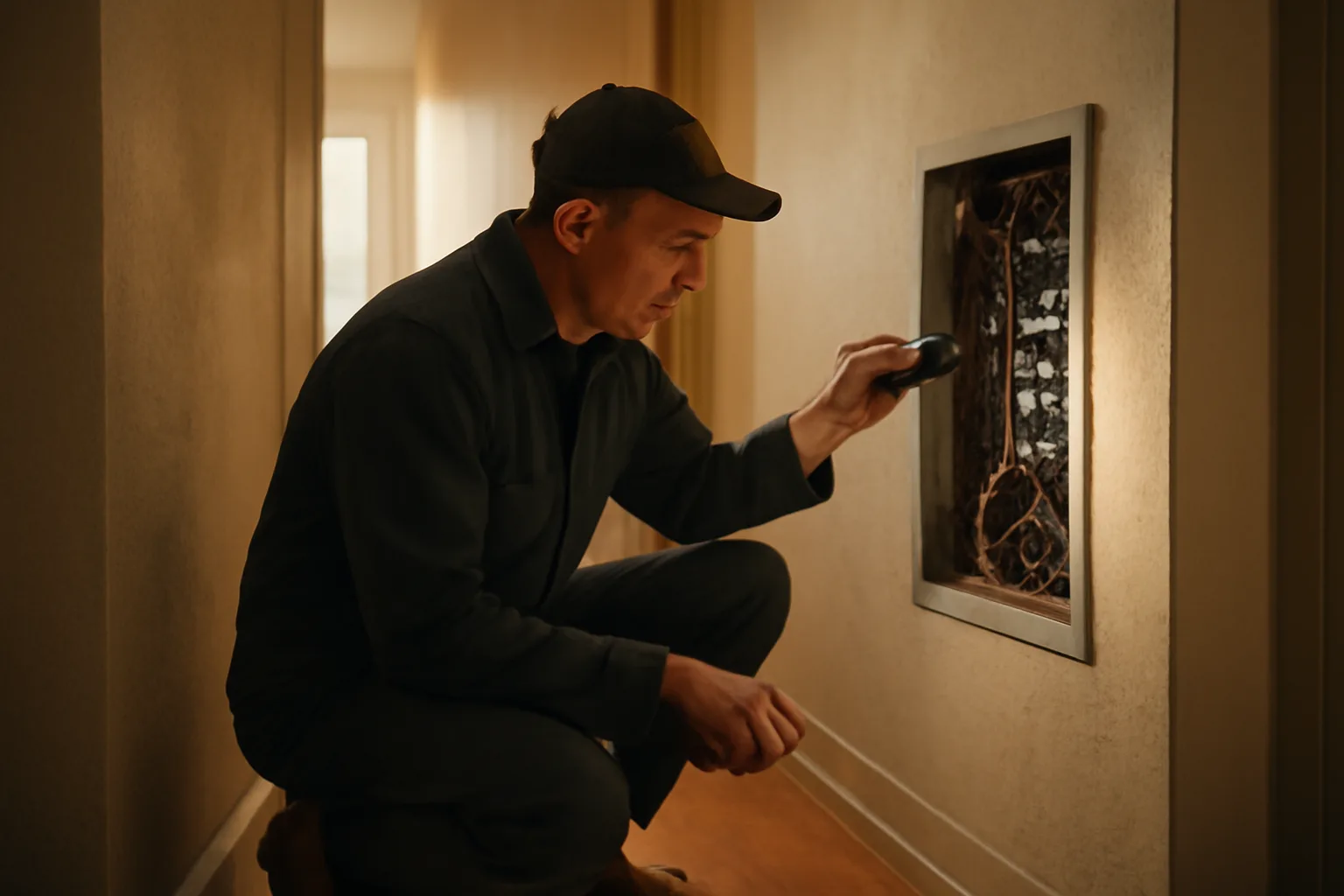
During a routine or licensing inspection, a landlord (or the city inspector) can generally check smoke and carbon monoxide detectors, electrical outlets and panels, plumbing fixtures for leaks, heating systems, window and door locks, exterior conditions like railings and steps, and general cleanliness that affects health and safety. Inspections are not supposed to be a search through personal belongings. A typical city rental inspection checklist covers: working smoke alarms in every bedroom and on every level, carbon monoxide detectors where fuel-burning appliances exist, no exposed wiring, functioning heat source, no active leaks or standing water, secure handrails on stairs with more than a few steps, and pest-free conditions. The U.S. Department of Housing and Urban Development's Housing Quality Standards, used for Section 8 inspections nationwide, is a useful baseline even for landlords not in the voucher program, covering sanitary facilities, food preparation areas, thermal environment, and structural safety under 24 CFR 982.401 [6]. What inspectors are not there to do is rifle through drawers, closets full of personal items, or areas unrelated to safety and code compliance. Landlords doing their own inspection should also respect the same boundary, both because it's good practice and because overstepping can expose you to a claim of harassment or violation of the tenant's right to quiet enjoyment. Here's a quick comparison of the two most common inspection types renters and landlords run into: | Inspection type | Who conducts it | What it checks | When it happens |
How much notice does a landlord have to give before entering or ending a tenancy?
Most states require 24 to 48 hours' written or verbal notice before a landlord enters an occupied rental for non-emergency reasons, and notice periods for ending a month-to-month tenancy typically run 30 to 60 days depending on the state and how long the tenant has lived there. Exact numbers vary significantly by state, so confirm your state's specific statute before acting. California requires "reasonable notice," which the statute presumes to be 24 hours in writing for entry to make repairs or show the unit, under Civil Code Section 1954 [7]. Many other states set a flat 24-hour rule by statute as well, though some, like Florida, specify at least 12 hours' notice for landlords entering to make repairs under Florida Statutes Section 83.53 [8]. For ending a tenancy, notice periods scale with how long the tenant has lived there in several states. California requires 60 days' notice to end a periodic tenancy where the tenant has lived in the unit a year or more, and 30 days if under a year, under Civil Code Section 1946.1 [9]. Emergency entry (fire, flooding, a burst pipe) doesn't require advance notice under most state laws, but landlords should still document the reason and time in case a dispute comes up later. Bottom line: never assume a number. Pull your specific state's landlord-tenant statute (usually titled something like "Residential Landlord and Tenant Act") before sending any entry or termination notice, and check whether your city has its own additional layer of tenant protection on top of the state minimum, which is common in cities with rent stabilization ordinances.
What rights do tenants have without a lease?
A tenant without a written lease still has full legal rights under state landlord-tenant law: the right to habitable housing, protection from illegal lockouts, the same notice requirements for entry and termination, and (in most states) an automatically created month-to-month tenancy once they've paid rent and the landlord has accepted it. An oral or implied lease is still a lease in the eyes of the law in nearly every state. The absence of a signed document doesn't strip a tenant of the right to a habitable unit, the right to their security deposit back under the statutory timeline, or protection against retaliatory eviction for reporting code violations. What it does change is proof: without a written lease, terms like rent amount, who's responsible for utilities, and pet policies become harder to establish if there's a dispute, and both sides end up relying on receipts, texts, and witness accounts. Most states treat a tenancy without a specified end date as a month-to-month tenancy, meaning either party can end it with proper notice (commonly 30 days) but neither side is locked into a longer term. A tenant paying rent monthly without a lease can generally only be removed through the same formal eviction process required for a leased tenant. No landlord, in any state, can just change the locks or remove a tenant's belongings without a court order, lease or no lease. That's true nationwide and it's one of the most consistently enforced tenant protections in the country. For landlords, the lesson is simple: get it in writing anyway. A written lease doesn't create tenant rights that don't already exist, but it does protect you by locking in rent amount, due dates, and responsibilities before a disagreement happens.
Why do landlords require renters insurance?
Landlords require renters insurance mainly to shift liability for a tenant's personal property loss and for injuries or damage the tenant causes, since a landlord's own property insurance typically only covers the building structure, not the tenant's belongings or the tenant's liability to others. A landlord's dwelling policy covers the physical structure: the roof, walls, built-in appliances, and the landlord's own liability if someone's hurt due to a building defect. It generally does not cover a tenant's furniture, electronics, or clothing if there's a fire, burst pipe, or theft, and it doesn't cover the tenant's liability if the tenant's dog bites a visitor or the tenant accidentally starts a kitchen fire that spreads to a neighboring unit. Requiring renters insurance (commonly $100,000 to $300,000 in liability coverage, often costing a tenant somewhere in the range of $15 to $30 a month depending on location and coverage) closes that gap. If a tenant's negligence causes damage, the landlord's insurer can potentially subrogate against the tenant's policy rather than eating the loss or suing an uninsured tenant directly. Many landlords also require it because a fire or major water damage caused by a tenant without insurance often turns into a landlord absorbing costs that should have belonged to the tenant's side of the liability line. Whether a landlord can legally require it depends on the lease and, in a few jurisdictions, local ordinance; there's no federal law mandating it, but there's also generally no law prohibiting a landlord from making it a lease condition, provided it's applied consistently to all tenants under fair housing rules.
What can a landlord not do in Ohio?
In Ohio, a landlord cannot shut off utilities, change the locks, or remove a tenant's belongings to force them out, and cannot retaliate against a tenant for reporting code violations or exercising a legal right. These protections come directly from Ohio's landlord-tenant statute. Ohio Revised Code Section 5321.15 states that "no landlord of residential premises shall initiate any act, including termination of utility services... to recover possession of residential premises other than as provided in Chapters 1923., 5303., and 5321" of the Ohio Revised Code, meaning a landlord has to use the formal eviction process (forcible entry and detainer) in court, not self-help remedies like lockouts or utility shutoffs [10]. Ohio landlords also cannot retaliate. Ohio Revised Code Section 5321.02 prohibits a landlord from raising rent, decreasing services, or starting eviction proceedings against a tenant in retaliation for the tenant complaining to a government agency about a building or health code violation, or for the tenant joining a tenant organization [11]. Ohio landlords also have to maintain the property under Ohio Revised Code Section 5321.04, which requires compliance with building, health, and safety codes, keeping common areas safe, keeping plumbing and electrical systems in good working order, and supplying running water and reasonable heat . Failing to meet these duties doesn't just risk a code violation; it can be raised as a defense if the landlord later tries to evict for nonpayment, since some Ohio courts recognize a tenant's right to withhold rent into escrow when the landlord fails to repair after proper notice under the same chapter. Every state has its own version of these rules, phrased differently and with different remedies. If you're a landlord operating in Ohio, or in any state, read your own state's residential landlord-tenant chapter directly rather than relying on general advice, since the specific mechanics of notice, cure periods, and prohibited actions vary.
What belongs on a rental license and inspection prep checklist?
A complete pre-inspection checklist covers working smoke and CO detectors on every level and in every bedroom, GFCI outlets in kitchens and bathrooms, no exposed or frayed wiring, a functioning heat source rated for the climate, secure handrails on any stairway with more than three or four steps, no active leaks, and pest-free conditions, plus your city's specific registration paperwork filed and any inspection fee paid. Here's a general pre-inspection list that covers what most city rental inspection programs check, though you should always cross-reference this against your specific city's actual inspection checklist, since requirements do vary: - Smoke detectors in every bedroom and on every level (test batteries and replace units older than 10 years)
- Carbon monoxide detectors near sleeping areas if the unit has gas appliances or an attached garage
- GFCI-protected outlets within 6 feet of any water source
- No exposed wiring, missing outlet covers, or overloaded extension cords used as permanent wiring
- Working locks on all exterior doors and windows
- Secure handrails and guardrails on stairs and elevated decks
- No active roof, plumbing, or window leaks
- Functioning primary heat source adequate for the climate zone
- Clear egress from every bedroom (a functioning window or second door)
- No visible pest infestation or standing water
- Water heater properly vented and with a working temperature-pressure relief valve
- Current registration or license certificate posted or on file, if your city requires it Missing even one small item, like an expired smoke detector battery or a missing GFCI outlet, is a common reason for a failed inspection and a re-inspection fee. Building your own prep list around your specific city's actual checklist (available from your city rental licensing office, or bundled in a resource like our $79 City Rental License & Inspection Prep Packet) is worth the time before an inspector shows up unannounced or on a scheduled date you might forget.
What happens if you skip registration, licensing, or inspection?
Skipping required rental registration or licensing typically results in a civil fine (commonly ranging from under $100 to several hundred dollars per violation or per day in some cities), and in many jurisdictions it also blocks the landlord from filing or winning an eviction case until the property is properly licensed. The fine structure differs enormously city to city; some charge a flat penalty, others charge daily accruing fines for continued noncompliance, and a few escalate quickly if the violation isn't cured within a set window. Beyond fines, the bigger practical risk for most landlords is the eviction block: courts in licensed cities often require proof of current registration before they'll hear a nonpayment or holdover case, meaning an unlicensed landlord can end up unable to remove a non-paying tenant through the legal process at all until the paperwork catches up. There's also an insurance angle worth knowing: if a rental unit is found to be operating without required city licensing at the time of a fire or injury claim, some insurers have grounds to dispute or delay a claim depending on policy language, though this varies by carrier and policy. None of this is guaranteed to happen in every city or every case, which is exactly why confirming your specific city's rules before you rent out a unit is worth more than guessing based on what a neighboring city does.
Frequently asked questions
How to become a landlord with just one rental unit?
Confirm zoning allows rental use, register or license the unit with your city if required, get a landlord/dwelling insurance policy, screen tenants consistently under fair housing law, and sign a written lease. Even one-unit landlords in licensed cities have to follow the same registration and inspection rules as larger operators, so check with your city rental licensing office first.
Who is responsible for a rental property walk-through inspection in California?
The landlord is responsible for offering a move-out inspection if the tenant requests one, under California Civil Code Section 1950.5(f), which requires written notice of the tenant's right to an inspection roughly two weeks before move-out. Separately, city rental inspection programs (where they exist) are conducted by city inspectors, not the landlord.
What is landlording?
Landlording is the ongoing work of owning and operating rental property: collecting rent, maintaining habitability, handling repairs, following notice and entry laws, renewing licenses, and managing the legal tenant relationship. It's regulated small-business work, not passive income, even for a single-unit owner.
What is a landlord?
A landlord is the person or entity that owns or controls rental property and grants a tenant occupancy rights in exchange for rent under a lease. State law usually treats anyone acting on the owner's behalf, including a property manager, as bound by the same landlord obligations.
What rights do tenants have without a lease?
Tenants without a written lease still have the right to habitable housing, protection from illegal lockouts, the same entry and termination notice rules as leased tenants, and generally an automatic month-to-month tenancy once rent is paid and accepted. No landlord can remove a tenant without formal eviction, lease or no lease.
Why do landlords require renters insurance?
Because a landlord's own property policy usually covers only the building, not the tenant's belongings or the tenant's liability for accidents they cause. Requiring renters insurance, often $100,000 to $300,000 in liability coverage, shifts that risk off the landlord and onto the tenant's own policy.
How much notice does a landlord have to give before entering a rental unit?
Most states require 24 to 48 hours' notice for non-emergency entry. California presumes 24 hours' written notice reasonable under Civil Code Section 1954, while Florida requires at least 12 hours for repair entries under Florida Statutes Section 83.53. Always confirm your specific state's rule.
What can a landlord not do in Ohio?
Ohio landlords cannot shut off utilities, change locks, or remove belongings to force a tenant out; they must use the formal eviction process under Ohio Revised Code Section 5321.15. They also cannot retaliate against tenants for reporting code violations, per Ohio Revised Code Section 5321.02.
What can a landlord look at during a rental inspection?
Inspectors and landlords can check smoke/CO detectors, electrical and plumbing systems, heating, locks, stairs and railings, and general safety and sanitary conditions, similar to HUD's Housing Quality Standards under 24 CFR 982.401. Inspections should not extend to searching personal belongings unrelated to safety.
How often do rental units need to be re-inspected?
It depends entirely on the city. Some cities require inspection before every new tenant, others run a cycle of every 1, 2, or 5 years for licensed units. There is no national standard, so confirm your specific city's inspection interval with its rental licensing or code enforcement office.
Do you need a rental license for a single-family home you rent out?
In cities with mandatory rental licensing, yes, single-family rentals are usually covered too, more than multi-unit buildings. Some cities exempt owner-occupied duplexes or units rented to family members, but that exemption varies, so confirm directly with your city rental licensing office.
What happens if a landlord doesn't have a rental license?
Consequences typically include civil fines and, in many cities, an inability to file or win an eviction case until the unit is properly licensed. Some cities also charge daily accruing penalties for continued noncompliance. Fine amounts and enforcement approach differ significantly by city.
Can a landlord charge a fee for a re-inspection after a failed inspection?
Many cities do charge a re-inspection fee, often in a range of roughly $50 to $200, though the exact amount depends entirely on the municipal fee schedule. Confirm the specific re-inspection fee and cure period with your city rental licensing office before your first inspection.
Sources
- U.S. Department of Housing and Urban Development, Housing Quality Standards: Baseline safety and sanitary standards used in rental inspections nationwide
- Minneapolis Code of Ordinances, Chapter 244 (Rental Licenses): Minneapolis requires a rental license before a unit can be legally leased
- U.S. Department of Housing and Urban Development, Fair Housing Act overview: Fair Housing Act prohibits discrimination in housing decisions based on race, color, religion, sex, national origin, familial status, or disability
- California Civil Code Section 1940 et seq.: California Civil Code governs the landlord-tenant relationship and defines landlord obligations
- California Civil Code Section 1950.5: Landlord must offer a move-out inspection and itemized deficiency list if tenant requests one
- Florida Statutes Section 83.53: Florida requires at least 12 hours notice for landlord entry to make repairs
- California Civil Code Section 1954: California presumes 24 hours written notice reasonable for landlord entry
- California Civil Code Section 1946.1: California requires 60 or 30 days notice to terminate a periodic tenancy depending on length of occupancy
- Ohio Revised Code Section 5321.15: Ohio landlords cannot use utility shutoffs or lockouts instead of formal eviction proceedings
- Ohio Revised Code Section 5321.02: Ohio prohibits landlord retaliation against tenants who report code violations or join tenant organizations
- Ohio Revised Code Section 5321.04: Ohio landlords must maintain code compliance, working plumbing/electrical, and reasonable heat and running water