Last updated 2026-07-26
TL;DR
Lansing, Michigan requires all rental housing to be registered with the city and pass a periodic Housing Bureau inspection before a certificate of compliance is issued. Inspections check smoke and CO alarms, electrical, plumbing, structural condition, and egress. Confirm current fees, cycle length, and scheduling with the Lansing Bureau of Fire Services / Code Compliance office directly, since these details shift.
Does the city of Lansing require rental inspections?
Yes. Lansing operates under a housing code enforcement system that requires owners of rental property to register their units with the city and have them inspected before renting, and then again on a recurring cycle. This isn't unique to Lansing. Michigan's Housing Law (the state's broader housing and premises statute, Act 167 of 1917, codified starting at MCL 125.401) gives municipalities authority to adopt these programs, and Lansing's own City Code contains a housing and premises chapter that spells out registration, inspection, and certificate requirements for rental dwellings [1][2]. The practical effect for a small landlord is this: you can't just buy a duplex, put up a listing, and collect rent. You need to get the property on the city's radar, pay a fee, get an inspector out to look at the unit, fix whatever they flag, and get a certificate of compliance (sometimes called a certificate of occupancy or rental license, depending on how the city labels it that year). Skip this and you're exposed to citations, fines, and in some cities an inability to legally collect rent or evict for nonpayment until you're compliant. Because municipal fee schedules and inspection cycle lengths change through ordinance amendments, don't rely on a number you saw in a forum post from 2019. Confirm the current registration fee, inspection fee, and cycle length with the Lansing rental housing / code compliance office before you budget for a new purchase.
Who administers the rental inspection program in Lansing?
Rental registration and inspection in Lansing is generally handled through the city's code compliance and fire safety functions, which enforce the Housing and Premises chapter of the Lansing City Code [2]. Some Michigan cities route rental inspections through their Fire Marshal's office because smoke alarm and egress checks overlap with fire code; others run it through a dedicated Code Compliance or Building Safety division. Because department names and phone numbers shift with reorganizations, the safest move is to call Lansing's main code compliance line or check the city's official rental housing page directly before you register a new property, rather than trusting a third-party summary (including this one) for the current office name. If you own property in multiple Michigan cities, don't assume Lansing's process mirrors Detroit's, Grand Rapids's, or Ann Arbor's rental registration systems. Each city sets its own fee schedule, inspection interval, and violation process under the same state enabling law, so the details diverge even though the legal foundation is shared [1].
What does a Lansing rental inspection actually check?
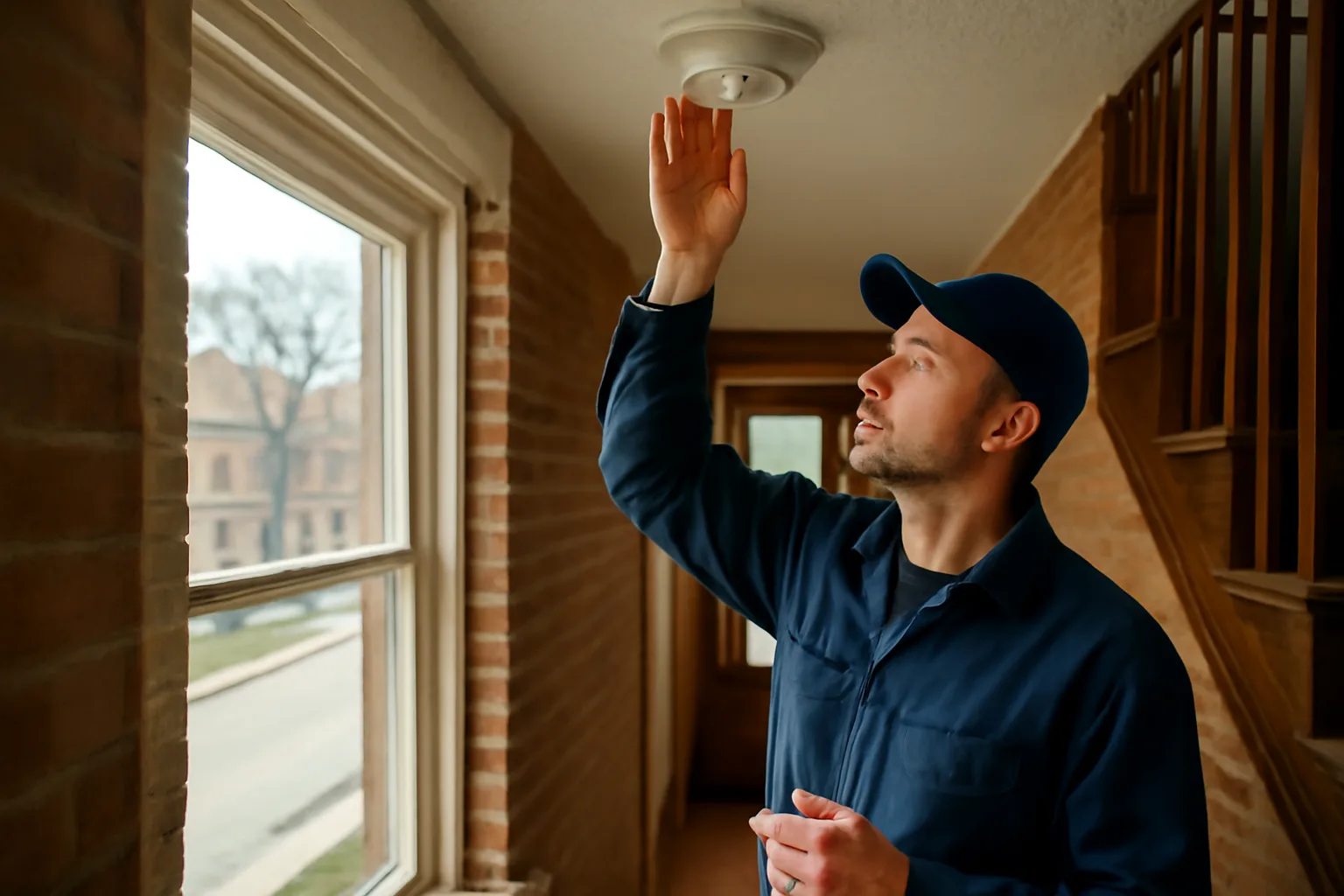
Rental inspections in Michigan cities that run these programs typically follow a checklist built around basic health and safety, not cosmetic condition. Expect an inspector to look at: - Smoke alarms and carbon monoxide alarms: presence, placement, and working condition. Michigan's Housing Law and related state code require smoke alarms in dwelling units, and CO alarm requirements attach when a unit has fuel-burning appliances or an attached garage [1].
- Electrical: exposed wiring, overloaded panels, missing GFCI protection near water sources, and outlet condition.
- Plumbing: working fixtures, no active leaks, functioning water heater with a proper relief valve.
- Heating: a working, safely vented heat source adequate for the climate. Michigan winters make this a real focus point, not a formality.
- Structural and exterior: foundation issues, roof condition, peeling exterior paint (a lead concern in older housing stock), and stair/railing integrity.
- Egress: every bedroom needs a legal second way out, usually a window meeting minimum size and sill height rules. This is one of the most common fail points in older Lansing housing, a lot of which predates modern egress code.
- Interior condition: broken windows, missing handrails, pest evidence, and general disrepair. A general landlord primer on what inspectors look for during any rental walkthrough is worth reading before your first inspection: what can a landlord look at during an inspection.
How often does Lansing inspect rental properties?
Inspection cycles for rental housing in Michigan cities commonly run anywhere from annually to every three years, depending on the unit's compliance history and the specific ordinance. Some cities extend the interval for owners with a clean track record and shorten it for repeat violators. Lansing's exact cycle length is set by its own ordinance under the Housing and Premises chapter [2], and it can be revised by city council. Don't assume the interval you were told at your last inspection still applies at your next one. Confirm the current cycle length, and whether your specific unit qualifies for an extended interval, with the Lansing rental licensing office directly. A new rental unit (one that's never been registered) will need an initial inspection before it can legally be occupied, regardless of where it falls in the standard cycle.
How much does a Lansing rental license or inspection cost?
| Initial registration fee (per property or per unit) | Charged once when you first register a rental | |
|---|---|---|
| Per-unit inspection fee | Usually charged each cycle, sometimes annually | |
| Reinspection fee | Charged if the unit fails and needs a follow-up visit | |
| Late registration penalty | Charged if you rent before registering | |
| Certificate renewal fee | Charged when your compliance certificate expires | A lot of small landlords get burned by the reinspection fee specifically. If your unit fails on something minor like a missing GFCI outlet, fixing it and scheduling a reinspection often costs less in dollars than in lost time, since your unit generally can't be legally rented (or in some cities, can't have rent collected on a new tenancy) until the certificate is issued. |
Registration fees, per-unit inspection fees, and reinspection fees for failed inspections all vary by city and change periodically through ordinance amendment or fee schedule updates. Because Lansing's specific dollar amounts are subject to change and we won't guess at figures that could be wrong by the time you read this, confirm current fees with the Lansing rental licensing office before budgeting. What you should ask for specifically when you call: | Fee type | Why it matters |
How do I register a rental property with the city of Lansing?
The general sequence in Michigan cities with mandatory rental registration looks like this, though Lansing's specific forms and portal will have its own names: 1. Identify every unit you own that qualifies as a rental (this usually includes single-family homes you rent out, more than multi-unit buildings). 2. Submit a registration application to the city's code compliance or rental housing office, along with the initial fee. 3. Schedule the initial inspection. Some cities let you pick a window; others assign a date. 4. Fix any violations found during the walkthrough. Minor items (a missing alarm battery, a loose handrail) often get a short cure period; structural issues take longer. 5. Pass reinspection and receive your certificate of compliance or rental license. 6. Renew on the city's set cycle, and re-register any time ownership changes hands. Before your inspection date, walk the unit yourself with the checklist in mind. Test every smoke and CO alarm, check every window in a bedroom actually opens and is large enough to count as egress, and look under sinks for slow leaks. A $79 one-time City Rental License & Inspection Prep Packet exists specifically for this pre-inspection walkthrough step if you'd rather work from a structured checklist than start from scratch: /rental-packet-builder.
What happens if I skip registration or fail inspection in Lansing?
Cities with mandatory rental programs generally have real enforcement teeth, more than paperwork consequences. Common outcomes for noncompliance in Michigan municipalities include daily fines that accrue until the violation is fixed, a hold on your ability to obtain or renew a certificate of occupancy, and in some cities, a legal barrier to filing an eviction for nonpayment of rent if the unit isn't properly licensed. Michigan courts have addressed the licensing-and-eviction interaction in various contexts over the years, and some local ordinances explicitly tie code compliance status to a landlord's ability to pursue certain remedies. This is exactly the kind of detail where you want current local guidance, not a general summary, because it directly affects your legal options if a tenant stops paying. Talk to a landlord-tenant attorney licensed in Michigan if you're facing a fine, a stop-rent order, or a compliance-linked eviction problem; this article isn't legal advice. For general background on what tenants without a lease are still owed, see tenants rights and tenant rights.
What can a landlord look at during an inspection (and what can't they)?
During a city compliance inspection, the inspector (not you) has the authority to check the specific systems the ordinance covers: smoke and CO alarms, electrical, plumbing, heating, structural elements, and egress. They're not there to judge your tenant's housekeeping or count how many dishes are in the sink. When you as the landlord do your own periodic unit walkthrough (separate from the city inspection), the same general boundaries apply everywhere in the U.S.: you can inspect the condition of the unit and check for lease violations or damage, but you generally can't search personal belongings, show up unannounced without proper notice, or use an inspection as pretext for harassment. Requirements on landlord entry notice vary by state; many states set a minimum of 24 hours' written notice for non-emergency entry, though the exact figure and format depend on your state's statute, so check your specific state code rather than assuming a number. In Ohio specifically, landlords are bound by the Ohio Landlord-Tenant Act, which spells out what a landlord cannot do, including entering without reasonable notice or entering at unreasonable times, retaliating against a tenant for exercising legal rights, or shutting off utilities to force a tenant out [3]. If you own property in Ohio, don't assume Michigan's or Lansing's landlord entry rules apply; each state's landlord-tenant act stands on its own.
How much notice does a landlord have to give before entering a rental unit?
There's no single national answer here; it's set state by state. Many states require at least 24 hours' notice for routine, non-emergency entry (repairs, showings, inspections), but the exact hours, whether notice must be written, and what counts as an emergency exception all vary by statute. Some states have no statutory notice requirement at all and instead rely on lease terms or general 'reasonable notice' case law. For a Lansing-specific rental inspection scheduled by the city itself, the notice process is set by municipal ordinance, and the city typically coordinates directly with the property owner (not the tenant) to schedule access. As the landlord, you're then responsible for giving your tenant proper notice under state law before the inspector arrives, since you still need to get into the unit. Before any tenant-facing entry, check Michigan's specific landlord-tenant statute or your state's equivalent rather than relying on a generic '24 hours' rule of thumb; some states specify 48 hours, and some carve out different rules for showings versus repairs versus inspections.
What is landlording, and what is a landlord, exactly?
A landlord is a person or entity that owns residential or commercial property and rents it to a tenant in exchange for payment, typically under a lease agreement. Landlording is the ongoing work of managing that relationship and that asset: collecting rent, maintaining the property, handling repairs, following state and local law, and dealing with turnover. It's a legal role with real obligations attached, more than a source of passive income. Depending on your city and state, being a landlord can mean registering your rental with the municipality (as in Lansing), carrying specific insurance, maintaining habitability standards under your state's housing code, and following strict rules around security deposits, notice periods, and eviction procedure. A lot of first-time landlords underestimate how much of the job is administrative rather than physical. Between registration renewals, inspection scheduling, lease compliance, and record-keeping, the paperwork side of landlording in a licensed city like Lansing is genuinely a part-time job, especially in year one.
How do you become a landlord, and how do you do it well?
Becoming a landlord legally starts before you ever collect rent. The basic sequence: 1. Buy or already own residential property you intend to rent out. 2. Check whether your city requires rental registration or licensing (as Lansing does) before you can legally rent. 3. Register with the city if required, and schedule any mandatory inspection. 4. Understand your state's landlord-tenant law: security deposit limits and handling rules, notice periods for entry and for ending a tenancy, habitability obligations, and eviction procedure. 5. Get a legally sound lease in place (a lawyer or a reputable state-specific template, not a generic form pulled from a random site). 6. Get proper insurance, specifically a landlord (dwelling) policy, not a standard homeowner's policy, which typically excludes rental use. 7. Screen tenants consistently and legally under the Fair Housing Act, which prohibits discrimination based on race, color, national origin, religion, sex, familial status, or disability [4]. 'Doing it well' mostly comes down to being boring and consistent: same screening criteria for every applicant, same notice process every time, maintenance requests logged and handled promptly, and city compliance renewed before it lapses rather than after you get a citation. For a broader walkthrough of the landlord role, see landlord and landlord landlords.
Who is responsible for a rental property walkthrough inspection in California?
In California, the landlord is generally responsible for arranging and conducting move-in and move-out walkthrough inspections, and the tenant has a statutory right to participate. California Civil Code section 1950.5 gives tenants the right to request an initial inspection before move-out, with the landlord required to give at least 48 hours' written notice of that inspection and to provide the tenant an itemized list of deficiencies found, so the tenant has a chance to fix them before the final deposit deduction [5]. This is distinct from a city-mandated rental housing inspection like Lansing's, which is conducted by a government inspector to check code compliance, not by the landlord and tenant together to document unit condition for deposit purposes. If you own property in both a licensed city and California, understand that these are two entirely separate inspection systems with different purposes, different participants, and different legal authority behind them.
Why do landlords require renters insurance?
Landlords require renters insurance mainly to shift liability and personal property risk away from themselves. A standard landlord dwelling policy covers the building and the landlord's own liability, but it doesn't cover a tenant's personal belongings if there's a fire, burst pipe, or theft, and it may not fully cover a tenant's liability if they cause damage or injury to a guest. Requiring renters insurance (commonly with a modest liability minimum, often in the range of $100,000, though this varies by landlord and lease) reduces the odds that a tenant's uninsured loss turns into a dispute with the landlord over who pays, and it gives the landlord a second source of recovery if the tenant's negligence causes property damage. It's a cheap requirement to enforce (renters insurance policies commonly run in the range of roughly $15 to $30 a month depending on coverage and location) and a lot of landlords treat it as a standard lease condition alongside proof of income and screening. Whether you can legally require it, and how you enforce it, depends on your state and your lease language; it's not universally mandated by law the way rental registration is in cities like Lansing.
What rights do tenants have without a lease?
A tenant without a written lease, often called a month-to-month or at-will tenant depending on the state, still has real legal protections. They're not unprotected just because nothing is signed. Generally, tenants without a lease retain the right to habitable housing (working plumbing, heat, structural safety), protection from illegal lockouts or utility shutoffs, the right to proper notice before the tenancy is ended (commonly 30 days for month-to-month arrangements, though this varies by state and by how long the tenancy has run), and protection from retaliation for reporting code violations or exercising legal rights. What a no-lease tenant typically doesn't have is a locked-in rent amount or term; a landlord can usually raise rent or end a month-to-month tenancy with proper statutory notice, since there's no lease term protecting against it. The specific notice period, and any local rent stabilization protections, depend entirely on your state and city. In a licensed rental city like Lansing, the unit still has to meet the housing code and pass inspection regardless of whether the tenant has a signed lease. For more, see renters rights.
Frequently asked questions
Does every rental unit in Lansing need to be inspected, even a single rented room?
Most Michigan rental registration ordinances, including cities structured like Lansing, cover any dwelling unit rented to someone other than an immediate family member, which often includes single rooms in owner-occupied houses. Whether a specific arrangement is exempt depends on Lansing's current ordinance language, so confirm directly with the city's rental licensing office rather than assuming a single-room rental is automatically exempt.
Can I rent out my unit in Lansing while waiting for the inspection to be scheduled?
Generally, no. Cities with mandatory rental licensing typically require the certificate of compliance be issued before, or very shortly after, occupancy begins, and renting before registration is usually itself a violation subject to fines. Confirm the specific timing rule with Lansing's code compliance office before signing a new lease on an unregistered unit.
What happens if my Lansing rental fails inspection?
You'll typically get a written list of violations and a deadline to fix them, followed by a reinspection (usually for an added fee). Minor issues like a dead smoke alarm battery often have a short cure window; structural or major electrical issues may require a longer timeline and possibly a permit from the city's building division.
Does Lansing require carbon monoxide detectors in rental units?
Michigan's Housing Law framework and related state and local codes generally require CO alarms in dwellings with fuel-burning appliances (furnace, water heater, stove) or an attached garage. Confirm the exact placement and testing requirements Lansing's inspectors enforce, since specific alarm-type and placement rules can be set at the local level.
How do I find out if my Lansing rental property is currently registered?
Contact the Lansing code compliance or rental housing office directly and ask for the registration status by address. Don't assume a prior owner's registration carries over to you; ownership changes typically trigger a re-registration requirement in cities with these programs.
What is landlording?
Landlording is the ongoing work of owning and managing rental property: collecting rent, handling maintenance and repairs, following state and local housing law, managing tenant turnover, and keeping the property compliant with any city registration or inspection requirements, such as Lansing's rental housing program.
What is a landlord?
A landlord is the owner of a residential or commercial property who rents it to a tenant under a lease or rental agreement in exchange for payment. The landlord holds legal responsibilities for habitability, repairs, and compliance with state and local landlord-tenant law.
How much notice does a landlord have to give before entering a rental unit?
It depends on your state's statute. Many states require at least 24 hours' notice for routine non-emergency entry, though some require 48 hours or specify different rules for repairs versus showings. Emergencies (fire, active flooding) generally don't require advance notice. Check your specific state's landlord-tenant law for the exact figure.
What can a landlord look at during an inspection?
A landlord conducting a routine unit inspection can generally check the condition of the property: appliances, fixtures, signs of damage, smoke and CO alarm function, and lease compliance. They generally cannot search personal belongings or use the inspection as a pretext to harass a tenant. A city compliance inspector, separately, checks specific code items like electrical, plumbing, and egress.
What can a landlord not do in Ohio?
Under Ohio's Landlord-Tenant Act, a landlord cannot enter without reasonable notice and at a reasonable time except in emergencies, cannot shut off utilities or change locks to force a tenant out, cannot retaliate against a tenant for reporting code violations or joining a tenant organization, and must maintain the unit in a fit and habitable condition.
Who is responsible for a rental property walkthrough inspection in California?
The landlord is responsible for conducting move-in and move-out walkthroughs, and under California Civil Code section 1950.5, the tenant has the right to request a pre-move-out inspection with at least 48 hours' written notice, giving the tenant a chance to fix flagged issues before final deposit deductions.
Why do landlords require renters insurance?
Renters insurance covers the tenant's personal belongings and personal liability, which a landlord's own dwelling policy typically doesn't cover. Requiring it reduces disputes over who pays after a fire, leak, or theft, and gives the landlord a second avenue of recovery if the tenant's negligence causes damage.
What rights do tenants have without a lease?
Tenants without a written lease still have the right to habitable housing, protection from illegal lockouts and retaliation, and proper statutory notice before the tenancy ends, commonly around 30 days for month-to-month arrangements depending on the state. They generally lack a fixed, locked-in rent or term.
Sources
- City of Lansing, Michigan Code of Ordinances, Chapter 1460 (Housing and Premises): Lansing's City Code contains a housing and premises chapter setting registration, inspection, and certificate requirements for rental dwellings
- Ohio Revised Code Section 5321.04 (Landlord obligations): Ohio's Landlord-Tenant Act sets rules on landlord entry notice, retaliation, and utility shutoffs
- 42 U.S.C. Section 3604, Fair Housing Act (discriminatory practices): The Fair Housing Act prohibits discrimination based on race, color, national origin, religion, sex, familial status, or disability
- California Civil Code Section 1950.5: California tenants have the right to request a pre-move-out inspection with at least 48 hours' written notice
- Ohio Revised Code Section 5321.05 (Tenant obligations): Ohio's Landlord-Tenant Act also sets tenant obligations that pair with landlord entry and habitability rules