Last updated 2026-07-25
TL;DR
Denver requires a rental license for almost every residential rental unit, and licensing requires either a self-certification or a third-party inspection showing the unit meets Denver's minimum housing standards. Fees, inspection cycles, and deadlines vary by property type; confirm current numbers with Denver's Excise and Licenses Department before you apply or renew.
Does Denver require rental property inspections?
Yes. Denver's rental licensing ordinance, passed in 2021 and phased in through 2023, requires almost every owner of residential rental property in the city and county of Denver to hold a rental license before renting the unit out. Getting that license means proving the unit meets Denver's minimum housing standards, either through a licensed third-party inspector's report or, for some property types, an owner self-certification checklist [1]. This applies whether you rent out a single room, a single-family house, a duplex, or a ten-unit building. Denver Municode Chapter 27, Article V is the legal basis, and the city phased in enforcement by property size, starting with larger buildings first and moving to smaller ones (including single unit and duplex rentals) by January 1, 2023 [1]. If you're managing property in more than one licensing city, this pattern is common: a license plus an inspection or self-cert, tied to a code standard. See our broader city guides for how other cities structure similar programs, since the paperwork and lead time tend to look similar even when fees differ.
What does a Denver rental inspection actually check?
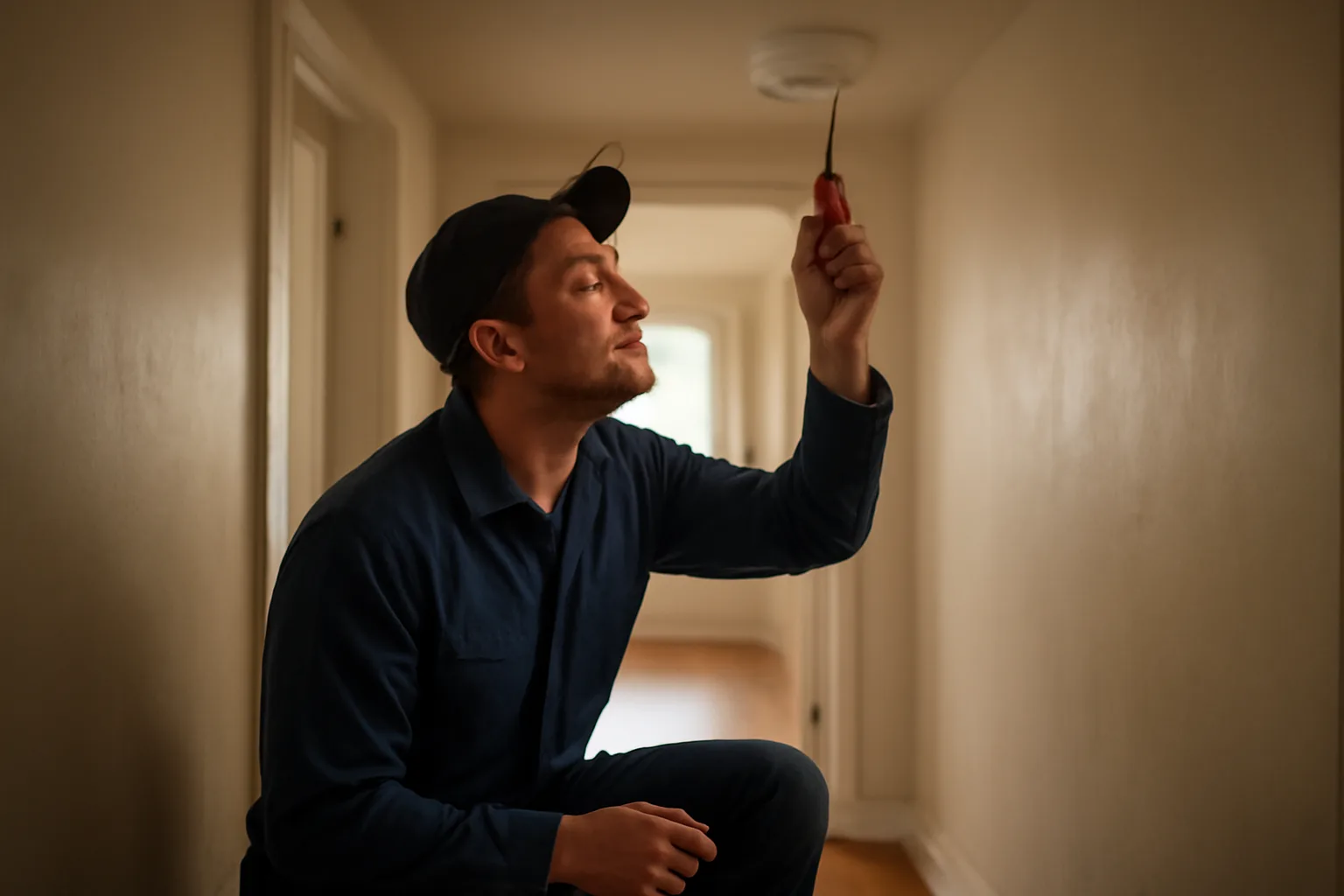
A Denver rental inspection (or the self-certification checklist that substitutes for one, depending on your property type) looks at whether the unit meets minimum habitability standards, not whether it's nicely decorated or updated. Inspectors and the self-cert checklist typically cover things like working smoke and carbon monoxide detectors, functioning heat, hot water, electrical safety, no active leaks or pest infestations, secure locks on exterior doors, and window and exit safety [1]. This is consistent with what inspectors check in most mandatory rental inspection cities: not cosmetic finish, but the systems that make a unit safe to live in. A cracked driveway usually isn't a violation. A broken smoke detector almost always is. Denver's program allows two paths for many property types: a self-certification where the owner attests the property meets the standards using the city's checklist, or a report from a private, city-approved inspector. Which path you're eligible for depends on your property type and unit count, so check the current rules for your property class before assuming you can self-certify [1]. Multi-unit buildings above certain thresholds have historically been required to use licensed inspectors rather than self-certify. If you're preparing for a first-time license or a renewal inspection, walking your own unit ahead of time with the same checklist the city uses saves you from a failed inspection and a re-inspection fee. That's the exact kind of prep the $79 Denver-specific licensing and inspection prep packet is built around: a checklist mirrored to what your city's inspection actually covers, so you're not guessing.
How much does a Denver rental license cost?
License fees in Denver vary by property type (single unit, multi-unit tiers, accessory dwelling units, condos) and the city has adjusted fee schedules since the ordinance passed. Because these numbers change and differ by unit count and renewal status, confirm the current fee schedule directly with Denver's Excise and Licenses Department before you budget or apply [2]. As a general pattern across mandatory licensing cities, expect an application fee, a possible separate inspection or self-cert processing fee, and a renewal fee every one to two years. Late applications after Denver's phased deadlines have also triggered fines in past enforcement actions, so don't assume you have an indefinite grace period if you missed your property type's original 2023 deadline [1]. Budget for the license fee itself, plus whatever a private inspector charges if your property type requires a licensed inspection rather than self-certification. Third-party inspector rates aren't set by the city; you're hiring from Denver's approved inspector list and rates vary by company and unit size.
What happens if I don't get my Denver rental unit licensed?
Renting out a unit in Denver without the required rental license is a code violation, and the city has issued fines and can pursue further enforcement action against unlicensed landlords, including potential orders to stop renting the unit until it's brought into compliance [1]. Denver's ordinance was structured with phased compliance deadlines by property type, and after those deadlines passed, the city began enforcement including notices and fines for property owners operating without a license [1]. Beyond fines, an unlicensed rental can create real legal exposure. If a tenant disputes a lease or an eviction case in Denver and it comes out the unit was never legally licensed, that can complicate the landlord's ability to enforce the lease in court, though the exact procedural effect depends on your case and you should talk to an attorney rather than assume how a judge will rule. If you got a notice of violation or a fine, don't ignore it hoping it goes away. Licensing violations tend to compound (a late fee becomes a bigger fee, a stop-rent order becomes lost income) and the fastest fix is almost always to get the inspection or self-cert scheduled and the application filed, not to fight the fine first.
How do I become a landlord in Denver (or anywhere)?
Becoming a landlord means more than buying a rental property. In a mandatory-licensing city like Denver, it means confirming zoning allows the rental use, registering or licensing the unit with the city, passing whatever inspection or self-cert process applies to your property type, carrying appropriate insurance, understanding your state and local landlord-tenant law, and setting up a lease that actually complies with local law. Colorado state law also layers on top of Denver's local ordinance. For example, Colorado requires landlords give tenants specific notice periods before certain lease terminations and rent increases (the exact notice period depends on the tenancy type and reason), and separately regulates security deposit return timelines under C.R.S. § 38-12-103, which generally requires deposits be returned within one month of lease termination unless the lease specifies up to 60 days [2]. If you're starting from zero, the practical order is: confirm the property can legally be rented (zoning, HOA rules if applicable), get your city rental license and inspection sorted first, then build your lease and screening process, then find a tenant. Skipping the licensing step to rent faster is the single most common mistake first-time Denver landlords make, and it's the one that costs the most to fix after the fact.
What is landlording, and what does a landlord actually do?
Landlording is the practice of owning residential or commercial property and renting it to tenants in exchange for rent, along with the ongoing responsibilities that come with that: maintaining the property in habitable condition, handling repairs, managing lease agreements, collecting rent, and complying with local, state, and federal housing law. A landlord, legally, is the property owner (or an authorized agent acting on the owner's behalf) who leases real property to a tenant under a rental agreement. The landlord holds title or a legal interest in the property; the tenant holds a leasehold interest, meaning the right to occupy and use the property for the lease term, without owning it. In practice, day-to-day landlording covers a wide set of tasks: screening tenants, drafting compliant leases, collecting rent and security deposits, responding to maintenance requests, handling routine and emergency repairs, keeping the unit compliant with local habitability and licensing law (like Denver's rental license requirement), and managing the relationship through move-out, including security deposit accounting. Many landlords with one to ten units self-manage this whole process. Some hire a property manager, especially once they're managing rentals in more than one city or state, because tracking different license renewal dates, inspection cycles, and notice-period rules across jurisdictions gets complicated fast.
What rights do tenants have without a lease?
A tenant without a written lease usually still has legal protections; the absence of a written lease does not mean the absence of a tenancy or of tenant rights. In most states, a tenant paying rent and occupying a unit, even under a verbal agreement, is typically treated as a periodic tenant (commonly month-to-month), and state law fills in the terms a written lease would otherwise specify. That generally includes the right to habitable housing, the right to proper notice before eviction or lease termination, and protection from illegal lockouts or self-help eviction. In Colorado, for example, landlord-tenant law under the Colorado Revised Statutes still applies to oral or month-to-month tenancies; a landlord can't simply change the locks or remove a tenant's belongings without following the legal eviction process, regardless of whether there's a signed lease. If you're renting to someone without a written lease, understand that you likely still owe them the same habitability duties and notice requirements as if you had one. A missing lease protects nobody; it just means the terms default to whatever your state's statute says, which is often less landlord-friendly than a lease you'd have written yourself. For general reference, see landlord and tenant basics on how these defaults typically work.
Who is responsible for a rental property walk-through inspection?
This depends heavily on the context: move-in and move-out condition inspections are typically the landlord's responsibility to conduct and document, while government rental licensing inspections (like Denver's) are conducted by a city-approved third-party inspector or via owner self-certification, not by the tenant. In California specifically, state law (California Civil Code § 1950.5) requires landlords, if requested by the tenant, to conduct an initial move-out inspection before the tenant vacates, giving the tenant a chance to fix issues that could otherwise be deducted from their security deposit. The landlord must give the tenant reasonable notice of this inspection and, after it, provide an itemized statement of anticipated deductions [3]. The landlord (or their agent) is the one who performs and documents this pre-move-out walk-through; it is a landlord obligation, not a tenant one. Separately, at move-in, it's standard best practice (and required in some states) for the landlord to document unit condition with photos or a written checklist, ideally with the tenant present or given a copy to countersign, to have a clear baseline for any later deposit dispute. Denver's licensing inspections work differently: those are performed by a third-party inspector approved by the city, or self-certified by the owner using the city's checklist, and they check code compliance and habitability standards, not the tenant's personal belongings or housekeeping.
Why do landlords require renters insurance?
Landlords require renters insurance mainly to shift liability and loss risk away from themselves and their own policy. A landlord's property insurance covers the building structure; it typically does not cover a tenant's personal belongings if there's a fire, flood, theft, or burst pipe, and it usually doesn't cover a tenant's liability if they cause an accident that injures a guest or damages a neighboring unit. Requiring renters insurance (commonly with a modest liability minimum, often $100,000 in coverage, though this varies by landlord and lease) means the tenant's own policy pays out for their belongings and personal liability claims, instead of the landlord's insurer footing that bill or the landlord facing a lawsuit directly. It also reduces disputes: if a tenant's negligence (like an unattended candle) damages the unit, their renters insurance liability coverage may pay for the landlord's losses rather than that becoming an uncollectible debt. There's no federal law requiring renters insurance, and state law rarely mandates it either; it's a lease-level requirement landlords add themselves. If you require it, say so clearly in the lease and ask for proof of coverage (a declarations page) at move-in and at renewal, since policies lapse.
How much notice does a landlord have to give a tenant?
Notice periods vary by state and by the reason for the notice (routine entry, non-renewal, rent increase, lease termination for cause), so there's no single national number. Colorado, for instance, sets specific notice periods depending on tenancy length and termination reason under its landlord-tenant statutes, and many other states set their own separate periods for routine entry (commonly 24 to 48 hours' notice for non-emergency entry, though this again varies by state and isn't universal). For entry to inspect, repair, or show a unit, most states that regulate this at all require some form of "reasonable notice," and several define that explicitly. For ending a month-to-month tenancy or raising rent on one, many states require a minimum of 30 days' written notice, though some cities and states with rent stabilization or just-cause eviction laws require considerably longer notice or additional documentation. Because this varies so much by state and even by city ordinance, always check your specific state's statute and any local rent control or just-cause ordinance before sending a notice, rather than assuming a generic 30-day rule applies everywhere.
What can a landlord look at during an inspection?
During a routine maintenance or safety inspection, a landlord (or the landlord's agent, or a city inspector for a licensing inspection) can generally look at the condition and function of the unit itself: smoke and CO detectors, HVAC function, plumbing for leaks, electrical outlets and panels, visible signs of pest activity or mold, window and door locks, and general habitability conditions tied to local code. What a landlord typically cannot do during a routine inspection is search through a tenant's personal belongings, closets, drawers, or private files without cause, or use the inspection as a pretext to harass the tenant or retaliate against them (for example, scheduling inspections right after a tenant files a complaint). Most states require the inspection be for a legitimate purpose (repairs, safety checks, showing the unit to prospective tenants or buyers, license inspections) and require proper advance notice except in genuine emergencies. For a government rental licensing inspection specifically, like Denver's third-party inspection or self-cert process, the inspector or checklist is looking only at code-related habitability items (detectors, systems, structural safety), not at the tenant's housekeeping, decor, or personal property [1].
What can't a landlord do in Ohio?
Ohio's landlord-tenant law, primarily Ohio Revised Code Chapter 5321, sets out specific things a landlord cannot do. A landlord cannot shut off utilities, change the locks, or remove a tenant's belongings to force them out; this is illegal self-help eviction, and Ohio requires landlords to use the formal court eviction process instead [4]. Ohio law also requires landlords to maintain the premises in a fit and habitable condition, comply with building and housing codes affecting health and safety, keep common areas safe, and maintain electrical, plumbing, and heating systems in good working order (Ohio Rev. Code § 5321.04) [5]. A landlord who fails these duties can face a tenant's legal remedies including rent escrow actions or lease termination, depending on the circumstances. Ohio also restricts retaliatory conduct: a landlord generally cannot raise rent, decrease services, or attempt to evict a tenant specifically because the tenant complained to a government agency about a code violation or exercised a legal right under the landlord-tenant statute (Ohio Rev. Code § 5321.02) [4]. As with any state statute, exact protections and exceptions are detailed in the code itself, and a landlord operating in Ohio should read the specific sections rather than rely on general summaries.
How does Denver's inspection process compare to other mandatory rental licensing cities?
| Who inspects | City-approved third-party inspector, or owner self-cert depending on property type [1] | Government inspector, third-party inspector, or self-cert, depends on city | |
|---|---|---|---|
| Phase-in | Rolled out by property size, full compliance by Jan 1, 2023 [1] | Common pattern; larger buildings first | |
| Renewal cycle | Confirm current cycle with Denver Excise and Licenses [2] | Commonly 1 to 3 years | |
| Basis for standards | Denver Municode Ch. 27, Art. V minimum housing standards [1] | Local housing code, often modeled on international property maintenance code | If you own rentals in more than one city, don't assume the rules transfer. A self-cert checklist that works in Denver won't necessarily satisfy a different city's inspector requirement, and missing that distinction is a common way landlords get caught out on renewal in a second market. See our renters rights and tenant rights references for how tenant protections interact with these local licensing rules. |
Denver's model (city license required, third-party inspection or owner self-certification, phased in by property size) is a common structure among mandatory rental licensing cities, but the specifics (fees, cycle length, who can self-certify) vary a lot city to city. Some cities require government inspectors rather than allowing private third-party inspectors; some require re-inspection every year, others every two or three years; some allow self-certification for single-family rentals but not for multi-unit buildings. | Feature | Denver | Typical range across mandatory-licensing cities |
How do I get ready for a Denver rental inspection without failing it?
Walk the unit yourself first, using the same checklist Denver's inspectors or self-cert program uses, before you schedule the real inspection or submit your self-cert. Test every smoke and CO detector (replace batteries even if they look fine), run the heat, check all faucets and drains for leaks, check that every exterior door locks properly, and look for anything an inspector would flag as a life-safety issue, not a cosmetic one. Document what you fixed with photos and dates. If you get a failed inspection or a violation notice, having your own records of prior maintenance helps you push back on anything incorrectly cited and speeds up the re-inspection. This is exactly the gap the $79 Denver-specific Rental License and Inspection Prep Packet is meant to close: a one-time checklist and document set built around what Denver's licensing program actually asks for, so a first-time landlord isn't reconstructing the requirements from scratch or guessing what "minimum housing standards" means in practice. It's not a substitute for legal advice or a guarantee you'll pass; it's prep, the same way you'd prep for any inspection with a known checklist instead of a blind one.
Frequently asked questions
Does every rental unit in Denver need a license?
Nearly every residential rental unit in Denver needs a license under the city's rental licensing ordinance, phased in fully by January 1, 2023. There are limited exemptions depending on property type; confirm your unit's status with Denver's Excise and Licenses Department rather than assuming an exemption applies [1][2].
How often does a licensed Denver rental need re-inspection?
Renewal and re-inspection cycles depend on your property type and license terms, and Denver has adjusted its program since 2021. Confirm the current renewal cycle and whether your property type qualifies for self-certification or requires a third-party inspector with Denver's Excise and Licenses Department before your license expires [2].
Can I self-certify my Denver rental instead of hiring an inspector?
Some property types in Denver's program allow owner self-certification using the city's checklist instead of a third-party inspection, but eligibility depends on unit count and property type. Larger multi-unit buildings have historically needed a licensed third-party inspector rather than self-cert. Confirm which path applies to your property with the city [1].
What happens if I rent out a unit in Denver without a license?
Denver can issue fines and pursue further enforcement, including potentially requiring you to stop renting the unit until it's licensed, for operating an unlicensed rental after the applicable compliance deadline. It can also complicate lease enforcement in a later eviction dispute. Get the license process started immediately rather than waiting out a notice [1].
How do I become a landlord if I've never rented out property before?
Confirm zoning allows the rental use, then handle city licensing and any required inspection before advertising the unit. After that, learn your state's landlord-tenant law on notice periods, security deposits, and habitability duties, build a compliant lease, and only then screen tenants. Skipping licensing to rent faster is the most expensive mistake first-timers make.
What is landlording exactly?
Landlording is owning residential or commercial property and renting it out to tenants for income, along with the ongoing legal and practical duties that come with it: maintaining habitability, handling repairs, managing leases and rent collection, and complying with local licensing, state landlord-tenant law, and federal fair housing law.
What rights does a tenant have if there's no written lease?
A tenant without a written lease is usually still a legal tenant under state law, typically treated as month-to-month if paying rent regularly. They generally keep the right to habitable housing, proper notice before eviction, and protection from illegal lockouts, since state statute fills in terms a lease would otherwise specify.
Who does the move-out inspection, the landlord or the tenant?
The landlord (or their agent) is responsible for conducting and documenting move-out condition inspections. In California, Civil Code § 1950.5 requires landlords to offer tenants an initial move-out inspection before they vacate, if requested, giving tenants a chance to fix issues before deposit deductions are calculated [4].
Why do landlords require tenants to carry renters insurance?
Landlords require it to move liability off their own policy: a landlord's building insurance generally doesn't cover a tenant's belongings or personal liability. Renters insurance covers the tenant's property loss and liability claims (like an accidental fire), reducing disputes and uncollectible damages the landlord would otherwise absorb.
How much notice does a landlord have to give before entering a rental unit?
This depends entirely on state law; there's no single national standard. Many states that regulate entry notice require 24 to 48 hours for non-emergency entry, and some just require "reasonable notice" without a specific number. Check your state's landlord-tenant statute for the exact requirement where your property is located.
What can a landlord check during a routine inspection?
A landlord can generally check the unit's safety systems and condition: smoke and CO detectors, HVAC, plumbing, electrical, pest or mold signs, and door and window locks. They generally cannot search personal belongings, drawers, or private files without cause, and can't use inspections as pretext for harassment or retaliation.
What is a landlord not allowed to do in Ohio?
Under Ohio Revised Code Chapter 5321, a landlord cannot shut off utilities, change locks, or remove belongings to force a tenant out (illegal self-help eviction); must use the court eviction process instead. Landlords also can't retaliate against tenants for code complaints and must maintain the unit in habitable, code-compliant condition [5].
Does Denver require renters insurance for tenants?
Denver's rental licensing ordinance itself doesn't mandate tenant renters insurance; that's a lease-level requirement individual landlords choose to add. Some Denver landlords require it as a lease condition for liability protection, but it isn't part of the city's rental license or inspection requirements.
Sources
- City and County of Denver, Denver Municipal Code Chapter 27, Article V (Rental Licensing): Denver requires a rental license for residential rental property, with minimum housing standards verified by third-party inspection or self-certification, phased in by property type through Jan 1, 2023
- Colorado Revised Statutes § 38-12-104, Colorado General Assembly, LexisNexis Colorado Revised Statutes online reference: Current Colorado statutory text governing landlord security deposit and related property obligations, as codified in Title 38
- California Civil Code § 1950.5: California landlords must offer tenants an initial move-out inspection before lease end if requested, then provide itemized deduction statement
- Ohio Revised Code Chapter 5321 (Landlord and Tenant): Ohio landlord duties to maintain habitability, prohibition on self-help eviction, and prohibition on retaliatory conduct
- Ohio Revised Code § 5321.04, Obligations of landlord: Ohio landlords must comply with building and housing codes and maintain electrical, plumbing, and heating systems in good working order