Last updated 2026-07-26
TL;DR
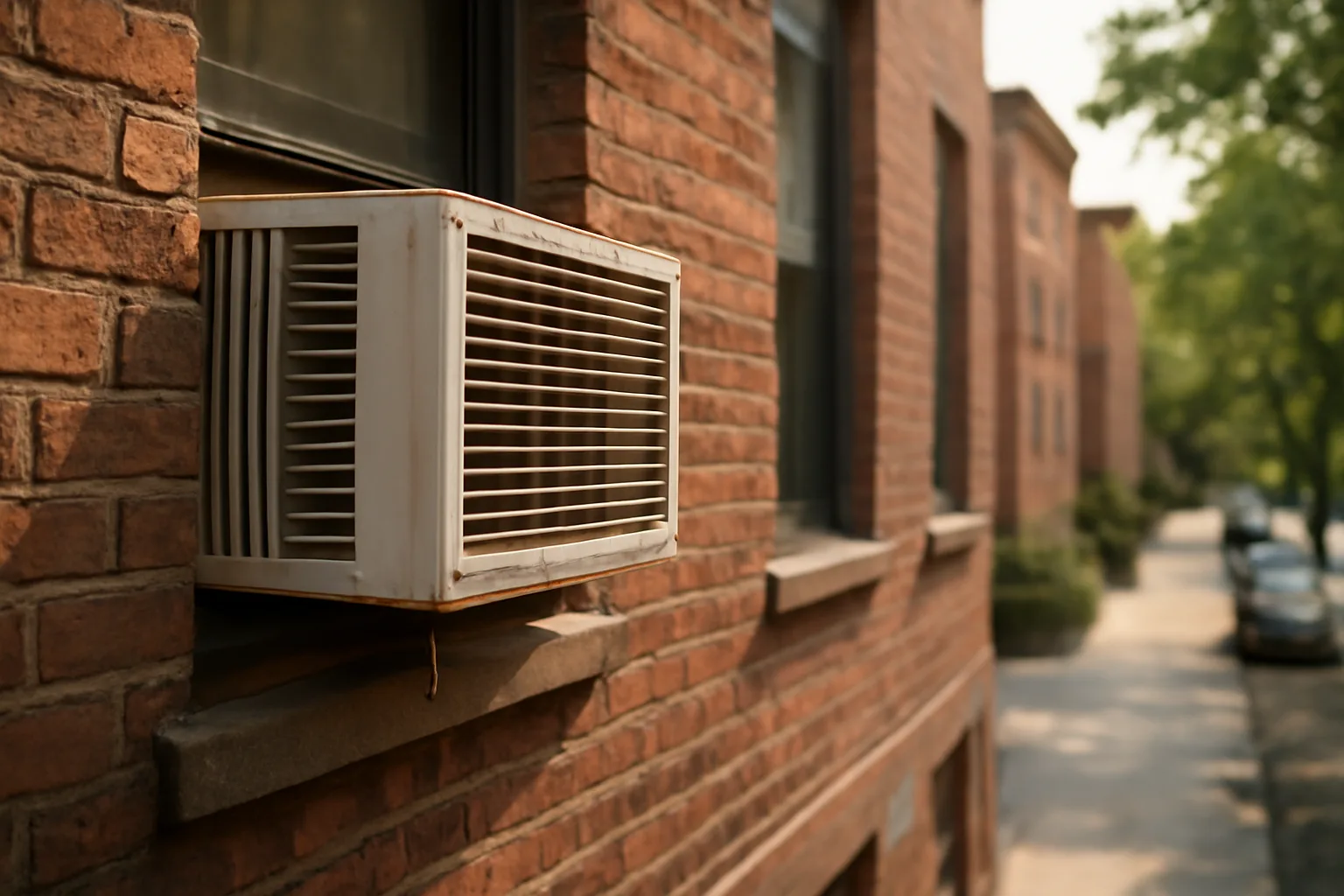
There's no federal law requiring landlords to provide air conditioning. Most states leave it up to local ordinance or lease terms. A small number of cities (like Dallas, Phoenix in some cases, and Palm Springs) do require cooling equipment or set maximum indoor temperatures. If your lease includes AC as an amenity, you generally must maintain it under your state's habitability rules.
is a landlord required to provide air conditioning?
Nationally, no. There is no federal statute that requires residential landlords to install or provide air conditioning. Habitability law under most state landlord-tenant codes traditionally covers heat, working plumbing, electrical safety, and weatherproofing, but cooling is treated differently because it developed later as a "comfort" expectation rather than a life-safety baseline in most of the country [1]. That said, a growing number of local governments have started treating extreme heat as a habitability issue, especially after heat waves tied to record numbers of heat deaths. Some cities require rental units to have a functioning cooling source (window unit, central air, or evaporative cooler in dry climates) if the landlord provides one, or they cap the maximum indoor temperature a rental can reach before it's a violation. The practical answer for any individual landlord is: check your specific city and state. If you're in a mandatory rental-licensing city, the inspection checklist your city uses will tell you exactly what's required, because inspectors check against that list, not against a national standard. If your city doesn't require AC at all, and your lease doesn't promise it, you're generally in the clear to skip it. But if you already installed window units or central air as an amenity, most states will hold you to keeping it working under the implied warranty of habitability, discussed more below.
which cities and states actually require landlords to provide ac?
| Dallas, TX | Rental properties must have air conditioning capable of cooling to 85°F or lower under the city's minimum housing standards; landlords must maintain existing units [2] | Dallas City Code, Ch. 27 | |
|---|---|---|---|
| Phoenix, AZ | Landlord must maintain a cooling system capable of a specific temperature (commonly cited around 82°F) if one is provided or built in [3] | Phoenix City Code, Ch. 39 | |
| Palm Springs, CA | Rental units must have a cooling system able to maintain 80°F or below in habitable rooms [4] | Palm Springs Municipal Code | |
| Most other U.S. cities | No specific AC mandate; heat (usually 68°F minimum) is the regulated side, cooling is not | Varies by state and city | Notice the pattern: it's mostly hot-climate cities in Texas, Arizona, and desert California that have added cooling requirements, because summer indoor heat there is a genuine safety issue, more than discomfort. Cooler and temperate-climate cities (most of the Midwest and Northeast) still regulate heat only. If you own in one of these hot-climate cities, don't guess. Pull the actual municipal code section or call your city's code enforcement or rental licensing office directly, because the exact temperature threshold and which unit types count (window unit vs. central) varies by ordinance text, not by general reputation. |
A short list of jurisdictions have specific cooling rules on the books. This is not exhaustive and ordinances change, so confirm with your city rental licensing office before relying on any of this for a specific unit. | Jurisdiction | Rule (general summary) | Source |
what counts as habitability, and does ac fall under it?
Habitability is the legal floor of livable conditions a landlord must provide, derived from the implied warranty of habitability that most states recognize either by statute or case law. It typically covers structural safety, weatherproofing, working plumbing and electrical systems, adequate heat, and freedom from serious pest infestation [5]. Cooling is inconsistently included. Some states have started folding extreme heat into habitability through health and safety code updates, especially as heat-related mortality data gets more attention from public health agencies. The CDC has flagged extreme heat as the leading weather-related cause of death in the U.S. in many recent years, which is part of why cities in hot climates have moved on this issue faster than legislatures nationally [6]. If air conditioning was included in your listing, lease, or was a fixture when the tenant moved in, most states will treat it as part of the bargained-for condition of the unit, meaning you have to keep it in working order even if no ordinance forces you to have installed it in the first place. This is different from installing AC because a tenant asks nicely. That's a negotiation, not a legal obligation, unless your city says otherwise.
what happens if my lease already includes ac as an amenity?
If you advertised the unit with air conditioning, or the lease lists AC as an included appliance or utility, you generally have to maintain it in working condition for the term of the tenancy. This falls under ordinary maintenance obligations under most state landlord-tenant statutes, separate from any city-specific cooling mandate. A broken AC unit in a lease that promises air conditioning is a maintenance issue, and depending on your state, a tenant may have remedies like rent withholding, repair-and-deduct, or filing a code complaint if you don't fix it within a reasonable time after notice. "Reasonable time" is usually defined by state statute or case law, often something like 14 to 30 days for non-emergency repairs, though a broken AC during a heat wave in a hot-climate city may be treated with more urgency by a court or code inspector. The safest move as a landlord: if you don't want an ongoing AC maintenance obligation, don't advertise or lease the unit with AC included, and be explicit in the lease that any tenant-installed window unit is the tenant's own equipment and responsibility, subject to your building's rules on window units (some cities and HOAs restrict window-unit installation for structural or fire code reasons).
what can a landlord look at during a rental inspection?
During a licensing or code inspection, inspectors generally check items tied to health, safety, and structural condition, not cosmetic preferences. Typical inspection scope includes smoke and carbon monoxide detectors, electrical panel and outlet safety, plumbing leaks and hot water function, heating system operation, window and door locks, means of egress (fire escape routes), and pest or mold evidence [7]. Whether AC is on the checklist depends entirely on your local ordinance. In a city like Dallas or Palm Springs with a cooling mandate, expect inspectors to test that the unit actually cools to the required threshold, more than that a unit is physically present. In cities without a cooling requirement, AC usually isn't part of the pass/fail criteria at all, even if the inspector notices it. Inspectors generally cannot look through personal belongings, closets, or areas unrelated to code compliance, and most jurisdictions require the inspection to be limited to habitability and safety systems, not a general search. If you're preparing for a first inspection, pulling your specific city's checklist ahead of time saves a lot of guessing; this is exactly the kind of city-specific detail that varies enough that a generic list won't get you all the way there. Our $79 City Rental License & Inspection Prep Packet is built around exactly this problem: matching your prep to what your specific city's inspector actually checks, instead of a national assumption.
who is responsible for the rental property walk-through inspection in california?
In California, move-in and move-out condition inspections are primarily a landlord responsibility under California Civil Code Section 1950.5, which governs security deposit itemization and requires landlords to document the unit's condition [8]. For move-out, tenants have a right to request a pre-move-out inspection with at least 48 hours' notice, giving them a chance to fix issues before the landlord makes deductions from the security deposit. Separately, in cities with mandatory rental licensing or inspection programs (common in parts of California including several Bay Area and Southern California cities), a government-employed or city-contracted inspector conducts the health and safety compliance inspection, which is different from the landlord's own move-in/move-out documentation walk-through. Landlords are responsible for scheduling and being present for that municipal inspection, and for fixing any violations cited. Don't confuse the two: the landlord's own condition walk-through protects your security deposit deductions, while the city's licensing inspection protects the tenant's right to a code-compliant unit and can result in fines if you skip it or fail it repeatedly.
what is landlording, and what is a landlord, exactly?
A landlord is the owner (or authorized agent of the owner) of real property who leases that property to a tenant in exchange for rent, taking on legal obligations around habitability, quiet enjoyment, and, in many cities now, registration or licensing of the rental unit with a local agency. "Landlording" is the informal industry term for the ongoing work of managing rental property: screening tenants, collecting rent, handling repairs, staying current on local ordinance changes, and dealing with turnover. It's part legal compliance, part light construction management, part customer service. Landlords with one or two units often do all of this themselves; larger owners hire property managers. The legal side matters more than most new landlords expect going in. If your city requires rental registration or licensing (increasingly common; see our city guides for local specifics), you're more than a private property owner anymore, you're a regulated business in the eyes of code enforcement, with fines attached to non-compliance.
how do you become a landlord, and how do you actually be one day to day?
Becoming a landlord legally usually means: owning or co-owning residential property, complying with any state or local landlord registration requirements, carrying appropriate insurance (a landlord policy, not a standard homeowner's policy, since most homeowner policies exclude tenant-occupied risk), and, in licensing cities, registering the unit and passing an initial inspection before you can legally rent it out. Day to day, being a landlord means keeping the unit habitable (heat, water, structural safety, and locally required items like AC where mandated), responding to repair requests within your state's legal timeframe, handling security deposits per your state's rules (deposit caps and return deadlines vary widely, for example California caps deposits at one month's rent for unfurnished units under a 2024 law change, AB 12 [9]), and following your state's required notice periods for entry, rent increases, and lease termination. Many first-time landlords underestimate the paperwork side. If your city requires a rental license or registration, that's usually a separate step from anything your state requires, with its own fee, its own inspection cycle, and its own renewal deadline. Missing a renewal is one of the most common ways small landlords get hit with fines they didn't see coming.
what rights do tenants have without a signed lease?
Tenants without a written lease still have rights. In every state, an oral or month-to-month tenancy is legally recognized once rent is accepted and possession is given, and the tenant is entitled to the same basic habitability protections as a tenant with a written lease: working utilities, safe structure, and freedom from illegal lockouts or self-help eviction [10]. Without a written lease, the tenancy typically defaults to month-to-month under state law, meaning either party can end it with proper notice (commonly 30 days, though this varies by state and by how long the tenant has lived there). Rent amount and due date are usually whatever was agreed upon or established by a pattern of payment. What a no-lease tenant does NOT automatically get is any specific amenity, like air conishing, unless it was part of the actual unit as rented or falls under a local ordinance requirement. A tenant without a lease can't claim you promised AC if you never provided it and no local law requires it.
why do landlords require renters insurance?
Landlords require renters insurance mainly to shift liability risk. A standard landlord insurance policy covers the building and the landlord's own property, but generally excludes the tenant's personal belongings and often narrows the landlord's liability exposure if the tenant's negligence causes damage (a kitchen fire, a bathtub overflow, a break-in). Renters insurance typically covers the tenant's personal property, provides liability coverage if the tenant is found responsible for damage to the unit or injury to a guest, and often covers additional living expenses if the unit becomes uninhabitable during repairs. Requiring it is legal in nearly all states, and many landlords write it into the lease as a condition of tenancy, with proof of a policy due before move-in and at each renewal. It's genuinely one of the cheaper protections available to a small landlord. Renters insurance policies commonly run in the range of $15 to $30 a month depending on coverage and location, a small ask relative to the liability exposure it removes from your side.
how much notice does a landlord have to give before entering a unit?
Notice requirements vary by state, and there's no single national number. California requires "reasonable notice," which the state defines by default as 24 hours in writing for non-emergency entry under Civil Code Section 1954 . Many other states use a similar 24-hour standard, though some (like Arizona, under A.R.S. 33-1343) also specify 2 days for certain entry purposes. Emergency entry (fire, flooding, a reported gas leak) is generally exempt from advance notice requirements in every state, since the point of notice rules is to protect routine privacy, not to block emergency response. The safe practice for any landlord, regardless of state minimum: put your notice policy in writing in the lease, give notice by a method you can document (text with timestamp, email, or written notice left at the door), and never assume verbal notice the day before counts as sufficient if your state statute specifies a written or 24-hour minimum. If you're unsure of your state's exact number, check your state law context resources or your state's tenant-landlord statute directly before entering without a clear notice trail.
what can a landlord not do in ohio?
Ohio's landlord-tenant law (Ohio Revised Code Chapter 5321) prohibits several specific landlord actions. A landlord cannot shut off utilities, change the locks, or remove a tenant's belongings to force them out without going through the formal eviction process in court; this is commonly called "self-help eviction" and it's illegal in Ohio as in nearly every state . Ohio landlords also cannot retaliate against a tenant for exercising a legal right, such as filing a code complaint or joining a tenant union; ORC 5321.02 specifically bars retaliatory conduct like raising rent or terminating a tenancy because a tenant reported a housing code violation . Landlords in Ohio also have to return the security deposit (or an itemized list of deductions) within 30 days of the tenancy ending, under ORC 5321.16. Ohio doesn't have a statewide law requiring landlords to provide air conditioning. Some Ohio cities may have their own housing code provisions worth checking, but at the state level, heat (not cooling) is the regulated temperature issue.
if my city doesn't require ac, should i provide it anyway?
That's a business decision, not a legal one, in most cities. Providing central air or even window units can raise rent competitiveness and reduce turnover, especially in markets where summer heat is becoming a bigger tenant complaint than it used to be. It's worth weighing against your actual maintenance capacity: once you provide AC, you generally take on the obligation to keep it working, whether or not any ordinance forces you to. If you're on the fence, a middle option many small landlords use: allow tenant-installed window units (with lease language about installation method and who's responsible for the unit itself) rather than installing central air you now have to service. This keeps you out of the ongoing maintenance obligation while still letting tenants cool the unit. Whatever you decide, put it in writing. Vague lease language about "cooling" or "climate control" creates ambiguity that tends to resolve against the landlord if a dispute ends up in front of a housing court or code enforcement officer.
Frequently asked questions
Is a landlord required to provide air conditioning by federal law?
No. There is no federal statute requiring residential landlords to provide air conditioning. Any requirement comes from state law, and more commonly, specific city ordinances, mostly in hot-climate cities like Dallas, TX and Palm Springs, CA. Check your city's rental housing code directly since this is a local, not national, requirement.
Can a landlord be fined for not having working air conditioning?
Only if a local ordinance requires AC and the unit fails an inspection, or if the lease promised AC and the landlord failed to maintain it under state habitability rules. In cities without a cooling mandate, there's typically no fine tied specifically to AC, though other unrelated code violations can still be cited during the same inspection.
Does the implied warranty of habitability include air conditioning?
Usually not by default. Habitability traditionally covers heat, plumbing, electrical safety, and structural soundness. Some hot-climate cities have expanded local code to include cooling, but most state-level habitability statutes still treat AC as an amenity rather than a core habitability requirement.
What temperature does a rental unit have to be kept at?
This varies by city. Some cities set a minimum heat requirement (commonly around 68°F during heating season) and a small number set a maximum cooling temperature (Dallas requires cooling to 85°F or below, Palm Springs to 80°F or below). Confirm your specific city's numbers with your rental licensing office.
How to become a landlord for the first time?
Buy or co-own residential property, check whether your city requires rental registration or licensing before you can legally rent it out, get landlord insurance (not a standard homeowner's policy), and learn your state's rules on deposits, notice periods, and habitability before signing a first lease.
Who is responsible for the rental property walk-through inspection in California?
The landlord handles the move-in/move-out condition walk-through tied to security deposit rules under California Civil Code 1950.5. Separately, in cities with rental licensing programs, a city inspector conducts the health and safety compliance inspection, which is a different process the landlord must schedule and pass.
What is landlording?
Landlording is the everyday work of owning and managing rental property: tenant screening, rent collection, repairs, habitability compliance, and increasingly, staying current with local rental registration and licensing requirements. It's part legal compliance and part ongoing maintenance management.
What rights do tenants have without a signed lease?
Tenants without a written lease still get full habitability protections and are generally treated as month-to-month tenants under state law. They can't claim specific amenities like air conditioning were promised unless it was actually provided or required by local ordinance.
Why do landlords require renters insurance?
Mainly to shift liability. Renters insurance covers the tenant's belongings and covers the tenant's liability if their negligence causes damage, protecting the landlord from disputes over who pays. It's commonly required as a lease condition and typically costs $15 to $30 a month.
How much notice does a landlord have to give before entering the unit?
It varies by state. California requires 24 hours' written notice for non-emergency entry under Civil Code 1954. Most states use a similar 24-hour standard, though the exact number and format (written vs. verbal) differs. Emergency entry doesn't require advance notice in any state.
What can a landlord look at during an inspection?
Inspectors generally check safety and habitability systems: smoke and carbon monoxide detectors, electrical and plumbing condition, heating (and cooling, if locally required), egress routes, and pest or mold issues. They typically can't search personal belongings or areas unrelated to code compliance.
What can a landlord not do in Ohio?
Under Ohio Revised Code Chapter 5321, landlords can't shut off utilities or change locks to force a tenant out without a court eviction, and can't retaliate against a tenant for filing a code complaint. Security deposits must be returned with an itemized statement within 30 days of move-out.
Do window units count as providing air conditioning under most ordinances?
Often yes, but it depends on the specific city code's wording. Some ordinances specify a cooling system capable of reaching a set temperature regardless of unit type, while others distinguish central air from window units for compliance purposes. Confirm the exact wording with your city's housing code office.
Sources
- Dallas, TX City Code Chapter 27, Minimum Housing Standards: Dallas requires rental air conditioning capable of cooling to 85°F or below
- Phoenix, AZ City Code Chapter 39, Minimum Housing Standards: Phoenix requires landlords to maintain existing cooling systems to a set temperature standard
- Palm Springs, CA Municipal Code: Palm Springs requires cooling systems capable of maintaining 80°F or below in habitable rooms
- CDC, Extreme Heat and Your Health: Extreme heat is a leading weather-related cause of death in the U.S. in many recent years
- California Civil Code Section 1950.5: California landlords must document unit condition and itemize security deposit deductions; tenants can request a pre-move-out inspection with 48 hours notice
- California Legislature, AB 12 (2023-2024): California caps security deposits at one month's rent for most unfurnished units starting under this law
- Legal Information Institute, Cornell Law School: Oral and month-to-month tenancies are legally recognized and carry the same basic habitability protections
- California Civil Code Section 1954: California requires 24 hours written notice by default for non-emergency landlord entry
- Ohio Revised Code Chapter 5321: Ohio landlords cannot use self-help eviction methods like shutting off utilities or changing locks
- Ohio Revised Code Section 5321.02: Ohio law bars landlord retaliation against tenants who exercise legal rights such as filing a code complaint