Last updated 2026-07-25
TL;DR
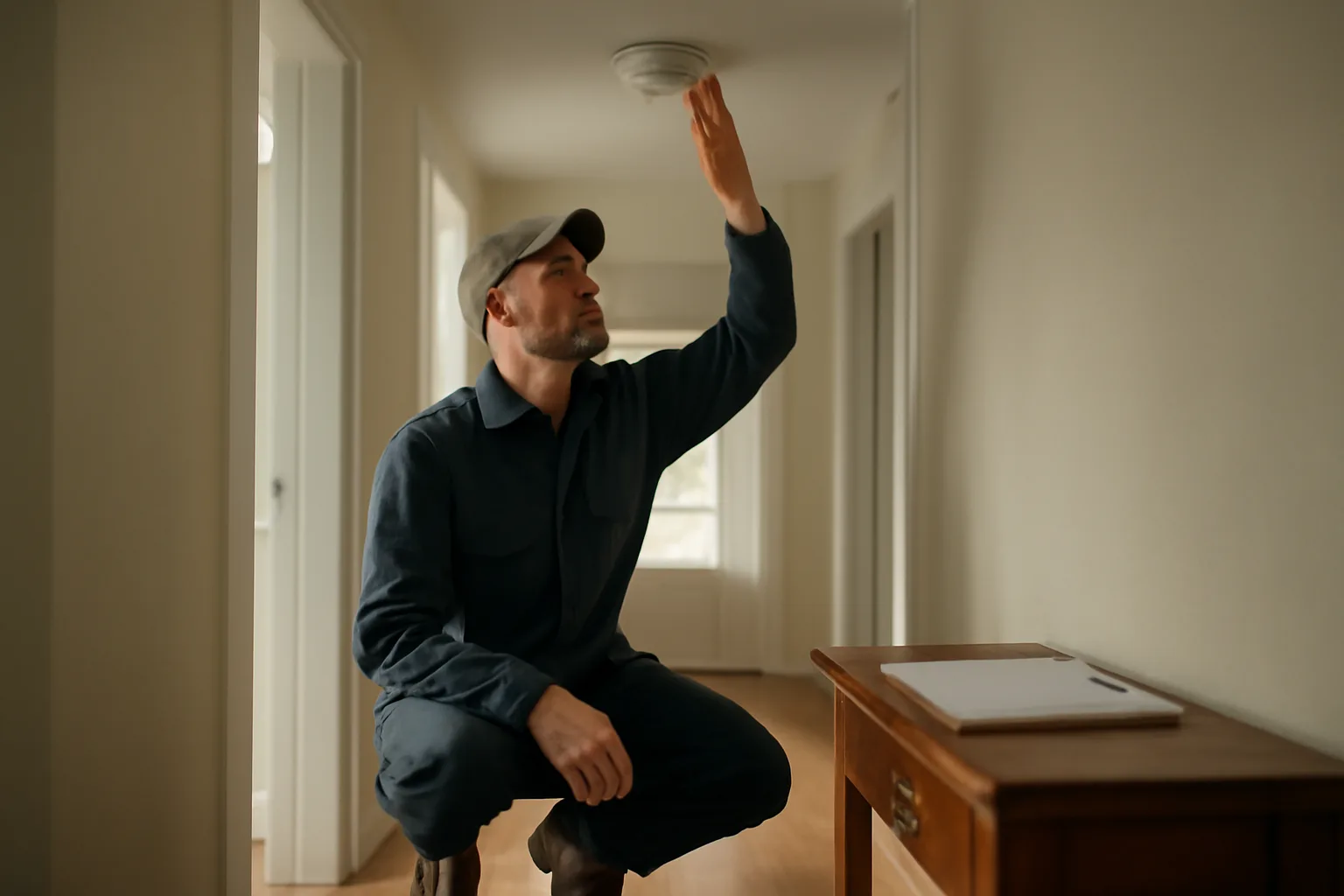
A landlord inspection lets the owner (or city inspector) check a rental's condition, safety systems, and code compliance. Notice requirements run from 24 to 48 hours in most states, though a few, like California, set a 24-hour standard by statute. Inspectors generally can't search closets or personal belongings, only verify the unit's habitability and any code items on the checklist.
What is landlording, and what is a landlord?
A landlord is the person or company that owns a rental property and rents it out to a tenant in exchange for money. "Landlording" is the everyday word for the whole job: setting rent, screening tenants, handling repairs, dealing with the city, and knowing when to call a lawyer instead of guessing. It sounds simple until you own the property. Then you're the one on the hook when a pipe bursts at 11 p.m., when the city sends a rental registration notice you've never seen before, or when a tenant stops paying and you have to figure out what the law actually lets you do about it. Most U.S. households rent from small operators, not big companies. Census Bureau data from the Rental Housing Finance Survey shows that individual investors own a majority of rental properties nationwide, and most of those owners have just one to four units [1]. If you're a landlord with a handful of doors, you're the norm, not the exception, even though the paperwork often assumes you're a professional property management company with a compliance department. That gap between "how the rules are written" and "how small landlords actually operate" is where most violation notices and inspection headaches come from. This article covers what a landlord inspection actually involves, what an inspector or owner can and can't look at, how much notice you're owed (or owe your tenant), and how to get through a licensing inspection without a scramble.
How to become a landlord (and how to actually be one)
Becoming a landlord legally takes three things: you need to own or control the property, you need to follow your state's landlord-tenant law, and in a growing number of cities you need to register or license the rental before you can legally rent it out. Step one is ownership or lawful control. That's usually a deed, but it can also be a sublease arrangement if your lease allows it. Step two is knowing your state's baseline rules: security deposit limits and return deadlines, notice periods for entry and for ending a tenancy, habitability standards, and eviction procedure. These vary enormously. Some states cap security deposits at one or two months' rent; others don't cap them at all. Some require deposits to be held in interest-bearing escrow accounts; most don't. Step three, and the one new landlords miss most often, is local registration and licensing. Hundreds of U.S. cities now require landlords to register their rental, pay an annual or biennial fee, and pass a habitability inspection before they can legally lease the unit. Chicago, for example, requires most residential rental properties to be registered with the city, with penalties for landlords who rent without registering [2]. Miss that step and you're more than out of compliance on paperwork, you can be blocked from collecting rent or evicting a nonpaying tenant in some jurisdictions until you fix it. Being a landlord day to day comes down to a short list of recurring jobs: collect rent on time, keep the unit habitable, respond to repair requests promptly (many states set a "reasonable time" standard, some set a specific number of days for urgent items like no heat or no water), give proper notice before you enter, and keep records of everything. If you only remember one habit, make it this one: put every notice, inspection result, and repair request in writing, with a date. It's the single cheapest form of protection you have.
What can a landlord look at during an inspection?
| Life safety | Working smoke detectors, CO detectors, fire extinguishers in common areas, clear exits | |
|---|---|---|
| Electrical | GFCI outlets near water, no exposed wiring, working panel, no overloaded circuits | |
| Plumbing | No active leaks, working water heater, proper drainage, functioning toilets | |
| Structural | Foundation condition, stairs and railings, window and door seals, roof condition | |
| Pest/mold | No active infestation, no visible mold, proper ventilation in bathrooms/kitchens | |
| Exterior | Peeling paint (especially pre-1978 homes, due to lead paint rules), yard maintenance, trash storage | The exact list depends entirely on your city's rental licensing ordinance, and they differ a lot: some cities check smoke detectors and little else, others run a full 40-point checklist including egress window sizes in bedrooms. Confirm the exact checklist with your city rental licensing office before the inspection date, not after you get the violation notice. |
A landlord (or a city inspector standing in for one) can generally check the things that affect safety, habitability, and code compliance: smoke and carbon monoxide detectors, electrical outlets and panels, plumbing for leaks, heating and cooling function, window and door locks, signs of pest infestation, mold or moisture damage, and general structural condition. That's the short list that shows up on almost every municipal rental inspection checklist. What they generally cannot do is search through your closets, dressers, or personal belongings, or use the inspection as a pretext to look for anything unrelated to habitability and code compliance. An inspection is not a general search. If a city inspector or landlord starts opening drawers or going through personal items that have nothing to do with a code violation, that's outside the scope of a standard habitability inspection. Most city rental inspection checklists cover a fairly predictable set of items: | Category | Typical inspection points |
Who is responsible for a rental property walk-through inspection in California?
In California, the landlord is responsible for arranging the move-in and move-out walk-through inspections, and the tenant has the right to be present for both. California Civil Code Section 1950.5 gives tenants the right to request an initial inspection before move-out, specifically so they get a chance to fix any deficiencies before the landlord makes deductions from the security deposit [3]. Here's how it actually works under the statute. Before the end of the tenancy, the landlord must notify the tenant in writing of their right to request an initial inspection. If the tenant requests one, the landlord conducts it no earlier than two weeks before the end of the tenancy and must give the tenant at least 48 hours' written notice of the date and time (unless the tenant waives that notice) [3]. After the walk-through, the landlord gives the tenant an itemized statement of any deficiencies and a reasonable opportunity to fix them before move-out, if the tenant chooses to. This initial inspection is separate from the final move-out inspection used to calculate any security deposit deductions. Landlords in California must return the deposit, or an itemized statement of deductions with receipts, within 21 days after the tenant moves out, per the same code section [3]. If you're a California landlord, this two-step process (initial walk-through, then final move-out inspection) is not optional paperwork, it's baked into how deposit disputes get decided if a tenant takes you to small claims court.
How much notice does a landlord have to give before entering?
Notice requirements for landlord entry vary by state, but 24 hours is the most common standard, with some states requiring less and a few requiring more. There is no single federal rule; each state sets its own notice period and its own list of acceptable reasons for entry. California requires "reasonable notice," which the statute presumes to be 24 hours in writing, for entries to make repairs, show the unit to prospective tenants or buyers, or conduct an inspection, under Civil Code Section 1954 [4]. Other states set similar but not identical windows. Florida, for example, requires landlords to give at least 12 hours' notice before entering to make repairs, under Florida Statutes Section 83.53, and permits entry only at reasonable times [5]. Notice periods and acceptable entry reasons differ enough state to state that you genuinely need to check your own state's statute rather than assume the California or Florida rule applies where you live. Across most states, the recognized reasons for a landlord to enter without an emergency generally include: - Making or assessing needed repairs
- Showing the unit to prospective tenants, buyers, or lenders
- Conducting an agreed-upon or legally required inspection
- Pest control treatment Emergencies are the one universal exception. If there's an active fire, flooding, or a gas leak, essentially every state lets a landlord enter without advance notice, because waiting to give notice would make the emergency worse. Outside of an emergency, entering without proper notice, or entering repeatedly for no legitimate reason, can amount to harassment or an unlawful entry, and tenants in most states can sue for it or use it as a defense in an eviction case. If you're managing a rental in more than one city or state, keep a simple reference sheet of the notice period and acceptable entry reasons for each property. It's a five-minute task that prevents a very expensive mistake.
What rights do tenants have without a lease?
Tenants without a written lease, sometimes called month-to-month or at-will tenants, still have essentially all the same legal protections as tenants with a signed lease. The lack of a written agreement does not strip away habitability rights, notice requirements, deposit protections, or eviction procedure protections; state landlord-tenant law applies regardless of whether there's paper. What changes without a written lease is mostly about terms and proof, not rights. Without a lease specifying the rent amount, due date, or rules, a month-to-month tenancy is generally governed by whatever was verbally agreed (hard to prove in a dispute) or by default state rules. Rent is still owed, tenants still cannot be locked out without proper legal process, and the property still has to meet the state's implied warranty of habitability. The big practical difference is termination notice. Month-to-month tenants (with or without a written lease) are entitled to a notice period before the tenancy can be ended, and that period is set by state law, commonly 30 days, though some states or cities require more (60 or even 90 days in some rent-controlled jurisdictions) and some states allow less for very short tenancies. A landlord cannot simply tell a no-lease tenant to leave tomorrow, and cannot change the locks, shut off utilities, or remove belongings to force someone out. That kind of "self-help eviction" is illegal in every state; the landlord has to go through the formal eviction process regardless of whether a lease exists.
Why do landlords require renters insurance?
Landlords require renters insurance mainly to shift liability. If a tenant's negligence causes a fire, a flood, or an injury to a guest, renters insurance covers the tenant's liability and their personal property, instead of the landlord's policy (or the landlord personally) absorbing the cost. A landlord's own property insurance covers the building itself, but it generally does not cover a tenant's personal belongings, and it may not fully cover liability claims that stem from the tenant's actions specifically. Renters insurance policies typically include personal liability coverage, often starting around $100,000, along with coverage for the tenant's possessions and additional living expenses if the unit becomes unlivable after a covered event. Insurance Information Institute data notes that renters insurance is relatively inexpensive, commonly running in the range of roughly $15 to $30 a month depending on coverage amount and location [6], which is a big part of why more landlords now make it a lease requirement rather than a suggestion. Requiring renters insurance is legal in every state; it's a standard lease clause, not a special exception. Some cities with rental licensing programs are also starting to ask landlords to confirm insurance requirements as part of registration paperwork, so check whether your city's rental license application asks about this.
What can a landlord not do in Ohio?
Ohio law spells out a specific set of landlord obligations and prohibited actions under Ohio Revised Code Section 5321.04, and violating them can expose a landlord to a tenant lawsuit or a rent escrow action. The core habitability duties include keeping the unit in a fit and habitable condition, complying with building and housing codes, keeping common areas safe and sanitary, maintaining electrical, plumbing, and heating systems in good working order, and providing running water, hot water, and reasonable heat [7]. Ohio law also directly restricts landlord entry. Under Ohio Revised Code Section 5321.04, a landlord may enter the rental premises only after giving the tenant reasonable notice, and only at reasonable times, for purposes like inspection, repairs, or showing the unit, except in cases of emergency [7]. The statute doesn't define a specific number of hours for "reasonable notice" the way California does, but 24 hours is the generally accepted practice and what most Ohio courts and tenant guides treat as reasonable absent a different lease provision. Ohio landlords also cannot use certain retaliatory or self-help tactics. Ohio Revised Code Section 5321.02 prohibits retaliatory conduct, meaning a landlord cannot raise rent, decrease services, or attempt to end a tenancy specifically because a tenant complained to a government agency about a code violation or exercised a legal right under the chapter [8]. Ohio also does not permit self-help eviction: a landlord cannot shut off utilities, change locks, or remove a tenant's belongings to force them out without going through the court eviction process. If a landlord violates the maintenance obligations under Section 5321.04 and doesn't fix the problem after written notice, Ohio tenants have a statutory remedy that can include depositing rent with the court (rent escrow) rather than paying the landlord directly, under Ohio Revised Code Section 5321.07 [9].
What does a city rental licensing inspection actually check?
A city rental licensing inspection checks a narrower, code-specific version of the general habitability items covered earlier: working smoke and CO detectors, safe electrical and plumbing systems, adequate heat, no active leaks or pest infestation, proper egress from bedrooms, and compliance with the city's specific housing code sections. Some cities add local-specific items, like exterior paint condition on older homes (lead paint risk) or handrail height on stairs. The process generally goes: you register the rental with the city (often annually or every two years) and pay a fee, the city schedules or requires you to schedule an inspection within a set window, an inspector visits and works through a checklist, and you get either a pass, a conditional pass with a list of items to fix by a deadline, or a failure that requires a re-inspection. Fees, inspection cycles, and exact checklist items vary enormously by city, so confirm the current fee schedule, inspection frequency, and checklist with your city rental licensing office directly; these details change often and a citywide flat fee last year can turn into a per-unit tiered fee this year depending on local ordinance updates. Common reasons rentals fail a first inspection are almost always small and fixable: a missing or expired smoke detector battery, a GFCI outlet not installed near a sink, a handrail that's loose, a window that won't open (a serious issue if it's a required bedroom egress point), or minor exterior paint peeling on a pre-1978 house. None of these are expensive fixes individually, but missing all of them at once because you didn't walk the property beforehand is what turns a routine inspection into a failed one with a re-inspection fee attached. If you want a structured way to prepare before the inspector shows up, rather than triaging violations after the fact, the City Rental License & Inspection Prep Packet walks through a pre-inspection checklist built around the items cities most commonly flag, for a one-time $79 cost. It's not a substitute for your city's actual checklist (get that from your city rental licensing office directly), but it's a good gap-check before the inspector's visit.
What happens if you fail a rental inspection, or ignore the notice?
If you fail a rental inspection, you generally get a written list of deficiencies and a deadline to fix them, followed by a re-inspection, sometimes for an added fee. If you ignore the registration or inspection notice entirely, most cities escalate to fines, and some can bar you from legally collecting rent or from evicting a tenant until you come into compliance. The exact escalation path (warning notice, fine schedule, daily accrual of penalties, potential lien on the property) is set entirely by local ordinance, so there's no single number to quote here that's true everywhere. Some cities issue a modest first-time fine in the range of roughly $100 to $500 for an unregistered rental, others charge per unit per day the violation continues, which can add up fast on a multi-unit property. Confirm your city's specific fine schedule and appeal process with your city rental licensing office; ordinances get updated, and a fine amount you saw quoted two years ago may already be out of date. The practical move if you get a violation notice: don't ignore it and don't argue with the inspector on-site about whether the rule is fair. Read the notice for the specific code section cited, fix what you can fix immediately (smoke detectors, GFCI outlets, and loose handrails are usually same-day fixes), and call the rental licensing office to confirm the re-inspection process and any fee. Most cities will work with a landlord who's clearly making a good-faith effort to comply; the fines escalate hardest against owners who never respond at all.
How landlords can prepare for an inspection before it happens
The best inspection is the one you already passed in your own walk-through a week earlier. A simple pre-inspection routine catches almost everything a city inspector will flag, because most city checklists cover the same handful of recurring issues. A reasonable DIY pre-inspection walk covers: - Test every smoke detector and CO detector; replace batteries even if they seem fine
- Check every GFCI outlet (bathroom, kitchen, anywhere near water) with the test button
- Run every faucet and flush every toilet, checking under sinks for slow leaks
- Open every window that's supposed to open, especially in bedrooms (egress requirement)
- Check handrails and stairs for looseness
- Look at exterior paint condition, especially on homes built before 1978
- Confirm heat works and check the water heater for visible corrosion or leaks
- Look for any signs of pests or moisture/mold in corners, closets, and under sinks Do this walk yourself, in person, rather than assuming the last tenant would have told you about a problem. Tenants often don't report small issues (a slow leak under a sink, a smoke detector with a dead battery) until an inspector points it out, and by then it's a violation notice with a deadline attached instead of a Saturday afternoon fix. If you manage more than one rental, or you're dealing with a city ordinance you've never navigated before, it's worth reading up on general tenant rights and tenants rights resources too, since a habitability complaint from a tenant often triggers the same kind of inspection as a routine licensing cycle, just on an unplanned timeline.
Frequently asked questions
How to become a landlord if you've never rented out a property before?
Confirm you have legal ownership or control of the unit, learn your state's landlord-tenant statute (deposit limits, entry notice, eviction procedure), and check whether your city requires rental registration or licensing before you can legally rent. Many cities require this step before you collect rent legally, so check with your city rental licensing office first.
Who is responsible for a rental property walk-through inspection in California?
The landlord is responsible for scheduling it, but the tenant has the right to request an initial pre-move-out inspection under California Civil Code Section 1950.5, and the landlord must give at least 48 hours' written notice of that inspection unless the tenant waives it.
What is landlording?
Landlording is the day-to-day work of owning and operating a rental property: collecting rent, maintaining habitability, handling repair requests, following notice and entry rules, and complying with any local rental registration or licensing requirements. It covers both the legal duties and the practical property-management tasks a rental owner handles.
What is a landlord, legally speaking?
A landlord is the owner (or authorized agent of the owner) who leases residential or commercial property to a tenant in exchange for rent. Legally, a landlord takes on specific duties under state law, including habitability maintenance, proper notice before entry, and following formal eviction procedure rather than self-help remedies.
What rights do tenants have without a lease?
Tenants without a written lease still get the full protection of state landlord-tenant law: habitability standards, protection against illegal lockouts, and a required notice period (commonly 30 days) before the tenancy can end. The lack of paper changes what's provable in a dispute, not the underlying legal rights.
Why do landlords require renters insurance?
Renters insurance shifts liability for tenant negligence (fires, water damage, injuries to guests) and covers the tenant's own belongings, which a landlord's property insurance usually doesn't cover. It typically costs around $15 to $30 a month per the Insurance Information Institute, making it a low-cost way to reduce a landlord's liability exposure.
How much notice does a landlord have to give before entering the unit?
It depends on the state. California presumes 24 hours' notice is reasonable under Civil Code Section 1954, Florida requires at least 12 hours under Florida Statutes Section 83.53, and most other states fall somewhere in that range. Check your specific state's statute, since there's no single national rule.
What can a landlord look at during an inspection?
A landlord or inspector can check smoke and CO detectors, electrical and plumbing systems, heating, structural condition, and signs of pests or mold. They generally cannot search personal belongings, closets, or drawers; the inspection is limited to habitability and code compliance, not a general search of the home.
What can a landlord not do in Ohio?
Ohio landlords cannot skip required habitability maintenance under Ohio Revised Code Section 5321.04, cannot enter without reasonable notice except in an emergency, cannot retaliate against a tenant for reporting code violations under Section 5321.02, and cannot force a tenant out through lockouts or utility shutoffs instead of formal eviction.
What happens if a landlord fails a rental inspection?
You typically get a written list of deficiencies and a deadline to fix them, then a re-inspection, sometimes for a fee. Ignoring the notice usually leads to escalating fines set by local ordinance, and in some cities can block your ability to collect rent or evict until the property is brought into compliance.
Do I need a lawyer to become a landlord or handle an inspection?
Not for routine registration or a standard licensing inspection; most landlords handle those directly with the city. It's worth consulting a landlord-tenant attorney if you're facing an eviction, a tenant lawsuit, a retaliation claim, or a complex habitability dispute, since state procedure rules are specific and mistakes are costly.
Can a landlord do a walk-through inspection without notice?
Only in a genuine emergency (fire, flooding, gas leak) in nearly every state. For routine inspections, repairs, or showings, landlords must give advance written notice, typically 12 to 48 hours depending on the state, before entering an occupied unit.
Sources
- U.S. Census Bureau, Rental Housing Finance Survey: Most rental properties nationwide are owned by individual investors, many with one to four units
- City of Chicago, Residential Landlord and Tenant Ordinance / Rental registration requirement: Chicago requires most residential rental properties to be registered with the city
- California Legislative Information, Civil Code Section 1950.5: California tenants can request an initial move-out inspection with 48 hours' written notice, and deposits must be returned or itemized within 21 days
- California Legislative Information, Civil Code Section 1954: California presumes 24 hours' written notice is reasonable for landlord entry
- Online Sunshine, Florida Statutes Section 83.53: Florida requires at least 12 hours' notice before a landlord enters to make repairs
- Insurance Information Institute, Renters Insurance facts and statistics: Renters insurance typically costs in the range of roughly $15 to $30 a month
- Ohio Laws, Ohio Revised Code Section 5321.04: Ohio landlord habitability duties and entry notice requirements
- Ohio Laws, Ohio Revised Code Section 5321.02: Ohio prohibits retaliatory landlord conduct against tenants who report code violations
- Ohio Laws, Ohio Revised Code Section 5321.07: Ohio tenants can use rent escrow as a remedy when a landlord fails to fix habitability issues after notice