Last updated 2026-07-24
TL;DR
Landlord tenant law is the mix of state statutes, local ordinances, and lease terms that sets rules for notice periods, entry, deposits, repairs, and evictions. It varies by state and city, so a landlord in Columbus and one in Sacramento follow different rulebooks even for the same basic question, like how much notice to give before entering a unit.
what is landlord tenant law
Landlord tenant law is the body of state statutes, local housing ordinances, and case law that governs the relationship between a property owner and the person renting from them. It covers rent collection, security deposits, notice requirements, habitability standards, repairs, entry rights, and the eviction process. Every state has its own landlord tenant statute (often called a Residential Landlord and Tenant Act), and cities layer their own rules on top through rental licensing, registration, and inspection ordinances. That's the part that trips up most small landlords. You can follow your state law to the letter and still get a violation notice because your city requires a rental license or a certificate of occupancy that state law doesn't mention at all. There's no single federal landlord tenant law. The closest thing is the Fair Housing Act, enforced by the U.S. Department of Housing and Urban Development, which bans discrimination based on race, color, national origin, religion, sex, familial status, and disability in housing transactions. Everything else, security deposit limits, notice periods, habitability rules, is state or local. If you own in a city with mandatory rental licensing, treat the city ordinance as a second layer of law sitting on top of your state's landlord tenant act. Miss either one and you can end up with a fine even if your lease is airtight.
what is a landlord
A landlord is the person or entity that owns residential property and rents it to someone else (the tenant) in exchange for money, usually under a lease or rental agreement. Legally, a landlord takes on specific duties: keeping the unit habitable, handling repairs, returning security deposits on time, and giving proper notice before entering or ending a tenancy. Being a landlord isn't just owning a building. It's a legal role with obligations attached the moment you accept rent from another person. Most state landlord tenant acts define "landlord" broadly enough to include a property manager acting on the owner's behalf, so hiring a management company doesn't remove your legal responsibility, it usually just adds another party who can also be held accountable. Small landlords (1 to 10 units) often don't think of themselves as running a business in the legal sense, but the law doesn't care about scale. A landlord with one rented basement apartment has the same habitability and notice obligations as a company managing 200 units, and in cities with rental registration ordinances, that one unit still has to be registered.
what is landlording
Landlording is the day-to-day work of owning and operating rental property: screening tenants, collecting rent, handling maintenance requests, managing lease renewals, and staying compliant with local rental laws. It's part legal compliance, part maintenance, part bookkeeping, and part customer service. People who've done it a long time will tell you the legal side is the part that bites you when you're not looking. You can be great at fixing a leaky faucet and still get a $200 to $500 fine (the range varies heavily by city, confirm with your city rental licensing office) because you never registered the unit or missed an inspection notice. Good landlording means building a system: a lease that matches your state's law, a habit of documenting repair requests and responses, a calendar reminder for lease renewals and any city inspection cycle, and a paper trail for every notice you send. None of that is exciting. All of it is what keeps you out of housing court.
how to become a landlord
To become a landlord, you generally need to: buy or already own residential property, confirm local zoning allows rental use, register the property with your city if required, get any required rental license or inspection completed, obtain landlord insurance, and prepare a lease that complies with your state's landlord tenant act. The exact steps and paperwork depend heavily on your city and state. Here's a realistic order of operations for a first-time landlord: 1. Check zoning and any HOA restrictions on rentals before you plan to rent the unit out. 2. Contact your city or county to find out if rental registration or licensing is mandatory. Many cities require it even for a single-family home rental; fees commonly run somewhere between $25 and $300 per unit depending on the city, confirm the actual number with your city rental licensing office. 3. Schedule any required rental inspection (fire safety, smoke and carbon monoxide detectors, egress windows, electrical). Some cities require this before you can legally advertise the unit. 4. Get landlord (dwelling fire, DP-3 or similar) insurance, separate from a standard homeowner's policy. 5. Screen tenants consistently and legally, applying the same criteria to every applicant to avoid Fair Housing Act problems. 6. Use a written lease that matches your state's required disclosures (lead paint disclosure for pre-1978 housing is federally required under 42 U.S.C. § 4852d, for example) [1]. 7. Set up a separate bank account for security deposits if your state requires it, and know your state's deposit limit and return deadline. If you're in a city that requires a license before you can legally rent, do that step before you sign a lease, not after. Cities that catch unlicensed rentals often issue a violation plus back fees for every month the unit was rented unlicensed.
how to be a landlord (day to day)
Being a landlord day to day means responding to repair requests promptly, giving legally required notice before entry or lease changes, keeping the unit habitable, and following your state's eviction process exactly if things go wrong. Most disputes that end up costing landlords money come from skipped notice, not bad intentions. Habitability is the core legal obligation. Nearly every state has an implied warranty of habitability, meaning a rental has to meet basic health and safety standards (working heat, plumbing, weatherproofing, no serious pest infestations) whether or not the lease mentions it. California's version is written into Civil Code Section 1941, which requires landlords to maintain the premises "in a condition fit for occupation" [1]. On notice and entry: most states require landlords to give tenants advance written notice before entering, commonly 24 hours, though the exact number and the situations where it's excused (emergencies) vary by state. California law, for example, presumes 24 hours' written notice is reasonable for non-emergency entry under Civil Code Section 1954 [1]. On ending a tenancy: notice-to-vacate periods usually range from 30 to 60 days depending on how long the tenant has lived there and the state, and rent increase notice periods often track the same rule. Always check your specific state statute before sending anything, because getting the notice period wrong can void the notice and restart your timeline.
who is responsible for rental property walk-through inspection in california
In California, the landlord is responsible for offering an initial move-out walk-through inspection to the tenant, but the tenant decides whether to accept it. California Civil Code Section 1950.5(f) requires landlords to notify tenants of their right to request an initial inspection before move-out, giving the tenant a chance to fix any damage before deposit deductions are calculated. The process works like this: when a tenant gives notice to vacate (or the landlord terminates the tenancy), the landlord must notify the tenant in writing of the right to an initial inspection, to be conducted no earlier than two weeks before the end of the tenancy. If the tenant wants the inspection, the landlord (or an agent) has to give at least 48 hours' written notice of the date and time, and afterward provide an itemized statement of anticipated deductions so the tenant can fix issues themselves. This is separate from any city-mandated rental inspection for licensing purposes (fire, safety, habitability checks tied to a rental license), which is a different process run by the city, not something a tenant requests. Los Angeles' Systematic Code Enforcement Program (SCEP) is a good example: it requires periodic inspections of registered rental units, funded through an annual per-unit fee, and is handled through the city's Housing Department rather than tenant request [2]. If your property is in a city with a program like this, confirm the inspection cycle and fee with your city rental licensing office, because it runs independently of the move-out walk-through rules in Civil Code 1950.5.
what can a landlord look at during an inspection
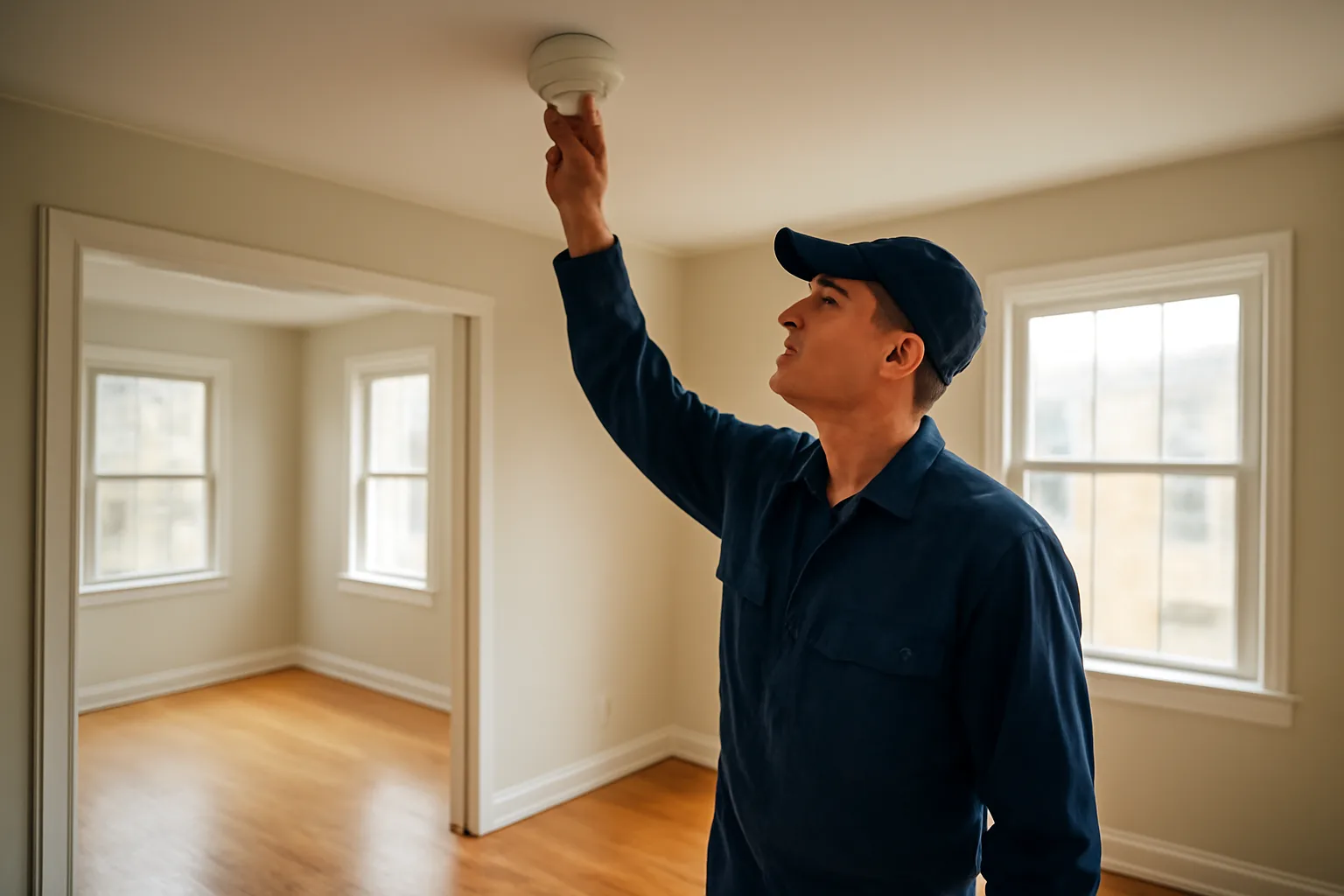
During a routine or move-out inspection, a landlord can generally look at the physical condition of the unit: walls, floors, fixtures, appliances, smoke and carbon monoxide detectors, plumbing, electrical outlets, windows and doors, and signs of damage beyond normal wear and tear. A landlord cannot search personal belongings, go through drawers or closets unrelated to the inspection, or use the visit to harass or pressure a tenant. For a city rental licensing inspection, the inspector is usually checking a specific safety checklist rather than general condition: working smoke and CO detectors, secondary means of egress, functioning heat, no exposed wiring, proper handrails, and pest or mold issues that affect habitability. These inspections exist to confirm the unit meets the minimum standard tied to the rental license, not to evaluate décor or cleanliness beyond what affects safety. A landlord doing a routine mid-lease inspection should stick to a similar scope: confirm smoke detectors work, look for water damage or leaks, check for unauthorized occupants or pets if the lease restricts them, and document conditions with photos or a checklist. Going through a tenant's mail, opening locked personal storage, or inspecting without proper notice crosses into territory that can violate state entry laws and, in some states, give the tenant grounds for a claim. If you're preparing for a city license inspection specifically, it helps to walk the unit yourself first using the same checklist the inspector will use. A rental license and inspection prep packet built around your city's actual checklist can save you a failed inspection and a re-inspection fee, which in many cities runs $50 to $150 on top of the original inspection cost (confirm with your city rental licensing office).
how much notice does a landlord have to give
| Entry for repairs/inspection (non-emergency) | 24 to 48 hours | California presumes 24 hours reasonable under Civil Code 1954 [1] | |
|---|---|---|---|
| Rent increase (under 10%) | 30 days | Many states tie this to the length of tenancy | |
| Rent increase (10% or more) | 60 days | Common in states with tiered notice rules | |
| Month-to-month termination (no cause) | 30 to 60 days | Longer for tenants who've lived there a year or more in some states | |
| Nonpayment of rent (pay or quit) | 3 to 14 days | Varies widely; some states use 3-day, others 5-day or 14-day | |
| Lease violation (cure or quit) | 3 to 30 days | Depends on the violation and whether it's curable | City ordinances sometimes add their own layer. Just cause eviction ordinances in cities like Los Angeles and San Francisco extend required notice and limit reasons for termination beyond what state law alone would require, so always check both levels before sending a notice [2]. If your notice period is wrong, the notice can be legally invalid, meaning you'd have to start over. That's the single most common landlord mistake in eviction cases, according to housing court self-help resources published by state judiciary websites; it costs weeks of extra time, more than paperwork. |
How much notice a landlord has to give depends on what's happening: entry into the unit, a rent increase, or ending a tenancy each has its own notice period, and all of them are set by state law (with some cities adding stricter local rules). There's no single national number. Here's a general comparison of common notice types. These are typical ranges seen across states, not a substitute for checking your specific state statute. | Notice type | Typical range | Notes |
what rights do tenants have without a lease
Tenants without a written lease still have full legal protection under their state's landlord tenant law. An oral or implied month-to-month tenancy still requires proper notice to end, still guarantees habitability, and still requires the landlord to follow the legal eviction process rather than self-help remedies like changing locks or shutting off utilities. A lot of small landlords think no lease means no rules. That's backwards. Without a written lease, the relationship defaults to whatever your state's statute says a periodic tenancy looks like, which is usually month-to-month, terminable with standard notice (commonly 30 days, sometimes tied to how rent is paid). Tenants without a lease still have the right to: a habitable unit, advance notice before entry, proper notice before rent increases or termination, the return of any security deposit within their state's required timeframe, and protection from retaliatory or discriminatory eviction under the Fair Housing Act. What they lose is the certainty of fixed terms, meaning a landlord can typically raise rent or end the tenancy faster than they could during a fixed lease term, but always with legal notice, never by force or lockout. Self-help eviction, changing the locks, removing a tenant's belongings, or shutting off power or water to force someone out, is illegal in essentially every state regardless of whether there's a written lease. Landlords who do this can face statutory damages, sometimes several times the monthly rent, on top of the tenant's actual damages.
why do landlords require renters insurance
Landlords require renters insurance mainly to shift liability for a tenant's personal belongings and personal liability away from the landlord's own policy. A standard landlord (dwelling) insurance policy covers the building structure, not the tenant's furniture, electronics, or clothing, and it usually doesn't cover a tenant's liability if they cause an injury or damage inside the unit. If a pipe bursts and ruins a tenant's laptop and furniture, the landlord's policy typically won't pay for that, and without renters insurance the tenant may try to hold the landlord responsible anyway, sometimes through a claim or small-claims suit. Requiring renters insurance (often with a minimum liability coverage amount, commonly $100,000, though this varies) pushes that risk onto a policy designed for it. Renters insurance also usually covers a tenant's liability for accidental fires or water damage they cause, which protects the landlord from an expensive out-of-pocket repair if the tenant's insurance doesn't respond. Many landlords make it a lease requirement and ask for proof of a policy naming the landlord as an "interested party" so they're notified if the policy lapses. Cost-wise, renters insurance is cheap relative to the protection it buys. National estimates commonly put average renters insurance premiums somewhere in the range of $15 to $30 a month depending on coverage and location, according to insurance industry data cited by state insurance department consumer guides. That's a small ask compared to the liability exposure a landlord avoids.
what a landlord cannot do in ohio
In Ohio, a landlord cannot shut off utilities, change the locks, or remove a tenant's belongings to force them out without a court order, even if the tenant is behind on rent. Ohio's landlord tenant law, codified in Ohio Revised Code Chapter 5321, also prohibits retaliatory conduct and requires landlords to maintain the property in a fit and habitable condition [3]. Specifically, Ohio Revised Code 5321.15 states that no landlord shall "cause, directly or indirectly, the interruption or termination of any utility service" being supplied to a tenant, and bars landlords from excluding a tenant from the premises except through proper legal process, and from seizing a tenant's property to enforce a claim [4]. Violating this section can expose the landlord to actual damages plus reasonable attorney fees. Ohio law also requires landlords to give reasonable notice, generally 24 hours, before entering a tenant's unit for non-emergency purposes, under ORC 5321.04, which lists a landlord's specific duties including keeping the premises in compliance with applicable housing codes and keeping common areas safe. On eviction specifically, Ohio requires landlords to serve a proper written notice (commonly a 3-day notice to leave the premises for nonpayment) before filing an eviction action in court, and only a court can order a tenant physically removed via the county sheriff. Landlords who try to skip this and remove a tenant themselves risk a lawsuit and statutory damages under ORC 5321.15 [4]. If you're a landlord in Ohio dealing with a difficult tenant, the frustration is real, but the fastest legal path is still through the municipal or county court, not around it. Many of these same principles (no self-help eviction, no utility shutoffs, required notice before entry) apply in some form in most states, even though the exact statute numbers differ. If you're operating in a different state, look up your state's equivalent to Ohio's Chapter 5321 landlord obligations section before assuming the rules are the same.
how landlord tenant law and city rental licensing overlap
State landlord tenant law sets the baseline: habitability, notice, deposits, eviction procedure. City rental licensing and inspection ordinances add a second, separate set of requirements on top, usually covering registration, fees, and periodic safety inspections tied to the right to legally rent the unit at all. This is where a lot of small landlords get caught off guard. You can follow every notice rule in your state statute perfectly and still get fined by your city for renting an unregistered or uninspected unit, because those are two completely different legal systems enforced by two different offices (your state's courts for landlord tenant disputes, your city's housing or code enforcement department for licensing). Cities vary enormously here. Some, like many small municipalities, have no rental licensing program at all. Others, particularly larger cities and some inner-ring suburbs, require annual or biennial registration, a per-unit fee, and a physical inspection before a license is issued or renewed. Because these programs differ so much city to city, and change fairly often, always confirm current fees, inspection cycles, and deadlines directly with your city rental licensing office rather than relying on what a neighboring city does. If you're trying to get organized before a licensing deadline or a first inspection, working from a checklist built around your specific city's requirements (rather than a generic one) is what actually prevents a failed inspection. That's the gap a City Rental License & Inspection Prep Packet is meant to fill: a one-time $79 packet built to match your city's actual checklist instead of guessing at it.
where to check your specific state or city rules
Every state publishes its landlord tenant statute online, usually through the state legislature's website, and many state attorneys general or judiciary websites publish plain-language summaries for landlords and tenants. Start there before relying on general guides like this one, because notice periods, deposit limits, and habitability standards genuinely differ state to state. For city-specific rental licensing rules (registration fees, inspection cycles, penalties for operating unlicensed), the city's housing department or code enforcement office is the authoritative source, not a search engine summary. Programs change: fees get adjusted, inspection cycles get extended or shortened, and new registration requirements get added, sometimes annually. A reasonable workflow: read your state's landlord tenant act summary for the legal baseline (notice, deposits, habitability, eviction process), then separately call or check your city's rental licensing office for the local registration and inspection requirements, then build your lease and your systems around both. Related reading on tenant rights, tenants rights, and renters rights can help you see the tenant side of the same rules, which is worth understanding even as a landlord, because it tells you exactly what a tenant can push back on.
Frequently asked questions
What is landlord tenant law in simple terms?
It's the combination of state statutes and local ordinances that set the rules for renting property: how much notice a landlord must give, how security deposits are handled, what habitability means, and how an eviction has to legally proceed. It varies by state, and cities often add their own rental licensing and inspection rules on top.
How do I become a landlord for the first time?
Confirm zoning allows a rental, check if your city requires rental registration or a license, complete any required inspection, get landlord insurance, screen tenants consistently, and use a lease that matches your state's disclosure requirements. Do the licensing step before you sign a lease if your city requires it, since renting unlicensed can trigger back fees.
Who is responsible for scheduling a move-out walk-through inspection in California?
The landlord must offer the tenant a pre-move-out inspection under California Civil Code Section 1950.5(f), giving written notice of the right to request it. The tenant decides whether to accept; if they do, the landlord gives 48 hours' notice of the date and provides an itemized list of expected deposit deductions afterward.
What rights does a tenant have without a signed lease?
A tenant without a written lease still gets full protection under state landlord tenant law: habitability, notice before entry, notice before rent increases or termination, timely deposit return, and Fair Housing Act protections against discrimination. The tenancy typically defaults to month-to-month, but the landlord must still use proper legal notice to end it.
Why do landlords require renters insurance from tenants?
Because a landlord's own dwelling policy doesn't cover a tenant's belongings or the tenant's personal liability. Requiring renters insurance shifts that risk to a policy meant for it, protecting the landlord from disputes over damaged tenant property or injuries that happen inside the unit.
How much notice does a landlord have to give before entering the unit?
Most states require 24 to 48 hours' written notice for non-emergency entry. California presumes 24 hours reasonable under Civil Code Section 1954. Emergencies (fire, flooding, imminent danger) are generally exempt from advance notice requirements in nearly every state.
What can a landlord check during a rental inspection?
A landlord or city inspector can check the physical condition and safety features of a unit: smoke and CO detectors, plumbing, electrical, egress windows, heat, and signs of damage or pest issues. They cannot search personal belongings or use the visit to harass a tenant; the scope is the unit's condition, not the tenant's possessions.
What can't a landlord do in Ohio specifically?
Under Ohio Revised Code 5321.15, a landlord cannot shut off utilities, change locks, or remove a tenant's belongings to force them out without a court order, even for nonpayment of rent. Ohio also requires 24 hours' notice for non-emergency entry and bars retaliatory actions against tenants under ORC Chapter 5321.
What's the difference between landlord tenant law and a city rental license requirement?
Landlord tenant law is state-level and covers the legal relationship: notice, deposits, habitability, eviction procedure. A city rental license is a separate local requirement to register the unit, sometimes with a mandatory inspection, before it can legally be rented. You need to comply with both, and they're enforced by different offices.
How much does it typically cost to become a licensed landlord in a city with rental registration?
Fees vary enormously by city, commonly somewhere between $25 and $300 per unit for initial registration or annual renewal, sometimes with an added inspection fee. There's no national standard; confirm the exact current fee with your specific city's rental licensing or housing department.
Can a landlord evict a tenant without going to court?
No. Self-help eviction, changing locks, removing belongings, or shutting off utilities without a court order, is illegal in essentially every state. A landlord has to file in court, serve proper notice, and in most states have a sheriff or marshal carry out a court-ordered removal if the tenant doesn't leave.
Is landlording considered a business legally?
Yes, in most respects. Even a single rented unit creates legal duties around habitability, notice, deposits, and antidiscrimination law under the Fair Housing Act. Many cities also treat any rented residential unit as requiring registration or licensing regardless of how many units the owner has.
Sources
- California Legislative Information, Civil Code Section 1941: California requires landlords to maintain rental premises in a condition fit for occupation.
- Ohio Legislative Service Commission, Ohio Revised Code Chapter 5321: Ohio's landlord tenant law is codified in Ohio Revised Code Chapter 5321 and requires habitable conditions.
- Ohio Revised Code Section 5321.15: Ohio law bars landlords from shutting off utilities, changing locks, or seizing tenant property without a court order.
- Ohio Revised Code Section 5321.04: Ohio law lists landlord duties including reasonable notice before entry and maintaining compliance with housing codes.
- California Legislative Information: California Civil Code Section 1954 sets the notice requirements a landlord must give before entering a rental unit for inspection or other purposes.
- Ohio Revised Code: Ohio Revised Code Section 5321.05 outlines the obligations of tenants, which relates to what a landlord can expect and enforce in the tenancy.
- Electronic Code of Federal Regulations: Federal housing regulations provide baseline standards relevant to landlord responsibilities in rental housing.