Last updated 2026-07-25
TL;DR
Philadelphia rental licenses run on an annual cycle tied to your license issue date, not the calendar year. You renew through the city's eCLIPSE portal, keep your lead and fire certifications current, and pay a renewal fee set by the Department of Licenses and Inspections (L&I). Miss the deadline and the city can fine you and bar you from filing evictions until you're compliant.
When does a Philadelphia rental license need to be renewed?
Philadelphia rental licenses are not on a fixed citywide renewal date. Each license expires one year from the date it was issued or last renewed, so your deadline is specific to your property, not a date shared by every landlord in the city. You'll find the exact expiration date printed on your existing license or listed in your eCLIPSE account. L&I generally sends a renewal notice by mail or email in the weeks before expiration, but relying on that notice is risky. Notices get lost, addresses change, and property managers sometimes miss them for units they manage remotely. The safer move is to log into eCLIPSE yourself and check the status a month or two before you think it's due. Philadelphia's rental license requirement comes from the Philadelphia Property Maintenance Code, which requires anyone who rents residential property to hold a valid rental license before leasing or advertising a unit for rent [1]. The license attaches to the unit. If you own multiple rental properties in the city, each address needs its own license and its own renewal timeline.
How do I renew a rental license in Philadelphia?
You renew through eCLIPSE, Philadelphia's online licensing and permitting portal run by L&I. If you already have an account tied to your property, log in, find the rental license record, and follow the renewal prompts. If you don't have online access set up yet, you'll need to create an account and link it to your existing license number first. The renewal process usually asks you to confirm current owner and contact information, confirm the property is still tenant-occupied or available for rent, and pay the renewal fee. If your lead paint certification or fire safety certifications (for applicable properties) have lapsed, the system may block renewal until those are current. L&I's licensing pages note that rental licenses must be renewed annually and that a current lead-safe certification is required for most pre-1978 rental properties before a license can be issued or renewed [2]. Because the requirements interact (a lapsed lead certification can hold up license renewal, which then can hold up your ability to file an eviction), it's worth checking every certification's expiration date at the same time you check the license, not one at a time as problems come up.
What does the Philadelphia rental license renewal cost?
Philadelphia's rental license fee is set by L&I fee schedule and can change from year to year, so confirm the current amount with L&I or through your eCLIPSE account before budgeting. Historically the fee has been a flat annual amount per rental unit, separate from any inspection fees or lead certification costs. Don't confuse the license fee with the total cost of staying compliant. On top of the renewal fee, most landlords are also paying for a lead-safe certification (required for pre-1978 units unless exempted), and in some cases a fire safety inspection fee for multi-unit buildings. None of these get waived just because you renewed the license itself. They're separate line items that L&I tracks independently. If you're managing several units, it helps to build a simple annual calendar: license renewal date, lead certification expiration, fire inspection date if applicable, and business income tax filings tied to rental income. Missing any one of these can create a domino effect where L&I flags the property and puts a hold on new licensing actions until everything is current.
What happens if I miss the renewal deadline?
If your rental license lapses, you're operating an unlicensed rental unit under Philadelphia code, and that carries real consequences beyond a late fee. L&I can issue a violation notice and fine for renting without a valid license, and repeated or ignored violations can escalate to higher penalties under the city's code enforcement process [1]. The bigger practical problem hits when you need to evict a nonpaying or problematic tenant. Pennsylvania's eviction process runs through the Municipal Court, and Philadelphia's licensing rules mean a lapsed rental license can complicate or delay a landlord's ability to move a case forward until the property is back in compliance [1]. A lapsed license at the wrong moment can delay an eviction by weeks while you scramble to renew and get any lapsed certifications back in order. A lapsed license can also complicate insurance claims and make it harder to prove compliant operation if a tenant disputes habitability issues or files a complaint with L&I. Renewing late is usually possible. You're not permanently locked out, but you'll likely owe back fees for the lapsed period and need to resolve any certification gaps first.
Does my rental unit need a new inspection at renewal?
Not automatically every year for most standard rental licenses, but this depends heavily on property type and any prior violations. Philadelphia's rental licensing program is primarily a registration and certification system rather than a mandatory annual walkthrough inspection for every single-family or small rental unit, unlike inspection-heavy programs in some other cities. What does typically trigger inspection activity is the lead-safe certification process. Properties built before 1978 need a valid lead-safe or lead-free certification from a certified inspector, and that certification itself expires and must be renewed on its own schedule (commonly every two years for lead-safe certifications, longer for lead-free) [2]. If your certification lapses at the same time your license is up for renewal, you'll need to schedule a new inspection with a certified lead inspector before eCLIPSE will let the license renewal go through. Multi-unit buildings and properties with fire safety requirements (like those with three or more units, or specific occupancy types) may also have separate periodic fire and life-safety inspection requirements tracked through L&I, independent of the rental license cycle. If you've had a prior L&I violation on the property, that can also trigger a required reinspection before any renewal is approved.
What is a landlord, and what does landlording actually involve?
A landlord is the person or entity that owns residential or commercial property and leases it to a tenant in exchange for rent, taking on legal responsibilities for habitability, repairs, and following state and local landlord-tenant law. "Landlording" is the day-to-day work of running that arrangement: screening tenants, collecting rent, handling maintenance requests, keeping the property compliant with local codes, and managing the lease relationship from move-in to move-out. In a licensing city like Philadelphia, landlording also means treating the city's registration and certification requirements as part of the job, not an afterthought. That includes keeping the rental license current, renewing lead and fire certifications on schedule, and understanding what a housing inspector is actually allowed to check when they show up. For landlords new to a licensed market, it helps to think of landlording as running a small regulated business rather than just owning a spare property. The paperwork side (licenses, certifications, tax filings) takes as much ongoing attention as the physical maintenance side.
How do I become a landlord in a city like Philadelphia?
Becoming a landlord starts before you ever list a unit: you need to confirm the property's zoning allows rental use, register the rental with your city (in Philadelphia, that's the rental license through eCLIPSE), and get any required inspections or certifications done, including lead-safe certification for older properties [1] [2]. Skipping this step and renting anyway is exactly what triggers the fines discussed above. Once you're set up legally, the practical steps look like this: set a legal, competitive rent based on comparable units; write a lease that complies with your state's landlord-tenant law; screen applicants consistently under fair housing rules; and get renters insurance requirements and security deposit handling spelled out clearly before move-in. Many new landlords underestimate how much of the job is administrative. Between the rental license, lead certification, business tax registration, and any HOA or condo rules, a first-time landlord in Philadelphia is often managing four or five separate compliance threads for a single unit. Building a simple checklist or renewal calendar early saves a lot of scrambling later. Some landlords use the tenants rights and renters rights resources to understand the other side of the relationship before drafting policies, since a lease that ignores tenant protections invites disputes.
What can a landlord look at during an inspection?
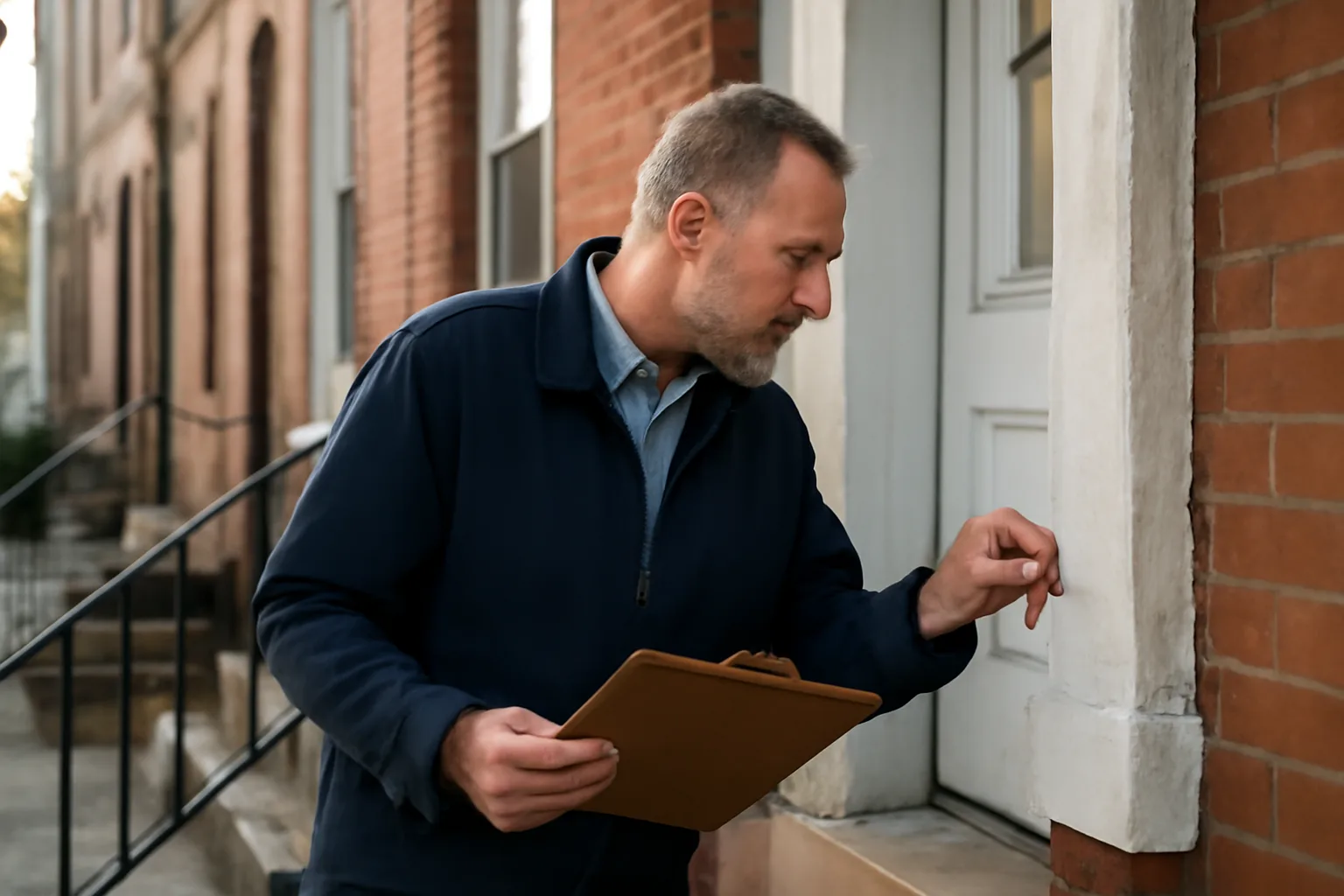
During a lawful rental inspection, whether it's a city code inspection or a lead-safe certification visit, the inspector or landlord can generally check things directly tied to habitability and safety: smoke detectors, egress windows, heating systems, electrical hazards, plumbing leaks, structural issues, pest evidence, and lead paint hazards in pre-1978 units. What they're checking depends entirely on the type of inspection and the code section that authorizes it. A landlord's own routine walkthrough (separate from a government inspection) is typically limited by the lease and state law to checking the condition of the unit, confirming no unauthorized occupants or pets, and looking for damage or lease violations. Landlords generally cannot use a walkthrough to search personal belongings, closets, or areas unrelated to habitability and lease compliance, and most states require advance notice before entering (see the notice section below). Government inspectors tied to a city licensing program, like Philadelphia's L&I, typically have a defined scope tied to the code they're enforcing: a fire safety inspector checks smoke and CO detectors, egress, and fire separation; a lead inspector checks painted surfaces for deteriorated lead paint; a general property maintenance inspector checks the broader property maintenance code (structural, sanitation, mechanical systems) [1]. None of these give the inspector or the landlord open-ended authority to search the unit beyond what the applicable code covers.
Who is responsible for a rental property walk-through inspection?
This depends on which state and which type of inspection you mean, and the rules differ quite a bit by jurisdiction. In California, for example, state law requires landlords to conduct an initial inspection before the tenant moves out if the landlord intends to withhold any part of the security deposit, and to give the tenant the chance to be present for that inspection. California Civil Code Section 1950.5 requires landlords to notify the tenant of their right to request this pre-move-out inspection and to provide an itemized statement of deficiencies if problems are found [1]. That pre-move-out inspection is separate from any move-in condition inspection, which most states either require or strongly recommend as a way to document the unit's baseline condition and avoid deposit disputes later. Responsibility for scheduling and conducting both usually falls to the landlord or their property manager, with the tenant having the right to participate or receive notice. Outside California-style statutory walk-through rights, general routine inspections during a tenancy are typically the landlord's responsibility to schedule, subject to the notice requirements covered below. The landlord (or a property manager acting on their behalf) is the one who has to initiate and document these, since it's the landlord's interest in the property's condition and legal compliance that's at stake.
How much notice does a landlord have to give before entering or inspecting?
Notice requirements vary by state, but 24 hours is the most common standard for non-emergency entry, including for repairs or inspections. California requires "reasonable notice," which state law defines as 24 hours in the absence of an agreement otherwise, under Civil Code Section 1954 [3]. Many other states use similar 24-hour or 48-hour standards written into their own landlord-tenant statutes. Pennsylvania, where Philadelphia sits, doesn't have a single statewide statute spelling out a specific notice period for routine landlord entry the way California does. Entry rights are typically governed by the lease terms and general common-law reasonableness, which is part of why a clear, specific entry clause in the lease matters so much in Pennsylvania rental agreements. Given that ambiguity, most experienced Philadelphia landlords still give at least 24 to 48 hours' written notice as a practical matter, both to avoid disputes and because many local leases specify it directly. Emergencies are the standard exception nationwide. A landlord can typically enter without advance notice to address an immediate safety issue like a gas leak, fire, or major water leak, regardless of state notice rules. Outside of true emergencies, entering without proper notice can expose a landlord to a tenant claim of unlawful entry or breach of the covenant of quiet enjoyment.
What rights do tenants have without a written lease?
A tenant without a written lease still has legal rights. Most states treat an unwritten rental arrangement as a month-to-month tenancy at will, governed by the state's landlord-tenant statute rather than a private contract. That means the tenant still has the right to habitable housing, protection from illegal lockouts or utility shutoffs, and proper notice before eviction or rent increases, even with nothing signed. In Pennsylvania, the Landlord and Tenant Act still applies to tenancies without a written lease, and a landlord generally must give proper written notice to terminate a month-to-month tenancy (commonly 15 or 30 days depending on how long the tenancy has run, under 68 P.S. Section 250.501) before starting eviction proceedings [4]. Verbal agreements about rent amount and due date are still enforceable, though they're obviously harder to prove in a dispute. The main risk of skipping a written lease falls more on the landlord than the tenant, since ambiguity about terms tends to get resolved in the tenant's favor in a dispute, and a lack of documentation makes it much harder to enforce rules about guests, pets, or property condition. If you're a landlord operating without leases, that's a bigger business risk than a legal loophole. See our companion piece on tenant rights for more on baseline protections that apply regardless of lease status.
Why do landlords require renters insurance?
Landlords require renters insurance mainly to shift liability and property-damage risk away from themselves. A standard landlord insurance policy covers the building structure but typically excludes the tenant's personal belongings and often limits the landlord's liability exposure for incidents caused by the tenant's own negligence, like a kitchen fire or a bathtub overflow that damages the unit below. Requiring renters insurance (commonly $100,000 to $300,000 in liability coverage, with policies often costing $15 to $30 a month depending on the market) means the tenant's insurer, not the landlord's, is the first line of defense if the tenant causes damage or a guest gets injured in the unit. It also protects the tenant. Without it, a fire or burst pipe can wipe out someone's furniture and electronics with zero recovery. Whether a landlord can legally require renters insurance as a lease condition depends on the state and, in some cities, on local rules, so check your state's landlord-tenant statute before adding it as a mandatory lease term. Where it's allowed, most landlords write it into the lease as a condition of tenancy and require proof of an active policy before move-in and at each renewal.
What can't a landlord do in Ohio?
Ohio's landlord-tenant law, codified mainly in Ohio Revised Code Chapter 5321, prohibits landlords from retaliating against tenants who exercise a legal right, such as reporting a code violation or joining a tenant union. The statute specifically bars a landlord from increasing rent, decreasing services, or threatening eviction in retaliation for those protected actions . Ohio landlords also cannot shut off utilities, remove doors or windows, or forcibly change locks to force a tenant out. That kind of "self-help eviction" is illegal, and tenants can sue for actual damages plus reasonable attorney fees under the same chapter. Ohio law also requires landlords to maintain the premises in a fit and habitable condition, keep common areas safe, and comply with building and housing codes, under R.C. 5321.04 . A landlord who ignores serious repair requests, or who tries to evict a tenant without going through Ohio's formal eviction process in court (forcible entry and detainer action), is acting outside the law regardless of what the lease says. Security deposit handling is another area where Ohio landlords have real limits: R.C. 5321.16 requires landlords to return the deposit, minus lawful deductions with an itemized list, within 30 days of the tenant vacating, and a landlord who wrongfully withholds a deposit in bad faith can be liable for damages equal to double the amount wrongfully withheld .
How can landlords stay ahead of renewal and inspection deadlines?
The single biggest failure point isn't the renewal fee, it's landlords losing track of dates across multiple systems: the license itself, the lead certification, fire inspections, and local tax filings. Set calendar reminders at 90, 60, and 30 days before your Philadelphia rental license expiration date, pulled directly from your eCLIPSE account rather than a mailed notice you might not receive. Keep a single folder (digital or physical) with your current license, lead-safe or lead-free certification, and any fire safety inspection reports, and check the expiration date on each one at the same time. If you own multiple properties in the city, a shared spreadsheet with columns for license expiration, lead certification expiration, and last L&I violation resolves this problem far better than trying to remember dates property by property. If you'd rather not build that tracking system from scratch, our $79 one-time City Rental License & Inspection Prep Packet walks through what documentation Philadelphia and other licensing cities typically expect at renewal and helps you organize it before a deadline sneaks up on you. It's not legal advice and it doesn't replace confirming exact requirements with L&I, but it's built for landlords juggling this kind of paperwork across a handful of units.
Frequently asked questions
How often does a Philadelphia rental license need to be renewed?
Annually, on a date tied to when the license was originally issued or last renewed rather than a fixed citywide date. Check the exact expiration date on your existing license or in your eCLIPSE account, since it's specific to your property, not the same for every Philadelphia landlord.
Can I rent my property in Philadelphia without a license?
No. The Philadelphia Property Maintenance Code requires a valid rental license before you lease or advertise residential rental property in the city [1]. Renting without one exposes you to L&I violations and fines, and can block or delay eviction filings until the license is current.
Does my Philadelphia rental license renewal require a lead inspection?
Only if your lead-safe or lead-free certification has expired. Most pre-1978 Philadelphia rental units need a current lead certification, which typically must be renewed every two years for lead-safe status, separate from the rental license's own annual renewal [2]. If both lapse together, you'll need the lead inspection done before eCLIPSE lets the license renew.
What happens if my Philadelphia rental license expires while I have a tenant?
The tenancy itself doesn't end, but you're operating without a valid license, which can trigger L&I fines and may block or delay you from filing an eviction through Philadelphia's court process until the license is renewed and any lapsed certifications are fixed [1]. Renew as soon as possible to avoid compounding problems.
How do I check my Philadelphia rental license status online?
Log into eCLIPSE, the city's online licensing portal run by the Department of Licenses and Inspections, and look up the property address or license number. The portal shows current status, expiration date, and any outstanding requirements holding up renewal.
What is landlording, in plain terms?
Landlording is the ongoing work of owning and managing a rental property: screening tenants, collecting rent, handling repairs, and keeping the unit compliant with local codes and licensing rules. In a licensing city like Philadelphia, it also includes tracking renewal deadlines for the rental license and any required certifications.
Who is responsible for a rental property walk-through inspection in California?
The landlord is responsible for conducting the pre-move-out inspection when they intend to withhold deposit funds, and must notify the tenant of the right to be present, under California Civil Code Section 1950.5 [4]. The tenant has the right to participate and receive an itemized list of any deficiencies found.
How much notice does a landlord have to give before an inspection?
Twenty-four hours is the most common standard nationally, and it's the specific rule under California Civil Code Section 1954 absent a different agreement [5]. Pennsylvania doesn't have one blanket statute setting this number, so lease terms and general reasonableness govern; most Philadelphia landlords still give at least 24 to 48 hours in writing.
What rights does a tenant have without a signed lease?
A tenant without a written lease is still protected under state landlord-tenant law, typically as a month-to-month tenant at will. That includes the right to habitable housing and proper written notice before termination; in Pennsylvania, that notice period is generally 15 or 30 days depending on tenancy length under 68 P.S. Section 250.501 [6].
Why do landlords require renters insurance from tenants?
Mainly to shift liability for tenant-caused damage and injuries away from the landlord's own policy, and to protect the tenant's belongings from fire, theft, or water damage that the landlord's building policy doesn't cover. Whether it can be a mandatory lease condition depends on your state's law, so confirm before requiring it.
What can't a landlord do in Ohio?
Ohio landlords cannot retaliate against tenants for exercising legal rights, cannot perform self-help evictions like shutting off utilities or changing locks, and must keep the property in a habitable condition, all under Ohio Revised Code Chapter 5321 [7]. They also must return security deposits within 30 days with an itemized list of deductions.
What can a landlord look at during a routine inspection?
A landlord's routine walkthrough is generally limited to checking the unit's condition, looking for damage or lease violations, and confirming no unauthorized occupants, subject to lease terms and state notice requirements. It should not extend to searching personal belongings or areas unrelated to habitability or lease compliance.
How do I become a landlord for the first time?
Confirm the property's zoning allows rental use, register with your city if required (Philadelphia requires a rental license through eCLIPSE), complete any required certifications like lead-safe inspection, then set legal rent, write a compliant lease, and screen tenants under fair housing law before move-in.
Sources
- Pennsylvania General Assembly, Pennsylvania Landlord and Tenant Act of 1951, 68 P.S. Section 250.101 et seq.: Pennsylvania's eviction process is governed by the state Landlord and Tenant Act, which Philadelphia's Municipal Court applies to landlord-tenant filings
- California Legislative Information, California Civil Code Section 1950.5: California requires landlords to notify tenants of the right to a pre-move-out inspection before withholding security deposit funds
- California Legislative Information, California Civil Code Section 1954: California defines reasonable notice for landlord entry as 24 hours absent a different agreement
- Ohio Legislature, Ohio Revised Code Chapter 5321, Landlords and Tenants: Ohio law bars landlord retaliation and self-help eviction and requires landlords to maintain rental premises in a fit and habitable condition
- Ohio Legislature, Ohio Revised Code Section 5321.16: Ohio landlords must return security deposits within 30 days with an itemized list of deductions or face liability for double the wrongfully withheld amount