Last updated 2026-07-25
TL;DR
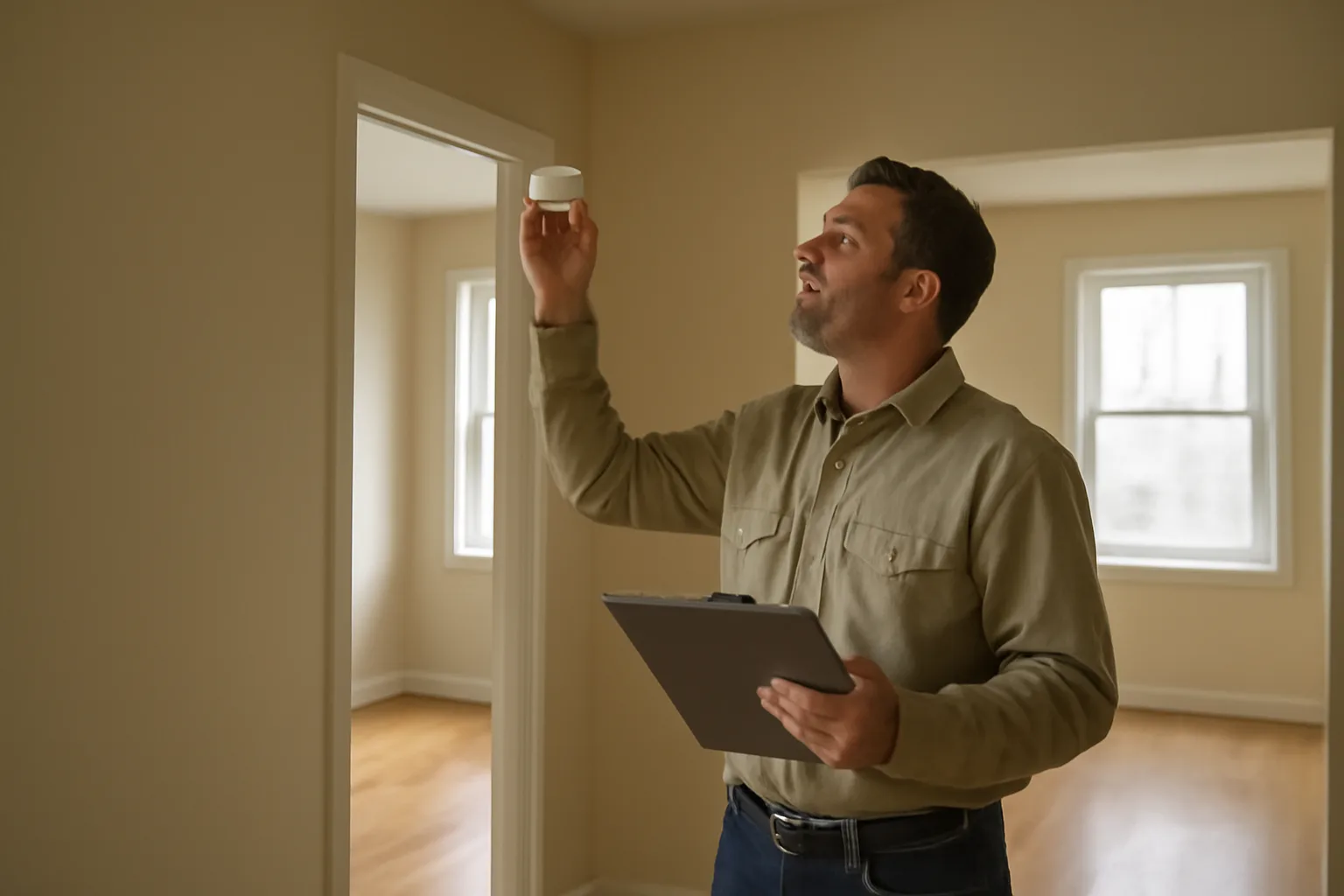
A rental property walk-through inspection checklist covers unit condition, safety equipment, utilities, and lease compliance. Landlords generally must give 24 to 48 hours notice depending on state law, tenants can be present, and inspections cannot be used to harass or retaliate. This guide covers who's responsible for the walk-through, what a landlord can and can't do, and state-specific notice rules.
What is a rental property inspection checklist and why do you need one
A rental property inspection checklist is a written list of items a landlord (or a city inspector) checks during a walk-through of a rental unit: smoke detectors, water heater condition, electrical outlets, window locks, plumbing leaks, pest signs, and general habitability. It's not the same thing as a car rental checklist, but the two share a structure worth borrowing: document condition before and after, use the same list every time, and keep dated records. Most individual landlords with a handful of units skip the checklist and just "look around." That's how you end up in a security deposit dispute with no proof of prior condition, or how you miss a $40,000 mold problem because nobody wrote down that the bathroom ceiling was already discolored in March. A checklist forces consistency. It also protects you if a tenant later claims you never inspected, or claims a hazard existed that you should have caught. If your city has a mandatory rental licensing or inspection program, the city's checklist is usually public and specific: working smoke and carbon monoxide detectors, secure handrails, no exposed wiring, functioning heat source, and so on. Always confirm your city's actual checklist with your local rental licensing office before your inspection date, because requirements vary block to block, let alone city to city.
What is landlording, and what is a landlord, exactly
Landlording is the day-to-day work of owning and operating rental property: screening tenants, collecting rent, handling maintenance requests, complying with local licensing and inspection rules, and managing the legal relationship created by a lease. A landlord is the person or entity (individual, LLC, trust) that owns residential property and leases it to a tenant in exchange for rent, taking on the legal duties that come with that role, most importantly the duty to keep the unit habitable. That habitability duty is not optional and it's not really negotiable. Most states impose an implied warranty of habitability by statute or case law, meaning the landlord has to provide a unit that is fit to live in (working plumbing, heat, and structural safety) regardless of what the lease says. California's version is written directly into the Civil Code: a landlord must maintain the premises in a condition "fit for the occupation of human beings" and keep it in "good sanitary repair" for the term of the lease [1]. Landlording also means paperwork you didn't expect when you bought the property: business license applications, rental registration renewals, lead paint disclosures, and city inspection scheduling. If you're new to this, budget real time for it. It's not passive income in year one.
How to become a landlord (the actual steps, not the fantasy version)
Becoming a landlord starts before you buy anything. Here's the realistic sequence: 1. Get your financing and insurance sorted first. Landlord (dwelling) insurance is different from a standard homeowner's policy and most lenders on a non-owner-occupied property will require it. 2. Check local licensing rules before closing, not after. Many cities require a rental license or registration before you can legally lease a unit, and some require a pre-rental inspection. Confirm with your city rental licensing office what applies to your specific address; requirements can differ by neighborhood or building age. 3. Screen tenants consistently and legally. The Fair Housing Act prohibits discrimination based on race, color, national origin, religion, sex, familial status, and disability in any aspect of renting [2]. Apply the same screening criteria to every applicant and keep records showing you did. 4. Use a written lease. Oral leases create tenancies too (more on that below), but a written lease is how you set rent amount, term, deposit terms, and house rules in a way you can actually enforce. 5. Set up rent collection, a maintenance request system, and a file for every inspection, repair, and notice you send. 6. Register or license the property with your city if required, and schedule any mandatory inspection before your first tenant moves in. None of this is fast. Plan for weeks, not days, especially if your city requires an inspection appointment; some jurisdictions book those out a month or more.
Who is responsible for a rental property walk-through inspection in California
In California, the landlord is responsible for scheduling and conducting move-in and move-out walk-through inspections, but the tenant has a statutory right to participate in the move-out one. California Civil Code Section 1950.5 requires that if a landlord intends to deduct from a security deposit for anything other than unpaid rent, the landlord must give the tenant a reasonable opportunity to request an initial inspection before move-out, conducted "no earlier than two weeks before the expiration or termination of the tenancy" [3]. After that initial inspection, the landlord must give the tenant an itemized list of deficiencies and let them fix things themselves if they want to avoid a deduction. This isn't optional paperwork. Landlords who skip it and then withhold a deposit for repairable damage can lose that argument in small claims court because they denied the tenant the statutory chance to cure it. For routine mid-tenancy inspections (not move-out related), the landlord is still the one responsible for arranging them, but must give proper entry notice under Civil Code Section 1954, generally 24 hours in writing for non-emergency entry [4]. The tenant doesn't have to be present, but they have the right to know it's happening and when.
How much notice does a landlord have to give before entering or inspecting
| California | 24 hours written | Civ. Code §1954 [4] | |
|---|---|---|---|
| Florida | 12 hours (except emergencies) | Fla. Stat. §83.53 [5] | |
| Texas | No statutory minimum; lease governs | N/A (contract-based) | |
| Oregon | 24 hours | ORS 90.322 [6] | Emergencies (fire, flooding, gas leak) are the universal exception; no state requires you to wait 24 hours while a pipe floods the unit below. But "emergency" gets abused. A landlord who wants to "just check on things" every other week and calls it an emergency is asking for a habitability or harassment complaint. Give the notice, put it in writing (text and email both work in most jurisdictions if the lease allows it), and keep a copy. |
Notice requirements are set state by state, and they're one of the most-violated rules in landlord-tenant law because owners assume they can just "stop by." California requires 24 hours' written notice for routine entry, with exceptions for emergencies and for cases where the tenant has already agreed to a shorter window [4]. Many other states use a similar 24-hour standard by statute; others don't specify a number at all and just require "reasonable notice," which courts interpret contextually. Here's a general comparison of common notice frameworks (always confirm the current statute for your state, since these get amended): | State | Standard notice for entry | Statute |
What can a landlord look at during an inspection
A landlord can generally inspect anything related to the condition of the property and the tenant's compliance with the lease: the state of appliances, plumbing, electrical fixtures, smoke and carbon monoxide detectors, signs of unauthorized occupants or pets, unauthorized alterations, and visible damage. That's it, broadly. A routine habitability or move-out inspection is about the condition of the unit, not a search of the tenant's belongings. What's generally out of bounds: opening drawers, closets, or containers to look through personal property, going through mail, or using the inspection as pretext to look for lease violations unrelated to the stated purpose of the visit (for example, showing up to "check the smoke detector" and instead photographing the tenant's belongings for an unrelated dispute). Courts and tenant law generally treat inspections that exceed their stated purpose as a violation of the tenant's right to quiet enjoyment. If your city has a licensing-related inspection, the inspector is even more limited. They're checking compliance items on the city's checklist (smoke detectors, egress windows, electrical panel, water heater strapping, no illegal units) and typically aren't looking at anything else. If you're prepping for one of these, get the actual checklist from your city rental licensing office in advance so you're not guessing what they'll flag.
What a landlord cannot do in Ohio
Ohio law puts real limits on landlord conduct, and violating them can cost you more than a fine; it can void your ability to evict or collect. Under Ohio Revised Code Section 5321.04, a landlord must comply with building and housing codes, keep common areas safe, keep plumbing and electrical systems in good working order, and provide running water, hot water, and heat during specified seasons [7]. Ohio Revised Code Section 5321.05 sets tenant duties, and courts read the two sections together: a landlord who fails their statutory duties under 5321.04 generally can't use self-help remedies against the tenant [8]. Specifically, an Ohio landlord cannot lock a tenant out, remove doors or windows, shut off utilities, or seize the tenant's belongings to force them out. This is illegal "self-help eviction." Ohio law requires landlords to use the court eviction (forcible entry and detainer) process instead. A landlord also cannot enter without reasonable notice, generally treated as 24 hours in practice, and cannot retaliate against a tenant for reporting a code violation or joining a tenant organization. Ohio Revised Code Section 5321.02 specifically prohibits retaliatory conduct, including raising rent, decreasing services, or threatening eviction, in response to a tenant's good-faith complaint [9].
What rights do tenants have without a lease
A tenant without a written lease still has real legal rights; verbal agreements and even implied tenancies (someone paying rent and being accepted by the owner) create a legal tenancy in nearly every state, usually treated as a month-to-month arrangement. The tenant still gets the implied warranty of habitability, the same protection against illegal lockouts and utility shutoffs, and the same notice requirements before eviction, just governed by state default rules instead of lease terms. Without a written lease, notice periods for ending the tenancy typically default to state statute, commonly 30 days for month-to-month tenancies, though some states use 60 days once a tenancy has run a year or more. California, for example, requires 60 days' notice to terminate a tenancy of one year or longer under Civil Code Section 1946.1 [10]. Rent amount and due date, if never put in writing, become whatever was actually being paid and accepted; disputes about this get messy fast, which is exactly why a written lease matters even for a one-unit landlord renting to a friend. A tenant without a lease can't be evicted without proper legal process either. No state allows a landlord to just tell an undocumented, no-lease tenant to leave and change the locks. The eviction process, and the notice period before it, still applies.
Why do landlords require renters insurance
Landlords require renters insurance mainly to shift liability and property-loss risk off their own policy and onto the tenant's. A landlord's dwelling insurance covers the building structure and the landlord's own property; it typically does not cover a tenant's personal belongings (furniture, electronics, clothing) if there's a fire, burst pipe, or theft. Without renters insurance, a tenant who loses everything in a fire has no coverage, and often looks to sue the landlord to recoup the loss, whether or not the landlord was actually negligent. Renters insurance also usually includes liability coverage, meaning if the tenant accidentally causes damage (a bathtub overflow that soaks the unit below, a grease fire that spreads) their policy, not the landlord's, pays for it. That's a direct cost transfer that protects a small landlord's margin. Typical renters insurance policies run in the range of roughly $15 to $30 per month depending on coverage amount and location, according to industry rate surveys; the exact price depends heavily on state, coverage limits, and the tenant's credit-based insurance score. Many landlords require proof of an active renters insurance policy, sometimes naming the landlord as an "interested party," as a lease condition. This is legal in most states as long as it's applied consistently and disclosed before signing.
How to be a landlord day-to-day (what actually takes your time)
Being a landlord day-to-day is mostly about response time and documentation, not big decisions. The daily and monthly reality looks like: responding to maintenance requests within a reasonable window (many states set specific deadlines for habitability repairs, commonly 24 hours for no-heat or no-water emergencies and up to 30 days for non-urgent issues), tracking rent payments, renewing insurance and any required rental license before it lapses, and keeping a paper trail on every notice you send. The biggest time sink for small landlords is usually turnover: cleaning, minor repairs, re-marketing, screening, and lease signing between tenants. Budget at least one to two weeks of vacancy per turnover even in a fast market, and build that into your annual cash flow so a slow month doesn't feel like a crisis. If you're in a city with mandatory rental licensing, add a recurring calendar item for renewal deadlines and inspection scheduling. Missing a renewal window is one of the most common, and most avoidable, ways landlords rack up late fees or fines. A rental packet checklist built around your specific city's requirements is worth having before your first renewal notice shows up, not after.
How to prep for a city rental inspection using a checklist approach
Whether your city calls it a rental license inspection, a certificate of occupancy inspection, or a proactive rental inspection, the prep work is nearly identical. Walk the unit yourself first, using a written list, at least two weeks before the scheduled date so you have time to fix anything that fails. Common items city inspectors check across programs (confirm your specific city's list, since these vary): - Working smoke detectors in every bedroom and on every level, and carbon monoxide detectors near sleeping areas where required
- No exposed or frayed electrical wiring; GFCI outlets in kitchens and bathrooms where code requires them
- Secure handrails and guardrails on stairs and elevated porches
- Functioning heat source able to maintain a minimum interior temperature (commonly 65 to 68°F depending on local code)
- No active leaks, no visible mold, no pest infestation
- Egress windows in bedrooms that open and aren't painted shut
- Water heater properly strapped or vented where required
- No illegal or unpermitted additional units A $79 one-time packet like the City Rental License & Inspection Prep Packet can save you the research time of tracking down your specific city's checklist and renewal deadlines from scratch, especially if you own units in more than one municipality with different rules. It's not a substitute for confirming current requirements with your city rental licensing office directly, since fees and standards change and vary by address. If you fail an inspection, most cities give a re-inspection window (commonly 15 to 30 days, confirm with your city) to fix cited items before fines apply. Don't wait until day 29 to start; parts and contractor scheduling eat time you don't get back.
Frequently asked questions
How to become a landlord with just one rental property?
Get landlord insurance, check whether your city requires rental registration or licensing before you can legally lease, use a written lease, screen every applicant with the same criteria, and set up a system for maintenance requests and entry notices. Confirm licensing requirements with your city's rental licensing office before your first tenant moves in, since many cities require this before, not after, leasing.
Who is responsible for a rental property walk-through inspection in California?
The landlord is responsible for scheduling both move-in and move-out inspections. California Civil Code Section 1950.5 gives tenants the right to request an initial move-out inspection two weeks before the tenancy ends, so they can fix flagged issues themselves before the landlord makes deductions from the deposit.
What is landlording?
Landlording is the ongoing work of owning and operating rental property: screening tenants, collecting rent, handling repairs, complying with habitability law and local licensing rules, and managing the legal duties created by a lease. It's an active role with real legal obligations, not passive income.
What is a landlord, legally speaking?
A landlord is the property owner (individual, LLC, or trust) who leases residential property to a tenant for rent. State law imposes duties on landlords, most importantly an implied warranty of habitability, meaning the unit must be fit to live in regardless of lease terms.
What rights do tenants have without a lease?
Tenants without a written lease still have a legal tenancy, usually treated as month-to-month, and keep the same habitability rights, protection against illegal lockouts, and required notice before eviction. Terms default to state statute rather than a written agreement, which is exactly why disputes over a no-lease tenancy tend to get messy.
How to be a landlord without getting overwhelmed?
Build systems before you need them: a maintenance request process, a filing system for every notice and inspection, and a calendar for insurance and license renewals. Most day-to-day landlord work is documentation and response time, not big decisions, so consistency matters more than expertise.
Why do landlords require renters insurance?
Because a landlord's own dwelling insurance usually doesn't cover a tenant's personal belongings or the tenant's liability for accidental damage. Requiring renters insurance, typically $15 to $30 a month, shifts that risk to the tenant's policy instead of leaving the landlord exposed to lawsuits or unrecoverable losses.
How much notice does a landlord have to give before entering the unit?
It depends on the state. California requires 24 hours' written notice for routine entry (Civil Code Section 1954), Florida requires 12 hours, and some states like Texas leave it to the lease. Emergencies are always an exception to standard notice requirements.
What can a landlord look at during an inspection?
A landlord can check the physical condition of the unit: appliances, plumbing, electrical, smoke detectors, signs of damage or unauthorized occupants. A landlord generally cannot open drawers or closets, go through personal belongings, or use the inspection as a pretext to look for unrelated issues.
What a landlord cannot do in Ohio?
Under Ohio Revised Code Section 5321.04 and 5321.02, a landlord cannot shut off utilities, change locks, or remove a tenant's belongings to force them out (illegal self-help eviction), cannot skip required notice before entry, and cannot retaliate against a tenant for reporting a code violation.
Do I need a checklist for a routine mid-tenancy inspection, more than move-in and move-out?
Yes. Using the same written checklist every time (smoke detectors, leaks, pest signs, unauthorized alterations) protects you if a habitability or damage dispute comes up later, and it keeps the inspection focused on its legitimate purpose rather than looking like a general search.
Can a landlord charge a fee for a required inspection?
Many cities charge an inspection or licensing fee directly to the landlord, separate from anything charged to the tenant; amounts vary widely by city and by number of units. Confirm the current fee schedule with your specific city's rental licensing office, since these change and aren't standardized nationally.
What happens if I fail a city rental inspection?
Most cities issue a list of cited violations and a re-inspection window, commonly 15 to 30 days, to fix them before fines or license denial apply. Confirm your city's specific timeline and fine schedule, since these vary significantly by jurisdiction.
Sources
- California Legislative Information, Civil Code Section 1941.1: California's habitability standard requires premises fit for human occupation and in good sanitary repair
- HUD, Fair Housing Act overview: Fair Housing Act prohibits discrimination based on protected classes in renting
- California Legislative Information, Civil Code Section 1950.5: Tenant's right to request initial move-out inspection two weeks before tenancy ends
- California Legislative Information, Civil Code Section 1954: California requires 24 hours written notice for landlord entry
- Florida Legislature, Florida Statutes Section 83.53: Florida requires 12 hours notice for landlord entry except emergencies
- Oregon Legislature, ORS 90.322: Oregon requires 24 hours notice for landlord entry
- Ohio Legislature, Ohio Revised Code Section 5321.04: Ohio landlord duties including utilities, plumbing, electrical, and heat
- Ohio Legislature, Ohio Revised Code Section 5321.02: Ohio prohibits landlord retaliatory conduct against tenants who report code violations
- Ohio Legislature, Ohio Revised Code Section 5321.05: Ohio tenant duties read alongside landlord duties under 5321.04
- California Legislative Information, Civil Code Section 1946.1: California requires 60 days notice to terminate a tenancy of one year or longer