Last updated 2026-07-26
TL;DR
If you searched "rental car inspection checklist pdf" while researching rental property, you likely meant a rental unit move-in/move-out or licensing inspection checklist, not a vehicle form. This guide covers what a rental property inspection actually checks, who's responsible for it, tenant notice rules, and the landlord basics (leases, insurance, rights) that come up right alongside it.
Why you might be searching "rental car inspection checklist pdf" for a rental property
If you landed here searching for a rental car inspection checklist pdf, there's a decent chance autocomplete or habit steered you wrong. Vehicle rental companies (Enterprise, Hertz, Avis) do publish car condition checklists for renters to document dents and scratches at pickup. That's a real document type, but it has nothing to do with residential rental property. Most people who end up on this page are actually landlords or new landlords trying to find a checklist for inspecting a rental unit, either for a move-in/move-out walkthrough or for a city rental licensing inspection. Those are the documents that matter for your business and your legal exposure, so that's what this article covers. If you do need an actual car rental inspection form, check directly with your rental car company's counter staff or website; they issue their own standardized damage checklists tied to their specific liability waiver terms, and a generic PDF found online won't match their process. Everything below is about the property side: what a landlord is, what an inspection actually checks, who's responsible for scheduling it, and what happens when a city says your unit failed.
What is landlording, and what is a landlord?
A landlord is the owner (or an owner's authorized agent) who leases residential or commercial property to a tenant in exchange for rent. "Landlording" is the informal term for the day-to-day work of managing that relationship: collecting rent, maintaining the property, handling repairs, screening tenants, and staying compliant with local, state, and federal law. Landlording is not passive. Even a single-unit owner-landlord is running a small regulated business. You're subject to fair housing law, state landlord-tenant statutes, local building codes, and in a growing number of cities, mandatory rental registration or licensing ordinances. The U.S. Department of Housing and Urban Development enforces the Fair Housing Act, which bars discrimination based on race, color, national origin, religion, sex, familial status, or disability in housing transactions [1]. Most first-time landlords underestimate the paperwork side. Between the lease, security deposit rules, habitability standards, and (in mandatory-licensing cities) inspection checklists, the administrative load is bigger than the maintenance load in year one. That's the gap a lot of new landlords hit hardest.
How to become a landlord
Becoming a landlord legally takes more than buying a property and putting up a listing. At minimum you need to: confirm your property is legally zoned and permitted for rental use, get any required rental registration or license from your city, screen tenants consistently and lawfully, draft a lease that complies with your state's landlord-tenant code, and set up a compliant method for holding security deposits. Here's a practical sequence: 1. Check your city's rental registration or licensing requirement. Many cities (Los Angeles's Rent Stabilization Ordinance program, Minneapolis's rental license program, and dozens of others) require landlords to register or license every rental unit before it's occupied, often with an inspection tied to renewal [2][3]. 2. Get landlord (dwelling) insurance, separate from a standard homeowner's policy, since most homeowner policies exclude rented property. 3. Set your lease terms in writing, matching your state's required disclosures (lead paint disclosure for pre-1978 housing is federally required under 42 U.S.C. § 4852d [4]). 4. Screen tenants using a consistent, written criteria applied to every applicant, to avoid fair housing violations. 5. Set up a rent collection and maintenance request system before your first tenant moves in. 6. Learn your local notice-to-enter rules and your inspection obligations, since these vary a lot by state and city. If your city requires a license, budget time for the inspection process specifically. Cities that run mandatory rental inspection programs typically require the license (and sometimes a passed inspection) before you can legally collect rent or renew occupancy. Confirm exact fees, forms, and inspection scheduling with your city rental licensing office, since these numbers change often and differ block to block in some jurisdictions.
Who is responsible for a rental property walk-through inspection in California?
In California, the landlord is responsible for scheduling and conducting the move-in and move-out inspections, but the tenant has a statutory right to participate. California Civil Code § 1950.5(f) gives tenants the right to request an initial move-out inspection before they leave, held no earlier than two weeks before the end of the tenancy, so they get a chance to fix any damage before the landlord makes deductions from the security deposit [5]. The landlord must give the tenant at least 48 hours' written notice before that initial inspection, unless the tenant waives the notice, per the same statute [5]. After the inspection, the landlord has to give the tenant an itemized statement of any needed repairs or cleaning that could result in a deposit deduction, along with a chance to fix those items themselves before move-out. Separately, if your unit is in a California city with its own rental inspection or Rental Housing Habitability Program (like Los Angeles's Systematic Code Enforcement Program, run through the Housing Department), the city's inspector, not the landlord, conducts that compliance inspection, and the landlord is responsible for scheduling it and paying the associated fee [2]. Confirm your specific city's program name, fee, and inspection cadence with your local rental housing or code enforcement office, since California has no single statewide inspection law and each city runs its own system. Bottom line: for the standard move-in/move-out walkthrough, the landlord runs it and the tenant has a right to be there. For city compliance inspections, the city runs it, but the landlord is on the hook for scheduling and any violations found.
What can a landlord look at during an inspection?
A landlord conducting a routine or move-out inspection can generally look at anything related to the physical condition of the unit and confirm the tenant hasn't violated lease terms, but can't rummage through personal belongings or use the inspection as a pretext for harassment. Reasonable inspection scope typically includes: - Structural condition (walls, floors, ceilings, windows, doors)
- Plumbing fixtures, for leaks or damage
- Electrical outlets and fixtures, for safety hazards
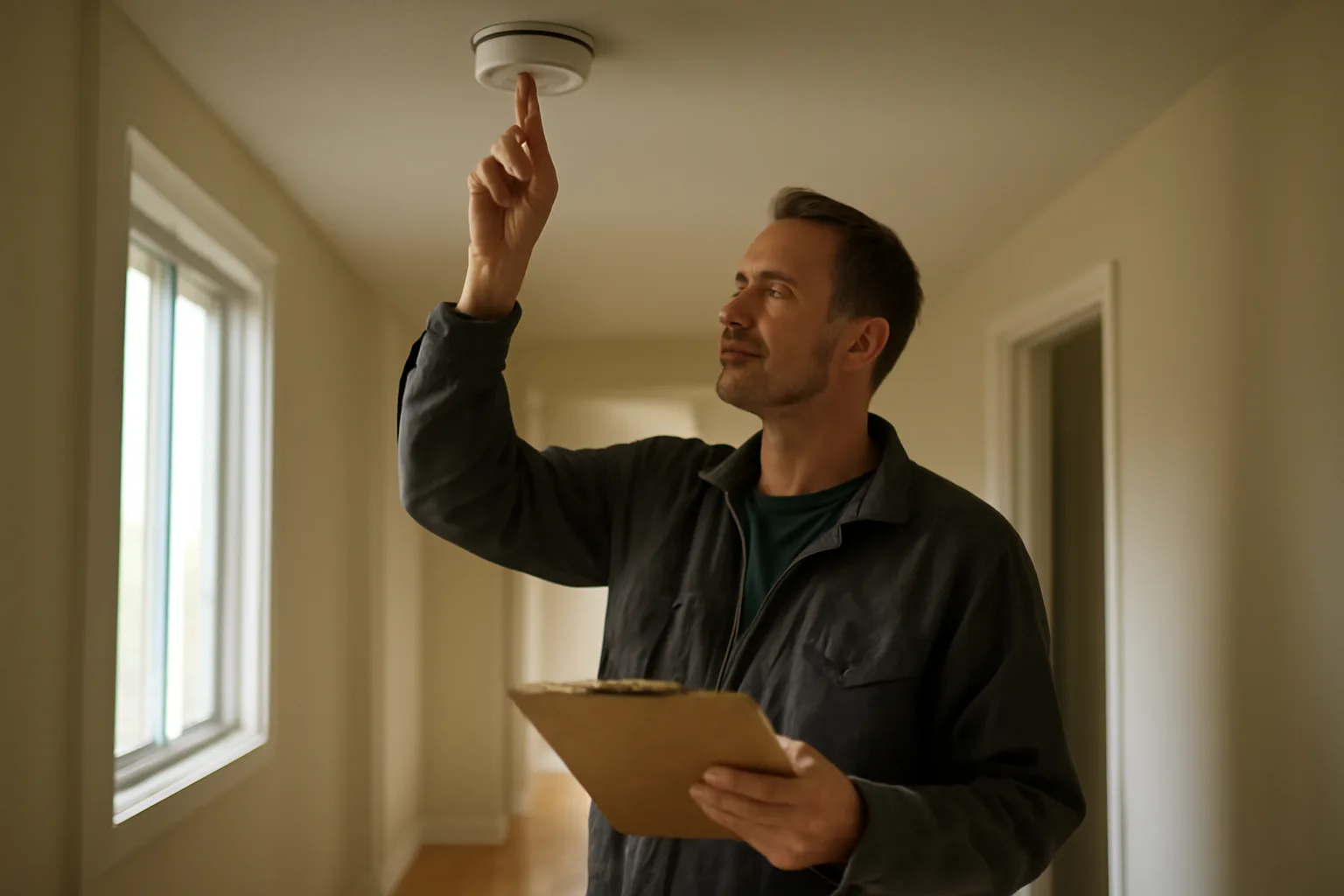
- Smoke and carbon monoxide detector presence and function
- HVAC system condition
- Evidence of unauthorized occupants or pets (if restricted by lease)
- Signs of unreported damage or needed repairs
- General cleanliness relevant to habitability (not personal tidiness preferences)
- Compliance with lease terms (e.g., no smoking clause, unauthorized alterations) What a landlord typically cannot do: open closed drawers, cabinets, or containers to inspect personal property; take photos of personal items unrelated to property condition; enter without proper notice except in a genuine emergency; or use inspections as a way to intimidate a tenant into moving out. City rental licensing inspections work differently. Those inspectors are checking code compliance, not lease compliance: smoke detectors, egress windows, handrails, water heater temperature-pressure relief valves, electrical panel condition, and pest evidence are common checklist items. If you want a structured way to prep for that kind of inspection specifically, our inspection prep guides walk through what code inspectors flag most often city by city.
How much notice does a landlord have to give before entering or inspecting?
| California | 24 hours (48 hrs for move-out inspection) | Civ. Code §§ 1954, 1950.5(f) | |
|---|---|---|---|
| Delaware | 48 hours | Del. Code tit. 25, § 5509 | |
| Texas | No statutory minimum (lease governs) | n/a | |
| Florida | 12 hours (reasonable notice) | Fla. Stat. § 83.53 | Florida's statute specifically says notice of at least 12 hours is presumed reasonable for entry to make repairs [8]. Texas has no statewide statutory minimum notice period for landlord entry, so the lease terms control unless a local ordinance says otherwise, which makes a clear lease clause more important there than almost anywhere else. Because this varies so much, confirm your specific state's notice statute (and any stricter local rule) before doing any inspection, whether routine, move-out, or city-mandated. A city rental inspection appointment is usually scheduled directly with the tenant present or with the landlord coordinating access, and most city ordinances require their own separate notice period on top of state landlord-tenant law. |
Notice requirements vary by state, and there's no single national standard. California requires at least 24 hours' written notice for routine entry under Civil Code § 1954, and 48 hours specifically for the pre-move-out inspection under § 1950.5(f) [5][6]. Many other states set 24 hours as the baseline, though a few (like Delaware) require 48 hours for non-emergency entry [7]. | State (example) | Standard entry notice | Statute |
What rights do tenants have without a lease?
A tenant without a written lease still has legal rights. Occupying a unit and paying rent, even under a verbal agreement, typically creates a month-to-month tenancy under state law, and that tenancy carries the same basic protections as a written lease in most states: the right to habitable conditions, protection from illegal lockouts, and the right to proper notice before eviction. Habitability is the big one. Under most states' implied warranty of habitability (a legal doctrine, not always a single statute), landlords have to keep rental units safe and livable regardless of whether there's a signed lease. California codifies this in Civil Code § 1941, requiring landlords to maintain the premises in a condition fit for human occupation [9]. Without a written lease, a tenant also typically gets the state's default notice-to-terminate period, since there's no lease clause overriding it. That's often 30 days for month-to-month tenancies, though it varies by state and by how long the tenant has lived there. What a no-lease tenant does NOT automatically get: any lease-specific promise (rent caps, included utilities, pet allowances) that was only ever discussed verbally and not documented. Verbal agreements are hard to enforce, which is exactly why every landlord, no matter how small the property, should use a written lease. For state-specific tenant protections, see our tenant rights and renters rights guides.
Why do landlords require renters insurance?
Landlords require renters insurance mainly to shift liability for the tenant's personal property loss and personal liability claims away from the landlord's own policy. A standard landlord (dwelling) insurance policy covers the building structure and the landlord's own liability, but it typically doesn't cover a tenant's furniture, electronics, or clothing if there's a fire, burst pipe, or theft. Requiring renters insurance also gives the landlord a layer of protection if the tenant causes damage that spreads to other units (a stove fire, an overflowing bathtub that damages the unit below). The tenant's liability coverage, usually $100,000 or more in a standard renters policy, can pay for that damage instead of the landlord's insurance absorbing the claim and raising the landlord's premiums. There's no federal law requiring landlords to mandate renters insurance, but it's an increasingly common lease clause, and some state laws explicitly allow landlords to require it as a lease condition. Requiring it is generally legal as long as it's applied consistently to all tenants (never selectively, which risks a fair housing violation) and disclosed clearly in the lease before signing.
What a landlord cannot do in Ohio
Ohio landlord-tenant law, codified mainly in Ohio Revised Code Chapter 5321, sets clear limits on landlord conduct. A landlord in Ohio cannot shut off utilities, change the locks, or remove a tenant's belongings to force them out; this is illegal "self-help eviction," and Ohio law requires landlords to go through the courts (a forcible entry and detainer action) to remove a tenant [10]. Ohio Rev. Code § 5321.04 requires landlords to keep the premises in a fit and habitable condition, comply with building and housing codes materially affecting health and safety, keep common areas safe, and maintain electrical, plumbing, and heating systems in good working order . A landlord who ignores these duties can face a tenant lawsuit for damages or lease termination. Ohio law also restricts entry: § 5321.04(A)(8) requires landlords to give reasonable notice, at least 24 hours in practice under most local interpretations, before entering except in an emergency . Retaliation is also barred; § 5321.02 prohibits a landlord from raising rent, decreasing services, or threatening eviction because a tenant complained to a government agency about code violations or exercised a legal right . So in Ohio, a landlord cannot: lock out a tenant without a court order, shut off utilities to force a move-out, retaliate against a tenant who reports code violations, enter without proper notice except in an emergency, or refuse to maintain basic health and safety systems in the unit.
How rental unit inspection checklists differ from car rental checklists
A car rental inspection checklist documents pre-existing exterior and interior damage on a vehicle at pickup, using a diagram of the car body where the renter and the counter agent both note dings, scratches, and mileage. It protects the renter from being charged for damage they didn't cause and the company from disputes about return condition. A rental property inspection checklist is structurally different because it's checking two very different things depending on which kind of inspection it is: - Move-in/move-out condition checklist: room-by-room notes on walls, flooring, appliances, fixtures, with photos, signed by both landlord and tenant, used to determine security deposit deductions.
- City rental licensing/code compliance checklist: a government inspector's checklist covering life-safety items (smoke detectors, egress, electrical panels, water heater safety valves, handrails, pest evidence), used to determine whether the unit passes for occupancy or license renewal. The first type you can build yourself with a simple template. The second type is set by your specific city's housing or building code and can vary block to block within the same state, so a generic national PDF often misses items your local inspector will flag. If you're prepping for a city licensing inspection specifically, it's worth building a checklist matched to your actual city's code rather than pulling a generic form off Google, since missed items usually mean a re-inspection fee and a delay on your license. Our $79 City Rental License & Inspection Prep Packet builds a checklist matched to your specific city's known inspection items so you're not guessing from a generic template.
What happens if your rental unit fails a city inspection
Failing a rental inspection usually means the city issues a written violation notice listing every item that didn't pass, along with a re-inspection deadline, typically ranging from 10 to 30 days depending on the city and the severity of the violation. Confirm your exact re-inspection window and any fee with your city rental licensing office, since this varies significantly by jurisdiction and by whether the issue is life-safety (fixed faster) or cosmetic. Common reasons units fail: missing or non-functioning smoke detectors, missing carbon monoxide detectors in states or cities that require them, exposed wiring, inadequate egress from bedrooms (windows too small or too high off the floor), water heater without a proper temperature-pressure relief valve discharge line, and peeling paint in pre-1978 housing without proper lead-safe treatment. Most cities charge a re-inspection fee if the first inspection fails and a second visit is needed; this fee is set locally and can range from around $50 to a few hundred dollars depending on the city, so confirm the number with your city rather than assuming a flat national figure. Repeated failures or ignored violation notices can escalate to fines, a hold on your rental license renewal, or in serious cases, an order that the unit can't be legally occupied until repairs are verified. The cheapest fix is avoiding the fail in the first place. Walk your unit against your city's actual published inspection checklist (most rental licensing offices publish one, sometimes as a PDF, on their housing or code enforcement webpage) before your scheduled date, and fix anything questionable ahead of time rather than hoping the inspector overlooks it.
Building your own rental unit inspection checklist
If you want a DIY checklist rather than a city-specific packet, start with these categories and adapt line items to your local code: Safety systems
- Smoke detectors present in every bedroom and common hallway, tested and working
- Carbon monoxide detectors present where required (near fuel-burning appliances or attached garages)
- Fire extinguisher present and accessible (required in some cities for multi-unit buildings) Egress and structure
- Every bedroom has a window meeting minimum size/height-from-floor egress requirements
- Handrails present on stairs with more than a few steps
- No obvious structural damage (sagging floors, cracked foundation visible from basement) Mechanical and electrical
- Water heater has a temperature-pressure relief valve with a discharge pipe to within 6 inches of the floor
- No exposed wiring or overloaded outlets
- HVAC system functions and vents properly outdoors General condition
- No active leaks
- No visible mold beyond minor surface mildew
- Working locks on all exterior doors
- Adequate exterior lighting at entry points (required in some cities) Photograph everything before your city inspection and keep dated copies. That documentation protects you if a violation notice cites something that was actually already fixed, and it builds a paper trail if a tenant dispute comes up later about unit condition at move-in versus move-out.
Frequently asked questions
Is there a real rental car inspection checklist pdf I can download?
Yes, but it comes from the rental car company itself, not a third-party site. Enterprise, Hertz, and Avis each use their own vehicle condition forms at pickup and return. Ask the counter agent for their specific form, since a generic downloaded PDF won't match the company's actual damage-documentation process or liability waiver terms.
What is landlording?
Landlording is the ongoing work of owning and managing rental property: collecting rent, screening tenants, handling repairs, maintaining habitability, and complying with local, state, and federal landlord-tenant law. It's an informal industry term, not a legal one, but it covers everything from a single-unit owner-landlord up to large property management operations.
What is a landlord?
A landlord is the property owner (or their authorized agent) who leases residential or commercial space to a tenant under a lease or rental agreement, in exchange for rent. Landlords are legally responsible for habitability, following fair housing law, and complying with any local rental registration or licensing ordinance in their city.
How do I become a landlord?
Confirm your property's zoning allows rental use, register or license it with your city if required, get landlord insurance, draft a lease matching your state's law, screen tenants consistently, and set up a rent collection and maintenance system. If your city requires a rental license, budget time and money for the associated inspection.
Who is responsible for a rental property walk-through inspection in California?
The landlord schedules and conducts move-in and move-out walkthroughs, but California Civil Code § 1950.5(f) gives tenants the right to request a pre-move-out inspection with 48 hours' notice. For city compliance inspections (like L.A.'s SCEP program), the city inspector conducts it, but the landlord is responsible for scheduling and fees.
What rights do tenants have without a lease?
A tenant without a written lease still has a legal month-to-month tenancy in most states, with rights to habitable conditions, protection from illegal lockout, and the state's default notice period before termination. What they lack is any lease-specific term (rent cap, included utilities) that was never put in writing.
Why do landlords require renters insurance?
Renters insurance shifts liability for a tenant's personal property loss and personal injury claims away from the landlord's own policy. Most landlord dwelling policies don't cover tenant belongings, so requiring renters insurance (often with $100,000+ in liability coverage) protects both the tenant's stuff and the landlord from certain liability claims.
How much notice does a landlord have to give before entering a unit?
It depends on the state. California requires 24 hours for routine entry and 48 hours for the pre-move-out inspection (Civ. Code §§ 1954, 1950.5(f)). Florida presumes 12 hours reasonable for repair entry (Fla. Stat. § 83.53). Texas has no statutory minimum, so the lease controls. Always check your specific state's statute.
What can a landlord look at during an inspection?
A landlord can inspect the physical condition of the unit: structure, plumbing, electrical, smoke detectors, HVAC, and lease-term compliance like unauthorized pets. A landlord cannot open closed drawers or containers, photograph personal belongings unrelated to property condition, or use the inspection to harass or pressure a tenant to move.
What can't a landlord do in Ohio?
Under Ohio Rev. Code Chapter 5321, a landlord cannot lock out a tenant without a court order, shut off utilities to force a move, retaliate against a tenant who reports code violations (§ 5321.02), enter without reasonable notice except in an emergency, or ignore the duty to maintain a fit and habitable unit (§ 5321.04).
What happens if my rental unit fails a city inspection?
You typically get a written violation notice with a list of failed items and a re-inspection deadline, often 10 to 30 days depending on the city. Many cities charge a re-inspection fee if a second visit is needed. Confirm exact deadlines and fees with your city rental licensing office since these vary significantly.
Do I need a different checklist for every city I own rental property in?
Yes, generally. Rental licensing inspection checklists are set by each city's own housing or building code, so requirements in one city (egress window sizes, CO detector rules, handrail specs) can differ from a neighboring city in the same state. A checklist matched to your specific city's known inspection items works better than a generic national template.
Can a landlord require renters insurance as a lease condition?
Generally yes, as long as the requirement is applied consistently to every tenant and disclosed clearly in the lease before signing. There's no federal law mandating it, but most states allow landlords to make it a lease condition. Selectively requiring it for some tenants and not others risks a fair housing complaint.
Sources
- HUD, Fair Housing Act overview: Fair Housing Act bars discrimination based on race, color, national origin, religion, sex, familial status, disability
- 42 U.S.C. § 4852d: Federal lead paint disclosure requirement for pre-1978 housing
- California Civil Code § 1950.5: Tenant right to request pre-move-out inspection with 48 hours notice
- California Civil Code § 1954: 24 hours notice required for routine landlord entry in California
- Delaware Code Title 25, § 5509: Delaware requires 48 hours notice for landlord entry
- Florida Statutes § 83.53: 12 hours notice presumed reasonable for landlord entry to make repairs in Florida
- California Civil Code § 1941: California landlord duty to maintain habitable premises regardless of lease type
- Ohio Revised Code § 5321.15: Ohio bars self-help eviction; landlord must use court process to remove tenant
- Ohio Revised Code § 5321.04: Ohio landlord duties to maintain habitability, safety systems, and give notice before entry
- Ohio Revised Code § 5321.02: Ohio bars landlord retaliation against tenants who report code violations