Last updated 2026-07-25
TL;DR
A rental car inspection form documents a vehicle's condition at pickup and return, noting existing damage so renters aren't billed for it later. Landlords use an equivalent walk-through inspection form for rental units, checking safety and condition rather than damage liability. In California, the property owner or manager, not the tenant, is responsible for conducting and documenting that walk-through.
What is a rental car inspection form, exactly?
A rental car inspection form is a short document, usually one page, that the rental company (or its counter agent) fills out with the renter at pickup and again at drop-off. It records the car's condition: existing scratches, dents, tire wear, fluid levels, mileage, and fuel level. Some companies photograph the vehicle instead of or alongside the paper form. The point is simple: create a shared record of the car's condition before the renter drives off, so nobody gets billed later for damage that was already there. Most major rental companies attach this inspection to the rental agreement itself. If you're renting a car and the counter agent doesn't walk around the vehicle with you, do it yourself and photograph every panel, the wheels, and the interior before you leave the lot. Keep those photos until the charge clears your card. This page isn't really about car rentals though. If you searched "rental car inspection form" while researching rental property compliance, you're probably thinking about walk-through inspection forms for rental housing, the kind cities require before issuing or renewing a rental license, or the kind a landlord uses at move-in and move-out to document unit condition. That's the version we cover in depth below, because the two documents work almost identically: a checklist, a signature, a dated snapshot of condition that protects both sides if a dispute comes up later.
What is a landlord walk-through inspection form for rental property?
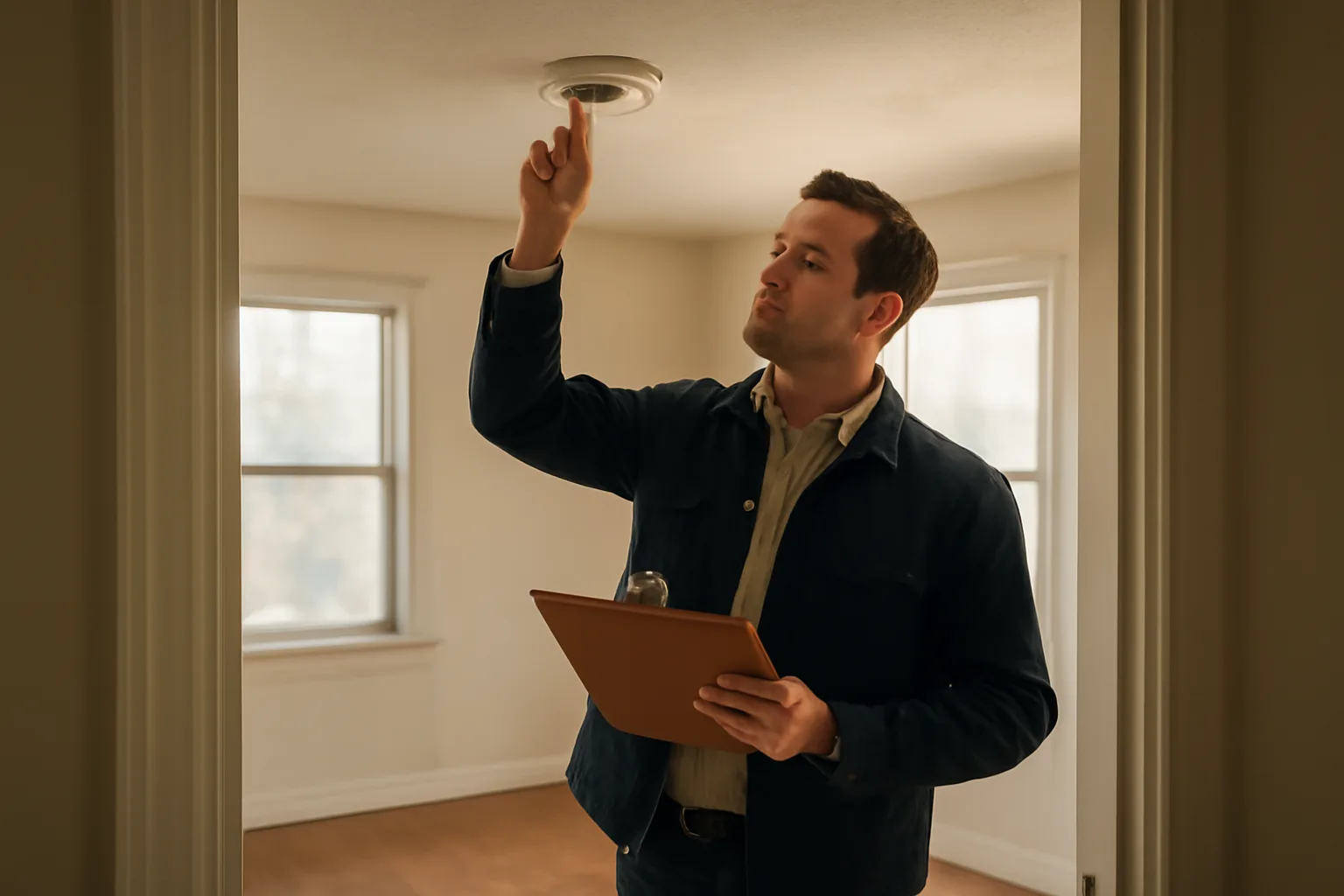
A rental property walk-through inspection form is a checklist a landlord (or a city inspector) uses to record the condition of a unit at a specific point in time: move-in, move-out, or a scheduled compliance inspection. It typically lists each room, notes damage or wear, records smoke and carbon monoxide detector function, checks for working locks and windows, and sometimes includes photos or a signature line from both parties. Cities with mandatory rental licensing programs often have their own version of this form built into the inspection process. An inspector from the city (sometimes the building department, sometimes a dedicated rental licensing office) walks the unit against a code checklist covering things like smoke detectors, egress windows, handrail height, electrical panel access, and pest evidence. That's separate from, but similar in spirit to, the move-in/move-out condition form a landlord uses privately with a tenant. If you're managing 1 to 10 units in a city that requires licensing, you'll likely deal with both kinds of forms: your own internal move-in/move-out checklist, and the city's official inspection checklist tied to your rental license or registration. Confirm with your city rental licensing office which specific form they require and whether they provide a template, since requirements vary widely by jurisdiction.
Who is responsible for a rental property walk-through inspection in California?
In California, the property owner or their agent (property manager) is responsible for conducting and documenting the move-in and move-out inspection, not the tenant. California Civil Code Section 1950.5 sets out the state's rules for security deposits and inspections. The statute gives tenants the right to request a pre-move-out inspection so they can fix any deficiencies themselves before the landlord assesses deductions from the deposit. Specifically, California Civil Code Section 1950.5(f) states that upon termination of the tenancy, "the landlord shall notify the tenant in writing of his or her option to request an initial inspection and of his or her right to be present at the inspection" [1]. The landlord (or their agent) then conducts that inspection, typically within two weeks of the move-out date, and gives the tenant an itemized statement of any proposed deductions along with a reasonable opportunity to fix the issues before move-out. So the responsibility sits with the landlord, but the process is built to be collaborative. The tenant has the right to be present, the right to advance written notice, and the right to an itemized list if the landlord ends up withholding any deposit money. Under Civil Code 1950.5(g), the landlord generally has 21 days after the tenant vacates to return the deposit along with an itemized statement of deductions [1]. A lot of landlords use a written walk-through checklist for both move-in and move-out, have the tenant sign it, and keep a copy. This isn't strictly mandated by statute for the move-in inspection itself, but courts and small claims judges tend to favor landlords who documented condition clearly, since deposit disputes usually come down to a landlord's word against a tenant's.
What can a landlord look at during a rental inspection?
During a routine inspection (as opposed to a move-in/move-out walk-through), a landlord can generally look at the general condition and safety of the unit: smoke detector function, visible water damage, signs of unauthorized pets or occupants, obvious lease violations, and maintenance issues like a leaking faucet or a broken window. What a landlord cannot do is show up unannounced and rummage through drawers or closets under the guise of a maintenance check. Most states require landlords to give advance notice before entering for a non-emergency inspection. California requires 24 hours' written notice under Civil Code Section 1954, with entry limited to "reasonable times" and for specified purposes like repairs, showing the unit, or agreed inspections [2]. Other states set the notice window differently: some require 24 hours, some 48, and a handful have no statutory minimum at all, which means local custom or lease language ends up filling the gap. The scope of what's fair game during an inspection also depends on the reason for entry. A move-out inspection focused on damage assessment is different from a routine "is everything working" check, and it's different again from a city compliance inspection tied to a rental license, which usually focuses narrowly on code items like egress, smoke/CO detectors, electrical safety, and structural issues rather than tenant belongings or housekeeping. A reasonable rule of thumb: landlords can inspect what relates to the property's condition, safety, and lease compliance. They generally can't search personal belongings, open locked containers, or use an inspection as a pretext to harass a tenant.
How much notice does a landlord have to give before an inspection?
Notice requirements vary by state, but 24 hours is the most common baseline, and it's what California requires under Civil Code Section 1954 for non-emergency entry [2]. Some cities layer additional requirements on top of state law for licensing-related inspections, so always confirm with your city rental licensing office what their specific notice rule is for compliance inspections, since it may differ from your state's general landlord-tenant notice rule. Emergency situations (fire, flooding, gas leak) are the standard exception; landlords generally can enter without advance notice when there's a genuine emergency threatening health or safety. Outside of an emergency, giving less notice than your state or city requires can expose you to a claim that you violated the tenant's right to quiet enjoyment of the unit, and in some states it can support a claim for damages. Practical tip: put your notice in writing (text or email counts in most jurisdictions as long as it's not disputed), specify the date and a reasonable time window rather than "sometime Tuesday," and state the reason for entry. This creates a paper trail that protects you if a tenant later claims they weren't told.
What is landlording and what is a landlord?
A landlord is the owner of a residential or commercial property who rents it out to a tenant in exchange for regular payment, typically monthly rent, under a lease or rental agreement. "Landlording" is the informal term for the work of managing that relationship and the property itself: collecting rent, handling repairs, screening tenants, staying compliant with local codes, and managing the legal side of the tenancy. It's a mix of property management, light bookkeeping, and conflict resolution, with a layer of legal compliance underneath all of it. Landlords with just one or two units often handle everything themselves; landlords with more units sometimes hire a property manager to handle the day-to-day work while the owner keeps the legal and financial responsibility. The scale of the job depends heavily on where the property sits. A landlord in a city with no rental registration requirement has a much lighter compliance load than a landlord in a city that requires an annual rental license, a scheduled inspection, and proof of registration before you can legally collect rent. Cities like Minneapolis, for example, require rental license renewal and periodic inspections under their Property Maintenance Code, with fees and inspection cycles set by the city's rental licensing division; specifics vary by property type and should be confirmed directly with the city office.
How do you become a landlord?
Becoming a landlord starts with buying (or already owning) a property you intend to rent out, then meeting whatever legal requirements your city and state impose before you can legally lease it. There's no license required to simply own rental property in most of the country, but a growing number of cities require landlords to register the rental unit, obtain a rental license, and pass a habitability inspection before they can legally rent it to a tenant. The general path looks like this: acquire the property, check your city's municipal code for rental registration or licensing requirements, get any required inspection scheduled and passed, secure landlord insurance (different from a standard homeowner's policy), set up a system for collecting rent and handling maintenance requests, and screen tenants using a legally compliant process (credit check, income verification, background check, applied consistently to avoid fair housing violations). Fair housing compliance matters from your very first ad. The federal Fair Housing Act, enforced by the U.S. Department of Housing and Urban Development, prohibits discrimination in rental housing based on race, color, national origin, religion, sex, familial status, and disability [3]. This applies to how you advertise the unit, how you screen applicants, and how you enforce lease terms. If your city requires a rental license, that's usually a separate step from getting a landlord insurance policy or drafting a lease. Confirm with your city rental licensing office what documentation, fees, and inspection timeline apply before you list the unit, since renting without a required license can trigger fines in cities that enforce the requirement (fine amounts and enforcement practices vary widely by city).
What rights do tenants have without a signed lease?
A tenant without a signed lease still has legal rights; the absence of a written lease doesn't put them outside the law. Most states recognize a month-to-month tenancy by default when rent is paid and accepted regularly, even with no written agreement, and that arrangement carries the same basic protections as a written lease: the right to a habitable unit, the right to advance notice before entry, and the right to proper legal process before eviction. What's usually missing without a written lease is clarity on specific terms: exact rent due date, late fee amounts, pet policies, and who's responsible for specific repairs. Those default to state law and local custom when there's no written agreement spelling them out, which is one reason experienced landlords use a written lease even for family members or friends. Eviction of a tenant without a lease still requires the landlord to follow the same formal eviction process (proper notice, then court filing if the tenant doesn't leave) that applies to a tenant with a signed lease. A landlord cannot simply change the locks or shut off utilities to force a tenant out; that's illegal self-help eviction in essentially every state, and courts treat it as a violation regardless of whether a lease existed. For a broader look at what tenants can expect regardless of lease status, see tenants rights and tenant rights.
Why do landlords require renters insurance?
Landlords require renters insurance mainly to shift liability risk away from themselves. A standard landlord insurance policy covers the building and the landlord's own property, but it generally doesn't cover a tenant's personal belongings or protect the landlord if a tenant's negligence causes damage (a kitchen fire, an overflowing tub) that spreads to other units or injures someone. Requiring renters insurance, typically with a modest liability minimum like $100,000, means the tenant's policy is the first line of defense if something goes wrong in their unit. It also protects the tenant: if a fire destroys their belongings and they have no renters policy, the landlord's insurance isn't going to reimburse them for a ruined couch or laptop. Renters insurance is cheap relative to the protection it offers. The Insurance Information Institute has reported average renters insurance premiums in the range of roughly $15 to $30 per month depending on coverage limits, location, and deductible, though actual quotes vary by state and insurer [4]. Many landlords write a renters insurance requirement directly into the lease and ask for proof of an active policy naming the landlord as an "interested party" so they get notified if the policy lapses.
What can't a landlord do in Ohio?
Ohio landlord-tenant law, codified largely in Ohio Revised Code Chapter 5321, restricts a number of things landlords are tempted to do when a tenant relationship goes sideways. A landlord in Ohio cannot shut off utilities, change the locks, or remove a tenant's belongings to force them out without going through the formal eviction process in court. This is often called "self-help eviction" and it's illegal in Ohio just as it is in nearly every other state. Ohio Revised Code 5321.04 lays out the landlord's affirmative obligations, including keeping the premises in a fit and habitable condition, complying with building and housing codes affecting health and safety, and keeping common areas safe [5]. A landlord who ignores these duties can face a tenant claim for damages or, under certain conditions, a rent escrow deposit through the local municipal or county court under ORC 5321.07 [6], which lets a tenant pay rent into a court-held escrow instead of directly to the landlord until the landlord fixes a documented code violation. Ohio also restricts retaliatory conduct: under ORC 5321.02, a landlord cannot raise rent, decrease services, or threaten eviction in retaliation for a tenant reporting a code violation or joining a tenant organization [7]. And Ohio law generally requires 24 hours' notice before a landlord enters an occupied unit for a non-emergency reason, per the reasonable-notice standard built into ORC 5321.04's habitability and access framework, though the exact number isn't spelled out as a single statutory hour figure the way California's is; check current guidance for specifics. Security deposit handling has its own rules too: under ORC 5321.16, an Ohio landlord who wrongfully withholds a security deposit or fails to provide an itemized list of deductions within 30 days of the tenant vacating can be liable for damages, including in some cases the amount wrongfully withheld plus reasonable attorney's fees [8].
City rental inspection checklists vs. a landlord's own walk-through form
| City rental license inspection checklist | City inspector (sometimes with landlord present) | Code compliance: smoke/CO detectors, egress, electrical, structural, pest evidence | Before license issuance or renewal, per city cycle | |
|---|---|---|---|---|
| Landlord move-in/move-out walk-through form | Landlord or property manager, tenant often present or invited | Unit condition: walls, flooring, appliances, fixtures, cleanliness | At lease start and lease end | |
| Rental car inspection form | Rental company agent, renter present | Vehicle condition: body damage, mileage, fuel, tire wear | At pickup and return | The city checklist is about legal compliance and public safety. The landlord's own walk-through form is about protecting the security deposit and documenting condition for both parties. They can overlap (a smoke detector that's dead shows up on both), but they serve different purposes and usually get filed in different places. If your city requires a rental license, you may also be required to keep your own move-in/move-out documentation on file in case of a tenant dispute, though this requirement itself varies by city; confirm with your city rental licensing office what records they expect you to retain. |
It helps to keep these two documents mentally separate, because landlords in licensing cities deal with both. | Document | Who fills it out | What it checks | When it happens |
How to prepare for a rental property inspection (practical checklist)
Whether it's a city licensing inspection or your own move-in walk-through, a little prep avoids most of the common failures. Test every smoke detector and carbon monoxide detector before the inspector shows up; dead batteries are one of the most common reasons units fail a first inspection. Check that every window that's supposed to open actually opens, especially in bedrooms, since egress requirements are a standard code item. Walk the exterior too. Loose handrails, missing address numbers, overgrown vegetation blocking a fire exit, or a broken exterior light are all things an inspector is trained to flag, and they're cheap to fix in advance. Check your electrical panel is accessible and labeled, and clear anything stored in front of it. If you manage several units across different cities, keeping track of each city's specific fee schedule, inspection cycle, and required forms gets complicated fast. That's the gap our $79 one-time City Rental License & Inspection Prep Packet is built to close: it walks you through the documentation most cities ask for so you're not scrambling to figure out the local checklist a week before your inspection date. It's not a substitute for confirming your specific city's current rules directly with their rental licensing office, since those requirements do change.
Where to go for more on tenant and landlord rights
Rental compliance touches both sides of the lease, and understanding tenant rights makes you a better landlord, not a weaker one. A tenant who knows their rights and trusts that you know yours tends to be an easier tenant to work with over the life of a lease. If you want to go deeper on the tenant side of this relationship, see tenants rights and renters rights for state-by-state frameworks, and tenant and tenant for common disputes between co-tenants that landlords often get pulled into. On the landlord side, landlord and landlord landlords cover the broader responsibilities that come with the role beyond just the inspection paperwork. None of this is legal advice, and city and state requirements change often enough that a specific number or deadline you read anywhere online, including here, should be confirmed against your city's current published rules before you rely on it for a license application or an inspection date.
Frequently asked questions
What is a rental car inspection form used for?
It documents a vehicle's condition (existing damage, mileage, fuel level) at pickup and return so the renter isn't charged for pre-existing wear. Rental companies use it to protect against damage disputes; renters should photograph the car themselves as backup in case the paper form misses something.
Who is responsible for a rental property walk-through inspection in California?
The landlord or their agent is responsible. California Civil Code Section 1950.5 requires the landlord to notify the tenant in writing of the right to request a pre-move-out inspection and to be present, then gives the landlord roughly 21 days after move-out to return the deposit with an itemized statement [1].
What is landlording?
Landlording is the day-to-day work of owning and renting out property: collecting rent, handling repairs and tenant communication, screening applicants, and staying compliant with local rental codes. It ranges from very light (one unit, no local licensing requirement) to fairly administrative in cities with mandatory registration and inspection cycles.
What is a landlord, legally speaking?
A landlord is the party who owns residential or commercial property and leases it to a tenant in exchange for rent, under either a written lease or an oral/implied month-to-month agreement. The role carries legal obligations under state landlord-tenant statutes, including habitability duties and notice requirements before entry.
What rights do tenants have without a signed lease?
A tenant without a written lease is usually treated as a month-to-month tenant under state law, with the same basic protections as a written lease: habitability, notice before entry, and formal eviction procedure. What's missing is written specificity on things like exact rent terms and pet rules, which then default to state law.
How do you become a landlord?
Buy or already own a property, check your city and state for any rental registration or licensing requirements, pass any required inspection, get landlord insurance, and screen tenants consistently under fair housing law. In licensing cities, confirm the specific fee and inspection process with your city's rental licensing office before you list the unit.
Why do landlords require renters insurance?
It shifts liability for tenant belongings and tenant-caused damage away from the landlord's own policy, which usually doesn't cover a tenant's possessions. Renters insurance averages roughly $15 to $30 per month according to industry data from the Insurance Information Institute [4], making it a low-cost requirement relative to the protection it provides both parties.
How much notice does a landlord have to give before entering?
24 hours is the most common standard; California requires 24 hours' written notice under Civil Code Section 1954 for non-emergency entry at a reasonable time [2]. Other states vary, and cities sometimes add separate notice rules for licensing-related inspections, so confirm the specific requirement where your property sits.
What can a landlord look at during an inspection?
A landlord can generally check the unit's safety and condition: smoke/CO detector function, visible damage, maintenance issues, and lease compliance like unauthorized occupants. A landlord generally cannot search personal belongings, open locked drawers or containers, or use an inspection as a pretext to go through a tenant's things.
What can't a landlord do in Ohio?
Ohio landlords cannot use self-help eviction (changing locks, shutting off utilities) instead of the formal court eviction process. Ohio Revised Code 5321.04 requires habitability compliance, and ORC 5321.02 bars retaliatory rent increases or eviction threats against tenants who report code violations [5][7].
How long does a landlord have to return a security deposit?
It depends on the state. California generally requires the deposit and itemized deduction statement within 21 days of move-out under Civil Code 1950.5(g) [1]. Ohio requires landlords to account for deductions within 30 days under ORC 5321.16, with potential liability for wrongfully withheld amounts [8].
Do all cities require a rental license or inspection?
No. Rental licensing and mandatory inspection requirements are set city by city (and sometimes county by county), not universally at the state level. Some cities require annual license renewal with a scheduled inspection; many U.S. jurisdictions have no such requirement at all. Always confirm directly with your specific city's rental licensing office.
What's the difference between rental registration and rental licensing?
Registration typically just means telling the city a unit is being rented, often for a small or no fee, with no inspection attached. Licensing usually requires an application, a fee, and a passed inspection before the city issues (or renews) the license, with penalties for renting without one in cities that enforce it.
Sources
- California Legislative Information, Civil Code Section 1950.5: California landlord obligations for move-out inspections, notice, and 21-day deposit itemization timeline
- California Legislative Information, Civil Code Section 1954: California's 24-hour written notice requirement for landlord entry
- U.S. Department of Housing and Urban Development, Fair Housing Act overview: Federal Fair Housing Act protected classes applying to rental housing
- Insurance Information Institute, Renters Insurance facts and statistics: Average renters insurance premium range
- Ohio Legislature, Ohio Revised Code Section 5321.04: Ohio landlord obligations to maintain habitable, code-compliant premises
- Ohio Legislature, Ohio Revised Code Section 5321.07: Ohio rent escrow deposit remedy for tenants when landlord fails to fix code violations
- Ohio Legislature, Ohio Revised Code Section 5321.02: Ohio's prohibition on retaliatory landlord conduct
- Ohio Legislature, Ohio Revised Code Section 5321.16: Ohio's 30-day security deposit itemization requirement and landlord liability for wrongful withholding