Last updated 2026-07-26
TL;DR
A rental housing inspection is a city or code-enforcement review of a rental unit's safety and habitability, usually tied to a rental license or registration program. Landlords typically must give 24 to 48 hours notice before entering, and inspectors check smoke detectors, electrical, plumbing, and structural conditions. Rules vary heavily by city and state.
what is a rental housing inspection, exactly
A rental housing inspection is when a city inspector, code enforcement officer, or sometimes a third-party contractor comes into your rental unit to check whether it meets local health, safety, and building code standards. Most cities that run these programs tie the inspection to a rental license or registration requirement. No inspection, no valid license. No valid license, and you can't legally rent the unit in that jurisdiction, and in some cities you can be fined even if rent is still being collected. This is different from a routine maintenance walkthrough or a move-in/move-out inspection you do yourself. A code inspection is government-facing. The inspector is checking against a written code, usually the International Property Maintenance Code (IPMC) as adopted locally, or a city-specific housing code. Cities like Minneapolis, Rochester (NY), and hundreds of others require periodic inspections as a condition of keeping a rental license active. The frequency varies a lot. Some cities inspect every unit before the first tenant moves in and then every 2 to 3 years after that. Others only inspect on complaint, meaning a tenant calls in a problem and code enforcement shows up. If you own in a city with mandatory periodic inspection, you'll usually get a notice letter with a scheduled window, not a random knock at the door. If you're not sure whether your city runs this kind of program at all, start with your city's rental licensing or code enforcement office directly. Program names differ: "rental registration," "certificate of occupancy for rentals," "crime-free rental housing inspection." Same basic idea, different label.
who is responsible for a rental property walkthrough inspection in california
In California, there's no single statewide mandatory rental inspection law that applies to every city. Instead, individual cities and counties adopt their own rental inspection or proactive rental inspection programs (sometimes called RRIP, Rental Housing Inspection Program, or similar) under their local municipal code and police power authority. Los Angeles runs its Systematic Code Enforcement Program (SCEP) under the LA Municipal Code, which requires periodic inspections of most rental units and charges an annual per-unit fee that funds the inspections [1]. Oakland, San Francisco, and other cities run comparable but separately-adopted programs. So who does the actual walkthrough? It depends on the city. In most California programs, it's a city building or housing inspector, not a private contractor and not the landlord. The landlord's job is to schedule access, be present or have someone present to let the inspector in, and fix any violations found within the timeline given. Some cities allow a self-certification checklist for smaller properties in lieu of a full walkthrough in some inspection cycles, but that's a local policy call, not a statewide rule. California's general landlord entry law, Civil Code Section 1954, separately governs when a landlord can enter a tenant's unit for repairs, inspections shown to prospective tenants or buyers, or in emergencies, and generally requires "reasonable notice," which the statute defines as 24 hours presumed reasonable in the absence of contrary evidence [2]. That's the rule you'd lean on for entering to prep for a city inspection, since Civil Code 1954 covers landlord-initiated entry, while the city's own inspection program will usually specify its own separate notice period to the landlord. Bottom line for California landlords: check your specific city's municipal code section for the rental inspection program (LA's SCEP fee and inspection interval details are on the city's Housing Department site) [1], and separately follow Civil Code 1954 for tenant notice when you personally need to enter the unit.
what does a landlord actually do (what is landlording)
Landlording is the ongoing work of owning and operating rental property: setting rent, screening and selecting tenants, maintaining the unit, collecting rent, keeping up with local licensing and inspection requirements, and dealing with turnover. It's part business operation, part maintenance job, part legal compliance. Most small landlords underestimate the compliance side going in. You're more than renting out a spare bedroom or a duplex unit; in a licensed city, you're operating something the city tracks, taxes (in the form of license fees), and periodically inspects. HUD's own guidance for housing providers frames habitability duties around basic health and safety systems: working plumbing, heat, electrical, and structural soundness [3]. That's the floor. Local codes usually add more on top of it, things like smoke detector placement, egress window sizes for bedrooms, handrail height, and GFCI outlets near water sources. A landlord who's only thinking about rent collection and not about the local rental licensing calendar is the one who gets blindsided by a $200 to $1,000+ inspection violation fine (fine ranges vary hugely by city; confirm with your city rental licensing office) months after buying a property. Landlording well means building a habit: check licensing status at purchase, calendar the renewal and inspection cycle, and keep a maintenance log.
what is a landlord, legally speaking
Legally, a landlord (also called a lessor) is the party who owns real property and grants another party (the tenant, or lessee) the right to occupy and use it in exchange for rent, under a lease or rental agreement. That's the core definition in landlord-tenant law across every U.S. state, though the specific duties attached to that role, habitability, repair obligations, notice-to-enter rules, security deposit handling, vary state by state and often city by city on top of that. Being a landlord isn't just "owning a rental." It comes with statutory obligations. Nearly every state has an implied warranty of habitability, meaning even if your lease says nothing about repairs, the law requires you to keep the unit livable: working utilities, no serious pest infestations, structurally sound, free of health hazards. Landlords are also generally treated as running a business for tax purposes (Schedule E on federal returns) and, in mandatory-licensing cities, as a regulated business subject to registration, fees, and inspection. If you're weighing whether to formally call yourself a landlord versus doing informal room rentals, the informal route rarely gets you out of local rental registration requirements. Many cities define "rental unit" broadly enough to capture a rented room in an owner-occupied house, a basement unit, or a single-family home rented to family for below-market rent. Check your specific city's definition before assuming you're exempt.
how to become a landlord (the realistic checklist)
Becoming a landlord isn't a licensing process by itself in most states (a few states and cities do require a specific landlord or property manager license or registration, so check locally), but there's a real sequence of steps if you want to do it without a costly mistake in year one. 1. Buy or convert a property that's legal to rent in your zoning district. Not every residential zone allows rentals, and some cities cap the number of rental units per block or require owner-occupancy for certain unit types. 2. Register or license the rental with your city, if required. This is the step most first-time landlords miss, because most states don't require it, but hundreds of individual cities do. Fees commonly run somewhere in the range of $20 to $300 per unit per year depending on the city (confirm with your city rental licensing office), though some cities scale fees by number of units or building age. 3. Get the required inspection scheduled and passed, if your city requires pre-rental or periodic inspection. 4. Get landlord-specific insurance (a standard homeowner's policy usually excludes rental use; you generally need a landlord/dwelling policy, sometimes called DP-3). 5. Screen tenants consistently and legally, applying the same criteria to every applicant to avoid Fair Housing Act violations. HUD enforces the federal Fair Housing Act, which bars discrimination based on race, color, national origin, religion, sex, familial status, and disability [4]. 6. Use a written lease. Verbal leases are legal in most states but create real evidence problems later. 7. Set up rent collection, a maintenance response process, and a compliance calendar for license renewals and inspection cycles. If you're doing this in a city with mandatory rental licensing, the tenants rights and local inspection rules are worth reading before you close on the property, not after.
what can a landlord look at during an inspection
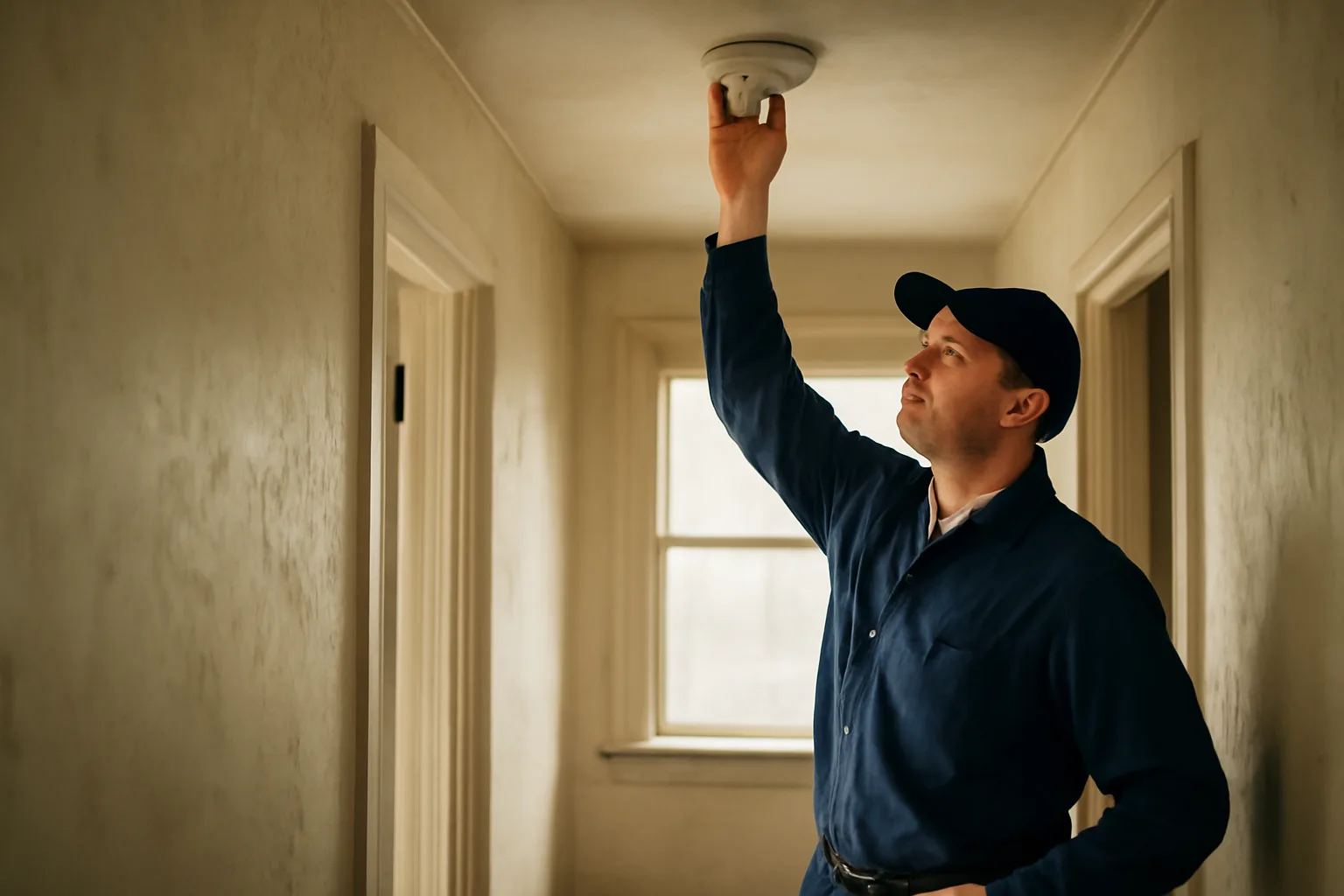
During a city rental inspection, the inspector (not the landlord) is generally checking life-safety and structural items, not judging your decor. Typical inspection checklists, drawn from the International Property Maintenance Code adopted by many cities, cover: working smoke alarms and carbon monoxide detectors in required locations, functioning heat source capable of maintaining a minimum interior temperature (often around 68degF, though the exact number is set locally), no exposed wiring or overloaded circuits, functioning plumbing with no active leaks, adequate egress (a legal second way out of bedrooms, including window size minimums), handrails on stairs with more than a few steps, no structural damage to floors, walls, ceilings, or foundation, and no pest infestation or accumulated trash creating a health hazard [5]. During a landlord's own pre-inspection walkthrough (separate from the government inspection), you can and should look at all of the above yourself first, plus things the city inspector won't flag but that matter for your liability: water heater temperature-pressure relief valve, dryer vent lint buildup, GFCI outlets in bathrooms and kitchens, and window lock function. What a landlord generally cannot do during any walkthrough, city inspection or your own, is search through the tenant's personal belongings, closets, or drawers beyond what's needed to check the fixed systems of the unit. The inspection is about the property's condition, not an excuse to go through someone's stuff.
how much notice does a landlord have to give before entering or inspecting
| California | 24 hours (presumed reasonable) | Civil Code 1954 [2] | |
|---|---|---|---|
| Florida | 12 hours | Fla. Stat. 83.53 [6] | |
| Texas | No statewide statutory minimum; lease-governed | N/A | |
| Washington | 2 days (48 hours) written notice | RCW 59.18.150 [7] | Separately, a city-run rental inspection program may specify its own notice period to the landlord for the scheduled inspection appointment itself, often 7 to 30 days written notice by mail, which is a completely different notice requirement than the landlord-to-tenant entry notice under state law. You may need to satisfy both: the city's notice to you, and then your own notice to the tenant under state law, before the inspection date. |
Most states require landlords to give tenants advance written or verbal notice before entering an occupied unit for non-emergency reasons, including inspections. The most common notice period is 24 hours, though it's not universal. California's Civil Code Section 1954 treats 24 hours notice as presumptively reasonable for entry to make repairs or show the unit, and requires notice in writing except in specific limited circumstances [2]. Florida Statute 83.53 requires landlords to give tenants at least 12 hours notice before entering to inspect [6]. Texas has no single statewide statutory notice period for routine landlord entry (it's typically governed by the lease itself), which surprises a lot of landlords moving from a state with a hard statutory number. Here's a quick comparison of a few commonly cited state rules: | State | Standard notice for entry/inspection | Statute |
why do landlords require renters insurance
Landlords require renters insurance mainly to shift liability and personal property risk away from the landlord's own policy. A landlord's dwelling insurance covers the building's structure, not the tenant's belongings, and it generally doesn't cover injuries or damage caused by the tenant's own negligence in a way that fully protects the landlord from a lawsuit. Renters insurance typically includes personal liability coverage, often $100,000 or more depending on the policy, which means if the tenant's negligence causes a fire, a flood from an overflowing tub, or a dog bite, their policy responds first instead of the landlord's insurer having to fight it out or the landlord eating the loss. It also covers the tenant's own belongings, which reduces the chance a tenant tries to blame the landlord for the loss of furniture or electronics after a covered event like a pipe burst. There's no federal law requiring renters insurance, but a large share of landlords require it as a lease condition where state law allows it, and Fannie Mae and other industry sources have noted the trend of landlords making it a lease requirement to reduce claims exposure [8]. If you require it, be consistent: require it of every tenant, state the minimum liability coverage amount in the lease, and require proof of a policy naming you as an "interested party" or "additional interest" before move-in.
what rights do tenants have without a lease
A tenant without a signed lease still has real legal rights in nearly every U.S. state, they're just typically classified as a month-to-month tenant (sometimes called a "tenant at will" or "periodic tenancy") rather than a fixed-term tenant. The absence of a written lease does not mean the absence of a legal tenancy. Tenants without a lease generally still have: the right to habitable housing under the state's implied warranty of habitability, the right to advance notice before the landlord can terminate the tenancy (commonly 30 days for month-to-month tenancies, though some states or cities require more, particularly in rent-controlled jurisdictions), the right to the same entry notice protections as leased tenants under state law, and the right to the return of any security deposit collected, handled under the state's deposit statute regardless of whether a written lease exists. What a landlord cannot do just because there's no written lease is skip required legal process to remove the tenant. Self-help eviction (changing locks, shutting off utilities, removing belongings without a court order) is illegal in essentially every state whether or not a lease exists. If you're renting without a written lease right now, get one in place going forward; verbal agreements are legally binding in most states but nearly impossible to prove in a dispute. For state-specific and city-specific tenant protections, see tenant rights and renters rights.
what a landlord cannot do in ohio
Ohio's landlord-tenant law is codified mainly in Ohio Revised Code Chapter 5321. A few specific things Ohio law prohibits landlords from doing: Ohio landlords cannot enter a tenant's unit without reasonable notice except in an emergency. ORC 5321.04 requires landlords to give tenants "reasonable notice" of intent to enter, and Ohio courts and the statute generally treat 24 hours as reasonable in most circumstances, though the statute itself doesn't hard-code a specific number of hours the way California's does [9]. Ohio landlords cannot shut off utilities, change the locks, or remove a tenant's belongings to force them out without going through formal eviction (forcible entry and detainer) proceedings in court. This is true in every state, but Ohio's statute (ORC 5321.15) specifically prohibits landlords from using self-help remedies like lockouts or utility shutoffs . Ohio landlords cannot retaliate against a tenant for legitimate complaints. ORC 5321.02 bars landlords from raising rent, decreasing services, or threatening eviction because a tenant complained to a government agency about a code violation or exercised a legal right under Chapter 5321 . Ohio landlords also cannot fail to maintain the unit in a habitable condition. ORC 5321.04 requires landlords to keep the premises in compliance with building, housing, and health codes, keep common areas safe, keep plumbing and electrical systems in good working order, and supply running water and reasonable amounts of hot water [9]. If you own in Ohio, read 5321.04 directly rather than relying on a summary; it lists the specific maintenance duties in one place and is short enough to read in ten minutes [9].
how to prep a unit before a scheduled city inspection
Prep for a city rental inspection the same way every time, regardless of city: walk the unit yourself 1 to 2 weeks ahead using the same checklist the inspector will use (most cities post their inspection checklist publicly; ask your rental licensing office for it if you can't find it online). Test every smoke alarm and carbon monoxide detector. Replace batteries even if they're not dead; a chirping detector during an inspection is an easy, avoidable fail. Check that every bedroom has a legal second exit (a door or a window that opens fully and meets the local minimum size), since egress failures are one of the more common reasons cities cite for re-inspection. Look at every outlet in the kitchen and bathroom for GFCI protection, check for any visible water staining on ceilings (a common trigger for a deeper plumbing check), make sure handrails are secure on any stairway with more than 3 or 4 steps, and clear any storage blocking a furnace, water heater, or electrical panel, since inspectors need clear access to those. If you manage multiple units across different cities, keeping the paperwork straight (license numbers, renewal dates, inspection notices, prior violation letters) gets messy fast. That's the specific gap our $79 one-time City Rental License & Inspection Prep Packet is built for: a structured way to organize what your city is asking for before the inspector shows up, at /rental-packet-builder. It's a document organization tool, not a substitute for reading your city's actual code or for legal advice.
what happens if a rental fails inspection
If a rental unit fails a city inspection, the typical process is: the inspector documents each violation in a written notice, gives you a compliance deadline (commonly somewhere between 10 and 60 days depending on the severity and the city, confirm with your city rental licensing office), and schedules a re-inspection. Minor items (a missing smoke detector battery, a loose handrail) are usually quick fixes with a short deadline. Major items (structural issues, lack of heat, active electrical hazards) can trigger a much shorter compliance window, sometimes as little as 24 to 72 hours for anything the city considers an imminent life-safety hazard, and in extreme cases the city can red-tag the unit as unfit for occupancy until repairs are made. Failing to fix violations by the deadline typically escalates to fines, which vary enormously by city (some start around $100 to $250 per violation per day it remains unresolved; again, confirm the actual number with your city rental licensing office, since this is genuinely one of the most locally variable numbers in this whole topic). Repeated or unresolved failures can lead to license suspension or revocation, meaning you legally cannot rent the unit at all until it's resolved and re-inspected. The fastest path back to compliance is almost always calling the inspector's office directly rather than waiting for a second notice; most inspectors will clarify exactly what satisfies the violation and, in many cities, will do a partial or photo-based re-check for minor items instead of a full second visit.
Frequently asked questions
How to become a landlord?
Buy or convert a property zoned for rental use, check whether your city requires rental registration or licensing, get any required pre-rental inspection done, buy landlord-specific insurance, screen tenants consistently under Fair Housing Act rules, and use a written lease. Most states don't license individual landlords, but many cities do require registering the property itself.
Who is responsible for a rental property walkthrough inspection in California?
A city or county building/housing inspector conducts the walkthrough under the local rental inspection program (like Los Angeles's SCEP), not the landlord or a private contractor. Landlords are responsible for scheduling access and fixing violations. Separately, Civil Code 1954 governs a landlord's own entry notice to tenants, generally 24 hours.
What is landlording?
Landlording is the full job of owning and operating rental property: setting rent, screening tenants, maintaining the unit to habitability standards, collecting rent, and staying current on local licensing, registration, and inspection requirements. It's part maintenance, part compliance, part running a small business.
What is a landlord?
A landlord (or lessor) is the property owner who grants a tenant the legal right to occupy a unit under a lease or rental agreement in exchange for rent. Landlords carry statutory duties, like the implied warranty of habitability, that exist regardless of whether the lease spells them out.
What rights do tenants have without a lease?
Tenants without a written lease are usually still legally month-to-month tenants with real rights: habitable housing, standard entry notice, advance notice before termination (often 30 days), and return of any security deposit under state law. A landlord still cannot evict without going through the court process.
Why do landlords require renters insurance?
Renters insurance shifts personal liability and property-damage risk to the tenant's own policy instead of the landlord's. It typically includes liability coverage (often $100,000-plus) for things like tenant-caused fires or water damage, and covers the tenant's belongings so they can't later claim the landlord owes for their losses.
How much notice does a landlord have to give before entering?
It depends on the state. California treats 24 hours as presumptively reasonable (Civil Code 1954). Florida requires at least 12 hours (Fla. Stat. 83.53). Washington requires 2 days written notice (RCW 59.18.150). Texas has no statewide statutory minimum; check your lease and local ordinance.
What can a landlord look at during an inspection?
During a city rental inspection, the inspector checks life-safety and structural items: smoke and CO detectors, heat, electrical wiring, plumbing, egress windows in bedrooms, handrails, and pest or trash hazards. Neither the landlord nor the inspector should be searching through a tenant's personal belongings during the check.
What can't a landlord do in Ohio?
Under Ohio Revised Code Chapter 5321, landlords cannot enter without reasonable notice except in emergencies (5321.04), cannot use self-help like lockouts or utility shutoffs instead of formal eviction (5321.15), cannot retaliate against tenants for code complaints (5321.02), and cannot fail to maintain the unit to code.
How often do cities inspect rental units?
It varies widely. Some cities inspect every unit before the first tenancy and then every 2 to 3 years after. Others inspect only when a tenant files a complaint. There's no national standard; confirm the specific interval with your city's rental licensing or code enforcement office.
What happens if my rental fails a city inspection?
You get a written notice listing each violation and a compliance deadline, often 10 to 60 days depending on severity, followed by a re-inspection. Unresolved violations can lead to daily fines and, eventually, suspension of your rental license until the unit passes.
Can a landlord charge for a required rental inspection?
The inspection fee itself is typically charged by the city as part of the rental license or registration fee, not something the landlord charges the tenant directly. Landlords generally can't pass a city inspection fee onto tenants as a separate line-item charge unless local law and the lease specifically allow it.
Do I need a rental license if I only rent out one room in my house?
Possibly yes. Many cities define a rental unit broadly enough to include a rented room in an owner-occupied home, more than a separate apartment. Check your specific city's rental registration ordinance definition of "dwelling unit" or "rental unit" rather than assuming a single room is exempt.
Sources
- California Civil Code Section 1954: California treats 24 hours notice as presumptively reasonable for landlord entry
- HUD, Housing Habitability and Fair Housing guidance: Federal Fair Housing Act enforcement and basic habitability framing for housing providers
- HUD, Fair Housing Act overview: Fair Housing Act bars discrimination based on race, color, national origin, religion, sex, familial status, and disability
- International Code Council, International Property Maintenance Code: IPMC sets standard rental inspection criteria including smoke alarms, egress, plumbing, and structural soundness
- Revised Code of Washington 59.18.150: Washington requires 2 days written notice before landlord entry in most cases
- Fannie Mae, renters insurance industry guidance: Landlords increasingly require renters insurance as a lease condition to reduce claims exposure
- Ohio Revised Code Section 5321.04: Ohio landlords must maintain habitability and give reasonable notice before entry
- Ohio Revised Code Section 5321.15: Ohio prohibits landlord self-help remedies like lockouts and utility shutoffs
- Ohio Revised Code Section 5321.02: Ohio bars landlord retaliation against tenants for code complaints or exercising legal rights