Last updated 2026-07-25
TL;DR
A rental property inspection checklist covers smoke detectors, plumbing, electrical, egress windows, pest signs, and structural condition, matched to your city's actual code. There's no single universal PDF because every jurisdiction inspects for different things. The most useful approach is building a checklist from your city's own inspection form, then keeping a private version for move-in and move-out walk-throughs.
What should a rental property inspection checklist actually include?
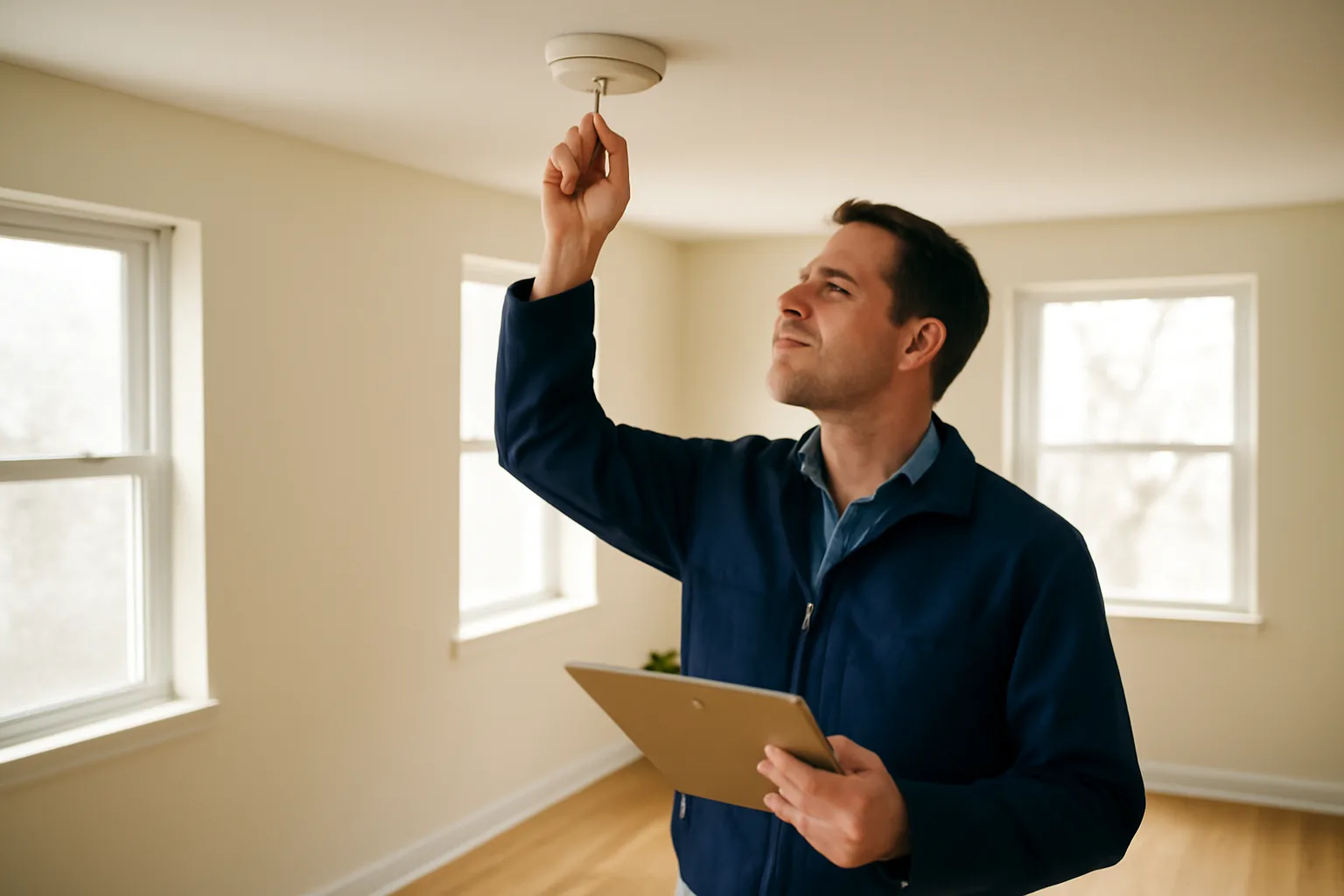
A solid checklist covers life-safety items first, then structural and mechanical systems, then cosmetic condition. Life-safety items are smoke alarms in every bedroom and on every level, carbon monoxide detectors near sleeping areas (required in many states when there's a fuel-burning appliance or attached garage), working egress windows in bedrooms, and clear exit paths. These are the items that get cited most often in city rental inspections, because they're the items tied to actual injury and death data. After life-safety, check plumbing (leaks, water pressure, working shutoffs), electrical (no exposed wiring, GFCI outlets near water sources, no overloaded panels), HVAC (working heat source, since most cities require a functioning heating system as a habitability baseline), and the building envelope (roof, windows, foundation, pest entry points). Then there's the tenant-facing layer: appliance condition, paint and flooring, door and window locks, and general cleanliness. This layer matters for your move-in/move-out documentation but usually isn't what a city inspector cares about. The honest answer is that no generic PDF checklist substitutes for your actual city's inspection form. If your city runs a rental licensing program, request their inspection checklist directly. Many post it online as a form (search '[your city] rental inspection checklist filetype:pdf' or check the city's housing or code enforcement department page). If you can't find one, ask before your inspection date. It's a normal question and inspectors answer it. For landlords managing this across multiple cities, our Rental Packet Builder puts together a city-specific prep packet built around your municipality's actual checklist, so you're not guessing at what a $79 packet review would have already told you.
Who is responsible for a rental property walk-through inspection in California?
In California, the landlord is responsible for arranging and conducting move-in and move-out walk-through inspections, but the process has specific tenant rights built in. Under California Civil Code Section 1950.5, a landlord must, if requested by the tenant, do an initial inspection before the tenant moves out, no earlier than two weeks before the end of the tenancy [1]. The landlord has to give at least 48 hours written notice of that pre-move-out inspection, unless the tenant waives that notice [1]. The point of that pre-move-out walk-through is to give the tenant a chance to fix any deficiencies that could otherwise result in deductions from their security deposit. The landlord must provide an itemized statement of proposed deductions at that inspection, so the tenant has time to clean, repair, or contest issues before move-out [1]. Separate from move-out inspections, California landlords also have a general right of entry for repairs, showings, and health/safety checks, but that requires 24 hours notice in most cases under Civil Code 1954, absent emergency [2]. Cities with their own proactive rental inspection programs (several California cities, including parts of Los Angeles County under the Rent Escrow Account Program, and cities like Santa Monica and Berkeley with local housing codes) may add city inspector visits on top of this, with their own notice rules. So the short version: the landlord runs the walk-through, but state law dictates the notice and documentation requirements, and city rental inspection programs can add another layer on top. Confirm with your city rental licensing office whether they have additional walk-through or notice requirements beyond state law.
What is landlording, and what does the job actually involve?
Landlording is the ongoing work of owning and managing a rental property: collecting rent, maintaining habitability, handling tenant communication, following state and local landlord-tenant law, and keeping the property compliant with local licensing and inspection requirements. It's not passive. Even a single-unit landlord in a licensing city is running a small compliance operation. The day-to-day list looks like this: screening tenants, drafting or using a compliant lease, collecting and holding security deposits per state rules, handling maintenance requests within legal timeframes, doing periodic inspections, renewing any required rental license or registration, and responding to code violations if they come up. Many new landlords underestimate the compliance side specifically. A city like Chicago requires a Certificate of Real Estate Compliance in some situations along with Residential Landlord and Tenant Ordinance disclosures. Baltimore requires rental license renewal with lead paint registration for pre-1978 units under Maryland's Lead Poisoning Prevention Program. These aren't optional paperwork exercises; skipping them leads to fines and, in some cities, an inability to legally collect rent or file an eviction until you're in compliance.
What is a landlord, legally speaking?
A landlord is the owner (or their authorized agent) of a residential or commercial property who leases that property to a tenant in exchange for rent, and who holds the legal obligations that come with that relationship, primarily the duty to provide habitable housing. Most state landlord-tenant statutes define the term this way, tying it to ownership or control of the property plus the existence of a rental agreement. The legal weight of being a landlord comes from the implied warranty of habitability, a doctrine recognized in nearly every US state, which requires rental housing to meet basic standards like working plumbing, heat, and structural safety regardless of what the lease says [3]. On top of that baseline, cities with rental licensing programs add their own definition-adjacent requirements: you can't legally operate as a landlord in that jurisdiction without a valid rental license or registration number, even if you technically own the property and have a signed lease. This matters for enforcement. If your city issues a violation notice and you don't have an active rental license, in many jurisdictions that voids your ability to collect rent through the courts or file an eviction until you cure the license, on top of any monetary fine.
What rights do tenants have without a signed lease?
Tenants without a signed lease, often called tenants-at-will or month-to-month tenants by default, still have nearly all the same rights as tenants with a written lease. The absence of a lease doesn't strip away habitability rights, protection from illegal lockouts, or the right to proper notice before termination. Without a written lease, the tenancy is generally treated as month-to-month, governed by state statute rather than lease terms. That means the landlord typically must give 30 days notice (some states require more for longer tenancies) to end the tenancy, can't change terms like rent without proper notice, and still owes the tenant a habitable unit under the implied warranty of habitability [3]. The lack of a lease also doesn't remove security deposit protections in states that regulate deposits by statute rather than by contract. What a tenant without a lease does lose is the certainty of fixed terms: no fixed rent amount protection for a lease term, no guaranteed renewal, and easier (though still notice-required) termination by the landlord compared to a fixed-term lease. For more on this, see our guide on tenants rights and renters rights.
How do you become a landlord, step by step?
Becoming a landlord means buying or inheriting a rental property, then meeting your state's and city's legal requirements before you can lease it out. There's no license required to simply own property, but almost every city with a rental registration program requires a license or registration before you rent the unit out, not after. The practical sequence: (1) confirm zoning allows rental use, especially for converting an owner-occupied home to a rental, (2) check whether your city requires a rental license, registration, or business license, (3) schedule any required pre-rental inspection, (4) get landlord insurance (standard homeowners insurance typically excludes rental use), (5) understand your state's security deposit, notice, and habitability laws, (6) build a compliant lease, and (7) screen tenants under Fair Housing Act rules, which prohibit discrimination based on race, color, religion, sex, national origin, familial status, or disability [4]. A lot of new landlords skip step 2 and 3 because they don't know their city has a rental licensing requirement at all. This is the single most common source of first-time landlord fines: renting out a unit before getting the required license, then getting caught either through a tenant complaint or a routine inspection sweep. Confirm with your city rental licensing office before you sign a first lease, not after. Once you're operating, ongoing landlording involves renewing your license (often annually, sometimes with a required inspection each renewal cycle), handling maintenance and repair requests, and keeping your lease and notices compliant with current state law.
How do you be a good landlord, beyond just being compliant?
Being a good landlord, beyond meeting the legal minimum, means responding to maintenance requests fast, communicating clearly, and treating inspections and licensing as routine business tasks instead of nuisances. The legal minimum keeps you out of court. The extra effort keeps good tenants renewing. A few practical habits separate landlords who avoid problems from ones who don't: they respond to repair requests within 24 to 48 hours for non-emergencies and immediately for things like no heat or a burst pipe (many states set specific repair timeframes by statute, so check yours). They do a documented walk-through at move-in and move-out with photos, more than a verbal check. They renew their rental license before it expires rather than after a violation notice arrives. They keep a paper trail of every notice given, every repair completed, and every inspection passed. The landlords who get repeat fines from their city almost always have one thing in common: they treat the rental license and inspection process as a one-time hurdle instead of a recurring obligation. Most cities require renewal annually or every two to three years, and missing that renewal date is treated the same as never having registered in the first place in most municipal codes.
Why do landlords require renters insurance?
Landlords require renters insurance mainly to shift liability for the tenant's personal property and for tenant-caused injuries or damage away from the landlord's own policy. A landlord's insurance covers the building; it typically does not cover a tenant's furniture, electronics, or personal injury claims arising from the tenant's own actions inside the unit. Requiring renters insurance also reduces the landlord's exposure in situations like a tenant's cooking fire, a bathtub overflow that damages the unit below, or a dog bite claim from a guest. Standard renters insurance policies include personal liability coverage, often starting around $100,000, which can cover these claims instead of the landlord's policy absorbing them or the landlord suing an under-resourced tenant directly. Many states explicitly allow landlords to require renters insurance as a lease condition, and some, like Louisiana and Oklahoma, have specific statutes addressing it. Requiring proof of coverage at lease signing and at each renewal is a simple risk-management step that costs the landlord nothing and typically costs the tenant somewhere in the range of $15 to $30 a month depending on coverage and location, according to industry rate data cited by state insurance departments.
How much notice does a landlord have to give before entering or ending a tenancy?
Notice requirements split into two different situations: notice to enter the unit, and notice to end the tenancy. Both vary by state, and there's no single national number. For entry, the most common standard is 24 hours advance notice, used by California (Civil Code 1954) [2] and many other states, though some states specify 'reasonable notice' without a fixed hour count, and a handful require 48 hours. Emergency entry (fire, flooding, imminent danger) generally doesn't require advance notice anywhere. For ending a month-to-month tenancy, 30 days is the most common baseline, though it climbs with tenancy length in some states (California requires 60 days notice if the tenant has lived in the unit a year or more, under Civil Code 1946.1) [5]. For terminating a tenancy for cause, like nonpayment of rent, most states allow a shorter notice period, often 3 to 14 days depending on the state and the reason, followed by formal eviction filing if the tenant doesn't cure or vacate. City rental inspection notices are a separate category entirely. Cities that run proactive rental inspection programs typically require the landlord to give the tenant written notice of the inspection date, and require the city inspector to give the landlord notice before a scheduled visit, but the specific number of days is set by that city's ordinance rather than state law. Confirm with your city rental licensing office what their specific notice period is before your first scheduled inspection.
What can a landlord look at during an inspection?
During a routine or move-in/move-out inspection, a landlord can generally look at anything related to the condition of the property: walls, floors, ceilings, appliances, plumbing fixtures, electrical outlets, windows, doors, smoke and CO detectors, and signs of pest activity or unauthorized alterations. What a landlord typically cannot do is search through the tenant's personal belongings, closets used for personal storage beyond a visual check, or private papers, since the inspection right covers the property, not the tenant's possessions. Most state laws frame the landlord's inspection right as tied to specific legitimate purposes: making repairs, showing the unit to prospective tenants or buyers, verifying compliance with the lease, or complying with a court order or city inspection requirement. An inspection that isn't tied to one of these purposes, especially one used to harass a tenant or done without proper notice, can be challenged as an unlawful entry in many states. City rental inspectors, when they come for a licensing inspection, generally focus narrowly on code compliance items: smoke/CO detectors, egress, electrical panel condition, visible plumbing leaks, heating system function, and structural hazards. They typically aren't there to evaluate cosmetic condition or enforce lease terms; that's a private matter between landlord and tenant.
What can a landlord not do in Ohio specifically?
Ohio landlord-tenant law, codified in Ohio Revised Code Chapter 5321, sets clear limits on landlord conduct. A landlord cannot enter the rental unit without reasonable notice, generally interpreted as 24 hours, except in an emergency, and can only enter at reasonable times [6]. Ohio Revised Code 5321.04 also prohibits a landlord from retaliating against a tenant for exercising legal rights, such as filing a code complaint or joining a tenant union, by raising rent, decreasing services, or threatening eviction in response [7]. Ohio law also prohibits self-help eviction. A landlord cannot change the locks, remove the tenant's belongings, or shut off utilities to force a tenant out, even if rent is unpaid; the landlord must go through the formal eviction process in court [7]. Ohio Revised Code 5321.15 specifically bars landlords from using lockouts or utility shutoffs as eviction methods. On habitability, Ohio Revised Code 5321.04 requires landlords to keep the premises in a fit and habitable condition, comply with building and housing codes materially affecting health and safety, and keep common areas safe and sanitary [7]. A landlord who ignores these duties risks a tenant's right to repair-and-deduct claims or a rent escrow action through the local municipal court in addition to any city code violation.
How do you build your own rental inspection checklist PDF?
| Life safety | Smoke alarms (every bedroom, every level), CO detectors | Most cited item in city inspections | |
|---|---|---|---|
| Egress | Bedroom windows open, unobstructed exits | Fire code requirement in nearly all municipal codes | |
| Electrical | No exposed wiring, GFCI near water, panel condition | Common source of code violations | |
| Plumbing | No active leaks, working shutoffs, adequate hot water | Habitability baseline in most states | |
| Heating | Functioning primary heat source | Required in nearly every state's habitability standard | |
| Structural | Roof, foundation, stairs, railings | Safety hazard category most cities inspect for | |
| Pest/moisture | Signs of infestation, mold, water intrusion | Health code trigger in most cities | |
| Documentation | Photos dated, tenant signature, copy retained | Protects both parties in deposit disputes | Once built, keep two versions: the compliance version you'd hand to a city inspector or reference before their visit, and the private version you use with tenants at move-in and move-out. They overlap heavily but aren't identical, since the private version also covers cosmetic condition for deposit purposes. If you're managing this across a licensing city you're not fully familiar with, that's the specific gap our Rental Packet Builder is built to close: a $79 one-time packet that maps your city's actual rental licensing and inspection requirements so you're building your checklist around the real local standard instead of a generic template. |
Start with your city's actual inspection checklist if one exists (check the housing, code enforcement, or building department page). Layer state habitability requirements on top of that. Then add a private, tenant-facing move-in/move-out layer for your own documentation. A workable structure: | Category | What to check | Why it matters |
Frequently asked questions
Is there a free rental property inspection checklist PDF that works for every city?
No. Inspection criteria vary by city ordinance, so a generic PDF misses items your specific city requires (like a particular CO detector placement rule or an egress window size). Use a generic checklist as a starting point, then confirm the specifics with your city's housing or code enforcement department before relying on it.
How often does a landlord have to do a rental inspection?
It depends entirely on your city. Many rental licensing municipalities require inspection at initial licensing and then at renewal, often every 1 to 3 years, though some cities inspect annually and others only inspect on complaint or tenant turnover. Confirm your specific interval with your city rental licensing office, since there's no national standard.
Who pays for a rental inspection, the landlord or the tenant?
The landlord almost always pays for city rental licensing inspections, either as part of the license fee or as a separate inspection fee. These costs aren't legally required to be passed to the tenant and typically aren't itemized in rent, though the cost is factored into overall rent-setting by most landlords.
Can a landlord charge a tenant for a failed inspection?
Generally no, if the failure is due to a landlord-responsibility item like a broken smoke detector, electrical panel, or structural issue. If the failure is due to tenant-caused damage or a tenant-installed hazard, the landlord may be able to bill for repair costs, but this depends on state law and lease terms, not the inspection itself.
What happens if a landlord fails a city rental inspection?
Most cities give the landlord a written notice of violation with a cure period, often 30 to 60 days, to fix the cited issues, followed by a re-inspection. Continued failure typically leads to fines, and in some cities, suspension of the rental license or an inability to renew until the property passes.
How to become a landlord if you've never rented before?
Confirm zoning allows rental use, check whether your city requires a rental license or registration, get landlord insurance, learn your state's security deposit and notice laws, build a lease compliant with your state, and screen tenants under Fair Housing Act rules. Most first-time landlord problems come from skipping the local licensing step.
Who is responsible for a rental walk-through inspection in California?
The landlord arranges and conducts the walk-through, but California Civil Code 1950.5 requires the landlord to offer a pre-move-out inspection if the tenant requests one, with at least 48 hours written notice, giving the tenant a chance to fix issues before move-out deductions are finalized.
What rights does a tenant have without a signed lease?
A tenant without a written lease is usually treated as a month-to-month tenant under state law and retains habitability rights, protection from illegal lockout, and the right to proper notice (commonly 30 days) before the landlord can end the tenancy, even though there's no fixed lease term.
What can a landlord not do in Ohio?
Under Ohio Revised Code Chapter 5321, a landlord cannot enter without reasonable notice except in an emergency, cannot retaliate against a tenant for exercising legal rights, and cannot use self-help eviction methods like lockouts or utility shutoffs to remove a tenant.
Why do landlords require renters insurance?
Renters insurance shifts liability for the tenant's personal property loss and tenant-caused injury or damage claims away from the landlord's policy. It typically costs the tenant $15 to $30 a month and includes personal liability coverage, often starting at $100,000.
What can a landlord look at during a rental inspection?
A landlord can inspect property condition items: smoke/CO detectors, plumbing, electrical, windows, doors, appliances, and signs of damage or pest activity. A landlord generally cannot search personal belongings or private storage beyond a visual check, since the inspection right covers the unit's condition, not the tenant's possessions.
How much notice does a landlord have to give before entering a rental unit?
Most states require 24 hours advance notice for non-emergency entry, including California under Civil Code 1954. Some states use a 'reasonable notice' standard without a fixed hour count. Emergency situations, like fire or active flooding, don't require advance notice in any state.
Sources
- California Legislative Information, Civil Code Section 1950.5: Pre-move-out inspection rights, 48-hour notice, and itemized deduction statement requirement in California
- California Legislative Information, Civil Code Section 1954: 24-hour notice requirement for landlord entry in California
- Cornell Legal Information Institute, Implied Warranty of Habitability: Nearly all US states recognize the implied warranty of habitability regardless of lease terms
- HUD, Fair Housing Act Overview: Fair Housing Act protected classes landlords must screen tenants under
- California Legislative Information, Civil Code Section 1946.1: 60-day notice requirement to end tenancy of one year or more in California
- Ohio Laws, Revised Code Section 5321.04: Ohio landlord obligations including notice for entry and habitability duties
- Ohio Laws, Revised Code Section 5321.15: Ohio prohibition on self-help eviction including lockouts and utility shutoffs