Last updated 2026-07-25
TL;DR
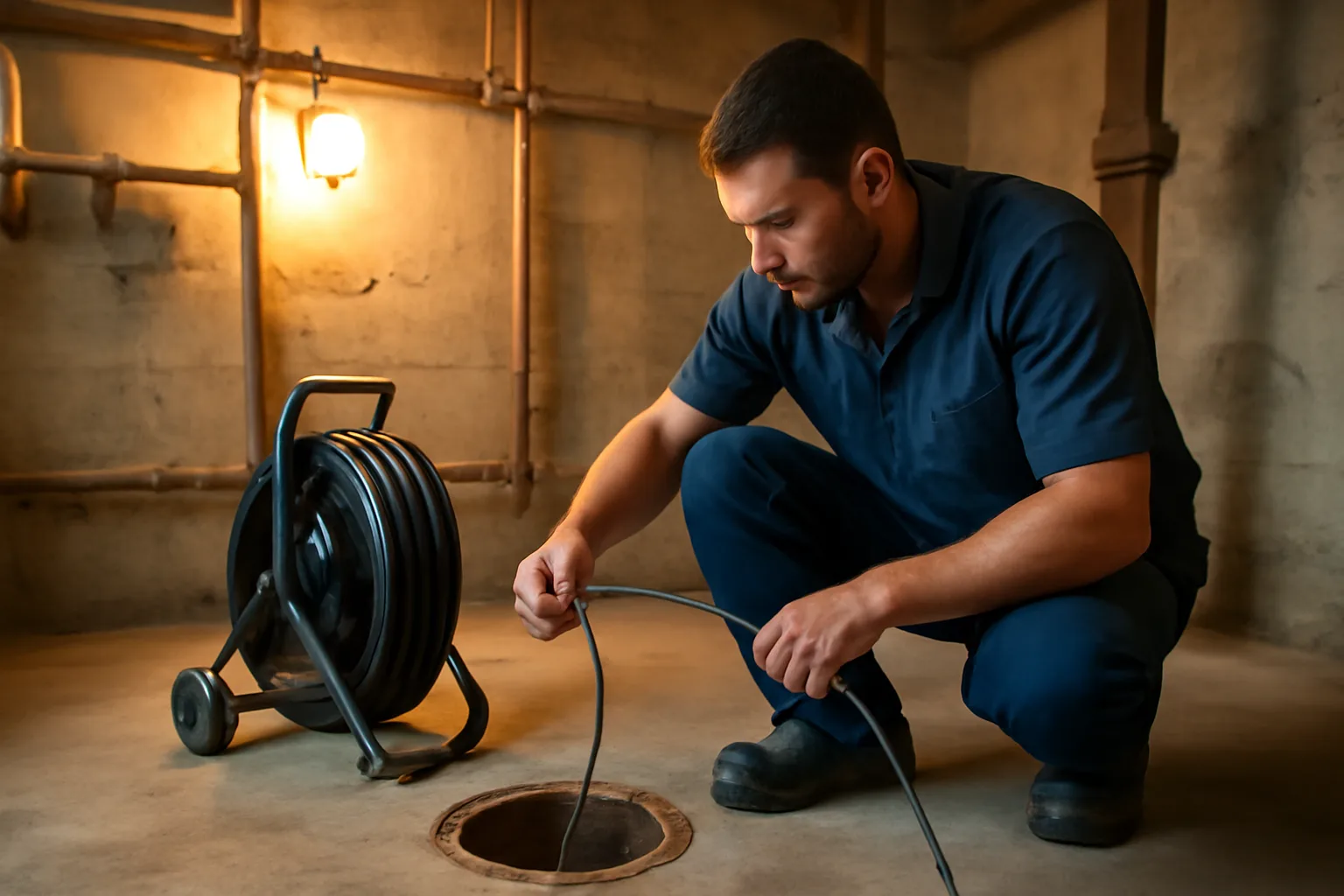
A short-term pipe crawler rental lets you (or a plumber) run a small camera through a sewer lateral to spot the break causing a backup, often within hours instead of days. Most landlords hire a plumber with the equipment rather than renting one themselves. Emergency sewer camera inspections typically run $300 to $900 and can double as documentation for city rental inspection files.
What is a pipe crawler and why would a landlord need one in an emergency?
A pipe crawler is a small wheeled or tracked robot with a camera on the front, built to drive through sewer laterals and drain lines that are too narrow or too deep for a person to enter. Plumbers use them to find blockages, cracks, root intrusion, bellies (sags in the pipe), and offset joints without digging up a yard or a slab first. Some crawlers also carry sonar or sensors for pipes that are partially full of water. For a landlord, the "emergency" scenario is almost always the same story: a tenant reports a sewage backup, a slow drain that suddenly stops draining at all, or water coming up through a floor drain or tub. You need to know two things fast. First, is this a tenant-caused clog (wipes, grease, a toy) or a structural pipe failure that's your responsibility as owner? Second, how bad is the damage and what will it cost to fix? A pipe crawler inspection answers both. The footage becomes your evidence file: for the insurance claim, for a habitability dispute if a tenant later claims the unit was unlivable, and sometimes for your city's rental inspection record if the backup triggered a code complaint. Cities that run mandatory rental licensing programs, like Minneapolis or Portland, often require documentation of major repairs before you can renew a license or clear a violation notice, and camera footage with a timestamp is exactly the kind of proof an inspector wants. Most of the time you are not literally driving to a rental store and renting the robot yourself. "Short-term pipe crawler rental" in practice usually means hiring a plumbing or drain company that owns the equipment and dispatches it same-day, billed as a single inspection line item. A few tool rental yards and sewer-equipment distributors do rent crawler cameras to contractors and serious DIYers by the day, but the learning curve and risk of getting a $3,000 to $15,000 unit stuck in a pipe you don't own means almost every individual landlord is better off paying a licensed plumber's inspection fee instead of renting the hardware.
How much does an emergency sewer camera inspection cost?
| Scheduled sewer camera inspection | $150 to $500 | Daytime appointment, no active emergency | |
|---|---|---|---|
| Emergency/same-day camera inspection | $300 to $900 | After-hours or rush dispatch premium | |
| Hydro-jetting after camera diagnosis | $350 to $1,000+ | Depends on line length and clog severity | |
| DIY pipe crawler rental (contractor-grade) | Varies widely, often $150 to $400/day plus insurance | Rarely practical for a single-family or small multifamily owner | These are national ranges, not quotes. Actual pricing depends heavily on your market, the length and depth of the lateral, and whether the crawler needs to go through a cleanout, a toilet flange, or a roof vent. Always get the dollar number in writing before the truck leaves, especially on an emergency call where adrenaline (yours and the tenant's) tends to push people into agreeing to whatever's quoted. |
Expect to pay $300 to $900 for a standalone sewer camera inspection called on an emergency or same-day basis, according to home-service cost aggregators like Angi and HomeAdvisor's cost guides, which put a routine (non-emergency, scheduled) sewer scope at roughly $150 to $500 nationally. Emergency and after-hours dispatch typically adds a premium on top of the base inspection fee, sometimes 1.5x to 2x the daytime rate, because you're paying for a technician to drop other work. If the plumber finds the problem and you authorize a fix in the same visit (snaking, hydro-jetting, or a spot repair), some companies waive or credit the camera fee against the repair invoice. It's worth asking directly, because the practice varies company to company and isn't standardized anywhere. | Service type | Typical cost range | Notes |
How does an inspection like this fit into a mandatory rental license or registration program?
If your city requires a rental license, registration, or periodic inspection, plumbing condition is almost always part of what gets checked. A sewage backup that isn't repaired and documented can turn into a code violation notice on its own, separate from the original leak. Many municipal rental inspection checklists explicitly cover functioning plumbing, no active leaks, and proper drainage as baseline habitability items. For example, HUD's Housing Quality Standards, which many local programs mirror or reference, requires that "the water supply, plumbing and sewer connections must be free of leaks" and that plumbing fixtures work properly, under 24 CFR 982.401 [1]. A city inspector who sees water staining, a recent repair, or a tenant complaint about a backup will often ask for proof it was fixed correctly, and a camera inspection report with before/after footage is the cleanest way to satisfy that. Keep the invoice, the technician's written findings, and any video file or link the company provides. If your city's licensing office asks for a "corrective action completed" statement before it will lift a violation or renew a license, this documentation usually covers it. If you're building your renewal or violation-response file, our City Rental License & Inspection Prep Packet walks through what most municipal programs want to see and gives you a place to organize inspection reports, repair invoices, and photo/video evidence by property. It's a one-time $79 packet, not legal advice, and it doesn't replace confirming your specific city's requirements with your local rental licensing office.
Who is responsible for a rental property walk-through inspection in California?
In California, the landlord is generally responsible for arranging and conducting move-in and move-out inspections, but the process is jointly participatory by law. California Civil Code Section 1950.5 gives tenants the right to request an initial move-out inspection before the final move-out, so they can fix deficiencies themselves and avoid deductions from the security deposit [2]. The landlord must give at least 48 hours' written notice before that initial inspection if requested, and must provide an itemized statement of proposed deductions at that time, per Civil Code 1950.5(f) [2]. After the tenant actually moves out, the landlord conducts the final inspection alone (the tenant has no right to be present for the final one) and has 21 calendar days to return the deposit along with an itemized statement of any deductions, per Civil Code 1950.5(g) and (b) [2]. Separately, cities like Los Angeles, Oakland, and Berkeley that run their own rental registration or inspection programs (RSO cities, mostly) send their own inspectors for code-compliance walk-throughs, which is a different thing from the tenant move-out inspection and is handled by city staff, not the landlord personally.
How much notice does a landlord have to give before entering a rental unit?
Notice requirements vary by state, but 24 hours' written or verbal notice before entry is the most common standard, and it's the specific figure written into California law. California Civil Code Section 1954 requires landlords to give "reasonable notice in writing," and specifies that 24 hours is presumed reasonable in the absence of contrary evidence [3]. Other states set their own numbers. Some model statutes and several states following the Uniform Residential Landlord and Tenant Act pattern also use 24 hours as the default reasonable notice window. Always check your specific state's landlord-tenant statute rather than assuming California's rule applies, because notice periods, allowed entry reasons, and exceptions for emergencies differ state to state. Emergencies are the one universal exception. Nearly every state landlord-tenant statute, including California's Section 1954, allows entry without advance notice when there's an emergency, meaning a genuine risk to health, safety, or property, like the active sewage backup scenario this article started with. That's the legal hook that lets you dispatch a plumber with a pipe crawler the same day a tenant reports a backup, without waiting out a 24-hour notice window. Document the emergency (the tenant's call, texts, or photos) in case the entry is ever questioned later.
What can a landlord look at during an inspection?
During a lawful rental inspection, whether it's your own periodic walk-through or a city inspector's licensing visit, the focus is on the condition of the property and its systems, not the tenant's personal belongings. Landlords and inspectors can generally look at plumbing fixtures and visible leaks, electrical outlets and panels, smoke and carbon monoxide detectors, HVAC function, window and door operation, signs of pest infestation, mold or moisture damage, and general structural condition. What's off-limits is rummaging through closets, drawers, or personal items beyond what's needed to check a specific system (for example, you can check that a closet light works without going through what's stored on the shelf). City rental inspectors typically follow a checklist tied to the local housing code, and HUD's Housing Quality Standards under 24 CFR 982.401 give a reasonable model of the categories most municipal checklists borrow from: sanitary facilities, food preparation and refuse disposal, space and security, thermal environment, illumination and electricity, structural and material condition, and interior air quality [1]. For your own periodic inspections, sticking to the announced purpose (checking smoke detectors, checking for leaks, general condition) rather than turning it into a search keeps you clearly inside a defensible "reasonable purpose" under most state entry statutes.
What can't a landlord do in Ohio?
Ohio landlord-tenant law, found in Ohio Revised Code Chapter 5321, sets specific limits. A landlord cannot enter the rental unit except at reasonable times and after giving reasonable notice, with 24 hours generally treated as reasonable in practice, under ORC 5321.04 [4]. A landlord cannot shut off utilities, change the locks, or remove a tenant's belongings to force them out (self-help eviction), because Ohio requires a formal court eviction (forcible entry and detainer) process instead, under ORC 5321.15 [5]. Ohio Revised Code 5321.15 states landlords may not "cause, directly or indirectly, the interruption or termination of any utility service" or "prevent the tenant from entering the leased premises" except through proper legal process [5]. A landlord also cannot retaliate against a tenant for reporting a code violation or exercising a legal right, under ORC 5321.02, which specifically bars retaliatory eviction, rent increases, or service reduction after a tenant complains to a government agency about a housing code violation [6]. On the maintenance side, ORC 5321.04 also requires landlords to keep the premises fit and habitable and to keep all electrical, plumbing, sanitary, heating, and ventilating systems in good working order [4], which is the exact obligation that makes a fast, documented pipe crawler inspection useful evidence if a tenant or the city ever disputes whether a sewer problem was fixed properly and promptly.
How to become a landlord (the practical steps)?
Becoming a landlord is mostly a paperwork and cash-flow exercise, not a licensing exam in most states. There's no national landlord license; what you actually need depends on where the property sits and how you finance and structure it. Start with the basics: buy or already own a property you're willing to rent out, decide whether you'll hold it personally or through an LLC (many landlords use an LLC for liability separation, though it doesn't eliminate all personal risk and has its own costs like state filing fees), and check your local zoning to confirm rentals are allowed at that address. Next, check whether your city or county requires a rental license or registration before you can legally rent, which is common in cities like Minneapolis, Portland (OR), Baltimore, and dozens of others; renting without a required license can trigger fines even if the unit itself is in good condition. After that: get landlord insurance (a standard homeowners policy typically doesn't cover a rental), write or buy a lease compliant with your state's landlord-tenant law, screen tenants consistently (credit, background, income, prior landlord references) and apply your criteria the same way to every applicant to avoid fair housing problems, and set up a system for rent collection, maintenance requests, and security deposit handling that matches your state's specific deposit rules (amount limits, interest requirements, and return deadlines vary widely by state).
What is landlording, and what exactly is a landlord?
A landlord is the owner of a rental property, or the person or entity that leases real property to someone else (a tenant) in exchange for rent. "Landlording" is the everyday verb landlords use for the ongoing work of running that rental: collecting rent, handling maintenance calls, doing turnovers between tenants, keeping up with local code and licensing requirements, and managing the landlord-tenant relationship day to day. Legally, most states define "landlord" broadly enough to include more than individual owners but property management companies, LLCs, and other entities that lease residential property, since the obligations (habitability, notice, deposit handling) attach to whoever is acting as lessor, more than to a person who owns the deed personally. Practically, landlording splits into two buckets most people don't expect going in: the physical side (repairs, inspections, code compliance) and the administrative side (leases, notices, screening, licensing paperwork, taxes). New landlords tend to underestimate the second bucket, which is exactly where things like rental licensing deadlines and inspection notices catch people off guard.
What rights do tenants have without a lease?
A tenant without a written lease, sometimes called a tenant-at-will or a month-to-month tenant by operation of law, still has real legal protections. The absence of a signed lease doesn't strip away a tenant's basic rights; it mainly changes the terms around notice to end the tenancy. Most state laws treat an unwritten rental arrangement (where rent is paid and accepted on a regular, usually monthly, basis) as a month-to-month tenancy, governed by the same core landlord-tenant statute that would apply if there were a written lease. That means the tenant still generally has the right to a habitable unit, the right to advance notice before the landlord enters (the same 24-hour-type notice rules discussed above), and the right to be free from retaliation and from illegal lockouts or utility shutoffs, exactly as an Ohio tenant is protected under ORC 5321.02 and 5321.15 regardless of whether they signed a lease [5][6]. What does change without a written lease is how the tenancy can be ended and rent changed. Because it's month-to-month, either party typically can end it with proper notice (commonly 30 days, though some states or cities require more, and just-cause eviction cities may require even longer or a stated legal reason). Verbal agreements about rent amount and rules are also harder to prove in a dispute, which is part of why written leases exist in the first place, even though they're not always legally required to create a valid, rights-bearing tenancy.
Why do landlords require renters insurance?
Landlords require renters insurance mainly to shift liability and personal-property risk off the landlord's own policy. A standard landlord (dwelling) insurance policy covers the building structure and the landlord's own liability, but it generally doesn't cover a tenant's personal belongings or a tenant's liability if their negligence causes damage (a stovetop fire, an overflowing tub, a dog bite to a visitor). Requiring renters insurance, commonly with a modest liability minimum like $100,000, pushes that risk onto a policy the tenant pays for (renters insurance is typically inexpensive, often cited in the range of $15 to $30 a month depending on coverage and location, though rates vary by insurer and state). It also gives the landlord a second line of defense if a dispute arises over who caused a specific piece of damage, since the tenant's insurer, not the landlord's, ends up handling the claim and the investigation. Many landlords also see it as a practical filter: tenants willing to maintain a renters policy tend to be more organized about paperwork generally, though that's an observation, not a guarantee, and it shouldn't be the only screening criterion used.
So how does this all connect back to the pipe crawler and your license file?
Here's the practical chain: a tenant reports a backup, you invoke the emergency-entry exception under your state's notice statute (like California Civil Code 1954 [3] or Ohio's reasonable-notice standard under ORC 5321.04 [4]) to get someone in same-day, a plumber runs a camera or crawler through the lateral, you get a written diagnosis and repair invoice, and that packet becomes your proof of prompt correction if your city's rental license or inspection program asks about it later. The pipe crawler itself is a tool a plumber owns and bills for; you're very rarely renting the hardware directly as a landlord. What you are managing is the paper trail around it: the emergency notice you gave (or the emergency exception you relied on), the inspection findings, the repair invoice, and how all of that slots into whatever your specific city requires for license renewal or violation clearance. Confirm your city's exact rental licensing office requirements before you assume any one document satisfies them, since programs genuinely differ block to block, let alone city to city. If you're trying to get organized before a renewal deadline or a violation notice comes due, our City Rental License & Inspection Prep Packet is a one-time $79 tool built to help you assemble exactly this kind of documentation by property, though it's a organizing tool, not legal advice, and doesn't replace checking with your city's rental licensing office directly. For background on tenant rights that intersect with all of this, see our guides on tenants rights and renters rights.
Frequently asked questions
Can I rent a pipe crawler camera myself instead of hiring a plumber?
Technically yes, some sewer-equipment distributors and tool rental yards rent contractor-grade crawler cameras by the day, often $150 to $400 plus insurance. In practice, most individual landlords hire a plumber who owns the equipment, because operating a crawler correctly and interpreting the footage takes real experience, and getting one stuck costs far more than the rental fee.
How fast can I get an emergency sewer camera inspection scheduled?
Many plumbing companies offer same-day or within-hours emergency dispatch for active backups, typically at a premium over their standard scheduled rate. Call multiple companies if your usual plumber can't come immediately; sewage backups count as emergencies under most state landlord-tenant notice laws, so you don't need to wait out a standard 24-hour entry notice period.
Does a sewer camera inspection count as proof for my rental license renewal?
Often yes, if your city asks for documentation that a plumbing violation was corrected. Keep the technician's written findings, the invoice, and any footage or report link. Confirm with your specific city's rental licensing office what format they require, since requirements vary by municipality and aren't standardized nationally.
How to become a landlord if I only own one rental unit?
The steps are the same regardless of portfolio size: confirm local zoning allows rentals, check if your city requires a rental license or registration, get landlord insurance, use a lease compliant with your state's landlord-tenant law, screen tenants consistently, and set up systems for rent collection and maintenance requests.
Who is responsible for a rental property walk-through inspection in California?
The landlord arranges and conducts it, but California Civil Code 1950.5 gives tenants the right to request an initial move-out inspection with 48 hours' notice before the final move-out, so they can fix issues before deductions are taken from the deposit. The landlord then does the final inspection alone after move-out.
What is landlording?
Landlording is the ongoing work of owning and renting out property: collecting rent, handling repairs and inspections, managing leases and notices, screening tenants, and keeping up with local licensing and code requirements. It splits into physical upkeep and administrative paperwork, and most new landlords underestimate the second half.
What is a landlord?
A landlord is the owner or lessor of real property who rents it to a tenant in exchange for rent. The term legally covers individual owners, LLCs, and property management companies acting as lessor, since core obligations like habitability and notice attach to whoever leases the property, more than the deed holder personally.
What rights do tenants have without a lease?
A tenant without a written lease is usually treated as a month-to-month tenant under state law, with the same core protections as a leased tenant: habitability, advance notice before entry, and freedom from retaliation or illegal lockouts. What changes mainly is how the tenancy can be ended, typically with 30 days' notice from either side.
Why do landlords require renters insurance?
Landlords require it to shift liability and personal-property risk off their own policy. A landlord's dwelling insurance generally doesn't cover a tenant's belongings or a tenant's negligence-caused damage, so requiring renters insurance (often $15 to $30 a month) puts that risk and claims process on the tenant's insurer instead.
How much notice does a landlord have to give before entering a unit?
Most commonly 24 hours' written or verbal notice, which is the standard set by California Civil Code 1954 as presumptively reasonable. Other states set their own rules, so check your specific state statute. Nearly all states waive advance notice for genuine emergencies, like an active sewage backup.
What can a landlord look at during an inspection?
A landlord or city inspector can check plumbing, electrical systems, smoke and CO detectors, HVAC, windows and doors, pest signs, mold, and structural condition. They generally shouldn't search through closets or personal belongings beyond what's needed to verify a specific system is working.
What can a landlord not do in Ohio?
Under Ohio Revised Code Chapter 5321, a landlord cannot enter without reasonable notice (generally 24 hours), cannot shut off utilities or change locks to force a tenant out, must use the court eviction process instead, and cannot retaliate against a tenant for reporting a code violation.
Is a pipe crawler the same thing as a sewer camera?
They're closely related. A sewer camera on a flexible cable is pushed manually through a line; a pipe crawler is a self-propelled robot version, often used for longer, larger, or harder-to-access lines. Plumbers pick whichever tool fits the pipe diameter and length for the job.
Sources
- HUD, Housing Quality Standards (24 CFR 982.401): HUD's Housing Quality Standards require plumbing free of leaks and functioning fixtures as part of habitability review
- California Civil Code Section 1950.5: California tenant's right to request an initial move-out inspection with 48 hours notice, and landlord's 21-day deposit return deadline
- California Civil Code Section 1954: California requires reasonable written notice before landlord entry, with 24 hours presumed reasonable, and an emergency exception
- Ohio Revised Code Section 5321.04: Ohio landlord duties to maintain premises and give reasonable notice before entry
- Ohio Revised Code Section 5321.15: Ohio bars landlords from shutting off utilities or locking out tenants without using the court eviction process
- Ohio Revised Code Section 5321.02: Ohio prohibits retaliatory conduct against tenants who report code violations