Last updated 2026-07-24
TL;DR
The Uniform Residential Landlord and Tenant Act (URLTA) is a model law drafted in 1972 that roughly 21 states adopted in some form. It sets baseline rules for security deposits, notice periods, habitability, and entry. It's not a federal law, so your actual rights depend on your state's version and any city rental licensing rules layered on top.
what is the uniform landlord tenant act
The Uniform Residential Landlord and Tenant Act, usually shortened to URLTA, is a model statute drafted by the National Conference of Commissioners on Uniform State Laws (now called the Uniform Law Commission) in 1972. It was written to give states a consistent template for landlord-tenant law instead of each one inventing rules from scratch. [1] Here's the part people get wrong constantly: URLTA is not itself a law. It's a draft that state legislatures can adopt, modify, or ignore entirely. The Uniform Law Commission's own tracking shows roughly 21 states have enacted some version of it, including Alaska, Arizona, Florida, Hawaii, Iowa, Kansas, Kentucky, Nebraska, New Mexico, Oklahoma, Oregon, Rhode Island, South Carolina, Tennessee, Virginia, and Washington, among others. [1] Some states adopted it almost word for word. Others took pieces and left the rest. A handful of big states, California and New York among them, never adopted URLTA at all and instead built their own separate landlord-tenant codes. So when someone says "the law requires X under the Uniform Landlord Tenant Act," the honest answer is: it depends entirely on whether your state adopted it, and which version. If you're a landlord in an adopting state, you need your state's actual statute, not the 1972 model text, because states amend these things constantly and add their own wrinkles.
what does the uniform landlord tenant act actually cover
The model act covers the mechanics most residential leases run on: security deposit handling and return deadlines, notice periods for entry and termination, habitability and repair obligations, rent withholding remedies when a landlord won't fix things, and rules for handling abandoned property. It also sets out landlord remedies for nonpayment and lease violations. [1] A few things it does NOT touch: it doesn't set rent control policy, it doesn't create a licensing or registration system, and it doesn't dictate city-level inspection requirements. Those are separate legal layers. A city that requires rental licensing and periodic inspections (think Minneapolis, Milwaukee, or dozens of mid-size cities across the Midwest) is doing that under its own municipal code, which sits on top of whatever your state's landlord-tenant statute (URLTA-based or not) already requires. Confirm with your city rental licensing office before assuming state law is the whole picture, because it almost never is. The practical upshot for a small landlord: read your state's actual statute (search "[your state] residential landlord tenant act" plus ".gov"), then separately check your city's rental registration or licensing ordinance. Two different rulebooks, two different agencies enforcing them.
how much notice does a landlord have to give
There's no single national number. Notice requirements split into two very different categories: notice to enter for inspections or repairs, and notice to terminate a tenancy. For entry, states that follow the URLTA model typically require "reasonable notice," and many statutes specify 24 or 48 hours as presumptively reasonable for non-emergency entry. Oregon's landlord-tenant statute, for example, requires at least 24 hours' written notice before entering for repairs or inspection, except in emergencies. [2] Arizona's Residential Landlord and Tenant Act likewise requires at least two days' notice before entry, with entry limited to reasonable times. For lease termination, the range is wider. Month-to-month tenancies commonly require 30 days' notice to end the tenancy in either direction, though some states require 60 days once a tenant has lived there past a certain length (California requires 60 days if the tenant has occupied the unit for a year or more, under Civil Code 1946.1). [3] Nonpayment of rent notices are shorter and vary a lot: some states allow a 3-day pay-or-quit notice, others require 5, 7, 10, or 14 days depending on the state and the reason. There is genuinely no shortcut here. You have to look up your specific state code section, because getting notice wrong is one of the most common ways landlords lose eviction cases on a technicality.
what can a landlord look at during an inspection
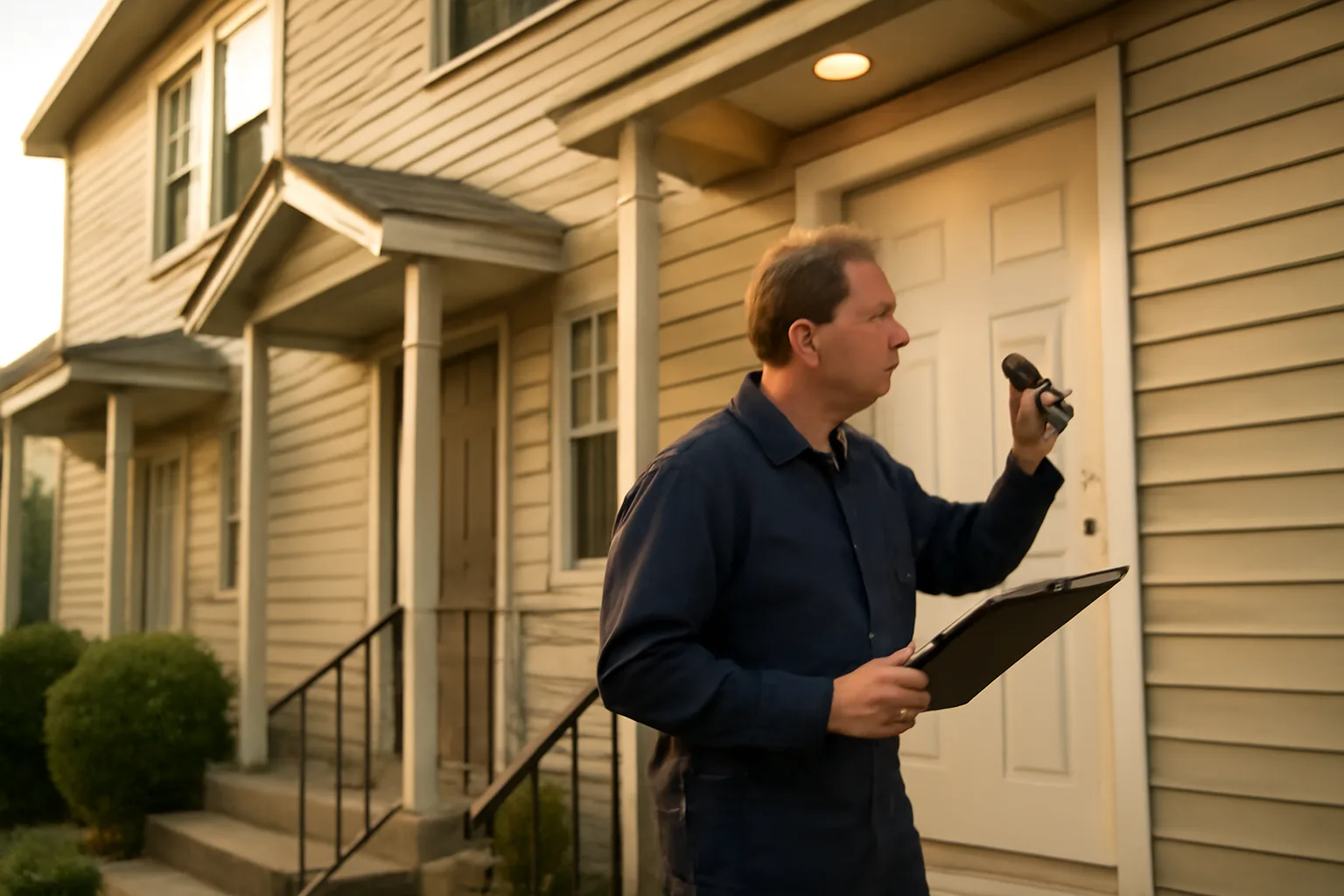
A landlord conducting a routine inspection can generally check smoke and carbon monoxide detectors, plumbing for leaks, electrical outlets and panels, HVAC function, signs of pest infestation, mold or water damage, window and door locks, and general structural condition, basically anything tied to habitability, safety, or lease compliance. What a landlord generally should not do is search through a tenant's personal belongings, closets, or private papers beyond what's needed to verify the condition of the unit itself. Most state statutes limit inspections to "reasonable purposes," a phrase that typically includes showing the unit to prospective tenants or buyers, making repairs, and verifying compliance with the lease, not general snooping. Entry outside those purposes, or entry without the required notice, can expose a landlord to a tenant claim for violation of quiet enjoyment or, in states with statutory penalties, actual damages. City rental licensing inspections are a different animal entirely. Those are usually done by a code enforcement officer, not the landlord, and they check for things tied to the local housing code: working smoke detectors, egress windows in bedrooms, handrail and stair safety, proper electrical grounding, water heater temperature and pressure relief valves, and exterior conditions like peeling paint or unsafe decks. If you're prepping for one of these, it helps to walk the unit yourself first using the same checklist the inspector will use; most cities publish theirs, and it's worth calling ahead to ask. If you want a structured way to organize documentation before an inspector shows up, our City Rental License & Inspection Prep Packet walks through the common categories cities check, city fee and deadline fields left blank for you to confirm locally, plus a request-for-entry notice template and a move-in/move-out condition log.
who is responsible for rental property walk through inspection in california
In California, the landlord is responsible for conducting the move-out inspection, but the tenant has a right to request it in advance and be present. Under California Civil Code section 1950.5(f), a landlord must notify the tenant in writing of their right to an initial move-out inspection, to be conducted no earlier than two weeks before the end of the tenancy, so the tenant can fix any deficiencies before the final deposit accounting. [3] If the tenant requests this initial inspection, the landlord must give at least 48 hours' written notice of the date and time, and the tenant can waive that notice. [3] After the actual move-out, the landlord has 21 calendar days to return the security deposit along with an itemized statement of any deductions, per the same code section. [3] California never adopted URLTA. Its landlord-tenant rules live in the Civil Code (largely sections 1940 through 1954) and in the separate Health and Safety Code for habitability standards. So if you're a California landlord researching "the uniform landlord tenant act," the honest answer is that it doesn't apply to you directly; you're working from California's own statutory scheme instead.
what a landlord cannot do in ohio
Ohio adopted its own version of the Landlord and Tenant Act, codified in Ohio Revised Code Chapter 5321, which draws heavily from the URLTA model. Under this chapter, a landlord cannot shut off utilities, change locks, or remove a tenant's belongings to force them out; that's illegal "self-help" eviction, and Ohio law requires landlords to go through the courts (forcible entry and detainer action) to remove a tenant. [4] Ohio Revised Code 5321.04 spells out landlord obligations: keep the premises in compliance with building and housing codes, make repairs to keep the unit fit and habitable, keep common areas safe, and maintain electrical, plumbing, and heating systems in good working order. [4] A landlord who fails to meet these duties can face a tenant claim for damages or, under certain conditions, rent escrow through the local municipal or county court. On entry, Ohio Revised Code 5321.04(A)(8) requires a landlord give reasonable notice before entering and enter only at reasonable times, except in emergencies. [4] Ohio doesn't specify an exact hour count in the statute the way Oregon does, so "reasonable" gets interpreted case by case; most Ohio landlords and property managers use 24 hours as their practical standard. Ohio landlords also cannot retaliate against a tenant for reporting code violations or joining a tenant organization; Ohio Revised Code 5321.02 specifically bars retaliatory eviction or rent increases for those actions. [4] And a landlord cannot keep a security deposit without an itemized, written list of deductions if the deposit exceeds what's owed plus $50 or one month's rent, whichever is greater, under Ohio Revised Code 5321.16.
what rights do tenants have without a lease
A tenant without a written lease still has real legal protections. Occupying a unit and paying rent, even with no signed paper, typically creates what the law calls a month-to-month periodic tenancy, and that tenancy carries most of the same statutory rights a written lease tenant has: the right to a habitable unit, the right to advance notice before the landlord enters, and the right to proper notice before the tenancy is terminated. Under most state landlord-tenant statutes, including URLTA-based ones, a tenant without a lease still can't be evicted without cause-appropriate notice and, if they don't leave, a court proceeding. A landlord can't just change the locks or toss belongings on the curb because there's no signed lease; self-help eviction is illegal in effectively every state regardless of lease status. [4] What a no-lease tenant usually loses is certainty: without a written term, either party can typically end the tenancy with standard notice (commonly 30 days, sometimes tied to the rent payment interval), and there's more room for dispute over what was actually promised, like whether pets were allowed or who pays for a specific repair. That ambiguity cuts both ways, and it's exactly why even a one-page lease beats a handshake, though drafting lease language isn't something we cover here; check with a local landlord-tenant attorney or legal aid office if you're structuring a new tenancy.
why do landlords require renters insurance
Landlords require renters insurance mainly to shift liability and personal property risk away from themselves. A landlord's own insurance covers the building structure, not a tenant's furniture, electronics, or clothing, so if a pipe bursts or a fire starts, a tenant without renters insurance has no coverage for their own losses and may look to sue the landlord to cover the gap, even when the landlord isn't legally at fault. Renters insurance also typically includes liability coverage, meaning if the tenant accidentally causes damage (a kitchen fire, an overflowing tub that soaks the unit below), the tenant's policy pays for it instead of the landlord's insurer eating the claim or the landlord suing the tenant directly, which is slow, expensive, and often doesn't recover much if the tenant has no assets. There's no federal law requiring renters insurance, and most states don't mandate it either, but landlords are generally allowed to require it as a lease condition as long as the requirement is disclosed and applied consistently. Typical policies run in the range of roughly $15 to $30 a month depending on coverage limits and location, according to industry rate surveys, though a landlord shouldn't quote exact pricing to tenants since rates vary by insurer, credit, and region.
what is landlording and what is a landlord
A landlord is the owner, or an owner's authorized agent, who rents residential or commercial property to a tenant in exchange for rent, under a lease or rental agreement. That's the legal definition in plain terms: URLTA's model text defines "landlord" as "the owner, lessor, or sublessor of the dwelling unit," which includes a manager acting on the owner's behalf. [1] "Landlording" is the informal term for the actual job: everything involved in owning and operating rental property day to day. That includes marketing vacant units, screening applicants, signing leases, collecting rent, handling maintenance requests, doing move-in and move-out inspections, keeping up with local landlord licensing and registration rules, and, when things go wrong, navigating notices and eviction procedure. It's part property management, part bookkeeping, part legal compliance, and small landlords with one to ten units usually do all of it themselves without a property manager, which is exactly why staying current on notice periods and inspection rules from your specific state and city matters so much; there's no property management company catching your mistakes for you.
how to become a landlord and how to be a landlord
Becoming a landlord legally starts before you ever hand over a key. Buy or already own residential property, confirm your local zoning allows rental use, and check whether your city requires a rental license or registration before you can legally rent the unit out at all; a growing number of cities do, and renting without that license can trigger fines even if the tenancy itself is otherwise fine. Then screen tenants consistently under the Fair Housing Act, which bars discrimination based on race, color, national origin, religion, sex, familial status, or disability. [5] Set the rent, draft or use a compliant lease, collect a security deposit within your state's legal limits, and document the unit's condition with photos and a written move-in checklist before the tenant moves in. Being a landlord day to day means following through: giving proper notice before entry, responding to repair requests within your state's habitability timeline, returning the security deposit within the legal deadline (often 14 to 30 days depending on the state), and keeping records of everything, because in a dispute the party with better documentation usually wins. If your city requires periodic rental licensing, budget time for it every renewal cycle. Fees, inspection intervals, and required forms vary enormously by city; confirm with your city rental licensing office for your specific numbers rather than trusting a generic figure online. This is the piece most new landlords underestimate: the state landlord-tenant statute is only half the compliance picture, and the city half often has its own deadlines, its own inspection checklist, and its own fine schedule for missing them.
state adoption of urlta at a glance
| Oregon | Yes | ORS Chapter 90 [2] | |
|---|---|---|---|
| Arizona | Yes | ARS Title 33, Chapter 10 | |
| Ohio | Yes (adapted) | ORC Chapter 5321 [4] | |
| Washington | Yes | RCW 59.18 | |
| Kentucky | Yes | KRS Chapter 383 | |
| Tennessee | Yes | Tenn. Code Ann. Title 66, Ch. 28 | |
| California | No, own code | Cal. Civil Code 1940-1954 [3] | |
| New York | No, own code | Real Property Law, various | |
| Texas | No, own code | Texas Property Code Ch. 91-92 | As the Uniform Law Commission itself puts it, the goal of a uniform act is to give "states a well-drafted... law they can enact instead of drafting their own," but adoption is entirely voluntary and states routinely modify the model text to fit local politics and housing conditions. [1] That's why two "URLTA states" can still have meaningfully different notice periods or deposit rules; adoption isn't a copy-paste guarantee of uniformity, despite the name. |
The table below shows the general pattern, not an exhaustive legal reference; always confirm against your state's current statute since amendments happen regularly. | State | URLTA-based? | Where it's codified |
Frequently asked questions
Is the Uniform Landlord Tenant Act a federal law?
No. It's a model statute drafted in 1972 by the Uniform Law Commission for states to voluntarily adopt. There is no federal landlord-tenant law covering leases, notice, or security deposits; those are entirely state and local matters. About 21 states have adopted some version of it, according to the Uniform Law Commission's own tracking. [1]
Does my state use the Uniform Landlord Tenant Act?
Roughly 21 states have adopted a version, including Arizona, Oregon, Ohio, Washington, Kentucky, and Tennessee. States like California, New York, and Texas never adopted it and instead use their own separate landlord-tenant codes. Search your state name plus 'residential landlord tenant act' and a .gov domain to confirm.
How much notice does a landlord have to give before entering?
It varies by state, typically 24 to 48 hours for non-emergency entry. Oregon requires at least 24 hours' written notice under ORS Chapter 90; Arizona requires at least two days under its Residential Landlord and Tenant Act. Always check your specific state's statute since some set no fixed hour count, just 'reasonable notice.'
What can a landlord check during a routine inspection?
Smoke and carbon monoxide detectors, plumbing, electrical systems, HVAC, pest or mold signs, locks, and general structural condition tied to habitability and lease compliance. A landlord generally can't search personal belongings beyond what's needed to check the unit's condition, and city code inspections follow a separate, published checklist.
Who does the move-out walkthrough inspection in California?
The landlord conducts it, but under California Civil Code 1950.5(f), the tenant has a right to request an initial inspection up to two weeks before move-out, with 48 hours' written notice, so they can fix issues before the final deposit deduction. [4]
What a landlord cannot do in Ohio?
An Ohio landlord cannot shut off utilities, change locks, or remove belongings to force a tenant out (illegal self-help eviction), cannot retaliate against a tenant for reporting code violations under ORC 5321.02, and cannot keep a security deposit without an itemized written deduction list under ORC 5321.16.
What rights does a tenant have without a written lease?
A tenant paying rent without a signed lease generally has a month-to-month tenancy with the same core statutory protections: habitability, advance notice before entry, and proper notice before termination. A landlord still cannot evict without notice and a court process just because nothing was signed.
Why do landlords require renters insurance?
Mainly to cover a tenant's own belongings (which the landlord's policy never covers) and to shift liability for tenant-caused damage, like a kitchen fire, onto the tenant's insurer instead of the landlord's. It's legal for a landlord to require it as a lease condition in most states, though it isn't federally mandated.
What is landlording?
Landlording is the everyday practice of owning and operating rental property: marketing units, screening tenants, collecting rent, handling repairs, doing inspections, and keeping up with local licensing rules. Small landlords with one to ten units usually handle all of it themselves without hiring a property manager.
How do I become a landlord legally?
Confirm local zoning permits rental use, check whether your city requires rental licensing or registration before you rent it out, screen tenants under Fair Housing Act rules, use a compliant lease, collect deposits within your state's legal limits, and document unit condition at move-in with photos and a checklist.
What's the difference between URLTA and my city's rental licensing ordinance?
URLTA (or your state's version of it) sets baseline tenant-landlord rights like notice and habitability. City rental licensing is a completely separate local requirement, often needing a permit, a fee, and a periodic inspection just to legally operate a rental at all. Confirm with your city rental licensing office for specifics.
Can a landlord evict a tenant without going to court?
No. Every state, whether URLTA-based or not, bars 'self-help' eviction: changing locks, shutting off utilities, or removing belongings without a court order. Ohio Revised Code 5321 explicitly requires a forcible entry and detainer action through the courts, and this rule is essentially universal across states. [5]
Sources
- Uniform Law Commission, Residential Landlord and Tenant Act: URLTA was drafted in 1972 and has been adopted in some form by roughly 21 states
- Oregon State Legislature, ORS Chapter 90 (Residential Landlord and Tenant): Oregon requires at least 24 hours' written notice before landlord entry except in emergencies
- California Legislative Information, Civil Code Section 1950.5: California landlords must notify tenants of the right to an initial move-out inspection and return deposits within 21 days
- Ohio Legislature, Ohio Revised Code Chapter 5321: Ohio landlord obligations, entry notice rules, retaliation ban, and deposit itemization requirements
- HUD, Fair Housing Act overview: Federal Fair Housing Act bars discrimination based on race, color, national origin, religion, sex, familial status, or disability