Last updated 2026-07-25
TL;DR
A landlord inspection checks life-safety items (smoke and CO alarms, egress windows, electrical panels), plumbing and moisture problems, structural condition, and lease compliance. City rental-license inspections add code items like handrails and pest control. Most states require 24 to 48 hours notice before entry, and tenants can't be forced to let inspectors in without proper notice except in emergencies.
What does a landlord look for in an inspection?
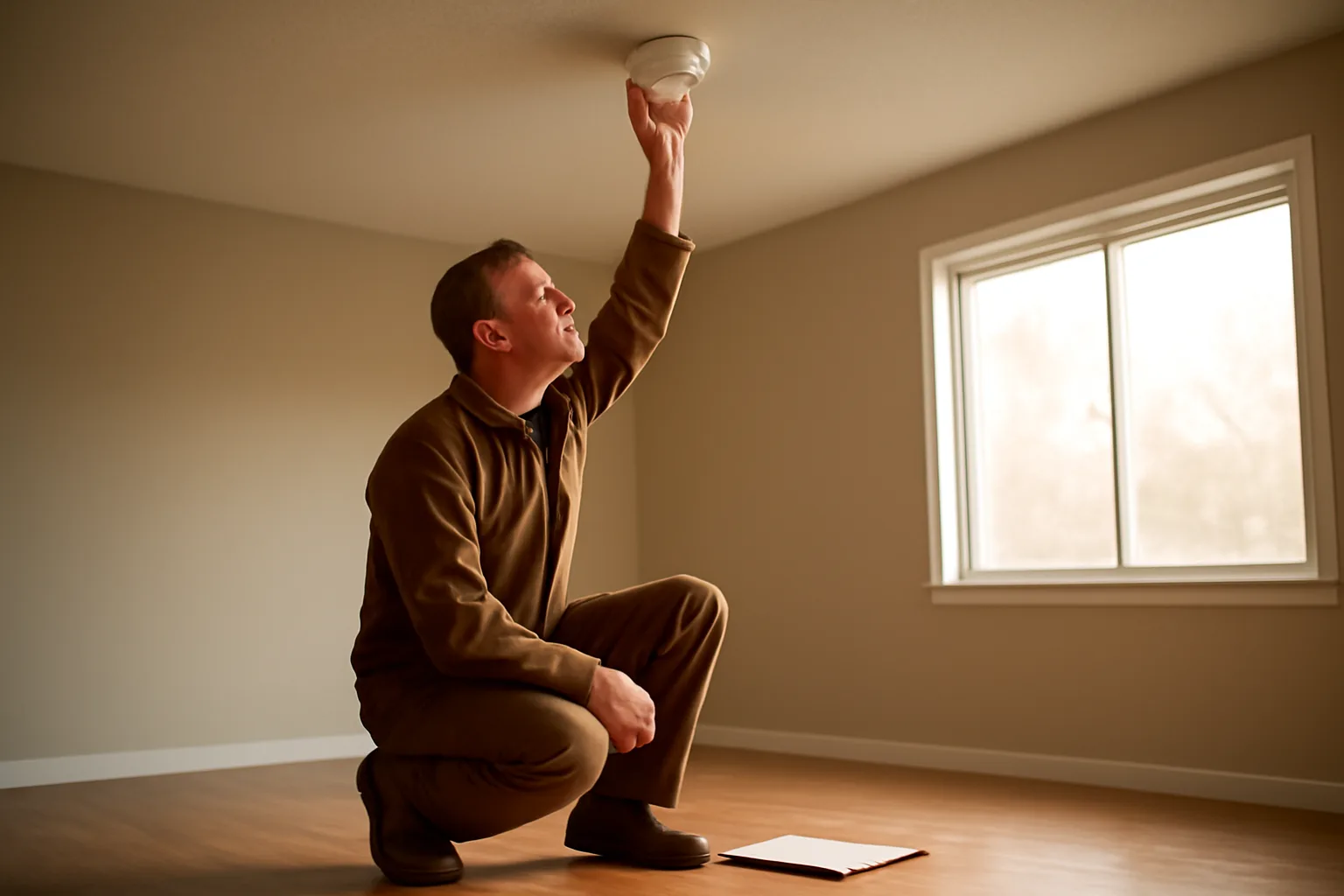
A landlord walking through a unit is mostly hunting for three things: safety hazards, damage that's turning into a bigger repair bill, and lease violations. That's it. Nobody's grading your interior design. On the safety side, expect a look at every smoke alarm (test button, more than visual check), carbon monoxide detectors near sleeping areas, and whether windows in bedrooms actually open for egress. Electrical panels get checked for scorch marks, missing breaker labels, or DIY wiring. Water heaters get checked for a working temperature-pressure relief valve and a proper discharge pipe. On the property-condition side, a landlord looks for water stains on ceilings (roof or plumbing leak), soft spots in flooring near tubs and toilets, mold in bathrooms, and pest evidence like droppings under sinks or in cabinets. HVAC filters, caulking around tubs, and whether smoke alarms have been disabled (a missing battery or a alarm hanging off the ceiling) are common red flags. Lease compliance items include unauthorized occupants, undisclosed pets, unauthorized subletting, and hoarding conditions that block exits. If the unit is in a city with mandatory rental licensing, the inspector (sometimes a city code official, not the landlord) is also checking against a specific code checklist: working handrails, GFCI outlets near water, proper egress from bedrooms, and smoke/CO alarm placement per local fire code. If you're a landlord prepping for a city inspection rather than your own routine walkthrough, the requirements are usually spelled out in your municipal code and published inspection checklist. Cities like these often list specific line items (egress window dimensions, handrail height, alarm placement) that go well beyond a normal landlord's routine check.
What can a landlord look at during an inspection?
A landlord can generally look at anything visible and accessible in the rental unit itself: fixtures, appliances that came with the unit, walls, floors, windows, smoke alarms, and common problem spots like under sinks and around tubs. What a landlord cannot do is search through a tenant's personal belongings, closets full of personal items, dressers, or locked containers, unless there's a specific safety reason (like checking for an active gas leak) or the tenant consents. Most states frame this as a right of entry limited to "inspecting the premises" for maintenance, repairs, or showing the unit, not a general search. California's Civil Code section 1954, for example, lists the specific reasons a landlord may enter: to make necessary or agreed repairs, to show the unit to prospective tenants or buyers, in case of emergency, or when the tenant has abandoned the property [1]. So practically: appliances, HVAC filters, smoke detectors, plumbing under sinks, electrical outlets, window function, and general cleanliness or damage are fair game. A tenant's mail, financial documents, or personal property in drawers are not something a landlord should be digging through during a routine inspection.
Who is responsible for a rental property walkthrough inspection in California?
In California, the landlord (or their authorized property manager) is responsible for conducting move-in and move-out walkthrough inspections, and state law gives tenants specific rights around that process. Under California Civil Code section 1950.5, if a landlord plans to withhold any part of a security deposit at move-out, the tenant has the right to request an initial inspection before move-out, giving the tenant a chance to fix issues themselves and avoid deductions [2]. The landlord must give the tenant at least 48 hours written notice before that initial inspection, unless the tenant waives that notice in writing [2]. After the pre-move-out inspection, the landlord has to give the tenant an itemized list of deficiencies that could result in deductions. Separately, some California cities with rental inspection or registration programs (check with your local rental housing office, since these vary by city) send a city inspector rather than relying only on the landlord's own walkthrough. That's a code-compliance inspection, different in purpose from a landlord's routine or move-out walkthrough, and it's usually tied to a citywide rental license renewal cycle.
How much notice does a landlord have to give before an inspection?
Most states require at least 24 hours notice before a landlord enters an occupied unit for a non-emergency inspection, though a handful require less and California requires more for certain move-out inspections. There's no single national rule, since landlord-tenant law is state-by-state. California requires "reasonable notice," which the statute presumes to be 24 hours for normal entry, but 48 hours specifically for the pre-move-out deposit inspection under Civil Code 1950.5 [1][2]. Notice generally has to state the date, approximate time, and purpose of entry, and entry has to happen during normal business hours unless the tenant agrees otherwise. Emergencies are the big exception everywhere. A suspected gas leak, a burst pipe, or fire doesn't require advance notice in any state. If a tenant has abandoned the unit, notice requirements also typically don't apply. Because these rules differ by state and sometimes by city ordinance layered on top, the safest move for a landlord is to check the specific statute where the property sits rather than assume a national standard. If you're managing across multiple cities, this is one of the details worth tracking city by city, since some municipal rental-licensing ordinances add their own notice requirements on top of state law.
What can a landlord not do in Ohio?
Ohio landlords cannot enter a rental unit without giving reasonable notice, cannot shut off utilities to force a tenant out, cannot change the locks without a court order, and cannot retaliate against a tenant for requesting repairs or reporting code violations. Ohio Revised Code section 5321.04 spells out landlord obligations, including keeping the unit in a fit and habitable condition and complying with health and safety codes [3]. Ohio Revised Code section 5321.05 covers tenant obligations, and the reciprocal entry rule sits in section 5321.04, which requires the landlord to give the tenant "reasonable notice" before entering, except in an emergency [3]. Ohio law also prohibits self-help eviction. A landlord who locks a tenant out, removes doors, or shuts off electricity or water to force someone out is exposing themselves to liability regardless of how much rent is owed. Eviction has to go through the municipal or county court process. Retaliatory conduct, meaning raising rent, reducing services, or starting an eviction specifically because a tenant complained to a code enforcement agency or joined a tenant organization, is restricted under Ohio Revised Code section 5321.02 [4].
What rights do tenants have without a lease?
A tenant without a written lease, sometimes called a month-to-month or oral tenancy, still has essentially the same legal protections as someone with a signed lease. That includes the right to habitable housing, protection from illegal lockouts, the right to advance notice before the landlord enters, and the right to proper notice before the tenancy is ended. An oral or month-to-month agreement is still a legal tenancy in every state, it's just not documented in writing. The landlord still has to give proper notice to terminate, commonly 30 days for month-to-month tenancies, though some states and cities require longer, especially in rent-stabilized jurisdictions. The tenant still has the right to a habitable unit under the implied warranty of habitability that most states recognize by statute or case law. What's different without a lease: there's more ambiguity about specific terms like who pays for what repairs, whether pets are allowed, or what the exact rent due date is. Without a written record, disputes over move-in condition or verbal promises are harder to prove. That's exactly why both landlords and tenants benefit from at least a basic written agreement even if it's simple. See tenant rights and tenants rights for more on protections that apply regardless of lease status.
Why do landlords require renters insurance?
Landlords require renters insurance mainly to shift liability risk off themselves and to make sure a tenant can cover their own property losses and any damage they cause, rather than the landlord's insurance (or the landlord personally) absorbing the cost. A landlord's own property insurance covers the building structure, not a tenant's belongings, and it often doesn't cover liability claims arising from a tenant's actions inside the unit. If a tenant's unattended candle starts a fire, or a tenant's dog bites a visitor, renters insurance (specifically the liability portion, typically starting around $100,000 in coverage on standard policies) picks up that cost instead of the landlord's policy or personal assets. The Insurance Information Institute notes that the average cost of renters insurance nationally runs well under $200 a year, making it a low-cost requirement relative to the risk it transfers [5]. Requiring renters insurance is legal in most states as a lease condition, though a landlord generally can't require a tenant to buy insurance through a specific company the landlord owns or profits from without disclosure, and some states regulate how landlords can enforce this requirement. It's become a standard line item in leases precisely because it's cheap for the tenant and meaningfully reduces the landlord's exposure.
How to become a landlord
Becoming a landlord starts with buying or already owning a property you intend to rent out, then handling the legal and financial steps: getting proper landlord insurance (different from a standard homeowner's policy), checking whether your city or county requires a rental license or registration, and understanding your state's landlord-tenant law before you sign a first lease. The practical checklist looks like this: confirm zoning allows rental use, get landlord liability insurance, check local rental licensing requirements (many cities require registration even for a single unit, and some require a pre-rental inspection before you can legally lease it out), set up a way to screen tenants that complies with Fair Housing Act requirements, and prepare a compliant lease. A lot of new landlords skip the local licensing step and find out the hard way, usually through a notice of violation or a fine, that their city requires registration or a rental license. This is common enough that it's worth checking with your city's rental licensing or code enforcement office before you list the unit, not after. If you're prepping for that first city inspection, our $79 City Rental License & Inspection Prep Packet walks through the common line items cities check, though you should always confirm your specific city's checklist since requirements vary block to block in some metro areas.
What is landlording, and what is a landlord?
A landlord is the owner (or authorized agent of the owner) of real property who rents that property to a tenant in exchange for rent, under a lease or rental agreement. "Landlording" is the informal term for the ongoing work of managing that relationship: collecting rent, handling repairs, screening tenants, following notice and entry laws, and staying compliant with local housing codes. Legally, a landlord's core obligations across nearly every state include keeping the unit habitable (working plumbing, heat, electricity, structural safety), following state-specific rules for security deposits, giving proper notice before entry, and following legal eviction procedures rather than self-help remedies like lockouts or utility shutoffs. Being a landlord is part maintenance manager, part bookkeeper, part compliance officer. Individual owners with one to ten units often underestimate the compliance side, especially in cities that require annual rental registration, a license fee, or a periodic inspection. That paperwork burden is real, and skipping it is usually what turns a routine oversight into a fine.
How to be a landlord (the practical, ongoing version)
Being a landlord day-to-day means responding to repair requests promptly, giving legally sufficient notice before entering, following your state's security deposit rules for holding, itemizing, and returning deposits, and keeping records of everything (repair requests, entry notices, inspection reports). Most states set an implied or explicit reasonable timeframe for repairs, and some, like California, define specific habitability standards under Civil Code section 1941.1. The landlords who avoid fines and lawsuits tend to do three unglamorous things well: they document condition at move-in and move-out with photos and a signed checklist, they keep a written log of maintenance requests and when they were resolved, and they know their city's registration or licensing renewal date without needing a reminder notice to jog their memory. The landlords who get hit with violations tend to have skipped one of those steps. A missed smoke alarm during a city inspection is a fixable, cheap problem. A missed rental license renewal deadline in a city with escalating daily fines is a much more expensive mistake, and it's entirely avoidable with a calendar reminder.
How landlord inspections differ from city rental-license inspections
| Landlord's routine walkthrough | Landlord or property manager | Cleanliness, lease compliance, wear and tear, early damage | Lease enforcement, repair scheduling | |
|---|---|---|---|---|
| Move-in/move-out inspection | Landlord and tenant together | Baseline condition, damage vs. normal wear | Security deposit deductions | |
| City rental-license inspection | Municipal code inspector | Smoke/CO alarms, egress, electrical, plumbing, structural, pest issues per local code | Notice of violation, reinspection fee, fine, license denial | City inspections are the ones that carry real financial teeth. A failed inspection commonly triggers a reinspection fee (many cities charge in the range of $50 to $150 for a reinspection, though this varies widely, so confirm with your city's specific fee schedule) and, if violations aren't corrected by a deadline, escalating daily fines. Some cities can also deny or revoke a rental license entirely for repeat or unaddressed violations, which legally prevents the unit from being rented until it's resolved. |
A landlord's own inspection (routine walkthrough, move-in, move-out) is about protecting the landlord's investment and documenting condition. A city rental-license inspection is a code-compliance check performed by a municipal inspector against a specific written checklist tied to the local housing or property maintenance code. | Inspection type | Who conducts it | What it checks | Consequence of failure |
What happens if a rental fails a city inspection?
If a rental unit fails a city inspection, the landlord typically gets a written notice of violation listing each item, along with a correction deadline (often 30 days, though this ranges by city and by the severity of the violation). Life-safety issues like a missing smoke alarm or blocked egress are usually given shorter deadlines than cosmetic code items. After corrections are made, the landlord requests a reinspection, sometimes for an added fee. If violations aren't corrected by the deadline, cities generally have authority to issue civil fines, and repeat or serious violations can lead to denial or revocation of the rental license itself, meaning the unit legally can't be rented until it's fixed and reinspected. The cheapest way through this process is preparation before the first inspection, not scrambling after a failed one. Walking the unit yourself against your city's published checklist (test every smoke alarm, check every GFCI outlet, make sure every bedroom window opens fully) catches most issues before an inspector does.
Frequently asked questions
What does a landlord look for in an inspection?
A landlord checks smoke and CO alarms, egress windows, electrical and plumbing condition, signs of leaks or mold, pest evidence, and lease compliance (unauthorized occupants or pets). City rental-license inspections add specific code items like handrail height and GFCI outlet placement, checked against a written municipal checklist rather than a landlord's informal judgment.
How much notice does a landlord have to give before an inspection?
Most states require at least 24 hours notice for routine entry. California requires 48 hours specifically before the pre-move-out deposit inspection under Civil Code 1950.5. Emergencies (gas leak, fire, burst pipe) don't require advance notice anywhere. Check your specific state statute since the exact hour requirement and allowed exceptions vary.
Who is responsible for a rental property walkthrough inspection in California?
The landlord or their authorized property manager is responsible for conducting the walkthrough. California Civil Code 1950.5 gives tenants the right to request a pre-move-out inspection with 48 hours notice, so they can fix issues before final move-out and avoid deposit deductions. Some California cities also send a municipal inspector for licensing compliance, separate from the landlord's own walkthrough.
What is landlording?
Landlording is the ongoing work of owning and managing rental property: collecting rent, handling repairs, screening tenants, following entry and notice laws, and complying with local rental registration or licensing rules. It covers both the legal obligations of being a landlord and the practical, day-to-day maintenance and record-keeping work.
What is a landlord?
A landlord is the owner, or an authorized agent of the owner, of real property who rents it to a tenant under a lease or rental agreement in exchange for rent. Landlords have legal obligations around habitability, security deposits, entry notice, and eviction procedure that vary by state statute.
What rights do tenants have without a lease?
Tenants without a written lease still have the right to habitable housing, protection from illegal lockouts, advance notice before entry, and proper notice before the tenancy ends (commonly 30 days for month-to-month). An oral or month-to-month agreement is still a legal tenancy; it's just not documented in writing, which can make disputes harder to prove.
How do I become a landlord?
Confirm zoning allows rental use, get landlord liability insurance, check whether your city requires rental registration or a pre-rental inspection, set up Fair Housing-compliant tenant screening, and prepare a lease that follows your state's landlord-tenant law. Many first-time landlords miss the local licensing step and only learn about it from a violation notice.
Why do landlords require renters insurance?
Renters insurance shifts liability and property-loss risk off the landlord. A landlord's own building insurance doesn't cover a tenant's belongings or most tenant-caused liability claims. Renters insurance, often costing under $200 a year according to the Insurance Information Institute, is a cheap way to close that gap, which is why it's a common lease requirement.
What can a landlord look at during an inspection?
A landlord can look at anything visible and accessible in the unit itself: appliances, smoke alarms, plumbing under sinks, electrical outlets, and general condition. A landlord cannot search personal belongings like closets, dressers, or locked containers without a specific safety reason or the tenant's consent.
What can a landlord not do in Ohio?
Ohio landlords cannot enter without reasonable notice, cannot shut off utilities or change locks to force a tenant out, and cannot retaliate against a tenant for reporting code violations or requesting repairs. These obligations come from Ohio Revised Code Chapter 5321, covering landlord duties, tenant obligations, and retaliation protections.
What happens if my rental fails a city inspection?
You'll typically get a written notice of violation with a correction deadline, often around 30 days depending on severity. After fixing the issues, you request a reinspection (sometimes for a fee). Uncorrected violations can lead to fines or, for repeat problems, denial or revocation of the rental license.
Is a landlord's inspection the same as a city rental-license inspection?
No. A landlord's own walkthrough checks lease compliance and property condition for the landlord's own purposes. A city rental-license inspection is performed by a municipal code inspector against a specific housing code checklist, and failing it can lead to fines or license denial, more than a maintenance conversation.
Sources
- California Legislature, Civil Code Section 1954: California law lists specific permitted reasons for landlord entry: repairs, showing the unit, emergency, or abandonment
- California Legislature, Civil Code Section 1950.5: Tenants have the right to a pre-move-out inspection with 48 hours written notice before deposit deductions
- Ohio Legislature, Ohio Revised Code Section 5321.04: Ohio landlord duties include habitability and reasonable notice before entry except in an emergency
- Ohio Legislature, Ohio Revised Code Section 5321.02: Ohio law restricts retaliatory conduct against tenants who report code violations or join tenant organizations
- Insurance Information Institute, Facts + Statistics: Renters Insurance: Renters insurance premiums average well under $200 per year nationally
- California Legislature, Civil Code Section 1941.1: California defines specific habitability standards landlords must maintain, including waterproofing, plumbing, heating, and electrical safety