Last updated 2026-07-25
TL;DR
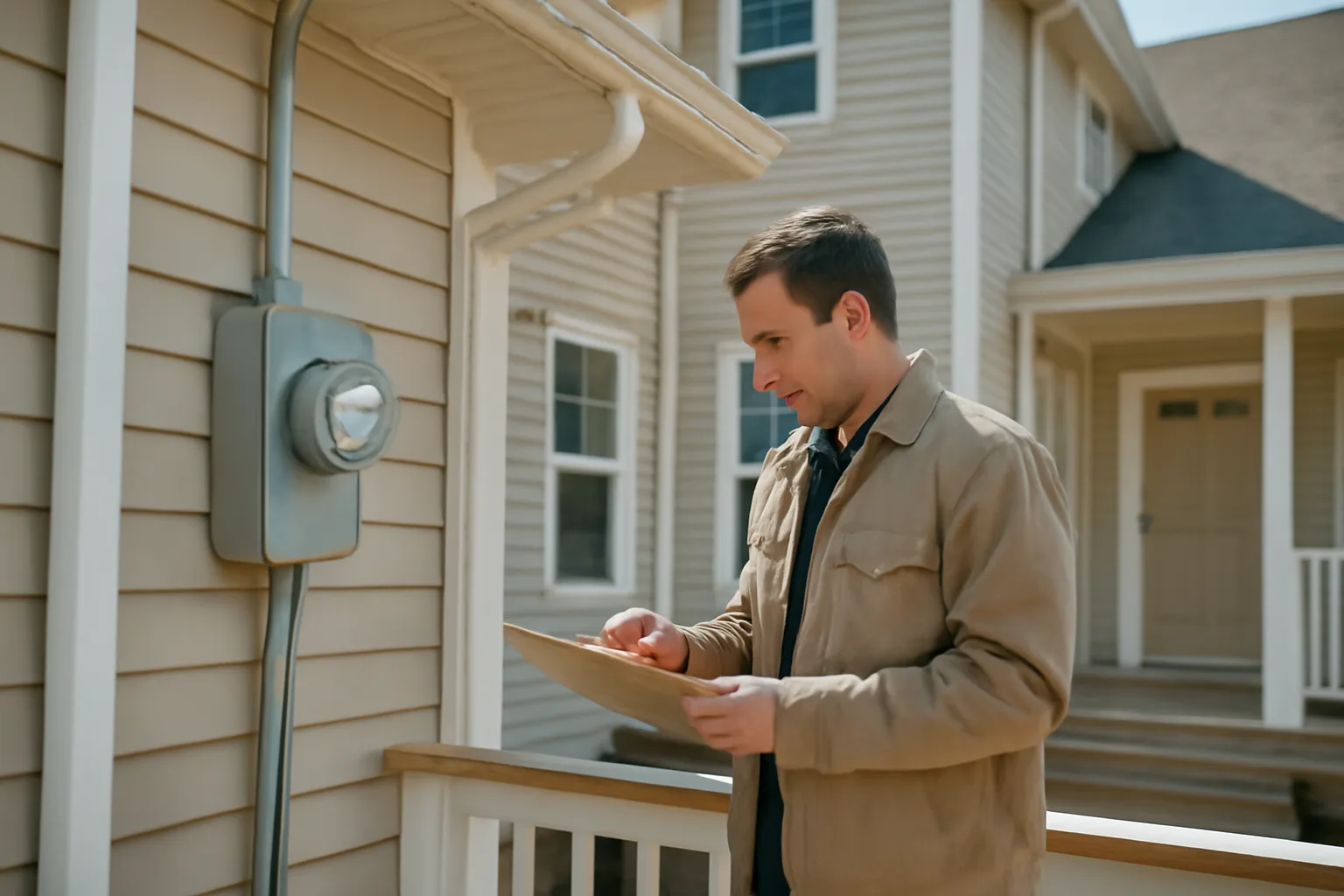
An apartment insurance inspection is a walkthrough by your insurer (or a hired inspector) to check the property's condition before issuing or renewing a landlord policy. Inspectors look at the roof, electrical panel, plumbing, smoke detectors, and any liability hazards like broken stairs. It's separate from city rental licensing inspections, though many landlords confuse the two.
what is an apartment insurance inspection and why does it happen
An apartment insurance inspection is a visit (in person or sometimes virtual, using photos you submit) that your insurance carrier does to verify the actual condition of a rental property before writing or renewing a landlord policy. Insurers call this an underwriting inspection or a loss control survey. The point isn't customer service. It's risk. Insurers lose money on claims tied to old wiring, bad roofs, and deferred maintenance, so they send someone to look before they commit to covering the building. Most residential property insurers order these for landlord policies (sometimes called dwelling fire policies or DP-3 forms) more often than for owner-occupied homes, because rentals carry higher liability exposure. A tenant falling on a broken step is a different risk profile than a homeowner tripping in their own kitchen. Insurers know this from decades of claims data, which is why landlord policies typically cost more and get inspected more. Timing varies by carrier. Some inspect before the first policy is issued. Others do it within 60 to 90 days of binding coverage, and if the inspection turns up problems, they can non-renew or require repairs. If you're a first-time landlord buying a policy for a newly purchased duplex, expect an inspection request within the first few weeks. This is a completely separate process from a city's mandatory rental license inspection. If you're in a city that requires rental registration or licensing, you may be dealing with two different inspectors for two different reasons in the same year. Nobody coordinates these for you. You have to track both.
what can a landlord look at during an inspection
During an insurance inspection, the inspector (sometimes an employee of the carrier, sometimes a third-party loss control contractor) is checking for conditions that affect claim risk, not code compliance in the way a city inspector would. That said, the categories overlap heavily. Typical items on an insurance inspection checklist include the roof's age and condition, the electrical panel (amperage, breaker vs. fuse, any exposed wiring), plumbing (visible leaks, water heater age and strapping in earthquake zones), the furnace or boiler, smoke and carbon monoxide detector presence, exterior hazards (loose railings, cracked steps, trip hazards on walkways), and general housekeeping (stored combustibles, blocked exits). Insurers also look at things landlords rarely think about: trampolines, dog breed and history if disclosed, swimming pools without fencing, and space heaters left in units. During an insurance inspection, the landlord (not the tenant) is generally the one who has to grant access and be present or arrange access, since it's the landlord's policy being underwritten. This is different from a city rental inspection, where notice requirements to tenants usually apply because the inspector is entering the tenant's home. If you're prepping for both an insurance inspection and a city license inspection around the same time, it's worth doing one walkthrough covering both checklists. Working smoke detectors, secure railings, and a roof without active leaks satisfy nearly every inspector, insurance or municipal.
why do landlords require renters insurance
Renters insurance is a policy the tenant buys to cover their own belongings and personal liability. Landlords require it, when they do, because a landlord's own dwelling policy doesn't cover a tenant's furniture, electronics, or clothing, and it often has limited liability protection if a tenant's guest gets hurt or a tenant's negligence (like a grease fire) damages the unit. The Insurance Information Institute notes that a standard renters insurance policy typically covers personal property, liability, and additional living expenses if the unit becomes uninhabitable [1]. Requiring it shifts some risk off the landlord's own policy and, in practice, can reduce subrogation disputes after a fire or water damage claim, since the tenant's insurer pays out first for the tenant's losses. Many states allow landlords to require renters insurance as a lease condition, and some cities have weighed in on how it can be structured (for example, capping what a landlord can charge if they offer a liability damage waiver in lieu of requiring a policy). Requirements and limits on this vary by state and city, so confirm with your local landlord-tenant statute or your city's rental licensing office before making it a lease term. A landlord who requires renters insurance should ask for a certificate of insurance naming them as an interested party or additional insured on the liability portion, more than take the tenant's word for it. Insurers can add a landlord as an interested party at no cost in most cases, which means the landlord gets notified if the tenant's policy lapses.
how much notice does a landlord have to give before an inspection
Notice requirements for entering a rental unit are set by state law, and they vary widely. Many states use a 24-hour notice standard for non-emergency entry, including for inspections, repairs, and showings. California, for instance, presumes 24 hours is reasonable notice under Civil Code Section 1954, though the statute allows for other reasonable notice periods depending on circumstances [2]. Other states set different windows. Some require 48 hours, some just say "reasonable notice" without a specific number, and a few have no statute at all, leaving it to case law or local ordinance. If your city has its own mandatory rental inspection program (common in cities with proactive rental licensing), the notice rule for that specific inspection may be spelled out in the municipal code rather than state landlord-tenant law, and it can differ from the general entry notice rule. Emergency entry (a burst pipe, a gas leak, fire) is the standard exception almost everywhere. No notice is required when there's an immediate threat to health or safety. Because this varies by state and by city ordinance, don't assume your neighboring landlord's notice rule applies to you. Pull your specific state's landlord-tenant statute or check with your city's rental licensing office before you schedule any inspection, insurance-related or municipal.
who is responsible for a rental property walk-through inspection in california
In California, responsibility for a rental walk-through inspection depends on which inspection you mean. For the pre-move-out inspection required under California Civil Code Section 1950.5, the landlord (or their agent) is responsible for initiating it and must give the tenant at least 48 hours' written notice of the date and time, unless the tenant waives that notice [3]. This inspection lets the tenant fix deficiencies before move-out so they can try to recover their full security deposit. For general habitability walk-throughs or code inspections, responsibility shifts depending on the trigger. A city or county code enforcement inspection (common in California cities with proactive rental inspection programs, like Los Angeles's Systematic Code Enforcement Program) is initiated by the local housing department, and the landlord is responsible for scheduling access and paying any associated inspection fee, which varies by city and unit count. Confirm current fees with your city's rental licensing or housing department, since these change and differ block by block in some California cities. For an insurance inspection tied to a landlord policy, the landlord is responsible for coordinating access, since it's their policy and their asset being evaluated. Tenants generally aren't required to be present, but courtesy notice is a good practice even when state law doesn't mandate it for this specific type of visit.
what a landlord cannot do in ohio
Ohio landlord-tenant law, codified mainly in Ohio Revised Code Chapter 5321, sets clear limits on what a landlord cannot do. A landlord cannot enter the rental unit without giving reasonable notice, which Ohio courts and the statute generally treat as 24 hours except in emergencies, and entry has to happen at reasonable times [4]. A landlord in Ohio cannot shut off utilities, change the locks, or remove a tenant's belongings to force them out. This is sometimes called self-help eviction, and Ohio law requires landlords to go through the formal eviction process (a forcible entry and detainer action) in municipal or county court instead [4]. A landlord also cannot retaliate against a tenant for reporting a code violation or exercising a legal right, such as joining a tenant union or requesting repairs, under ORC 5321.02. Ohio landlords cannot ignore their statutory duty to keep the unit in a fit and habitable condition and to comply with building, housing, and health codes that materially affect health and safety, per ORC 5321.04. Failing to do so can expose the landlord to a tenant's claim for rent abatement, repair-and-deduct remedies, or termination of the lease. A landlord also cannot keep a security deposit without an itemized, written list of deductions within 30 days of the tenant vacating, per ORC 5321.16. Missing that deadline can make the landlord liable for damages, including in some cases double the amount wrongfully withheld.
what is landlording and what does a landlord actually do
Landlording is the day-to-day work of owning and operating rental property: screening tenants, signing leases, collecting rent, handling repairs, managing turnover, and staying compliant with local rental laws. It's part business operation, part maintenance job, part legal compliance task. Most small landlords do this alongside a full-time job, managing anywhere from one unit to a small portfolio. A landlord, by definition, is the person or entity that owns a property and leases it to a tenant in exchange for rent, taking on the legal responsibilities that come with that arrangement (habitability, repairs, following state and local landlord-tenant law) in return for rental income and, ideally, long-term appreciation. In legal terms, a landlord is a lessor, and the tenant is the lessee. The job splits into a few real buckets. There's compliance work: rental registration, licensing, inspections, lead paint disclosures if the unit predates 1978 (required under federal law for pre-1978 housing under 42 U.S.C. Section 4852d and EPA's Lead Disclosure Rule) [5]. There's financial work: setting rent, tracking expenses, filing Schedule E on federal taxes for rental income. And there's operational work: fielding maintenance calls, doing move-in and move-out inspections, and handling the occasional dispute. A landlord with one or two units in a city with no licensing requirement has a fairly light compliance load. A landlord with the same two units in a city that requires rental registration, licensing, or proactive inspection (dozens of U.S. cities now do, including places like Los Angeles, Minneapolis, and many mid-size Rust Belt cities) has a meaningfully heavier one. If you're new to a city's requirements, tenant rights and tenants rights pages are worth reading before you finalize a lease, since local rules often shape what you can and can't put in it.
how to become a landlord and how to be a landlord day to day
Becoming a landlord starts with acquiring a property (purchase, inheritance, or converting a primary residence into a rental) and then meeting whatever registration or licensing requirements your city and state impose before you can legally rent it out. There's no national license. Requirements are set city by city and state by state, which is exactly why a landlord moving from a no-registration suburb to a licensing city gets blindsided. The practical steps most new landlords go through: get landlord insurance (a dwelling fire policy, not a standard homeowners policy, since standard homeowners policies typically exclude rented units), check whether your city or county requires a rental license, registration, or inspection before occupancy, set a legally compliant lease using your state's required disclosures, and set up a system for collecting rent and documenting the unit's condition at move-in. Being a landlord day to day means responding to repair requests within whatever timeframe your state's implied warranty of habitability requires (often "reasonable time," though some states and cities set specific day counts for urgent issues like no heat or no water), doing periodic inspections where your lease and local law allow it, and keeping records of every notice you send, since notice timing disputes are one of the most common landlord-tenant fights. A landlord also has to plan for renewals. If your city requires an annual or biennial rental license renewal (common in proactive inspection cities), missing that deadline is one of the most avoidable ways landlords end up with fines. This is exactly the kind of task that's easy to let slip when you're managing one or two units without a property manager. A $79 one-time City Rental License & Inspection Prep Packet exists for this specific gap: it's built to help a small landlord track city-specific license and inspection deadlines instead of relying on memory or a sticky note on the fridge.
what rights do tenants have without a lease
A tenant without a written lease still has legal rights. Occupying a unit and paying rent, even with no signed lease, generally creates what's called a tenancy at will or month-to-month tenancy under state law, and that tenant is entitled to the same basic protections as a tenant with a lease: habitability, protection from illegal lockouts, and the standard notice period before termination. Most states require a landlord to give at least 30 days' written notice to end a month-to-month tenancy without a lease, though some states and some lease-length thresholds require longer, and a few short-term situations require less. This notice period is set by state statute, not by the landlord's preference, so it's worth checking your specific state's code section rather than assuming 30 days everywhere. A tenant without a lease still has the right to a habitable unit under the implied warranty of habitability, which nearly every state recognizes in some form, either by statute or case law. They also keep the right to be free from retaliatory eviction (being evicted because they complained about a code violation) and from discriminatory treatment barred by the federal Fair Housing Act, 42 U.S.C. Section 3601 et seq. [6]. What a tenant without a lease does lose is the specific terms a written lease would lock in: a fixed rent amount for a fixed term, specific rules about pets or subletting, and clarity about who's responsible for what repairs beyond the state's baseline. Without those terms in writing, disputes tend to default to state law and, in a lot of cases, to whoever kept better records. Readers dealing with month-to-month situations may also want to check renters rights and tenant and tenant pages for state-specific breakdowns.
insurance inspection vs. city rental license inspection: what's the difference
| Who orders it | Your insurance carrier | City housing or code enforcement department | |
|---|---|---|---|
| Purpose | Assess claim risk before issuing/renewing a policy | Verify code compliance to issue or renew a rental license | |
| Legal basis | Insurance contract, state insurance code | Local municipal ordinance | |
| Consequence of failing | Higher premium, coverage denial, or non-renewal | Fine, license denial, or occupancy restriction | |
| Tenant notice required | Not usually mandated by statute, but good practice | Often required by ordinance, sometimes 24-48 hours | |
| Frequency | At binding, then periodically at renewal | Annual or biennial, per city ordinance | The overlap is real, though. Both inspectors care about smoke detectors, structural hazards, and the roof. If you fix issues for one, you're most of the way toward passing the other. But don't assume passing your city's rental inspection means your insurer won't flag something separately, or vice versa. They're different checklists run by different parties with different legal consequences. |
These two inspections get confused constantly because they can happen in the same calendar year and both involve someone walking through your unit with a clipboard. They're not the same thing, and mixing them up leads to missed deadlines on one or the other. | Feature | Insurance inspection | City rental license inspection |
Frequently asked questions
How to become a landlord if I've never rented out property before?
Buy or convert a property, get a landlord (dwelling fire) insurance policy instead of a standard homeowners policy, check whether your city or county requires rental registration or licensing before you can legally rent, and use a lease that complies with your state's required disclosures. Confirm local licensing requirements with your city's rental licensing office before advertising the unit.
Who is responsible for a rental property walk-through inspection in California?
For the pre-move-out inspection, the landlord initiates it and must give at least 48 hours' written notice under California Civil Code Section 1950.5. For city code enforcement inspections, the local housing department initiates it, and the landlord schedules access. For insurance inspections, the landlord coordinates access since it's their policy being underwritten.
What is landlording?
Landlording is the ongoing work of owning and operating rental property: screening tenants, signing and enforcing leases, collecting rent, handling repairs and turnover, and staying compliant with state landlord-tenant law and any local rental registration or licensing requirements.
What is a landlord, legally?
A landlord (legally, a lessor) is the person or entity that owns real property and leases it to a tenant (lessee) in exchange for rent. That relationship creates specific legal duties, including maintaining habitability and following state and local landlord-tenant statutes, in exchange for rental income.
What rights do tenants have without a lease?
A tenant without a written lease still gets habitability protection, protection from illegal lockouts, protection from discrimination under the Fair Housing Act, and a state-mandated notice period (commonly at least 30 days) before the landlord can end the tenancy. They lose the fixed terms a written lease would otherwise lock in.
How to be a landlord without a property manager?
Set up systems for rent collection, maintenance requests, and document storage from day one. Track every notice you send with dates. Learn your state's habitability and notice-of-entry rules, and mark your city's rental license or inspection renewal date on a calendar well before it's due, since missed renewals are a common source of avoidable fines.
Why do landlords require renters insurance?
Landlords require renters insurance because their own dwelling policy doesn't cover a tenant's personal belongings and often has limited liability coverage for tenant-caused incidents. Renters insurance shifts that risk to the tenant's own policy and can reduce disputes after fire or water damage claims.
How much notice does a landlord have to give before entering for an inspection?
Most states require at least 24 hours' notice for non-emergency entry, including inspections, though the exact number and what counts as "reasonable" varies by state statute and, sometimes, by city ordinance for mandatory rental inspections. Emergency entry (fire, gas leak, burst pipe) doesn't require advance notice.
What can a landlord look at during an insurance inspection?
An insurance inspector typically checks the roof's age and condition, the electrical panel, visible plumbing and water heater condition, smoke and carbon monoxide detectors, and exterior hazards like broken railings or steps. They're assessing claim risk for the insurer, not code compliance in the municipal sense.
What a landlord cannot do in Ohio?
Under Ohio Revised Code Chapter 5321, a landlord cannot enter without reasonable notice (generally treated as 24 hours), cannot shut off utilities or change locks to force a tenant out (self-help eviction is illegal), cannot retaliate against a tenant for reporting code violations, and cannot skip habitability duties under the code.
Does an insurance inspection replace my city's rental license inspection?
No. They're separate processes with separate legal consequences. An insurance inspection affects your coverage and premium; a city rental license inspection affects whether you can legally rent the unit at all. Passing one doesn't guarantee passing the other, though fixing basics like smoke detectors and structural hazards helps with both.
What happens if my landlord insurance inspection finds problems?
Depending on the carrier, you may get a list of required repairs with a deadline (commonly 30 to 60 days), a premium increase, or in more serious cases a non-renewal notice. Insurers vary in how strict they are, so ask your specific carrier what their re-inspection or appeal process looks like.
Can a landlord require proof of renters insurance as a lease condition?
In most states, yes, landlords can require renters insurance as a lease condition, though some cities regulate how it can be structured or capped if paired with a liability damage waiver program. Confirm the rule in your specific state and city before adding it to your lease.
Sources
- Insurance Information Institute, Renters Insurance: Standard renters insurance typically covers personal property, liability, and additional living expenses.
- California Legislative Information, Civil Code Section 1954: California presumes 24 hours is reasonable notice for landlord entry into a rental unit.
- California Legislative Information, Civil Code Section 1950.5: California requires at least 48 hours' written notice before a pre-move-out inspection.
- Ohio Legislative Service Commission, Ohio Revised Code Chapter 5321: Ohio landlord-tenant law sets rules on entry notice, self-help eviction, retaliation, and habitability duties.
- U.S. EPA, Real Estate Disclosures About Potential Lead Hazards: Federal law requires lead paint disclosure for housing built before 1978.
- U.S. Department of Justice, The Fair Housing Act: Federal law bars housing discrimination on protected bases regardless of lease status.
- Ohio Revised Code Section 5321.16: Ohio landlords must provide an itemized deduction list within 30 days of a tenant vacating or risk liability for wrongfully withheld deposits.