Last updated 2026-07-26
TL;DR
Becoming a landlord means more than buying a property and finding a tenant. Most cities require rental registration or licensing, many require inspections, and landlord-tenant law sets rules on notice, entry, and tenant rights even without a written lease. Check your city rental licensing office before you list a unit.
what is a landlord, exactly?
A landlord is the person or entity that owns residential property and rents it to someone else in exchange for money, usually under a lease or rental agreement. That's the plain definition. But legally, being a landlord comes with a bundle of obligations that vary by state and city: habitability standards, notice requirements before entry, security deposit handling rules, and in a growing number of cities, mandatory registration or licensing before you can legally rent the unit at all. The word covers everything from a single side-hustle rental to a 200-unit portfolio run through a property management company. The legal definition doesn't care about scale, though the compliance burden does. A landlord with one duplex in a licensing city still has to register that unit, pass inspection if required, and follow the same notice-to-enter rules as someone who owns 40 buildings. Most states define "landlord" (sometimes called "lessor") within their landlord-tenant statutes. For example, California's Civil Code Section 1940 defines the scope of the state's residential landlord-tenant law and who it applies to [1]. If you're new to this, read your state's landlord-tenant act before you read anything else. It sets the floor; your city's rental licensing ordinance sits on top of it.
what is landlording, and is it different from just owning rental property?
"Landlording" is the practical, day-to-day work of operating a rental: screening tenants, collecting rent, handling repairs, managing turnover, and staying compliant with local law. Owning the property is a financial position. Landlording is the job. You can own rental property and hire a property manager to do the landlording for you, which is common for out-of-state owners or people with more than a handful of units. If you self-manage, landlording includes things people don't expect until they're doing it: fielding a 9 p.m. call about a broken water heater, tracking which cities require annual rental registration renewal, keeping proof of lead paint disclosure on file (required nationally for pre-1978 housing under federal law, 24 CFR Part 35 [2]), and knowing your local notice periods cold. A lot of new landlords underestimate the administrative side. Registration renewals, inspection scheduling, insurance certificate updates, and fee payments pile up fast once a city has a licensing program. If you're managing 1 to 10 units yourself, a simple checklist system (even a spreadsheet with renewal dates) saves you from late fees and missed inspection windows.
how to become a landlord: the real steps
There's no single license that makes you "a landlord" nationally. It's a mix of business setup, local compliance, and practical prep. Here's the realistic sequence: 1. Decide on ownership structure. Many landlords hold rental property in an LLC for liability separation, though this has tax and financing tradeoffs worth discussing with an accountant, not a blog post. 2. Check your city and county for rental registration or licensing requirements. This is the step people skip and regret. A growing number of cities require landlords to register every rental unit, pay an annual or biennial fee, and in many cases pass a habitability inspection before renting or renewing. Requirements differ by city; confirm current fees and deadlines with your city rental licensing office. 3. Understand your state's landlord-tenant law. This covers security deposit limits and return timelines, notice periods for entry and termination, habitability obligations, and eviction procedure. These rules apply whether or not your city has a licensing program. 4. Get the property inspection-ready if your city requires one. Working smoke and carbon monoxide detectors, no exposed wiring, functioning heat, secure locks, and no obvious code violations are common baseline items across most municipal rental inspection checklists. 5. Get landlord insurance (a landlord or "dwelling" policy, different from a standard homeowners policy) before you rent out the unit. 6. Screen tenants consistently and legally, using the same criteria for every applicant to stay compliant with the federal Fair Housing Act, which prohibits discrimination based on race, color, national origin, religion, sex, familial status, or disability [3]. 7. Sign a lease that matches your state's required disclosures (lead paint, mold, bed bug history, and other state-specific items depending on where the property sits). If your city requires licensing, steps 2 and 4 usually happen together: you register, then schedule or wait for the required inspection, then get your license or certificate of occupancy for rental use.
who is responsible for a rental property walk-through inspection in california?
In California, the responsibility for a move-in/move-out walk-through inspection depends on the type of inspection. For the pre-move-out inspection tied to security deposit deductions, California Civil Code Section 1950.5(f) gives the tenant the right to request an initial inspection before move-out, and the landlord must notify the tenant of that right and, if requested, conduct the inspection and provide an itemized list of any deficiencies with time to fix them before move-out [4]. The landlord (or their authorized agent, like a property manager) is the one who conducts this inspection, not the city and not a third-party inspector, unless the jurisdiction has a separate municipal rental inspection program. Cities like Los Angeles, for example, run their own systematic code enforcement inspection program through the Rent Escrow Account Program (REAP) and related habitability inspection efforts, which is separate from the tenant move-out walk-through required under state law. So there are really two different "inspections" that get conflated: the state-law move-out walk-through (landlord's job, tenant-initiated), and city-level rental licensing or habitability inspections (run by a city inspector, if your city has that kind of program). Confirm with your city rental licensing office whether a habitability inspection applies to your unit, since this varies widely even within California.
what can a landlord look at during an inspection?
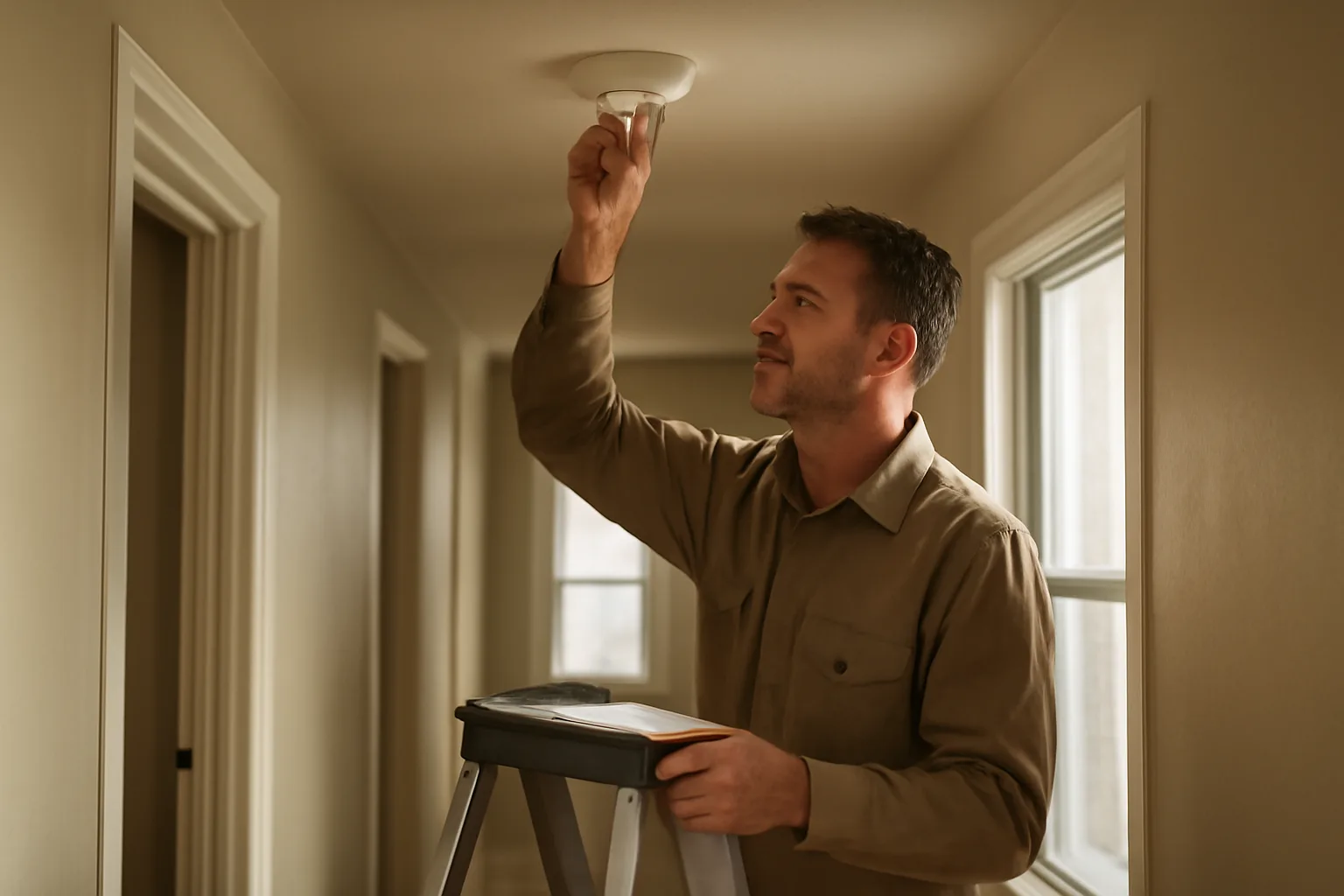
During a routine inspection, whether it's a habitability check tied to a rental license, a lease-compliance walk-through, or a maintenance visit, a landlord can generally look at the general condition and safety of the unit: smoke detector function, visible plumbing leaks, electrical hazards, signs of pest infestation, unauthorized occupants or pets in violation of lease terms, and obvious property damage. What a landlord generally cannot do is search through a tenant's personal belongings, closets, or private papers as part of a routine inspection. The inspection is about the condition of the property, not an excuse to go through drawers. Most state laws also require advance notice before entry for a non-emergency inspection, commonly 24 to 48 hours depending on the state (see the notice section below). For city-run rental licensing inspections, the inspector is typically checking against a municipal housing or property maintenance code: working heat, hot water, structural safety, egress windows in bedrooms, functioning smoke and CO detectors, and the absence of code violations like exposed wiring or missing handrails. These inspections usually don't involve looking at tenant belongings at all, since the inspector's job is the building's condition, not the tenant's housekeeping. If you're prepping for one of these, our City Rental License & Inspection Prep Packet walks through the common checklist items city inspectors flag most often, based on the categories that show up across municipal rental housing codes.
why do landlords require renters insurance?
Landlords require renters insurance mainly to shift liability and reduce disputes after a fire, water damage, theft, or injury. A landlord's own dwelling insurance policy covers the building and the landlord's property; it generally does not cover a tenant's personal belongings or a tenant's liability if they cause damage (like leaving a stove on that starts a fire). Requiring renters insurance, typically with a modest liability minimum like $100,000, means if the tenant causes a covered loss, their policy pays first, reducing claims against the landlord's policy and reducing the odds of a costly out-of-pocket dispute. It's a smart, low-cost risk transfer tool. Renters insurance is genuinely cheap: the National Association of Insurance Commissioners tracks average renters insurance premiums, and average annual costs have historically run in the range of roughly $150 to $200 a year nationally, though this varies by state and coverage level [5]. Some cities and states are starting to build renters insurance requirements directly into local law, but in most places it's still a lease clause a landlord chooses to include, not a legal mandate. Requiring it is legal almost everywhere as long as it's applied consistently to all tenants (again, a Fair Housing Act consideration).
how much notice does a landlord have to give before entering or ending a tenancy?
| Entry for repairs/inspection | 24 to 48 hours | State statute | |
|---|---|---|---|
| End month-to-month tenancy | 30 to 60 days | State, tenancy length | |
| Rent increase notice | 30 to 90 days | State, size of increase | |
| Non-payment of rent (pay or quit) | 3 to 14 days | State statute | Eviction notice periods for nonpayment of rent are usually much shorter, often 3 to 14 days depending on the state, but eviction procedure itself is a court process, not something a landlord can do unilaterally. If you're dealing with an active eviction situation, talk to a local attorney or your state's tenant-landlord mediation office rather than relying on a general guide like this one. |
This depends heavily on your state and the type of notice, and it's one of the most commonly misunderstood parts of landlord-tenant law. For entry notice (a landlord wanting to enter for repairs, inspection, or showings), many states require at least 24 hours' advance written or verbal notice, though the specifics vary. California requires "reasonable notice," which state law presumes to be 24 hours in most circumstances, under Civil Code Section 1954 [6]. Some states specify 24 hours explicitly; others use vaguer "reasonable notice" language and leave the interpretation to case law. For ending a month-to-month tenancy, notice periods commonly range from 30 to 60 days depending on the state and sometimes on how long the tenant has lived there. California requires 60 days' notice to terminate a tenancy where the tenant has lived in the unit one year or more, and 30 days if under a year, under Civil Code Section 1946.1 [7]. Here's a simple comparison of common notice categories (always confirm your specific state statute, since these vary): | Notice type | Typical range | Varies by |
what rights do tenants have without a written lease?
Tenants without a written lease still have real legal rights. Most states treat an unwritten, ongoing tenancy (where rent is paid and accepted regularly) as a month-to-month tenancy, governed by the same state landlord-tenant statutes that apply to written leases. That means the same habitability standards, the same notice-to-enter requirements, and the same eviction procedures generally apply. A tenant without a lease still has the right to a habitable unit (working plumbing, heat, structural safety), protection from illegal lockouts or "self-help" eviction (a landlord can't just change the locks or shut off utilities to force someone out), and the right to proper legal notice before the tenancy ends. Many states codify an implied warranty of habitability that applies regardless of whether there's a signed lease. HUD's Tenant Rights, Laws and Protections page notes that "tenants have basic rights in every state," including protections against discrimination and, in most states, a right to habitable housing [8]. What a tenant without a lease usually doesn't have is a locked-in rent amount or term length. Without a written lease specifying otherwise, either party can typically end a month-to-month arrangement with proper notice, and the landlord can raise rent with proper notice too (subject to any local rent control law). If you're a landlord operating without written leases, that's a real exposure risk for you too, since verbal agreements are hard to prove in a dispute. Written leases protect both sides.
what a landlord cannot do in ohio
Ohio's landlord-tenant law is codified in Ohio Revised Code Chapter 5321. A few things Ohio landlords specifically cannot do: A landlord cannot engage in "self-help" eviction: locking a tenant out, removing doors, shutting off utilities, or seizing belongings to force a tenant out without going through the court eviction process. Ohio law requires landlords to use the formal eviction (forcible entry and detainer) process through the courts. A landlord cannot enter the rental unit without reasonable notice except in an emergency. Ohio Revised Code 5321.04 requires landlords to give "reasonable notice" (Ohio courts and practice generally treat 24 hours as reasonable, though the statute doesn't fix an exact number) and to enter only at reasonable times [9]. A landlord cannot retaliate against a tenant for exercising a legal right, like reporting a housing code violation or joining a tenant union. Ohio Revised Code 5321.02 specifically prohibits retaliatory conduct such as raising rent, decreasing services, or threatening eviction in response to a tenant's good-faith complaint . A landlord also cannot ignore their maintenance obligations under Ohio Revised Code 5321.04, which requires landlords to keep the premises in a fit and habitable condition, comply with building and housing codes, and keep common areas safe [9]. Failing to make required repairs after proper notice from the tenant can expose a landlord to a rent escrow deposit action, where the tenant pays rent into a court-held account instead of directly to the landlord until repairs are made. These Ohio-specific rules are a good example of why a general guide can only get you so far. Every state's landlord-tenant code has its own numbered sections, its own notice periods, and its own remedies. If you're operating in Ohio, or anywhere else, read the actual statute chapter, more than a summary of it.
how to be a landlord without getting blindsided by city rules
The single biggest mistake new landlords make isn't a bad tenant screening decision. It's not knowing their city requires rental registration or licensing until a code enforcement notice or fine shows up. A rising number of cities, from Los Angeles to smaller cities across Ohio, Pennsylvania, and the Midwest, run mandatory rental registration, licensing, or inspection programs, and the penalty for skipping registration is often a fine per unit per violation, sometimes stacking daily until you comply. Before you rent out any unit, three things to check with your specific city: Does the city require rental property registration or a rental license, and what's the renewal cycle (annual, biennial)? Does the city require a habitability inspection before initial rental, at tenant turnover, or on a fixed cycle regardless of turnover? What's the fee, and what's the penalty structure for late registration or failed inspection re-checks? Because these programs vary city by city and change over time (fees go up, inspection cycles shift, some cities add new registration tiers for out-of-state owners), always confirm current requirements with your city rental licensing office directly rather than relying on a general search result. If you want a structured way to get organized before your first registration or inspection, our $79 one-time City Rental License & Inspection Prep Packet walks through the document checklist and common inspection categories landlords in licensing cities run into most. For the tenant-facing side of this relationship, it also helps to understand what tenants can expect from you legally. See our guides on tenant rights and renters rights for the flip side of these same obligations.
Frequently asked questions
How to become a landlord if I only own one rental unit?
Register the property with your city if a rental licensing program exists, verify your state's landlord-tenant law for notice periods and security deposit rules, get landlord insurance, and screen tenants consistently under Fair Housing Act rules. One unit still triggers the same legal obligations as ten; the compliance burden per unit doesn't shrink with portfolio size.
What is a landlord under the law?
A landlord is the owner (or authorized agent) who rents residential property to a tenant under a lease or rental agreement, subject to state landlord-tenant statutes covering habitability, notice, and eviction procedure. California defines this scope in Civil Code Section 1940; every state has an equivalent statute.
What is landlording as a practice?
Landlording is the operational work of running a rental: tenant screening, rent collection, repairs, compliance with local licensing and inspection rules, and lease administration. It's distinct from simply owning rental real estate, which is a financial position that can be handled entirely by a property manager instead.
Who is responsible for a rental property walk-through inspection in California?
The landlord (or their agent) is responsible for conducting the pre-move-out inspection under California Civil Code Section 1950.5(f), if the tenant requests it. Separately, some California cities run their own municipal habitability inspection programs through code enforcement, which is a different process handled by a city inspector.
What rights do tenants have without a written lease?
Tenants without a written lease are usually treated as month-to-month tenants under state law, with the same rights to habitable housing, protection from illegal lockouts, and required notice before eviction as tenants with written leases. What they typically lack is a fixed rent amount or lease term locked in writing.
Why do landlords require renters insurance?
Landlords require renters insurance to shift liability for tenant-caused damage or injury away from the landlord's own policy and onto the tenant's coverage. It's cheap for tenants, often around $150 to $200 a year nationally according to NAIC data, and reduces disputes after fires, water damage, or theft.
How much notice does a landlord have to give before entering the unit?
Most states require 24 to 48 hours' advance notice for non-emergency entry. California presumes 24 hours is reasonable under Civil Code Section 1954. Ohio requires "reasonable notice" under Ohio Revised Code 5321.04 without fixing an exact number, though 24 hours is commonly treated as reasonable in practice.
What can a landlord look at during an inspection?
A landlord can check the general condition and safety of the unit: smoke detectors, plumbing, electrical hazards, pest signs, and lease compliance like unauthorized occupants. A landlord generally cannot search personal belongings, drawers, or private papers during a routine inspection; that goes beyond checking the property's condition.
What can a landlord not do in Ohio specifically?
Ohio landlords cannot use self-help eviction (lockouts, utility shutoffs), cannot enter without reasonable notice except in emergencies, and cannot retaliate against tenants for reporting code violations, under Ohio Revised Code 5321.02 and 5321.04. They also cannot ignore statutory maintenance obligations to keep the unit fit and habitable.
Do all cities require a rental license or registration?
No. Requirements vary widely; some cities have no program at all, others require simple registration, and some require registration plus a habitability inspection on a set cycle. Because rules change, always confirm current requirements, fees, and deadlines directly with your city's rental licensing office.
What's the difference between a rental license and a rental registration?
Registration usually just means notifying the city that a unit is being rented, often for a fee, sometimes with no inspection attached. Licensing typically implies the city can approve, deny, or revoke your ability to rent the unit, often tied to a passed habitability inspection. Terms and requirements vary by city.
Can a landlord require renters insurance as a lease condition?
Yes, in most states a landlord can require renters insurance as a lease condition, as long as the requirement is applied consistently to every tenant to avoid Fair Housing Act discrimination concerns. It is generally not a legal mandate imposed by the state, just a landlord policy choice written into the lease.
What happens if I don't register my rental property with the city?
Consequences vary by city but commonly include fines per unit, sometimes accruing daily until you register, and in some cities an inability to legally collect rent or evict a tenant for nonpayment until the property is properly registered or licensed. Confirm specific penalties with your city rental licensing office.
Sources
- California Legislature, Civil Code Section 1940: Scope of California residential landlord-tenant law and its application
- HUD/EPA, 24 CFR Part 35 Lead-Based Paint Disclosure Rule: Federal lead paint disclosure requirement for pre-1978 housing
- HUD, Fair Housing Act protected classes: Federal protected classes under the Fair Housing Act
- California Legislature, Civil Code Section 1950.5: Landlord's obligation to conduct pre-move-out inspection if requested by tenant
- California Legislature, Civil Code Section 1954: 24-hour reasonable notice presumption for landlord entry in California
- California Legislature, Civil Code Section 1946.1: 30 or 60 day notice requirement to terminate month-to-month tenancy in California
- HUD, Tenant Rights, Laws and Protections: Tenants have basic legal rights in every state regardless of lease status
- Ohio Revised Code Section 5321.04: Ohio landlord obligations for habitability, notice before entry, and reasonable entry times
- Ohio Revised Code Section 5321.02: Ohio prohibition on landlord retaliation against tenants