Last updated 2026-07-26
TL;DR
Becoming a landlord means more than buying property and finding a tenant. You need to know your state's notice rules, what inspectors and landlords can legally check, what tenants keep as rights even without a signed lease, and where local licensing or registration applies. This guide walks through each piece in plain terms.
what is landlording, and what is a landlord actually responsible for
Landlording is the day-to-day work of owning and managing rental property: collecting rent, handling repairs, following notice rules, keeping the unit safe, and staying on the right side of local and state law. A landlord is the person or entity that owns residential property and leases it to someone else (a tenant) in exchange for rent. That sounds simple until you actually do it. The paperwork side alone includes lease terms, security deposit handling (many states cap deposits and set return deadlines, like California's requirement to return deposits within 21 days under Civil Code Section 1950.5 [1]), habitability standards, and in a growing number of cities, a rental license or registration you renew every year or two. Most new landlords underestimate the compliance side. It's more than fixing a leaky faucet. It's knowing when you're required to give notice before entering, what counts as a habitable unit under your state's implied warranty of habitability, and whether your city requires you to register the unit before you can legally collect rent at all. Some cities (Philadelphia and Los Angeles are two well-known examples) will fine you or bar you from filing an eviction if you haven't registered the unit.
how to become a landlord, step by step
Becoming a landlord is a mix of legal setup, financial planning, and local compliance. There's no single license that makes you a landlord in most states, but there are steps almost every jurisdiction expects. First, decide how you'll hold the property. Many landlords use an LLC for liability protection, though this doesn't replace insurance and has its own costs (state filing fees for an LLC range widely, often $50 to $500 depending on the state). Second, check whether your city or county requires rental registration or a rental license. This is separate from a business license. Cities including Philadelphia, PA (rental license required under Philadelphia Code Title 9 [2]), Los Angeles, and Minneapolis all require some form of registration or inspection before you can legally rent out a unit. Skipping this step is one of the most common (and expensive) mistakes new landlords make. If your city requires an inspection, budget time for scheduling: some cities book inspection slots weeks out. Third, get landlord-specific insurance (a standard homeowner's policy usually excludes rental use). Fourth, write a lease that matches your state's disclosure requirements: lead paint disclosure is federally required for homes built before 1978 under 42 U.S.C. Section 4852d [3]. Fifth, screen tenants consistently, following Fair Housing Act rules so you don't discriminate based on protected classes (race, color, national origin, religion, sex, familial status, or disability, per 42 U.S.C. Section 3604 [4]). If your city has a licensing or inspection requirement, get ahead of it rather than reacting to a violation notice. A lot of landlords first learn about local rules when a fine notice shows up. If that's you right now, our City Rental License & Inspection Prep Packet is a one-time $79 tool built to walk you through exactly what most inspection checklists cover and how to document your unit before an inspector shows up.
who is responsible for a rental property walk-through inspection in California
In California, the landlord is generally responsible for conducting the move-in and move-out walk-through inspections, though the tenant has a right to participate. California Civil Code Section 1950.5(f) gives tenants the right to request an initial inspection before move-out, specifically so they can fix any issues before the landlord assesses deductions from the security deposit [1]. Here's how it works in practice: the landlord (or their agent) must notify the tenant of the right to an initial move-out inspection, usually offered around two weeks before the tenancy ends. If the tenant wants that inspection, the landlord conducts it and gives the tenant an itemized list of what needs fixing or cleaning to avoid deposit deductions. The tenant isn't required to fix anything, but this step is meant to prevent surprises. Separately, many California cities with rent control or licensing programs (Los Angeles, Oakland, San Francisco) have their own inspection requirements tied to habitability enforcement, run through city housing or code enforcement departments, not the landlord. Those inspections are different from the tenant move-out walk-through: they're compliance checks, and they're the city's responsibility, not the landlord's. If you're a landlord in a California city with a rental registration or inspection mandate, check with your city rental licensing office for the specific walk-through requirements tied to that program, since they vary by city and aren't part of the state Civil Code process.
what rights do tenants have without a signed lease
Tenants without a written lease still have real legal rights. In most states, an oral or implied agreement to pay rent for a place to live creates what's called a month-to-month tenancy, and that tenancy is still covered by state landlord-tenant law. Specifically, tenants without a lease generally still get: the right to a habitable unit (working plumbing, heat, structural safety), protection from illegal lockouts or utility shutoffs, the right to proper notice before eviction, and protection from discrimination under the Fair Housing Act [4]. What they typically don't get is a locked-in rent amount or term length. A landlord can usually raise rent or end a month-to-month tenancy by giving the legally required notice (commonly 30 days, though this varies by state and by how long the tenant has lived there). Some states specifically address this. For example, under California Civil Code Section 1946, a month-to-month tenancy (lease or no lease) requires 30 days' notice to terminate, or 60 days if the tenant has lived there a year or more [5]. Without any lease at all, you still can't just change the locks or shut off water to force someone out. Self-help eviction is illegal almost everywhere in the U.S., lease or no lease.
how much notice does a landlord have to give before entering or ending a tenancy
Notice requirements split into two very different categories: notice to enter the unit, and notice to end the tenancy. Both vary by state, and neither has a single national standard. For entry, California requires 24 hours' written notice for non-emergency entry under Civil Code Section 1954, with limited exceptions for emergencies or if the tenant agrees to shorter notice [6]. Other states set different windows: some require 24 hours, some 48, and a few states don't specify a number at all, just "reasonable notice." For ending a month-to-month tenancy, 30 days is the most common baseline nationally, though it climbs to 60 or even 90 days in some states or cities once the tenant has lived there past a certain length of time (California's 60-day rule for tenancies over one year is one example [5]). For non-payment of rent or lease violations, notice periods are usually shorter (3 to 14 days is typical, though this varies a lot by state) and are governed by a completely different set of statutes than the ordinary termination notice. The short version: don't assume a number. Look up your specific state's statute, because 24 hours for entry and 30 days for termination are common defaults, not universal law.
what can a landlord look at during an inspection
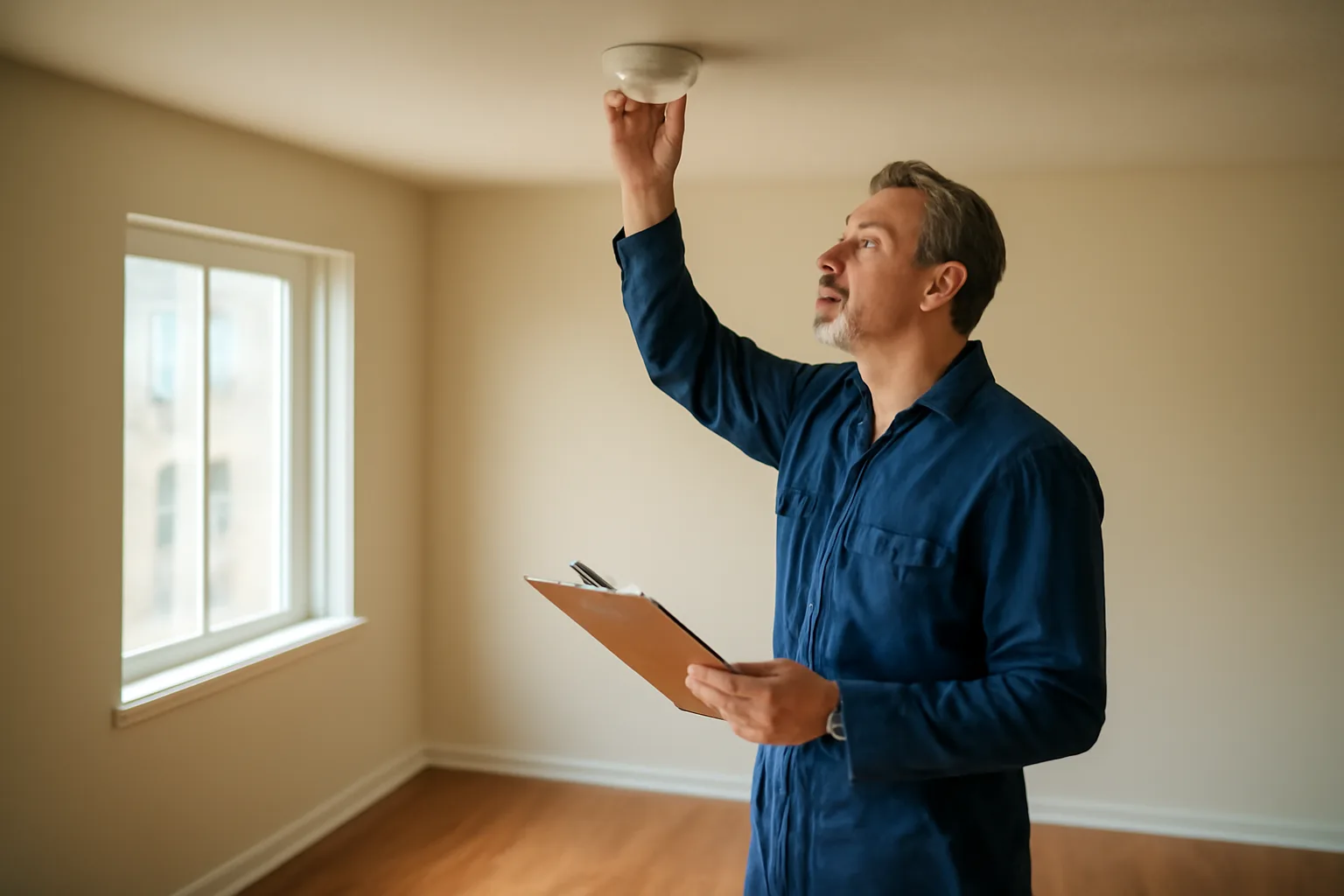
During a lawful inspection, a landlord (or a city inspector, if it's a licensing inspection) can generally check anything related to habitability, safety, and lease compliance: working smoke detectors, plumbing, electrical systems, signs of pest infestation, mold, structural damage, and whether the unit matches what's on the lease (unauthorized occupants, unauthorized pets, illegal subletting). What a landlord generally cannot do is search through personal belongings, closets, or drawers unrelated to habitability checks, and cannot use an inspection as a pretext to harass a tenant or retaliate against one who filed a complaint. Retaliatory conduct connected to a tenant exercising legal rights is specifically prohibited in many states; Ohio, for instance, addresses this under Ohio Revised Code Section 5321.02, which bars retaliatory conduct such as increasing rent, decreasing services, or attempting eviction against a tenant who has complained to a government agency about a housing code violation [7]. City licensing inspections (as opposed to a landlord's own walk-through) are usually broader and more standardized: inspectors check for things like working egress windows, functioning heat, exposed wiring, and compliance with the local housing code, often using a checklist tied to the International Property Maintenance Code, which many cities adopt as their baseline standard [8]. If you're prepping for one of these city inspections rather than your own routine landlord walk-through, that checklist is the more useful one to study, since it's what determines whether you pass or get a violation notice.
what a landlord cannot do in Ohio
Ohio law spells out specific landlord obligations and prohibitions under the Ohio Landlord-Tenant Act, primarily Ohio Revised Code Chapter 5321. A landlord in Ohio cannot: shut off utilities or change locks to force a tenant out without a court order (illegal self-help eviction), retaliate against a tenant for reporting a code violation or joining a tenant union (ORC 5321.02 [7]), enter the unit without reasonable notice except in an emergency, or fail to maintain the unit in a habitable condition once notified of a problem. Ohio Revised Code Section 5321.04 requires landlords to keep the premises in a fit and habitable condition, comply with building and housing codes, and keep common areas safe [9]. If a landlord fails to make a needed repair after receiving proper notice, Ohio tenants have remedies under ORC 5321.07, including the ability to deposit rent with the court (rent escrow) rather than paying the landlord directly, as long as they've given proper written notice first [10]. Ohio also caps what a landlord can do around security deposits: if a landlord wrongfully withholds a deposit, ORC 5321.16 allows the tenant to recover damages, and Ohio courts have interpreted this to include the amount wrongfully withheld plus attorney fees in some cases [11]. The bottom line for Ohio landlords: don't self-evict, don't retaliate, don't ignore repair notices, and follow the security deposit return timeline (30 days after termination of the rental agreement under ORC 5321.16).
why do landlords require renters insurance
Landlords require renters insurance mainly to shift liability risk away from their own policy. A landlord's own insurance covers the building and their own property, not the tenant's belongings, and typically doesn't cover a tenant's liability if the tenant accidentally causes damage (a kitchen fire, an overflowing tub that damages the unit below). Renters insurance is cheap relative to the protection it buys: the average cost nationally runs around $15 to $30 a month depending on coverage level and location, according to industry rate data commonly cited by insurance comparison services, though exact pricing varies by state and carrier. Requiring it is legal in nearly every state and is increasingly common in lease agreements, especially in multi-unit buildings where one tenant's negligence (a grease fire, a burst hose) can damage neighboring units. From the landlord's side, it also protects against liability gaps. If a tenant's guest is injured in the unit, the tenant's renters insurance (which usually includes liability coverage) may cover that claim instead of it falling entirely on the landlord's policy. It's a low-cost requirement that meaningfully reduces the landlord's own exposure, which is why it shows up in more and more standard lease templates.
how rental licensing and registration connect to all of this
Everything above (habitability, notice, inspections, insurance) sits underneath a layer that a growing number of cities now require: rental licensing or registration. This is separate from state landlord-tenant law. It's a local requirement, city by city, and it usually means you have to register your rental unit with a city office, pay a fee, and in many cities, pass a physical inspection before you're legally allowed to rent it out. Cities vary enormously here. Some only require registration and a modest annual fee. Others (Philadelphia is a well-documented example, requiring a rental license under Title 9 of the Philadelphia Code before a landlord can lease residential property [2]) require an inspection tied to the license and can bar landlords from filing eviction cases if the license has lapsed. Confirm with your city rental licensing office what's required in your specific jurisdiction, since fees, inspection frequency, and penalties differ from city to city and change over time. If you're dealing with a first-time licensing notice or an upcoming inspection deadline, it helps to separate two things: state landlord-tenant obligations (notice, habitability, deposits) which apply everywhere in that state, and local licensing rules (registration, fees, inspection checklists) which only apply in cities that have adopted them. Missing the local piece is what usually triggers fines, since a lot of landlords assume state compliance is enough. For landlords who want a structured way to get ready for a city inspection instead of guessing what the inspector will check, the City Rental License & Inspection Prep Packet is a $79 one-time resource built specifically around common city inspection checklists and registration paperwork.
what tenants can expect from a landlord who follows the rules
A tenant renting from a landlord who runs things correctly should expect: a habitable unit maintained to code, proper notice before entry (24 to 48 hours in most states, with emergency exceptions), a security deposit returned within the state's required window (14 to 30 days is common, though it varies), and no retaliation for complaints filed with a housing agency. Tenants should also expect the landlord to follow Fair Housing Act rules during the application process, meaning no denial based on race, religion, national origin, sex, disability, or familial status [4]. If a city requires rental licensing, tenants in some jurisdictions can actually look up whether their unit is properly licensed. Certain cities publish rental registration databases publicly, and an unlicensed rental can sometimes be a legal defense against eviction depending on local rules. Understanding these baseline expectations from the tenant's rights side helps landlords too. If you know what a reasonable tenant expects and is legally entitled to, you avoid a lot of disputes before they start. For a broader look at how these obligations play out state by state, see our guide on tenant rights and renters rights.
Frequently asked questions
How do you become a landlord if you've never rented out property before?
Buy or already own residential property, check whether your city requires rental registration or licensing, get landlord insurance, write a state-compliant lease, and screen tenants under Fair Housing Act rules. There's no single national landlord license, but many cities require local registration before you can legally collect rent.
Who does the walk-through inspection on a rental in California, the landlord or the tenant?
The landlord conducts it, but the tenant has the right to request an initial move-out inspection under California Civil Code Section 1950.5(f), so problems can be fixed before deposit deductions are made. City-level licensing inspections, where they exist, are done by city inspectors, not the landlord.
What is landlording, exactly?
Landlording is the ongoing work of owning and managing rental property: collecting rent, handling maintenance, following notice and habitability laws, and in many cities, keeping up with rental registration or licensing requirements and inspections.
What legally makes someone a landlord?
A landlord is anyone who owns residential property and rents it to a tenant under a lease or rental agreement, written or oral. The relationship exists once rent is exchanged for occupancy, whether or not there's a signed lease.
Do tenants have rights if they never signed a lease?
Yes. An oral agreement to pay rent creates a month-to-month tenancy in most states, and tenants keep habitability rights, protection from illegal lockouts, required notice before eviction, and Fair Housing Act protections, even without a written lease.
What steps should someone follow to be a good landlord?
Screen tenants consistently and legally, follow your state's notice and entry rules, maintain the unit to code, return deposits on time, register or license the property if your city requires it, and require renters insurance to limit your liability exposure.
Why do landlords require renters insurance from tenants?
It shifts liability for tenant-caused damage and injuries off the landlord's own policy. Renters insurance typically costs $15 to $30 a month and covers the tenant's belongings plus liability, protecting both parties if something goes wrong.
How much notice does a landlord have to give before entering a unit?
It depends on the state. California requires 24 hours' written notice for non-emergency entry (Civil Code Section 1954). Other states set different windows, commonly 24 to 48 hours, with exceptions for emergencies.
How much notice is required to end a month-to-month tenancy?
30 days is the most common baseline nationally. Some states extend this to 60 or 90 days once a tenant has lived there past a certain length of time, so check your specific state's statute rather than assuming 30 days applies everywhere.
What can a landlord check during an inspection?
Habitability items like smoke detectors, plumbing, electrical systems, pest issues, and mold, plus lease compliance such as unauthorized occupants or pets. A landlord generally cannot search personal belongings unrelated to habitability or use an inspection to retaliate.
What can't a landlord do in Ohio?
An Ohio landlord cannot shut off utilities or change locks to force a tenant out, retaliate against a tenant who reports a code violation (ORC 5321.02), enter without reasonable notice outside emergencies, or ignore repair requests after proper notice.
Does every city require a rental license or registration?
No. It's a local requirement that varies city by city. Some cities have no rental licensing program at all, while others (like Philadelphia) require a license and inspection before you can legally rent out a unit. Confirm with your specific city's rental licensing office.
Sources
- California Civil Code Section 1950.5: California security deposit return timeline and initial move-out inspection right
- Philadelphia Code Title 9, Chapter 9-3900 (Rental Housing): Philadelphia rental license requirement before leasing residential property
- 42 U.S.C. Section 4852d (Lead Disclosure): Federal lead paint disclosure requirement for pre-1978 housing
- 42 U.S.C. Section 3604, Fair Housing Act: Fair Housing Act protected classes for rental discrimination
- California Civil Code Section 1946: 30 and 60-day notice requirements for ending month-to-month tenancy in California
- California Civil Code Section 1954: 24-hour notice requirement for landlord entry in California
- Ohio Revised Code Section 5321.02: Ohio prohibition on landlord retaliation against tenants who report code violations
- International Code Council, International Property Maintenance Code: Common baseline housing code standard adopted by many city inspection programs
- Ohio Revised Code Section 5321.04: Ohio landlord obligation to maintain habitable, code-compliant premises
- Ohio Revised Code Section 5321.07: Ohio tenant remedy of rent escrow after proper notice of needed repairs
- Ohio Revised Code Section 5321.16: Ohio security deposit return rules and tenant remedy for wrongful withholding