Last updated 2026-07-26
TL;DR
Becoming a landlord means more than buying a property and finding a tenant. Most cities with rental registration require you to license the unit, pass an inspection, and follow notice rules (often 24-48 hours for entry). Tenants without a lease still have rights under state landlord-tenant law, and insurance requirements vary by city and lender.
what is landlording, exactly?
Landlording is the ongoing work of owning residential property and renting it to someone else in exchange for money. It is not a one-time transaction. It is screening applicants, collecting rent, handling repairs, following local and state law, and managing the relationship until the tenant moves out or you sell. Most people who ask "what is a landlord" already own a property or are about to buy one. The legal answer is simple: a landlord is the owner (or an agent acting for the owner) who leases real property to a tenant under a lease or rental agreement, in exchange for rent [1]. The practical answer is bigger. A landlord is also the person who has to know the local rental registration ordinance, keep the unit habitable, and show up (or send someone) for a city inspection when it's scheduled. If you're managing 1 to 10 units, you're doing all of this yourself most likely. No property management company, no in-house legal team. That's the audience this whole site is built for.
how to become a landlord: the actual steps
Becoming a landlord in a city with mandatory rental licensing usually follows a set order, and skipping steps is how people end up with fines. 1. Confirm your city requires rental registration or licensing. Many cities do, some counties do, and plenty of small towns don't require anything at all. Check with your city rental licensing office before you list the unit. 2. Register the property and pay the licensing fee. Fees vary widely by city, sometimes a flat annual fee per unit, sometimes tiered by number of units. Confirm the exact number with your city rental licensing office, because these get updated almost every budget cycle. 3. Schedule and pass the required inspection, if your city has one. Some cities inspect before the first tenant moves in; others inspect on a rotating cycle (every 1, 2, or 3 years is common). 4. Get a certificate of occupancy or rental license number, if issued. Some cities require you to post this or provide it to the tenant. 5. Get the right insurance. A landlord policy (not a standard homeowner's policy) is what most lenders and cities expect once you're renting the unit out. 6. Draft a lease that follows your state's landlord-tenant statute, not a generic template you found online. 7. Screen tenants under fair housing law, both federal (Fair Housing Act, 42 U.S.C. § 3601 et seq. [2]) and any state or local add-ons (source of income protections, for example, are common in cities that also require rental licensing). The order matters because a lot of ordinances specifically say you can't legally rent out a unit until it's registered and, in some cities, inspected. Renting first and registering later is exactly how landlords end up with the fines this site covers in the violations and fines hub.
who is responsible for the rental property walk-through inspection in California?
In California, the landlord is responsible for scheduling and cooperating with the pre-move-out inspection. California Civil Code § 1950.5(f) gives the tenant the right to request an initial inspection before they move out, specifically so they can fix any deductible issues themselves before the landlord assesses the security deposit [3]. Here's how it actually works: the tenant has to request the inspection, the landlord has to give the tenant at least 48 hours' written notice of the date and time (unless the tenant waives that in writing), and the landlord has to give the tenant an itemized list of anything that would justify a deposit deduction if it isn't fixed [3]. This is separate from any city rental inspection tied to licensing. It's a landlord-tenant deposit process, not a code inspection. For local rental license inspections (the kind tied to registration programs in cities like Los Angeles, Oakland, or dozens of others), the responsibility split is different: the landlord (property owner or agent) has to register the unit, pay the fee, and be present or have someone present for the inspector's visit. Confirm the specific inspection cycle and notice period with your city rental licensing office, since these vary block by block in California depending on whether the property falls under a local Rent Stabilization Ordinance program.
what a landlord cannot do in Ohio
Ohio's landlord-tenant law (Ohio Revised Code Chapter 5321) sets clear limits. A landlord in Ohio cannot shut off utilities, remove doors or windows, or change the locks to force a tenant out. That's a "self-help eviction," and Ohio law requires landlords to go through the courts (forcible entry and detainer action) to remove a tenant, even one who hasn't paid rent [4]. Ohio landlords also cannot enter the rental unit without reasonable notice. Ohio Revised Code § 5321.04(A)(8) requires landlords to give "reasonable notice" of intent to enter and to enter only at reasonable times, except in emergencies [4]. Most Ohio courts and practitioners treat 24 hours as the baseline for "reasonable," though the statute itself doesn't name a specific number of hours. A landlord in Ohio also cannot retaliate against a tenant for exercising a legal right, like requesting repairs or reporting a code violation. Ohio Revised Code § 5321.02 specifically bars retaliatory conduct such as raising rent, decreasing services, or trying to evict a tenant because they made a legitimate complaint [5]. Finally, a landlord cannot ignore the duties in § 5321.04, which require keeping the property in compliance with building and housing codes, keeping common areas safe, and maintaining working plumbing, heating, and electrical systems [4]. If you're licensing a rental in an Ohio city with its own registration program (Cincinnati and Cleveland both have programs, for example), local code adds another layer on top of the state statute. Confirm current local rules with your city rental licensing office.
what rights do tenants have without a lease?
A tenant without a written lease still has full legal protection under state landlord-tenant law. No lease does not mean no rights. It usually means the tenancy defaults to a month-to-month arrangement governed entirely by statute instead of a written contract. Without a lease, a tenant still has the right to: - A habitable unit. Every state has an implied warranty of habitability, meaning the landlord has to keep the unit safe and livable (working plumbing, heat, no serious pest infestations, structurally sound) whether or not that's written down anywhere.
- Proper notice before entry. Most states require some form of advance notice (commonly 24 hours) before a landlord enters, lease or no lease.
- Proper notice before termination. Without a lease, either party generally can end a month-to-month tenancy with notice, but the notice period is set by state law, not by the absence of paperwork. Many states require 30 days' notice to end a month-to-month tenancy, though some cities with just-cause eviction ordinances require more and limit the reasons a landlord can end it at all.
- Protection from illegal eviction. A landlord still has to go through the court eviction process. No lease doesn't mean a landlord can just change the locks.
- Fair housing protections. The federal Fair Housing Act applies regardless of whether there's a signed lease [2]. The risk of no lease runs the other way too: without written terms, both sides have less clarity on rent amount, due dates, and what counts as a violation. If you're a landlord operating without leases right now, that's worth fixing before it becomes a dispute you can't easily resolve. See tenant rights and renters rights for more on what tenants can expect state to state.
how much notice does a landlord have to give?
| Entry for repairs/inspection | 24 hours in many states | Some states don't set a specific number, just "reasonable notice" (Ohio is an example, ORC § 5321.04) [4] | |
|---|---|---|---|
| Ending a month-to-month tenancy | Commonly 30 days | Some states require 60 days if the tenant has lived there over a year; check your specific state statute | |
| Rent increase | Often matches the termination notice period | Many states tie rent-increase notice to the same 30 or 60-day window | |
| Non-payment of rent (before filing eviction) | Varies widely, 3 to 14 days is common | This is a "pay or quit" notice, not the final eviction; it's a statutory first step | |
| Lease violation (non-monetary) | Often 10 to 30 days to cure | Varies heavily by state and by whether it's a "curable" violation | These numbers move around a lot by state, and this table is meant as a general shape, not a citation-by-citation breakdown for all 50 states. Always confirm the exact notice period against your specific state's landlord-tenant statute before sending any notice, since getting the number wrong can void the notice entirely and restart your timeline. |
It depends on what the landlord is doing, and the required notice period is set by state statute (sometimes stacked with a stricter city ordinance). | Action | Typical notice range | Notes |
what can a landlord look at during an inspection?
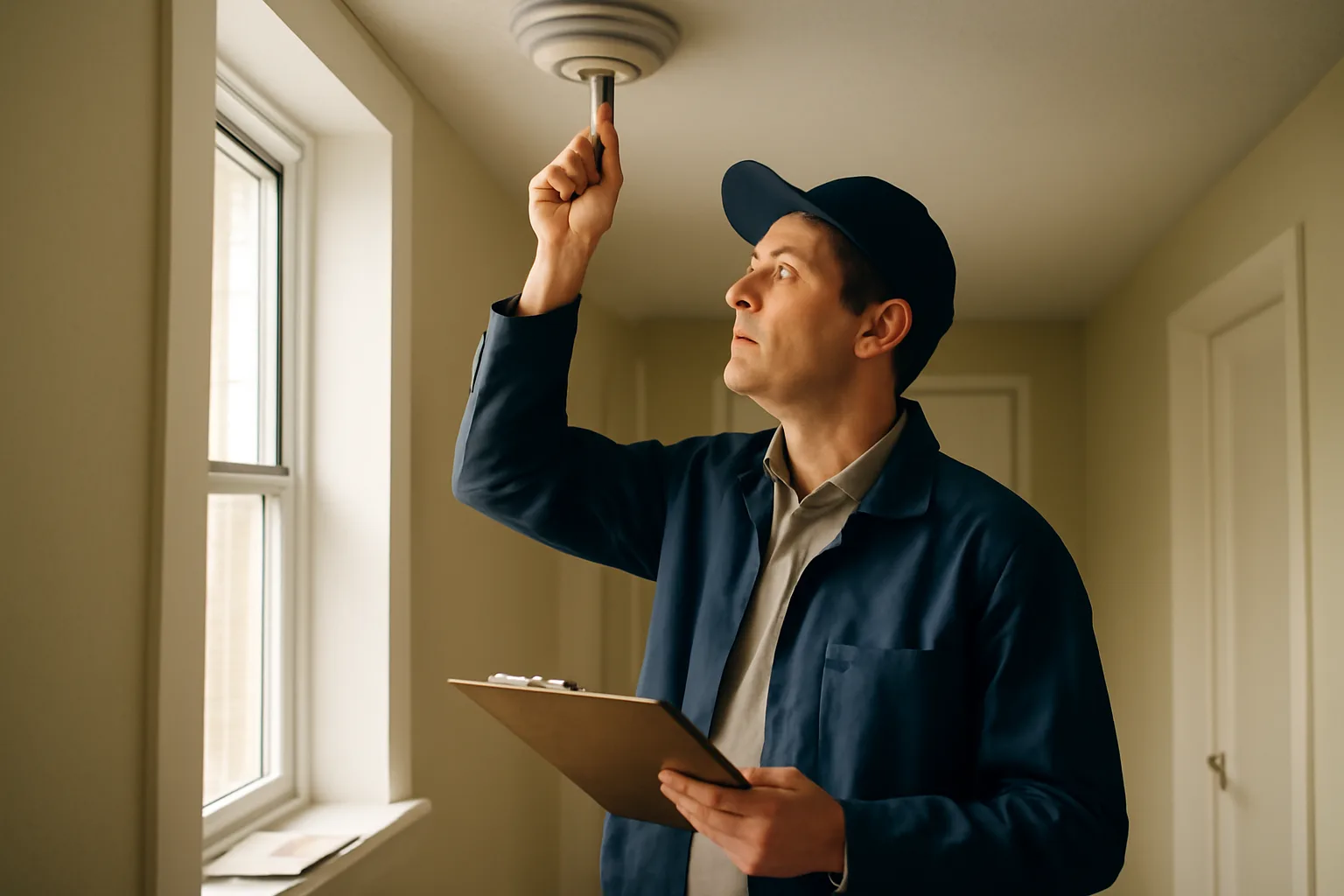
During a routine or move-in/move-out inspection, a landlord can generally look at anything related to the condition, safety, and code compliance of the unit: walls, floors, ceilings, windows, doors, smoke and carbon monoxide detectors, plumbing fixtures, electrical outlets, HVAC systems, and signs of pest infestation or unauthorized occupants. What a landlord generally cannot do is search through a tenant's personal belongings, open closed drawers or containers, or use the inspection as a pretext to look for something unrelated to the property's condition. The inspection is about the unit, not the tenant's stuff. For city rental license inspections specifically, the inspector is usually checking against a fixed checklist tied to the local housing code: functioning smoke detectors, secure handrails, no exposed wiring, working locks on doors and windows, adequate egress from bedrooms, no active leaks, and proper venting for gas appliances. Some cities also check for unpermitted units (an unregistered basement apartment, for example) as part of the same visit. This is where a lot of small landlords get caught off guard, not because the property is unsafe, but because they didn't know what was actually on the inspector's list. Programs like the $79 City Rental License & Inspection Prep Packet exist specifically to walk you through what your city's checklist covers before the inspector shows up, so you're fixing the cheap stuff (a missing smoke detector battery, a loose handrail) instead of failing over something you could've caught in five minutes.
why do landlords require renters insurance?
Landlords require renters insurance mainly to shift liability risk away from themselves and to make sure the tenant, not the landlord's policy, covers the tenant's own belongings and certain liability situations. A standard landlord (dwelling) insurance policy covers the building itself and the landlord's liability as owner. It typically does not cover a tenant's personal property (furniture, electronics, clothing) if there's a fire, burst pipe, or theft. Without renters insurance, a tenant who loses everything in a fire has no coverage, and depending on how the fire started, the tenant could try to hold the landlord financially responsible for their losses. Renters insurance also usually includes liability coverage, which protects the tenant (and indirectly the landlord) if the tenant causes damage or an injury happens in the unit that's traced back to something the tenant did (an overflowing bathtub that damages the unit below, for example). Many landlords require proof of renters insurance as a lease condition, often with a minimum liability coverage amount ($100,000 is a common minimum requested, though there's no federal or state standard dollar figure; it's set by the individual landlord or, in some cases, a city or state program). This isn't a rental licensing requirement in most cities; it's a lease term a landlord chooses to require. Confirm whether your specific city or state ties any insurance requirement to a rental license or registration program, since a few housing authorities and subsidized-housing programs do.
what is the difference between rental registration, licensing, and inspection?
These three terms get used loosely, but they're not the same thing, and mixing them up is a common source of confusion for new landlords. Registration usually means you're just telling the city you own a rental property. It's often the lightest lift: a form, an owner name, a fee. Some cities require registration but nothing else. Licensing goes further. A rental license is a permit to legally operate the rental, and it usually has to be renewed on a schedule (annually or every few years). Licensing often requires passing an inspection first, or on a set cycle after the license is issued. Inspection is the physical check of the unit against a housing or building code checklist. Some cities inspect every unit before the first license is issued; others inspect on a rotating schedule (every unit gets inspected once every 2 or 3 years, for example) or only inspect in response to a tenant complaint. A city might require all three, just one, or some combination. Confirm exactly what your specific city requires with your city rental licensing office, since the terminology and the actual process both vary a lot, and getting this wrong (assuming registration is enough when your city also requires a license and inspection) is one of the most common ways landlords end up with a violation notice they didn't see coming.
what happens if you skip rental licensing or ignore an inspection notice?
Consequences vary by city, but the pattern is consistent: fines first, then escalating penalties, and in some cities, an outright ban on collecting rent or evicting a tenant until you're compliant. Many cities issue an initial notice of violation with a grace period to register or schedule an inspection. If you miss that window, fines typically start accruing, sometimes per day, sometimes per unit, sometimes as a flat penalty that increases on a second offense. Some cities also have provisions that bar an unlicensed landlord from filing an eviction case at all until the property is properly licensed, which can leave you stuck with a non-paying tenant and no legal path to remove them until you fix the paperwork. This is genuinely one of the more expensive mistakes a small landlord can make, not because the licensing fee itself is large (it usually isn't), but because the fines, the delayed eviction rights, and the scramble to pass an inspection under deadline pressure all cost more than doing it right the first time. If you've gotten a notice already, don't wait. Call your city rental licensing office, ask what's actually required to cure it, and get on their calendar.
how do rental licensing fees and inspection cycles compare across cities?
There's no national standard. Every rental licensing program is set by the city (sometimes the county), and both fees and inspection frequency vary a lot even between neighboring cities in the same state. Generally, you'll see a few common patterns: - Flat annual fee per rental unit, often in the range of a modest two-digit to low three-digit dollar amount per unit, though some cities charge more for larger buildings.
- Fee scaled by number of units in the property (a duplex pays less total than a 10-unit building, but often more per unit than a single-family rental).
- Inspection cycles ranging from every rental turnover, to annual, to once every 2 to 3 years, to complaint-based only (no routine inspection unless a tenant reports an issue). Because these numbers change with city budgets and council votes, this article isn't going to guess at your city's specific fee or cycle. Confirm the current fee and inspection frequency with your city rental licensing office directly, or check their published fee schedule if they post one online. If you own units across several cities, keeping track of which city requires what, and when each license or inspection is due, is exactly the kind of thing that's easy to lose track of with a spreadsheet and a lot easier with a structured checklist built for that specific city's ordinance.
Frequently asked questions
How to become a landlord if you already own the property?
Check whether your city requires rental registration or licensing, get the property inspected if required, secure a landlord insurance policy, write a lease that follows your state's landlord-tenant statute, and screen tenants under fair housing law. Order matters: many cities require you to register (and sometimes pass inspection) before you can legally rent the unit out.
What is a landlord under the law?
A landlord is the owner of real property, or someone acting on the owner's behalf, who leases that property to a tenant in exchange for rent. The relationship is governed by a lease or rental agreement and by state landlord-tenant statutes, plus any local rental licensing ordinance the city has adopted.
Who is responsible for the walk-through inspection in California?
The landlord is responsible for scheduling it once the tenant requests it. California Civil Code § 1950.5(f) requires at least 48 hours' written notice of the inspection date and time, and the landlord has to give the tenant an itemized list of any deductible issues found.
What is landlording, in plain terms?
Landlording is the ongoing job of owning a rental property and managing everything that comes with renting it out: screening tenants, collecting rent, handling repairs, following local licensing and inspection rules, and staying compliant with state landlord-tenant law from move-in through move-out.
What rights do tenants have without a signed lease?
A tenant without a lease still has full rights under state landlord-tenant law, typically as a month-to-month tenant. That includes the right to a habitable unit, notice before entry, notice before termination or a rent increase, and protection from illegal self-help eviction. No lease does not mean no rights.
How much notice does a landlord have to give before entering?
Most states require some form of advance notice, commonly 24 hours, though the specific number is set by state statute and some states just say "reasonable notice" without naming an hour count. Ohio, for example, requires reasonable notice under Ohio Revised Code § 5321.04(A)(8) without specifying a number of hours.
What can a landlord look at during a rental inspection?
A landlord or city inspector can check the physical condition and code compliance of the unit: smoke detectors, plumbing, electrical, windows, doors, and structural issues. They generally cannot search a tenant's personal belongings or closed containers; the inspection covers the property, not the tenant's stuff.
Why do landlords require renters insurance?
Because a standard landlord policy covers the building, not the tenant's belongings. Renters insurance shifts the risk of tenant property loss (fire, theft, water damage) away from the landlord and typically includes liability coverage if the tenant accidentally causes damage or an injury in the unit.
What can't a landlord do in Ohio?
Under Ohio Revised Code Chapter 5321, a landlord cannot shut off utilities or change locks to force a tenant out (self-help eviction is illegal), cannot enter without reasonable notice, cannot retaliate against a tenant for a legitimate complaint, and cannot ignore statutory duties to maintain a habitable, code-compliant unit.
Does every city require a rental license?
No. Rental licensing, registration, and inspection requirements are set city by city (sometimes county by county), and plenty of towns have no program at all. Some large cities require full licensing with routine inspections; others only require basic registration. Confirm with your specific city rental licensing office.
What's the difference between rental registration and rental licensing?
Registration is usually just notifying the city you own a rental unit, often with a form and a fee. Licensing is a permit to legally operate the rental, often requiring an inspection first and renewal on a set schedule. A city can require one, both, or neither.
Can a landlord evict a tenant without going to court?
No, not in any U.S. state. Self-help evictions, changing locks, removing doors, shutting off utilities, are illegal everywhere. A landlord has to file a formal eviction case in court and get a judgment, even against a tenant who hasn't paid rent in months.
Sources
- Cornell Legal Information Institute, Landlord definition: Definition of a landlord as owner or agent leasing property for rent
- U.S. Department of Justice, Fair Housing Act: Federal Fair Housing Act protections apply regardless of lease status
- California Legislative Information, Civil Code § 1950.5: California's initial move-out inspection process requires 48 hours' written notice and an itemized deduction list
- Ohio Legislature, Revised Code § 5321.04: Ohio landlord-tenant law requires reasonable notice of entry and sets landlord maintenance duties, and bars self-help eviction
- Ohio Legislature, Revised Code § 5321.02: Ohio law prohibits landlord retaliation against a tenant for exercising a legal right, such as raising rent or decreasing services after a legitimate complaint
- U.S. Code, Fair Housing Act, 42 U.S.C. § 3601 et seq.: Federal statutory basis for the Fair Housing Act's nondiscrimination protections in housing