Last updated 2026-07-26
TL;DR
In most cities, no law stops you from signing a lease before you get a rental license, but many mandatory-registration cities fine landlords who rent without one, and some won't let you evict a nonpaying tenant until you're licensed. Check your specific city's rental licensing ordinance before you list the unit.
Can you legally rent out a property without a license?
It depends entirely on where the property sits. There's no federal law requiring a rental license. Licensing is a local thing, city by city, sometimes county by county, and a lot of small and mid-size cities have no program at all. If your city has no rental registration ordinance, you can rent out a spare bedroom or a duplex unit without any license and nobody at city hall will blink. But a huge number of cities, especially older Rust Belt and Northeast cities, do require it. Minneapolis requires a rental license for nearly all rental dwellings under its rental licensing ordinance [1]. Chicago requires registration of most rental buildings under its Residential Landlord and Tenant Ordinance and a separate Building Registration requirement enforced by the Department of Buildings [2]. Cities like these treat renting without the required license as a code violation, not a paperwork suggestion. So the honest answer: you can physically hand someone keys and collect rent without a license almost anywhere. Whether that's allowed, and whether you'll get away with it, are two different questions. If your city requires a license and you skip it, you're exposed to fines, and in some jurisdictions you lose your ability to evict for nonpayment until you get compliant. Always confirm with your city rental licensing office before assuming you're in the clear.
What happens if you rent without a required license?
The consequences vary by city, but they cluster into three buckets: fines, back-fees, and eviction roadblocks. Fines. Cities that catch unlicensed rentals, usually through a tenant complaint, a utility company tip, or a routine sweep, typically issue a citation with a per-day or per-violation fine. Some cities also charge a retroactive license fee covering every month you operated without one, plus a penalty multiplier. Eviction roadblocks. This is the part landlords miss. In some cities, having an unlicensed rental unit is a defense a tenant's attorney can raise in eviction court. If the ordinance conditions the right to collect rent or file for possession on having a valid license, a judge can dismiss your case outright, even if the tenant genuinely owes months of back rent. That's not a small inconvenience. It can add months to an eviction timeline while you scramble to get licensed and re-file. Code enforcement escalation. Once a city flags your address as unlicensed, it often triggers a full inspection requirement before you can get licensed, and if the unit fails inspection you're now dealing with repair orders on top of the fine. Confirm with your city rental licensing office what their specific unlicensed-rental penalty schedule looks like, since amounts and escalation triggers differ block to block, let alone city to city.
How to become a landlord: what you actually need to do first
Before you post a listing, work through this in order: 1. Confirm your city's licensing status. Search your city name plus "rental registration" or "rental license" or call the building/housing department directly. Don't rely on what a neighbor or a real estate agent told you three years ago, ordinances change. 2. Check zoning and occupancy rules. Some cities cap the number of unrelated occupants per unit or restrict short-term rentals separately from long-term rental licensing. 3. Get the property inspection-ready. Many licensing programs require a passed inspection (working smoke and carbon monoxide detectors, functioning heat, no exposed wiring, egress windows in bedrooms) before they'll issue the license. 4. Register with the state or county if required, separate from any city step. Some states require landlords to register rental property with the county assessor or file a business registration. 5. Get landlord-specific insurance. A standard homeowner's policy usually excludes rental activity; you need a landlord (dwelling) policy. 6. Screen tenants consistently and follow fair housing law. The Fair Housing Act prohibits discrimination based on race, color, national origin, religion, sex, familial status, or disability in housing transactions [3]. 7. Apply for the rental license itself, pay the fee, and schedule the inspection if one is required. This is the order that keeps you out of trouble. Skipping straight to step 7, or skipping it entirely and just listing the unit, is how landlords end up with a fine notice in month four instead of a license in hand on day one.
What is landlording, exactly?
Landlording is the ongoing job of owning residential property and renting it to tenants in exchange for payment, plus everything that comes with that: maintaining the unit in habitable condition, handling repairs, collecting rent, managing lease terms, and complying with local, state, and federal housing law. It's not passive. Even a single-unit landlord with one tenant has real legal duties. The implied warranty of habitability, recognized in some form by most state courts and legislatures, generally requires landlords to keep rental units fit for human habitation, meaning working plumbing, heat, and structural safety [3]. Landlording also includes the administrative side: tracking lease renewal dates, filing required city registrations, keeping security deposit funds compliant with state deposit laws, and responding to repair requests within whatever timeframe your state or city sets. People who treat landlording as a side hobby, something you do once a year when rent is due, tend to be the ones who get caught by licensing sweeps or habitability complaints. Cities that require inspections are specifically targeting that gap.
What is a landlord, legally speaking?
A landlord is the party who owns or controls residential property and leases it to a tenant in exchange for rent, taking on the legal obligations that come with that relationship under state landlord-tenant law and any applicable local ordinance. The legal definition matters because it determines who's on the hook. If you own a property but a property manager runs day-to-day operations, you're usually still the landlord of record for licensing purposes in most cities, meaning the license has to be in your name (or your LLC's), not the manager's. Some cities specifically require a registered local agent if the owner lives out of state or out of the metro area; Chicago's ordinance, for example, requires an owner who doesn't reside in the state to designate a local agent for service of legal process [2]. If you're renting through an LLC, confirm with your city rental licensing office whether the license needs to be in the LLC's name, your personal name, or both, since this trips up a lot of first-time landlord-investors who set up an LLC for liability reasons and then discover the license application wants a natural person listed too.
What rights do tenants have without a lease?
A tenant without a signed lease still has real legal rights. If someone is paying rent and living in a unit, most states treat that as a month-to-month tenancy by operation of law, even with nothing in writing. That means the tenant generally has a right to habitable premises, a right to notice before you can end the tenancy, and protection from illegal lockouts or utility shutoffs. Without a written lease, the terms default to whatever your state's landlord-tenant statute says for month-to-month tenancies, plus any local rules. That typically covers notice periods to terminate, notice periods to enter the unit, and how security deposits (if any changed hands) have to be handled and returned. A verbal agreement to rent is still a binding tenancy in most states; it's just harder to prove specific terms like rent amount or who's responsible for utilities if a dispute ends up in court. That's a strong argument for always putting something in writing, even a one-page agreement, regardless of what the city licensing rules require. See tenant rights and tenants rights for more on the baseline protections that generally apply.
How to be a landlord without getting blindsided by local rules
The single biggest mistake new landlords make is assuming rental rules are the same everywhere. They're not. What's optional in one city is a licensing requirement with fines attached three towns over. A workable routine looks like this: before you list any unit for rent, call the city (not a real estate agent, not a forum post) and ask directly, "does this address need a rental license or registration, and is an inspection required before or after I get a tenant in place?" Get the answer in writing if you can, an email confirmation is enough. Then build your timeline backward from that: license processing time, inspection scheduling (which in busy cities can run four to eight weeks out), and any required repairs, before you set a move-in date with a tenant. Renters get frustrated when a landlord who hasn't done this homework has to delay move-in because the city won't issue occupancy approval. That's avoidable. If you want a structured way to gather what a specific city's licensing office typically asks for, checklists like our $79 City Rental License & Inspection Prep Packet exist for exactly this problem, pulling together the common document and inspection-prep items so you're not guessing at what the inspector will check.
Who is responsible for the rental property walk-through inspection in California?
In California, the landlord is responsible for conducting or arranging the move-in and move-out walk-through inspections, though the process is initiated at the tenant's request for the move-out version. California Civil Code Section 1950.5 gives a tenant, before moving out, the right to request an initial inspection so the landlord can identify deductible damage before the security deposit is finalized [4]. Under that statute, the landlord must give the tenant at least 48 hours' written notice before the initial move-out inspection unless the tenant waives that notice, and must provide the tenant an itemized statement of anything found that could result in a deduction, along with a reasonable opportunity to fix those items before move-out [4]. This is separate from any city-level rental inspection tied to a licensing program (several California cities, including Los Angeles under its Systematic Code Enforcement Program, run their own separate habitability inspection cycles) [5]. So there are potentially two different inspections in play in a California rental: the state-mandated move-out walk-through under Section 1950.5, which is about security deposit deductions, and a city-level rental housing inspection, which is about code compliance and licensing. Confirm with your city rental licensing office (Los Angeles Housing Department for SCEP-covered units, for example) which cycle applies to your specific address.
What can a landlord look at during a rental inspection?
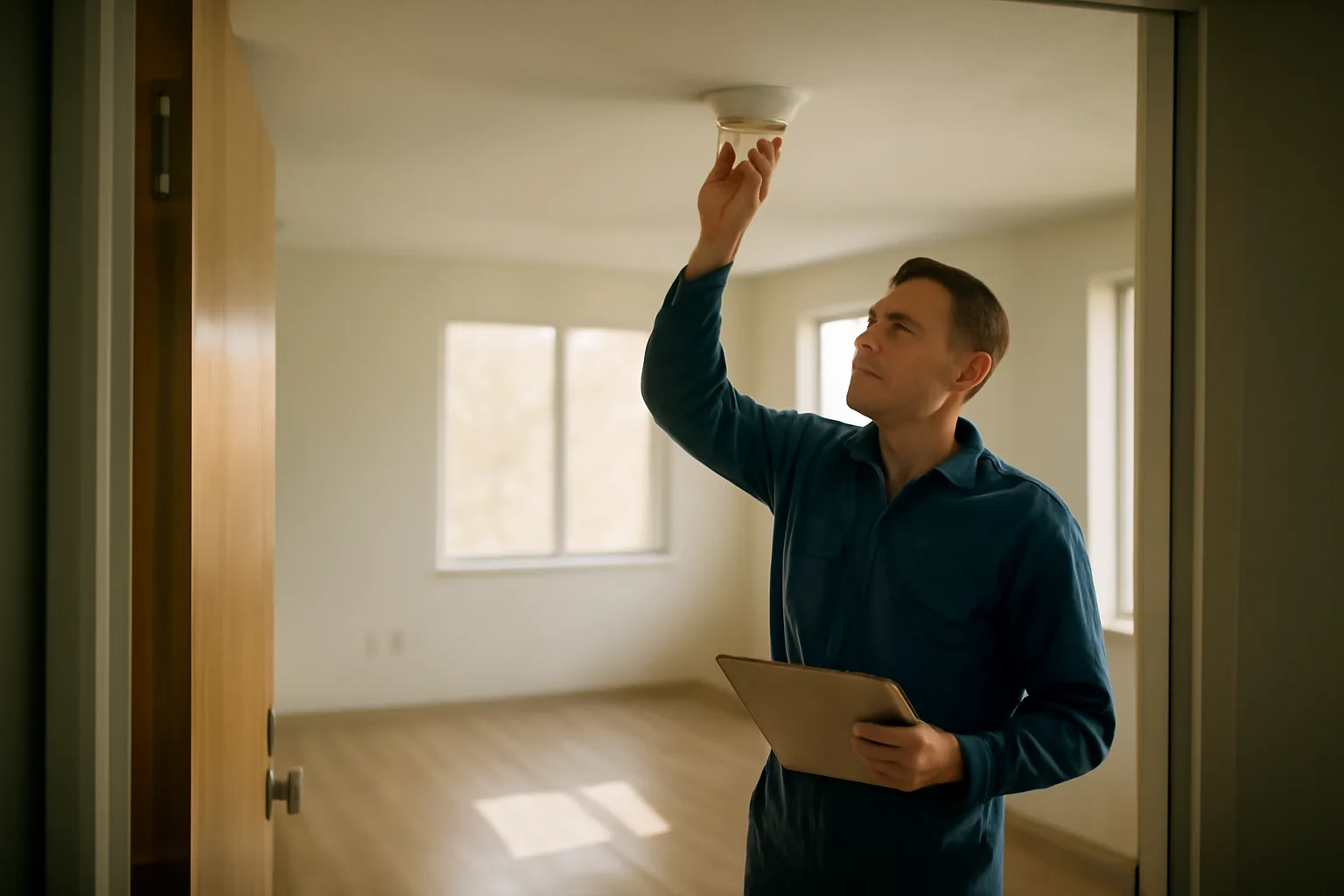
During a routine or move-in/move-out inspection, a landlord (or, for a city licensing inspection, the city inspector) is generally looking at the condition and safety of the unit itself, not the tenant's personal belongings. That typically includes: working smoke and carbon monoxide detectors, functioning heating and plumbing, no visible pest infestation, structural integrity of floors, walls, and ceilings, safe electrical outlets and wiring, secure locks on doors and windows, and adequate egress from bedrooms. City licensing inspections often use a standardized checklist; HUD's Housing Quality Standards, used for Section 8 voucher inspections, cover similar categories including sanitary facilities, thermal environment, and structural safety, and give a useful reference point even for non-voucher units [6]. What a landlord generally should not do during an inspection: search through closets, drawers, or personal items unrelated to the condition check, show up without the legally required notice, or use the inspection as a pretext to harass a tenant or retaliate for a complaint. Most states require reasonable advance notice, commonly 24 to 48 hours, before a landlord enters an occupied unit for a non-emergency inspection .
How much notice does a landlord have to give before entering or ending a tenancy?
There are two different notice questions here, and landlords often conflate them: notice to enter for an inspection or repair, and notice to end a tenancy. Notice to enter varies by state but commonly falls in the 24 to 48 hour range for non-emergency entry, with exceptions for genuine emergencies (like a burst pipe) where no advance notice is required. California, for example, generally requires 24 hours' written notice for entry to make repairs or show the unit, per Civil Code Section 1954 . Notice to end a month-to-month tenancy is a completely different clock and depends on your state and sometimes your city's rent stabilization rules. Many states require 30 days' notice to terminate a month-to-month tenancy of under a year, and 60 days if the tenant has lived there a year or more, though this varies significantly and some cities with just-cause eviction ordinances require far more, plus a legally valid reason. Don't guess on either of these. Using the wrong notice period is one of the most common reasons an eviction case gets thrown out or delayed, and it's a completely avoidable error if you look up your specific state statute before serving anything.
Why do landlords require renters insurance?
Landlords require renters insurance mainly to shift liability and property-damage risk away from the landlord's own policy. A landlord's dwelling insurance covers the structure itself, not the tenant's personal belongings, and often doesn't cover a tenant's liability if the tenant accidentally causes damage (a kitchen fire, an overflowing bathtub that damages a downstairs unit). Renters insurance typically covers the tenant's personal property against fire, theft, and certain water damage, plus liability coverage if the tenant is found responsible for damage to the building or injury to a guest. Requiring it in the lease means that if a tenant's negligence causes a $15,000 damage claim, there's a policy to go after besides the landlord's own insurance or the security deposit (which is usually capped by state law at one or two months' rent and won't cover major damage). It's a low-cost requirement for the tenant, renters insurance commonly runs in the range of $15 to $30 a month depending on coverage and location, and a meaningful risk transfer for the landlord. Most states allow landlords to require it as a lease condition, though you should confirm your specific state doesn't restrict this.
What can't a landlord do in Ohio?
Ohio's landlord-tenant law, codified in Ohio Revised Code Chapter 5321, spells out specific things a landlord cannot do. A landlord cannot shut off utilities, change the locks, or remove a tenant's belongings to force them out without going through the formal eviction process in court, sometimes called "self-help eviction," and doing so can expose the landlord to damages under Ohio Revised Code Section 5321.15 . A landlord in Ohio also cannot retaliate against a tenant for complaining to a government agency about a building or health code violation, requesting repairs, or joining a tenants' organization; Ohio Revised Code Section 5321.02 specifically prohibits retaliatory conduct including increasing rent, decreasing services, or threatening eviction in response to protected tenant actions . Ohio law also requires landlords to maintain the premises in a fit and habitable condition, comply with building and housing codes affecting health and safety, and keep common areas safe, under Ohio Revised Code Section 5321.04 . A landlord who fails to do this can face a tenant's rent escrow deposit action in Ohio municipal or county court, where the tenant pays rent into an escrow account with the court instead of directly to the landlord until repairs are made.
How rental licensing fits into all of this
Rental licensing and the general landlord-tenant obligations above operate on separate tracks that intersect at exactly one point: if you don't have the required city license, some cities won't let you enforce the rent side of the landlord-tenant relationship in court. That's the practical stakes. Everything else, habitability duties, notice requirements, anti-retaliation rules, applies to you as a landlord whether or not your city has a licensing program. Licensing is the added city-specific layer that determines whether you can operate at all without a fine, and in stricter cities, whether you can win an eviction case for nonpayment. If you're setting up as a landlord for the first time, or you just got a notice from your city about a licensing deadline you didn't know applied to you, the fastest path forward is confirming directly with your city's rental licensing or housing office what's required for your specific address, then working backward from any inspection or application deadline they give you. Related reading: landlord landlords, landlord, and renters rights.
Frequently asked questions
Can you get evicted for renting without a license?
No, the tenant can't be evicted for the landlord's licensing failure. It works the other way: in some cities, a landlord who doesn't have the required rental license can't successfully evict a nonpaying tenant until the unit is licensed, because the ordinance conditions the right to sue for possession or collect rent on compliance. Confirm your city's specific rule before filing.
Do I need a license to rent out a room in my own house?
It depends on your city. Some rental licensing ordinances exempt owner-occupied properties with one or two rented rooms; others don't distinguish and require registration regardless of owner occupancy. Check your specific city ordinance, since "owner-occupied" exemptions are common but not universal.
What's the difference between a rental license and rental registration?
Registration usually just means telling the city you own a rental unit, often with basic owner contact information on file. A license typically requires that plus a fee and often a passed inspection before you're legally allowed to rent the unit. Some cities use the terms interchangeably, so check what your city's process actually requires.
How much does a rental license usually cost?
Costs vary widely by city, commonly ranging from under $50 a year in smaller municipalities to a few hundred dollars per unit in larger cities with inspection-based programs. There's no reliable national figure since every city sets its own fee schedule, so confirm the current amount with your specific city rental licensing office.
Can a landlord require renters insurance as a lease condition?
Yes, in most states a landlord can require tenants to carry renters insurance as a lease condition, since it's generally treated as a reasonable lease term rather than a restricted practice. It shifts liability for tenant-caused damage and personal property loss away from the landlord's own policy and security deposit.
What happens if a rental fails a city inspection?
The city typically issues a list of required repairs with a deadline to fix them and schedule a re-inspection. The unit generally can't be licensed (or relicensed) until it passes. Repeated failures or missed deadlines can escalate to fines or, in serious habitability cases, an order restricting occupancy until repairs are completed.
Do all cities require a rental license?
No. Rental licensing is set at the city or sometimes county level, and there's no federal or, in most states, statewide requirement. Many small and mid-size cities have no rental licensing program at all, while others, especially older cities in the Midwest and Northeast, have mandatory programs with inspections and fees.
What rights does a tenant have if there's no written lease?
A tenant paying rent without a written lease is generally still a legal tenant, usually on a month-to-month basis under state law. They typically keep the right to habitable premises, advance notice before entry or termination, and protection from illegal lockouts, even without anything in writing.
How much notice does a landlord need to enter a rental unit?
Most states require 24 to 48 hours' advance notice for non-emergency entry, though the exact figure and whether it must be written varies by state. California requires 24 hours' notice under Civil Code Section 1954 for entry to make repairs or show the unit. Emergencies, like a gas leak or burst pipe, generally don't require advance notice.
Can a landlord do a walk-through inspection at any time?
No. Outside genuine emergencies, landlords generally need to give the tenant advance written notice, commonly 24 to 48 hours depending on the state, before entering for a routine inspection. Showing up unannounced repeatedly can support a tenant claim of harassment or violation of the right to quiet enjoyment.
What can't a landlord do under Ohio law?
Under Ohio Revised Code Chapter 5321, a landlord can't shut off utilities or change locks to force a tenant out without a court eviction, and can't retaliate against a tenant for reporting code violations or requesting repairs. Landlords must also keep the unit compliant with health and safety codes.
Is landlording considered a business?
Generally yes, for tax and liability purposes, even a single rental unit is treated as a business activity, reportable on Schedule E of your federal tax return. Some cities also require a separate business license or registration on top of any rental license, so check both requirements for your address.
Sources
- HUD, Fair Housing Act overview: The Fair Housing Act prohibits discrimination based on race, color, national origin, religion, sex, familial status, or disability
- California Civil Code Section 1950.5: California tenants can request an initial move-out inspection with 48 hours' written notice before it occurs
- California Civil Code Section 1954: California requires 24 hours' notice before landlord entry to make repairs or show a unit
- Ohio Revised Code Section 5321.15: Ohio law prohibits self-help eviction, including utility shutoffs and lockouts, without a court process
- Ohio Revised Code Section 5321.02: Ohio law prohibits landlord retaliation against tenants for code complaints, repair requests, or organizing
- Ohio Revised Code Section 5321.04: Ohio landlords must maintain premises in a fit and habitable condition and comply with health and safety codes