Last updated 2026-07-26
TL;DR
Becoming a landlord means registering with your city if it requires rental licensing, passing a habitability inspection, giving proper notice before entry, and following state rules on deposits, notice periods, and tenant rights. Requirements vary a lot by city and state, so check your local rental licensing office before you list a unit.
How do you become a landlord?
Becoming a landlord starts before you ever hand someone a key. You need to check whether your city requires a rental license or registration (many do), get your unit ready to pass a habitability inspection, set up a lease that matches your state's landlord-tenant law, and figure out how you'll screen tenants, collect rent, and handle repairs. The legal side matters more than people expect. Minneapolis requires a rental license for nearly all rental dwellings under its city code, and plenty of mid-size cities run similar programs with an inspection attached [1]. Skipping that step doesn't just risk a fine. In some cities it can bar you from filing an eviction or collecting rent until you're compliant. Practically, the steps look like this: confirm your city's rental registration or licensing rules, get a certificate of occupancy or inspection scheduled if required, screen tenants under fair housing law, draft a lease that follows your state's deposit and notice rules, and set aside cash for repairs and vacancy. None of this is exotic, but skipping any one piece is how new landlords end up with a violation notice in year one. If you're managing your own rental in a city with a licensing program, our City Rental License & Inspection Prep Packet walks through the document checklist most cities ask for, but the actual license application always goes through your city's rental office, not through us.
What is a landlord, exactly?
A landlord is the person or entity that owns residential or commercial property and rents it to someone else (the tenant) in exchange for rent, under a lease or rental agreement. That's the plain definition, but legally, being a landlord comes with specific duties: maintaining the property in habitable condition, following state and local notice requirements, and respecting tenant rights around privacy, security deposits, and eviction procedure. Most states define "landlord" (sometimes "lessor") in their landlord-tenant statutes. California's Civil Code, for example, spells out a landlord's repair and habitability obligations under Civil Code Section 1941 and 1942 [2]. The label isn't just about collecting rent; it triggers legal obligations the moment you accept a tenant's money.
What is landlording?
"Landlording" is the ongoing work of owning and managing a rental property: screening tenants, collecting rent, handling maintenance requests, following legal notice periods, and staying compliant with local licensing and inspection rules. It's not a formal legal term, it's shorthand for the day-to-day job. For a small landlord with one to ten units, landlording usually means wearing every hat yourself: bookkeeper, handyman, and the person who answers a 9pm text about a leaking faucet. Some landlords hire a property manager once they cross five or six units, mostly because the compliance paperwork (registration renewals, inspection scheduling, notice tracking) eats more time than the actual repairs do. The unglamorous truth is that landlording is mostly administrative. Keeping copies of every notice you send, every inspection report, and every repair receipt is what protects you if a tenant disputes something later or a city inspector shows up.
Who is responsible for a rental property walk-through inspection in California?
In California, the landlord is responsible for scheduling and conducting the move-out walk-through inspection, but it's the tenant's right to request one. Under California Civil Code Section 1950.5(f), a tenant can request an initial inspection before move-out, and the landlord must give at least 48 hours written notice of the date and time if the tenant doesn't waive that notice [2]. The point of the inspection is to give the tenant a chance to fix any deductible issues before they move out, so they don't lose deposit money for something they could've cleaned or repaired themselves. After the initial inspection, the landlord has to give the tenant an itemized statement of proposed repairs or cleaning. Separately, some California cities also require landlords to allow a habitability or licensing inspection tied to a rental registration program (these are different from the move-out walk-through and are run by the city, not negotiated with the tenant). Confirm with your city rental licensing office whether your unit falls under a program like that, since rules vary block to block in some counties.
How do you actually become a landlord, step by step?
| Zoning/use check | Confirm the property can legally be rented (single-family vs. multi-unit rules) | City planning or zoning office | |
|---|---|---|---|
| Registration/license | Some cities require annual registration and a fee | City rental licensing office | |
| Inspection | Fire safety, habitability, sometimes lead paint or smoke detector checks | City inspection department | |
| Lease drafting | Must follow state notice, deposit, and disclosure rules | State landlord-tenant statute | |
| Insurance | Landlord policy, sometimes proof required by mortgage lender | Your insurance agent | Once you've got registration and inspection sorted, the rest is standard property management. If your city's process feels like a maze of PDF forms and unclear deadlines, that's common, not unusual. Confirm current fees and deadlines directly with your city rental licensing office since these change often and vary by unit count and building age. |
If you already own a property and want to rent it out, the practical sequence is: confirm zoning allows rental use, register or license the unit with your city if required, get the property inspection-ready, screen tenants, sign a lease that matches your state's rules, and set up a system for rent collection and maintenance requests. A lot of first-time landlords skip the licensing step because they don't know it exists. Rental registration ordinances are common in mid-size and large cities: Minneapolis requires a rental license for nearly all rental dwellings under its city code, and the ordinance spells out that "no person shall operate a rental dwelling... without first having obtained a license" from the city [1]. If your city has a program like this and you rent without registering, you can face fines that stack month over month, and in some jurisdictions you lose the right to collect rent or file an eviction until you fix it. Here's a rough checklist: | Step | What it involves | Who to check with |
What can a landlord look at during an inspection?
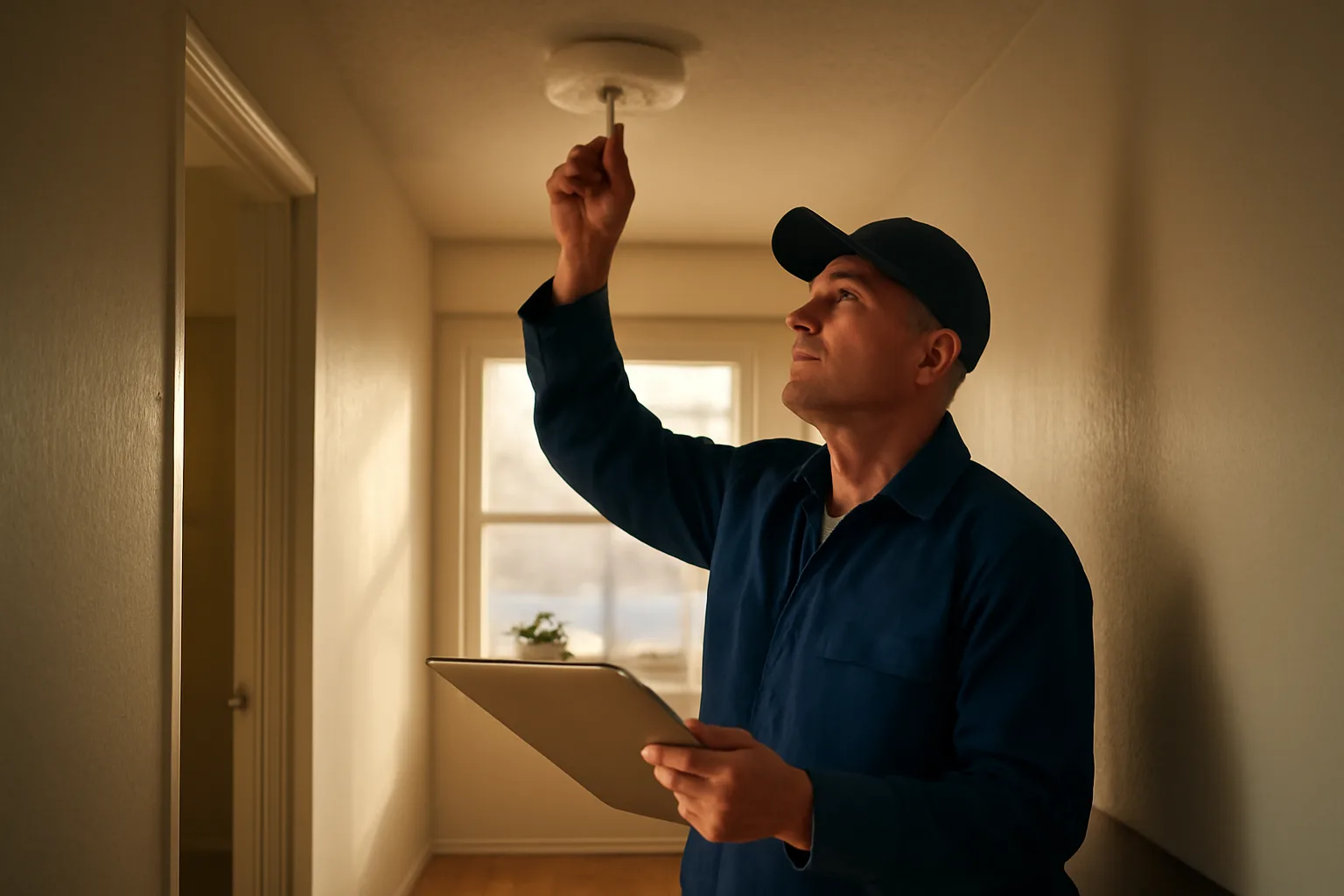
During a rental inspection, a landlord (or city inspector) can generally check things related to habitability and safety: smoke detectors, plumbing and electrical systems, signs of pest infestation, structural safety, and compliance with local housing code. What they typically cannot do is search through a tenant's personal belongings, closets, or private files unless there's a specific safety reason (like checking for a gas leak) and proper notice was given. For city licensing inspections specifically, inspectors usually look for the same basics across most jurisdictions: working smoke and carbon monoxide detectors, secure locks, no exposed wiring, functioning heat, and no obvious structural hazards. Some cities also check for unpermitted units or illegal room conversions, since that's a common trigger for licensing enforcement in the first place. Landlord entry itself is governed by state law, more than inspection programs. California requires "reasonable notice," which the statute presumes to be 24 hours in writing, before entering for repairs, showings, or inspections, except in emergencies [2]. Most states have a similar structure even if the exact notice period differs.
How much notice does a landlord have to give before entering or ending a tenancy?
Notice requirements depend on what the landlord is doing. For routine entry (repairs, inspections, showings), most states require 24 to 48 hours advance written notice; California's default is 24 hours under Civil Code Section 1954 [2]. For ending a month-to-month tenancy, many states require 30 days notice, though some require 60 or even 90 days depending on how long the tenant has lived there or local rent control rules. There's no single national standard here, so the honest answer is: check your specific state's statute. A landlord in a state with weak tenant protections might only owe 30 days notice to end a month-to-month lease with no reason given at all. A landlord in a strong tenant-protection jurisdiction, or one covered by a just-cause eviction ordinance, may need a specific legal reason plus a longer notice period. Emergency entry is the one exception almost every state carves out: if there's a fire, flood, or similar hazard, landlords generally don't need advance notice at all.
What rights do tenants have without a lease?
Tenants without a written lease still have legal rights. Most states treat an unwritten rental arrangement as a month-to-month tenancy, which means the tenant is entitled to the same habitability protections, notice-before-entry rules, and notice-before-eviction requirements as someone with a signed lease. The main difference is that lease terms (rent amount, renewal conditions) default to whatever was verbally agreed or established by the pattern of payments, which can get messy to prove later. A landlord still can't just change the locks or shut off utilities to force a tenant out, even without a written lease. That's illegal self-help eviction in essentially every state, and tenants without a lease can sue over it just like tenants with one. Courts generally look at how rent was actually paid (monthly, weekly) to figure out what kind of tenancy exists and what notice period applies. If you're a landlord operating without a written lease, that's a risk you're taking on yourself, not a shortcut that reduces the tenant's rights. Written leases exist mostly to protect the landlord's ability to prove terms later; tenants keep their legal protections regardless.
What can't a landlord do in Ohio?
In Ohio, landlords can't shut off utilities, change the locks, or remove a tenant's belongings to force them out, even if rent is unpaid; this is illegal self-help eviction and Ohio law requires landlords to go through the court eviction process instead [3]. Landlords also can't retaliate against a tenant for reporting a code violation or requesting repairs, and they must return the security deposit (or an itemized list of deductions) within 30 days of the tenant moving out under Ohio Revised Code 5321.16 [3]. Ohio landlords are also required to maintain the property in a fit and habitable condition, keep common areas safe, and comply with building, housing, and health codes, under Ohio Revised Code 5321.04 [4]. That means a landlord can't simply ignore a broken furnace in winter or a leaking roof and call it the tenant's problem. One detail people miss: Ohio Revised Code 5321.16 specifically penalizes landlords who withhold a deposit in bad faith. The statute states that if a landlord fails to comply and the failure is found to be "in bad faith," the tenant "may recover the property and money due... together with damages in an amount equal to the amount wrongfully withheld" [3]. That's a real financial risk for a landlord who tries to keep a deposit without proper documentation.
Why do landlords require renters insurance?
Landlords require renters insurance mainly to cover the tenant's personal belongings and liability, not the building itself. A landlord's own property insurance covers the structure, but it typically doesn't cover a tenant's furniture, electronics, or clothing if there's a fire, burst pipe, or theft. Renters insurance also usually includes liability coverage, meaning if the tenant accidentally causes damage (say, a kitchen fire) or someone gets hurt in the unit, the tenant's policy helps cover the claim instead of it landing entirely on the landlord's policy. There's a real cost angle too. Renters insurance is cheap, typically well under $200 a year in most markets, so requiring it as a lease condition costs the tenant very little but reduces the landlord's exposure meaningfully. Many landlords write it into the lease as a required condition, similar to requiring proof of insurance for a car loan. From a pure risk-management standpoint, requiring renters insurance is one of the cheapest protections a landlord can add. It's not a substitute for the landlord's own dwelling policy, but it closes a gap that would otherwise leave both the tenant and the landlord more exposed after a bad incident.
What should a new landlord budget for licensing and inspection costs?
Rental licensing fees vary widely by city, typically ranging from under $50 to a few hundred dollars per unit per year, sometimes with an added inspection fee if the city requires a physical walkthrough. Some cities charge a flat annual fee per rental unit; others scale by number of units or building age. A handful of large cities also charge a re-inspection fee if a unit fails its first inspection, which can add another cost on top of the base license fee. Because these numbers change year to year and vary by city (and sometimes by neighborhood or building type within the same city), the responsible thing to do is confirm current fees and deadlines with your city rental licensing office directly rather than relying on a number you saw online. A fee that was accurate two years ago may not be accurate today. What you can budget confidently for, regardless of city, is a first-time inspection sometimes turning up small issues (a missing smoke detector, a loose handrail, an expired fire extinguisher) that cost $50 to $300 to fix. Building that buffer into your first-year budget saves you from scrambling when the inspection report comes back with a punch list.
Frequently asked questions
How do I become a landlord if I've never rented out a property before?
Start by confirming your city's rental registration or licensing rules, then get the property inspection-ready, screen tenants under fair housing law, and use a lease that matches your state's deposit and notice requirements. Most first-time landlords underestimate the licensing step; check with your city rental licensing office before you list the unit, not after.
Who schedules the move-out walk-through inspection in California?
The landlord schedules it, but the tenant has the right to request it under California Civil Code Section 1950.5(f). The landlord must give at least 48 hours written notice of the date and time unless the tenant waives that notice, and afterward must provide an itemized list of proposed deductions.
What's the difference between a landlord and someone who's landlording?
A landlord is the legal role, the person who owns and rents out property. Landlording is the ongoing work: screening tenants, collecting rent, handling repairs, and staying compliant with licensing rules. One is a title, the other is the job that comes with it.
What rights does a tenant have if there's no written lease?
Tenants without a written lease are generally treated as month-to-month tenants and keep the same habitability, notice-before-entry, and eviction-notice protections as tenants with a lease. Landlords still can't change locks or shut off utilities to force them out; that's illegal in essentially every state.
What can a landlord check during a rental inspection?
Smoke and carbon monoxide detectors, plumbing, electrical systems, structural safety, pest issues, and general code compliance. Inspectors generally can't search personal belongings or private areas without a specific safety reason and proper notice under state law.
How much notice does a landlord have to give before entering a rental unit?
Most states require 24 to 48 hours written notice for routine entry like repairs or inspections. California's default is 24 hours under Civil Code Section 1954. Emergency situations like fire or flooding are an exception in nearly every state.
What can't a landlord do in Ohio specifically?
Ohio landlords can't shut off utilities or change locks to force a tenant out (illegal self-help eviction), must return deposits or an itemized deduction list within 30 days under Ohio Revised Code 5321.16, and must keep the unit fit and habitable under Ohio Revised Code 5321.04.
Why do landlords require tenants to carry renters insurance?
It covers the tenant's belongings and liability, gaps that the landlord's own property insurance doesn't cover. It's also cheap, often under $200 a year, so it reduces the landlord's risk exposure for very little cost to the tenant.
Do all cities require a rental license before you can rent out a unit?
No. Rental licensing and registration requirements are set city by city, not nationally. Cities like Minneapolis have formal rental registration or licensing programs, but many smaller cities and rural areas don't. Always confirm with your specific city rental licensing office.
What happens if a landlord rents out a unit without the required city license?
Consequences vary by city but can include monthly fines that stack up, loss of the right to collect rent, and in some jurisdictions, being barred from filing an eviction until the property is properly licensed. Confirm your city's specific enforcement rules directly.
How is landlording different from just owning a rental property?
Owning the property is passive; landlording is the active, ongoing management: tenant screening, rent collection, repairs, and compliance with licensing and inspection rules. You can own a rental without doing the landlording yourself if you hire a property manager.
Can a landlord legally raise rent without notice?
No. Nearly every state requires written notice before a rent increase, commonly 30 days for smaller increases and sometimes 60 or 90 days for larger increases or in jurisdictions with rent stabilization rules. Check your specific state's landlord-tenant statute for the exact threshold.
Sources
- Minneapolis City Code, Rental Licensing (Chapter 244): Minneapolis requires a rental license for nearly all rental dwellings under city code
- California Civil Code Section 1950.5 (via California Legislative Information): California tenant's right to request an initial move-out inspection with 48 hours notice, landlord repair obligations, and 24-hour entry notice default
- Ohio Revised Code Section 5321.16: Ohio landlords must return security deposits or itemized deductions within 30 days and face bad-faith damages under Ohio law
- Ohio Revised Code Section 5321.04: Ohio landlords must maintain rental property in a fit and habitable condition and comply with housing codes
- California Civil Code Section 1954 (via California Legislative Information): California requires 24 hours reasonable written notice before landlord entry except in emergencies
- California Civil Code Section 1941 and 1942 (via California Legislative Information): California landlords have a statutory duty to maintain rental property in habitable condition