Last updated 2026-07-26
TL;DR
Yes, every major rental car company checks that your driver's license is valid, unexpired, and matches the renter's name before handing over keys. That's a separate issue from rental property licensing, which landlords face when cities require registration or inspection of rental units before tenants move in.
do rental car companies check your license, and how does that differ from a landlord's rental license?
Yes. Every major rental car company, including Hertz, Enterprise, and Avis, checks your driver's license at the counter to confirm it's valid, unexpired, and belongs to the person renting the car. Some also run a check against your driving record depending on the state and the company's policy, particularly if you're renting a larger vehicle or adding a young driver. This is a consumer transaction protection, not a government licensing program. That's a completely different animal from what this site covers: rental property licensing. If you're a landlord who got a notice from your city about a rental registration deadline, an inspection appointment, or a fine for an unlicensed unit, that's a municipal program. It's usually run out of a city's code enforcement or housing department. It requires you to register your property, pay a fee, and often pass a habitability inspection before you can legally rent it out. The confusion is understandable. "Does X check your license" is a common search pattern, and people land here after typing something close to it while actually trying to figure out landlord licensing questions. So this article covers both: a quick, honest answer on rental car license checks, then a full guide to the landlord side, since that's almost certainly what brought most of you here.
how to become a landlord
Becoming a landlord is mostly a paperwork and cash-flow exercise, not a licensing exam in most states. There's no federal landlord license. A handful of things actually gate you from renting out property legally. First, you need to own or control a property you can legally rent, which means checking your local zoning to confirm residential rental use is allowed on that parcel. Second, many cities require you to register the rental with a city agency and sometimes get a certificate of occupancy or rental license before the first tenant moves in. Third, you need landlord-friendly insurance (a standard homeowners policy usually excludes rental use), a way to screen tenants, and a lease that complies with your state's landlord-tenant statute. A rough sequence: confirm zoning and any HOA restrictions, get the unit inspected and up to code if your city requires it, register with your city's rental licensing office and pay the fee, get a landlord/dwelling-fire insurance policy, then start marketing the unit and screening applicants using a consistent, written criteria to avoid fair housing complaints. The U.S. Department of Housing and Urban Development's Fair Housing Act guidance is the baseline for what you can and can't ask applicants [1]. If your city is one of the growing number with mandatory rental licensing (think Minneapolis, Baltimore, Toledo, or dozens of mid-size cities), skipping the registration step is the single most common way new landlords rack up avoidable fines. Confirm with your city rental licensing office before you sign a first lease.
what is landlording, and what is a landlord?
A landlord is the legal owner (or an entity the owner authorizes, like a property manager) who rents real property to a tenant in exchange for rent, under a lease or rental agreement. Landlording is the day-to-day work of that role: collecting rent, maintaining the property, handling repairs, screening new tenants, and following your state and local landlord-tenant law. Landlording isn't a check-cashing job. It carries real legal duties. Most states impose an implied "warranty of habitability," meaning the landlord has to keep the unit livable (working plumbing, heat, structural safety) regardless of what the lease says. California's version is codified in Civil Code Section 1941, which requires landlords to maintain rental units in a condition "fit for the occupation of human beings" [2]. Landlords also have to follow fair housing law, provide required disclosures (lead paint for pre-1978 housing is a federal requirement under 42 U.S.C. Section 4852d), and, in licensing cities, keep the rental registered and pass periodic inspections. Treating landlording as passive income only works until an inspector or a tenant complaint proves otherwise.
who is responsible for the rental property walk-through inspection in california?
In California, the landlord is responsible for scheduling and conducting move-in and move-out walk-through inspections, but the tenant has a right to participate. California Civil Code Section 1950.5 gives tenants the right to request an initial inspection before move-out, specifically so they can fix any deductible issues before the landlord assesses the security deposit [3]. Here's how it actually works: the landlord (or their agent) must notify the tenant in writing of the right to an initial move-out inspection, conducted no earlier than two weeks before the tenancy ends. If the tenant requests it, both parties do a joint walk-through, and the landlord gives the tenant an itemized list of anything that needs fixing or cleaning to avoid a deduction. The tenant then has the chance to fix those items before move-out. This isn't the same as a city rental inspection tied to a licensing program (some California cities, like Los Angeles, run their own separate rental housing inspection program), so check both processes separately if you own in a city with mandatory inspection. For move-in, there's no statewide requirement forcing a joint walk-through. Doing one anyway and documenting it with photos and a signed checklist protects both sides when it's time to settle the deposit.
what can a landlord look at during an inspection?
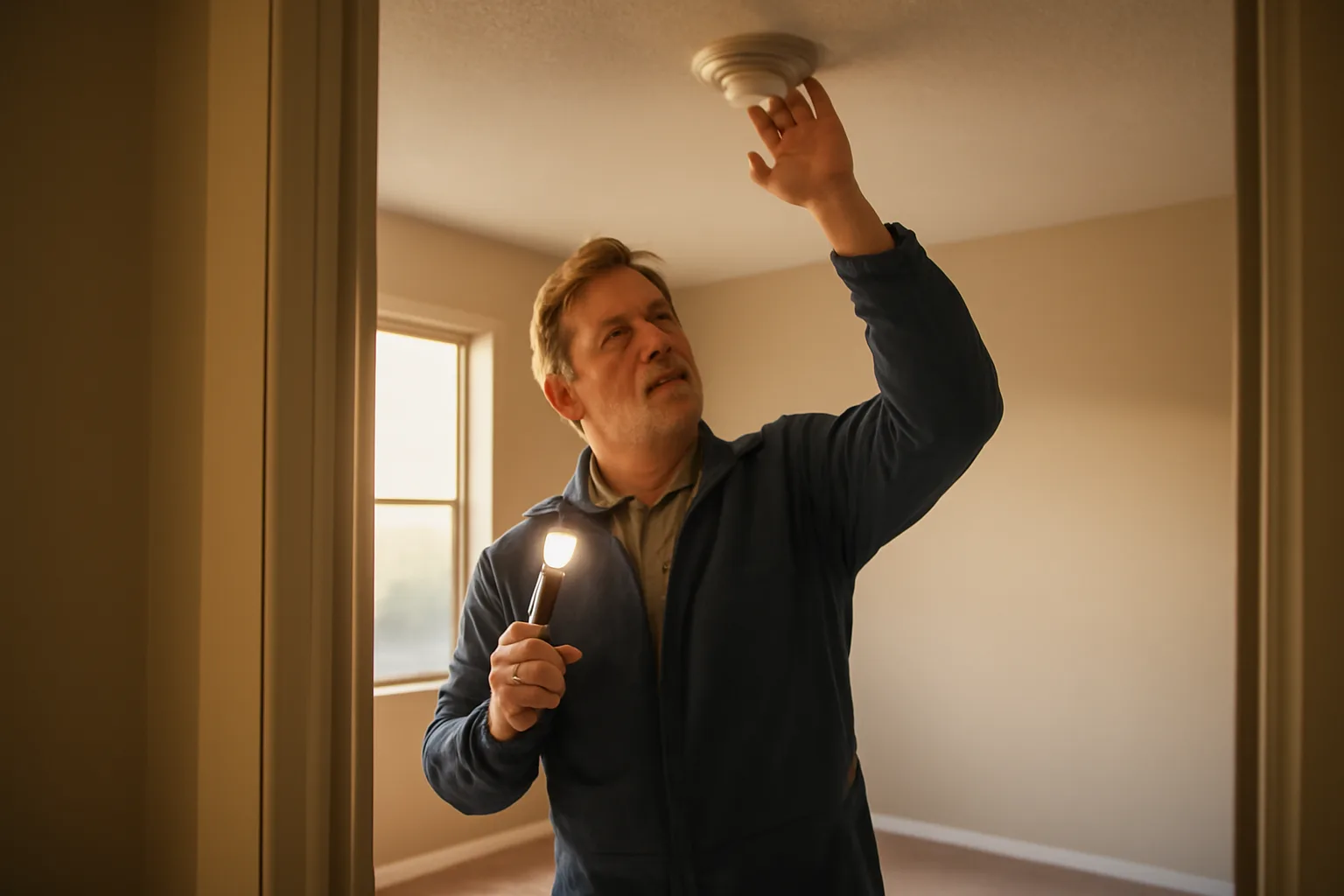
During a routine or move-out inspection, a landlord can look at the general condition and cleanliness of the unit: walls, floors, appliances, fixtures, smoke and carbon monoxide detectors, plumbing, and signs of damage beyond normal wear and tear. Landlords generally cannot search through a tenant's personal belongings, closets, or private papers during a standard habitability or maintenance inspection. Most states require advance written notice before a non-emergency entry for inspection, typically 24 to 48 hours, and entry has to happen at reasonable times. California requires 24 hours' written notice for entry under Civil Code Section 1954, with exceptions for emergencies or when the tenant agrees to less notice [4]. City rental-licensing inspections are narrower in scope. Inspectors are usually checking a fixed checklist: working smoke detectors, secure railings, no exposed wiring, functioning heat, no active leaks, adequate egress from bedrooms, and pest or mold issues. They're not evaluating decor or tenant housekeeping unless it creates a safety hazard. If you get a violation notice after one of these inspections, our rental packet builder walks through the common fail points city inspectors flag, alongside a general pre-inspection checklist you can run through before the official visit.
how much notice does a landlord have to give before entering or ending a tenancy?
Notice requirements split into two very different buckets: notice to enter for inspection or repairs, and notice to end or change a tenancy. Both vary by state, so treat any number here as a starting point, not a nationwide rule. For entry, California requires 24 hours' written notice in most cases (Civil Code Section 1954) [4]. Many other states use a similar 24 to 48 hour standard, though some, like Florida, specify at least 12 hours' notice for repairs under Florida Statutes Section 83.53 [5]. Emergencies are the universal exception, letting landlords enter without advance notice when there's an immediate safety issue like a fire or major leak. For ending a month-to-month tenancy, most states require 30 days' written notice, though California requires 60 days' notice if the tenant has lived there a year or more, under Civil Code Section 1946.1 [6]. For rent increases, notice periods often mirror the termination notice; check your specific state statute, since a handful of cities (and California statewide under the Tenant Protection Act, Civil Code Section 1947.12) cap how much and how often rent can go up at all [7].
what rights do tenants have without a lease?
A tenant without a written lease still has real legal rights. Verbal agreements and month-to-month tenancies created by paying and accepting rent are legally recognized in every state, and the tenant gets the same basic habitability, privacy, and notice protections as someone with a signed lease. Without a written lease, the tenancy typically defaults to month-to-month under state law, meaning either side can end it with proper notice (commonly 30 days, though state statutes vary as noted above). The tenant still has the right to a habitable unit, the right to advance notice before the landlord enters, and protection from illegal lockouts or utility shutoffs used to force them out. Every state prohibits "self-help" evictions; landlords have to go through the formal court eviction process regardless of whether there's a written lease. What a tenant loses without a written lease is clarity. No lease means no agreed-upon rules on pets, subletting, guests, or specific maintenance responsibilities, which becomes a dispute magnet. If you're currently renting month-to-month with no paper trail, both sides benefit from putting something in writing, even a short one-page agreement, rather than relying on memory of a verbal deal.
why do landlords require renters insurance?
Landlords require renters insurance mainly to shift liability and personal property risk away from the landlord's own policy. A landlord's dwelling policy covers the building structure; it typically does not cover a tenant's furniture, electronics, or clothing if there's a fire, burst pipe, or theft, and it may not fully cover a tenant's liability if they cause an accident that injures a guest or damages a neighboring unit. Requiring renters insurance (commonly $100,000 to $300,000 in liability coverage, which the Insurance Information Institute notes typically costs a national average of around $15 to $30 a month for a standard policy) [8] pushes that risk onto the tenant's own coverage. It also gives the landlord a cleaner path if a tenant's negligence (an unattended stove, an overflowing tub) damages the unit, since the tenant's insurer, not the landlord, often ends up covering the claim. Many states allow landlords to require renters insurance as a lease condition, though a handful of cities restrict how it's enforced. This isn't a licensing requirement from any city or state. It's a private lease term, so whether to require it (and how strictly to enforce it) is the landlord's call within what state law allows.
what a landlord cannot do in ohio
Ohio law, primarily under Ohio Revised Code Chapter 5321, spells out several things a landlord cannot do regardless of what the lease says. A landlord cannot shut off utilities, change the locks, or remove a tenant's belongings to force them out without going through formal eviction in court; this is sometimes called a self-help eviction and it's illegal statewide [9]. A landlord in Ohio also cannot retaliate against a tenant for exercising a legal right, like reporting a code violation or joining a tenant union; Ohio Revised Code Section 5321.02 specifically protects tenants from retaliatory eviction or rent increases for this reason [10]. Ohio landlords cannot enter a rental unit without reasonable notice except in an emergency; Section 5321.04 requires the landlord to give "reasonable notice" (generally interpreted as 24 hours in practice, though the statute doesn't specify an exact hour count) before non-emergency entry [11]. Ohio landlords also cannot discriminate against applicants or tenants based on protected classes under fair housing law, cannot keep a security deposit without an itemized list of deductions if it's withheld, and cannot include lease clauses waiving a tenant's statutory rights, since Ohio Revised Code Section 5321.13 voids lease provisions that try to get a tenant to waive rights granted under Chapter 5321 [12]. If you're operating in a city within Ohio that also runs its own rental registration or inspection program (several larger Ohio cities do), that's a separate, local layer on top of these state-level tenant protections.
how is landlord licensing different city to city?
There's no single national or even statewide rental license in most of the country. Rental licensing is almost always a city-level program, and the rules, fees, and inspection cycles differ enormously from one city to the next. Some cities require a simple annual registration with a modest fee and no inspection. Others require a full habitability inspection before the first lease and then re-inspection every one to three years. Fees commonly range from under $50 to a few hundred dollars per unit per year, though this varies so widely by city that any specific number you read online should be verified directly rather than assumed to apply to you; confirm the exact fee and inspection cycle with your city rental licensing office before budgeting. What's consistent across most licensing cities: you register before renting (not after), you pay per unit, not per building, in most multi-unit setups, and unlicensed rentals typically carry escalating fines plus the risk that you can't legally collect rent or evict a nonpaying tenant until the unit is properly licensed. That last part catches a lot of landlords off guard, since some cities bar landlords from filing eviction actions on unlicensed units. If you got a notice about registering, an inspection appointment, or a violation fine, the fastest way to get current is usually to call the specific office listed on the notice, confirm the exact requirement and deadline, and fix any known maintenance issues (smoke detectors, egress, visible hazards) before the inspection date rather than after. Our $79 rental packet builder packages a pre-inspection checklist and document organizer built around the most common city rental-licensing requirements, which is useful if you'd rather not build that checklist from scratch under deadline pressure.
what happens if you skip rental licensing or fail an inspection?
Skipping rental licensing typically triggers fines that start small and escalate the longer the unit stays unregistered, plus, in many cities, a legal block on evicting nonpaying tenants until the license is current. This is the part landlords underestimate most. Failing an inspection usually doesn't mean an instant fine. Most city programs give you a written list of violations and a re-inspection window, commonly 30 to 60 days, to fix the issues (broken smoke detectors, exposed wiring, pest evidence, blocked egress) before penalties kick in. Repeat failures or ignoring the notice entirely is what turns into real fines and, in serious cases, a vacate order on the unit. The practical fix is the same everywhere: read the actual notice for your specific deadline and violation list (don't assume it matches what a forum post said about a different city), fix what's flagged, document it with photos, and confirm the re-inspection date directly with your city's office rather than guessing at the process.
Frequently asked questions
do rental car companies check your driving record, more than your license?
Sometimes. Most rental car companies verify your license is valid and matches your name at pickup, and many also run a background check on your driving record, especially for underage renters or certain vehicle classes. Policies vary by company and state, so check the specific rental company's rental terms rather than assuming a standard nationwide check applies.
how to become a landlord if you only own one rental unit?
Confirm your property's zoning allows rental use, check whether your city requires rental registration or licensing (many mid-size and large cities do), get landlord-specific insurance, and use a written lease that complies with your state's landlord-tenant statute. One unit still triggers the same licensing rules as ten in most mandatory-registration cities, so don't assume small scale exempts you.
what is the difference between landlording and property management?
Landlording is the ownership role: you own the unit and bear the legal responsibilities, whether or not you handle daily tasks yourself. Property management is a hired service where a company or individual handles day-to-day tasks (rent collection, maintenance calls, tenant screening) on the landlord's behalf, but the landlord still holds ultimate legal responsibility for licensing and habitability.
who is responsible for the rental walk-through inspection in California, landlord or tenant?
The landlord is responsible for scheduling it, but the tenant has the right to request a joint move-out walk-through under California Civil Code Section 1950.5, giving the tenant a chance to fix flagged issues before the landlord finalizes any security deposit deductions.
what rights do tenants have without a signed lease?
A tenant without a written lease still gets habitability, privacy, and notice protections under state law, and the tenancy is typically treated as month-to-month. Landlords still must give proper notice to end it and can't use illegal self-help tactics like lockouts or utility shutoffs, lease or no lease.
why do landlords require renters insurance if the building itself is insured?
A landlord's dwelling policy covers the structure, not the tenant's belongings or personal liability. Requiring renters insurance shifts the cost of tenant property loss and tenant-caused liability claims onto the tenant's own policy instead of the landlord's, and it's a common lease condition allowed in most states.
how much notice does a landlord have to give before ending a month-to-month tenancy?
Most states require at least 30 days' written notice to end a month-to-month tenancy. California requires 60 days if the tenant has lived there a year or more, under Civil Code Section 1946.1. Always confirm the exact number for your state, since some cities layer on additional local notice rules.
what can a landlord look at during a routine inspection versus a city licensing inspection?
A routine landlord inspection typically checks general condition, cleanliness, and maintenance issues. A city rental-licensing inspection is narrower and checklist-based: working smoke detectors, safe egress, no exposed wiring, functioning heat and plumbing, and no active safety hazards. Neither type generally allows searching a tenant's personal belongings.
what can a landlord not do in Ohio regarding entry to the unit?
Under Ohio Revised Code Section 5321.04, a landlord must give reasonable notice, generally treated as 24 hours in practice, before entering for non-emergency reasons, and cannot enter at unreasonable times or use entry to harass a tenant. Emergencies are the exception where notice isn't required.
can a landlord retaliate against a tenant for filing a complaint in Ohio?
No. Ohio Revised Code Section 5321.02 specifically prohibits landlords from retaliating against a tenant, through eviction, rent increases, or service reductions, for exercising a legal right such as reporting a code violation or joining a tenant organization.
does a rental license apply to a single-family home rented out, or only apartment buildings?
In most mandatory-licensing cities, rental licensing applies to any rental unit, including single-family homes, duplexes, and accessory units, more than larger apartment buildings. Confirm with your specific city rental licensing office, since a small number of programs exempt owner-occupied duplexes or short-term rentals under separate rules.
what happens if you rent out a unit without a required city license?
Consequences typically include escalating fines and, in many cities, a legal bar on filing an eviction against a nonpaying tenant until the unit is properly licensed. Some cities also require back-payment of registration fees for the unlicensed period. Exact penalties vary widely, so check your city's specific ordinance.
Sources
- HUD, Fair Housing Act overview: Federal fair housing law sets baseline rules for what landlords can ask applicants
- California Legislative Information, Civil Code Section 1941: California requires landlords to maintain units fit for human occupation
- California Legislative Information, Civil Code Section 1950.5: Tenants have the right to request an initial move-out inspection in California
- California Legislative Information, Civil Code Section 1954: California requires 24 hours' written notice before landlord entry
- Florida Legislature, Florida Statutes Section 83.53: Florida requires at least 12 hours' notice for entry to make repairs
- California Legislative Information, Civil Code Section 1946.1: California requires 60 days' notice to end a tenancy of one year or more
- California Legislative Information, Civil Code Section 1947.12: California's Tenant Protection Act caps annual rent increases statewide
- Insurance Information Institute, renters insurance facts and statistics: National average renters insurance cost figures
- Ohio Laws, Ohio Revised Code Chapter 5321: Ohio law prohibits self-help evictions like lockouts and utility shutoffs
- Ohio Laws, Ohio Revised Code Section 5321.02: Ohio prohibits retaliatory eviction or rent increases against tenants exercising legal rights
- Ohio Laws, Ohio Revised Code Section 5321.04: Ohio landlords must give reasonable notice before non-emergency entry
- Ohio Laws, Ohio Revised Code Section 5321.13: Ohio voids lease clauses that waive a tenant's statutory rights