Last updated 2026-07-26
TL;DR
Becoming a landlord means more than buying a property and finding a tenant. You'll likely need to register or license the unit with your city, follow state notice rules before entering or inspecting, and respect tenant protections that exist even without a written lease. Requirements vary a lot by city and state.
how do you become a landlord?
There's no license required to buy a house and rent it out in most states, but there's usually a stack of local paperwork you need before you can legally collect rent. The basic path looks like this: buy or already own the property, check whether your city requires a rental license or registration (many do, especially in cities with proactive rental inspection programs), get the unit inspected if required, screen and select a tenant under fair housing rules, and sign a lease that matches your state's landlord-tenant statute. The part people skip is the local licensing step. Cities like Los Angeles, Minneapolis, Baltimore, and dozens of others require landlords to register rental units, pay an annual or biennial fee, and in many cases pass a habitability inspection before a tenant moves in or a lease renews [1]. Skip this and you can face fines, and in some cities you can lose the right to collect rent or evict for nonpayment until you're compliant [2]. Before you list a unit, confirm with your city rental licensing office whether registration applies to you. Some cities exempt owner-occupied duplexes or single rentals of a room in your own home. Others don't care how many units you have; one rental property is enough to trigger the requirement. If you're managing this for the first time, budget real time for the inspection and paperwork cycle. It commonly takes several weeks between application, scheduling an inspector, and getting a certificate of occupancy or rental license issued, depending on the jurisdiction's backlog.
what is landlording and what is a landlord, exactly?
A landlord is the owner (or the owner's authorized agent) who rents real property to someone else in exchange for payment, under a lease or rental agreement. "Landlording" is the informal term for the whole job: finding tenants, maintaining the property, handling money, following the law, and dealing with problems when they come up. Legally, most states define "landlord" in their landlord-tenant statutes as the owner, lessor, or agent authorized to act on the owner's behalf regarding the rental unit. For example, under Ohio's Landlords and Tenants Act, a "landlord" is "the owner, lessor, or sublessor of the residential premises or the building of which it is a part" [3]. Landlording isn't passive. You're responsible for keeping the unit habitable, following your state's notice requirements before entering, handling security deposits correctly, and complying with any local licensing or inspection ordinance. Treat it like a small regulated business, because in a lot of cities, that's exactly what it is.
who is responsible for the rental property walk-through inspection in california?
In California, the landlord is generally responsible for arranging and paying for both move-in and move-out inspections when the tenant requests one, but the process itself is a joint walk-through between landlord and tenant. California Civil Code Section 1950.5 gives tenants the right to request an initial inspection before move-out, done at a reasonable time, with at least 48 hours' written notice given to the tenant of the date and time [4]. The point of the pre-move-out inspection is to let the tenant fix deficiencies before the final deposit deduction happens, so they aren't blindsided. The landlord (or their agent) has to give the tenant an itemized statement of anything that needs repair or cleaning, based on that initial walk-through, per Civil Code 1950.5(f) [4]. This is separate from any city-mandated proactive rental inspection program, like those run by Los Angeles' Systematic Code Enforcement Program or similar habitability inspection systems in other California cities. Those inspections are conducted by city inspectors, not the landlord, and check for code compliance rather than security deposit condition [5].
what can a landlord look at during an inspection?
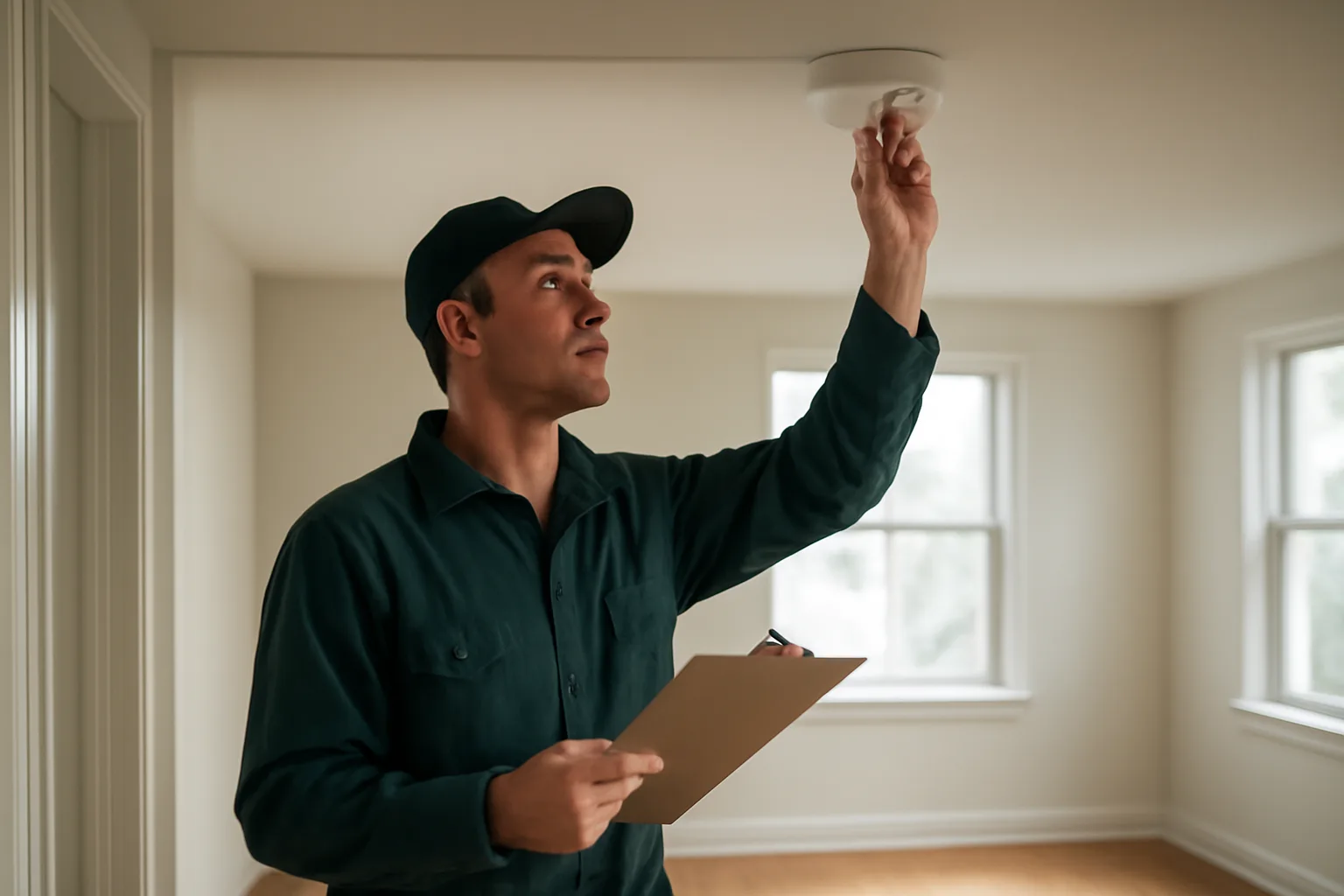
During a routine or move-out inspection, a landlord can generally check things directly tied to the condition of the unit and lease compliance: general cleanliness, damage beyond normal wear and tear, whether smoke detectors and safety equipment work, signs of unauthorized occupants or pets, and obvious maintenance issues like leaks or pest problems. What a landlord typically cannot do is search personal belongings, go through drawers, closets, or containers that aren't part of a maintenance issue, or use an inspection as cover to harass a tenant or retaliate against one who filed a complaint. Inspections have to relate to the lease and the property, not to policing how a tenant lives. City rental inspection programs add another layer. A city inspector coming through for a rental license renewal usually checks for code violations: working smoke and CO detectors, functioning heat, no exposed wiring, secure locks, proper egress from bedrooms, absence of mold or pest infestation, and working plumbing. These are habitability and safety checks, not condition-for-deposit checks, and the standards come from the local housing or building code rather than the lease [1]. Either way, notice matters. Most states require some advance notice before a landlord (or an inspector accompanying a landlord) enters an occupied unit, commonly 24 hours, though the exact number and the definition of "reasonable notice" varies quite a bit by state statute.
how much notice does a landlord have to give before entering or inspecting?
Most states require 24 hours' written or oral notice before a landlord enters an occupied rental unit for a non-emergency reason, but the exact rule depends on your state statute, and a few states specify a different number. California requires "reasonable notice," and the same Civil Code section that governs move-out inspections presumes 24 hours' written notice is reasonable unless circumstances say otherwise [4]. Some states, like Florida, specify at least 12 hours' notice for entry to inspect the premises [6]. Others simply say "reasonable notice" without a fixed number, which leaves 24 hours as the practical default landlords use to stay safe. Emergencies are the standard exception everywhere: fire, flooding, a gas leak, or another situation threatening health or safety lets a landlord enter without advance notice. For city rental inspection programs specifically, the notice requirement often comes from the local ordinance rather than the state landlord-tenant statute, and it can run longer, sometimes 7 to 14 days for a scheduled compliance inspection. Confirm with your city rental licensing office exactly how much notice their program requires before you schedule anything.
what rights do tenants have without a lease?
A tenant without a written lease still has real legal protections. If someone is paying rent and living in a unit with the landlord's knowledge, most states treat that as a month-to-month tenancy governed by the state's landlord-tenant statute, even with nothing signed. That means the tenant generally keeps the right to: a habitable unit (working plumbing, heat, safe structure), advance notice before the landlord enters, a formal notice period before the landlord can end the tenancy (commonly 30 days for month-to-month, sometimes longer depending on how long the tenant has lived there and state law), and protection from illegal lockouts or utility shutoffs used to force them out. A lease's absence doesn't turn a rental into an at-will arrangement the landlord can end whenever they want. Ending a no-lease tenancy still requires proper written notice under state law, and evicting someone still requires going through the court process; a landlord can't just change the locks. HUD's fair housing rules and most state security deposit laws also apply regardless of whether there's a signed lease [7]. If you're currently renting without paperwork on either side, on the tenant or landlord side, that's a good moment to get a written agreement in place, since verbal terms are hard to prove later if there's a dispute.
why do landlords require renters insurance?
Landlords require renters insurance mainly to shift liability risk away from the property owner and to make sure a tenant has coverage if their own belongings are damaged or if they accidentally cause damage to the unit. A landlord's own property insurance covers the building and the landlord's liability, but it usually doesn't cover a tenant's personal possessions, and it may not fully cover a tenant-caused incident like an overflowing bathtub that damages the unit below. Renters insurance typically covers the tenant's belongings, provides liability coverage if the tenant accidentally causes damage or someone is injured in the unit, and can cover temporary housing costs if the unit becomes unlivable. Requiring it is legal in nearly every state as a lease condition, as long as it's applied consistently to all tenants and doesn't run afoul of fair housing rules. It's a common risk-management move rather than a legal mandate from any state or federal law; there's no statute that forces landlords to require it, it's just a widely adopted lease clause because it reduces the landlord's exposure when something goes wrong.
what can't a landlord do in ohio?
Ohio's Landlord-Tenant Act, Chapter 5321 of the Ohio Revised Code, spells out a list of things a landlord can't do to a tenant. A landlord can't shut off utilities, change the locks, or remove a tenant's belongings to force them out instead of filing a formal eviction through the courts, this is generally referred to as a prohibition on "self-help" eviction [8]. Ohio landlords also can't retaliate against a tenant for complaining to a housing authority, joining a tenants' union, or asserting a legal right, and Ohio Revised Code 5321.02 specifically protects tenants from retaliatory eviction, rent increases, or service reductions for exercising these rights . A landlord in Ohio also can't enter the rental unit without reasonable notice except in an emergency; Ohio Revised Code 5321.05 sets tenant obligations, and 5321.04 sets landlord obligations, including maintaining the unit in a fit and habitable condition and keeping common areas safe . A landlord can't ignore a legitimate repair request that affects habitability and then try to evict the tenant for withholding rent over it, since Ohio law provides a process (rent escrow through the local court) specifically for that dispute . Security deposits have rules too: Ohio Revised Code 5321.16 requires landlords to return the deposit, minus any lawful deductions, within 30 days of the tenant vacating, along with an itemized list of deductions if any part is withheld .
how to be a landlord day to day: what the job actually involves
Being a landlord day to day comes down to a handful of recurring tasks: collecting rent on time, responding to maintenance requests quickly, keeping records (leases, inspection reports, repair receipts, notices sent), staying current on local licensing renewals, and knowing your local notice periods cold so you don't accidentally violate them. The mistake first-time landlords make most is treating the license or registration as a one-time thing. Most mandatory rental licensing cities require annual or biennial renewal, sometimes with a reinspection, and the renewal deadline doesn't wait for you to notice it. Miss it and you can be looking at daily fines in some cities, plus a scramble to get an inspector scheduled before you can legally re-rent the unit. If you're managing this alone across one or more units, it helps to have a simple system: a calendar reminder set well before your city's renewal deadline, a folder (digital or physical) with your lease templates, past inspection reports, and proof of registration, and a habit of documenting every entry notice and repair request in writing, even a text message, so there's a record if a dispute ever comes up. This is the exact gap our $79 City Rental License & Inspection Prep Packet is built for: a structured way to track your city's licensing requirements, get ready for the inspection itself, and keep the paperwork organized so renewal doesn't turn into a fire drill.
what happens if you skip rental licensing or ignore an inspection notice?
Ignoring a rental licensing requirement or an inspection notice tends to get expensive fast, and the consequences go beyond a simple fine in a lot of cities. Common penalties across mandatory licensing municipalities include: daily or monthly fines that accrue until you come into compliance, a hold on your ability to file an eviction for nonpayment of rent until the unit is licensed, and in serious or repeated cases, referral to housing court or a lien against the property for unpaid fines. Some cities also publish violation notices, which can affect your reputation as a landlord if a prospective tenant checks the property's compliance history before signing a lease. The fix is almost never as bad as ignoring the notice. Most cities have a compliance path: pay the registration fee, schedule the inspection, fix whatever the inspector flags, and get your certificate. Confirm with your city rental licensing office what the reinstatement process looks like once you've fallen out of compliance, since some cities charge a reinstatement fee on top of the standard licensing fee.
Frequently asked questions
How do you become a landlord for the first time?
Buy or already own a rental property, check whether your city requires rental registration or licensing (many do), pass any required inspection, screen tenants under fair housing law, and sign a lease that follows your state's landlord-tenant statute. Confirm local rules with your city rental licensing office before you list the unit, since requirements vary widely by city.
What is landlording?
Landlording is the ongoing work of renting out property: finding and screening tenants, maintaining the unit, collecting rent, handling repairs and inspections, and following state and local landlord-tenant law. It's an active responsibility, not a passive investment, especially in cities with mandatory rental licensing.
What is a landlord, legally?
A landlord is the property owner, or an authorized agent acting for the owner, who rents residential or commercial space to a tenant under a lease or rental agreement. Ohio's statute, for example, defines a landlord as "the owner, lessor, or sublessor of the residential premises" (Ohio Revised Code 5321.01).
Who is responsible for the rental property walk-through inspection in California?
The landlord arranges and typically pays for the move-in and move-out walk-through, but it's done jointly with the tenant. California Civil Code 1950.5 gives tenants the right to request a pre-move-out inspection with at least 48 hours' written notice of the date and time.
What rights do tenants have without a lease?
A tenant paying rent without a written lease is usually treated as a month-to-month tenant under state law, keeping rights to habitability, advance entry notice, a formal notice period before eviction, and protection from illegal lockouts. Verbal or implied tenancies still fall under state landlord-tenant statutes.
Why do landlords require renters insurance?
Renters insurance covers the tenant's belongings and gives liability coverage if the tenant accidentally causes damage, which the landlord's own property insurance usually doesn't cover. Landlords require it mainly to reduce their own financial exposure, not because any federal or state law mandates it.
How much notice does a landlord have to give before entering a unit?
Most states require at least 24 hours' notice for non-emergency entry, though the exact number varies. Florida sets a 12-hour minimum for inspections under its landlord-tenant statute, while California treats 24 hours' written notice as presumptively reasonable under Civil Code 1950.5.
What can a landlord look at during an inspection?
A landlord can check the general condition of the unit, damage beyond normal wear and tear, working smoke detectors and safety equipment, and signs of lease violations like unauthorized occupants. A landlord generally can't search personal belongings or use an inspection to harass a tenant.
What can't a landlord do in Ohio?
Ohio landlords can't shut off utilities, change locks, or remove belongings to force a tenant out instead of filing a formal court eviction (self-help eviction is prohibited). They also can't retaliate against a tenant for complaints or enter without reasonable notice, per Ohio Revised Code Chapter 5321.
How long does a landlord have to return a security deposit in Ohio?
Ohio landlords must return the security deposit, minus lawful deductions, within 30 days of the tenant vacating, along with an itemized list of any deductions, under Ohio Revised Code 5321.16. Missing this deadline without a valid itemized list can expose the landlord to damages.
Does every city require a rental license?
No. Rental licensing and registration requirements exist in specific cities, not statewide or nationwide, and the rules (fees, inspection frequency, exemptions) differ a lot from one city to the next. Always confirm with your specific city's rental licensing or housing office rather than assuming a nearby city's rules apply.
What happens if a landlord misses a rental inspection deadline?
Consequences vary by city but commonly include accumulating daily or monthly fines, a block on filing eviction for nonpayment until the unit is licensed, and possibly a lien or housing court referral for repeated noncompliance. Most cities offer a compliance path to fix the lapse rather than permanent penalties.
Can a landlord require both a lease and renters insurance?
Yes. Requiring renters insurance as a lease condition is legal in nearly every state, as long as the requirement is applied consistently to all tenants and doesn't violate fair housing rules. It's a standard risk-management clause, not a separate legal mandate.
Sources
- Ohio Revised Code 5321.01, Definitions: Ohio defines 'landlord' as the owner, lessor, or sublessor of the residential premises
- California Civil Code Section 1950.5: California tenants can request a pre-move-out inspection with 48 hours' written notice, and 24 hours' written notice is presumed reasonable for entry
- Florida Statutes Section 83.53: Florida requires at least 12 hours' notice before a landlord enters a rental unit to inspect the premises
- U.S. Department of Housing and Urban Development, Fair Housing Act overview: Fair housing protections apply to tenants regardless of whether a written lease exists
- Ohio Revised Code 5321.15, Prohibition of self-help eviction: Ohio law prohibits landlords from using lockouts, utility shutoffs, or removal of belongings instead of a formal court eviction
- Ohio Revised Code 5321.02, Retaliation prohibited: Ohio law prohibits landlords from retaliating against tenants who complain to authorities or assert legal rights
- Ohio Revised Code 5321.04, Landlord obligations: Ohio landlords must maintain the rental unit in a fit and habitable condition and keep common areas safe
- Ohio Revised Code 5321.16, Security deposits: Ohio landlords must return security deposits within 30 days of the tenant vacating, with an itemized list of deductions