Last updated 2026-07-26
TL;DR
Becoming a landlord means more than collecting rent. It includes registering with your city if required, passing habitability inspections, giving proper notice (often 24 to 48 hours), and following state rules on tenant rights, security deposits, and renters insurance requirements. Rules vary a lot by city and state, so always confirm specifics with your local rental licensing office.
What is landlording, and what does a landlord actually do?
Landlording is the day-to-day work of owning and operating rental property: collecting rent, maintaining the unit, handling repairs, screening tenants, following state and local law, and dealing with turnover. It's part business, part customer service, part compliance work. A landlord (also called a lessor) is the person or entity that owns a rental property and leases it to a tenant in exchange for rent. Under most state landlord-tenant statutes, the landlord holds specific legal duties: keeping the unit habitable, making repairs within a reasonable time, and following the rules for entry, notice, and deposit handling that the state legislature has written into law. California's Civil Code, for example, requires landlords to maintain rentals in a condition "fit for the occupation of human beings" and lists specific habitability standards including working plumbing, heat, and weatherproofing [1]. For a 1 to 10 unit landlord, this usually means wearing every hat yourself: you're the leasing agent, the maintenance line, the bookkeeper, and the compliance officer who has to know your city's rental registration deadlines. Cities with mandatory rental licensing add another layer entirely, requiring you to register the property, sometimes pass a physical inspection, and pay an annual or biennial fee before you can legally rent it out. If your city sent you an ordinance notice or inspection deadline, that's usually the trigger for figuring all of this out fast.
How do you become a landlord for the first time?
Becoming a landlord starts before you ever list a unit. You'll want a lease that complies with your state's landlord-tenant law, a plan for tenant screening that follows fair housing rules, and a clear understanding of your local licensing requirements. The practical steps most first-time landlords go through: 1. Confirm the property is legally allowed to be rented (zoning, occupancy limits, and any HOA restrictions). 2. Check whether your city requires a rental license, registration, or business license. Many cities with mandatory programs require this before you sign a lease, not after. 3. Get the unit inspection-ready if your city requires a habitability or safety inspection (working smoke detectors, no exposed wiring, functioning heat, egress windows in bedrooms). 4. Set a legal security deposit amount. States cap this: for example, many states limit deposits to one or two months' rent, though exact caps vary by state and by whether the unit is furnished. 5. Draft a lease that matches your state's required disclosures (lead paint disclosure for pre-1978 housing is a federal requirement under 24 CFR Part 35 [2]). 6. Set up a system for rent collection, maintenance requests, and record-keeping. 7. Screen tenants consistently, using the same criteria for every applicant, per the Fair Housing Act's protections against discrimination based on race, color, national origin, religion, sex, familial status, or disability [3]. If you're the kind of landlord who wants a checklist before your first city inspection notice arrives, our Landlord landlords guide walks through the ownership basics in more depth.
What is a landlord, legally speaking?
Legally, a landlord is the party who holds title (or a controlling leasehold interest) in real property and grants a tenant the right to occupy it under a lease or rental agreement, in exchange for rent. The landlord retains ownership; the tenant gets a possessory interest for the lease term. This matters because state landlord-tenant statutes attach specific obligations to whoever fits that legal definition, regardless of what you call yourself. If you own a duplex and rent out one unit while living in the other, you're still a landlord under the law and still subject to your state's habitability, notice, and deposit rules. Property managers acting on an owner's behalf are usually treated as the landlord's agent, but the underlying legal responsibilities (maintaining the property, following eviction procedure) still trace back to the owner. Many cities also define "landlord" separately in their municipal rental licensing code, sometimes including anyone who receives rental income from a residential unit, which is the trigger for needing a rental license in a licensing city even if you consider it a casual side arrangement.
Who is responsible for the rental property walk-through inspection in California?
In California, the landlord is responsible for arranging and conducting the initial move-in and move-out walk-through inspection, though the tenant has the right to be present. California Civil Code Section 1950.5(f) gives tenants the right to request an initial inspection before move-out, conducted no earlier than two weeks before the tenancy ends, so the landlord can identify deductible damage and give the tenant a chance to fix it themselves before the final deposit accounting [4]. The landlord must give the tenant at least 48 hours' written notice before that initial inspection, unless the tenant waives the notice period [4]. After the walk-through, the landlord has to provide an itemized statement of any proposed deductions, giving the tenant the opportunity to remedy identified deficiencies. This is separate from any city-level rental inspection program. Cities like Los Angeles, Oakland, and San Francisco run their own systematic code enforcement or proactive rental inspection programs on top of state deposit-return rules, and those inspections are typically conducted by a city inspector, not the landlord. Confirm with your city rental licensing office whether a program inspection applies to your unit and who schedules it.
What can a landlord look at during an inspection?
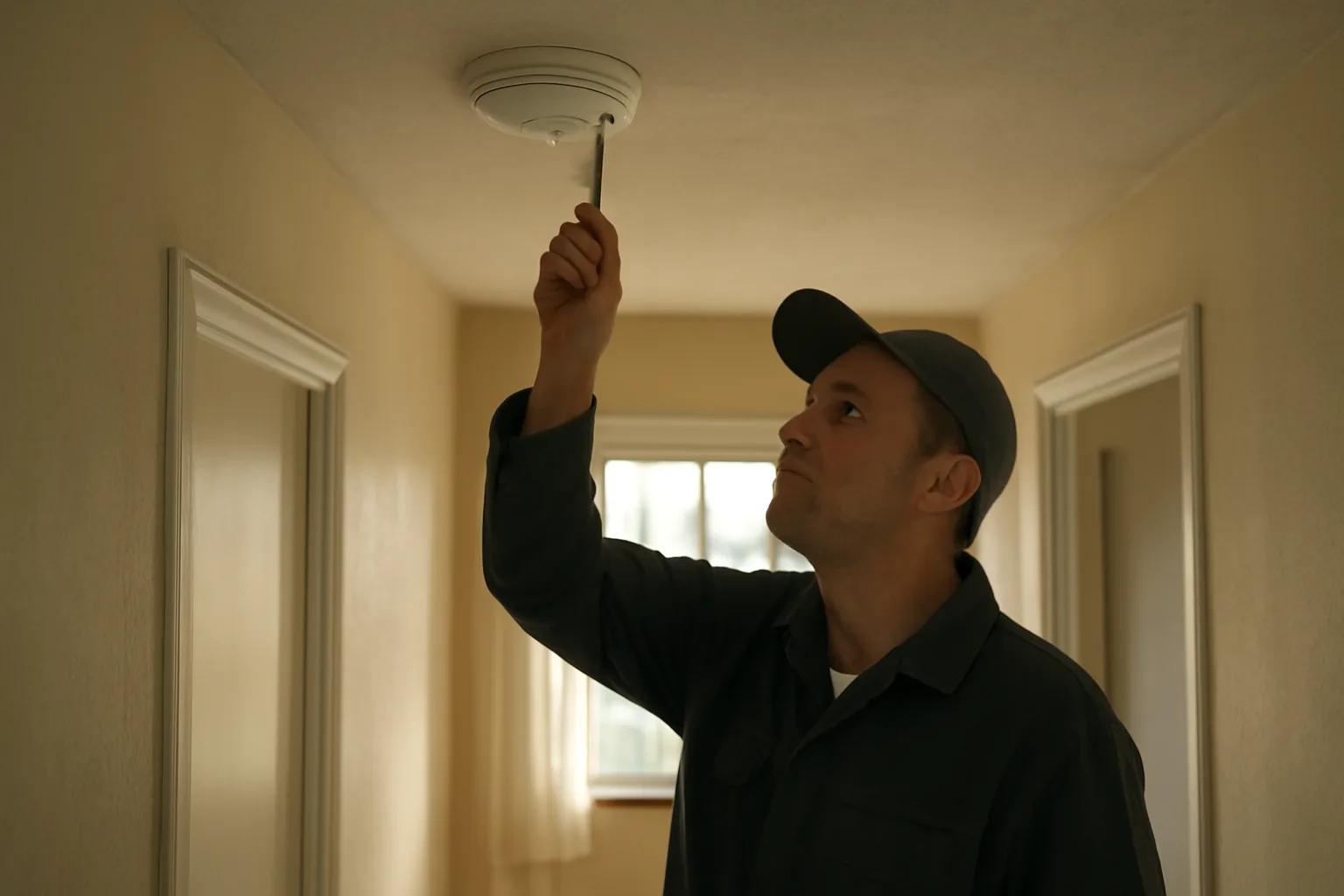
During a routine or move-out inspection, a landlord can generally check for damage beyond normal wear and tear, safety issues, cleanliness, and code compliance items like working smoke and carbon monoxide detectors. What a landlord cannot do is search personal belongings, look through drawers or closets unrelated to the inspection's purpose, or use the visit as pretext to harass a tenant. Typical inspection checklist items: - Smoke and carbon monoxide detector function and battery status
- Signs of water damage, mold, or leaks
- Working locks on doors and windows
- HVAC and plumbing function
- Evidence of unauthorized pets, occupants, or subletting (if prohibited by lease)
- Damage beyond normal wear and tear (holes in walls, broken fixtures, burns in carpet)
- Pest infestations
- Working outlets and no exposed wiring For city-mandated rental licensing inspections, the inspector is usually checking against a specific municipal housing code: egress window sizes, handrail height, GFCI outlets near water sources, and functioning heat sources rated for the local climate. These lists vary widely by city, so pull your city's actual inspection checklist before the appointment rather than guessing. Many cities post a specific pre-inspection checklist PDF on their housing department page; confirm with your city rental licensing office for the exact document. A landlord generally cannot inspect for reasons unrelated to the tenancy or property condition, and normal wear and tear (faded paint, worn carpet from ordinary use) is not chargeable against a security deposit under most state deposit statutes.
How much notice does a landlord have to give before entering?
Most states require landlords to give 24 to 48 hours of advance notice before entering an occupied rental unit for a non-emergency reason, though the exact number and the acceptable form of notice (written vs. verbal) vary by state. California requires "reasonable notice," which state law presumes to be 24 hours in writing for most purposes, per Civil Code Section 1954 [5]. For the specific initial move-out inspection under Section 1950.5(f), the notice requirement is 48 hours [4]. Other states set their own standards: some require 24 hours, others 48, and a few don't specify a number at all, just "reasonable notice," which creates more ambiguity. Emergencies are the standard exception nationwide: if there's a fire, flood, gas leak, or similar hazard, a landlord can enter without advance notice to address the danger. Outside of emergencies, entering without proper notice can expose a landlord to a tenant claim for breach of the covenant of quiet enjoyment, and in some states, statutory damages. Before you show up for any inspection, whether it's your own routine check or a scheduled city licensing inspection, confirm your state's specific notice period and put it in writing with a clear date and time window. This protects you if a dispute comes up later, and it's simply the professional way to run a rental business. Our Tenants rights overview covers how notice requirements intersect with broader tenant protections.
Why do landlords require renters insurance?
Landlords require renters insurance mainly to shift liability. A landlord's own property insurance covers the building and the landlord's belongings, but it typically does not cover a tenant's personal property or a tenant's liability if they accidentally cause damage (a kitchen fire, an overflowing bathtub that damages the unit below). Renters insurance policies are inexpensive relative to the protection they offer. The Insurance Information Institute notes that renters insurance typically costs a few hundred dollars a year, though the exact premium depends on coverage limits, location, and the insurer [6]. Requiring it as a lease condition means that if a tenant's negligence causes a loss, the tenant's own policy pays out instead of the landlord eating the cost or fighting it through small claims court. It also protects the tenant. Without renters insurance, a tenant whose belongings are destroyed in a fire or burst pipe has no recourse unless they can prove the landlord was negligent, which is a much harder legal case to win than simply filing an insurance claim. Many landlords write a renters insurance requirement directly into the lease, often specifying a minimum liability coverage amount (commonly $100,000, sometimes higher) and requiring proof of a current policy before move-in and at each renewal. This is a lease term, not a universal legal mandate; whether you can require it depends on your state and any local rent control or tenant protection ordinances, so check before you add the clause.
What rights do tenants have without a written lease?
Tenants without a written lease still have full legal protection under state landlord-tenant law. The absence of a written lease doesn't strip away rights; it just means the tenancy defaults to whatever the state calls a periodic tenancy, usually month-to-month, governed entirely by statute rather than a private contract. Even with no lease, a tenant paying rent and occupying a unit is entitled to: - A habitable dwelling meeting basic health and safety codes
- Proper notice before the landlord enters (same rules as with a written lease)
- Proper notice before the tenancy is terminated (commonly 30 days for month-to-month tenancies, though some states and cities require more)
- Protection from retaliatory or discriminatory eviction
- Return of any security deposit collected, following the same state deposit-return timelines and itemization rules that apply to written leases An oral or implied lease (sometimes called a tenancy at will) is still a lease in the legal sense. Courts generally treat consistent rent payment and acceptance as evidence of a periodic tenancy even with nothing in writing. The lack of a written document mainly hurts the parties when a dispute arises, since there's no document to point to for specific terms like who pays for utilities or whether pets are allowed; those terms fall back to whatever the state's default rules say, or become a matter of proving verbal agreement. For a broader look at these baseline protections, see our Tenant rights and Renters rights guides.
What can a landlord not do in Ohio?
Ohio landlord-tenant law, codified in Ohio Revised Code Chapter 5321, spells out specific things a landlord cannot do. A landlord cannot shut off utilities, change the locks, or remove a tenant's belongings to force them out without going through the formal eviction process in court, sometimes called a "self-help eviction," and Ohio courts have held these actions unlawful [7]. Under ORC 5321.04, an Ohio landlord cannot let the unit fall out of compliance with health and safety codes, must keep common areas safe and sanitary, and must maintain electrical, plumbing, heating, and other essential services in good working order [8]. A landlord also cannot retaliate against a tenant for reporting a code violation or exercising a legal right, such as joining a tenant union or requesting repairs; ORC 5321.02 specifically prohibits retaliatory conduct including raising rent or terminating a tenancy because the tenant exercised these rights [9]. Ohio also restricts a landlord's entry rights: under ORC 5321.04(A)(8), a landlord must give "reasonable notice" (interpreted by most Ohio courts and practitioners as 24 hours) before entering, except in an emergency [8]. Ohio landlords also cannot discriminate in violation of the federal Fair Housing Act [3] or Ohio's own civil rights statutes, and cannot include lease clauses that waive a tenant's statutory rights under ORC 5321, since ORC 5321.13 voids any rental agreement provision that waives protections granted under the chapter [10].
What's the difference between state landlord-tenant law and city rental licensing rules?
| Habitability, deposits, notice | State statute | Minimum livability standards, deposit caps, entry notice periods | |
|---|---|---|---|
| Eviction procedure | State statute (sometimes county court rules) | Required notice before filing, court process, timelines | |
| Rental registration/license | City ordinance | Annual/biennial registration, license fee, unit count reporting | |
| Rental inspection program | City ordinance | Scheduled or complaint-based inspection, code compliance checklist | |
| Fair housing | Federal law (with state/local overlays) | Anti-discrimination protections in screening, advertising, and treatment | A city rental license doesn't replace state law compliance; it's an added registration and inspection layer that many cities use to enforce housing code more proactively than waiting for tenant complaints. If your city sent a notice about registering a rental unit or scheduling an inspection, that's the municipal ordinance talking, separate from (but layered on top of) whatever your state already requires you to do as a landlord. |
State landlord-tenant law sets the baseline: habitability standards, notice periods, deposit limits, and eviction procedure. City rental licensing ordinances stack a separate, additional layer of requirements on top of that, usually tied to the physical property rather than the lease relationship. | Requirement type | Set by | Typical content |
How do you get ready for a city rental license inspection?
Getting ready for a city rental inspection means walking the unit yourself first, using whatever checklist your city publishes, and fixing the obvious stuff before the inspector shows up. Most failed inspections come down to a short list of repeat issues: missing or expired smoke detectors, no carbon monoxide detector where required, blocked egress windows, exposed wiring, and peeling paint in pre-1978 units that could be lead-based. A reasonable prep sequence: 1. Pull your specific city's rental inspection checklist (confirm with your city rental licensing office; many post the exact PDF used by inspectors). 2. Test every smoke and CO detector and replace batteries or units as needed. 3. Check every window for proper operation, especially bedroom egress windows. 4. Look for water damage, active leaks, or visible mold. 5. Confirm handrails are secure on any stairs with more than a few steps. 6. Check that all outlets near water sources have GFCI protection. 7. Make sure house numbers are visible from the street if your city requires it (a surprisingly common, cheap fail point). 8. Gather your paperwork: proof of ownership, prior inspection reports, and your license application or renewal confirmation. If you manage multiple units across different cities, or you're staring down your first rental license notice and don't know where to start, our $79 one-time City Rental License & Inspection Prep Packet walks through the registration and inspection prep steps in a structured format, built specifically for landlords in mandatory rental-licensing cities. It's a reference tool, not a substitute for your city's own checklist.
Frequently asked questions
Do I need a business license to be a landlord?
It depends on your city. Some cities require a general business license for any rental income activity, separate from a rental registration or inspection license. Others only require the rental-specific license. Confirm with your city rental licensing office and your city's business tax or revenue department, since the two requirements are often handled by different city offices.
How is landlording different from property management?
Landlording refers to owning and being legally responsible for a rental property. Property management is the operational work of running it day to day (collecting rent, coordinating repairs, handling tenant communication), which a landlord can do themselves or hire out to a licensed property manager or management company.
Can a landlord require renters insurance in every state?
Generally yes, requiring renters insurance as a lease condition is legal in most states, since it's a contract term rather than a statutory right. Some cities or rent-controlled jurisdictions may restrict what fees or conditions a landlord can add, so check local rent stabilization rules before making it mandatory.
What happens if a tenant refuses to let the landlord in for a scheduled inspection?
If proper notice was given and the entry is for a lawful purpose (repairs, a mandated inspection, showing the unit), most states allow the landlord to pursue a court remedy if the tenant repeatedly refuses access. A landlord generally cannot force entry themselves; the standard path is to document the refusal and, if needed, seek a court order.
Does a month-to-month tenant have fewer rights than a tenant with a lease?
No. A month-to-month tenant has the same habitability, notice, and deposit protections as a tenant on a fixed-term lease. The main practical difference is that either party can end a month-to-month tenancy with proper notice (commonly 30 days), while a fixed-term lease binds both parties until the term ends.
What is normal wear and tear versus damage a landlord can charge for?
Normal wear and tear is the gradual deterioration from ordinary use: faded paint, worn carpet paths, minor scuffs. Chargeable damage is beyond ordinary use: large holes, pet damage, burns, broken fixtures. Most state deposit statutes bar landlords from deducting for normal wear and tear.
How much notice does a landlord need to give to end a month-to-month tenancy?
Most states require 30 days' written notice to end a month-to-month tenancy, though some states and cities (particularly those with just-cause eviction ordinances) require 60 or even 90 days depending on how long the tenant has lived there. Check your specific state statute and any local just-cause protections.
Can a landlord enter without notice in an emergency?
Yes. Every state recognizes an emergency exception to standard entry notice rules, covering situations like fire, flooding, gas leaks, or an immediate threat to health or safety. Outside of a genuine emergency, the landlord still needs to follow the state's standard notice period.
Is a rental license the same thing as a certificate of occupancy?
No. A rental license (or registration) is typically an ongoing requirement to legally operate a rental property, often renewed annually. A certificate of occupancy is usually issued once, confirming a building meets code for a specific use. Some cities require both; confirm with your city rental licensing office which applies to your property.
Do landlords have to disclose lead paint to tenants?
Yes, for housing built before 1978. Federal law under 24 CFR Part 35 requires landlords to disclose known lead-based paint hazards, provide an EPA-approved information pamphlet, and include specific disclosure language in the lease. This applies nationwide, regardless of any city-specific rental licensing rules.
What's the fastest way to figure out if my city requires rental licensing?
Search your city name plus "rental registration" or "rental license" and look for a .gov housing or code enforcement page, or call the city clerk's office directly. Many cities also mail a notice to the property's tax address when a new ordinance takes effect, which is often the first sign an owner gets.
Can a landlord charge a fee for the rental inspection?
Many cities do charge an inspection or licensing fee, often ranging from under $50 to a few hundred dollars per unit depending on the city and unit count, though this varies widely. Confirm the specific fee amount with your city rental licensing office rather than assuming a figure, since these change and vary a lot by jurisdiction.
Sources
- California Legislative Information, Civil Code Section 1941.1: California habitability standards for rental units
- HUD, 24 CFR Part 35 Lead-Based Paint Disclosure: Federal lead paint disclosure requirement for pre-1978 housing
- HUD, Fair Housing Act protected classes: Federal fair housing protected classes
- California Legislative Information, Civil Code Section 1950.5: California initial move-out inspection right and 48-hour notice requirement
- California Legislative Information, Civil Code Section 1954: California landlord entry notice requirement
- Insurance Information Institute, Renters Insurance facts and statistics: Typical renters insurance cost range
- Ohio Legislative Service Commission, Ohio Revised Code Chapter 5321: Ohio landlord-tenant law chapter governing landlord obligations
- Ohio Revised Code Section 5321.04: Ohio landlord obligations for habitability and entry notice
- Ohio Revised Code Section 5321.02: Ohio prohibition on landlord retaliation
- Ohio Revised Code Section 5321.13: Ohio voids lease provisions waiving statutory tenant protections