Last updated 2026-07-26
TL;DR
There's no federal or blanket state rule requiring a landlord license. It's a city-by-city and sometimes county thing. Many cities (Los Angeles, Baltimore, Minneapolis, and hundreds more) require a rental registration, license, or inspection before you can legally rent a unit. Skip the requirement and you can face fines, back fees, or a block on collecting rent through the courts.
Does a landlord need a license to rent out a property?
There's no federal law requiring landlords to hold a license, and most states don't require one either. The requirement almost always comes from your city or county, and it varies a lot from one zip code to the next. Some cities call it a rental license. Others call it rental registration, a certificate of occupancy for rental use, or a business license for landlords. The name changes, but the idea is the same: the city wants to know who owns the rental units in town, and often wants to inspect the unit before or after you rent it out. Baltimore requires most rental properties to have a valid rental license, renewed annually, before the owner can lease the unit. Los Angeles requires owners of rental units built before October 1, 1978 to register with the Rent Stabilization Ordinance program and pay an annual per-unit fee [1]. Minneapolis requires a rental license for nearly every rental dwelling in the city, with inspections tied to the license cycle [2]. None of these are state requirements. They're city ordinances, and the city next door might have nothing like it. If you own one rental house in a rural county with no licensing program, you may genuinely need nothing beyond a landlord-tenant law crash course and a solid lease. If you own a duplex in Baltimore or a four-unit building in Minneapolis, skipping the license isn't a paperwork technicality, it can cost you real money and even your ability to collect rent in court.
How do I find out if my city requires a rental license?
Start with your city's website and search for 'rental registration' or 'rental license' plus your city name. Most mandatory-licensing cities put this under a housing department, code enforcement division, or a rental services office. A few things worth checking specifically: whether the requirement applies to single-family rentals or only multi-unit buildings, whether owner-occupied duplexes are exempt, and whether there's a grace period for new landlords. Some cities exempt properties where the landlord lives on-site, which trips up a lot of people renting out a basement unit or an in-law suite for the first time. Call the office directly if the website is vague. Confirm with your city rental licensing office on the exact fee, renewal cycle, and inspection requirement, because these numbers change year to year and this article can't quote a fee that might be outdated by the time you read it. If you manage properties in more than one city, don't assume the rules transfer. A license in one municipality means nothing in the next town over. This is the single biggest mistake landlords make when they buy their second or third property in a new area. Our City Rental License & Inspection Prep Packet is built for exactly this problem: a one-time $79 tool that walks you through gathering what most cities ask for (proof of ownership, contact info, inspection prep checklist) so you're not starting from zero when the notice arrives.
How to become a landlord (what you actually need to set up)
Becoming a landlord isn't a licensing process in the way becoming a real estate agent is. There's no exam most places, no continuing education requirement, no professional license board. What you need is a property, a lease, insurance, and compliance with whatever your city and state require. The basic checklist looks like this: confirm the property is legally zoned for rental use, check whether your city requires rental registration or licensing, get landlord insurance (not a standard homeowner's policy), understand your state's security deposit and notice laws, and set up a system for collecting rent and handling maintenance requests. A lot of new landlords skip the zoning check and regret it. Some cities restrict short-term rentals or cap the number of rental units allowed on a residential lot. Others require a certificate of occupancy specifically for rental use, separate from the one issued when the house was built. If you're renting out your first unit, budget time, more than money. First-time inspections often turn up things you didn't know were code violations (missing smoke detector interconnection, an ungrounded outlet, a water heater without a proper temperature-pressure relief valve discharge line). None of these are hard fixes, but they take time to schedule and complete before your license gets approved.
What is landlording, and what is a landlord, exactly?
A landlord is the legal owner (or an authorized agent of the owner) who leases residential or commercial property to a tenant in exchange for rent. Landlording is the ongoing work of managing that relationship: collecting rent, handling repairs, following notice and eviction procedures, and keeping the property compliant with local codes. Legally, the term 'landlord' shows up in every state's landlord-tenant statute, usually paired with 'tenant' to define the rights and duties on each side. For example, most state codes define a landlord as anyone who owns or manages a dwelling unit rented to someone else, whether that's one house or a 300-unit apartment complex. Practically, landlording splits into two jobs people often don't separate cleanly: being the owner (making capital decisions, handling insurance and taxes) and being the manager (screening tenants, answering maintenance calls, handling turnover). A lot of landlords with 1 to 10 units do both jobs themselves. Once you cross into double digits, most start hiring a property manager for at least the day-to-day part.
Who is responsible for a rental property walk-through inspection in California?
In California, the landlord is responsible for offering an initial move-out inspection to the tenant before they leave, under California Civil Code Section 1950.5(f) [3]. This is separate from any city rental licensing inspection. The statute requires the landlord to notify the tenant of their right to request an initial inspection, conducted no earlier than two weeks before the end of the tenancy. The landlord then must give the tenant an itemized list of what needs fixing or cleaning, with enough time to make repairs and avoid deductions from the security deposit. The exact text: the landlord must 'notify the tenant in writing of his or her option to request an initial inspection' [3]. Separately, if your city has a rental licensing or inspection program (Los Angeles's Systematic Code Enforcement Program is one example, tied to the Rent Stabilization Ordinance registration), that inspection is conducted by a city housing or code enforcement inspector, not the landlord [1]. Two different inspections, two different purposes: one protects the tenant's deposit rights, the other enforces the city's habitability and safety code. Don't confuse the two. A tenant move-out walk-through doesn't satisfy a city rental license inspection requirement, and vice versa.
What rights do tenants have without a lease?
A tenant without a written lease still has legal rights. In most states, a verbal agreement to pay rent creates a month-to-month tenancy, and the tenant gets the same basic protections as someone with a signed lease: the right to habitable housing, protection from illegal lockouts, and a required notice period before the landlord can end the tenancy. Habitability is the big one. Nearly every state has an implied warranty of habitability that applies whether or not there's a written lease. That means working plumbing, heat, and a structurally sound unit, regardless of what's on paper. Without a lease, the terms default to state law and local ordinance rather than a private agreement. That cuts both ways. The landlord can typically raise rent or end a month-to-month tenancy with proper notice (commonly 30 days, though some cities require more, especially in rent-controlled jurisdictions). But the tenant also can't be evicted without the notice and process the law requires, lease or no lease. If you're renting without a written lease right now, get one in place. It's not required everywhere, but it protects both sides and gives you something to point to when a dispute comes up. Read more on tenants rights and renters rights for how this plays out state by state.
How to be a landlord day to day
Being a landlord day to day is mostly about three things: responding fast, documenting everything, and knowing your local rules before you act. Tenants remember how quickly you fixed the broken heater more than almost anything else. A few habits that separate landlords who avoid disputes from landlords who end up in small claims court: put every notice in writing, even if you also talk in person. Keep a paper trail of repair requests and your response times. Know your state's timeline for returning security deposits (many states require it within 14 to 30 days of move-out, with specifics varying by state law). Stay current on your city's rental license renewal cycle if one applies to you. A license that lapses can turn a routine renewal into a violation notice with fines attached, and in some cities it can bar you from filing an eviction at all until the license is reinstated. This is one of the more expensive mistakes landlords make, not because the fine itself is huge, but because it can freeze an eviction case for weeks.
Why do landlords require renters insurance?
Landlords require renters insurance mainly to cover the tenant's personal property and liability, since the landlord's own property insurance doesn't cover a tenant's belongings or a tenant's guest getting hurt inside the unit. It also gives the landlord a layer of protection if the tenant's negligence causes damage (a grease fire, an overflowing tub) that exceeds the security deposit. The landlord's policy (a dwelling fire or landlord policy) covers the structure itself and the landlord's liability as the owner. It does not cover the tenant's furniture, electronics, or clothing if there's a fire or a break-in. Without renters insurance, a tenant who loses everything in a fire has no coverage, and some tenants in that position try to sue the landlord to recoup the loss, whether or not the landlord was at fault. Many landlords require proof of a renters insurance policy, often with a minimum liability limit (commonly $100,000, sometimes higher), as a lease condition. This isn't a legal requirement in most states, it's a landlord's own risk management choice, and it's a very common one in professionally managed buildings.
How much notice does a landlord have to give before entering or ending a tenancy?
| Entry for repairs/inspection | 24-48 hours | California: 24 hours presumed reasonable [4] | |
|---|---|---|---|
| End month-to-month tenancy | 30-60 days | Varies by state and local rent control rules | |
| Non-payment of rent notice | 3-14 days | Varies widely by state | |
| Lease violation notice (curable) | 3-30 days | Varies by state and lease terms | This table is a starting point, not a substitute for reading your own state's statute. Notice periods are one of the most litigated parts of landlord-tenant law, and getting the number wrong can void an eviction filing entirely. |
Notice requirements split into two very different categories: notice to enter the unit and notice to end a tenancy. Both vary by state, and neither is set by federal law. For entry, most states require 24 to 48 hours' advance notice for non-emergency entry (repairs, showings, inspections). California requires 'reasonable notice,' which the law presumes to be 24 hours under Civil Code Section 1954 [4]. Some states like Florida specify a similar 12-to-24-hour standard depending on the reason for entry. For ending a month-to-month tenancy, 30 days' notice is the most common standard nationally, though this stretches to 60 or even 90 days in some rent-controlled cities or for longer-term tenancies. Some states scale the notice period to how long the tenant has lived there. Here's a rough comparison of common notice periods, though you should always confirm the exact number for your state and city before acting: | Notice type | Typical range | Example |
What can a landlord look at during an inspection?
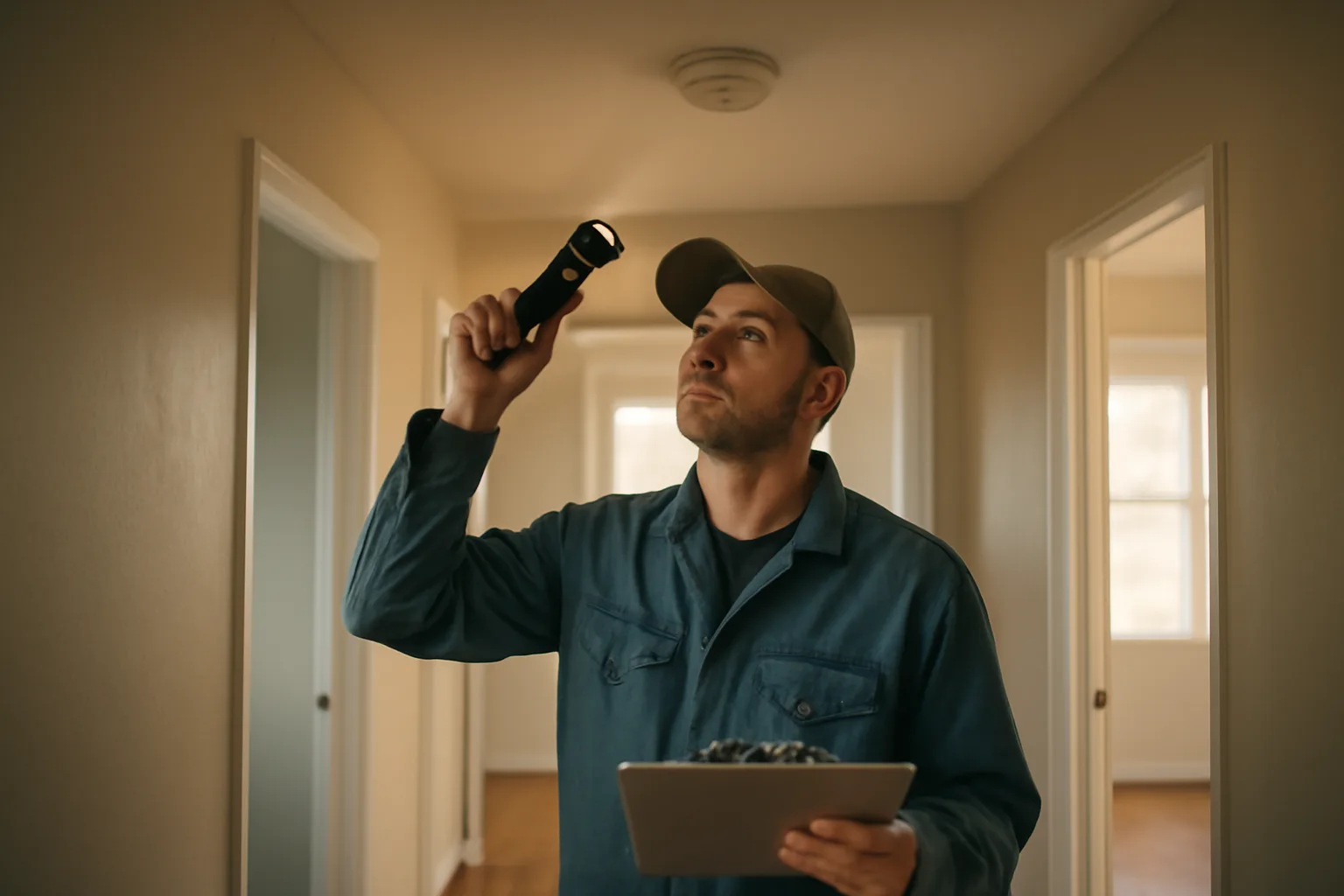
During a routine inspection, a landlord (or a city inspector, if it's a licensing inspection) generally checks for habitability and safety issues: working smoke and carbon monoxide detectors, functioning heat and plumbing, no active pest infestations, secure locks on doors and windows, safe electrical wiring, and no structural hazards like broken stairs or exposed wiring. A landlord's own periodic inspection (separate from a city license inspection) is usually limited to checking the condition of the unit and confirming the tenant isn't violating lease terms, like unauthorized pets or occupants. This inspection still requires proper notice in almost every state, it isn't a free pass to search personal belongings or go through closets and drawers looking for lease violations. A city rental licensing inspection goes further and checks against the building and housing code specifically: interconnected smoke detectors, GFCI outlets in bathrooms and kitchens, proper egress from bedrooms, water heater safety features, and sometimes exterior conditions like peeling exterior paint (a lead hazard concern in pre-1978 housing) or unsecured stairways. What an inspector generally can't do: enter without proper notice except in a true emergency, search areas unrelated to code compliance, or use the inspection as pretext to investigate something unrelated like immigration status or unrelated criminal activity. If you're prepping for a city license inspection specifically, our City Rental License & Inspection Prep Packet walks through the most commonly cited violations city inspectors flag, so you can fix them before the inspector shows up rather than after a failed inspection notice.
What a landlord cannot do in Ohio
Ohio landlord-tenant law, codified mainly in Ohio Revised Code Chapter 5321, sets out specific things a landlord cannot do. A landlord cannot shut off utilities, change locks, or remove a tenant's belongings to force them out without going through the formal eviction process in court, commonly called a 'self-help eviction,' and Ohio courts have consistently held these actions unlawful [5]. Ohio law also requires the landlord to keep the unit in a habitable condition, comply with building and housing codes, and make repairs within a reasonable time after receiving notice. Ohio Revised Code 5321.04 lists the landlord's specific obligations, including keeping common areas safe and clean, maintaining electrical, plumbing, and heating systems, and providing running water and reasonable amounts of hot water . A landlord in Ohio also cannot enter the rental unit without reasonable notice, generally interpreted as 24 hours, except in genuine emergencies. Retaliatory actions are restricted too. Ohio Revised Code 5321.02 prohibits a landlord from raising rent, decreasing services, or threatening eviction in retaliation for a tenant reporting a code violation or joining a tenant organization . Ohio doesn't have a statewide rental licensing requirement, but individual cities within Ohio can and do run their own registration or inspection programs, so a landlord operating in Cleveland, Columbus, or Cincinnati still needs to check city-level rules separately from the state landlord-tenant code.
What happens if you rent without a required license?
Consequences vary by city, but the common ones are civil fines, back-fees for unpaid registration periods, and in some jurisdictions, a bar on collecting rent or filing an eviction until the license is obtained. None of these are small. Baltimore's rental licensing code allows the city to pursue civil penalties against unlicensed rental operations, and an unlicensed landlord can face real difficulty enforcing a lease in court. Los Angeles's Rent Stabilization Ordinance registration is tied directly to the landlord's ability to raise rent: an unregistered unit generally cannot have its rent increased under the ordinance until registration is current [1]. Some cities layer daily fines on top of the base penalty for continued non-compliance, which turns a missed renewal into a fast-growing bill. The exact fine schedule is something you need to confirm with your city rental licensing office, since these figures get updated in city budget cycles and vary a lot even between similarly sized cities. The practical lesson: don't wait for a violation notice to find out your city has a licensing program. Check before you list the unit, not after a tenant complaint triggers a code enforcement visit.
Frequently asked questions
Does every state require a landlord license?
No. There's no federal requirement and almost no state requires a landlord license outright. The requirement, when it exists, almost always comes from a city or county ordinance. Some states require a general business license for rental income, but a dedicated 'landlord license' tied to inspections is a municipal-level program, not a state one.
How much does a rental license typically cost?
Costs vary widely by city and by number of units, ranging from under $50 to several hundred dollars per unit annually in some markets. There's no single national figure. Confirm the exact fee with your city rental licensing office, since these are set locally and change with city budgets.
What is the difference between rental registration and a rental license?
Registration usually just means telling the city you own a rental unit and who to contact, often without an inspection requirement. A rental license typically requires registration plus a passed inspection and a renewal cycle. Some cities use the terms interchangeably, so check your specific city's program to know which applies.
Can I rent out a room in my own house without a license?
It depends on your city. Some cities exempt owner-occupied properties with a small number of rented rooms from licensing requirements, while others require registration regardless of occupancy. Zoning rules can also limit how many unrelated people can live in a single-family home, separate from any licensing question.
How to become a landlord if I've never rented a property before?
Check your city's rental licensing or registration requirement first, get landlord insurance, learn your state's notice and security deposit laws, and prepare a written lease. There's no exam or professional license required in most places, but skipping the local compliance check is the most common first-timer mistake.
Who is responsible for the move-out inspection in California?
The landlord is responsible for offering the tenant an initial move-out inspection under California Civil Code Section 1950.5(f), conducted no earlier than two weeks before the tenancy ends, so the tenant has a chance to fix issues before final deposit deductions are made.
What is landlording as a term?
Landlording refers to the ongoing work of owning and managing rental property: collecting rent, maintaining the unit, following notice and eviction laws, and staying compliant with local codes. It covers both the ownership side and the day-to-day management side of renting property to tenants.
What rights does a tenant have if there's no written lease?
A tenant without a written lease typically still gets a month-to-month tenancy under state law, with rights to habitable housing, protection from illegal lockouts, and a required notice period before the tenancy can end. State landlord-tenant statutes fill in the terms a written lease would otherwise cover.
Why do landlords require renters insurance if they have their own policy?
The landlord's policy covers the building and the landlord's liability, not the tenant's personal belongings or the tenant's liability for guest injuries. Requiring renters insurance shifts that risk to a policy meant to cover it, and protects the landlord from lawsuits over losses that weren't the landlord's fault.
How much notice does a landlord have to give before entering the unit?
Most states require 24 to 48 hours' notice for non-emergency entry. California presumes 24 hours is reasonable notice under Civil Code Section 1954. Always check your specific state's statute, since the exact number and what counts as an emergency exception both vary.
What can a landlord check during a routine inspection?
A landlord can generally check the physical condition of the unit and compliance with lease terms: smoke detectors, plumbing, signs of pest problems, unauthorized pets or occupants. A city licensing inspection goes further, checking against the local building and housing code.
What is something a landlord cannot legally do in Ohio?
A landlord in Ohio cannot perform a self-help eviction by shutting off utilities, changing locks, or removing belongings to force a tenant out. Ohio Revised Code Chapter 5321 requires the formal court eviction process, and retaliatory rent increases or service cuts against a tenant who reports code issues are also prohibited.
Sources
- California Civil Code Section 1950.5(f): Landlord must notify tenant in writing of the right to request an initial move-out inspection
- California Civil Code Section 1954: California law presumes 24 hours advance notice is reasonable notice for landlord entry
- Ohio Revised Code 5321.03, Landlord Remedies for Tenant Holding Over: Ohio law restricts self-help eviction actions like shutting off utilities or removing belongings without court process
- Ohio Revised Code 5321.04, Obligations of Landlord: Ohio law requires landlords to maintain common areas, electrical, plumbing, heating systems, and hot water
- Ohio Revised Code 5321.02, Retaliatory Conduct Prohibited: Ohio prohibits landlords from retaliating against tenants who report code violations or join tenant organizations