Last updated 2026-07-26
TL;DR
Becoming a landlord means registering with your city or state, screening tenants legally, carrying the right insurance, and following local notice and inspection rules. Even without a written lease, tenants have rights under state law. Landlords generally must give 24-48 hours notice before entering, and cities set specific limits on what an inspector or landlord can check during a walk-through.
How do you become a landlord?
Becoming a landlord starts before you ever hand over a key. You need a property that's legally allowed to be rented (check zoning and any HOA restrictions), and in a growing number of cities you need a rental license or registration before you can lease it out at all. More than 100 U.S. cities and several states now require some form of rental registration, licensing, or inspection program, and the list keeps growing as cities try to track substandard housing stock. The practical order of operations looks like this: confirm your property can legally be rented, get landlord liability insurance (a standard homeowner's policy usually excludes rental use), register or license the unit with your city if required, screen tenants under the Fair Housing Act and any state-specific screening rules, and put everything in a written lease. Skipping the license step is the most common first-year mistake. Cities like Los Angeles require registration under the Rent Escrow Account Program for older buildings, and fines for operating unregistered can run into thousands of dollars over time [1]. If your city requires a rental license, expect an inspection before or shortly after your first tenant moves in, and then periodic re-inspections, often every one to three years depending on the ordinance. Confirm with your city rental licensing office for your specific cycle and fee, because these vary block by block in some metro areas, let alone city by city.
What is landlording, exactly?
Landlording is the ongoing job of owning and managing rental property, more than the one-time act of signing a lease. It covers finding and screening tenants, collecting rent, handling repairs and maintenance, staying compliant with local housing codes, and managing the relationship (and eventually the exit) with each tenant. Most small landlords underestimate the maintenance and compliance side. Habitability law in nearly every state requires landlords to keep the unit fit to live in, meaning working plumbing, heat, and structural safety, regardless of what the lease says. California's civil code, for example, spells out specific conditions a rental must meet, including effective waterproofing, working plumbing and gas facilities, and heating that's in good working order [2]. Landlording also means record-keeping. You'll want files for every repair request, every notice you send, every rent payment, and (if your city requires it) every inspection report. When a dispute lands in front of a judge or a code inspector, whoever has the paper trail usually wins.
What is a landlord, legally speaking?
A landlord is the person or entity that owns real property and leases it to a tenant in exchange for rent, taking on legal duties around habitability, notice, and fair treatment in return. The relationship is defined by state landlord-tenant law, more than by whatever the lease says. Lease terms that conflict with state law (like waiving a tenant's right to habitable conditions) are generally unenforceable. Being a landlord also means you're bound by the Fair Housing Act, which prohibits discrimination based on race, color, national origin, religion, sex, familial status, and disability in the rental process [3]. State and local laws often add protected classes on top of that, including source of income (housing vouchers) in many jurisdictions. One thing new landlords miss: once you own even a single rental unit, you're a landlord under the law the moment you offer it for rent, whether or not you've gotten around to registering with the city yet. The registration requirement doesn't create the landlord-tenant relationship, it just regulates it.
What rights do tenants have without a written lease?
Tenants without a written lease still have real, enforceable rights under state law, they're not squatters and they're not without protection. Most states treat an unwritten rental agreement as a month-to-month tenancy, governed by the same habitability, notice, and eviction rules that apply to written leases. A tenant paying rent regularly, even with a handshake deal, is entitled to a habitable unit, protection from illegal lockouts or utility shutoffs, and proper notice before the landlord can end the tenancy. In California, for instance, a periodic tenancy without a lease still requires 30 or 60 days' written notice to terminate, depending on how long the tenant has lived there [4]. Landlords can't just change the locks or remove belongings because there's no signed paper. What a tenant loses without a written lease is certainty: no lease means no fixed rent amount in writing, no clear end date, and more room for dispute about what was actually agreed to. That cuts both ways and hurts landlords too. If you're renting month to month without paper, get something in writing (even a short one-page agreement) as soon as you can.
How do you be a good landlord day to day?
Being a solid landlord comes down to a short list of habits repeated consistently: respond to repair requests fast, document everything, follow your state's notice rules to the letter, and treat every applicant the same way regardless of who they are. Respond to habitability complaints (no heat, no water, pest infestations) within days, not weeks. Many states set specific deadlines; under California law, for example, landlords generally have a reasonable time (often interpreted as 30 days for non-emergency repairs, but much faster for anything affecting health and safety) to fix problems after written notice [2]. Waiting too long can trigger rent withholding or repair-and-deduct remedies for the tenant. Use a written lease every time, screen every applicant with the same criteria, and keep a maintenance calendar so you're not reacting to problems after they've become expensive. If your city requires periodic re-inspections as part of a rental licensing program, put that date on your calendar the same day you get the license, not the week before it's due.
Who is responsible for a rental property walk-through inspection in California?
In California, the landlord is generally responsible for scheduling and conducting move-in and move-out walk-through inspections, and state law gives the tenant specific rights around that process. Before deducting anything from a security deposit, California landlords must, if the tenant requests it, do an initial inspection within two weeks before the tenancy ends, and give the tenant an itemized list of anything that needs fixing to avoid a deduction [5]. The landlord (or their agent) does the actual walk-through and writes the report, but the tenant has the right to be present. California Civil Code Section 1950.5 requires landlords to give at least 48 hours' written notice of this pre-move-out inspection unless the tenant waives that notice [5]. After the tenant moves out, the landlord has 21 days to return the deposit along with an itemized statement of any deductions. For rental licensing inspections (as opposed to move-out inspections), some California cities, like Los Angeles under its Systematic Code Enforcement Program, send their own city inspector rather than relying on the landlord's walk-through, and that inspector checks code compliance, more than move-out damage [1]. Those are two different processes with two different responsible parties, and landlords sometimes confuse them.
What can a landlord look at during an inspection?
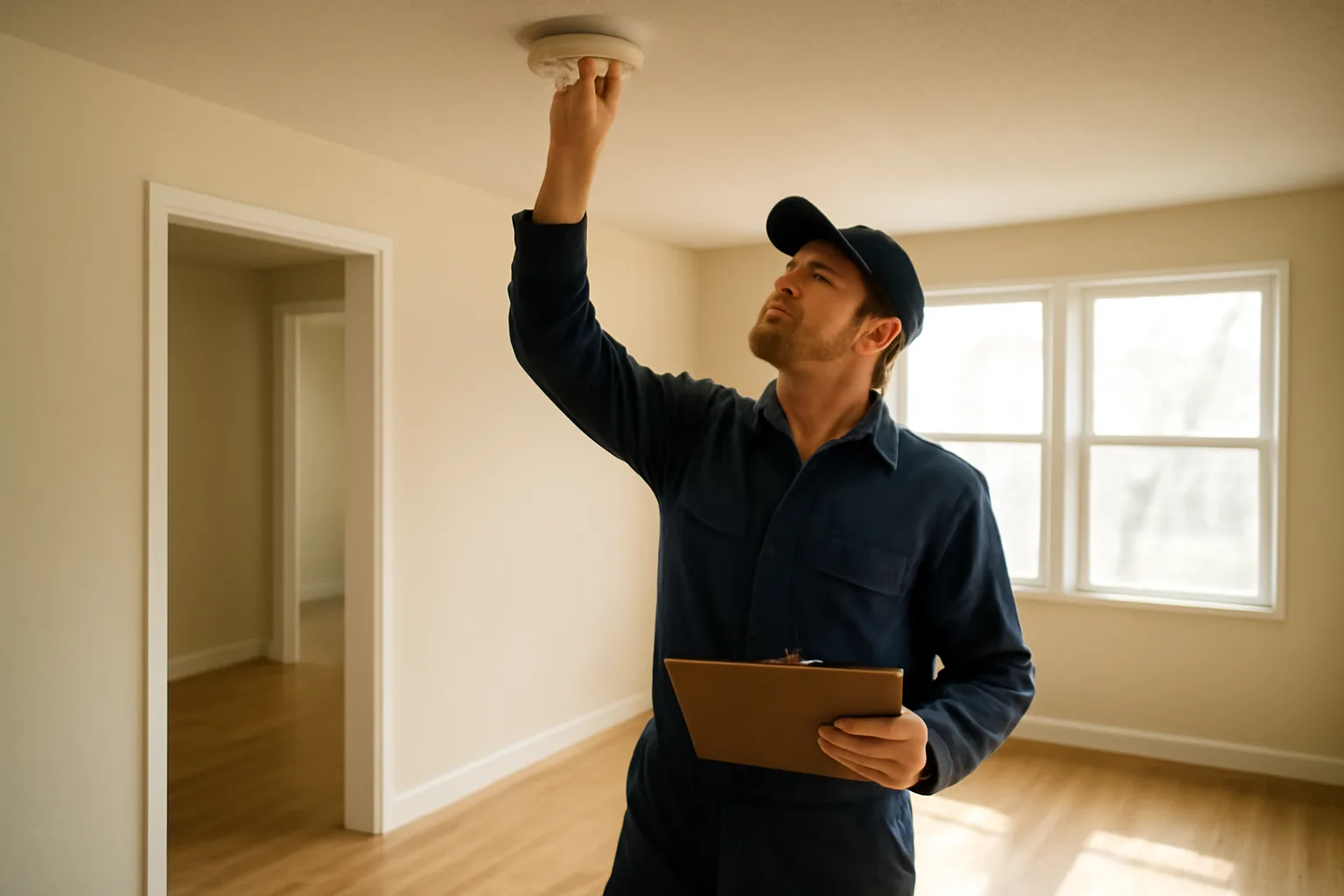
During a routine or move-out inspection, a landlord can generally check for property damage beyond normal wear and tear, safety hazards, unauthorized alterations, and lease violations like unapproved pets or occupants. What a landlord cannot do is search through a tenant's personal belongings, papers, or private areas unrelated to the property's condition. City code inspectors, doing a rental license inspection rather than a landlord's own walk-through, typically check for things tied directly to the housing code: smoke and carbon monoxide detectors, safe electrical outlets, working plumbing, adequate egress windows, handrails on stairs, and signs of mold or pest infestation. They're not there to judge how clean the tenant keeps things, only whether the unit meets minimum safety standards. Either way, the scope of an inspection is tied to giving proper notice first (see the section below) and to a legitimate purpose, maintenance, safety, or a sale, more than showing up because the landlord is curious. A tenant can generally refuse entry if notice wasn't given or if the landlord shows up for a reason outside the lease's inspection clause.
How much notice does a landlord have to give before entering?
Most states require landlords to give tenants 24 to 48 hours of notice before entering the unit for a non-emergency reason, though the exact number and the form the notice must take (written vs. verbal) varies by state. California requires "reasonable notice," which state law defines as 24 hours in most circumstances, delivered in writing unless the tenant agrees otherwise [6]. Some states, like Arizona, set the standard at 48 hours [7]. Emergencies are the exception everywhere: a burst pipe, fire, or gas leak lets a landlord enter without any advance notice at all, because the health and safety risk overrides the normal notice requirement. City rental inspection programs sometimes layer their own notice requirement on top of the state minimum. A city ordinance inspection for licensing might require the landlord to give the tenant a specific number of days' notice in writing, separate from whatever the state landlord-tenant statute says about routine entry. Always confirm with your city rental licensing office which notice period applies to their inspection, since it can be longer than your state's general entry rule.
Why do landlords require renters insurance?
Landlords require renters insurance mainly to shift liability and property-loss risk away from themselves. A landlord's own insurance policy typically covers the building structure, not a tenant's personal belongings, and it often doesn't cover liability if a tenant causes a fire, water damage, or an injury inside the unit. Renters insurance is inexpensive, commonly in the range of $15 to $30 a month depending on coverage and location, which is a big reason landlords feel comfortable requiring it as a lease condition. If a tenant's negligence causes damage (an overflowing bathtub, a kitchen fire), the tenant's renters insurance liability coverage is often what actually pays for it instead of the landlord's policy or the landlord's own pocket. Requiring renters insurance is legal in most states as long as it's disclosed clearly in the lease and applied consistently to all tenants, not selectively. Some cities and a few states have started requiring it outright for certain rental categories, so check your local ordinance alongside your own lease policy.
What can a landlord not do in Ohio?
Ohio landlords cannot shut off utilities, change the locks, or remove a tenant's belongings to force them out, a practice generally banned as illegal "self-help" eviction under Ohio law. Ohio Revised Code Chapter 5321 sets out the landlord's obligations and a tenant's remedies, including the right to sue for actual damages if the landlord uses these tactics instead of going through the courts [8]. Ohio landlords also cannot retaliate against a tenant for reporting a housing code violation, joining a tenant group, or asserting their legal rights; Ohio Revised Code 5321.02 specifically prohibits retaliatory eviction, rent increases, or service reductions within a certain time after a tenant's protected action [9]. They cannot discriminate based on the federally protected classes under the Fair Housing Act, plus any additional classes protected under Ohio or local law [3]. Ohio law under R.C. 5321.04 also requires landlords to keep the unit in a fit and habitable condition, comply with building and housing codes materially affecting health and safety, and keep common areas safe and sanitary; a landlord who ignores these duties can face a tenant lawsuit for damages or lease termination . And in cities with their own rental registration ordinances, like Cincinnati or Columbus, landlords can't legally rent out a unit at all without the required registration or license on file, separate from these statewide protections.
How do rental licensing rules connect to all of this?
Everything above (habitability, notice, inspections, tenant rights) sits underneath whatever your city's specific rental licensing ordinance requires. State law sets the floor for tenant rights and landlord duties; city rental licensing programs add a second layer on top, usually focused on code compliance and registration rather than the landlord-tenant relationship itself. That second layer is where most small landlords get tripped up, not because the rules are complicated, but because every city writes its own version. One city might require a license renewal every year with a $150 fee (confirm with your city rental licensing office for your actual number), another every three years with a full walk-through inspection of every unit. Missing a renewal deadline or an inspection date is usually what turns into a fine, not ignorance of tenant rights law. If you're trying to get organized before a first inspection or a license renewal, it helps to have a single checklist that maps your city's specific requirements against what you actually have on file. That's the gap our $79 City Rental License & Inspection Prep Packet is built to close, a one-time document that walks you through what your city's program typically checks, so you're not guessing the week before an inspector shows up.
What should a first-time landlord do before listing a unit?
Before you list a unit, run through four things in order: confirm the property can legally be rented (zoning, HOA rules, any city registration requirement), get landlord insurance in place, write a compliant lease, and set up your screening process so it's the same for every applicant. Check your city's rental registration status first, before you even take photos for the listing. If your city requires a rental license or registration and you rent without one, you can face fines, and in some cities a tenant can use the lack of registration as a defense in an eviction case. Confirm with your city rental licensing office whether registration has to happen before the first tenant moves in or within a set number of days after. Then build your file: insurance policy, license or registration number if applicable, blank lease template reviewed against your state's landlord-tenant statute, and a written screening criteria sheet you'll use for every applicant. Landlords who skip the screening-criteria step are the ones most likely to end up in a Fair Housing complaint later, because inconsistent screening is exactly what discrimination claims are built on [3].
Frequently asked questions
How to become a landlord with no experience?
Start by learning your state's landlord-tenant statute and your city's rental registration rules, then get landlord insurance, a compliant lease template, and consistent tenant-screening criteria before listing your first unit. Many first-time landlords also check whether their city requires a rental license or inspection before renting at all, since operating unlicensed can bring fines.
Who is responsible for a rental property walk-through inspection in California?
The landlord schedules and conducts the walk-through, but California Civil Code 1950.5 gives tenants the right to be present at a pre-move-out inspection and requires 48 hours' written notice unless the tenant waives it. City code inspectors, separate from this process, handle rental-license inspections for programs like Los Angeles's registration ordinance.
What is landlording?
Landlording is the ongoing work of owning and managing rental property: screening tenants, collecting rent, handling repairs, keeping the unit habitable, and staying compliant with local licensing and housing codes. It's a continuous job, not a one-time transaction of signing a lease.
What is a landlord?
A landlord is a person or entity that owns rental property and leases it to a tenant for rent, taking on legal duties around habitability, fair treatment, and proper notice under state landlord-tenant law and the federal Fair Housing Act.
What rights do tenants have without a lease?
Tenants without a written lease are usually treated as month-to-month tenants under state law, with the same rights to a habitable unit, protection from illegal lockouts, and required notice before termination. What they lose is a fixed written agreement on rent and terms, which increases dispute risk for both sides.
How to be a good landlord?
Respond to repair requests quickly, follow your state's notice rules exactly, screen every applicant with the same written criteria, and document everything. Consistency is what keeps you out of both habitability disputes and fair housing complaints.
Why do landlords require renters insurance?
Landlords require renters insurance because their own policy usually doesn't cover a tenant's belongings or liability for damage the tenant causes. Renters insurance is cheap (often $15 to $30 a month) and shifts that risk to the tenant's policy instead of the landlord's.
How much notice does a landlord have to give before entering a rental?
Most states require 24 to 48 hours' notice for non-emergency entry; California sets 24 hours as reasonable notice, while some states like Arizona require 48 hours. Emergencies (fire, gas leak, burst pipe) allow entry without any advance notice.
What can a landlord look at during an inspection?
A landlord or city inspector can check for property damage, safety hazards, code violations, and unauthorized alterations or occupants. They cannot search personal belongings or private papers unrelated to the unit's physical condition, and entry still requires proper notice.
What can a landlord not do in Ohio?
Ohio landlords cannot shut off utilities, change locks, or remove belongings to force a tenant out; this illegal self-help eviction is barred under Ohio Revised Code Chapter 5321. They also cannot retaliate against tenants for reporting code violations under R.C. 5321.02, or ignore habitability duties under R.C. 5321.04.
Do all cities require a rental license or registration?
No. Requirements vary heavily by city and state; some have no program at all, others require annual registration only, and others require a license plus a periodic physical inspection. Confirm with your specific city's rental licensing office, since even neighboring cities often have completely different rules.
What happens if a landlord skips required rental registration?
Consequences vary by city but often include fines that can accumulate the longer the unit stays unregistered, and in some jurisdictions the lack of registration can be used as a legal defense by the tenant in an eviction proceeding. Confirm your city's specific penalty structure with its rental licensing office before assuming a fine is a one-time cost.
Can a landlord require renters insurance as a lease condition?
Yes, in most states landlords can require renters insurance as a lease condition as long as it's disclosed in the lease and applied consistently to all tenants. A few cities and states have started mandating it for certain rental types, so check local rules alongside your own lease terms.
Sources
- California Civil Code Section 1941.1: California habitability standards require effective waterproofing, working plumbing, gas facilities, and functioning heating
- U.S. Department of Housing and Urban Development, Fair Housing Act overview: The Fair Housing Act prohibits rental discrimination based on race, color, national origin, religion, sex, familial status, and disability
- California Civil Code Section 1946.1: California requires 30 or 60 days' written notice to terminate a month-to-month tenancy depending on tenancy length
- California Civil Code Section 1950.5: California landlords must give 48 hours' written notice for a pre-move-out inspection and return deposits with an itemized statement within 21 days
- California Civil Code Section 1954: California landlords must give reasonable notice, defined as 24 hours in most cases, before entering a rental unit
- Arizona Residential Landlord and Tenant Act, A.R.S. Section 33-1343: Arizona requires at least two days' notice before a landlord enters a rental unit for non-emergency purposes
- Ohio Revised Code Chapter 5321, Landlords and Tenants: Ohio law bars landlords from using self-help measures like utility shutoffs or lockouts instead of formal eviction
- Ohio Revised Code Section 5321.02: Ohio prohibits landlords from retaliating against tenants who report code violations or assert legal rights
- Ohio Revised Code Section 5321.04: Ohio landlords must maintain rental units in a fit and habitable condition and comply with health and safety codes