Last updated 2026-07-26
TL;DR
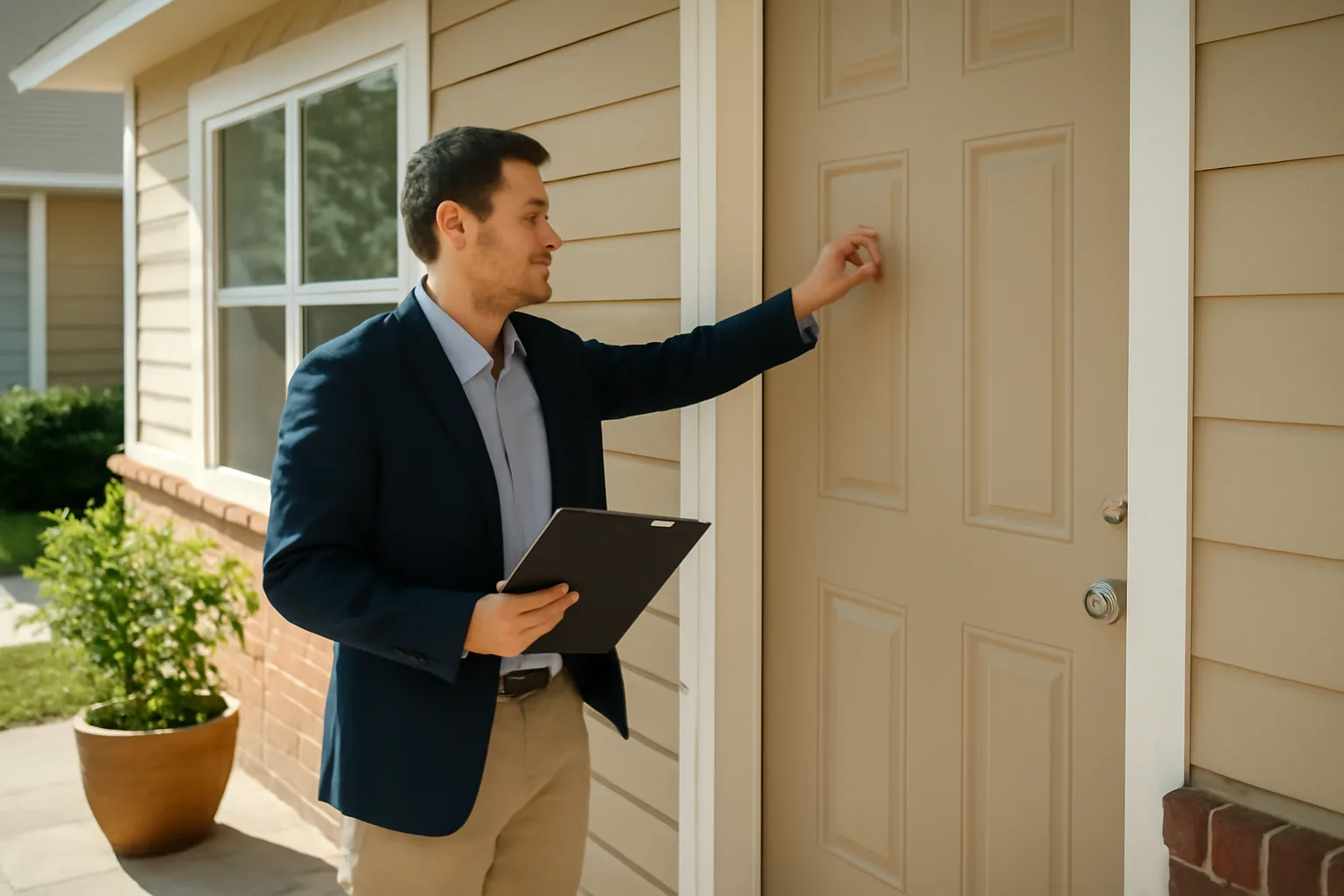
Most states require landlords to give tenants 24 to 48 hours notice before entering an occupied unit, except in emergencies. A handful of states set no statutory minimum at all, leaving lease language and local ordinances to fill the gap. Always check your specific state statute, because "reasonable notice" means different things in different places.
how much notice does a landlord have to give before entering?
The short answer: it depends on your state, and there's no single federal rule. Most landlord-tenant statutes land somewhere between 24 and 48 hours for routine, non-emergency entry (repairs, inspections, showing the unit to a prospective tenant or buyer). A few states don't specify a number at all and just say "reasonable notice," which is vaguer and more litigated. California requires "reasonable notice in writing," and the statute explicitly says 24 hours is presumed reasonable unless there's evidence otherwise [1]. Florida's statute sets a floor of at least 12 hours notice for entry to make repairs [2]. Texas, notably, has no statewide statute at all dictating a specific notice period for routine entry, which surprises a lot of landlords moving from stricter states. Because the range runs from zero (no state law) to 48 hours depending on jurisdiction, the only safe move is to look up your specific state's residential landlord-tenant act, not rely on what a landlord in another state told you at a meetup. If your city also runs a rental registration or licensing program, that ordinance sometimes layers additional notice or inspection-access rules on top of the state law, so check both. Emergencies are the universal exception. Every state that has an entry-notice statute also allows entry without advance notice when there's a genuine emergency (fire, flooding, gas leak, a tenant medical emergency). That exception is narrow. "I was in the neighborhood" is not an emergency.
what counts as reasonable notice, exactly?
"Reasonable notice" almost always means notice given far enough ahead that the tenant can plan around it, delivered in a way they'd actually see it, for a purpose the law allows. Most statutes require the notice to state a reason (repairs, inspection, showing to prospective tenants/buyers, court-ordered access) and a proposed time. California's civil code lists acceptable delivery methods, including personal delivery, leaving it with someone of suitable age at the unit, or mailing it (mailed notice needs six days lead time to account for delivery) [1]. Some states require written notice; others accept a phone call or text if the lease allows it, though a text is harder to prove in a dispute. Timing windows matter too. A notice that says "Tuesday between 8am and 6pm" is generally fine. A notice that says "sometime this week" is legally shakier because it doesn't give the tenant a real chance to be present or object to the specific time. A practical note: even in a state with no statutory minimum, a written lease clause specifying 24 or 48 hours notice is enforceable and courts will usually hold the landlord to it. If you wrote a stricter promise into the lease than the state requires, the lease wins.
do landlords ever need zero notice to enter?
Yes. Every state recognizes an emergency exception, and it's the one scenario where a landlord can enter without any advance notice. Emergencies typically include fire, a burst pipe or active flooding, a gas leak, suspected carbon monoxide, or a welfare check when there's real reason to believe the tenant is in danger. Some states also allow entry without notice if the tenant has abandoned the property, though "abandonment" has its own legal test (unpaid rent alone usually isn't enough). Court orders are the other no-notice-required scenario. If a landlord has a writ of possession following an eviction judgment, entry to change locks or remove belongings follows the court's process, not the routine notice statute. Outside those two situations, showing up unannounced because you're worried about property damage, because a neighbor complained, or because you "just want to check" is not a recognized emergency in any state's statute we're aware of. That kind of entry is where landlords get themselves into trouble, sometimes rising to harassment claims or violations of the tenant's right to quiet enjoyment.
what can a landlord look at during an inspection?
A landlord's inspection rights are generally limited to the reason stated in the entry notice; it's not a general license to search the unit. Standard routine inspections cover things directly tied to the reason given: checking smoke detectors and carbon monoxide alarms, looking for water damage, verifying HVAC filters, confirming no unauthorized occupants or pets in violation of the lease, and checking for maintenance issues the tenant may not have reported. If the notice says "inspecting for maintenance issues," the landlord shouldn't be opening drawers or closets unrelated to that purpose. City rental licensing inspections work differently and often go further, because they're checking code compliance, more than landlord curiosity. A city inspector doing a rental license renewal walk-through typically checks smoke and CO detector placement and function, electrical panel condition, plumbing leaks, egress windows in bedrooms, handrails and stair conditions, and pest evidence. These are usually scheduled with the landlord, and the tenant is notified separately under the same state notice rules, or under the city ordinance's own notice requirement if one exists. What a landlord (or inspector) generally cannot do: rummage through personal belongings, take photos of the tenant's possessions unrelated to a maintenance issue, or use a routine inspection as a pretext to intimidate a tenant over an unrelated dispute (like a rent complaint). If you're prepping for a city inspection and want a structured way to organize which issues to fix before the inspector arrives, this is exactly what the $79 City Rental License & Inspection Prep Packet is built for. It's a one-time tool, not a subscription, and it doesn't guarantee you'll pass; every city's checklist differs.
who is responsible for the rental property walk-through inspection in california?
In California, the move-in and move-out walk-through inspection responsibility sits with the landlord, and state law gives tenants a specific right to request a pre-move-out inspection before the tenancy ends. Under California Civil Code Section 1950.5, a tenant vacating has the right to request an initial inspection before move-out, and the landlord must give the tenant at least 48 hours notice before that inspection, then provide an itemized statement of any deficiencies the tenant could fix to avoid deductions from the security deposit [3]. This pre-move-out inspection is optional for the tenant to request, but if requested, the landlord must offer it. Separately, some California cities with rental registration or licensing programs (San Francisco, Los Angeles's RSO-covered units, Oakland, and others) run their own periodic habitability inspections tied to the local ordinance, and those follow the city's own notice and scheduling rules layered on top of the state's 24-hour "reasonable notice" standard for routine entry. If your unit is in one of these cities, confirm the specific inspection cycle and notice period with your city rental licensing office, because it varies by program and isn't uniform statewide.
what is landlording, and what does the job actually involve?
Landlording is the day-to-day work of owning and managing rental property: screening tenants, collecting rent, handling maintenance, staying current on local code and licensing requirements, and managing the legal relationship defined by the lease and state law. It's part business operation, part compliance work. On the business side, you're setting rent, marketing vacancies, screening applicants (credit, income, rental history, sometimes criminal background within the limits of fair housing law), and budgeting for repairs and vacancy. On the compliance side, you're dealing with security deposit rules, habitability standards, eviction procedure if it comes to that, and, in a growing number of cities, mandatory rental registration or licensing. Many small landlords underestimate the compliance half. A city that requires rental licensing usually expects annual or biennial registration, a fee (commonly in the range of confirm with your city rental licensing office, since these vary widely by jurisdiction and often by number of units), and a periodic inspection. Missing a renewal deadline or failing an inspection without a documented cure plan is often what turns a routine landlord into someone facing fines. If you're new to this, read up on tenant rights and tenants rights in your state before you write your first lease, not after your first dispute.
what is a landlord? (the basic legal definition)
A landlord is the owner of real property, or their authorized agent, who leases or rents that property to another person (the tenant) in exchange for payment, usually under a written or oral lease agreement. Legally, the landlord holds the property title and grants the tenant a possessory interest (the right to occupy and use the space) for a defined term. In exchange, the landlord takes on obligations: maintaining the property in habitable condition, following state-specific rules on security deposits and entry notice, and respecting the tenant's right to quiet enjoyment of the unit. The landlord role can be an individual owner-occupant who rents out a spare unit, a small owner with a handful of single-family rentals, or a large management company acting on behalf of an institutional owner. The legal obligations mostly don't change based on portfolio size, though some cities' licensing rules do scale fees or inspection frequency based on the number of units owned.
how to become a landlord (and how to be one without getting sued)
Becoming a landlord legally usually means five things: acquiring the property (or getting owner authorization to lease a unit you manage), registering with your city or county if local law requires it, learning your state's landlord-tenant statute, drafting or adopting a lease that complies with local law, and setting up systems for rent collection, maintenance requests, and record-keeping. Step one is almost always underestimated: check whether your city requires rental registration or a rental license before you ever advertise the unit. A growing number of cities (particularly in California, and scattered across the Midwest and Northeast) require landlords to register every rental unit, pay an annual fee, and pass a habitability inspection before renting legally. Renting without a required license in some cities can trigger fines that are assessed per unit, per violation, or per day depending on the ordinance, so confirm the specific fee schedule with your city rental licensing office rather than assuming it matches what you've read about a different city. Step two is the lease itself. It needs to comply with your state's required disclosures (lead paint disclosure for pre-1978 housing is federally required under 40 CFR Part 745 [4]), state-mandated security deposit limits and return timelines, and any local rent control or just-cause eviction ordinance that might apply. Step three, the part people skip, is building a maintenance and entry-notice habit before you have your first tenant. Decide now how you'll document entry notices (text with photo confirmation, certified mail, a property management app), because the first time you need to prove you gave proper notice is usually mid-dispute, not a good time to improvise a system. Read landlord and landlord landlords for more on structuring the relationship from day one.
what rights do tenants have without a lease?
A tenant without a written lease, sometimes called a month-to-month or oral tenancy, still has nearly all the same legal protections as a tenant with a signed lease, including habitability rights, entry-notice rights, and eviction protections under state law. Most states treat an oral or undocumented tenancy as a month-to-month arrangement once rent has been accepted and the tenant has moved in with the owner's knowledge. The tenant is entitled to the state's statutory notice period before entry (the same 24 to 48 hour rules discussed above generally apply regardless of whether there's a written lease), the right to a habitable unit, and legally required notice before termination of the tenancy, which for month-to-month arrangements is commonly 30 days, though some states require 60 days depending on how long the tenant has lived there and local rules (California requires 60 days notice to terminate a tenancy of one year or longer under Civil Code 1946.1 [5]). What a no-lease tenant does not automatically get is the certainty of fixed terms; a landlord can generally raise rent or end a month-to-month tenancy with proper notice more easily than they could break a fixed-term lease early. But basic protections against illegal lockouts, utility shutoffs as a pressure tactic, and unauthorized entry apply whether or not there's paper. See renters rights and tenant and tenant for state-specific detail on notice-to-vacate timelines.
why do landlords require renters insurance?
Landlords require renters insurance mainly to shift liability for the tenant's personal property loss and personal liability claims away from the landlord's own policy, since a standard landlord (dwelling) policy generally doesn't cover a tenant's belongings or a tenant-caused injury to a guest. A landlord's own property insurance covers the building structure and the landlord's own fixtures and appliances; it typically excludes the tenant's furniture, electronics, and other personal property, and it doesn't cover a tenant being sued because a guest slipped in their unit. Renters insurance, commonly running in the range of $15 to $30 a month according to industry data cited by the Insurance Information Institute [6], covers the tenant's belongings and adds liability coverage that can protect the landlord indirectly (many landlords require they be listed as an "interested party" on the policy so they're notified if it lapses). Requiring it is legal in the large majority of states and is commonly written into the lease as a condition of tenancy, similar to a security deposit requirement. It's cheap enough for tenants that it rarely becomes a dealbreaker, and it meaningfully reduces the landlord's exposure when a tenant's stuff is destroyed in a fire or pipe burst that wasn't the landlord's fault. A few cities and some subsidized housing programs restrict how strictly a landlord can enforce this, so it's worth confirming local rules before making it a hard lease condition.
what a landlord cannot do in ohio
Ohio law prohibits landlords from several specific actions: self-help eviction (changing locks, shutting off utilities, or removing a tenant's belongings without a court order), retaliating against a tenant for complaining to a code enforcement agency or asserting a legal right, and entering the unit without reasonable notice except in an emergency. Ohio Revised Code Section 5321.04 requires a landlord to give the tenant "reasonable notice" of intent to enter and to enter "only at reasonable times," and the statute lists 24 hours as presumptively reasonable notice, similar to California's approach [7]. Ohio Revised Code Section 5321.02 separately prohibits retaliatory conduct, such as raising rent, decreasing services, or threatening eviction because a tenant complained to a government agency about a housing code violation, or because the tenant joined a tenant's union [8]. Ohio also prohibits landlords from using self-help remedies to remove a tenant; a landlord must go through the municipal or county court eviction process (forcible entry and detainer action) even if rent is unpaid, and cannot legally lock out a tenant, remove doors, or shut off electricity or water to force them out. Doing so can expose the landlord to actual damages, and Ohio courts have allowed tenants to recover for wrongful lockouts under the statute's remedy provisions. This Ohio-specific breakdown is a good example of why "how much notice" questions need a state answer, not a generic one; Ohio's 24-hour presumption happens to match California's, but the enforcement mechanics and retaliation protections differ meaningfully between the two states.
state-by-state notice requirements at a glance
| State | Statutory notice for routine entry | Statute | |
|---|---|---|---|
| California | 24 hours presumed reasonable (written notice) | Civil Code 1954 [1] | |
| Ohio | 24 hours presumed reasonable | ORC 5321.04 [7] | |
| Florida | At least 12 hours for repairs | Fla. Stat. 83.53 [2] | |
| Texas | No statewide statutory minimum | Confirm lease terms and local ordinance | |
| Washington | 2 days (48 hours) written notice | RCW 59.18.150 [9] | |
| Oregon | At least 24 hours | ORS 90.322 | This is a starting point, not a complete list of every state. Notice periods, allowed delivery methods, and emergency exceptions are all defined at the state level, and several states haven't codified a specific number at all, defaulting instead to a "reasonable" standard that ends up interpreted case by case. If your city also has a rental licensing ordinance, check whether it adds a separate notice requirement for the city's own inspection visits, since that's a different notice period than the state's routine-entry rule. |
Frequently asked questions
How much notice does a landlord have to give before entering?
It depends on the state. Most states require 24 to 48 hours written notice for routine, non-emergency entry. California and Ohio both treat 24 hours as presumptively reasonable. Florida requires at least 12 hours for repair visits. A few states, including Texas, have no statutory minimum, so lease terms and reasonableness standards fill the gap.
Can a landlord enter without any notice at all?
Only in a genuine emergency, such as fire, flooding, a gas leak, or a credible safety concern for the tenant. Every state with an entry-notice statute carves out this exception. Outside emergencies or a court order, entering without notice generally violates the tenant's right to quiet enjoyment and can expose the landlord to legal claims.
Who is responsible for the rental property walk-through inspection in California?
The landlord is responsible for scheduling and conducting move-in/move-out walk-throughs. California Civil Code 1950.5 gives tenants the right to request a pre-move-out inspection, and the landlord must give at least 48 hours notice for that specific inspection and provide an itemized list of deductible deficiencies afterward.
What is landlording?
Landlording is the practical work of owning and operating rental property: screening tenants, collecting rent, handling repairs, following state landlord-tenant law, and complying with any local rental registration or licensing ordinance. It's part business management and part legal compliance, and the compliance side is where most first-time landlords get caught off guard.
What is a landlord, legally speaking?
A landlord is the property owner (or their authorized agent) who leases real property to a tenant in exchange for rent. The landlord holds title and grants the tenant a possessory interest for a set term, while taking on obligations like habitability maintenance and following entry-notice rules under state law.
What rights do tenants have without a lease?
A tenant without a written lease generally still gets full legal protections as a month-to-month tenant: the same entry-notice rights, habitability rights, and eviction protections as a tenant with a signed lease. Termination of a no-lease tenancy typically requires 30 to 60 days notice depending on the state and tenancy length.
Why do landlords require renters insurance?
Landlords require it because their own property insurance doesn't cover a tenant's belongings or liability for injuries in the tenant's unit. Renters insurance, typically $15 to $30 a month per the Insurance Information Institute, shifts that risk to the tenant's policy and reduces the landlord's exposure after fires, floods, or guest injuries.
What can a landlord look at during an inspection?
A landlord's inspection should stay tied to the reason stated in the entry notice, such as checking smoke detectors, plumbing, HVAC, or lease compliance (unauthorized occupants or pets). City licensing inspections often go further, checking code items like egress windows and electrical panels, but still shouldn't extend to searching personal belongings unrelated to the stated purpose.
What can a landlord not do in Ohio?
Ohio landlords cannot use self-help eviction (changing locks or shutting off utilities without a court order), cannot retaliate against a tenant for reporting code violations, and cannot enter without reasonable notice except in emergencies. These protections come from Ohio Revised Code 5321.02 and 5321.04.
How do I become a landlord the right way?
Acquire or get authorization to lease the property, check whether your city requires rental registration or licensing before advertising, learn your state's landlord-tenant statute, draft a lease with all required disclosures (including federal lead paint disclosure for pre-1978 units), and set up a system for documenting entry notices and maintenance requests from day one.
Does a landlord need written notice, or is a text message enough?
It depends on the state statute and the lease. States like California generally expect written notice, though delivery methods like personal delivery or mail are specified. Some states and leases accept text or verbal notice if both parties agreed to that method in the lease. When in doubt, put it in writing and keep a record.
Can a city rental inspection require different notice than the state law?
Yes. Many cities with rental registration or licensing programs set their own notice period and inspection scheduling process for code-compliance inspections, separate from the state's routine-entry notice statute. Confirm the specific notice period and inspection cycle with your city rental licensing office, since it varies by program.
Sources
- California Civil Code Section 1954: California requires reasonable written notice to enter, with 24 hours presumed reasonable
- Florida Statutes Section 83.53: Florida requires at least 12 hours notice before entry to make repairs
- California Civil Code Section 1950.5: Tenant right to request pre-move-out inspection with 48 hours notice from landlord
- EPA, 40 CFR Part 745 (Lead Disclosure Rule): Federal law requires lead paint disclosure for pre-1978 housing at lease signing
- California Civil Code Section 1946.1: California requires 60 days notice to terminate a tenancy of one year or more
- Ohio Revised Code Section 5321.04: Ohio landlords must give reasonable notice, with 24 hours presumed reasonable, before entry
- Ohio Revised Code Section 5321.02: Ohio prohibits landlord retaliation against tenants who report code violations
- Revised Code of Washington Section 59.18.150: Washington requires two days (48 hours) written notice before landlord entry
- Oregon Revised Statutes Section 90.322: Oregon requires at least 24 hours notice before landlord entry