Last updated 2026-07-26
TL;DR
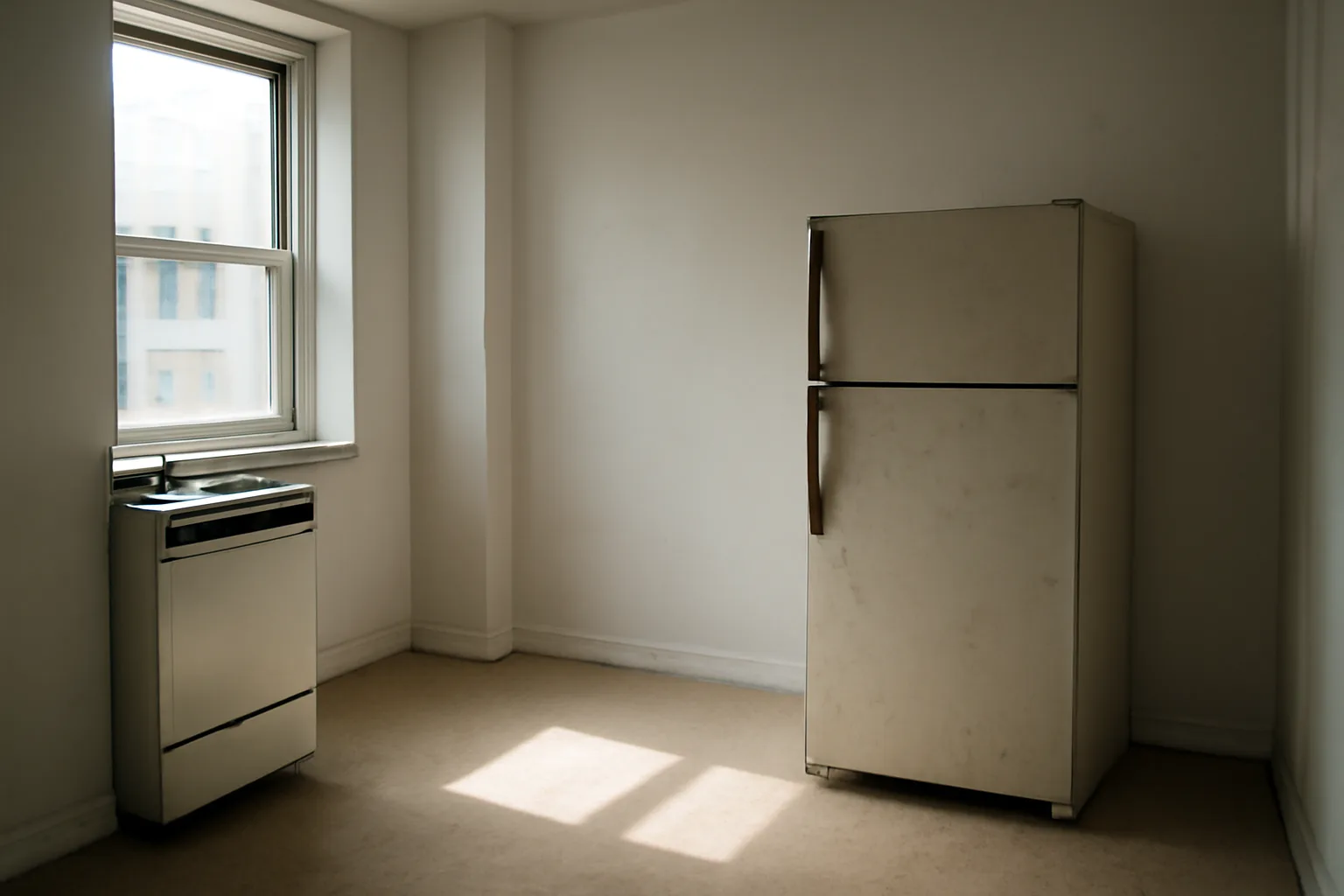
No federal or state law universally requires a landlord to provide a refrigerator. It depends on local housing codes: some cities count a fridge as a required habitability fixture (like a stove or heat), others don't. Check your city's rental housing code or ask your local rental licensing office before you assume either way.
is a landlord required to provide a refrigerator?
Mostly, no. There's no federal statute that requires a rental unit to come with a refrigerator. Federal housing law, including the Fair Housing Act, deals with discrimination in housing, not appliance requirements [1]. It doesn't touch what's inside the kitchen. State law usually doesn't require it either. Most state landlord-tenant statutes set out habitability requirements around things like working plumbing, heat, hot water, electrical systems, and structural safety. A refrigerator isn't usually on that list. California's implied warranty of habitability, for example, covers things like weatherproofing, plumbing, heating, and electrical systems, but doesn't specifically mandate a refrigerator [2]. Where it gets real is at the city level. A lot of local housing codes, especially in cities with mandatory rental registration or inspection programs, do require a working refrigerator and stove as baseline equipment for a unit to be legally rented. That means the honest answer is "it depends on your zip code," and the only way to know for sure is to pull up your specific city's housing or property maintenance code. A good rule: if the property has always had a fridge and the lease doesn't say otherwise, tenants usually expect one to stay. If you're renting an empty unit and want to skip providing one, say so in writing, clearly, before signing anything.
which cities require landlords to provide a refrigerator?
Some cities that run mandatory rental licensing or inspection programs treat a refrigerator as a required fixture, similar to a working stove or water heater. This usually comes out of a local property maintenance code, often based on or adapted from the International Property Maintenance Code (IPMC). The IPMC itself, in the version widely adopted by many jurisdictions, requires that "every kitchen shall be equipped with... a stove or range, refrigerator..." as part of minimum kitchen facility requirements in section 505 (the exact numbering shifts by edition and by how the city amended it) [3]. Cities that adopt the IPMC wholesale, or adopt something close to it, often inherit this requirement without landlords realizing it. Other cities strip that language out or amend it, treating the refrigerator as tenant-supplied personal property, same as a microwave or a toaster. There's no master list, because every city rewrites its own property maintenance code, and it changes on its own timeline. What this means practically: don't Google "does my state require landlords to provide fridges" and stop there. Pull your specific city's rental housing code or ask your local rental licensing or code enforcement office directly. If your city requires annual or pre-lease inspections, the inspection checklist itself will usually tell you whether a refrigerator is a pass/fail item.
what happens if a required refrigerator breaks or is missing during an inspection?
If your city's code counts the fridge as required equipment, a broken or missing refrigerator is typically written up the same as a broken stove or a leaking pipe: a code violation with a correction deadline. The specifics (how many days you get to fix it, whether it's a warning first or a straight fine) vary hugely by city, so confirm with your city rental licensing office what the actual timeline and penalty schedule look like for your jurisdiction. Some cities issue a notice of violation with 10 to 30 days to correct, others move faster if the issue affects immediate health or safety (a completely non-functioning fridge with food spoiling might qualify). Repeat or unaddressed violations can escalate to daily fines in some municipalities, and in the worst cases to a suspended rental license, meaning you legally can't rent the unit until it's fixed. If you're not sure whether your city treats the fridge as required, the safest move before any scheduled inspection is to check the actual walk-through checklist your city inspector uses. Many cities post this as part of their rental licensing packet. If a refrigerator line item exists on that checklist, treat it as required, full stop, regardless of what your lease says.
who is responsible for a rental property walk-through inspection in California?
In California, responsibility splits by inspection type. For a move-in or move-out walk-through under the security deposit statute, the landlord (or their agent) does the inspection, and the tenant has the right to be present. California Civil Code Section 1950.5 gives tenants the right to request an initial move-out inspection before the final one, so they can fix issues and avoid deductions [2]. For code compliance inspections (habitability, health and safety), it's a city or county building/code enforcement inspector, not the landlord, who conducts the review. Some California cities, like Los Angeles under its Systematic Code Enforcement Program (SCEP), require periodic proactive inspections of rental units regardless of complaints [4]. Others only inspect rentals reactively, after a tenant complaint. So the answer really depends on which walk-through you mean. Deposit-related walk-throughs: landlord conducts it, tenant can attend. Code enforcement or licensing inspections: a city inspector conducts it, and the landlord (or a representative) needs to be present to let them in and address findings on the spot.
what can a landlord look at during an inspection?
During a routine habitability or lease-compliance inspection, a landlord can generally check things tied to property condition and lease compliance: smoke detector function, HVAC condition, plumbing leaks, signs of unauthorized occupants or pets, hoarding or excessive clutter that creates a fire hazard, visible pest issues, and unauthorized alterations to the unit. What a landlord generally can't do: search through personal belongings, closets, or drawers unrelated to a maintenance issue, show up without proper notice (see the next section), or use the inspection as cover to harass a tenant or retaliate against one who filed a complaint. Many states, including California, require landlords to give reasonable notice, typically 24 hours in writing, before entering for a non-emergency inspection [2]. Inspectors from the city, doing a code enforcement or rental licensing inspection, generally check for things tied to the local housing code: working smoke and carbon monoxide detectors, secure locks, functioning heat, hot water, no exposed wiring, structural issues (cracked stairs, unsafe railings), pest infestation, and whether required appliances like a stove or refrigerator are present and working, if your city's code requires them. If you're prepping for a city rental inspection and want a clear walk-through of what's typically on the checklist for your municipality, our $79 City Rental License & Inspection Prep Packet walks through common inspection categories city by city, so you're not guessing what the inspector will flag.
how much notice does a landlord have to give before entering a rental unit?
| California | 24 hours (presumed reasonable) | Cal. Civ. Code Section 1954 [5] | |
|---|---|---|---|
| Texas | No statewide statutory minimum, lease usually controls | Tex. Prop. Code Chapter 92 [6] | |
| Florida | 12 hours | Fla. Stat. Section 83.53 [7] | |
| Washington | 2 days (48 hours) | RCW 59.18.150 [8] | Emergencies (fire, flooding, gas leak) are the standard exception. Landlords can enter without advance notice when there's an immediate threat to health, safety, or the property itself. Outside emergencies, entering without proper notice can expose a landlord to a tenant claim of illegal entry or even, in some states, damages under the landlord-tenant statute. |
Most states require some form of advance notice for non-emergency entry, and the most common standard is 24 hours written notice. California requires "reasonable notice," and the law presumes 24 hours is reasonable under Civil Code Section 1954 [5]. Other states set their own numbers. Here's a rough sample, and you should confirm the current figure for your specific state because these do get amended: | State | Typical notice required | Statute |
what a landlord cannot do in Ohio
Ohio's landlord-tenant law, codified mainly in Ohio Revised Code Chapter 5321, sets out several things landlords can't do. A landlord can't shut off a tenant's utilities, change the locks, or remove a tenant's belongings to force them out. This is illegal "self-help eviction" and Ohio law requires landlords to go through the courts instead [9]. Ohio Revised Code Section 5321.04 requires landlords to maintain the unit in a safe, habitable condition: keeping common areas safe, maintaining electrical, plumbing, heating, and hot water systems in good working order, and complying with local housing, health, and safety codes [10]. A landlord in Ohio also can't retaliate against a tenant for reporting a code violation or joining a tenant union. That protection is explicit in Ohio Revised Code Section 5321.02 [11]. Ohio landlords also need to give reasonable notice before entering an occupied unit for non-emergency purposes, generally interpreted as 24 hours under most local court guidance, though the statute itself uses the word "reasonable" rather than naming a specific number [10]. And a landlord can't refuse to return a security deposit without an itemized list of deductions if the tenant asks. Ohio law under Section 5321.16 gives landlords 30 days to return the deposit or provide a written, itemized statement of any deductions .
what rights do tenants have without a lease?
A tenant without a written lease still has rights. If someone's been paying rent and living in a unit with the landlord's knowledge, most states treat that as a month-to-month tenancy by default, governed by the state's general landlord-tenant statute rather than a specific written agreement [6]. That means habitability protections still apply. The landlord still has to maintain the unit in livable condition, still can't do a lockout or utility shutoff to force someone out, and still generally owes some minimum notice period (commonly 30 days, though this varies by state and by how long the tenant has lived there) before ending the tenancy or raising rent. What a tenant without a lease loses is the certainty a written lease provides: a fixed rent amount for a set term, a defined move-out date, and specific terms around things like pet policies, subletting, or who pays for what repairs. Without that paper trail, disputes tend to default to "what does state law say" rather than "what did we agree to," which can cut either way depending on the state. If you're a tenant in this situation and want a plainer breakdown of what protections apply, see our guide on tenant rights and renters rights.
why do landlords require renters insurance?
Landlords require renters insurance mostly to shift liability and property risk off themselves. A standard landlord insurance policy covers the building itself but generally doesn't cover a tenant's personal belongings, and it often doesn't fully cover liability if a tenant's guest gets hurt inside the unit or if the tenant accidentally causes damage (a kitchen fire, an overflowing tub that floods a downstairs unit). Renters insurance typically covers the tenant's personal property, provides liability coverage if the tenant is at fault for damage or injury, and often covers additional living expenses if the unit becomes temporarily uninhabitable. Requiring it as a lease condition means if a tenant's negligence causes a fire or a flood, their policy, not the landlord's, is first in line to pay for the damage. It's legal in most states for a landlord to require renters insurance as a lease condition, as long as it's disclosed clearly before signing and doesn't function as a way to discriminate against protected classes. Some cities and states, though, restrict how landlords can enforce this (for instance, some require landlords to accept a tenant's own policy rather than forcing a specific insurer). Check your state's landlord-tenant statute or your city's rental housing code for specifics.
what is landlording, and what is a landlord?
A landlord is a person or entity that owns residential or commercial property and rents it to someone else (a tenant) in exchange for regular payment, usually monthly rent. "Landlording" is the informal term for the actual work of managing that arrangement: collecting rent, handling maintenance requests, dealing with turnover between tenants, staying compliant with local housing codes, and handling the legal side of leases, notices, and (for it) evictions. Landlording isn't passive. Even a landlord with a single rental unit is on the hook for habitability standards under state law, for following fair housing rules under federal and state statutes, and often for local rental registration or licensing requirements if their city runs one. Many first-time landlords underestimate how much of the job is administrative and legal compliance rather than just handing over keys and cashing checks. Small landlords, especially those with one to ten units, often self-manage rather than hiring a property management company. That means they're personally responsible for knowing their state's notice requirements, their city's inspection cycle, and their local licensing renewal dates. That's a lot to track without a system, and it's exactly where the paperwork side of the job tends to trip people up.
how do you become a landlord, and how do you actually be one?
Becoming a landlord starts with acquiring a property you intend to rent out, whether that's buying one specifically as an investment or converting a home you already own. From there, most cities and some states require you to register the rental, sometimes obtain a rental license, and in many mandatory-inspection cities, pass an initial habitability inspection before you can legally rent the unit. Here's a rough sequence that applies broadly, though the order and specific steps depend heavily on your city: 1. Confirm zoning allows rental use for the property. 2. Check whether your city requires rental registration or licensing (many mandatory-licensing cities require this before you advertise the unit). 3. Get the unit inspected if your city requires it, and fix anything flagged before your license is issued. 4. Set your lease terms in line with state landlord-tenant law (notice periods, security deposit limits, disclosures). 5. Screen tenants consistently with fair housing law, federal and state. 6. Collect the security deposit within your state's legal cap and hold it per your state's rules (some states require a separate account, some require interest payments). 7. Sign the lease, document the unit's condition at move-in, and keep records. Being a good landlord day-to-day is mostly about responsiveness and paperwork discipline: responding to repair requests within the timeline your state's habitability law implies (often "reasonable time," sometimes a specific number of days for serious issues like no heat), keeping maintenance records, and renewing your rental license or registration before it lapses. Missing a license renewal deadline is one of the most common (and avoidable) ways small landlords end up with fines they didn't see coming. If you're trying to get organized ahead of a renewal or a first inspection, our $79 City Rental License & Inspection Prep Packet is built to walk a 1-10 unit landlord through exactly what a specific city expects, instead of guessing from a generic checklist.
Frequently asked questions
Is a landlord legally required to provide a refrigerator?
Usually not under federal or state law, but it depends on your city. Some cities that adopt the International Property Maintenance Code, or their own version of it, require a refrigerator as a minimum kitchen fixture [3]. Others treat it as optional, tenant-supplied equipment. Check your specific city's rental housing code to know for sure.
Does a landlord have to fix a broken refrigerator if they provided one?
If the landlord supplied the fridge, most states and cities expect it to be repaired or replaced within a reasonable time, especially if your city's code lists a refrigerator as required equipment. "Reasonable time" isn't usually a fixed number of days by state statute; it's judged case by case, though some cities set specific correction windows for licensed rental inspections.
Can a landlord require tenants to buy their own refrigerator?
Yes, in cities where a fridge isn't a required fixture, a landlord can rent the unit without one and let the tenant supply their own. This should be stated clearly in the lease before signing, so there's no dispute about who owns or maintains the appliance later.
How do you become a landlord?
You acquire a rental property, confirm local zoning allows renting it, register or license the unit if your city requires it, get any required inspection passed, set lease terms consistent with your state's landlord-tenant law, screen tenants under fair housing rules, and collect a deposit within your state's legal limits before signing a lease.
Who is responsible for a rental property walk-through inspection in California?
For move-in/move-out deposit inspections, the landlord conducts the walk-through and the tenant has the right to be present, per California Civil Code Section 1950.5 [2]. For code enforcement or licensing inspections, a city building or code inspector conducts it, and the landlord needs to provide access.
What is landlording?
Landlording is the ongoing work of owning and managing a rental property: collecting rent, handling repairs, staying compliant with habitability and fair housing law, and keeping up with local licensing or registration requirements. It's more administrative than most new landlords expect, even with just one unit.
What is a landlord?
A landlord is the owner (person or entity) of residential or commercial property who rents that property to a tenant for regular payment. Landlords are legally responsible for habitability, following fair housing law, and complying with any local rental registration, licensing, or inspection requirements in their city.
What rights do tenants have without a written lease?
A tenant without a written lease typically has a month-to-month tenancy under state law, which still requires habitability, protects against illegal lockouts or utility shutoffs, and generally requires a minimum notice period, often around 30 days, before ending the tenancy. State landlord-tenant statutes govern in the absence of a written agreement.
Why do landlords require renters insurance?
Landlords require it mainly to cover risks their own policy doesn't: a tenant's personal belongings and liability for damage or injury the tenant causes. Requiring renters insurance shifts that financial risk to the tenant's policy instead of the landlord's, and it's legal in most states as long as it's disclosed clearly in the lease.
How much notice does a landlord have to give before entering a unit?
Most states require 24 hours written notice for non-emergency entry, though the exact standard varies: Florida uses 12 hours [7], Washington requires two days [8], and Texas mostly defers to the lease itself [6]. Emergencies (fire, flooding, gas leaks) are typically exempt from advance notice requirements.
What can a landlord look at during an inspection?
A landlord can generally check maintenance and lease-compliance issues: smoke detectors, plumbing, HVAC condition, unauthorized occupants or pets, and hazards like clutter or pest signs. A landlord generally can't search personal belongings unrelated to a maintenance concern or use an inspection to harass or retaliate against a tenant.
What can a landlord not do in Ohio?
Ohio landlords can't perform a self-help eviction (changing locks, shutting off utilities, or removing belongings to force a tenant out), can't retaliate against a tenant for reporting code violations, and must return a security deposit or itemized deduction list within 30 days under Ohio Revised Code Section 5321.16 [12].
If my lease doesn't mention a refrigerator, do I still have to provide one?
It depends on local code and on move-in condition. If the unit already had a fridge when the tenant moved in, most states expect it to stay functional as part of ordinary habitability, even if the lease doesn't specifically mention it. If the unit never had one, silence in the lease usually means the tenant supplies their own, but confirm with your city's housing code since some require one regardless.
Sources
- U.S. Department of Housing and Urban Development, Fair Housing Act overview: Federal Fair Housing Act governs housing discrimination, not appliance requirements
- California Civil Code Section 1950.5: California tenants have the right to an initial move-out inspection before the final one
- International Code Council, International Property Maintenance Code, Section 505 (Plumbing/Kitchen Facilities): IPMC sets minimum kitchen facility requirements including a refrigerator in adopting jurisdictions
- California Civil Code Section 1954: California presumes 24 hours written notice is reasonable for landlord entry
- Texas Property Code Chapter 92: Texas landlord-tenant law does not set a statewide minimum entry notice period
- Florida Statutes Section 83.53: Florida requires 12 hours notice for landlord entry to inspect the premises
- Revised Code of Washington 59.18.150: Washington requires two days notice before landlord entry
- Ohio Revised Code Section 5321.03: Ohio law prohibits self-help eviction methods like lockouts and utility shutoffs
- Ohio Revised Code Section 5321.04: Ohio landlords must maintain the unit's electrical, plumbing, heating, and hot water systems and comply with housing codes
- Ohio Revised Code Section 5321.02: Ohio law prohibits landlord retaliation against tenants who report code violations
- Ohio Revised Code Section 5321.16: Ohio landlords must return a security deposit or itemized deduction statement within 30 days