Last updated 2026-07-25
TL;DR
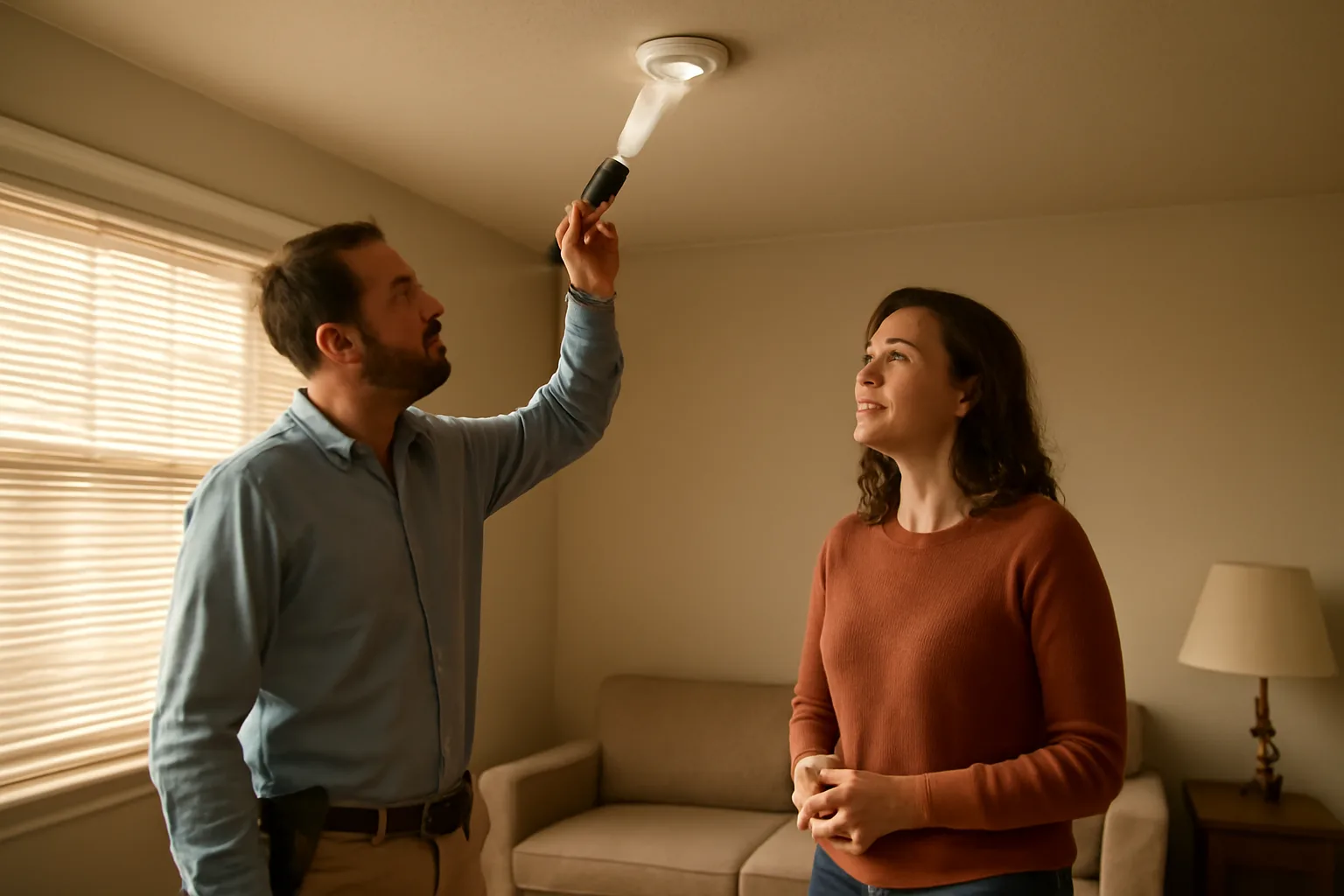
A rental house inspection checks that a unit meets local health, safety, and building codes, usually tied to a city rental license or registration program. Landlords typically must give 24 to 48 hours notice before entering, inspectors look at smoke detectors, plumbing, electrical, and structural issues, and tenants without a lease still have most standard legal protections.
What is a rental house inspection?
A rental house inspection is a walkthrough, usually done by a city code enforcement officer or a licensed private inspector, to confirm a rental unit meets minimum health and safety standards. Cities that run mandatory rental licensing programs typically require an inspection before issuing or renewing a license, and again on some renewal cycle (often every one to three years, though this varies a lot by city). The inspection is not the same thing as a private landlord walkthrough for wear-and-tear or move-in/move-out condition. It's a government check against a local housing code, sometimes based on the International Property Maintenance Code (IPMC), which many cities adopt wholesale or with local amendments [1]. The IPMC covers things like minimum ceiling heights, working plumbing fixtures, smoke alarm placement, and structural soundness. If your city sent you a notice about a rental inspection, it's almost certainly tied to a local ordinance, not state law. Confirm the specific triggers, fees, and cycle with your city rental licensing office, because two cities twenty miles apart can have completely different rules.
How to become a landlord (the basics before you rent out a house)
Becoming a landlord starts before you ever screen a tenant. You need to check whether your city or county requires a rental license or registration for the property, get landlord-friendly insurance (not a standard homeowner's policy), and understand your state's basic landlord-tenant law on security deposits, notice periods, and habitability. Most states have a statutory implied warranty of habitability, meaning a rental unit must be fit to live in regardless of what the lease says. Courts and statutes generally require working plumbing, heat, electricity, and a structurally sound building. Some states also require landlords to register with a local agency before collecting rent legally at all, and skipping that step can block you from filing an eviction later. Here's the realistic order of operations: confirm zoning allows rental use, register or license the property if your city requires it, get the property inspected if that's part of licensing, secure insurance, then screen tenants and sign a lease. Doing it in a different order (renting first, licensing later) is how landlords end up with fines and back-dated license fees.
What is landlording, exactly?
Landlording is the ongoing job of owning and managing a rental property: collecting rent, maintaining the unit, handling repairs, complying with local codes, and managing the tenant relationship. It's part property management, part compliance work, part customer service. A lot of new landlords underestimate the compliance side. Landlording isn't just owning a house and collecting rent. It includes responding to repair requests within a reasonable time (many states set default timelines, often 14 to 30 days for non-emergency repairs, shorter for things like no heat or no water), keeping up with rental license renewals, and knowing when you're required to let an inspector in. If you own one rental house, landlording might take a few hours a month. If your city has a mandatory inspection program, add in the paperwork: license applications, inspection scheduling, re-inspection fees if you fail the first pass, and keeping records of repairs for your own protection.
What is a landlord under the law?
Legally, a landlord is the person or entity that owns a residential property and rents it to a tenant in exchange for rent, taking on the legal duties that come with that relationship. Those duties usually include maintaining habitability, honoring the lease terms, returning security deposits within state deadlines, and giving proper notice before entry or termination. The legal definition matters because it triggers obligations you can't waive away in a lease. Most states won't let a landlord contract out of the implied warranty of habitability, even if the tenant "agrees" to accept a unit with no working heat. If you're a landlord under your state's statute, you owe those baseline duties whether you call yourself a landlord, a property manager, or an LLC member. Some cities also define "landlord" broadly enough to include anyone renting out a room, an accessory dwelling unit, or a single-family home on a short-term basis past a certain number of days per year, which can pull you into rental licensing requirements you didn't expect. Check your tenants rights page for your city and confirm scope with your local rental licensing office.
Who is responsible for the rental property walkthrough inspection in California?
In California, the landlord is generally responsible for arranging and paying for any move-in/move-out condition inspections, and for scheduling any city-required rental inspection if the property is in a jurisdiction with a rental inspection or licensing program. Many California cities, including parts of Los Angeles under its Systematic Code Enforcement Program, require periodic inspections of rental units [2]. California Civil Code Section 1950.5 requires landlords to offer tenants an initial inspection before move-out, if the landlord intends to withhold any part of the security deposit for repairs or cleaning, giving the tenant a chance to fix issues themselves first. The statute states the landlord must give the tenant "reasonable notice of no less than 48 hours" for this initial inspection unless the tenant waives that notice [3]. For code-enforcement-driven inspections tied to a rental registry, it's the landlord (as the property owner) who is legally responsible for compliance, scheduling access, and paying any inspection fee, even though the tenant has to allow entry. If a tenant refuses reasonable access, most California cities still hold the landlord responsible for eventually getting the inspection done, so document your outreach attempts.
How much notice does a landlord have to give before an inspection?
| California | 24 hrs (presumed reasonable) | Civil Code 1954 [4] |
|---|---|---|
| California (move-out inspection) | 48 hrs | Civil Code 1950.5 [3] |
| Florida | "Reasonable," 12 hrs presumed reasonable for repairs | Fla. Stat. 83.53 [5] |
| Most other states | 24 hrs common default | Confirm with your city rental licensing office |
Most states require at least 24 hours notice before a landlord or their agent enters a rental unit for a non-emergency inspection or repair, though a handful require 48 hours and a few don't set a specific number at all, defaulting to "reasonable notice." California's Civil Code Section 1954 requires "reasonable notice in writing," and specifies that 24 hours is presumed reasonable in most circumstances [4]. For the pre-move-out habitability-related initial inspection specifically, the state requires at least 48 hours notice under Civil Code 1950.5 [3]. Florida's landlord-tenant statute (Chapter 83) doesn't set a fixed hour count but requires the landlord to give "reasonable notice" and enter at "reasonable times," with 12 hours notice presumed reasonable for the purpose of repairs [5]. City-required rental inspections often layer on top of these general entry-notice rules. Some cities require a separate notice (sometimes 7 to 14 days) when scheduling the actual code-compliance inspection, distinct from the shorter routine-entry notice. Always check both your state's entry statute and your city's rental inspection program rules, since they can differ. | Jurisdiction | Notice for routine entry | Source |
What can a landlord look at during an inspection?
During a rental inspection, whether it's a city code-compliance check or a landlord's own walkthrough, the inspector or landlord can generally look at anything related to the condition and safety of the property: smoke and carbon monoxide detectors, electrical outlets and panels, plumbing fixtures, HVAC systems, windows and doors, stairs and railings, and signs of pest infestation or water damage. What they generally can't do is search through personal belongings, closets, or private areas unrelated to habitability or code compliance, unless there's a specific safety concern (like checking a smoke detector inside a bedroom, which does require brief entry into that room). The inspection is about the condition of the structure and systems, not an excuse to go through drawers or photograph personal items. A typical municipal rental inspection checklist, closely mirroring the International Property Maintenance Code, covers: working smoke alarms on every level and near sleeping areas, at least one carbon monoxide detector if there's fuel-burning equipment or an attached garage, no exposed wiring, functioning locks on all exterior doors, adequate egress from bedrooms (a window large enough to climb through in a fire), no active leaks, and no structural hazards like rotted stairs or unstable railings [1]. If you're prepping for a city inspection, walk the unit yourself first using your city's published checklist (most rental licensing offices post one online). Fixing the obvious stuff, dead smoke detector batteries, a loose railing, a leaking faucet, before the inspector shows up saves you a re-inspection fee and a second trip. Some landlords use a structured prep packet to keep track of what each city's program actually requires; our $79 City Rental License & Inspection Prep Packet is built around exactly that gap between generic advice and your specific city's checklist.
What rights do tenants have without a lease?
Tenants without a written lease, sometimes called month-to-month or at-will tenants, still have most of the same legal protections as tenants with a signed lease. This includes the right to habitable housing, protection from illegal lockouts, the right to proper notice before eviction, and privacy rights around landlord entry. Without a written lease, the tenancy usually defaults to a month-to-month arrangement governed by state statute rather than a private contract. That means the landlord generally has to give the same statutory notice to end the tenancy as they would to raise rent, commonly 30 days, though some states and cities require 60 or 90 days depending on how long the tenant has lived there or local just-cause eviction rules. A tenant without a lease can't be evicted without going through the same court process (unlawful detainer or similar) as a tenant with a lease. Landlords also still owe the implied warranty of habitability and standard entry-notice rules even in a no-lease, oral, or month-to-month tenancy. If you're a landlord operating without written leases, that's a real liability gap worth closing, not because it removes tenant rights (it doesn't) but because it removes your own documentation if a dispute lands in court. See tenant rights and renters rights for state-specific breakdowns.
Why do landlords require renters insurance?
Landlords require renters insurance mainly to shift liability for the tenant's personal property and for injuries or damage the tenant causes, since a standard landlord dwelling policy typically does not cover a tenant's belongings or the tenant's personal liability. If a tenant's cooking fire damages the unit, or a tenant's dog bites a guest, the landlord's own property insurance may cover structural repair but generally won't cover the tenant's liability exposure or replace the tenant's ruined furniture. Requiring renters insurance (often with a minimum liability limit, commonly $100,000, and sometimes naming the landlord as an "interested party" on the policy) pushes that risk onto a policy designed for it. It's a lease clause, not a universal legal requirement. Some cities and public housing programs do mandate it for subsidized units, but for private market-rate rentals it's up to the landlord to require it in the lease and verify coverage stays active, often via annual proof-of-insurance requests.
What can't a landlord do in Ohio?
Under Ohio Revised Code Chapter 5321, a landlord cannot enter a tenant's unit without reasonable notice (Ohio courts and the statute generally treat 24 hours as reasonable) except in genuine emergencies, cannot shut off utilities or change locks to force a tenant out (self-help eviction is illegal statewide), and cannot retaliate against a tenant for reporting code violations or exercising legal rights [6]. Ohio Revised Code 5321.04 requires landlords to keep the premises in a fit and habitable condition, comply with building and housing codes materially affecting health and safety, keep common areas safe, and maintain electrical, plumbing, heating, and other systems in good working order [7]. A landlord who fails to do this can face a tenant's rent escrow deposit action in municipal or county court rather than eviction going forward until repairs are made. Ohio landlords also cannot include certain clauses in a lease, like a waiver of the tenant's right to a habitable unit or a waiver of the landlord's duty to comply with the fit-for-habitation statute; ORC 5321.13 voids such waivers as against public policy . And self-help remedies (removing doors, cutting off water) are barred; the landlord has to use the court eviction process (forcible entry and detainer) even if rent is unpaid.
How to be a landlord (staying compliant, more than collecting rent)
Being a landlord day-to-day comes down to four repeating jobs: collecting rent and tracking it, handling maintenance requests promptly, keeping the property in code, and renewing whatever registrations or licenses your city requires on schedule. The part that trips up small landlords, especially first-timers with one or two units, is the licensing and inspection cycle. It's not a one-time thing. Many cities require annual or biennial rental license renewal, and missing a renewal deadline can trigger fines that start in the low hundreds of dollars and escalate with each missed notice, sometimes with daily accrual after a certain point. Confirm the exact fee schedule and grace period with your city rental licensing office, since these numbers are set locally and change. A practical habit: put your renewal date on a calendar with a 60-day lead reminder, keep a folder (digital or paper) with your last passed inspection report, smoke detector installation dates, and any repair receipts, and walk the unit yourself against your city's published checklist before the official inspection. Landlords managing more than one unit across different cities often find this is where a structured system pays for itself, since each city's checklist, fee, and cycle is different and easy to lose track of.
Frequently asked questions
How much does a rental house inspection typically cost?
City rental inspection fees commonly range from about $50 to $300 per unit, though some cities charge more for larger multi-unit buildings or for re-inspections after a failed first visit. Fees are set locally, so confirm the exact amount and any re-inspection charge with your city's rental licensing office before budgeting.
What happens if a landlord fails a rental inspection?
The landlord typically gets a written notice listing violations and a deadline (often 30 to 60 days) to fix them, then a re-inspection, sometimes for an added fee. Unresolved violations can lead to fines, license denial or revocation, and in serious health/safety cases, the city can restrict occupancy until repairs are verified.
Can a tenant refuse to allow a rental inspection?
A tenant can't indefinitely block a legally required inspection, but they can require the landlord to follow proper notice procedures. If a tenant refuses reasonable, properly-noticed access, the landlord may need to pursue access through the lease terms or, in persistent cases, through the local code office or court.
Do landlords need a license to rent out one house?
It depends entirely on the city. Many mandatory rental-licensing municipalities require a license for even a single rental unit, while other cities exempt owner-occupied duplexes or small properties below a certain unit count. There's no universal rule; confirm directly with your specific city rental licensing office.
What's the difference between a rental inspection and a move-in walkthrough?
A rental inspection (city code-compliance check) verifies the unit meets health and safety code, usually tied to licensing. A move-in walkthrough is a private documentation step between landlord and tenant recording the unit's condition, used later to fairly allocate security deposit deductions. They serve different purposes and different parties conduct them.
How often do cities require rental inspections?
Cycles vary widely: some cities inspect every year, others every two or three years, and some only inspect at tenant turnover or after a complaint. There is no national standard; the frequency is set entirely by local ordinance, so check your specific city's rental licensing program page.
Can a landlord enter without notice in an emergency?
Yes. Virtually every state's landlord-tenant statute allows entry without advance notice in a genuine emergency, such as a fire, gas leak, flooding, or other situation posing immediate danger to life or property. Outside emergencies, standard notice rules (commonly 24 to 48 hours) apply.
What items fail a rental inspection most often?
Common fail points on municipal rental inspections include missing or dead-battery smoke detectors, lack of a carbon monoxide detector where required, exposed or unsafe wiring, broken exterior door locks, water leaks, pest evidence, and blocked or inadequate bedroom egress windows. Most of these are cheap, fast fixes if caught before the inspector arrives.
Do landlords have to give tenants a copy of the inspection report?
Requirements vary by city; some rental licensing ordinances require the landlord to post or provide the inspection results to current tenants, others don't. There's no universal rule, so check your city's specific rental inspection ordinance for the disclosure requirement.
Is renters insurance legally required by the landlord or by law?
It's not required by state law in most places; it's a lease requirement the landlord chooses to impose. A minority of subsidized or public housing programs mandate it. Private landlords typically add it as a lease clause rather than relying on any statute.
What can't a landlord ask during a rental application in most states?
Federal Fair Housing Act protections bar questions or screening criteria based on race, color, national origin, religion, sex, familial status, or disability, per 42 U.S.C. 3604. Many states and cities add protected classes like source of income, sexual orientation, or age, so check your state's fair housing statute too.
Can a landlord charge a fee for a rental inspection re-visit?
Many cities do charge a re-inspection fee if the property fails the first inspection and needs a follow-up visit, often in the range of $50 to $150, though this is set locally. Confirm the specific re-inspection fee and how many free follow-ups (if any) your city allows with your rental licensing office.
Sources
- International Code Council, International Property Maintenance Code: Many cities adopt the IPMC's minimum housing safety standards (smoke alarms, egress, structural soundness) as the basis for rental inspections
- California Legislative Information, Civil Code Section 1950.5: California landlords must offer an initial move-out inspection with at least 48 hours notice before withholding security deposit for repairs
- California Legislative Information, Civil Code Section 1954: California requires reasonable written notice before landlord entry, with 24 hours presumed reasonable
- Florida Legislature, Florida Statutes Section 83.53: Florida requires reasonable notice for landlord entry, with 12 hours presumed reasonable for repairs
- Ohio Laws, Revised Code Section 5321.05: Ohio tenants have rights against landlord retaliation and improper entry
- Ohio Laws, Revised Code Section 5321.04: Ohio landlords must keep premises fit and habitable and comply with health and safety codes
- Ohio Laws, Revised Code Section 5321.13: Ohio voids lease clauses waiving a tenant's right to a habitable unit or the landlord's duty to maintain it