Last updated 2026-07-26
TL;DR
A routine rental inspection is a scheduled check of a rental unit for safety and code compliance, usually tied to a city's rental license or registration program. Most cities require 24 to 48 hours notice before entry. Inspectors look at smoke detectors, electrical, plumbing, and structural issues, not your housekeeping or belongings.
what is a routine rental inspection
A routine rental inspection is a scheduled visit, usually by a city code official or fire marshal, to confirm a rental unit meets minimum housing and safety standards. It is different from a move-in or move-out inspection, which is a private matter between landlord and tenant. Routine inspections are tied to government programs: rental licensing, registration renewal, or a periodic cycle set by city ordinance. Some cities inspect every unit every time a license renews (often every 1 to 3 years). Others use complaint-based inspections only, meaning nothing happens unless a tenant calls it in. A growing number use a hybrid: a first inspection when the unit is first licensed, then random sampling after that. The exact cycle depends entirely on your city's ordinance, so confirm with your city rental licensing office rather than assuming a national standard exists, because there isn't one [1]. The federal government does not run a rental inspection program for private housing. The closest thing is HUD's Uniform Physical Condition Standards (UPCS), which applies to federally assisted housing like Section 8 and public housing, not typical market-rate rentals [2]. If you don't take housing vouchers, your inspection rules come entirely from your city or county, not from HUD.
who is responsible for the rental property walk through inspection in california
In California, responsibility for a routine rental inspection depends on whether it's a government code inspection or a private walk-through. For government inspections, the city or county code enforcement office runs the process under its local rental inspection or Systematic Code Enforcement Program (many California cities, including Los Angeles, use versions of this model under LAMC provisions for the Systematic Code Enforcement Program) [3]. The landlord is legally responsible for granting access and making sure the unit is inspection-ready; the tenant cannot be forced to be present, but most cities require the landlord to give proper notice. For a private move-in or move-out walk-through (not a government inspection), California Civil Code Section 1950.5 governs the landlord's right to inspect before move-out to identify repair needs, and requires the landlord to give the tenant reasonable notice and a chance to fix issues before deductions from a security deposit [4]. That statute specifically covers the pre-move-out inspection tied to deposit deductions, not routine city code inspections. Bottom line for California landlords: the landlord arranges and is present for (or delegates to a property manager) any government-mandated inspection, and the landlord also holds responsibility for the pre-move-out walk-through under Civil Code 1950.5. The tenant's job is to allow reasonable access after proper notice, not to conduct or schedule the inspection themselves.
how much notice does a landlord have to give before an inspection
Most states require at least 24 hours notice before a landlord or inspector enters an occupied rental unit for a non-emergency reason. California's Civil Code Section 1954 sets 24 hours as "presumed to be reasonable notice in absence of evidence to the contrary" for entry to make repairs or show the unit, and requires notice in writing except in limited situations [5]. Some cities layer on additional notice rules for government code inspections specifically, on top of whatever the state landlord-tenant statute requires. Here's where people get confused: state law governs private landlord entry (repairs, showings, safety checks). City ordinance governs government inspection notice, which is often separate and sometimes longer. A city rental license inspection might require 48 hours or more, or a specific mailed notice period before the first scheduled visit. Always check both: your state's landlord-tenant entry statute and your city's specific rental inspection notice rule. Confirm the exact number with your city rental licensing office because it varies by jurisdiction and even by inspection type within the same city. Emergencies are the exception everywhere. If there's a burst pipe, gas leak, or fire, landlords (and often inspectors responding to a complaint) can enter without advance notice under nearly every state's law, including California's Civil Code 1954 emergency exception [5].
what can a landlord look at during an inspection
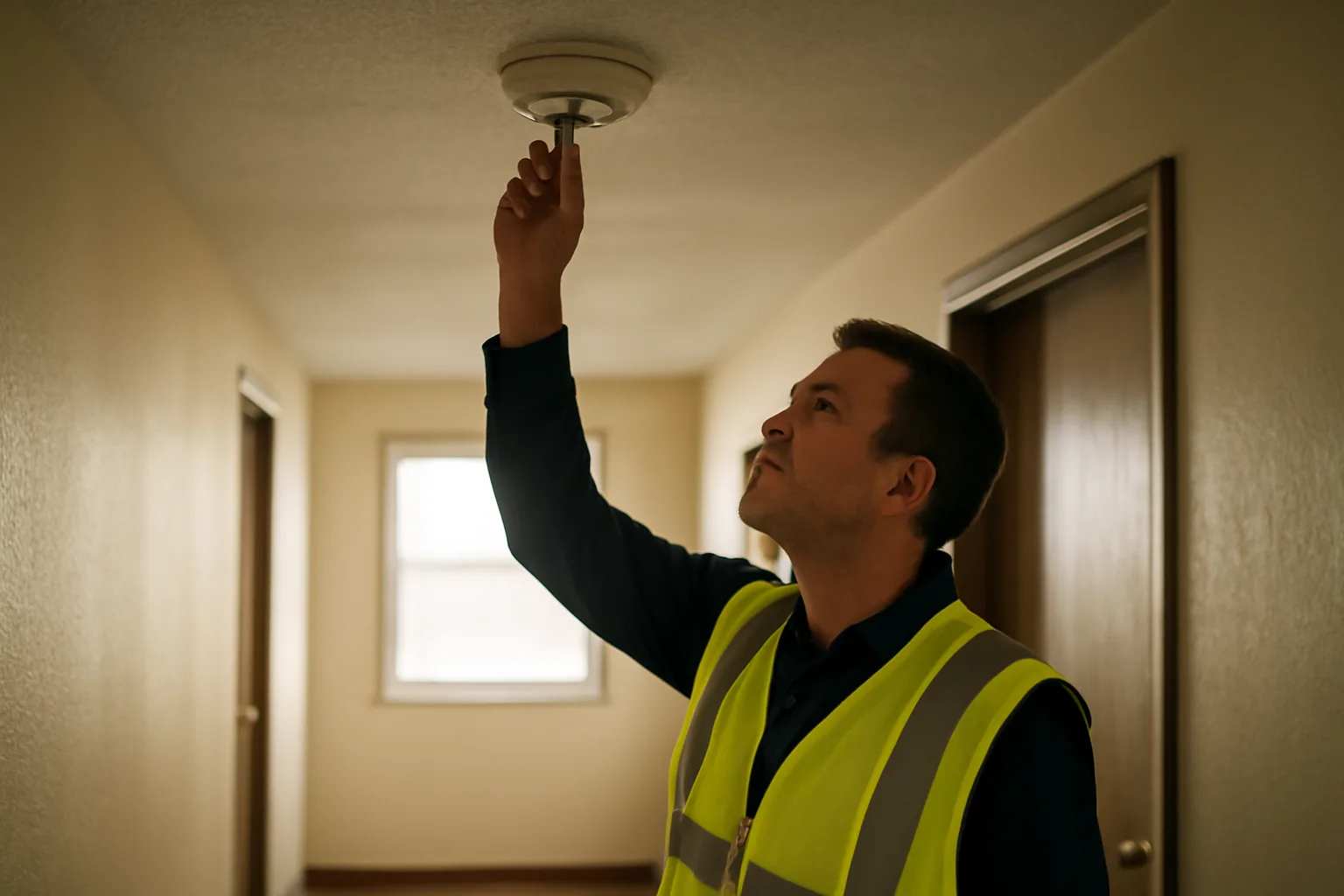
A routine inspection, whether run by the city or by the landlord, is supposed to focus on safety, maintenance, and code compliance items, not on a tenant's belongings, housekeeping style, or lifestyle choices. Typical items an inspector or landlord checks: - Smoke alarms and carbon monoxide detectors: presence, working batteries, correct placement
- Electrical: exposed wiring, overloaded outlets, missing GFCI outlets near water sources
- Plumbing: leaks, water damage, working hot water, functioning toilets and drains
- Structural: stairs, railings, window locks, door locks, ceiling or wall damage
- Heating: working furnace or heat source, especially before winter in cold-climate cities
- Pest and mold signs: visible infestation or moisture damage
- Egress: windows that open in bedrooms, clear paths to exits A landlord conducting a private inspection under a state entry statute (like California's 1954, or similar laws in most states) generally can look at the same categories: things related to habitability, safety, and lease compliance. What a landlord should not do is search through personal belongings, closets, or drawers unless there's a specific maintenance reason (checking under a sink for a leak, for example). The purpose of entry has to match what the notice said. If the notice says "repair inspection," the landlord can't use the visit to catalog how the tenant is living. Government code inspectors are even more restricted: they're checking the physical structure against a code list, not evaluating cleanliness or personal property. Some cities specifically prohibit inspectors from citing tenants for clutter or decor unless it creates a fire or safety hazard (blocked exits, for example).
what a landlord cannot do in ohio
Ohio's landlord-tenant law, Ohio Revised Code Chapter 5321, sets out both landlord obligations and specific limits. Under ORC 5321.04, a landlord cannot enter the rental unit except at reasonable times and after giving the tenant "reasonable notice" of intent to enter, and entry is limited to specific purposes like inspection, repairs, or showing the unit to prospective tenants or buyers [6]. Ohio courts and tenant guides generally treat 24 hours as reasonable, though the statute itself doesn't name a specific number of hours, unlike California's 1954. Ohio landlords also cannot shut off utilities, change locks, or remove a tenant's belongings to force them out, a practice sometimes called self-help eviction. ORC 5321.15 specifically prohibits a landlord from using "force, threat, or menacing conduct" or from interrupting utility services to compel a tenant to leave [7]. Ohio landlords must use the formal eviction process through municipal or county court instead, whatever the reason for wanting the tenant out. Ohio landlords also cannot retaliate against a tenant for reporting a code violation or requesting repairs. ORC 5321.02 bars landlords from raising rent, decreasing services, or threatening eviction because a tenant complained to a government agency about a building, housing, or safety code violation [8]. If a tenant calls the city about a broken heater, a landlord who responds with a rent increase notice the next week is on very thin legal ice under that statute. Finally, an Ohio landlord who wants to enter for a routine safety or maintenance inspection still has to follow the same 5321.04 notice rule as any other non-emergency entry. There's no special "inspection exception" that lets an Ohio landlord skip notice just because it's a scheduled walk-through instead of a repair call.
what rights do tenants have without a lease
A tenant without a written lease, sometimes called a month-to-month or oral tenancy, still has nearly all the same legal protections as a tenant with a signed lease. Every state's landlord-tenant law applies regardless of whether there's a written agreement, as long as rent is being paid and accepted. That includes the right to a habitable unit, protection from illegal lockouts, and the same notice-before-entry rules covered above. What changes without a lease is mostly about term length and termination. A month-to-month tenant (with or without a written agreement) can typically be asked to leave with 30 days notice in most states, though some states and cities require more, especially for long-term tenants or in jurisdictions with just-cause eviction rules. The tenant likewise generally only needs to give 30 days notice to leave. A tenant without a lease still cannot be evicted without proper legal process. No state allows a landlord to change locks, remove belongings, or shut off utilities just because there's no written lease. The formal eviction process (court filing, judgment, sheriff-executed removal) applies the same way it would to a tenant with a 12-month lease. The absence of paper doesn't mean absence of rights; it just means the tenancy defaults to whatever your state's statutory rules say for periodic tenancies.
why do landlords require renters insurance
Landlords require renters insurance mostly to shift financial risk for the tenant's own belongings and liability, not to protect the landlord's building (that's what the landlord's own property insurance covers). A landlord's building insurance typically does not cover a tenant's furniture, electronics, or clothing if there's a fire, burst pipe, or theft. Without renters insurance, a tenant who loses everything in a fire has no coverage, and some tenants in that position have tried to argue the landlord should pay for it, even when the landlord's policy specifically excludes tenant property. Renters insurance also typically includes liability coverage, which matters if a tenant's dog bites a visitor, or the tenant accidentally causes a kitchen fire that damages a neighboring unit. That liability coverage protects the landlord indirectly: if the tenant carries their own liability insurance, the landlord's policy and legal exposure both benefit if there's a claim, since the tenant's insurer becomes the first line of defense instead of the landlord's. Most landlords who require it set a minimum liability limit, often somewhere between $100,000 and $300,000, and ask to be listed as an "interested party" on the policy so they get notified if it lapses. There's no federal or state law requiring renters insurance in most places (a handful of cities and some large apartment operators mandate it by lease clause), so this is a landlord policy choice enforced through the lease, not a legal requirement most tenants face by default.
what is landlording and what is a landlord
A landlord is a person or entity that owns residential or commercial property and rents it to someone else (the tenant) in exchange for regular payment, typically monthly rent. Landlording is the informal term for the practice and business of being a landlord: managing tenants, handling repairs, collecting rent, following local and state law, and (increasingly, in mandatory-licensing cities) keeping a rental registration or license current. Landlording covers a wide set of responsibilities that go beyond just collecting a check. A landlord has to keep the unit habitable under state and local housing codes, respond to repair requests within a reasonable time, follow strict rules around security deposits, give proper notice before entry, and, in cities with rental licensing programs, register the property and pass periodic inspections. Landlords in mandatory-licensing cities also typically pay an annual or biennial fee, ranging anywhere from under $50 per unit to several hundred dollars per unit depending on the city, and face fines for operating without a current license (some cities, like Los Angeles under its Rent Stabilization Ordinance registration and related programs, impose penalties and can bar rent collection or eviction filings until a property is properly registered) [3]. Small landlords, those with 1 to 10 units, generally handle landlording themselves rather than hiring a property management company, which means they're personally responsible for tracking every local deadline: license renewal, inspection scheduling, insurance requirements, and lease compliance. That's a meaningfully different job than owning a single owner-occupied home, because the legal duties attach to the rental relationship, more than to property ownership.
how to become a landlord and how to be a landlord
Becoming a landlord starts with acquiring a property to rent, but the legal and practical steps after that matter more than most new landlords expect. Here's the realistic sequence: 1. Confirm zoning allows rental use. Some residential zones restrict short-term or even long-term rentals; check with your city planning or zoning office before listing a unit. 2. Register or license the property if your city requires it. Many cities (particularly older, denser cities with aging housing stock) require a rental registration or license before you can legally rent, sometimes with an inspection tied to the first license. 3. Set up a lease that complies with your state's landlord-tenant statute, covering security deposit limits, notice periods, and required disclosures (lead paint disclosure is a federal requirement for pre-1978 housing under 42 U.S.C. 4852d, enforced through EPA and HUD regulations) . 4. Get landlord property insurance (different from a standard homeowner's policy) and decide whether to require tenant renters insurance. 5. Screen tenants consistently and legally, following Fair Housing Act rules that bar discrimination based on race, color, religion, sex, national origin, familial status, or disability . 6. Track every recurring deadline: license renewal, inspection windows, insurance renewal, and any rent registration filings your city requires. Being a landlord day to day means responding to repair requests promptly (many states set implied timeframes, and cities often have their own code-enforcement timelines for things like heat outages in winter), keeping records of every notice and inspection, and budgeting for the fact that rental licensing programs are not one-time costs. Renewal fees, re-inspection fees after a failed inspection, and late fees for missed renewal deadlines all add up. If you're managing this solo across even a few units, a lot of new landlords find the biggest risk isn't the tenant relationship, it's missing a city paperwork deadline they didn't know existed. That's the exact gap our $79 City Rental License & Inspection Prep Packet is built to close: a city-specific checklist so you walk into your first (or next) inspection knowing what's actually on the list.
what happens if a rental unit fails a routine inspection
A failed routine inspection typically results in a written notice of violation listing every item the inspector found, along with a deadline (often 30, 60, or 90 days, but confirm with your city rental licensing office) to fix the problems and schedule a re-inspection. Cities vary widely on what happens next if the deadline passes: some issue escalating fines, some suspend or revoke the rental license, and a few can eventually refer serious health and safety violations to a housing court. Re-inspection fees are common and often separate from the original license fee. A landlord who fails an inspection isn't just facing repair costs; they're often facing a second inspection fee just to confirm the fixes, on top of whatever the repairs themselves cost. Budgeting for that second fee before the first inspection happens is one of the more overlooked parts of preparing for a licensing cycle. Serious violations (no working smoke detectors, blocked emergency exits, exposed electrical wiring, active gas leaks) can sometimes trigger an immediate order, meaning the unit can't legally be occupied until fixed, regardless of the standard repair deadline. This is rare for routine inspections compared to complaint-driven ones, but it happens when an inspector finds an imminent hazard during an otherwise scheduled visit.
how routine inspections differ from complaint-based and move-in/move-out inspections
| Routine (licensing) inspection | City code office | License issuance or renewal cycle | Local rental licensing ordinance | |
|---|---|---|---|---|
| Complaint-based inspection | City code office | Tenant or neighbor complaint | Local housing/building code | |
| Move-in / move-out inspection | Landlord | Start or end of tenancy | State landlord-tenant statute (e.g., security deposit law) | A routine licensing inspection happens on a schedule set by ordinance, whether or not anyone has complained about anything. A complaint-based inspection happens because a tenant, neighbor, or code office staffer flagged a specific problem, and it can happen at any time, license cycle or not. A move-in/move-out inspection is a private matter, driven by the landlord's own process and by state deposit-return law, and it has nothing to do with city code enforcement unless the landlord separately reports a problem. Landlords sometimes get blindsided because they assume passing a routine licensing inspection means they're covered against a later complaint-based inspection. It doesn't. A tenant complaint six months after a passed routine inspection can trigger a completely separate visit, checking a completely different (and sometimes narrower) list of issues. |
It helps to keep three different inspection types straight, because landlords often conflate them and miss requirements as a result. | Inspection type | Who initiates it | Typical trigger | Governs |
how landlords should prepare for a routine inspection
Preparation for a routine rental inspection starts weeks, not days, before the scheduled date. Walk the unit yourself first, using whatever checklist your city publishes (many cities post their rental inspection checklist publicly; if yours doesn't, ask the rental licensing office directly for the list inspectors actually use). Test every smoke alarm and carbon monoxide detector and replace batteries even if they seem to be working; this is consistently the single most common fail item across residential inspection programs, because inspectors check function, more than presence. Check every window in every bedroom to confirm it opens fully (egress requirements are a frequent structural fail point in older housing stock). Run water at every fixture and look under every sink for slow leaks that a tenant may not have reported. Give the tenant proper notice under both your state's entry statute and your city's inspection-specific notice rule; when in doubt, give more notice than the legal minimum, since a tenant who feels ambushed is far more likely to be uncooperative about access. Keep a written record of the notice you gave and when, in case there's ever a dispute about access being denied or unreasonably obstructed. If you manage properties across a couple of different cities, the biggest time sink is usually not the physical prep, it's figuring out what each city's checklist actually requires, since none of them use the same form or the same fee schedule. That's the specific problem our $79 City Rental License & Inspection Prep Packet is designed for: a city-specific rundown of the license steps, inspection checklist, and fee ranges you're actually going to be asked about, instead of guessing from a general checklist that doesn't match your city's ordinance.
Frequently asked questions
How much notice does a landlord have to give before an inspection?
Most states set 24 hours as the presumed reasonable notice for non-emergency entry; California Civil Code 1954 names 24 hours specifically [5]. Cities running rental license inspections sometimes require longer notice, occasionally 48 hours or more, as a separate ordinance requirement layered on top of the state's landlord-tenant entry statute. Confirm the exact number with your city rental licensing office.
What can a landlord look at during a routine inspection?
A routine inspection covers safety and code items: smoke and CO detectors, electrical wiring, plumbing leaks, heating function, window egress, stairs and railings, and pest or mold signs. It should not extend to a tenant's personal belongings, closets, or housekeeping unless there's a specific safety reason, like checking under a sink for a leak.
Who is responsible for the rental property walk-through inspection in California?
The landlord is responsible for scheduling and granting access for any government rental inspection and for conducting the pre-move-out walk-through under California Civil Code 1950.5, which lets tenants fix issues before deposit deductions [4]. Local code enforcement offices run government inspections; the tenant's obligation is simply to allow reasonable access after proper notice.
What is landlording?
Landlording is the practical, day-to-day work of owning and renting out residential property: collecting rent, maintaining habitability, handling repairs, following state landlord-tenant law, and, in licensing cities, registering the unit and passing periodic inspections. It's a legal relationship with ongoing duties, not a one-time transaction.
What is a landlord?
A landlord is the owner (individual or entity) of a rental property who leases it to a tenant for payment, usually monthly rent. Landlords hold legal obligations under state and local law covering habitability, security deposits, entry notice, and, in many cities, rental licensing or registration.
What rights do tenants have without a lease?
A tenant without a written lease still has nearly all statutory tenant protections: habitability, protection from illegal lockouts, and the same entry-notice rules as tenants with a lease. The tenancy defaults to a month-to-month periodic tenancy under state law, typically requiring 30 days notice from either side to end it, though some cities require more.
Why do landlords require renters insurance?
Landlords require renters insurance mainly to make sure the tenant's own belongings and personal liability are covered, since the landlord's building insurance usually excludes tenant property. It also protects the landlord indirectly, because a tenant's liability coverage becomes the first payer if the tenant causes damage or an injury on the property.
What can a landlord not do in Ohio?
Under Ohio Revised Code 5321.04, a landlord cannot enter without reasonable notice and a legitimate purpose [6]. Under ORC 5321.15, a landlord cannot use force, threats, or utility shutoffs to force a tenant out [7]. Under ORC 5321.02, a landlord cannot retaliate against a tenant for reporting a code violation [8].
How do I become a landlord?
Acquire a property, confirm local zoning allows rental use, register or license the unit if your city requires it, set up a legally compliant lease, get landlord insurance, and screen tenants under Fair Housing Act rules [10]. Then track every recurring deadline: license renewal, inspections, and insurance, since these are ongoing obligations, not one-time steps.
What happens if my rental fails a routine inspection?
You'll typically get a written violation notice with a repair deadline (often 30 to 90 days, confirm with your city) and a re-inspection fee separate from your original license fee. Serious hazards, like missing smoke detectors or exposed wiring, can sometimes trigger an immediate occupancy restriction until fixed, though that's more common with complaint-driven inspections than routine ones.
Is a routine rental inspection the same as a move-out inspection?
No. A routine inspection is run by a city code office under a rental licensing ordinance and checks code compliance. A move-out inspection is a private process run by the landlord, governed by state security deposit law like California Civil Code 1950.5 [4], and has nothing to do with city licensing unless a separate complaint is filed.
Can a landlord enter without notice in an emergency?
Yes. Every state's landlord-tenant law and most city inspection ordinances carve out an emergency exception, covering things like fire, flooding, gas leaks, or an immediate safety hazard. California Civil Code 1954 specifically exempts emergencies from its 24-hour notice requirement [5].
Does the federal government inspect private rentals?
No, not for market-rate housing. HUD's Uniform Physical Condition Standards inspection program applies to federally assisted housing, like Section 8 vouchers and public housing [2]. Private market-rate rentals are inspected, if at all, under state and city law, not federal rules.
Sources
- National Conference of State Legislatures, Landlord-Tenant Law overview: There is no single national standard for rental inspection cycles; rules vary by state and city
- California Legislative Information, Civil Code Section 1950.5: California law requires landlords to give tenants a pre-move-out inspection opportunity before deposit deductions
- California Legislative Information, Civil Code Section 1954: California presumes 24 hours written notice is reasonable for landlord entry, with an emergency exception
- Ohio Laws, Revised Code Section 5321.04: Ohio landlords must give reasonable notice and have a legitimate purpose before entering a rental unit
- Ohio Laws, Revised Code Section 5321.15: Ohio law bars landlords from using force, threats, or utility shutoffs to force a tenant to vacate
- Ohio Laws, Revised Code Section 5321.02: Ohio law prohibits landlord retaliation against a tenant who reports a code violation
- EPA, Real Estate Disclosures About Potential Lead Hazards: Federal law requires lead paint disclosure for housing built before 1978
- HUD, Fair Housing Act overview: Federal Fair Housing Act bars tenant screening discrimination based on protected classes including race, familial status, and disability