Last updated 2026-07-26
TL;DR
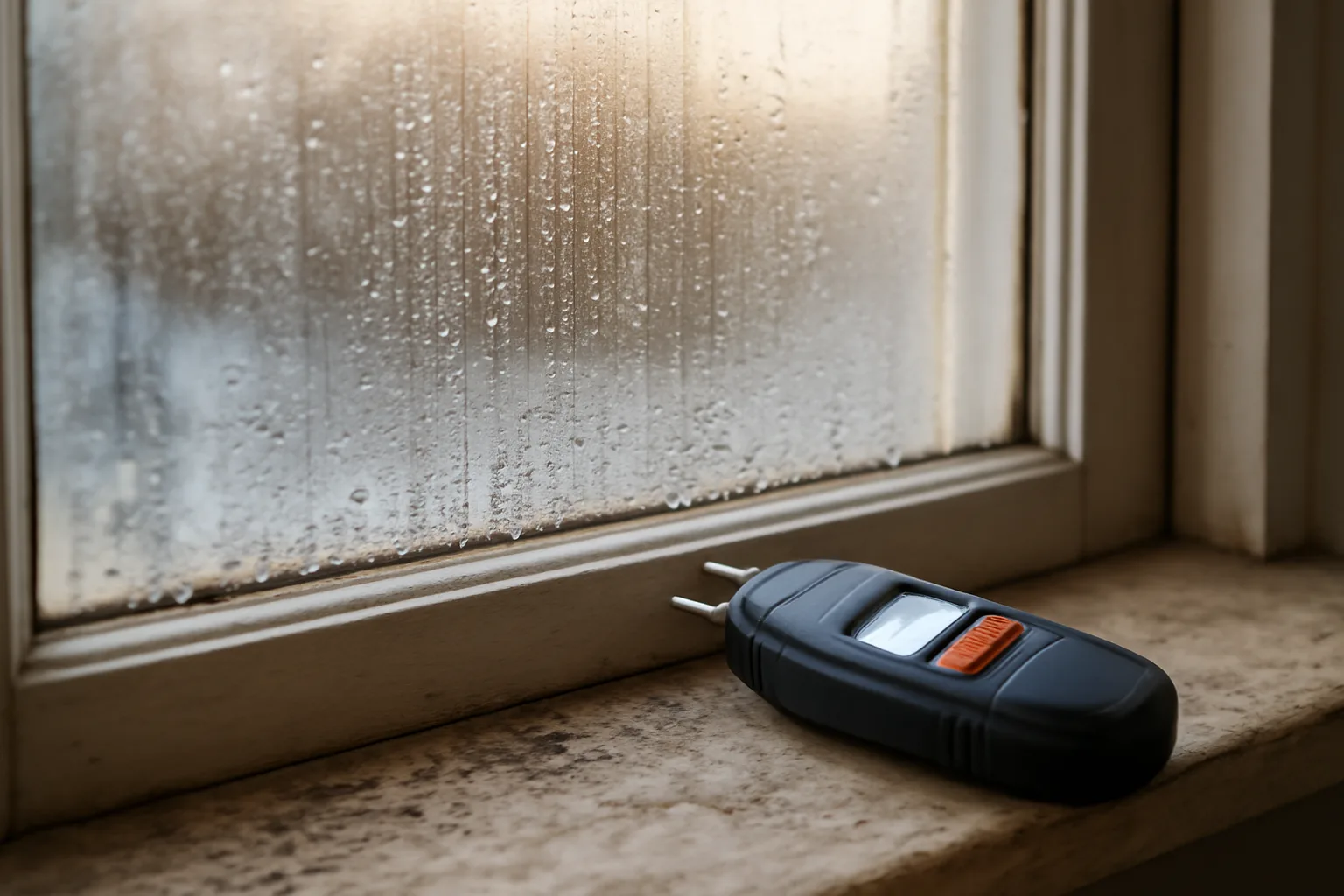
Start with your landlord or property manager, not a mold inspector. Window condensation is usually a ventilation or insulation issue, not a health hazard requiring lab testing. Call a certified mold inspector or industrial hygienist only if mold covers more than about 10 square feet, per EPA guidance, or a tenant has documented health complaints.
who do you actually call first for window condensation mold in a rental
Call your landlord or property manager first, in writing, before you call anyone else. That's true whether you're the tenant reporting it or the landlord who just got the notice. Condensation mold on window frames and sills is almost always a moisture and ventilation problem, not something that needs a $500 lab test on day one. The EPA's guidance on mold in homes is blunt about this: "If mold is a problem in your home, school, or business, you must clean up the mold and eliminate sources of moisture. Fixing the source of the water problem or leak is the only way to ensure that mold growth will not recur" [1]. Testing tells you what species you have. It doesn't tell you how to fix it, and the EPA specifically says testing usually isn't necessary: "In most cases, if visible mold growth is present, testing is not necessary" [1]. So the actual call order looks like this. First, the landlord documents the complaint and does a visual inspection themselves or sends a handyman or maintenance person to look at the window, the frame, and the wall around it. Second, if the mold covers a small area (EPA's own remediation guide uses 10 square feet, roughly a 3x3 foot patch, as the threshold for do-it-yourself cleanup versus calling in help) [1], a landlord or handyman can usually clean it with detergent and water and fix the moisture source. Third, if it's spreading behind drywall, recurring after cleaning, or a tenant has real health complaints (asthma flare-ups, persistent cough, doctor's note), that's when you call a certified mold inspector or industrial hygienist for testing and a written report. Don't skip straight to a mold remediation company advertising on a lawn sign. Get a plain assessment first. A lot of window condensation cases get solved with a $15 dehumidifier and a habit of cracking the window, not a four-figure remediation contract.
is window condensation mold actually dangerous or just cosmetic
It depends on the amount and the tenant's health, but most window-frame condensation mold is a nuisance and a maintenance issue, not a toxic emergency. The CDC states plainly: "Exposure to damp and moldy environments may cause a variety of health effects, or none at all" [2]. Some people are more sensitive than others, particularly people with asthma, allergies, or compromised immune systems. The CDC also notes there's no need to identify the mold species in most cases: "In most cases, mold can be removed from hard surfaces by a thorough cleaning with commercial products, soap and water" [2], and testing for specific mold types generally isn't recommended because standards for "acceptable" mold levels haven't been established. That matters for landlords getting pressure from tenants who've read scary blog posts about "toxic black mold." Stachybotrys chartarum (the mold usually meant by that phrase) isn't inherently more dangerous than other common indoor molds according to CDC guidance, though CDC does say some molds do produce toxins under certain conditions [2]. The practical read: small patches of black or green mold on a window sill, especially the kind that wipes off with a Clorox wipe and comes back every winter, is a ventilation and condensation problem. It becomes a bigger deal if it's spreading into drywall, carpet, or HVAC systems, or if a tenant has a documented medical reaction. That's the line between "landlord fixes it this week" and "time to call a professional and possibly a lawyer."
what kind of professional actually inspects mold from window condensation
Three different professionals get called for this, and they do different jobs. Know which one you need before you pick up the phone. 1. A certified mold inspector or industrial hygienist does visual inspection, moisture mapping (often with a moisture meter or infrared camera), and if warranted, air or surface sampling sent to a lab. This is the right call for a disputed situation, a health complaint, or before a remediation contractor starts work, so you have a baseline. The EPA doesn't license or certify mold inspectors nationally, so credentials vary by state; some states (Florida and New York, for example) do have their own licensing requirements for mold assessors, so check your state's environmental or health department before hiring [1]. 2. A mold remediation contractor removes and cleans up existing mold, usually following the EPA's "Mold Remediation in Schools and Commercial Buildings" guidance framework, adapted for residential use [3]. You want this company involved after testing confirms scope, not instead of it, unless the problem area is small and straightforward. 3. A general contractor or window/insulation specialist fixes the underlying cause: failed window seals, single-pane glass, missing storm windows, inadequate attic or wall insulation, or a bathroom fan that vents nowhere. This is often the most important call and the most skipped one. You can remediate mold all day, but if the window still sweats every cold morning, it comes back. For most landlords with 1 to 10 units, the sequence that saves money is: landlord/handyman visual check, then a ventilation/insulation fix, then a certified inspector only if the problem persists or a tenant pushes back.
what does a mold inspection for a rental property cost
A standalone mold inspection with lab sampling for a typical rental unit generally runs in the range of $200 to $600, though costs shift a lot by region, unit size, and whether air sampling, surface sampling, or both are included. There's no single national fee schedule for this because it's a private-market service, not a licensed government inspection in most states, so treat any number you see (including this one) as a planning range, not a quote. What drives the price up: multiple rooms tested, air sampling in addition to surface swabs, lab turnaround speed, and whether the inspector also does a full moisture/humidity assessment of the building envelope. What keeps it down: a single window or room, visual-only assessment with no lab work, and bundling it with a home inspector who already does mold add-ons. Remediation costs are a separate line item entirely and vary enormously based on whether it's surface cleaning (cheap, sometimes under $500) or drywall/insulation removal and replacement (can run into the thousands). Get the inspection and the remediation quote separately from different companies when the amount at stake is significant. A contractor who profits from finding mold has an obvious incentive problem when they're also the one selling you the $8,000 fix.
who is responsible for fixing window condensation mold, landlord or tenant
Generally the landlord, because condensation from window design, insulation, or ventilation problems is a building maintenance issue, not tenant negligence, but the tenant does share responsibility for reasonable ventilation habits. Most state landlord-tenant statutes require landlords to maintain the property in a habitable condition and keep it free of conditions that materially affect health and safety. Where it gets contested: if a tenant runs a humidifier constantly, blocks all airflow with plastic sheeting and furniture jammed against every window, or never opens a window or bathroom fan for months, a landlord has a reasonable argument that tenant behavior contributed to or caused the moisture buildup. Document the unit's ventilation systems (working exhaust fans, functioning windows that open) at move-in and again when the complaint comes in. That paper trail matters if this ever becomes a habitability dispute or a small claims case. If the building itself is the problem, old single-pane windows, no storm windows in a cold climate, poor attic insulation letting warm moist air condense on cold glass, that's squarely on the landlord to fix, and mold that results from it is a maintenance and possibly a habitability violation, not something a tenant can be blamed for.
what does an inspection actually look at, and what can a landlord check during a rental inspection
During a mold or condensation-related inspection, expect the inspector to check window seals and caulking, frame and sill condition, evidence of water staining or wood rot, humidity levels with a moisture meter, HVAC and exhaust fan function, attic and crawlspace insulation, and any visible mold growth on drywall, trim, or carpet near the window. Separately, landlords doing a routine rental inspection have their own scope, and tenants often ask what a landlord can legally look at during a walkthrough. In general, a landlord conducting a habitability or maintenance inspection can check smoke and carbon monoxide detectors, plumbing fixtures for leaks, HVAC function, signs of pest infestation, window and door seals, and general property condition. What a landlord typically cannot do, in most states, is search through personal belongings, closets, or drawers beyond what's needed to inspect the fixture itself, and cannot enter without proper notice except in a genuine emergency. In California specifically, who's responsible for the walkthrough inspection depends on the type of inspection. California Civil Code Section 1950.5 requires landlords to offer tenants an initial inspection before move-out (if the landlord intends to withhold any security deposit for repairs) so the tenant has a chance to fix issues themselves first [4]. Routine mid-tenancy habitability inspections are the landlord's responsibility to schedule and conduct, with proper notice under Civil Code Section 1954, which generally requires reasonable notice, presumed to be 24 hours in most non-emergency circumstances [5].
how much notice does a landlord have to give before an inspection
Most states require landlords to give at least 24 hours notice before entering a rental unit for a non-emergency inspection, but the exact number and the definition of "reasonable notice" varies by state, so check your specific state statute. California's Civil Code Section 1954 presumes 24 hours notice is reasonable for entry to make repairs or show the unit, and requires the landlord to enter only during normal business hours absent an emergency or the tenant's consent [5]. Other states set different defaults: some require 24 hours, some allow "reasonable notice" without a specific number attached, and a few states have no statutory notice requirement at all for landlord entry, leaving it to the lease. Emergencies (a burst pipe, an active gas leak, a fire) are the standard exception that lets a landlord enter without advance notice in virtually every state. For mold specifically, if a tenant reports visible mold or a musty smell, that's generally treated as a maintenance request, not an emergency, so normal notice rules apply unless the situation is actively dangerous (active water intrusion, sewage backup, structural damage). Confirm your specific state's notice statute before scheduling, since acting outside it can itself become a tenant complaint or even a small claims issue.
what a landlord cannot do in ohio for inspections and repairs
Ohio law puts specific limits on landlord entry and requires habitability upkeep, and landlords in Ohio cannot enter a rental unit without reasonable notice except in an emergency, cannot ignore a documented habitability complaint like a mold or moisture problem, and cannot retaliate against a tenant for reporting one. Ohio Revised Code Section 5321.04 requires landlords to "maintain the premises in a fit and habitable condition" and to keep common areas safe [6]. Ohio Revised Code Section 5321.05 sets tenant duties, including keeping the unit clean and not causing damage, which matters in the landlord/tenant responsibility question above [7]. Ohio Revised Code Section 5321.04, subsection dealing with landlord access, generally requires landlords give reasonable notice (Ohio courts and the statute framework treat 24 hours as a common practical standard, though the statute itself uses "reasonable notice" language) and enter at reasonable times [6]. What Ohio landlords cannot do: enter without notice for non-emergency inspections, refuse to address a habitability-affecting mold problem after written notice, or retaliate against a tenant (rent increase, eviction notice, service reduction) within a period after the tenant makes a legitimate complaint, protections addressed under Ohio's retaliation statute, Revised Code Section 5321.02 [8]. If you're an Ohio landlord getting a mold complaint, document your response and repair timeline carefully. It's the single best protection against a habitability claim later.
what rights do tenants have without a written lease
Tenants without a written lease still have full habitability rights under state landlord-tenant law; a lack of a written lease doesn't waive a tenant's right to a mold-free, structurally safe, and functioning unit. Verbal or month-to-month tenancies are still tenancies, and nearly every state's implied warranty of habitability applies regardless of whether the agreement is in writing. What changes without a written lease is mostly about notice periods for ending the tenancy (commonly 30 days for month-to-month arrangements in many states) and the difficulty of proving specific terms if there's a dispute about rent amount, pet policies, or included utilities. The core protections, the right to a habitable unit, protection from illegal lockouts, and protection from retaliation for reporting problems like mold, generally exist independent of whether there's a signed lease. If you're a landlord operating without written leases (common with small 1-4 unit operations, particularly family arrangements or long-term tenants), get a written lease in place going forward. It protects you as much as the tenant when a mold complaint turns into a dispute over who's responsible for what.
why do landlords require renters insurance, and does it cover mold
Landlords require renters insurance mainly to cover tenant liability and personal property loss, not because it typically covers mold remediation, and most standard renters insurance policies specifically exclude mold damage unless it results from a covered peril like a burst pipe. Landlords require it because it shifts the cost of a tenant's personal property loss (fire, theft, some water damage) and liability claims away from the landlord's own policy, and because a tenant with insurance is less likely to sue the landlord's insurer directly for damaged belongings. For mold specifically, most standard renters policies (HO-4 policies) exclude mold and fungus damage outright, or cap coverage at a low amount (often $1,000 to $5,000) unless the mold resulted from a sudden, accidental, covered water event like a burst pipe rather than gradual condensation. That's an important detail for both landlords and tenants to understand: renters insurance is not a mold safety net in most cases, and a tenant assuming their belongings are covered if window condensation ruins a curtain or windowsill items may be wrong. Landlords requiring renters insurance as a lease condition is a common and reasonable practice, but it doesn't reduce the landlord's own obligation to fix the underlying moisture problem causing the mold in the first place.
how to become a landlord and what does landlording actually mean
A landlord is simply the owner (or a person legally acting for the owner) who leases residential or commercial property to a tenant in exchange for rent, and landlording is the ongoing work of managing that relationship: collecting rent, maintaining the property, handling repairs, and following state and local law. Becoming a landlord doesn't require a special license in most states just to own and rent out property you own, though many cities require a rental registration, license, or periodic inspection before you can legally rent units, especially in multi-unit buildings or designated rental-licensing municipalities. The practical path to becoming a landlord: buy or already own a property suitable for rental, check your city's rental licensing office for registration or inspection requirements (many cities require this before you can legally advertise a unit), get a written lease compliant with your state's landlord-tenant law, understand your state's habitability, notice, and security deposit statutes, and set aside a maintenance reserve, since issues like window condensation mold, HVAC failures, and plumbing repairs are ongoing costs, not one-time expenses. Landlording well means responding to maintenance requests promptly (mold and moisture complaints especially, since delay tends to make both the physical damage and any legal exposure worse), keeping documentation of every inspection and repair, and understanding that most disputes that escalate to legal claims start with a landlord who ignored or minimized an early complaint. If you're managing rental units in a city with license or inspection requirements, our rental license and inspection prep packet walks through what inspectors commonly check, including window seal and moisture issues, before your city's inspector shows up.
Frequently asked questions
Who do I call first for mold on a window in a rental unit?
Call or write to your landlord or property manager first. Window condensation mold is usually a ventilation or insulation problem the landlord needs to fix, not an emergency requiring a mold inspector. Escalate to a certified mold inspector only if the patch is larger than about 10 square feet or a tenant has documented health symptoms.
Is a small amount of window condensation mold dangerous?
Usually not. The CDC says mold exposure "may cause a variety of health effects, or none at all," and most people without mold allergies or asthma have no reaction to small amounts. Sensitive individuals can experience irritation, so document any health complaints and treat those cases more seriously than a purely cosmetic patch.
How much does a professional mold inspection cost for a rental property?
Expect roughly $200 to $600 for an inspection with lab sampling, though this varies by region, unit size, and whether both air and surface samples are taken. There's no fixed national fee schedule since this is a private-market service in most states, so get two quotes before committing.
Who is responsible for a rental property walkthrough inspection in California?
It depends on the type. Under California Civil Code Section 1950.5, landlords must offer an initial move-out inspection if they intend to withhold deposit funds for repairs, giving tenants a chance to fix issues first. Routine mid-tenancy habitability inspections are the landlord's responsibility to schedule with proper notice.
What can a landlord look at during a rental inspection?
Generally: smoke and carbon monoxide detectors, plumbing and fixtures, HVAC function, window and door seals, signs of pests, and general habitability conditions like mold or moisture. Most states limit landlords from searching personal belongings or closets beyond what's needed to inspect the fixture itself.
How much notice does a landlord have to give before an inspection?
Most states require at least 24 hours notice for non-emergency entry; California's Civil Code Section 1954 presumes 24 hours is reasonable. Some states use a general "reasonable notice" standard without a fixed number. Emergencies like active leaks or gas issues are the standard exception. Confirm your specific state's statute.
What can't a landlord do in Ohio regarding mold complaints or inspections?
Ohio landlords can't enter without reasonable notice except in emergencies, can't ignore a documented habitability complaint (mold and moisture problems fall under Ohio Revised Code Section 5321.04's fit-and-habitable requirement), and can't retaliate against a tenant for reporting one, per Ohio Revised Code Section 5321.02.
What rights does a tenant have without a written lease?
Full habitability rights still apply. A verbal or month-to-month tenancy is still a tenancy under state law, and the implied warranty of habitability (including a mold-free, structurally safe unit) generally applies regardless of whether there's a signed lease. What mainly changes is the notice period for ending the tenancy.
Why do landlords require renters insurance if it doesn't cover mold?
Landlords require it mainly to cover tenant liability and personal property loss from things like fire or theft, shifting that financial risk away from the landlord. Most standard renters policies exclude mold damage unless it stems from a sudden covered event like a burst pipe, so it's not a mold safety net for either party.
How do you become a landlord?
Own or acquire rental property, check your city's rental licensing office for any registration, license, or inspection requirements before renting, put a compliant written lease in place, and learn your state's habitability, notice, and security deposit rules. Many cities require licensing before you can legally advertise or rent a unit.
What is landlording, in plain terms?
Landlording is the ongoing work of owning and managing rental property: collecting rent, handling maintenance and repairs, following state and local landlord-tenant law, keeping the unit habitable, and managing the tenant relationship. It's more operational work than most new landlords expect, especially around maintenance issues like window condensation and mold.
Does a landlord have to test for mold before fixing it?
No. The EPA states that "in most cases, if visible mold growth is present, testing is not necessary," and recommends fixing the moisture source and cleaning the visible mold directly. Testing is mainly useful for disputes, health-complaint documentation, or confirming remediation worked afterward, not as a required first step.
Sources
- EPA, A Brief Guide to Mold, Moisture, and Your Home: Testing usually isn't necessary if mold is visible, and fixing the moisture source is the only way to prevent recurrence, with 10 sq ft as the DIY cleanup threshold
- CDC, Mold: Basic Facts: Mold exposure may cause a variety of health effects or none at all, and species identification generally isn't necessary
- EPA, Mold Remediation in Schools and Commercial Buildings Guide: Framework for professional mold remediation scope and procedures
- California Civil Code Section 1950.5: Landlords must offer an initial move-out inspection before withholding security deposit funds for repairs
- California Civil Code Section 1954: 24 hours notice is presumed reasonable for landlord entry, limited to normal business hours absent emergency or consent
- Ohio Revised Code Section 5321.04: Ohio landlords must maintain premises in a fit and habitable condition and give reasonable notice before entry
- Ohio Revised Code Section 5321.05: Ohio tenant duties include keeping the unit clean and avoiding damage
- Ohio Revised Code Section 5321.02: Ohio law prohibits landlord retaliation against tenants who make legitimate habitability complaints