Last updated 2026-07-25
TL;DR
Becoming a landlord means more than buying a property and finding a tenant. Most cities require rental registration or licensing, many require a walk-through inspection before you can rent, and every state sets minimum notice periods and tenant protections you have to follow even without a signed lease.
what is landlording and what is a landlord, exactly?
A landlord is the owner (or an owner's authorized agent) who rents residential or commercial space to a tenant in exchange for money, usually under a lease or rental agreement. Landlording is the day-to-day work of running that arrangement: collecting rent, handling repairs, following habitability law, managing turnover, and staying compliant with whatever your city or county requires for rental property. That last part surprises a lot of first-time landlords. You're more than a private party renting out a spare unit. In hundreds of U.S. cities, once you rent residential property to someone else, you become subject to a rental registration or licensing ordinance, sometimes with a required inspection before you can legally lease at all. Chicago, Los Angeles, and Baltimore all run separate registration systems for rental units, and fees and inspection cycles differ by city. [1][2][3] The legal definition of "landlord" also carries obligations that exist whether or not you thought of yourself as running a business. Most state landlord-tenant statutes define a landlord as anyone who receives rent for the right to occupy a dwelling unit, full stop. That means a homeowner renting out a basement apartment to one tenant has the same basic legal duties (habitability, notice, security deposit handling) as someone who owns fifty units, even if the local licensing threshold doesn't kick in until a certain unit count.
how to become a landlord: the real step-by-step
Becoming a landlord is part paperwork and part risk management. Here's the order that actually works, based on how most city and state programs are structured. 1. Confirm the property can legally be rented. Check zoning and, if it's a condo or HOA property, the governing documents. Some cities cap the number of rental units allowed per building or block (Chicago's landlord ordinance, for instance, applies specific disclosure and registration duties once you rent out a covered unit). [1] 2. Register or license the rental with your city, if required. This is the step people skip and then get hit with a violation notice. Many cities require a rental registration or business license renewal every year, with per-unit fees that commonly run somewhere between $25 and $150 depending on the city, plus a possible inspection fee. Confirm the exact number with your city rental licensing office, since it varies block by block in some jurisdictions and changes on its own schedule. 3. Schedule and pass any required rental inspection. Some cities require this before you can occupy a new rental with a tenant; others inspect on a rolling multi-year cycle. Baltimore's rental license program, for example, requires inspection before initial licensing and periodic reinspection afterward. [3] 4. Get landlord insurance (not a standard homeowner's policy) and decide your renters insurance requirement for tenants. 5. Screen tenants under fair housing law. The Fair Housing Act bars discrimination based on race, color, national origin, religion, sex, familial status, and disability in the rental process. [4] Many states and cities add protected classes like source of income or sexual orientation. 6. Draft a lease that matches your state's landlord-tenant statute, not a generic template pulled off the internet. State law controls things like security deposit caps, notice periods, and habitability duties, and a lease that conflicts with state law generally loses to the statute. 7. Set up rent collection, a maintenance response process, and your recordkeeping (deposit ledger, inspection photos, notices served). If you're renting in a city with a licensing or inspection mandate, get your paperwork and inspection prep organized before day one instead of scrambling after a violation notice. That's the whole reason the $79 City Rental License & Inspection Prep Packet exists: it's a one-time reference packet to get your unit inspection-ready and your registration paperwork lined up so you're not guessing at deadlines.
who is responsible for the rental property walk-through inspection in California?
In California, the move-in and move-out walk-through inspection responsibility sits mainly with the landlord, and state law gives the tenant a specific right tied to security deposits. Under California Civil Code Section 1950.5, a landlord who intends to withhold any part of a security deposit for repairs or cleaning must, if the tenant requests it, give the tenant a reasonable opportunity to be present at an initial inspection conducted before the end of the tenancy. [5] The statute requires the landlord to give at least 48 hours' written notice of the date and time of that initial inspection, unless the tenant waives that notice in writing. [5] After the initial inspection, the landlord has to provide an itemized statement of deficiencies and give the tenant the chance to fix them before move-out, so the tenant has a real shot at avoiding deposit deductions. So the honest answer is: the landlord schedules and conducts the walk-through, but California law builds tenant participation into the process by right, not as a courtesy. Skipping that opportunity when a tenant requests it is one of the more common mistakes that gets landlords into small claims court over a deposit dispute. Cities layered on top of this (Los Angeles, for instance, has its own rental registration and habitability inspection rules for units under rent stabilization) may add separate inspection requirements that are about code compliance rather than deposit accounting. [2]
what can a landlord look at during an inspection?
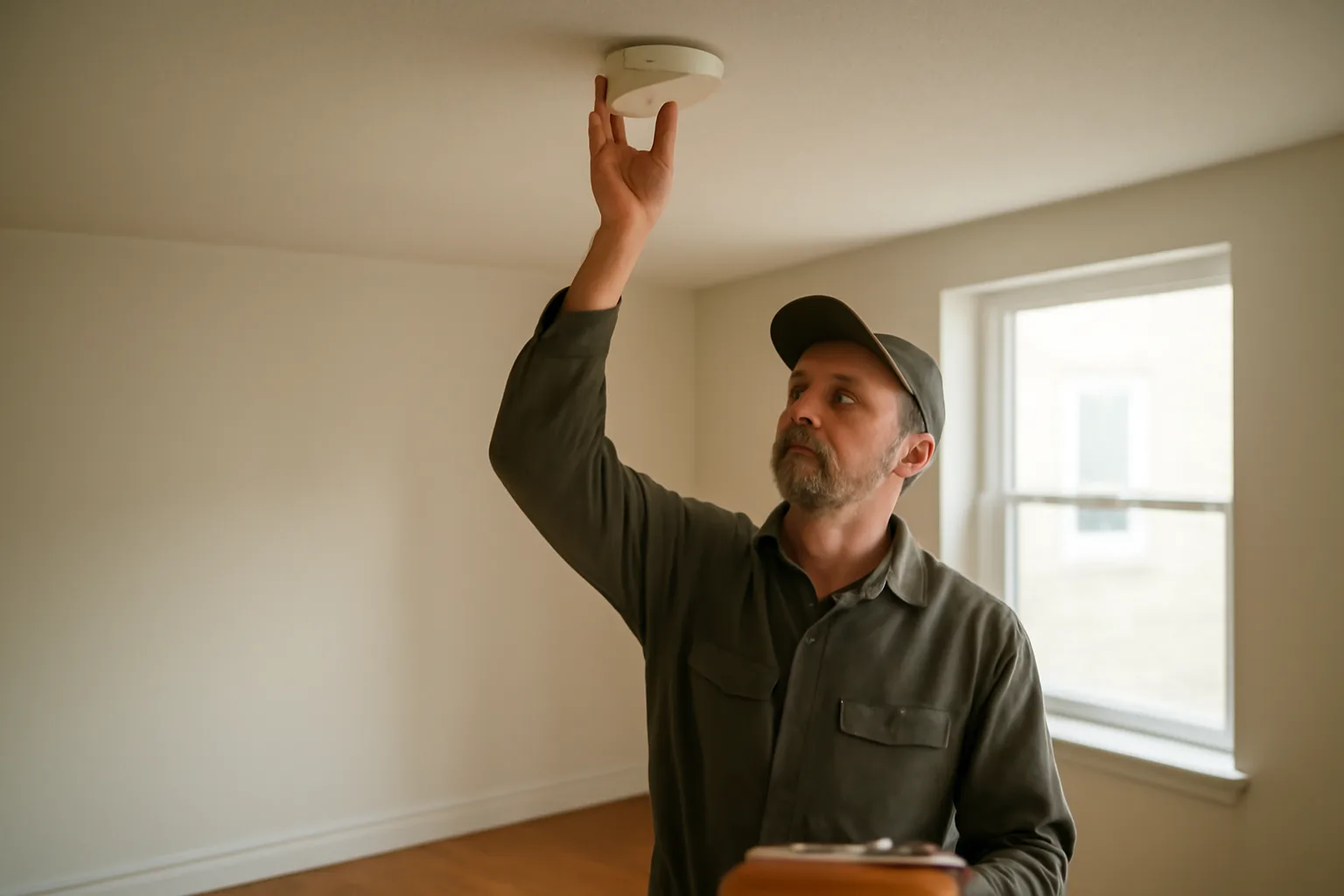
During a routine or move-out inspection, a landlord (or a city inspector, if it's a licensing inspection) can generally look at the condition of the unit itself: walls, floors, ceilings, fixtures, appliances, smoke and carbon monoxide detectors, plumbing, electrical outlets, windows, doors, and any damage beyond normal wear and tear. City code inspections tied to a rental license usually check for specific safety items: working smoke detectors, secure railings, no exposed wiring, functioning heat, and no illegal occupancy. What a landlord generally cannot do is rifle through a tenant's personal belongings, closets full of private items, or locked containers, and cannot use an inspection as a pretext to harass a tenant or search for evidence unrelated to the property's condition. Inspections also aren't a blank check to enter whenever the landlord wants. Most states require advance written notice (commonly 24 to 48 hours) except in a genuine emergency, and the visit has to happen at a reasonable time. A practical list of what's fair game during a standard habitability or move-out inspection: - Structural and safety systems (smoke detectors, locks, windows that open and lock)
- Signs of pest infestation, mold, or water damage
- Appliance function (stove, refrigerator, water heater)
- HVAC operation
- General cleanliness relevant to damage claims, not personal tidiness
- Unauthorized alterations (holes from unpermitted fixtures, unapproved paint jobs that damage the surface underneath) What's not fair game: opening drawers, dressers, or personal boxes unless there's a specific, disclosed reason (like checking for an undisclosed pet or a maintenance issue reported inside a closet).
how much notice does a landlord have to give before entering or ending a tenancy?
| Entry for repairs/inspection | 24-48 hours | Emergencies are exempt |
|---|---|---|
| End month-to-month tenancy | 30 days | Some states require 60+ after one year |
| Rent increase (moderate) | 30 days | Larger increases often require 60-90 days |
| Eviction for nonpayment | 3-14 days (varies widely) | Highly state-specific, often called a "pay or quit" notice |
Notice requirements split into two different questions: notice to enter for an inspection or repair, and notice to end or change a tenancy. Both vary heavily by state, so treat any number below as a starting point, not a nationwide rule. For routine entry, many states set 24 hours as the standard, though some (like California) also use 24 hours as the default reasonable notice for entry outside the security-deposit inspection context, per California Civil Code Section 1954. [6] A handful of states don't set a specific number and just require "reasonable notice," which courts have generally read as at least 24 hours in practice. For ending a month-to-month tenancy, 30 days' written notice is the most common default across states, though some jurisdictions require 60 days once a tenant has lived in the unit past a certain length of time (California requires 60 days' notice to terminate a month-to-month tenant who has occupied the unit for a year or more, under Civil Code Section 1946.1). [7] For rent increases, notice periods often track termination notice periods: 30 days for smaller increases, 60 or 90 days in some states for larger increases or under statewide rent caps (California's Tenant Protection Act sets separate notice tiers tied to the size of the increase). [7] The table below is a general pattern, not a substitute for checking your specific state statute. | Notice type | Typical range | Notes |
what rights do tenants have without a lease?
A tenant without a signed lease still has real legal protections. Once someone pays rent and occupies a unit with the owner's consent, most states treat that as a month-to-month tenancy governed by the same landlord-tenant statute that would apply if there were a written lease. No signature required. That means a tenant without a lease generally still has the right to: habitable housing (working plumbing, heat, structural safety), advance notice before the landlord enters, advance written notice before the tenancy is ended (typically the same 30-day default described above), protection from illegal lockouts or utility shutoffs used to force them out, and, in many states, the same security deposit protections as a tenant with a written lease. What a tenant without a lease usually does not have is a fixed-term guarantee. Without a written lease specifying a term (like one year), the tenancy is presumed month-to-month, and either side can end it with proper notice. That cuts both ways: it protects the landlord from being locked into a long term, but it also means the tenant can leave with the same short notice. A verbal agreement to rent is still a binding lease in the eyes of most courts, just harder to prove terms for (rent amount, who pays utilities) if a dispute happens. That's exactly why even a simple written agreement, even a one-page one, is worth the ten minutes it takes.
why do landlords require renters insurance?
Landlords require renters insurance mainly to shift liability and property-loss risk off their own policy and onto the tenant's. A landlord's own insurance (or landlord/dwelling policy) generally covers the building structure and the owner's liability, not the tenant's personal belongings and not liability the tenant creates inside the unit (a kitchen fire the tenant starts, a dog bite, water damage from an overflowing tub the tenant left running). Renters insurance is genuinely cheap relative to what it covers. National average costs for a standard renters insurance policy commonly fall in the range of about $15 to $30 per month, according to industry rate surveys, though the exact number depends on coverage limits, location, and deductible. Because it's inexpensive and covers a real gap, many landlords now require proof of an active renters insurance policy (often with a minimum liability limit, commonly $100,000) as a lease condition, and some states or cities explicitly allow landlords to require it as long as the requirement is disclosed and applied consistently. The other reason: renters insurance usually includes personal liability coverage, so if a tenant's guest gets hurt in the unit, or the tenant accidentally causes damage to a neighboring unit, that liability doesn't roll straight into a claim against the landlord's policy or a lawsuit against the landlord personally. A landlord requiring renters insurance isn't being paranoid. It's a low-cost way to keep a single water leak or dog bite from turning into a five-figure claim against the wrong party.
what a landlord cannot do in Ohio
Ohio's landlord-tenant law is built around Ohio Revised Code Chapter 5321, and it spells out specific things a landlord cannot do, on top of the general habitability and notice rules that apply almost everywhere. Under ORC 5321.15, a landlord cannot use self-help eviction: no changing the locks, shutting off utilities, removing doors, or removing a tenant's belongings to force them out, even if the tenant is behind on rent. The statute states a landlord shall not "cause, directly or indirectly, the interruption of any utility service to the tenant" and shall not seize the tenant's possessions, except through the formal eviction process handled by a court. Violating this section lets a tenant sue and recover actual damages plus, in some cases, reasonable attorney fees. Ohio law (ORC 5321.04) also requires landlords to keep the premises fit and habitable, maintain common areas, keep essential services in good working order, and comply with building and housing codes materially affecting health and safety. A landlord who ignores that duty can face a tenant lawsuit for repair-and-deduct rights or, in serious cases, lease termination and damages. On entry, Ohio generally expects landlords to give reasonable notice, commonly treated as 24 hours in practice (Ohio's statute uses the phrase "reasonable notice" rather than naming a specific number of hours), and to enter only at reasonable times. Retaliatory conduct is also restricted: a landlord generally cannot raise rent, decrease services, or start eviction proceedings specifically because a tenant complained to a code authority or joined a tenants' union, under Ohio's retaliation protections tied to ORC 5321.02. Bottom line for Ohio landlords: no lockouts, no utility shutoffs, no seizing property, no retaliation for a legitimate code complaint. Everything has to run through the courts.
rental licensing and inspection basics every new landlord should know
Once you're a landlord in a city with a rental registration or licensing ordinance, you're managing two separate compliance tracks: state landlord-tenant law (leases, deposits, notice, habitability) and local rental licensing law (registration, fees, inspection). Common local requirements, patterned across cities that run these programs: - Annual or biennial rental registration with a per-unit or per-building fee
- A city inspector visit before initial licensing, and again on a set cycle (often every 1 to 3 years, though this varies by city and sometimes by the property's compliance history)
- Correction deadlines after a failed inspection, typically 30 to 60 days before a reinspection or fine
- Escalating fines for operating an unlicensed rental, which in some cities can run into the hundreds of dollars per unit per violation Baltimore's rental licensing program is a good example of how these pieces link together: property owners must obtain a rental license before renting, pass a lead-safe or lead-free certification where applicable, and keep the license current through renewal and reinspection. [3] Chicago's ordinance similarly requires landlords to register covered rental units and comply with disclosure and habitability provisions tied to that registration. [1] If you're new to a city's program, the fastest way to avoid a violation letter is to call the city's rental licensing or code enforcement office directly and ask three questions: what's the current per-unit fee, what's the inspection cycle, and what triggers a reinspection. Confirm all three with your city rental licensing office before you list a unit, because fees and cycles get updated on their own schedule and third-party summaries (including this one) can lag behind.
what happens if you skip registration or fail an inspection?
Cities treat unregistered or unlicensed rentals as a code violation, and the penalties usually escalate the longer it goes uncorrected. Typical consequences include a written notice of violation, a compliance deadline (commonly 30 days), a fine if you miss that deadline, and in serious or repeat cases, a court order or lien against the property. Failing an inspection isn't usually fatal on its own. Most programs give you a correction period, often 30 to 60 days, to fix cited deficiencies (broken smoke detectors, code violations, structural issues) before a reinspection. What does get expensive is ignoring the notice entirely: unpaid fines accrue, and some cities will not allow you to renew a rental license or collect rent legally on an unlicensed unit until you're back in compliance, which can complicate an eviction filing if you ever need one. The safest posture is treating your city's inspection checklist as a pre-inspection checklist you run yourself, months before the city shows up. Test every smoke and CO detector, check every window lock, look for peeling paint (a lead hazard concern in pre-1978 housing under federal law), and fix anything a reasonable inspector would flag. That's the specific gap the $79 City Rental License & Inspection Prep Packet is built to close: a one-time reference to walk your unit through common inspection line items before the city does it for you at a worse price.
Frequently asked questions
How do I become a landlord for the first time?
Confirm the property is zoned for rental use, register it with your city if a licensing ordinance applies, pass any required inspection, get landlord insurance, screen tenants under fair housing law, and use a lease written to match your state's landlord-tenant statute. Most first-time landlords underestimate the local registration step, which some cities enforce with real fines for noncompliance.
What is the difference between landlording and being a landlord?
Being a landlord is the legal status: you own property and rent it to a tenant for money. Landlording is the ongoing work that role requires: rent collection, maintenance, inspections, notices, and compliance with local rental registration or licensing rules. One is a title, the other is the job.
Who has to be present during a California move-out inspection?
The landlord conducts the inspection, but under California Civil Code Section 1950.5, the tenant has the right to be present if they request it. The landlord must give at least 48 hours' written notice of the inspection date and time unless the tenant waives that notice in writing.
Can a landlord look inside closets and drawers during an inspection?
Generally no, not without a specific reason. A standard habitability or move-out inspection covers structural condition, safety systems, and damage, not a search of personal belongings. Opening drawers or private containers without cause isn't a normal or defensible part of a rental inspection.
How much notice does a landlord need to give before entering a unit?
Most states expect 24 to 48 hours' written notice for non-emergency entry, at a reasonable time of day. California's default is 24 hours under Civil Code Section 1954, though the security-deposit inspection process under Section 1950.5 requires at least 48 hours if the tenant requests to be present.
Do tenants without a written lease still have legal rights?
Yes. Paying rent and occupying a unit with the owner's consent generally creates a month-to-month tenancy under state law, even without a signature. That tenant keeps habitability rights, entry-notice rights, and protection from illegal lockouts, though the tenancy itself can usually be ended by either side with standard notice.
Why would a landlord require renters insurance if the building already has insurance?
A landlord's own policy typically covers the structure and the landlord's liability, not the tenant's belongings or liability the tenant creates inside the unit. Renters insurance, often $15 to $30 a month, closes that gap cheaply, which is why many landlords require proof of an active policy as a lease condition.
What can't a landlord do in Ohio if a tenant stops paying rent?
Ohio law (ORC 5321.15) bars self-help eviction: no changing locks, shutting off utilities, or removing a tenant's belongings, even for nonpayment. A landlord has to go through the formal court eviction process. Violating this lets the tenant sue for actual damages and, in some cases, attorney fees.
How often do cities inspect rental properties?
It varies by city, commonly every 1 to 3 years for licensed rentals, plus an initial inspection before the first tenant moves in under many ordinances. Some cities also inspect on tenant complaint or after a change of ownership. Confirm the exact cycle with your city's rental licensing office, since it changes program to program.
What happens if I rent out a unit without registering it with the city?
Most cities treat this as a code violation carrying escalating fines, and some restrict your ability to collect rent legally or file an eviction until the unit is registered and, if required, inspected. Correction periods of 30 to 60 days are common before penalties increase, but this varies by city ordinance.
Is a verbal rental agreement legally binding?
Yes, in most states a verbal agreement to rent creates a binding month-to-month tenancy once rent is paid and accepted. It's enforceable, but harder to prove specific terms (rent amount, who covers utilities) in a dispute, which is why even a short written agreement is worth having.
What is the most common rent increase notice period?
Thirty days is the most common default for a moderate rent increase on a month-to-month tenancy. Some states require 60 or 90 days for larger increases, particularly under statewide rent caps like California's Tenant Protection Act. Always check your specific state's notice statute before sending an increase notice.
Sources
- U.S. Department of Housing and Urban Development, Fair Housing Act overview: The Fair Housing Act bars discrimination based on race, color, national origin, religion, sex, familial status, and disability
- California Legislative Information, Civil Code Section 1950.5: California requires landlords to allow tenants to be present at an initial move-out inspection with 48 hours' written notice if requested
- California Legislative Information, Civil Code Section 1954: California sets 24 hours as presumed reasonable notice for landlord entry
- California Legislative Information, Civil Code Section 1946.1: California requires 60 days' notice to terminate a month-to-month tenant who has occupied the unit for a year or more
- Insurance Information Institute, Facts + Statistics: Renters insurance: Average renters insurance costs and typical liability coverage limits
- Ohio Legislature, Ohio Revised Code Section 5321.15: Ohio law prohibits landlords from using self-help eviction methods like utility shutoffs or lockouts
- Ohio Legislature, Ohio Revised Code Section 5321.04: Ohio law requires landlords to maintain premises in a fit and habitable condition and comply with housing codes