Last updated 2026-07-25
TL;DR
Becoming a landlord means more than buying a property. You need to know your city's rental licensing rules, give proper notice before entry or inspections, understand what inspectors can and can't look at, and know tenant rights even without a written lease. Requirements vary a lot by state and city, so check locally before you rent your first unit.
How do you become a landlord?
Becoming a landlord legally means clearing a few hurdles before you hand over keys: getting the property itself compliant (safety, zoning, sometimes a certificate of occupancy), registering or licensing the rental with your city or county if required, screening and selecting a tenant under fair housing rules, and putting a lease in writing. There's no national landlord license. Whether you need any license at all depends entirely on where the property sits. Many cities with high rental populations require landlords to register every unit annually and pass a habitability inspection before renting it out. Examples include cities that run mandatory rental registration or licensing programs, often tied to a per-unit fee and a periodic inspection cycle. If your city isn't one of these, you may only need to follow state landlord-tenant law and local building codes, with no separate license step. Before you list a unit, confirm with your city rental licensing office whether a rental license or registration is required, what the fee is, and how often re-inspection happens. Skipping this step is the single most common way first-time landlords end up with a violation notice in year one. Once licensing is sorted, the practical side of becoming a landlord includes setting a lease term, screening applicants consistently (same criteria for every applicant, per the Fair Housing Act, 42 U.S.C. § 3601 et seq. [1]), collecting a security deposit within your state's legal limit, and setting up a system for maintenance requests and rent collection. If you're renting your first unit in a city with mandatory licensing, building a packet of your lease, inspection prep checklist, and registration paperwork before the deadline saves a lot of stress. That's the exact gap the City Rental License & Inspection Prep Packet is built to fill: a $79 one-time packet to organize what your city will ask for.
What is a landlord, and what is landlording?
A landlord is the owner (or an owner's authorized agent) who rents real property to a tenant in exchange for regular payment, usually under a lease or rental agreement. Landlording is the everyday work of running that arrangement: collecting rent, keeping the unit habitable, handling repairs, giving legal notices, and following state and local landlord-tenant law. Legally, most states define a landlord functionally rather than by title. If you own the unit and collect rent, you're the landlord regardless of whether you self-manage or hire a property manager to act on your behalf. Property managers act as your agent; you still hold the underlying legal obligations as owner in most states. Landlording responsibilities generally break into four buckets: habitability (keeping the unit fit to live in), disclosure (lead paint, mold, and other required notices), process (proper notice before entry, before rent increases, before eviction filings), and money (security deposit handling, rent receipts, and in some states, interest on deposits held). HUD's overview of landlord-tenant rights is a reasonable starting point for the federal layer, though most day-to-day rules (notice periods, deposit limits, habitability standards) come from state statute, not federal law [2].
Who is responsible for a rental property walk-through inspection in California?
In California, the landlord is responsible for arranging and conducting the move-in and move-out walk-through inspections, but the tenant has the legal right to be present for both. California Civil Code § 1950.5(f) requires landlords, on request, to give tenants a reasonable opportunity to participate in an initial (pre-move-out) inspection before the security deposit is finalized, so the tenant can fix any deficiencies and avoid deposit deductions [3]. The law specifically says the landlord must notify the tenant in writing of the right to request this initial inspection, and if the tenant requests it, must give at least 48 hours written notice of the date and time. After that inspection, the landlord has to give the tenant an itemized statement of anything that needs fixing or cleaning to avoid a deduction, giving the tenant a chance to address it before move-out [3]. This is separate from any city-mandated rental inspection tied to a licensing program. In cities like Los Angeles, San Francisco, and Oakland that run their own rental registration or habitability inspection programs, the city's inspector (not the landlord) conducts that inspection, though the landlord is still responsible for scheduling it and fixing anything cited. So there are really two different "walk-throughs" in California: the security-deposit move-out inspection under Civil Code § 1950.5, which is a landlord-tenant matter, and any city habitability or rental-registration inspection, which is a landlord-city matter with the city inspector doing the actual walk-through.
What can a landlord look at during an inspection?
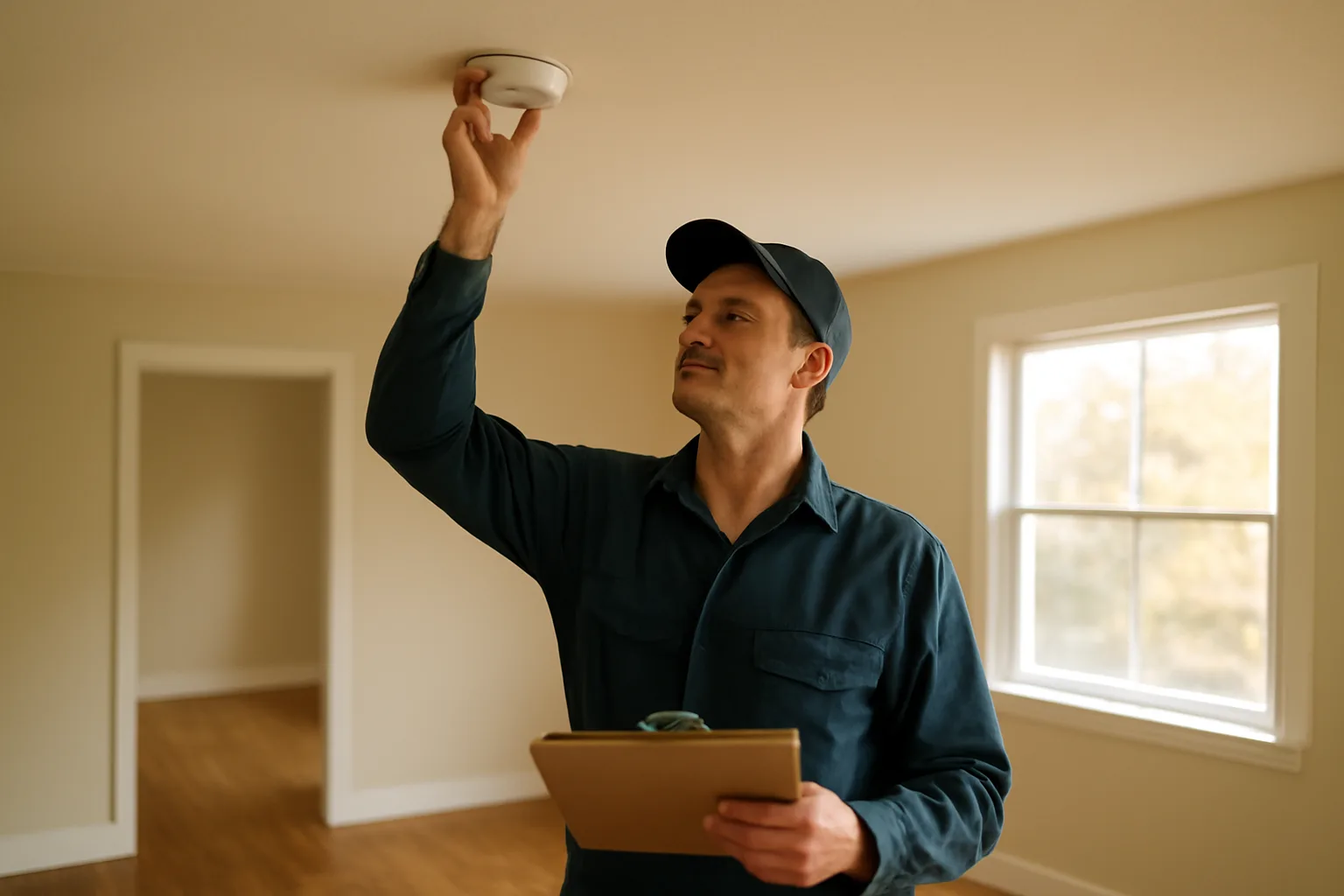
During a routine or move-out inspection, a landlord (or their agent) can generally look at anything related to the condition of the unit and evidence of lease violations: general cleanliness, damage beyond normal wear and tear, working smoke and carbon monoxide detectors, HVAC and appliance condition, signs of unauthorized pets or occupants, and safety hazards like blocked exits or exposed wiring. What a landlord generally cannot do is treat an inspection as a search. Most states limit inspections to a reasonable purpose (checking condition, doing repairs, showing the unit to prospective renters or buyers) and require advance notice, typically 24 to 48 hours, though this varies by state. Landlords typically cannot open locked personal containers, go through drawers or personal belongings, or use the inspection as a pretext to look for something unrelated to property condition. City-mandated rental inspections (as part of a licensing program) usually focus narrowly on health and safety code items: functioning smoke detectors, no active leaks, secure locks, adequate egress, no obvious electrical hazards, and pest-free conditions. Inspectors in these programs are generally not evaluating cleanliness or personal items at all; they're checking against a code checklist. A good habit before any inspection, city-mandated or routine: walk the unit yourself first using the same checklist the inspector will use, so nothing is a surprise on inspection day.
How much notice does a landlord have to give before entry or inspection?
Most states require 24 to 48 hours advance notice before a landlord enters an occupied unit for a non-emergency reason, including a routine inspection. The exact number and the required form of notice (written vs. verbal, posted vs. mailed) varies significantly by state. For example, California requires "reasonable notice," which state law presumes to mean 24 hours in writing, under Civil Code § 1954 [4]. Other states set their own standard: some require 24 hours, some 48, and a few don't set a specific number at all, just requiring "reasonable" notice, which courts interpret case by case. Emergencies are the standard exception everywhere: if there's a fire, flood, gas leak, or similar immediate hazard, landlords can enter without advance notice to prevent harm. Move-out inspections under a state's security deposit statute (like California's 1950.5) often have their own specific notice rule, separate from the general entry notice rule, so check both if you're doing an end-of-tenancy walk-through. Because this varies by state and sometimes by city ordinance layered on top, the safest approach is to check your specific state's landlord-tenant statute for the entry notice section, and confirm with your city rental licensing office whether a local ordinance adds anything (some cities require longer notice or specific delivery methods for licensed rental inspections).
Why do landlords require renters insurance?
Landlords require renters insurance mainly to shift liability and protect against gaps their own policy doesn't cover. A landlord's property insurance covers the building itself; it typically does not cover a tenant's personal belongings, and it may not fully cover a tenant's liability if the tenant accidentally causes damage (a kitchen fire, an overflowing tub) or if a tenant's guest gets injured in the unit. Requiring renters insurance, usually with a minimum liability limit (commonly $100,000, though landlords set their own number) and sometimes naming the landlord as an "interested party" on the policy, reduces the odds that the landlord's own insurance or personal assets end up absorbing a claim that was really the tenant's responsibility. It's legal in most states for a landlord to require renters insurance as a lease condition, as long as it's disclosed before the tenant signs and applied consistently to all tenants (to avoid fair housing issues). A few jurisdictions have specific rules about how this requirement has to be documented; check your state and city rules before adding it to a lease. From a landlord's practical standpoint, renters insurance is one of the cheapest risk-reduction tools available: typical renters insurance policies run in the range of $15 to $30 a month nationally according to insurance industry rate surveys, which is a small ask relative to the liability exposure it removes from the landlord's side.
What rights do tenants have without a written lease?
Tenants without a written lease still have full legal rights under state landlord-tenant law; the absence of a written lease does not mean the absence of a legal tenancy. Without a written lease, most states treat the arrangement as a month-to-month tenancy at will, governed by the same state statute that would apply if there were a written lease, just with fewer specific terms spelled out. That means a tenant without a written lease still generally has the right to: a habitable unit (working plumbing, heat, no serious safety hazards), advance notice before the landlord enters, proper legal notice before eviction (states still require formal notice and, in most cases, a court process, even for tenants without a lease), and return of any security deposit under the state's deposit rules. What changes without a written lease is mostly on the landlord's side: rent amount and increase terms default to whatever was verbally agreed or established by practice, and either party can typically end a month-to-month tenancy with proper notice (commonly 30 days, though some states and cities require more, especially in areas with just-cause eviction ordinances). Oral leases are legally valid in most states for month-to-month or short-term arrangements, though many states require leases longer than one year to be in writing under each state's version of the Statute of Frauds. For anyone landlording without a lease in place, HUD's tenant rights overview is a reasonable starting reference point, though the specific numbers (notice days, deposit limits) come from your state statute [2].
What can't a landlord do in Ohio?
Ohio landlord-tenant law, codified in Ohio Revised Code Chapter 5321, sets specific limits on landlord conduct. A landlord in Ohio cannot: shut off utilities to force a tenant out (a "self-help" eviction), change the locks without a court order, seize a tenant's property to cover unpaid rent (no distraint/lockout), or retaliate against a tenant for reporting a code violation or joining a tenant organization [5]. Ohio Rev. Code § 5321.02 specifically prohibits retaliatory conduct, including retaliatory eviction, rent increases, or service reductions, if the tenant has complained to a government agency about a building, housing, health, or safety code violation, or has organized a tenant union [5]. Ohio landlords are also required under § 5321.04 to keep the premises in a fit and habitable condition, comply with building and housing codes, keep common areas safe, and maintain all electrical, plumbing, sanitary, heating, and appliance systems in good working order [6]. Failing to do so can give the tenant grounds to withhold rent into escrow or terminate the lease under § 5321.07, following specific notice steps. Ohio also requires landlords to disclose the name and address of the property owner or authorized manager to tenants under § 5321.18, so tenants know who to serve notice on for repair issues [7]. Landlords who skip proper eviction process (self-help eviction) can face tenant lawsuits for actual damages plus, in some cases, statutory damages under Ohio law.
How do city rental licensing and inspection programs fit into landlording?
In cities with mandatory rental registration or licensing, becoming a landlord isn't just about the lease. It's also a compliance relationship with the city: you register the unit (sometimes annually), pay a per-unit fee (amounts vary widely, commonly in the tens to low hundreds of dollars per unit depending on the city), and schedule a habitability inspection, sometimes on a cycle (every year, every two or three years, or on tenant turnover, depending on the ordinance). These programs exist separately from state landlord-tenant law. State law governs the lease relationship (notice, deposits, habitability disputes between landlord and tenant). City licensing programs govern the landlord-to-city relationship (registration status, code compliance, inspection pass/fail, and fines for missed deadlines or failed items). A missed rental license renewal or a failed inspection item typically triggers a notice with a cure period, then escalating fines if unaddressed. Because every city writes its own ordinance, fee schedule, and inspection checklist, there's no single number that applies everywhere. Always confirm with your city rental licensing office for the current fee, renewal cycle, and inspection checklist before a deadline hits. If you manage rentals across more than one city, or you're getting your first rental license notice and don't know what to expect at inspection, organizing your paperwork (lease, prior inspection reports, smoke detector maintenance logs, proof of registration) into one packet before the inspector shows up is the difference between a quick pass and a re-inspection fee. That's the specific problem the $79 City Rental License & Inspection Prep Packet is built to solve, a one-time packet to help you walk into your city's inspection with what they'll actually ask for already organized.
Frequently asked questions
How do you become a landlord for the first time?
Buy or inherit a property, confirm zoning allows rental use, check whether your city requires rental registration or licensing, screen tenants consistently under fair housing law, and put the agreement in writing. Confirm with your city rental licensing office whether a license or inspection is required before you advertise the unit.
Who does the walk-through inspection on a rental in California?
The landlord arranges it, but the tenant has the right to be present. California Civil Code § 1950.5(f) gives tenants the right to request an initial move-out inspection with 48 hours written notice before the security deposit is finalized, so they can fix issues before final deductions are made.
What is landlording?
Landlording is the ongoing work of operating a rental: collecting rent, maintaining habitability, handling repairs, giving legal notices for entry or lease changes, and following state and local landlord-tenant law. It's distinct from simply owning rental property; landlording is the active management side of it.
What is a landlord legally?
A landlord is the property owner (or their authorized agent, like a property manager) who rents a unit to a tenant for payment under a lease or rental agreement. Most states define landlord obligations functionally by who collects rent and controls the property, not by job title.
What rights does a tenant have without a signed lease?
Tenants without a written lease still have full state landlord-tenant law protections: habitability, notice before entry, proper legal notice before eviction, and security deposit return rules. Most states treat an unwritten rental arrangement as a month-to-month tenancy governed by the same statute as a written lease.
How do you become a landlord in a city that requires rental licensing?
Register the unit with your city's rental licensing office, pay the required fee, and schedule the habitability inspection before your deadline. Requirements and fees vary by city, so confirm the specifics with your local office rather than assuming your neighboring city's rules apply.
Why do landlords require renters insurance?
To cover the gap a landlord's property insurance leaves: tenant belongings and tenant liability for accidental damage or guest injuries. It's a low-cost way (often $15 to $30 a month for the tenant) for landlords to shift risk off their own policy and personal assets.
How much notice does a landlord have to give before entering the unit?
Most states require 24 to 48 hours advance written notice for non-emergency entry, including routine inspections. California presumes 24 hours is reasonable under Civil Code § 1954. Exact rules vary by state, and some cities add their own notice requirements for licensed rental inspections.
What can a landlord look at during a rental inspection?
Condition of the unit: cleanliness, damage beyond normal wear, smoke detector function, appliance and HVAC condition, and safety hazards. Landlords generally cannot search personal belongings or locked containers; inspections are limited to a reasonable purpose like checking condition or doing repairs.
What can't a landlord do in Ohio?
Ohio landlords can't shut off utilities, change locks, or seize belongings to force a tenant out (no self-help eviction), and can't retaliate against a tenant for reporting a code violation, under Ohio Revised Code §§ 5321.02 and 5321.15. They must maintain habitability under § 5321.04.
Does a city rental inspection replace the state law inspection rules?
No. City rental licensing inspections (checking code compliance for a license) are separate from state landlord-tenant law inspections (like California's move-out walk-through under Civil Code § 1950.5). A landlord may need to comply with both, on different schedules, for the same unit.
Can a landlord require renters insurance as a lease condition?
Yes, in most states, as long as it's disclosed before signing and applied consistently to all tenants to avoid fair housing issues. A few states or cities have specific documentation requirements, so confirm local rules before adding a renters insurance clause to your lease.
Sources
- U.S. Department of Justice, Fair Housing Act overview: Tenant screening must be applied consistently under the Fair Housing Act, 42 U.S.C. § 3601 et seq.
- HUD, Tenant Rights, Laws and Protections: Federal-level overview of tenant rights; specific notice periods and deposit rules come from state law
- California Legislative Information, Civil Code Section 1950.5: Tenant right to request initial move-out inspection with 48 hours written notice, California Civil Code § 1950.5(f)
- California Legislative Information, Civil Code Section 1954: California presumes 24 hours written notice is reasonable notice for landlord entry
- Ohio Laws and Rules, Ohio Revised Code 5321.02: Ohio prohibits retaliatory conduct by landlords against tenants who report code violations or organize tenant unions
- Ohio Laws and Rules, Ohio Revised Code 5321.04: Ohio landlords must keep premises in a fit and habitable condition and maintain electrical, plumbing, and heating systems
- Ohio Laws and Rules, Ohio Revised Code 5321.18: Ohio landlords must disclose the name and address of the property owner or authorized manager to tenants