Last updated 2026-07-26
TL;DR
Becoming a landlord means more than owning property. Most cities with rental licensing require registration, a fee, and often an inspection before you can legally rent. Add landlord-tenant law basics: notice periods (typically 24-48 hours for entry), renters insurance policies, and rules that vary sharply by state and city.
What is landlording, and what does a landlord actually do?
Landlording is the business of owning residential property and renting it to tenants in exchange for periodic payment, usually monthly rent. A landlord (sometimes called a lessor) is the person or entity that holds title to the property and grants a tenant the right to occupy it under a lease or rental agreement. That sounds simple. In practice, landlording means juggling three different roles at once: property manager, small business owner, and compliance officer. You're responsible for maintaining habitable conditions, collecting rent, handling repairs, screening tenants, and in a growing number of cities, registering or licensing the unit with a local rental housing office before you can legally rent it out at all [1]. The compliance piece is the part first-time landlords underestimate. Cities with mandatory rental licensing (think Los Angeles, Baltimore, Minneapolis, and hundreds of smaller municipalities) require you to register the property, sometimes pay an annual or per-unit fee, and in many cases pass a habitability inspection before you get a certificate of occupancy or rental license. Skip this step and you can face fines, an inability to collect rent through the courts, or both, depending on the jurisdiction. If you're renting out your first unit, treat landlording as a regulated activity from day one, not a side hustle you'll formalize later. Cities that require licensing generally don't grandfather in landlords who "didn't know."
How do you become a landlord, step by step?
Becoming a landlord follows a fairly predictable sequence, even though the specific paperwork differs by city and state. 1. Confirm you can legally rent the property. Check zoning (some residential zones restrict rentals or short-term rentals), HOA rules, and any deed restrictions. 2. Register or license the rental with your city, if required. Many cities require this before you advertise the unit, not after you sign a lease. Contact your city's rental licensing or code enforcement office directly, since fees and deadlines vary by municipality and change year to year, so confirm the current amount and process with your city rental licensing office. 3. Prepare the unit for inspection, if your city requires one. This usually covers smoke and carbon monoxide detectors, egress windows, heating, electrical safety, and general habitability. 4. Get proper insurance. A standard homeowner's policy typically doesn't cover a rental; you generally need a landlord (dwelling) policy that covers liability and lost rental income. 5. Set up a compliant lease. State law governs required disclosures (lead paint for pre-1978 housing is a federal requirement under 40 CFR Part 745 [2]), security deposit limits, and notice periods. 6. Screen tenants consistently and legally, following the Fair Housing Act's protections against discrimination based on race, color, religion, sex, national origin, familial status, and disability [3]. 7. Collect the security deposit and first month's rent, and follow your state's rules on where deposits must be held. If your city has mandatory rental licensing, steps 2 and 3 aren't optional extras, they're the legal precondition for steps 5 through 7. For a structured walk-through of what your specific city's licensing office actually wants, the rental packet builder organizes the common documents (registration forms, inspection checklists, insurance proof) landlords need to submit.
What is a landlord, legally speaking?
Legally, a landlord is the party in a landlord-tenant relationship who owns or controls the property and grants occupancy rights to a tenant under a lease or rental agreement, in exchange for rent. This is a legal role, more than a description of who collects checks. A landlord's legal obligations typically include maintaining the property in habitable condition (often called the "implied warranty of habitability" in state law), making necessary repairs within a reasonable time, providing proper notice before entry, returning security deposits according to state timelines, and complying with local licensing or registration requirements where they exist. Property managers, family members collecting rent on someone else's behalf, and even short-term subletters can all fall under "landlord" for legal purposes in some states, depending on how much control they exercise over the unit. If you're renting a room in your own home versus renting out a separate unit you don't live in, some state laws (and local licensing rules) treat these differently, so don't assume owner-occupied exempts you automatically. Check your city ordinance's definitions section directly.
Who is responsible for a rental property walk-through inspection in California?
In California, the landlord is generally responsible for conducting the move-in and move-out walk-through inspections, and state law gives the tenant specific rights around that process. Under California Civil Code Section 1950.5, a landlord must, upon request, conduct an initial inspection before the tenant moves out (an "initial inspection") to identify deficiencies the tenant could fix before losing part of their deposit [4]. Specifically, the statute requires the landlord to notify the tenant in writing of the right to request this pre-move-out inspection, and if the tenant requests it, the inspection must happen no earlier than two weeks before the end of the tenancy, with the landlord giving at least 48 hours' written notice of the date and time (unless the tenant waives that notice) [4]. After that initial inspection, the landlord must give the tenant an itemized statement of deficiencies and a reasonable opportunity to fix them before move-out. This is separate from move-in condition documentation, which California law also effectively requires through the security deposit itemization process, since landlords need a clear "before" record to justify any deductions later. For rentals in cities with their own licensing-related inspections (habitability or code compliance inspections tied to a rental license, as opposed to the tenant's move-out walk-through), the city's code enforcement or housing department typically conducts or schedules those, not the landlord. Those are two different inspection types and it's worth knowing which one you're dealing with: a licensing inspection checks code compliance for the city; a move-out walk-through checks unit condition for deposit purposes between landlord and tenant.
What can a landlord look at during an inspection?
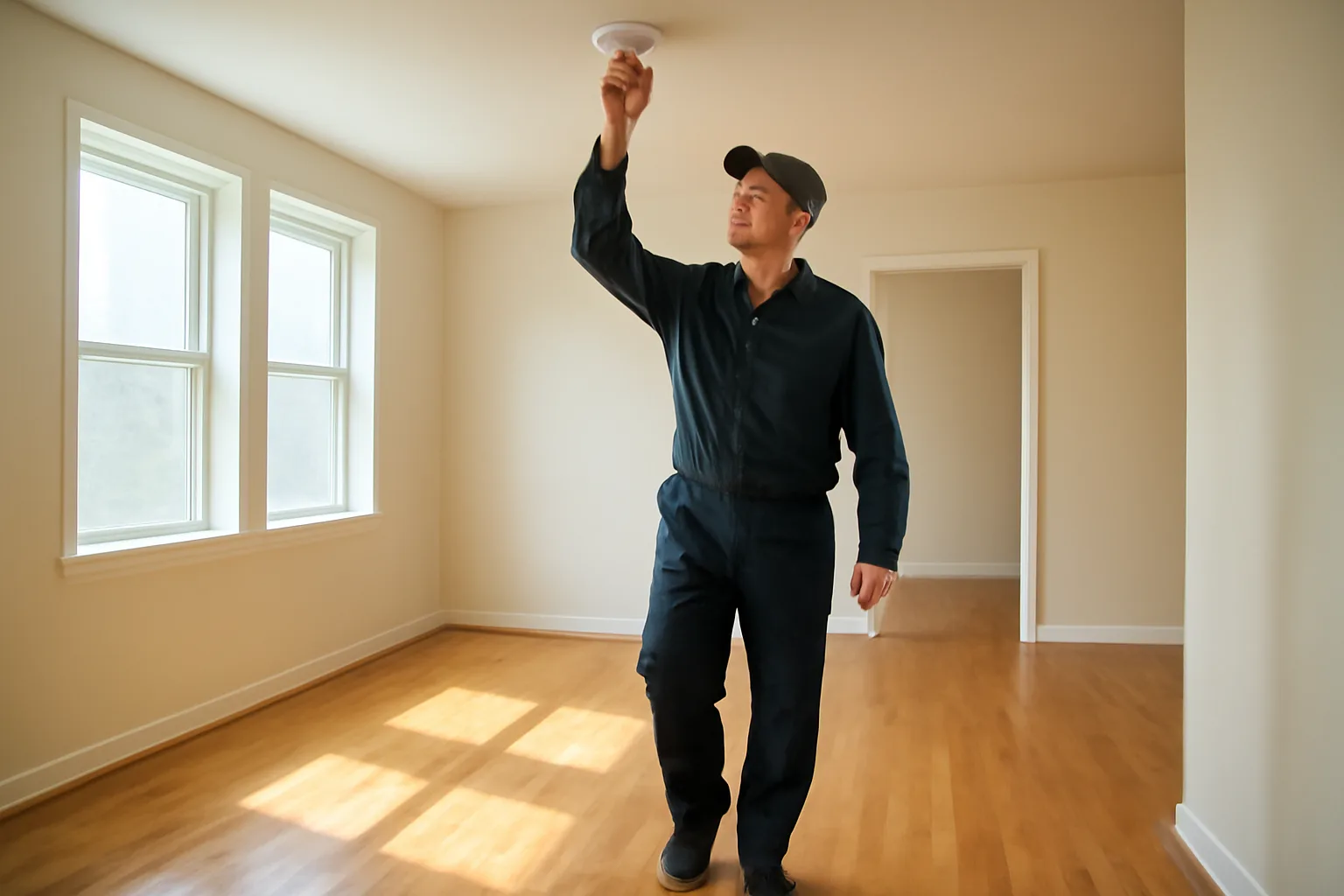
During a routine or move-out inspection, a landlord can generally look at the physical condition of the unit: walls, floors, ceilings, appliances, plumbing fixtures, windows, doors, smoke and carbon monoxide detectors, and any damage beyond normal wear and tear. Landlords are checking for lease violations (unauthorized pets, unauthorized occupants, illegal alterations) and safety hazards. What a landlord generally cannot do is search through a tenant's personal belongings, closets, or private areas beyond what's needed to assess the property itself, and they can't use an inspection as a pretext for harassment or to pressure a tenant over an unrelated dispute. Most states require landlords to give advance notice before entering an occupied unit for a non-emergency inspection, and the notice has to state a legitimate purpose (repairs, showing the unit, an agreed inspection). For a city-mandated rental licensing inspection, the inspector (usually a city code enforcement officer, not the landlord) is checking for things like functioning smoke detectors, proper egress in bedrooms, no exposed wiring, working heat, no significant mold or water damage, and adequate weatherproofing. These inspections generally focus on health and safety code compliance, not cosmetic condition or cleanliness, though some cities do check for basic sanitation too. Confirm the specific checklist with your city rental licensing office, since inspection scope varies by ordinance.
What rights do tenants have without a lease?
Tenants without a written lease still have rights. If a tenant is paying rent regularly and the landlord accepts it, most states recognize this as a "tenancy at will" or month-to-month tenancy, governed by state landlord-tenant statutes even without a signed document [5]. A tenant without a written lease generally still has the right to: a habitable unit (working plumbing, heat, structural safety), proper notice before the landlord terminates the tenancy or raises rent (notice periods for month-to-month tenancies commonly run 30 days, though some states and cities require more), protection from illegal lockouts or utility shutoffs used to force them out, and return of any security deposit collected, following state deposit rules. What changes without a lease is mostly the specifics: rent amount and due date, pet policies, and other terms that would otherwise be spelled out in writing become harder to prove if disputed, and either party can typically end a month-to-month tenancy with proper notice rather than being locked into a fixed term. Verbal agreements about rent amount are still generally enforceable, but they're harder to prove in a dispute, which is exactly why most landlord attorneys recommend a written agreement even for family or informal arrangements. Tenants without a lease are not "squatters" and don't lose baseline legal protections just because nothing is in writing. State law, not the presence or absence of a signed lease, is what primarily governs the relationship.
How much notice does a landlord have to give before entering or ending a tenancy?
Notice requirements split into two very different categories: notice to enter the unit, and notice to end the tenancy. Both vary by state, and cities sometimes add their own rules on top. For entry, most states require 24 to 48 hours' advance notice for non-emergency entry (repairs, inspections, showings). California requires "reasonable notice," which state law presumes to mean 24 hours in writing, under Civil Code Section 1954 [6]. Some states specify 24 hours exactly; others use the vaguer "reasonable notice" standard, which shifts the burden to case-by-case interpretation. Emergency entry (fire, flooding, gas leak) generally requires no advance notice at all. For ending a month-to-month tenancy, 30 days' notice is the most common baseline across states, though it's not universal. Some states require 60 days if the tenant has lived in the unit longer than a year, and cities with just-cause eviction ordinances (many California cities, for example) restrict the reasons a landlord can end a tenancy at all, notice period aside. For a fixed-term lease ending on its own schedule, no special notice may be required to simply not renew, though some states and many local ordinances now require written notice of non-renewal anywhere from 30 to 90 days out. Because this is one of the areas where state and city law diverge the most, check your specific state's landlord-tenant statute (usually part of the state's civil or property code) and your city's ordinance before sending any notice.
Why do landlords require renters insurance?
Landlords require renters insurance mainly to shift liability and personal property risk away from the landlord's own policy and onto the tenant's. A landlord's dwelling policy typically covers the building structure and the landlord's liability, but it generally does not cover a tenant's personal belongings or a tenant's liability for incidents inside the unit (a kitchen fire the tenant caused, a dog bite, a guest's injury). Requiring renters insurance, commonly with a minimum liability coverage amount (often $100,000, sometimes higher), gives the landlord a functional backstop: if the tenant's negligence causes damage, the tenant's policy pays first, rather than the landlord's insurer footing the bill and then raising the landlord's premium. It also protects the tenant, since without it, a stolen laptop, a burst pipe that ruins their furniture, or a lawsuit from an injured guest comes entirely out of the tenant's own pocket. Many states explicitly allow landlords to require renters insurance as a lease condition, and some cities' rental licensing programs treat proof of adequate insurance (on the landlord's side) as part of the licensing paperwork itself, separate from the tenant's own renters insurance requirement. These are two different insurance questions: the landlord's dwelling/liability policy is often required for licensing, while the tenant's renters insurance is a lease term the landlord chooses to require. Don't confuse the two when preparing your registration paperwork.
What can't a landlord do in Ohio?
Ohio's landlord-tenant law, codified largely in Ohio Revised Code Chapter 5321, spells out a list of things a landlord cannot do, and Ohio is a useful example because its statute is unusually explicit. Under ORC 5321.15, a landlord cannot use "self-help" eviction: no changing the locks, shutting off utilities, or removing a tenant's belongings to force them out, even if the tenant is behind on rent. The landlord must go through the formal eviction (forcible entry and detainer) process in court [7]. Under ORC 5321.04, the landlord must maintain the premises in a fit and habitable condition, keep common areas safe, and maintain electrical, plumbing, heating, and other essential systems in good working order [8]. Failing to do this isn't just bad practice, it's a statutory violation a tenant can raise in court, sometimes as a defense to nonpayment. Ohio law also restricts retaliatory conduct: a landlord generally cannot raise rent, decrease services, or attempt to evict a tenant in retaliation for the tenant complaining to a code enforcement agency or exercising a legal right, under ORC 5321.02 [9]. On entry, Ohio landlords must give "reasonable notice" of intent to enter and can only enter at reasonable times, per ORC 5321.04(A)(8), with 24 hours generally treated as reasonable notice in practice, though the statute doesn't specify an exact hour count the way California's does. Ohio landlords also cannot discriminate in violation of the federal Fair Housing Act [3], and many Ohio cities layer their own rental registration or licensing rules on top of the state statute, so a landlord who is technically compliant with state law can still be out of compliance locally.
How does rental licensing interact with all of this?
Landlord-tenant law (habitability, notice, deposits, eviction procedure) is set at the state level and applies whether or not your city has a rental licensing program. Rental licensing is a separate, city-level layer that regulates whether you can legally operate as a landlord in that specific municipality at all. A city rental license or registration program typically requires: an application (often annual or biennial), a fee per unit or per property (amounts vary widely, commonly ranging from under $50 to several hundred dollars depending on the city and unit count), and often a habitability or code compliance inspection before the license is issued or renewed. Some cities also require a local contact person if the owner lives out of state, proof of insurance, or a copy of the lease. Miss the licensing requirement and consequences vary by city, but commonly include fines per violation per day, an inability to file an eviction or collect rent through small claims or housing court until you're compliant, or a stop-rent order. None of that has anything to do with whether your lease itself is legally solid; it's a parallel compliance track. This is the gap that catches new landlords most often. You can have a airtight, state-law-compliant lease and still be in violation of your city's rental code simply because nobody registered the property. If you got a notice, an inspection deadline, or a fine letter from your city and you're not sure what's actually required to get compliant, the City Rental License & Inspection Prep Packet walks through the common documents cities ask for (registration forms, inspection prep checklists, insurance and notice templates) for a one-time $79 cost, though you should still confirm your specific city's exact fee, form, and deadline directly with its rental licensing office, since programs change and this isn't a substitute for that office's current requirements.
What should a new landlord do first if they got a licensing notice or fine?
If a city notice, inspection deadline, or fine just landed in your mailbox, the first move is to read it fully and identify exactly what's being cited: is it a missing registration, a failed or missed inspection, or an unpaid fee? Each has a different fix and a different clock. Second, call the office listed on the notice, not a generic city hall number. Ask three things directly: what specifically needs to be corrected, what the actual deadline is (fines often escalate the longer something sits unresolved), and whether a payment plan or appeal process exists if the fee or fine feels wrong. Third, don't ignore it hoping it resolves itself. Rental licensing violations in most cities accrue daily fines or block your ability to collect rent through the courts until you're compliant, and both of those get worse the longer they sit. A missed inspection deadline is almost always cheaper and faster to fix than a fine that's been accumulating for months. Fourth, once you understand what your city wants, get the physical unit ready (smoke detectors, egress, basic safety items) before your inspection date rather than after a failed one, since a second inspection often means another fee and another wait in the scheduling queue.
Frequently asked questions
How do you become a landlord if you've never rented out property before?
Confirm you can legally rent the property (zoning, HOA, deed restrictions), check whether your city requires rental registration or licensing, get a landlord insurance policy, prepare a state-compliant lease, and screen tenants consistently under Fair Housing Act rules. Contact your city's rental licensing office before advertising the unit, since many cities require registration before you can legally rent it out.
What is landlording exactly?
Landlording is the ongoing business of owning residential property and renting it to tenants for periodic payment. It involves maintenance, rent collection, tenant screening, legal compliance with state landlord-tenant law, and in many cities, rental registration or licensing before you can legally operate.
What is a landlord, in one sentence?
A landlord is the owner or controlling party of a rental property who grants a tenant the legal right to occupy it under a lease or rental agreement, in exchange for rent, and who takes on statutory duties like habitability and proper notice under state law.
Who does the walk-through inspection on a California rental?
The landlord generally conducts California move-in and move-out walk-through inspections. Under California Civil Code Section 1950.5, the landlord must offer the tenant an initial pre-move-out inspection if requested, giving at least 48 hours' written notice of the date and time, and must then provide an itemized list of any deficiencies the tenant could fix.
What rights does a tenant have without a signed lease?
A tenant without a written lease still gets state-law protections: a habitable unit, proper notice before the landlord ends the tenancy (commonly 30 days for month-to-month), protection from illegal lockouts, and return of any deposit under state rules. Paying rent regularly generally creates a recognized month-to-month tenancy even without paperwork.
How much notice does a landlord have to give before entering a unit?
Most states require 24 to 48 hours' advance notice for non-emergency entry. California presumes 24 hours' written notice is reasonable under Civil Code Section 1954. Emergencies (fire, gas leak, flooding) generally require no advance notice at all.
Why do landlords require tenants to carry renters insurance?
Renters insurance shifts liability for the tenant's belongings and tenant-caused incidents (fires, injuries to guests) away from the landlord's own policy. It protects both parties: the tenant's property gets covered directly, and the landlord's insurer isn't the first payer for damage the tenant caused.
What can't a landlord legally do in Ohio?
Under Ohio Revised Code Chapter 5321, a landlord cannot use self-help eviction (changing locks, shutting off utilities), must maintain the unit in habitable condition, cannot retaliate against a tenant for filing a code complaint, and must give reasonable notice before entering the unit.
What can a landlord look at during a rental inspection?
A landlord can inspect the physical condition of the unit: appliances, plumbing, electrical, smoke and CO detectors, damage beyond normal wear. A landlord generally cannot search personal belongings unrelated to the property or use an inspection as pretext for harassment. City licensing inspections focus on health and safety code items.
Does every city require a rental license before you can rent out a unit?
No. Rental licensing is set city by city, not nationwide. Some cities (Los Angeles, Baltimore, Minneapolis, and hundreds of smaller municipalities) require registration, a fee, and sometimes an inspection. Others have no licensing program at all. Confirm directly with your specific city's rental licensing or code enforcement office.
What happens if a landlord ignores a rental licensing notice or fine?
Consequences vary by city but commonly include escalating daily fines and an inability to file eviction or collect rent through housing court until the property is registered and compliant. Fines and blocked legal remedies generally get worse the longer the violation sits unresolved.
Is a rental licensing inspection the same as a tenant move-out walk-through?
No, they're different. A city licensing inspection checks code and habitability compliance for the municipality, usually done by a code enforcement officer. A move-out walk-through is between landlord and tenant, documenting unit condition for security deposit purposes, and in California is governed by Civil Code Section 1950.5.
Sources
- HUD, Fair Housing Act overview: Fair housing protections apply to landlords screening and renting to tenants
- EPA, 40 CFR Part 745 (Lead Disclosure Rule): Federal law requires lead paint disclosure for pre-1978 housing
- U.S. Department of Justice, Fair Housing Act: Fair Housing Act protected classes and discrimination prohibitions
- California Legislature, Civil Code Section 1950.5: California landlords must offer a pre-move-out inspection with 48 hours' written notice if requested
- Cornell Law School, Legal Information Institute, tenancy at will: Regular rent payment without a written lease generally creates a recognized tenancy
- California Legislature, Civil Code Section 1954: California presumes 24 hours' written notice is reasonable for landlord entry
- Ohio Legislature, Ohio Revised Code 5321.15: Ohio prohibits landlord self-help eviction such as lockouts and utility shutoffs
- Ohio Legislature, Ohio Revised Code 5321.04: Ohio landlords must maintain premises in fit and habitable condition
- Ohio Legislature, Ohio Revised Code 5321.02: Ohio prohibits landlord retaliation against tenants for exercising legal rights