Last updated 2026-07-23
TL;DR
When a tenant's belongings show up in a unit that isn't theirs, landlords use a short mutual agreement letter, signed by both parties, stating who owns the items, why they're there, and how long the arrangement lasts. This protects you at inspection or license renewal time, when unexplained items in a unit can look like undisclosed occupancy or an unpermitted sublet.
What does it mean when a tenant's belongings turn up in another unit?
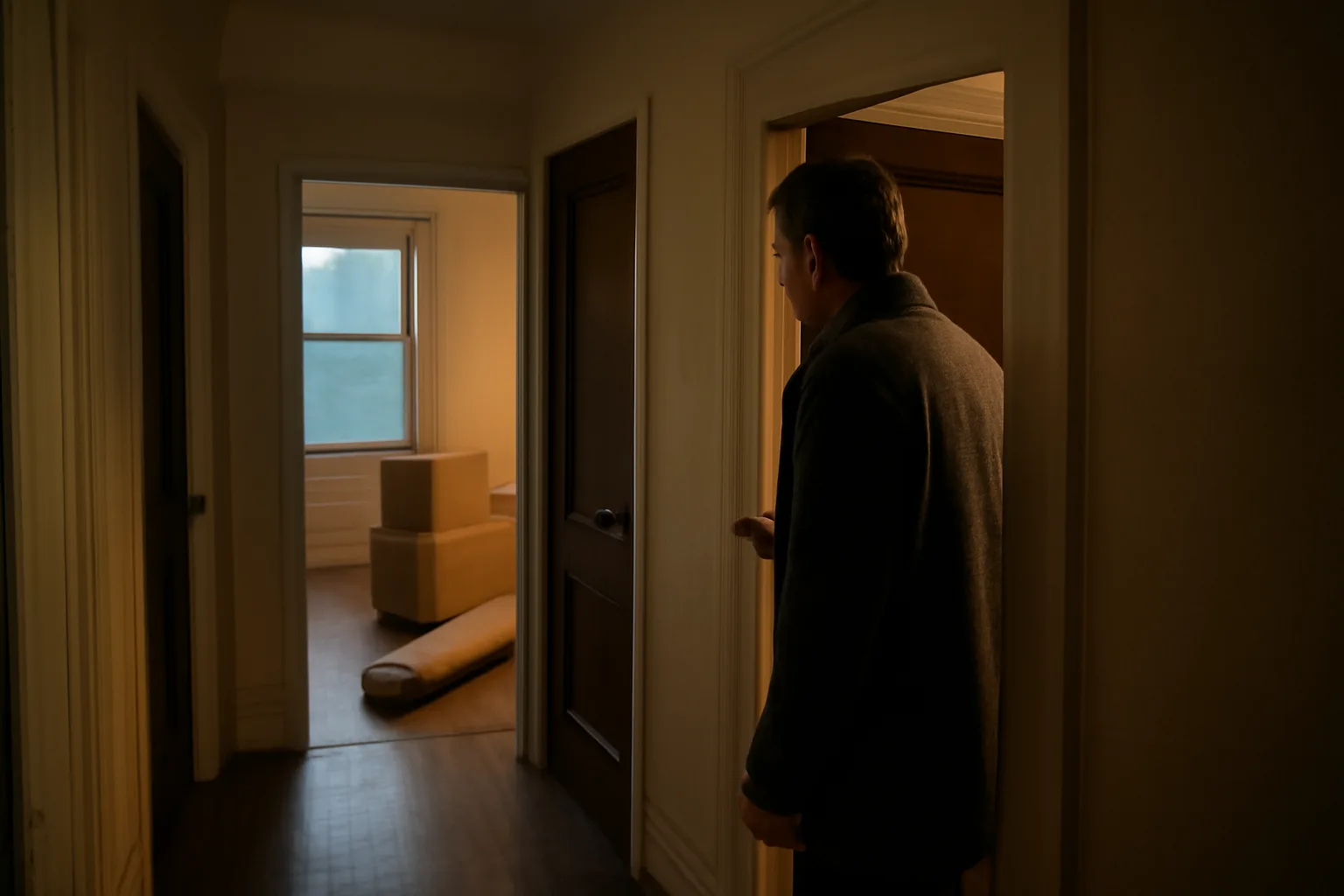
This comes up more than you'd think in small buildings, duplexes, triplexes, four-plexes where one landlord manages a few units under one roof. A tenant asks to keep a dresser or a few boxes in the empty unit next door during a move. A tenant transitions between two units in the same building (sometimes called a mutual lease swap, where both sides agree to move the tenant to a different unit mid-lease) and stuff sits in both spaces for a week or two. Or you do a routine walkthrough ahead of a license renewal and find a stranger's belongings in a unit that's supposed to be vacant. None of this is automatically a problem. It becomes a problem when a city rental inspector, or the licensing office reviewing your renewal, can't match what they see to who's on the lease for that unit. Most mandatory-licensing cities register units by address and expected occupancy. If an inspector finds personal property, especially bedding, clothing, or mail, in a unit that isn't the tenant's registered unit, that can read as an unreported occupant, an informal sublet, or overcrowding. Any of those can delay a license or trigger a follow-up inspection. The fix isn't complicated. You put the arrangement in writing before the inspector finds it, not after. That written record is what people mean by a mutual letter (some call it a mutual agreement letter, others a mutual lease addendum, though it's usually a standalone letter rather than a change to the lease itself).
What is a mutual agreement letter, and when do you actually need one?
A mutual agreement letter is a short, dated document signed by both landlord and tenant that describes a temporary or unusual arrangement outside the normal lease terms. For belongings stored in another unit, it typically states which unit the tenant's lease covers, which unit the items are actually in, what the items are (in general terms, not a full inventory), why they're there, and when the arrangement ends. You need one any time the physical reality of a unit won't match its lease or licensing record if someone walks in cold. That includes a tenant storing overflow items in a vacant unit during a move, a landlord letting a tenant use part of an empty unit as temporary storage in exchange for reduced rent, or a mid-lease unit swap where the paperwork hasn't caught up to where the tenant actually sleeps. What it isn't: a substitute for updating the lease if the arrangement becomes permanent, and not a way to quietly add an occupant or dodge your city's per-unit occupancy limits. If a tenant is genuinely moving into the second unit long-term, that needs its own lease and, in most licensing cities, its own registration. A mutual letter covers a short, defined, temporary situation, not a permanent one you're trying to avoid putting on paper. This isn't legal advice, and if the arrangement gets complicated (rent credit, disputed ownership of items, anything approaching a sublet), it's worth a quick call to a local landlord-tenant attorney or your city's tenant rights office before you sign anything.
What is a landlord, and what does landlording actually mean?
A landlord is the owner (or the owner's authorized agent) of real property who rents it to someone else, called a tenant, in exchange for payment. Cornell Law School's Legal Information Institute defines the landlord-tenant relationship as one created by a lease, which can be written or oral, and which gives the tenant a temporary right to possess and use the property in exchange for rent [1]. Landlording is the everyday word for the job itself, not a legal term. It covers everything that comes after you sign a lease: collecting rent, handling repairs, responding to complaints, doing move-in and move-out inspections, keeping the unit compliant with local codes, and dealing with your city's rental registration or licensing program if one applies. Landlording is closer to running a small service business than owning an investment that runs itself. Most first-time landlords underestimate the paperwork side of it, especially in cities that require annual or biennial rental licenses and scheduled inspections.
How do you become a landlord, and how do you actually be a good one?
Becoming a landlord starts before you own a rental at all. If you're buying property specifically to rent, most landlords look at whether to hold it personally or through an LLC, since an LLC can separate personal assets from rental liability, though it adds setup and annual filing costs that vary by state. The IRS treats rental income as reportable regardless of entity structure, and landlords generally file Schedule E with their federal return to report rental income and expenses. Beyond structure, becoming a landlord means learning the rules that actually govern you day to day: your state's landlord-tenant law on security deposits, notice periods, and habitability, plus your city's rental registration or licensing requirements if you're in one of the many municipalities that has one. You'll also want landlord insurance (different from a homeowner's policy), a plan for tenant screening that complies with fair housing law, and a system for tracking lease dates, inspection deadlines, and license renewals. Being a good landlord day to day comes down to a short list: respond to repair requests quickly, give proper notice before entering, keep the unit safe and code-compliant, and put everything in writing. Landlords who skip the paperwork are the ones who get surprised by a violation notice or a fine they can't contest because there's no record of what actually happened. If you're just starting out, read up on landlord basics before you sign your first lease, not after.
What rights does a tenant have without a signed lease?
A tenant without a signed lease usually isn't unprotected, they're typically a month-to-month tenant under state law, and month-to-month tenants keep almost all the same protections as tenants with a written lease. That includes the right to a habitable unit, protection from illegal lockouts or utility shutoffs, and the right to advance notice before the landlord ends the tenancy or raises rent, with the specific notice period set by state law (often 30 days, sometimes longer for longer tenancies). The Consumer Financial Protection Bureau's renter resources note that even without a written lease, tenants generally retain rights under state and local law covering habitability, privacy, and non-discrimination. What a tenant without a lease usually gives up is certainty: without written terms, disputes over rent amount, who pays for what, or how much notice applies can come down to state default rules or, in the worst case, conflicting recollections. If you're renting month-to-month, both landlord and tenant benefit from at least a short written agreement covering rent, due date, and notice terms. For a broader look at what protections apply, see renters rights and tenants rights by state.
Why do landlords require renters insurance?
Landlords require renters insurance mainly to shift liability, not to protect the building. Your landlord policy covers the structure itself; it generally doesn't cover a tenant's personal property or a tenant's liability if, say, their guest gets hurt in the unit or they accidentally cause a fire. Renters insurance covers the tenant's belongings and gives them (and indirectly you) a source of funds if they're found liable for damage. The Insurance Information Institute notes that renters insurance is inexpensive relative to the protection it provides, commonly in the range of a modest monthly premium depending on coverage limits and location. Many landlords now require proof of an active renters insurance policy, naming the landlord as an interested party or additional insured, as a lease condition. It's a cheap way to reduce your own exposure if something goes wrong in a unit you don't personally occupy or control day to day.
How much notice does a landlord have to give before entering a unit?
| California | 24 hours (presumed reasonable) | Cal. Civ. Code § 1954 [2] | |
|---|---|---|---|
| Ohio | 24 hours (presumed reasonable) | Ohio Rev. Code § 5321.04 [3] | |
| Florida | 12 hours (presumed reasonable) | Fla. Stat. § 83.53 | California's civil code requires landlords to give tenants "reasonable notice in writing" before entering for non-emergency purposes, and the statute treats 24 hours as reasonable absent contrary evidence [2]. Ohio's statute goes further and says it directly: landlords must give tenants "reasonable notice of the landlord's intent to enter and enter only at reasonable times," and the code states that "twenty-four hours shall be presumed to be reasonable notice in the absence of evidence to the contrary" [3]. Florida sets the bar lower, at 12 hours. Because these numbers vary and cities sometimes layer on their own rules through local ordinance, confirm the exact notice period with your city rental licensing office or your state's landlord-tenant statute before you schedule any entry, including a routine license inspection. |
There's no single federal rule here. Notice requirements for landlord entry are set state by state, and they range from no fixed statutory number to a specific, presumed-reasonable window written into the code. | State | Notice before entry | Source |
What can a landlord look at during a rental inspection?
During a routine or licensing inspection, a landlord (or a city inspector) is generally there to check safety and condition items: smoke and carbon monoxide detectors, electrical outlets and panels, plumbing for leaks, heating systems, window and door locks, egress routes, and any obvious code violations like exposed wiring or missing handrails. Inspectors are checking whether the unit matches its registered condition and occupancy, not doing a general search of the tenant's possessions. What a landlord generally should not do during an inspection is open drawers, closets, or personal storage that isn't relevant to a safety check, or use the visit to look through a tenant's belongings. Most state laws limit landlord entry to the stated purpose given in the notice (repairs, inspection, showing the unit) and don't extend to a general inspection of what the tenant owns. If you're prepping for a city license renewal inspection specifically, it helps to know what your city's checklist actually covers before the inspector arrives, since requirements vary widely by municipality. A City Rental License & Inspection Prep Packet ($79 one-time, at /rental-packet-builder) is built around exactly this: pulling together the common inspection points, documentation, and notice templates landlords need before a scheduled visit, so you're not guessing at what the inspector will check.
Who is responsible for the rental property walk-through inspection in California?
In California, the landlord is responsible for offering an initial move-out inspection if the tenant requests one, under California Civil Code Section 1950.5. The statute gives tenants the right to request an inspection before they vacate, specifically so they can fix any deductible issues themselves before the landlord finalizes the security deposit deductions [2]. Under the law, the landlord must give the tenant reasonable notice of the date and time of that initial inspection, and both landlord and tenant have the right to be present. After the inspection, the landlord provides an itemized statement of anything that still needs repair or cleaning to avoid a deposit deduction. This initial walkthrough is separate from any final move-out inspection after the tenant has actually vacated, and it's optional, meaning it happens only if the tenant asks for it or the landlord chooses to offer it. For city-level license or safety inspections in California (separate from the security deposit walkthrough), responsibility usually falls on the property owner to schedule and be present for, or to designate an authorized agent, since most municipal rental inspection programs require the owner of record to coordinate access. Confirm the specifics with your city rental licensing office, since California cities run their own separate inspection programs on top of state deposit law.
What can't a landlord do in Ohio?
Ohio law draws a hard line against landlord self-help. Under Ohio Revised Code Section 5321.15, a landlord cannot recover possession of a rental unit except through legal eviction proceedings; the statute specifically bars landlords from using or threatening force, changing the locks without a court order, or willfully shutting off utilities like water, electricity, or gas to force a tenant out. Ohio Revised Code Section 5321.02 also prohibits retaliatory conduct, meaning a landlord can't raise rent, decrease services, or start eviction proceedings mainly because a tenant complained to a government agency about a code violation or exercised a legal right (like requesting repairs). And under Section 5321.04, a landlord can't enter a unit without giving reasonable notice (24 hours is the presumed standard, discussed above) except in a genuine emergency. In short: no lockouts, no utility shutoffs, no self-help evictions, and no punishing a tenant for asserting a legal right. The Ohio Attorney General's consumer protection resources cover these landlord-tenant basics for both sides if you want the plain-language version. Violating these provisions can expose a landlord to damages and attorney's fees under Ohio law, on top of whatever eviction case gets thrown out for being done the wrong way.
How do you actually write the mutual letter when belongings show up in the wrong unit?
Keep it short, factual, and signed by both people. A mutual agreement letter for this situation generally needs: the date, both parties' names, the tenant's actual leased unit number, the other unit where items are located, a general description of what's stored there (a few pieces of furniture, several boxes, not a full itemized inventory unless there's a dispute risk), the reason for the arrangement, and an end date or a trigger event (like when the next unit's new tenant moves in). Both landlord and tenant sign it. Keep a copy with your lease file for that unit and a copy with the file for the unit where the items actually sit, so if an inspector or licensing reviewer opens either file, the explanation is right there. A few things this letter should not try to do: it shouldn't function as a new lease, shouldn't grant the tenant a right to occupy the other unit (occupying and storing are different things, and cities generally care a lot more about the first one), and it shouldn't be your only fix if the arrangement is going to last more than a few weeks. If storage turns into occupancy, or the timeline keeps sliding, update the actual lease and, if your city requires it, update your rental registration to reflect who's living where. If you're unsure whether a specific situation crosses that line, that's a good moment to check with your city rental licensing office or a local attorney rather than guess.
Does this situation put your rental license or inspection at risk?
It can, but usually only if it looks undocumented. Most rental licensing offices care about three things when they see something unexpected in a unit: is the occupancy legal, does it match what's registered, and is there a paper trail if something's out of the ordinary. A signed mutual letter answers all three in about thirty seconds of an inspector's time. An unexplained pile of someone else's belongings with no documentation invites more questions, and sometimes a formal violation notice or a delayed license renewal while the office sorts it out. Cities vary a lot here. Some inspection programs barely glance at personal property and focus entirely on life-safety systems. Others, especially in cities cracking down on unregistered occupancy or illegal conversions, look closely at anything that suggests more people are living in a building than what's on file. Confirm your city's specific stance with your local rental licensing office before your next scheduled inspection, since fines for undisclosed occupancy in some mandatory-licensing cities run into the hundreds of dollars per violation, and repeat or willful violations can run higher. If you manage even a couple of units and you're trying to get ahead of a license renewal or a first-time inspection, it's worth assembling your documentation before the inspector shows up rather than scrambling after a notice. That's the whole idea behind the $79 City Rental License & Inspection Prep Packet at /rental-packet-builder, a one-time packet built to help landlords organize the paperwork, notices, and checklists that most mandatory-licensing cities expect to see. None of this is legal advice, and program details differ by city, so always confirm specific fees, forms, and deadlines directly with your city rental licensing office.
Frequently asked questions
What is a mutual agreement letter for tenant belongings stored in another unit?
It's a short, signed document from both landlord and tenant confirming that some of the tenant's belongings are temporarily stored in a unit other than their leased unit. It states which units are involved, roughly what's stored, why, and when the arrangement ends. It protects both parties if a city inspector or licensing reviewer finds items that don't match the lease on file.
Can a landlord store a tenant's belongings in a different unit without the tenant's permission?
No, not without written agreement from the tenant. A tenant's personal property remains theirs to control. If a landlord needs to temporarily relocate items (during a repair, for example), that should be documented in writing and agreed to by the tenant beforehand, not decided unilaterally by the landlord.
How do I become a landlord?
Decide whether to hold property personally or through an LLC, learn your state's landlord-tenant law and your city's rental registration or licensing rules, get landlord insurance, set up a compliant tenant screening process, and build a system for tracking lease dates and inspection or license deadlines. The IRS requires reporting rental income regardless of entity structure, typically on Schedule E [6].
What is landlording?
Landlording is the day-to-day work of owning and managing rental property: collecting rent, handling repairs, doing inspections, keeping the unit code-compliant, and staying current with any city rental licensing requirements. It's the practical, ongoing side of being a landlord, as opposed to just owning the asset.
What is a landlord?
A landlord is the owner, or an authorized agent of the owner, of real property that's rented to a tenant under a lease, written or oral, in exchange for payment. Cornell Law School's Legal Information Institute defines the landlord-tenant relationship as one created by that lease arrangement [1].
What rights do tenants have without a signed lease?
Tenants without a written lease are usually month-to-month tenants under state law and keep nearly all standard protections: habitability, protection from illegal lockouts or utility shutoffs, non-discrimination, and required notice before rent increases or ending the tenancy. The main thing they lose is certainty over specific terms, since nothing is written down.
Why do landlords require renters insurance?
Landlords require it mainly to shift liability away from themselves. A landlord's own insurance covers the building, not the tenant's belongings or the tenant's liability if a guest is injured or the tenant accidentally causes damage. Renters insurance is relatively cheap and covers both of those gaps [9].
How much notice does a landlord have to give before entering a unit?
It depends on the state. California and Ohio both treat 24 hours as presumed reasonable notice [3][4]. Florida sets 12 hours as reasonable [5]. Some states don't specify an exact number at all, just require reasonable notice. Confirm your specific state's requirement, since local ordinances sometimes add stricter rules.
What can a landlord look at during a rental inspection?
Typically smoke and carbon monoxide detectors, electrical and plumbing systems, heating, locks, and egress routes, plus general code compliance. A landlord or inspector generally shouldn't be searching through closets, drawers, or personal belongings unrelated to the stated purpose of the visit.
Who is responsible for the rental property walk-through inspection in California?
The landlord is responsible for offering an initial move-out inspection if the tenant requests one, under California Civil Code Section 1950.5, and for giving reasonable notice of that inspection [2]. Separate city-level license or safety inspections are usually coordinated by the property owner or an authorized agent; confirm specifics with your city rental licensing office.
What can't a landlord do in Ohio?
Ohio landlords can't use self-help evictions, meaning no lockouts, no shutting off utilities, and no forcing a tenant out without a court order, under Ohio Revised Code Section 5321.15 [8]. They also can't retaliate against a tenant for exercising legal rights, per Section 5321.02, and must give reasonable entry notice under Section 5321.04 [4].
Does storing a tenant's belongings in another unit count as illegal occupancy?
Storing items alone usually isn't occupancy, but it can look like it to an inspector, especially if bedding, clothing, or mail are involved. Occupancy generally refers to someone actually living in a space. If the arrangement drifts from storage into someone sleeping there, that's a different, more serious compliance issue that needs its own lease and registration update.
Do I need a lawyer to write a mutual belongings agreement letter?
For a simple, short-term storage arrangement, most landlords write it themselves using plain, factual language: dates, units involved, description of items, and an end date, signed by both parties. If the situation involves disputed ownership, rent credits, or anything close to a sublet, it's worth a quick check with a local landlord-tenant attorney before signing.
Sources
- Cornell Law School, Legal Information Institute, Wex: Landlord-Tenant Law: Definition of the landlord-tenant relationship as created by a lease, written or oral
- Florida Senate, Florida Statutes: 12 hours presumed reasonable notice before landlord entry, Florida Statute 83.53
- Internal Revenue Service, Publication 527: Rental income and expense reporting requirements for landlords
- Consumer Financial Protection Bureau, Renting a Home resources: Tenants retain habitability, privacy, and non-discrimination rights even without a written lease
- Cornell Law School Legal Information Institute: Federal housing statutes reference tenant rights in rental units, relevant to disputes over belongings found in another unit.
- Ohio Revised Code: Ohio law outlines specific landlord obligations and prohibited actions, relevant to what a landlord can't do in Ohio.
- Ohio Revised Code: Ohio statute detailing tenant obligations and protections, relevant to tenant rights without a signed lease.
- California Department of Real Estate: California guidance on rental property walk-through inspections and landlord/tenant responsibilities.
- California Legislative Information: California Civil Code section governing security deposits and move-in/move-out inspections, relevant to who is responsible for the walk-through inspection.
- California Legislative Information: California Civil Code section 1954 specifying notice requirements before a landlord may enter a rental unit.
- U.S. Department of Housing and Urban Development: HUD guidance on tenant rights, applicable to tenants without a signed lease.
- National Association of Insurance Commissioners: Explains why landlords require renters insurance and what it covers for tenants' belongings.