Last updated 2026-07-26
TL;DR
Becoming a landlord means more than buying a property and finding a tenant. Most cities with rental licensing require you to register the unit, pass an inspection, and follow state notice and habitability rules before you can legally rent it out. Requirements vary by city, so confirm specifics with your local rental licensing office before listing a unit.
What is landlording, exactly?
Landlording is the business of owning residential property and renting it to tenants in exchange for regular payment. That's the plain definition, but the actual job is closer to running a small regulated business than collecting a check. You're responsible for habitability, repairs, legal notice periods, security deposit handling, fair housing compliance, and in a growing number of cities, rental licensing and inspection requirements. The scope of the job depends heavily on where the property sits. A landlord in a small town with no registration ordinance has a much lighter compliance load than one in a city like Minneapolis or Los Angeles, where rental units need a license, periodic inspection, and proof of code compliance before they can be legally occupied. Neither version is 'landlording lite.' Both carry the same core legal duties around habitability and tenant rights, just with different paperwork sitting on top. If you're brand new to this, think of landlording as three overlapping jobs: property manager (repairs, turnover, showings), bookkeeper (rent, deposits, expenses, taxes), and compliance officer (licenses, inspections, notices, insurance requirements). Most landlords with 1 to 10 units end up doing all three themselves, at least at first.
What is a landlord, legally speaking?
A landlord is the party who owns or controls residential real property and leases it to another party (the tenant) under a rental agreement, written or oral. Most state landlord-tenant statutes define the term this way, often folding in property managers and agents acting on the owner's behalf. For example, many states' landlord-tenant acts treat a 'landlord' as the owner or the owner's authorized agent for purposes of notices, repairs, and rent collection. The legal label matters because it triggers a set of duties, more than rights. Once you're a landlord under your state's statute, you generally owe the tenant a habitable unit, proper notice before entry, timely deposit handling, and non-discriminatory treatment under fair housing law. You don't get to opt out of these by calling yourself something else, like a 'host' or an 'informal landlord.' If money changes hands for the right to occupy a unit, the law treats you as a landlord regardless of what your listing calls it.
How do you become a landlord, step by step?
Becoming a landlord involves more steps than most first-timers expect, especially once a city rental licensing ordinance is involved. Here's the realistic sequence. 1. Confirm you can legally rent the unit. Check zoning (some single-family zones restrict rentals or short-term rentals), HOA rules if applicable, and mortgage terms (some owner-occupant loans restrict renting out the property within a certain period). 2. Check your city's rental registration or licensing requirement. A large share of U.S. cities, especially in the Midwest and Northeast, require landlords to register or license every rental unit before it's occupied. Confirm the specific requirement, fee, and renewal cycle with your city rental licensing office, since these vary block by block in some metro areas. 3. Prep the unit for inspection if your city requires one. Working smoke and carbon monoxide detectors, functioning locks, no exposed wiring, adequate egress from bedrooms, and working heat are common baseline items across most municipal housing codes. 4. Get landlord insurance (and often require renters insurance from your tenant, more on that below). 5. Set your lease terms, screening criteria, and rent price in line with fair housing law and any local rent control or just-cause eviction rules. 6. Screen tenants consistently, using the same criteria for every applicant, and keep records showing you did. 7. Sign the lease, collect the deposit within your state's cap and handling rules, and document the unit's condition with photos and a move-in checklist. Skipping step 2 is the single most common first-year mistake among new small landlords. Cities that catch an unregistered rental often issue a violation notice and fine before you even know an inspection program exists in your neighborhood.
Who is responsible for the rental property walkthrough inspection in California?
In California, the landlord (or their property manager) is responsible for conducting a habitability inspection before a tenant moves in, and California Civil Code Section 1950.5(f) gives tenants a separate right to request a joint pre-move-out inspection when they're vacating. That pre-move-out inspection is initiated by the landlord's notice, but it's the tenant's right to request it, and the landlord must give the tenant at least 48 hours' written notice before conducting it if the tenant doesn't waive that notice. Separately, if the rental sits in a city with its own rental inspection program (Los Angeles's Systematic Code Enforcement Program, for instance, inspects units on a cycle set by the L.A. Housing Department), the city's own inspector, not the landlord, conducts that compliance inspection. The landlord's job there is to schedule access, fix any cited violations, and pay the associated inspection fee, which for LAHD's program has historically been billed as part of the annual registration fee charged per unit. Confirm current SCEP fees and inspection cycles with LAHD directly, since they're adjusted periodically. [1] So the honest answer has two layers: the landlord is responsible for arranging and conducting the state-required move-in and move-out condition inspections, while a city's own code inspector handles any separate municipal rental-licensing inspection where one exists.
What can a landlord look at during an inspection?
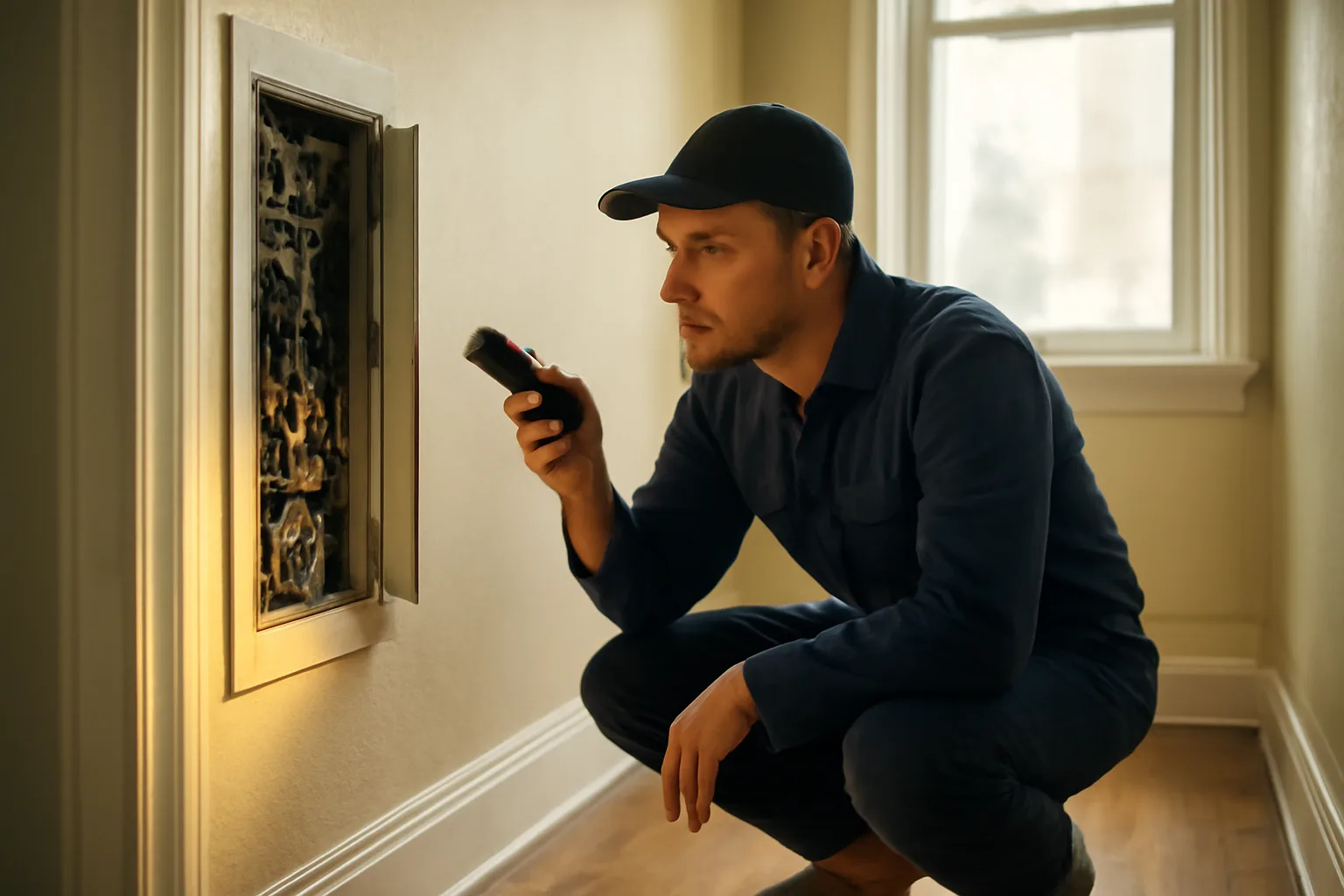
A landlord's inspection, whether it's a routine walkthrough, a move-out inspection, or one tied to a city licensing program, generally covers the physical condition and safety of the unit, not the tenant's personal belongings or how they're living day to day. Typical inspection scope includes: - Smoke and carbon monoxide detector presence and function
- Working plumbing, no active leaks, functioning water heater
- Electrical safety (no exposed wiring, functioning outlets, no overloaded circuits)
- Heating system function, especially before winter in cities that require it
- Structural issues (windows that open and lock, secure doors, no significant water damage)
- Pest evidence
- General cleanliness related to health and safety, not decor or lifestyle What a landlord generally cannot do during an inspection is search through closets, drawers, or personal items beyond what's needed to check the condition items above, or use the inspection as a pretext to surveil the tenant. Most state statutes tie the landlord's right to enter to specific purposes: repairs, inspections, showing the unit to prospective tenants or buyers, or emergencies. Entering for any other reason, or entering more often than the lease and statute allow, can expose the landlord to a claim for violating the tenant's right to quiet enjoyment. Municipal rental-licensing inspections are narrower still. A city code inspector is checking against the local housing or building code (detectors, egress, structural safety, pest and sanitation issues), not judging how tidy the unit is or what the tenant owns.
How much notice does a landlord have to give before entering or inspecting?
Most states require at least 24 hours' written or verbal notice before a landlord enters an occupied unit for a non-emergency reason, though the exact figure and required form of notice vary by state. California requires 'reasonable notice,' which the same Civil Code section presumes to be 24 hours unless circumstances make that impracticable, and requires that notice unless the tenant consents to a shorter window or there's an emergency. Some states set a different baseline. For example, Oregon generally requires at least 24 hours' notice for entry under ORS 90.322, and specifies that entry must happen at reasonable times. [2][3] Emergencies are the standard exception across nearly every state's landlord-tenant statute: a burst pipe, fire, or gas leak lets a landlord enter without advance notice, because delaying to give notice would make the emergency worse. City rental-licensing inspections work differently. In many jurisdictions, the landlord has to coordinate access with the inspection department directly, and the city typically requires the landlord to give tenants notice of the scheduled inspection date, sometimes with a specific notice period spelled out in the local rental licensing ordinance itself. Since that notice period is a local ordinance detail and not a single national standard, confirm it with your city rental licensing office rather than assuming your state's general entry-notice statute controls the municipal inspection too. One more wrinkle: notice for entry and notice for a lease change, like a rent increase or lease non-renewal, are governed by completely different rules and often a longer notice period, sometimes 30, 60, or 90 days depending on the state and how long the tenant has lived there.
Why do landlords require renters insurance?
Landlords require renters insurance mainly to shift liability and property-loss risk off themselves and onto a policy the tenant carries. A standard landlord insurance policy covers the building structure and the landlord's own property, but it typically does not cover a tenant's personal belongings if they're damaged or stolen, and it may not fully cover a liability claim that originates from the tenant's own negligence (a grease fire from unattended cooking, for instance). Requiring renters insurance, often with a minimum liability coverage amount like $100,000 written into the lease, gives the landlord a practical backstop: if the tenant's actions cause damage to the building or injury to a guest, the tenant's policy is the first line of defense instead of the landlord's own insurer or personal assets. It also protects the tenant, since without a policy, a kitchen fire or a burst pipe in their own unit could leave them paying to replace everything they own out of pocket. There's no federal law requiring renters insurance, and only a landlord's own lease clause creates the requirement (a few states and cities have weighed in on how landlords can structure this, including capping any 'insurance program' fee a landlord charges in lieu of the tenant buying their own policy). If you're going to require it, put the minimum coverage amount and proof-of-insurance deadline directly in the lease, and check the policy annually at renewal, more than at move-in.
What rights do tenants have without a written lease?
Tenants without a written lease are not without protection. Nearly every state recognizes an oral or month-to-month tenancy as legally binding, and the tenant still gets the core protections under that state's landlord-tenant statute: the right to a habitable unit, the right to advance notice before the landlord enters, protection from illegal lockouts or utility shutoffs used to force them out, and the right to proper notice before the tenancy is terminated. Without a written lease, the tenancy typically defaults to month-to-month, which means either party can end it with the notice period their state requires, commonly 30 days, though some states require more for longer-term tenants (California, for instance, requires 60 days' notice to end a month-to-month tenancy where the tenant has lived in the unit for a year or more, under Civil Code Section 1946.1). [4] What a tenant loses without a written lease is mostly evidentiary clarity: no fixed rent amount in writing, no agreed end date, no documented rules about pets, guests, or subletting. Disputes without a lease often come down to whose account of the verbal agreement is more credible, which is exactly why writing at least a basic lease, even for a single-family rental to a friend or relative, saves both sides real trouble later. If you're renting out a unit and haven't formalized terms yet, tenant rights resources for your specific state spell out what applies even without paper in hand.
What can't a landlord do in Ohio?
Ohio's landlord-tenant law (Ohio Revised Code Chapter 5321) spells out a specific list of things a landlord cannot do, and most of it centers on retaliation, self-help eviction, and habitability. Under ORC 5321.02, a landlord cannot retaliate against a tenant, meaning the landlord can't raise rent, decrease services, or move to evict a tenant specifically because the tenant complained to a government agency about a code violation, joined a tenants' union, or asserted rights under the chapter. [5] Ohio also prohibits 'self-help' eviction. A landlord cannot change the locks, shut off utilities, remove the tenant's belongings, or otherwise force a tenant out without going through the formal eviction process in court, even if the tenant is behind on rent. ORC 5321.15 specifically bars a landlord from using force, threats, or utility shutoffs to remove a tenant instead of filing an eviction action. [6] On habitability, ORC 5321.04 requires the landlord to keep the premises in a condition fit for habitation, comply with building and housing codes, and make repairs promptly. A landlord in Ohio also cannot enter the unit without reasonable notice, generally 24 hours, except in an emergency, per the same chapter's entry provisions. Other things Ohio law prohibits: charging a security deposit and then failing to return it or provide an itemized list of deductions within 30 days of the tenant vacating (ORC 5321.16), and refusing to make repairs that affect health and safety after receiving proper written notice from the tenant. [7]
What's the fastest way to get a rental unit licensed and inspection-ready?
There's no shortcut around the actual inspection, but there is a faster path through the paperwork and prep. Start by pulling your city's specific rental licensing checklist directly from the housing or code enforcement department's page, not a generic national list, since requirements for detector placement, egress, and required disclosures vary by city ordinance. Most failed first inspections come down to a small handful of repeat issues: missing or expired smoke detector batteries, no carbon monoxide detector where required, egress windows painted shut or blocked, and expired fire extinguisher tags in multi-unit buildings. Fixing those before the inspector shows up costs far less than a reinspection fee, which in many cities runs $50 to $200 per reinspection on top of the original licensing fee. Confirm your city's specific reinspection fee and cycle with the rental licensing office, since it varies widely. If you're managing the licensing and inspection prep process for the first time, or you've got a violation notice sitting on your desk right now, our $79 City Rental License & Inspection Prep Packet walks through the registration paperwork, the common inspection checklist items, and the timeline most cities expect you to hit, so you're not reverse-engineering the ordinance from scratch under a fine deadline.
What happens if you skip licensing or ignore an inspection notice?
Cities that require rental licensing generally have real enforcement teeth, and 'I didn't know I needed one' is not a defense that holds up once you're on their radar. Typical consequences for an unlicensed rental include a notice of violation with a cure period (often 30 days), followed by escalating fines if the unit still isn't registered, and in some cities, a bar on collecting rent or even filing an eviction action until the unit is properly licensed. Minneapolis, for example, requires all rental properties to hold a current rental license under its rental licensing ordinance, and operating without one, or letting a license lapse, can trigger administrative fines and can complicate the landlord's ability to pursue an eviction for nonpayment in some circumstances. Confirm current fine amounts and any rent-collection restriction with Minneapolis's specific rental licensing office, since ordinance penalty schedules get updated. The pattern holds across most licensing cities: the fine for staying unregistered is almost always more expensive, and more disruptive, than the licensing fee and inspection prep would have been in the first place. If you've already gotten a notice, the priority is getting registered and inspection-ready fast, not arguing the notice, since most municipal licensing ordinances don't have a meaningful appeals path for the basic requirement to register at all.
How does licensing differ for a single-family rental versus a multi-unit building?
| Registration required | Often, once owner-occupied status ends | Almost always | |
|---|---|---|---|
| Inspection frequency | Varies, some cities every 1-3 years | Often more frequent, sometimes annual | |
| Common-area fire code items | Rarely applicable | Frequently required | |
| Per-unit fee structure | Single flat fee typical | Often per-unit fee, confirm with city | If you own a mixed portfolio (a single-family here, a fourplex there), don't assume the same license and inspection rules apply across every property. Check each address individually against your city's current rental registry, since exemption thresholds and inspection cycles are usually set at the ordinance level and can differ by property type within the same city. |
Rental licensing requirements often scale with unit count and building type, though the exact threshold is set locally, not nationally. Some cities exempt single-family homes rented by an owner-occupant from licensing but require it the moment the owner moves out and the home becomes a straight rental. Others require every rental unit to register regardless of building size, including a single room rented in an owner-occupied duplex. Multi-unit buildings frequently face a heavier inspection load: common-area fire code items (extinguishers, exit signage, fire doors), shared systems (boilers, elevators if present), and sometimes a per-unit inspection cycle rather than a single building-wide check. A 4-unit building might need each unit inspected on a staggered schedule rather than all at once, which changes how you plan tenant notice and access. Here's a general comparison of common licensing elements, though every number below should be confirmed against your specific city's current ordinance: | Element | Single-family rental | Small multi-unit (2-10 units) |
Frequently asked questions
How do you become a landlord if you've never rented out property before?
Confirm you can legally rent the unit (zoning, HOA, mortgage terms), check whether your city requires rental registration or licensing, prepare the unit to meet basic habitability and safety code, get landlord insurance, and set lease terms that comply with your state's landlord-tenant law and fair housing rules before you screen and sign a tenant.
What is landlording as a job, day to day?
Landlording combines property management (repairs, turnover, showings), bookkeeping (rent, deposits, taxes), and compliance work (licenses, inspections, notice periods). For a 1-10 unit owner, most of this falls on one person, at least until the portfolio grows enough to justify hiring a property manager.
What legally makes someone a landlord?
A landlord is the owner of residential property, or their authorized agent, who leases it to a tenant under a rental agreement, written or oral. Most state landlord-tenant statutes define the term this way, and the legal duties (habitability, notice, fair housing compliance) attach automatically once that relationship exists, regardless of what the arrangement is called.
Who does the rental property walkthrough inspection in California?
The landlord or their property manager conducts move-in and move-out condition inspections, and California Civil Code Section 1950.5(f) gives tenants the right to request a joint pre-move-out inspection with 48 hours' written notice from the landlord. A separate city code inspector handles any municipal rental-licensing inspection where the property is in a city with that program.
What can a landlord actually look at during an inspection?
A landlord's inspection covers safety and condition items: smoke and CO detectors, plumbing, electrical, heating, structural issues, and pest evidence. It should not extend to searching personal belongings or using the visit to monitor how the tenant lives day to day, beyond what's needed to check those condition items.
How much notice does a landlord have to give before entering the unit?
Most states require at least 24 hours' notice for non-emergency entry. California presumes 24 hours is reasonable under Civil Code 1954, and Oregon requires at least 24 hours under ORS 90.322. Emergencies (fire, gas leak, burst pipe) are an exception in nearly every state's statute.
Why do landlords require tenants to carry renters insurance?
A landlord's own insurance usually doesn't cover the tenant's belongings or liability arising from the tenant's own negligence. Requiring renters insurance, often with a minimum liability amount written into the lease, shifts that risk to the tenant's own policy and protects both parties if there's a fire, theft, or injury.
What rights does a tenant have with no written lease?
Tenants without a written lease still get full protection under their state's landlord-tenant statute: habitability, notice before entry, protection from illegal lockouts, and proper notice before the tenancy ends. The tenancy typically defaults to month-to-month, with a standard notice period (often 30 to 60 days) required to end it.
What can't a landlord do in Ohio specifically?
Ohio Revised Code Chapter 5321 bars retaliation against tenants who report code violations (ORC 5321.02), bars self-help eviction like lock changes or utility shutoffs instead of a court eviction (ORC 5321.15), and requires the landlord to maintain habitability and return deposits with an itemized list within 30 days (ORC 5321.16).
Does every city require a rental license?
No. Rental licensing is set city by city or sometimes county by county, not by federal or, in most states, statewide law. Many mid-size and large U.S. cities do require it, but plenty of smaller towns don't. Always confirm directly with your specific city's rental licensing or code enforcement office.
How much does a rental license or inspection typically cost?
Fees vary widely by city, commonly ranging from under $50 to a few hundred dollars per unit annually, sometimes with an added reinspection fee if the unit fails the first check. Because these fees change and differ by city, confirm the current amount with your city's rental licensing office rather than relying on a generic figure.
What happens if I never registered my rental and get caught?
Most cities issue a violation notice with a cure period, often around 30 days, then escalate to fines if the unit stays unregistered. Some cities also restrict the landlord's ability to collect rent or file eviction until the unit is properly licensed, which usually makes getting registered immediately the cheaper and faster option.
Do single-family rentals need a license the same as apartment buildings?
Sometimes, sometimes not. Some cities exempt owner-occupied single-family homes but require licensing once the owner moves out. Others require registration for every rental unit regardless of building type. Check your specific city's ordinance for the exemption threshold rather than assuming single-family means automatically exempt.
Sources
- California Legislative Information, Civil Code Section 1954: California presumes 24 hours' notice is reasonable before landlord entry absent emergency or tenant consent
- Oregon State Legislature, ORS 90.322: Oregon requires at least 24 hours' notice for landlord entry at reasonable times
- California Legislative Information, Civil Code Section 1946.1: California requires 60 days' notice to terminate a month-to-month tenancy of one year or more
- Ohio Laws, Revised Code Section 5321.02: Ohio law prohibits landlord retaliation against tenants who report code violations or assert rights under Chapter 5321
- Ohio Laws, Revised Code Section 5321.15: Ohio law prohibits self-help eviction methods like lockouts or utility shutoffs instead of a court eviction process
- Ohio Laws, Revised Code Section 5321.16: Ohio landlords must return security deposits with an itemized list of deductions within 30 days of the tenant vacating
- Ohio Laws, Revised Code Section 5321.04: Ohio landlords must keep rental premises in a condition fit for human habitation and comply with housing codes
- California Legislative Information, Civil Code Section 1950.5: Tenants in California may request a joint pre-move-out inspection with 48 hours' written notice from the landlord