Last updated 2026-07-26
TL;DR
Becoming a landlord means more than owning a rental unit. You need to understand your city's registration or licensing rules, pass any required inspection, carry the right insurance, and know your state's notice and entry laws. Most cities with mandatory rental licensing charge a per-unit fee and require a walk-through before you can legally rent.
How do you become a landlord, step by step?
Becoming a landlord is really five separate jobs stacked into one: buyer, business owner, property manager, tax filer, and compliance officer. Most new landlords only think about the first one. Start with the money math before you look at a single property. Lenders typically want a higher down payment for investment property than for a primary home, often 15-25%, and Fannie Mae's own guidance treats non-owner-occupied purchases as higher risk with pricing adjustments to match [1]. Run the numbers on rent versus mortgage, taxes, insurance, and a repair reserve before you sign anything. Next comes the legal setup. Some landlords buy in their own name; others form an LLC to separate personal and rental liability. Either way, check your state's landlord-tenant statute before you ever list a unit, because notice periods, security deposit limits, and entry rules vary a lot by state. Then comes the part most first-timers skip: local registration. A growing number of cities require you to register or license every rental unit before you can legally rent it out, and many of those cities also require a habitability inspection on some schedule (often annual, biennial, or at tenant turnover). Skipping this step is how landlords end up with a violation notice in year one. Finally, get your paperwork system running before your first tenant moves in: lease, move-in checklist, insurance certificate, and a folder for every notice your city sends you. If you're renting in a city with mandatory licensing, our City Rental License & Inspection Prep Packet walks through the document list city programs typically ask for, so you're not scrambling when the inspection letter arrives.
What is landlording, exactly?
Landlording is the ongoing work of owning and operating a rental property: finding tenants, collecting rent, maintaining the unit, handling repairs, and staying compliant with local and state law. It's a business, not a passive investment, even if you only own one duplex. The word gets used loosely, but the core of it is a relationship with legal weight on both sides. You're more than a property owner; you're a party to a contract (the lease) governed by state statute, and in many cities, by a municipal rental code on top of that. Day to day, landlording looks like: screening applicants, drafting or renewing leases, responding to maintenance requests (often within a legally defined window for urgent issues like no heat or a broken lock), handling move-out and deposit return, and keeping records in case of a dispute. Landlord-tenant law in most states requires landlords to maintain a habitable unit, sometimes called the 'implied warranty of habitability,' which covers things like working plumbing, heat, and structural safety [2]. If you own in a city with mandatory rental licensing, landlording also means tracking your renewal date, paying your per-unit or per-property fee, and scheduling the required inspection before it lapses. Miss that, and you're more than out of compliance, you can lose your ability to legally collect rent or evict for nonpayment in some jurisdictions until you're licensed again.
What is a landlord, legally speaking?
A landlord is the person or entity that owns rental property and leases it to a tenant in exchange for rent, taking on specific legal duties in return. Most states define this relationship by statute, more than by the lease itself. Legally, a landlord has to provide a habitable unit, follow the lease terms, give proper notice before entry or before ending a tenancy, and follow state rules on security deposits (how much you can charge, how you must hold it, and the deadline for returning it after move-out, commonly 14 to 30 days depending on the state) [2]. The flip side is that a landlord also has rights: the right to collect rent on time, the right to enforce reasonable lease terms, and the right to evict through the proper legal process when a tenant violates the lease. What a landlord does not have is the right to skip that process. Self-help eviction (changing locks, shutting off utilities, removing belongings without a court order) is illegal in every state we're aware of, even when the tenant is genuinely behind on rent. Cities with rental licensing programs add a layer on top of state law: in those places, being a legal landlord also means being a registered or licensed one. Operating an unlicensed rental in a city that requires it can mean fines, and in some cities, an inability to enforce the lease in court until you're compliant. Check with your specific city's rental licensing office for how that plays out locally, since enforcement varies widely.
Who is responsible for the rental property walk-through inspection in California?
In California, the initial move-in and move-out walk-through inspection is generally the landlord's responsibility to conduct, but the tenant has a right to request one before move-out. California Civil Code section 1950.5 requires that if a tenant requests an initial inspection before vacating, the landlord must give at least 48 hours' written notice of the date and time, and provide the tenant an itemized statement of any deficiencies found so the tenant has a chance to fix them before the final move-out inspection [3]. That's specifically about deposit-related inspections at move-out. It's a separate thing from a city's mandatory rental housing inspection. California doesn't have a single statewide rental licensing or inspection program the way some cities do. Instead, individual California cities run their own programs. Los Angeles, for example, runs the Systematic Code Enforcement Program (SCEP), which requires periodic inspections of rental units and charges an annual per-unit fee, currently billed through the Rent Escrow Account Program framework administered by the Los Angeles Housing Department [4]. Oakland, Berkeley, and other California cities have their own separate rental registration or inspection ordinances. So the honest answer: for the security-deposit walk-through, it's a shared responsibility triggered by tenant request under state law. For code-compliance inspections, it depends entirely on your specific city's program, and you should confirm the current rules with your city's rental housing or code enforcement office, since these get updated and California cities are active about revising them.
What can a landlord look at during an inspection?
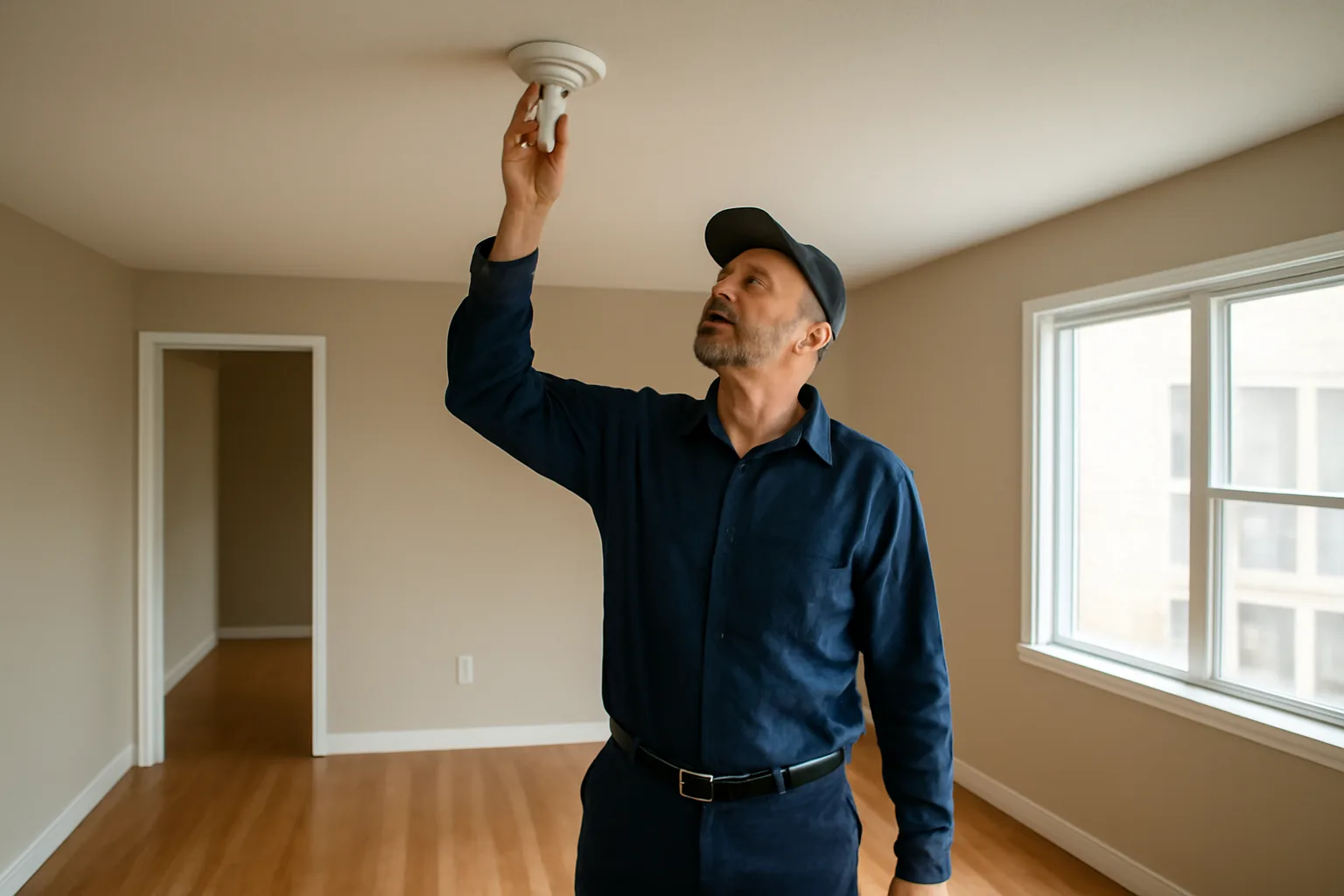
During a routine or move-in/move-out inspection, a landlord can generally look at the physical condition of the unit: walls, floors, ceilings, appliances, plumbing, electrical fixtures, windows, doors, locks, smoke and carbon monoxide detectors, and signs of pest or water damage. The point is documenting condition, not going through a tenant's belongings. What a landlord generally cannot do during an inspection is search through personal property, closets, drawers, or containers unless there's a specific safety reason (like checking for a gas leak) or the tenant invites that scope. An inspection is about the property's condition, not the tenant's possessions. For a city-mandated rental housing inspection (as opposed to a landlord's own walk-through), the inspector is usually checking for code compliance items: working smoke detectors, adequate egress from bedrooms, no exposed wiring, functioning heat, no active leaks, proper handrails on stairs, and pest-free conditions. Many city checklists mirror the International Property Maintenance Code's minimum standards for structure, plumbing, and mechanical systems [5]. Across basically every state, entry for inspection has to follow proper notice rules (see below), and it has to happen at a reasonable time. A landlord showing up unannounced to 'look around' is not a lawful inspection in most states; it's a notice violation waiting to happen.
How much notice does a landlord have to give before entering?
Notice requirements vary by state, but many require at least 24 hours' advance notice for non-emergency entry, with some states requiring less and a handful more. There's no single national rule, so you need to check your specific state's statute. California requires 'reasonable notice,' which the Civil Code presumes to be 24 hours in most non-emergency circumstances [6]. Some states, like Texas, don't set a specific statutory number of hours in the landlord-tenant chapter but still require entry to be reasonable and generally not otherwise restricted by the lease [7]. Other states specify 24 or 48 hours depending on the reason for entry (routine inspection versus showing the unit to a prospective buyer or tenant, for example). Emergencies are the standard exception almost everywhere: a landlord can enter without advance notice if there's a fire, flooding, gas leak, or another situation posing immediate danger to life or property. That exception exists in nearly every state's statute in some form, even where routine-entry notice rules differ. Municipal rental inspections are a different animal again. Cities that require a code compliance inspection typically schedule it with the landlord in advance (often by mail with a set date, or by requiring the landlord to book an appointment within an inspection window), and the landlord is then responsible for notifying the tenant per state law before that inspector or the landlord enters the unit. Don't assume the city's notice to you satisfies your state's notice requirement to your tenant; it usually doesn't, so send your own notice to the tenant separately.
Why do landlords require renters insurance?
Landlords require renters insurance mainly to cover the tenant's personal property and liability, since a landlord's own property insurance typically does not cover a tenant's belongings or a tenant's liability for incidents inside the unit. It also gives the landlord a layer of protection if a tenant's negligence (an overflowing tub, an unattended candle) causes property damage. A standard landlord property insurance policy covers the building structure and the landlord's own equipment or fixtures. It generally does not cover a tenant's furniture, electronics, or clothing if there's a fire, burst pipe, or theft. Without renters insurance, a displaced tenant has no coverage for those losses, which can turn into a dispute (or worse, a claim against the landlord) after the fact. Renters insurance also typically includes liability coverage, often in the range of $100,000 or more depending on the policy, which protects the tenant (and indirectly the landlord) if a guest is injured in the unit and sues. Many landlords require proof of an active policy as a lease condition and ask to be listed as an 'interested party' so they're notified if the policy lapses. Cost-wise, renters insurance is cheap relative to what it covers. The average annual renters insurance premium in the U.S. was around $174 per year (roughly $15 a month) according to the National Association of Insurance Commissioners' most recent countrywide average dwelling/renters data compilation [8]. That's a low bar to clear for the coverage it provides, which is part of why so many landlords make it a standard lease requirement rather than a suggestion.
What rights do tenants have without a lease?
A tenant without a written lease, sometimes called a tenant-at-will or a month-to-month tenant by default, still has real legal rights under state law. No written lease does not mean no protections. Most states treat an oral or unwritten rental arrangement (once rent has been paid and accepted) as a month-to-month tenancy, governed by the same core landlord-tenant statute that governs written leases: right to habitability, right to proper notice before entry, right to proper notice before termination, and protection from illegal eviction. The absence of a written lease mainly affects the term length and what's enforceable about specific terms (pet rules, extra fees, etc.), not the tenant's basic statutory protections. Ending a no-lease tenancy generally requires the same kind of advance written notice a landlord would give to end any month-to-month tenancy, commonly 30 days, though some states require more for longer-term tenants or under local just-cause eviction ordinances. A landlord can't simply tell a no-lease tenant to leave tomorrow; state notice-to-vacate rules still apply. Security deposit rules, habitability requirements, and anti-retaliation protections also typically still apply regardless of whether there's a signed lease. If you're a landlord operating without written leases (common with informal family arrangements or long-term verbal agreements), it's worth converting to a written lease anyway, since it protects you as much as the tenant by making terms explicit and provable. We don't draft lease language here, but your state's tenant-rights statute or a local legal aid office can point you to required lease disclosures.
What can't a landlord do in Ohio?
In Ohio, landlords can't shut off utilities, change the locks, or remove a tenant's belongings to force them out, a practice generally referred to as self-help eviction; Ohio law requires landlords to go through the court eviction (forcible entry and detainer) process instead . This applies even when rent is significantly overdue. Ohio Revised Code Chapter 5321 (the Ohio Landlords and Tenants Act) also prohibits landlords from retaliating against a tenant for exercising legal rights, such as reporting a code violation or joining a tenant union; retaliatory conduct includes raising rent, decreasing services, or threatening eviction because of it . A landlord also can't enter the rental unit without reasonable notice (Ohio courts and the statute generally treat 24 hours as reasonable, though the statute itself says 'reasonable notice' rather than a fixed number) except in genuine emergencies . Ohio landlords are also required to maintain the unit in a fit and habitable condition, keep common areas safe, keep electrical, plumbing, and heating systems in good working order, and comply with local building and housing codes. Failing to do so can expose the landlord to a tenant's claim for repair-and-deduct remedies or, in serious cases, constructive eviction claims. Ohio doesn't run a statewide rental licensing program, but individual Ohio cities do run their own rental registration or inspection ordinances (Cincinnati and Columbus both have registration requirements for certain rental properties, for example). Confirm the current rules with your specific city's building or health department, since these ordinances get updated at the local level, not the state level.
How do city rental licensing and inspection programs actually work?
| Registration | Landlord submits property/unit info and pays initial fee | Before first tenant moves in, or at ordinance rollout | |
|---|---|---|---|
| Inspection scheduling | City mails an inspection date or requires landlord to book one | Weeks to months after registration | |
| Inspection | Inspector checks habitability and code items | Scheduled visit, landlord must notify tenant per state entry law | |
| Violation notice (if any) | City lists deficiencies and a correction deadline | Typically 30-60 days to fix, varies by city | |
| Re-inspection | City confirms fixes | After correction deadline | |
| Renewal | Landlord repeats registration and fee | Annually or biennially, per city ordinance | Miss a renewal deadline or ignore a violation notice, and many cities escalate to fines, and in some cases suspend your ability to legally collect rent until you're back in compliance. This is the exact moment most first-time landlords panic and start Googling what their city actually wants from them. If that's where you are right now, our City Rental License & Inspection Prep Packet is a $79 one-time tool that organizes the document checklist city programs commonly ask for (proof of ownership, unit photos, smoke detector compliance, lead paint disclosures where required) so you can walk into your inspection prepared instead of guessing. |
Cities with mandatory rental licensing generally require you to register every rental unit (sometimes every property, sometimes every individual unit), pay a recurring fee, and pass a habitability inspection on some cycle, before you can legally lease it out. The details vary enormously by city. Some cities inspect every unit every year; others inspect on a rotating cycle (every 2-3 years) or only when there's a complaint or a change of tenancy. Some cities charge a flat per-unit annual fee in the range of $20-$150; others scale fees by number of units or building age. None of these numbers are consistent enough to state as a national average, which is exactly why you need to confirm your city's current fee schedule directly with its rental licensing or code enforcement office rather than relying on a generic figure. A typical program timeline looks something like this: | Step | What happens | Typical timing |
What should a new landlord budget for beyond the mortgage?
Beyond the mortgage, a new landlord should budget for property insurance, a repair and maintenance reserve, vacancy loss, property taxes, and, in licensing cities, registration and inspection fees on top of all of that. A commonly cited rule of thumb is setting aside 1% of the property's value per year for maintenance, though this varies a lot by the age and condition of the building; older properties or ones with deferred maintenance often need more. Vacancy loss (the months a unit sits empty between tenants) is worth budgeting at roughly one month's rent per year as a conservative planning number, even if your actual vacancy rate ends up lower. Don't forget the compliance-specific costs: a licensing fee (which, again, varies by city, so confirm the current fee with your local office), the cost of any repairs an inspector flags before you can pass, and potentially a re-inspection fee if you fail the first round. In some cities these re-inspection fees run higher than the original inspection fee, specifically to discourage landlords from showing up unprepared. Finally, budget time, more than money. Reading your city's actual ordinance text (more than a summary) once a year, checking for updates, and keeping a folder of your registration, insurance certificate, and inspection reports will save you real money the first time a tenant complaint or a routine audit brings a code officer to your door.
Frequently asked questions
How to become a landlord with no experience?
Start by learning your state's landlord-tenant statute and your city's rental licensing rules before you buy or list a unit. Get proper financing for investment property, set up a separate business account, get landlord insurance, and build a lease and move-in checklist. Many first-time landlords also start by self-managing a single unit they already own before scaling up, which limits early mistakes to a manageable size.
What is the difference between a landlord and a property manager?
A landlord owns the rental property and holds the legal responsibilities under the lease and state law. A property manager is hired (often for 8-12% of monthly rent, though this varies by market) to handle day-to-day operations like rent collection, maintenance calls, and tenant communication, but the landlord still bears ultimate legal responsibility for the property's compliance.
Do I need an LLC to be a landlord?
No, an LLC isn't legally required to rent out property, but many landlords use one to separate personal assets from rental liability. An LLC doesn't replace insurance, and lenders often have different (sometimes stricter) financing terms for LLC-owned property, so weigh the liability benefit against financing and administrative costs before forming one.
Who is responsible for the rental walk-through inspection in California?
For move-out deposit purposes, California Civil Code 1950.5 gives tenants the right to request an initial walk-through before vacating, and the landlord must give 48 hours' written notice and an itemized list of deficiencies. Separately, code-compliance inspections are run by individual city programs (like Los Angeles's SCEP), so check your specific city's rules.
What can a landlord look at during a rental inspection?
A landlord can inspect the physical condition of the unit: structure, plumbing, electrical, appliances, smoke detectors, windows, and signs of damage or pests. A landlord generally cannot search personal belongings, closets, or containers without a specific safety reason, and any inspection still has to follow your state's advance notice rules for entry.
How much notice does a landlord have to give before entering a rental unit?
It depends on the state; many require at least 24 hours' notice for non-emergency entry, though the exact number and required format (written versus verbal) vary by statute. Emergencies (fire, gas leak, flooding) are generally an exception everywhere. Always check your specific state's landlord-tenant statute for the exact number and any required notice format.
Why do landlords require renters insurance?
Because a landlord's own property insurance doesn't cover a tenant's belongings or liability. Renters insurance protects tenants' possessions and gives them liability coverage if a guest is injured, which also protects the landlord from getting pulled into related disputes. The average U.S. renters insurance premium is roughly $174 a year, according to NAIC data, making it a low-cost lease requirement.
What rights does a tenant have without a signed lease?
A tenant without a written lease generally still has full rights under state landlord-tenant law once rent is paid and accepted, typically as a month-to-month tenant. That includes habitability rights, proper notice before entry, and proper notice (commonly 30 days) before the tenancy can be ended. No written lease does not mean no legal protection.
What can't a landlord do in Ohio?
Ohio landlords can't perform a self-help eviction (changing locks, shutting off utilities, removing belongings) and must go through the court eviction process instead. They also can't retaliate against tenants for reporting code violations, and must give reasonable notice before entering, per Ohio Revised Code Chapter 5321.
What is landlording as a business?
Landlording is the ongoing operation of a rental property as a business: screening tenants, collecting rent, maintaining habitability, handling repairs, staying licensed where required, and following state and local law. It's active work, not passive income, especially in cities with mandatory registration and inspection cycles.
How often are rental units inspected in licensing cities?
It varies widely: some cities inspect every unit annually, others every 2-3 years on a rotating cycle, and some only inspect at tenant turnover or after a complaint. There's no national standard, so confirm the inspection cycle and fee with your specific city's rental licensing or code enforcement office.
What happens if a landlord doesn't register a rental unit with the city?
Consequences vary by city but commonly include fines, and in some jurisdictions, an inability to collect rent legally or pursue an eviction for nonpayment until the property is registered and passes inspection. Some cities also charge back-fees covering the unregistered period. Check your city's specific ordinance for its enforcement approach.
Can a landlord require proof of renters insurance as a lease condition?
Generally yes, in most states landlords can require tenants to carry renters insurance as a lease condition, similar to requiring a security deposit, though states differ on exact enforceability details. Landlords commonly ask to be listed as an interested party on the policy so they're notified if coverage lapses.
Sources
- Fannie Mae, Eligibility Matrix (investment property LTV/pricing): Investment property purchases typically require higher down payments and carry loan-level price adjustments compared to owner-occupied loans
- Cornell Legal Information Institute, Implied Warranty of Habitability: Most states require landlords to maintain a habitable unit under the implied warranty of habitability
- California Civil Code Section 1950.5: California tenants can request an initial move-out inspection with 48 hours' written notice and an itemized deficiency list
- International Code Council, International Property Maintenance Code: Many city rental inspection checklists are based on minimum property maintenance standards for structure, plumbing, and mechanical systems
- California Civil Code Section 1954: California presumes 24 hours' notice is reasonable for landlord entry in most non-emergency circumstances
- Texas Property Code Chapter 92: Texas landlord-tenant law does not set a fixed statutory notice period for routine entry, distinguishing it from states with specific hour requirements
- Ohio Revised Code Section 5321.15: Ohio law prohibits landlords from using self-help remedies like lockouts or utility shutoffs and requires court eviction proceedings
- Ohio Revised Code Chapter 5321 (Landlords and Tenants): Ohio landlords must give reasonable notice before entry, maintain habitable conditions, and cannot retaliate against tenants who exercise legal rights