Last updated 2026-07-26
TL;DR
Yes. California law requires landlords to supply a working heating system capable of adequately heating every room, year-round, as part of the implied warranty of habitability under Civil Code 1941.1 and the state Housing Code (Health & Safety Code 17920.3). There's no seasonal on/off switch in the statute itself, though many cities set their own minimum temperature and testing rules.
Is a landlord required to provide heat in California?
Yes. California treats working heat as a basic habitability requirement, not an amenity. Civil Code Section 1941.1 lists "heating facilities that conformed with applicable law at the time of installation, maintained in good working order" as one of the conditions a landlord must maintain for a rental unit to be considered fit for human habitation [1]. This isn't a winter-only obligation. The statute doesn't say "heat from November to March." It says the heating facility has to work, period, because California law doesn't carve out a heating season the way some cold-climate cities do with their own local codes. Health & Safety Code Section 17920.3 backs this up at the state housing code level, defining substandard housing to include units lacking "heating facilities [that] do not conform with applicable law" [2]. What California law does not do is set one specific statewide minimum indoor temperature number (like "68 degrees") the way Chicago's municipal code does for its heat season. Instead, the standard is functional: the heating system that came with the unit has to work and has to be capable of heating the space adequately. If a city or county has adopted its own housing code with a specific temperature threshold, that local rule can add to (not subtract from) the state floor. Landlords in mandatory rental-licensing cities, San Jose, Los Angeles, Sacramento, Oakland and others, should check their local housing code text directly, because inspectors there sometimes cite a specific degree standard that state law doesn't spell out.
What exactly does California law require a landlord to provide, heat-wise?
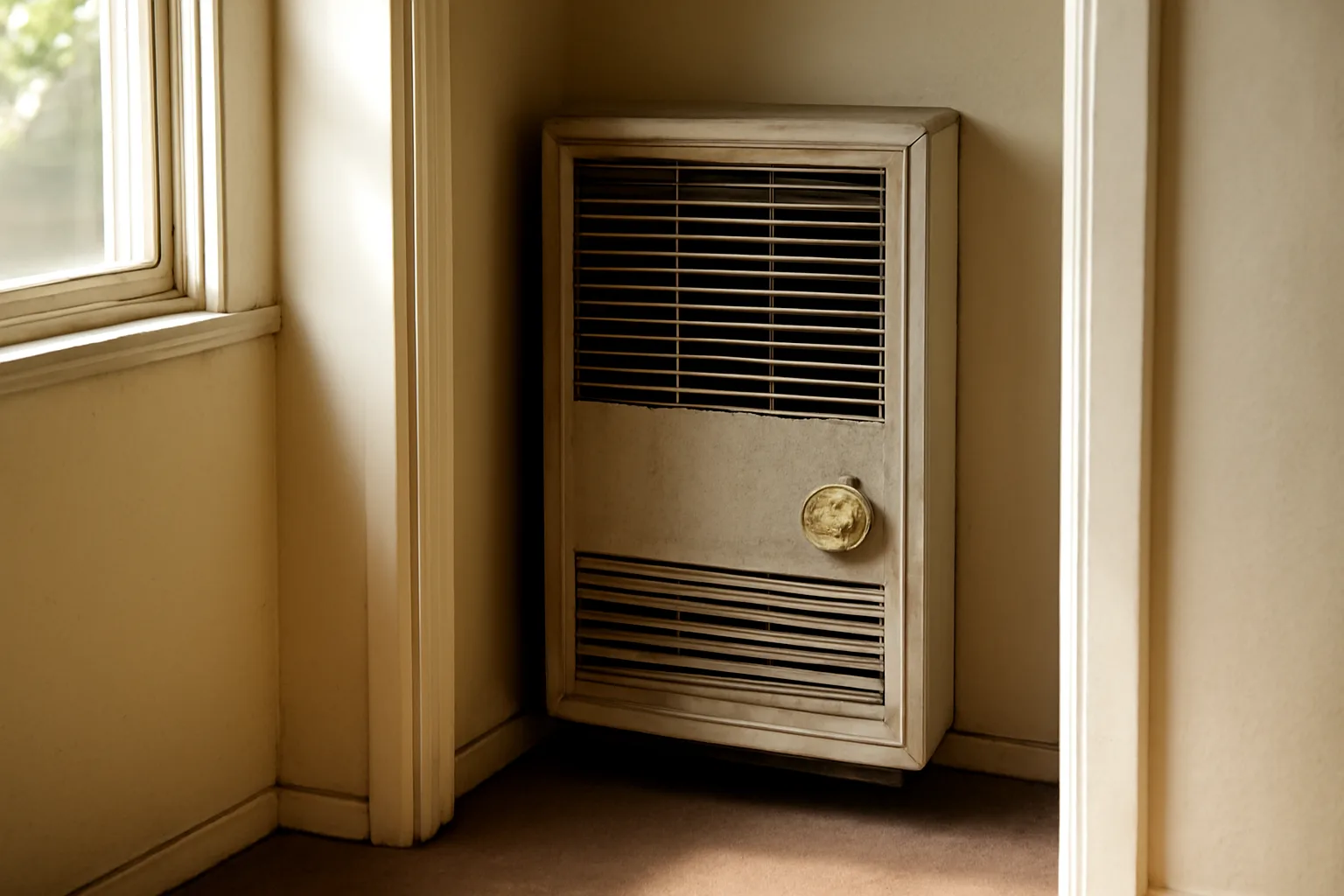
The floor is a working, code-compliant heating system in every habitable room, maintained continuously, more than during a cold snap. Civil Code 1941.1(a)(6) requires "heating facilities that conformed with applicable law at the time of installation, maintained in good working order" [1]. Civil Code 1941.1(a)(4) separately requires the building and grounds to be kept in a condition that doesn't threaten health or safety, which sweeps in exposed wiring or gas leaks tied to a broken furnace. A space heater the tenant bought at a hardware store doesn't satisfy this. The obligation runs to permanent heating equipment installed as part of the unit, a central furnace, wall units, baseboard heat, whatever was legally installed when the building was built or last permitted. If that system breaks, the landlord has to repair or replace it, not point the tenant to a plug-in heater as a permanent fix. There's also Civil Code Section 1941, the broader habitability statute, which requires landlords to keep the premises in a condition fit for occupation and to make repairs needed to keep it that way [3]. Section 1942 gives tenants a self-help remedy (repair-and-deduct, capped and conditioned) when a landlord fails to fix a habitability problem like broken heat after being notified [4].
Does California set a minimum temperature a landlord has to maintain?
Not at the state civil code level, no specific degree number. What state law does is require the heating system itself to be working and adequate for the space. Some cities layer a specific number on top through their local housing or building code. This is different from federal HUD public housing standards, which do reference specific temperature guidance for HUD-assisted housing, and different from cities like Chicago, which requires 68 degrees during the day and 66 at night in heat season under its municipal code. California's state statute doesn't use that kind of number. If you're a landlord in a city with its own rental registration or inspection program, check that city's municipal or housing code directly, because local health departments sometimes enforce a specific indoor temperature standard during inspections even though the state statute is silent on the number.
What happens if a landlord doesn't fix broken heat in California?
Tenants have several legal paths, and none of them require them to just wait it out. First, under Civil Code 1942, after giving the landlord reasonable notice and a reasonable opportunity to repair, a tenant may repair the heating problem themselves and deduct the cost from rent, limited to one month's rent and usable twice in any 12-month period [4]. Second, a tenant can sue, or raise habitability as a defense in an unlawful detainer (eviction) action, arguing the unit isn't habitable and rent shouldn't be owed at the full rate for that period. Courts can order rent abatement. Third, many California cities have their own code enforcement or rental inspection programs that respond to heat complaints faster than civil court does. A tenant calls code enforcement, an inspector comes out, and if the unit fails, the city can issue a notice of violation with a repair deadline and, in many jurisdictions, escalating fines for noncompliance. Confirm exact fine schedules with your city's code enforcement or rental licensing office, since these numbers vary widely by city and change over time. For landlords managing 1 to 10 units without in-house maintenance staff, a broken furnace complaint is one of the fastest ways to end up on a code enforcement inspector's list. Fixing heat complaints quickly, and documenting the repair, protects you both from tenant legal claims and from a city violation notice turning into a fine.
How much notice does a landlord have to give before entering to fix or inspect heating?
In California, a landlord generally must give at least 24 hours' written notice before entering a rental unit for repairs or inspection, per Civil Code Section 1954 [5]. The notice should state the date, approximate time, and purpose of entry, and entry must happen during normal business hours unless the tenant agrees otherwise. Emergencies are the exception. If a heating failure is causing an immediate safety hazard, a gas leak from a broken furnace, for example, a landlord can enter without the standard 24-hour notice under the emergency exception in the same statute. But a routine "I want to check the furnace before winter" visit needs the normal written notice. This notice rule applies whether the visit is landlord-initiated maintenance or a scheduled walkthrough tied to a city rental inspection program. If your city requires a pre-inspection or periodic rental unit inspection as part of its licensing program, you still owe the tenant the standard entry notice under state law unless your city ordinance sets a longer notice period, which some do.
Who is responsible for a rental property walkthrough inspection in California?
It depends on the type of inspection. For a routine landlord maintenance check or move-in/move-out walkthrough, the landlord (or their property manager) is responsible for scheduling it and giving the tenant proper notice under Civil Code 1954 [5]. For move-out walkthroughs specifically, Civil Code Section 1950.5(f) gives tenants the right to request an initial inspection before move-out so they get a chance to fix deficiencies before the landlord makes deductions from the security deposit [6]. For a city-mandated rental inspection tied to a rental registration or licensing program, the city's code enforcement or housing department typically schedules and conducts the inspection, sometimes with the landlord present, sometimes with a third-party inspector the landlord hires and submits results from. San Jose's Rental Rights and Referral Program and Los Angeles's Systematic Code Enforcement Program (SCEP) both use city inspectors or approved private inspectors depending on the program tier. If you're in a city with a mandatory licensing program, confirm with your city rental licensing office whether inspections are city-run, landlord-hired-and-reported, or complaint-triggered only, since the model varies a lot city to city. Regardless of who conducts it, the landlord is the one legally responsible for making sure the unit passes. That means the landlord bears the cost of fixing whatever the inspection turns up, whether that's a dead smoke detector, a broken furnace, or a peeling lead-paint window in an older building.
What can a landlord look at during an inspection?
During a lawful entry for maintenance or a habitability-related inspection, a landlord (or city inspector) can generally check the same systems the habitability statutes cover: heating, plumbing, electrical, weatherproofing, smoke and carbon monoxide detectors, and general safety hazards like broken stairs or exposed wiring. Civil Code 1941.1 lists the specific conditions that make a unit habitable, and that list is a reasonable map of what an inspection actually looks at [1]. What an inspection isn't for is a general search of the tenant's belongings or living habits unrelated to the property's condition. The entry notice under Civil Code 1954 has to state the purpose, and the visit should stay within that purpose. A furnace inspection doesn't give a landlord or inspector license to go through closets or personal items. For city-mandated rental inspections tied to licensing programs, cities usually publish a checklist covering the same core categories: working heat, hot water, no active leaks, functioning smoke/CO detectors, secure locks, safe electrical, and no significant pest infestation. If you're prepping for a first inspection under a new city ordinance, pulling that city's actual inspection checklist ahead of time (rather than guessing) saves a lot of back-and-forth. This is the exact kind of prep work our $79 City Rental License & Inspection Prep Packet is built around, mapping a specific city's checklist to what you actually need to fix or document before the inspector shows up.
What rights do tenants have without a lease in California?
A tenant without a written lease, someone renting month-to-month on a verbal agreement, still has full habitability rights under California law. Civil Code 1941 and 1941.1 apply regardless of whether there's a signed lease [1][3]. Heat, plumbing, weatherproofing, working locks, and pest-free conditions are owed to a tenant whether they signed a 12-month lease or just handed over first month's rent with a handshake. What a verbal or no-lease arrangement changes is mostly around notice and termination, not habitability. A month-to-month tenant without a lease is generally owed 30 days' notice to terminate if they've lived there under a year, or 60 days if a year or more, under Civil Code Section 1946.1 [7]. Local just-cause eviction ordinances in cities with rent control can extend that further. Security deposit rules under Civil Code 1950.5 also apply without regard to a written lease. So does the entry notice requirement under Section 1954. The absence of a written lease doesn't strip a tenant of statutory protections; it mostly just means the terms default to what state law says rather than what a lease document specifies.
Why do landlords require renters insurance?
Renters insurance protects the tenant's personal belongings and gives them liability coverage if, say, a guest gets hurt in the unit or the tenant accidentally causes damage (a kitchen fire, an overflowing tub). Landlord insurance policies typically don't cover a tenant's furniture, electronics, or clothing, and they don't cover a tenant's personal liability for incidents inside the unit. Requiring it (where the lease allows it) shifts risk off the landlord. If a tenant's negligence causes a fire or water damage, a renters insurance policy with liability coverage means the tenant's insurer, not the landlord's, may cover part of the loss. It's also cheap. The average cost of a renters insurance policy nationally runs in the range of roughly $15 to $30 a month depending on coverage level and location, according to industry rate surveys, though California landlords should confirm current local rates rather than assume a fixed number, since it varies by insurer and zip code. Many landlords build a renters insurance requirement into the lease itself, with proof of a policy due at move-in and annually after. That's a lease-drafting decision specific to your property and situation, and it's worth reviewing with a local landlord-tenant attorney or your city's landlord resource office rather than copying language from a generic template.
How to become a landlord in California (and what habitability duties come with it)
Becoming a landlord in California starts before you ever list a unit: you need to understand the habitability, safety, and disclosure obligations you're taking on, more than the financial side of buying or converting a property into a rental. At minimum, that means knowing Civil Code 1941 and 1941.1 (habitability), 1954 (entry notice), 1946.1 (termination notice), and 1950.5 (security deposits) before you sign a first lease [1][3][5][6][7]. Practically, becoming a landlord usually involves: confirming the property is zoned and permitted for rental use, checking whether your city requires rental registration or a rental license (many California cities do, including several with mandatory inspection programs), getting the right landlord insurance policy (different from a standard homeowner's policy), and setting up a lease that matches state and local law. If your city requires a business license or rental registration number, that typically has to be obtained before you can legally rent the unit out, and fees and renewal timelines vary by city, so confirm with your city rental licensing office directly. New landlords in mandatory-licensing cities often get caught off guard by the inspection step specifically, not because the rules are secret, but because they're scattered across a city's municipal code rather than collected in one place. That's the gap our $79 City Rental License & Inspection Prep Packet is meant to close: a city-specific rundown of what your local program actually requires before the inspector arrives, rather than a generic national checklist.
What is landlording, and what is a landlord, exactly?
A landlord is the owner (or their authorized agent) of a residential rental property who leases it to a tenant in exchange for rent. Landlording is the ongoing work of managing that relationship and property: collecting rent, maintaining habitability, handling repairs, managing turnover, and complying with state and local landlord-tenant law. It's not a passive role legally, even for a small landlord with one unit. California law puts affirmative maintenance duties on landlords (heat, plumbing, structural safety, pest control) under Civil Code 1941.1, and it puts procedural duties on them too (notice before entry, notice before termination, security deposit itemization deadlines). "Landlording" as a term generally refers to the practical, day-to-day version of carrying out those duties, responding to a maintenance request within a reasonable time, documenting repairs, keeping records for security deposit disputes, versus the purely legal ownership concept of being a "landlord." For a 1-to-10-unit landlord without a property management company, landlording in practice means being your own maintenance coordinator, your own compliance officer, and your own bookkeeper, often all at once, which is exactly why missed items (a heating system inspection, a smoke detector battery, a rental license renewal date) tend to slip through.
What can't a landlord do (Ohio and beyond), and how does that compare to California?
Every state bans certain landlord conduct, and while the specifics differ, the core categories are similar. In Ohio, landlords can't shut off a tenant's utilities (including heat) to force them out, can't lock a tenant out without a court order, can't remove a tenant's belongings without legal process, and can't retaliate against a tenant for exercising a legal right like reporting a code violation, protections generally found in Ohio Revised Code Chapter 5321, the Ohio Landlords and Tenants Act [8]. California has parallel rules with its own statute numbers. Self-help eviction (changing locks, shutting off utilities, removing a tenant's belongings without a court order) is illegal in California too, addressed through Civil Code Section 789.3, which imposes penalties, including statutory damages of up to $100 per day, for a landlord who willfully interrupts utility service like heat, power, or water to force a tenant out [9]. Retaliation against a tenant for reporting a habitability problem (like broken heat) is separately barred under Civil Code Section 1942.5, which creates a presumption of retaliation if the landlord takes adverse action within 180 days of the tenant's complaint [10]. So while the exact statute numbers differ state to state, the pattern holds nationally: cutting off heat to pressure a tenant out is illegal pretty much everywhere, and California's penalty structure (Section 789.3's $100/day statutory damages) is one of the more specific ones on the books.
How do city rental licensing and inspection programs treat heat specifically?
Cities with mandatory rental licensing or inspection programs, common across California in cities like Los Angeles, San Jose, Oakland, and Sacramento, generally fold the state habitability standard for heat directly into their local inspection checklist. That means a heating system inspectors flag as "not maintained in good working order" during a city inspection is citing the same underlying standard as Civil Code 1941.1 [1], just enforced through a city code violation process instead of, or in addition to, a tenant lawsuit. The practical difference for a landlord is speed and cost. A civil habitability claim from a tenant can take months to resolve through negotiation or court. A city code violation notice usually comes with a fixed repair deadline (often 30 days, though this varies by city and violation type) and can escalate to daily fines if unresolved, sometimes in the range of $100 to $1,000+ per day depending on the city and the severity of the violation. Confirm exact fine schedules and deadlines with your specific city's code enforcement office, since these numbers are set locally and change. For a small landlord managing 1 to 10 units, the smartest move is treating the local rental inspection checklist as the actual compliance bar, since it usually operationalizes the vaguer state statute language into something concrete: "furnace tested and operational," "no exposed wiring near heating unit," "CO detector present within X feet of heating source." Reading your city's actual checklist beats guessing from the state code text alone.
Frequently asked questions
Is a landlord required to provide heat in California year-round or just in winter?
Year-round. California's Civil Code 1941.1 requires heating facilities to be "maintained in good working order" without a seasonal carve-out. There's no state-level "heat season" like some cold-climate cities use. If the furnace breaks in July, the landlord still has to fix it under the same habitability standard [1].
What temperature is a landlord required to maintain in a California rental?
California's state statute doesn't set one specific degree number. The requirement is functional: the heating system has to work and be adequate for the space. Some individual cities may set a specific minimum temperature in their local housing code, so check your city's municipal code directly if you need an exact number.
Can a tenant withhold rent if the landlord won't fix broken heat in California?
Tenants generally can't simply stop paying rent outright, but Civil Code 1942 allows a "repair and deduct" remedy: after reasonable notice, a tenant can pay for the repair themselves and deduct the cost, capped at one month's rent and usable at most twice in 12 months [4]. Full rent withholding is riskier and usually raised as a defense in an eviction case.
How much notice does a landlord have to give before entering to fix heating?
At least 24 hours' written notice for non-emergency entry, stating the date, approximate time, and purpose, under Civil Code Section 1954 [5]. If the heating problem is an active safety emergency (like a gas leak), the landlord can enter without that notice under the statute's emergency exception.
Who is responsible for a rental property walkthrough inspection in California?
The landlord is legally responsible for the unit passing inspection and typically schedules routine maintenance walkthroughs. For city-mandated rental license inspections, the city's code enforcement office or an approved inspector usually conducts it. Move-out walkthroughs are governed by Civil Code 1950.5(f), which gives tenants a right to request a pre-move-out inspection [6].
What can a landlord look at during an inspection?
A lawful inspection covers habitability items: heating, plumbing, electrical safety, smoke and CO detectors, weatherproofing, and pest conditions, mirroring the list in Civil Code 1941.1 [1]. It isn't a general search of personal belongings, and the entry notice has to state the purpose under Civil Code 1954 [5].
What rights do tenants have without a lease in California?
Full habitability rights apply regardless of a written lease, including working heat, plumbing, and safe conditions under Civil Code 1941 and 1941.1 [1][3]. Notice periods for ending a month-to-month tenancy (30 or 60 days depending on tenancy length) still apply under Civil Code 1946.1 [7], as do security deposit rules.
Why do landlords require renters insurance?
It shifts liability and personal-property risk off the landlord. Renters insurance covers a tenant's belongings and gives them personal liability coverage for accidents like a kitchen fire or a guest injury, things a landlord's own property insurance typically doesn't cover for the tenant's possessions or conduct.
What can't a landlord do regarding heat in Ohio or California?
Neither state allows a landlord to shut off heat or other utilities to pressure a tenant out. Ohio addresses this under Revised Code Chapter 5321 [8]; California imposes statutory damages up to $100 per day for willful utility shutoffs under Civil Code Section 789.3 [9].
How to become a landlord in California without violating habitability law?
Learn the core statutes before renting: Civil Code 1941/1941.1 (habitability), 1954 (entry notice), 1946.1 (termination notice), and 1950.5 (deposits). Confirm whether your city requires rental registration or licensing, get proper landlord insurance, and build your lease around state and local rules rather than a generic template.
What is landlording?
Landlording is the day-to-day work of operating a rental: collecting rent, handling repairs, managing habitability compliance, coordinating inspections, and dealing with tenant turnover. It's distinct from simply "being a landlord" in the ownership sense; it's the operational side of the job.
Can a city fine a landlord for a broken furnace found during a rental inspection?
Yes, in cities with mandatory rental licensing or inspection programs. Code enforcement can issue a violation notice with a repair deadline, and unresolved violations can escalate to daily fines, though the exact amount and timeline is set locally. Confirm current fine schedules with your specific city's code enforcement or rental licensing office.
Sources
- California Legislature, Civil Code Section 1941.1: Landlords must maintain heating facilities in good working order as part of habitability requirements
- California Legislature, Health & Safety Code Section 17920.3: State housing code defines substandard housing to include noncompliant heating facilities
- California Legislature, Civil Code Section 1941: Landlord must keep premises fit for human occupation and make necessary repairs
- California Legislature, Civil Code Section 1942: Tenant repair-and-deduct remedy, capped at one month's rent, usable twice in 12 months
- California Legislature, Civil Code Section 1954: Landlord must give at least 24 hours' written notice before non-emergency entry
- California Legislature, Civil Code Section 1950.5: Tenant right to request initial move-out inspection before deposit deductions
- California Legislature, Civil Code Section 1946.1: 30 or 60 day notice requirement to terminate a month-to-month tenancy depending on tenancy length
- Ohio Legislature, Revised Code Chapter 5321 (Landlords and Tenants): Ohio law bars utility shutoffs, lockouts, and retaliation against tenants
- California Legislature, Civil Code Section 789.3: Statutory damages up to $100/day for willful utility shutoff by a landlord
- California Legislature, Civil Code Section 1942.5: Presumption of retaliation if landlord takes adverse action within 180 days of tenant habitability complaint