Last updated 2026-07-26
TL;DR
Baltimore City rental licenses run on a calendar year and expire December 31, with renewal required annually before that date. Renewal means a new application, current fee payment, and (for most properties) a passed lead and housing inspection with a lockbox installed for city access. Miss the deadline and you can't legally collect rent or file for eviction.
When does a Baltimore City rental license expire and how often do you renew it?
Baltimore City rental licenses expire on December 31 every year, regardless of when you first got licensed. That means a landlord who licensed a unit in March still has to renew by the following December 31, not twelve months from the original issue date. Renewal is annual, every year, for as long as you rent out the unit [1]. This calendar-year structure catches a lot of new landlords off guard. If you buy a rental property in June and get it licensed in July, you're renewing again just five or six months later. There's no prorating the license period to match your purchase date. The city's rental licensing law lives in the Baltimore City Code, Article 13, and requires a license for any dwelling unit rented to someone other than the owner's immediate family, with narrow exceptions [1]. Confirm current renewal cutoffs and any grace period with the Baltimore City Department of Housing and Community Development (DHCD) rental licensing office, since administrative practices shift year to year even when the code date doesn't. Because the deadline is fixed and public, it's genuinely one of the easier compliance dates to plan around. Put December 31 on your calendar the day you buy the property, not the day you get a notice.
How much does it cost to renew a Baltimore City rental license?
| Base annual license fee | Confirm with Baltimore City DHCD rental licensing office | |
|---|---|---|
| Late renewal penalty | Confirm with Baltimore City DHCD rental licensing office | |
| Reinspection fee (after a failed inspection) | Confirm with Baltimore City DHCD rental licensing office | |
| Lead paint registration/certification (separate from license) | Confirm with Maryland Dept. of the Environment [2] | Don't guess on these numbers when you're budgeting for a multi-unit portfolio. A $30 miss per unit doesn't matter much on one property. Multiply that error across eight units and it's real money. |
Confirm the current fee schedule with Baltimore City DHCD, since license fees have changed over recent years and vary by number of units and whether the property is owner-occupied with a rented portion versus fully non-owner-occupied. Baltimore's rental licensing fee structure is set by city ordinance and posted through DHCD's rental licensing program, and it is not a flat, one-size number across all property types [1]. Budget for more than just the base license fee. If your property needs a reinspection because it failed the first time, that typically triggers an additional reinspection fee. If you're renewing late, expect a late fee or penalty on top of the standard charge. And if your unit requires lead paint risk reduction certification (most pre-1978 Baltimore rentals do), that's a separate cost and process through the Maryland Department of the Environment, not the city license fee itself [2]. Here's a rough way to think about total renewal cost, using placeholder ranges until you check DHCD's current schedule: | Cost item | Typical range (confirm current amounts) |
What documents and steps does the Baltimore rental license renewal process require?
Renewal isn't just paying a fee. You typically need to submit a renewal application (often online through the city's licensing portal), confirm your current owner and property manager contact information, and pass or schedule a housing inspection if one is due. Baltimore City requires rental properties to be inspected periodically as part of licensing, more than at initial application [1]. You'll also need your lead paint compliance documentation current. Any Baltimore rental built before 1978 must have a valid lead paint registration and, in most cases, a lead risk reduction certificate from the Maryland Department of the Environment before the city will issue or renew the rental license [2]. If that lead paperwork lapses, your rental license renewal stalls even if you've paid every city fee on time. A step-by-step approach that works for most one-to-ten-unit landlords: 1. Confirm your license expiration date and current renewal window with Baltimore City DHCD. 2. Check your lead paint registration status with MDE and renew that first if it's expiring, since it's often a prerequisite. 3. Schedule or complete the required housing inspection before your renewal deadline, not after. 4. Submit the renewal application with current owner, agent, and emergency contact information. 5. Pay the renewal fee (and any reinspection or late fee if applicable). 6. Keep proof of the new license posted or on file at the property as required. If you manage more than one unit, build a simple spreadsheet with each property's license expiration, lead certificate expiration, and last inspection date. Nothing fancy. A missed renewal on unit six of ten is still a missed renewal.
What happens during a Baltimore rental license inspection?
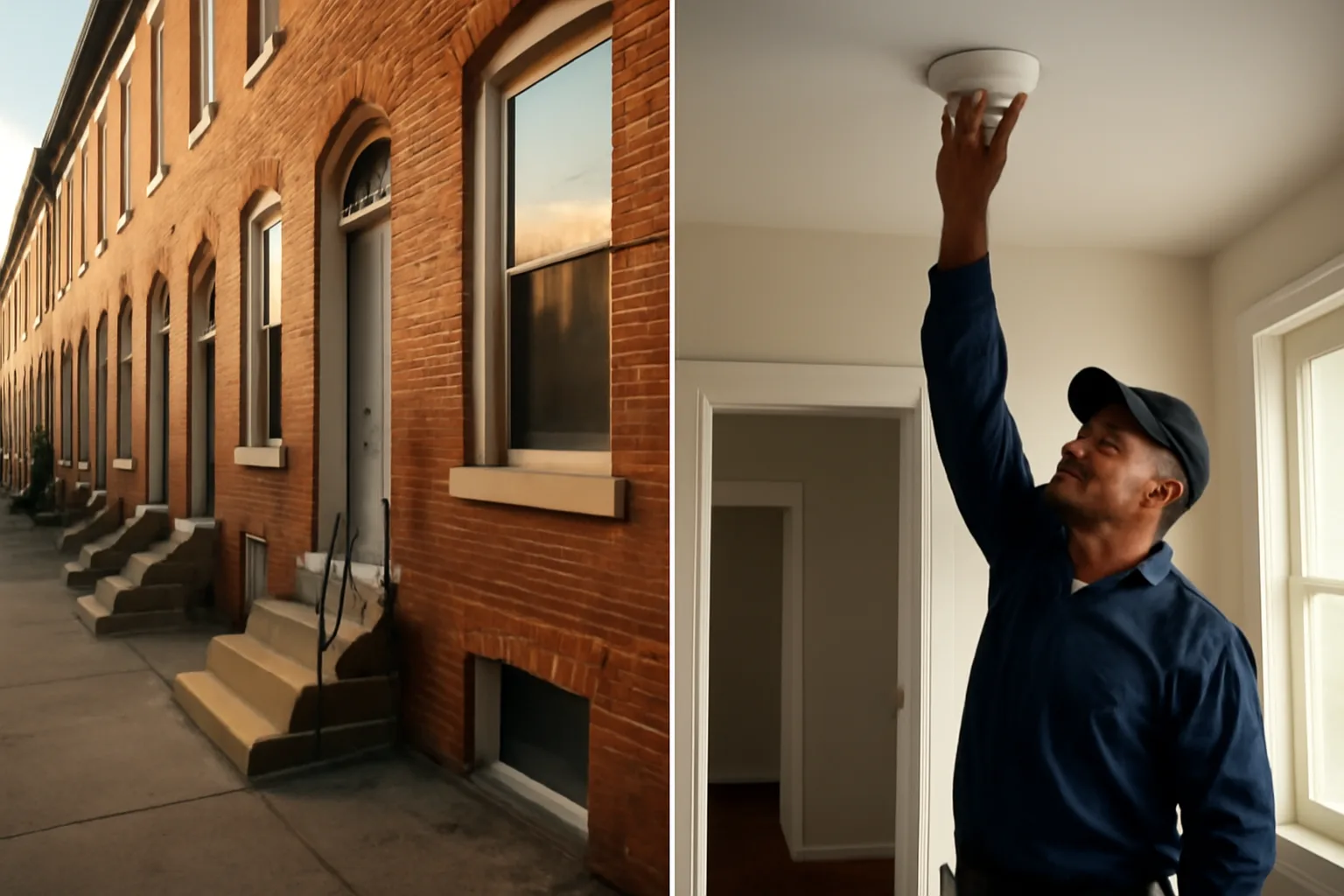
A Baltimore City rental license inspection checks basic health and safety conditions in the unit and common areas, generally covering things like working smoke alarms, functioning heat, safe electrical wiring, no active leaks or mold, secure exterior doors and windows, and adequate egress. Inspectors are looking for code violations under the city's housing code, not cosmetic issues [1]. What a landlord (or inspector) can look at during an inspection is generally limited to health, safety, and code compliance items: structural condition, plumbing, electrical systems, heating, ventilation, pest evidence, smoke and carbon monoxide detector function, and means of egress. It is not a review of your tenant's belongings or an open-ended search. If you're a tenant wondering what an inspector or landlord can examine during a routine unit check, the answer nationally tends to track the same categories: code-related conditions, not personal property [3]. Baltimore also requires most licensed rental properties to have a lockbox installed so code enforcement can access the unit for inspection purposes, which is a detail out-of-state landlords sometimes miss entirely until their first renewal notice arrives [1]. Confirm current lockbox specifications and whether your property type is exempt with DHCD directly. If the inspection turns up violations, you typically get a notice with a correction period before reinspection. Fix the items, request reinspection, pay the reinspection fee if one applies, and keep documentation of the repairs. A paper trail of receipts and photos protects you if a violation gets disputed later.
What happens if you miss the Baltimore rental license renewal deadline?
Renting out a unit without a current, valid Baltimore City rental license is a code violation, and the practical consequences stack up fast. You may be barred from filing an eviction or rent action in Baltimore City District Court while unlicensed, since Maryland law and Baltimore City ordinance both tie license status to a landlord's ability to pursue certain tenant actions [1]. That single fact stops a lot of landlords cold when they need to file for nonpayment and discover their license lapsed eight months earlier. You can also face civil citations and fines from the city for operating an unlicensed rental. The exact fine schedule changes, so confirm current amounts with Baltimore City DHCD or the Baltimore City Code enforcement office rather than assuming last year's number still applies. If you got a violation notice or fine already, don't sit on it. Contact the DHCD rental licensing office, find out exactly what's outstanding (the license itself, an inspection failure, a lead certificate gap), and get a written list of what's needed to clear it. Cities generally want compliance, not a fight. Fast, direct outreach after a violation notice usually resolves faster than ignoring it and hoping it goes away. One genuinely useful move here: build your renewal packet before the deadline, not after a notice shows up. That's the entire idea behind a $79 one-time City Rental License & Inspection Prep Packet, which walks you through gathering the lead certificate, inspection prep checklist, and renewal documents in one pass instead of scrambling city department by city department.
How to become a landlord in Baltimore (or anywhere): the basics
Becoming a landlord starts before you buy a rental property, and Baltimore's licensing rules are just one layer on top of the general steps. At minimum you need: a property, a plan for how you'll screen and select tenants, a lease that complies with your state's landlord-tenant law, insurance appropriate to a rental (not a standard homeowner policy), and a system for handling maintenance requests and rent collection. What is landlording, in plain terms? It's operating a rental property as a business, even if you only own one unit. That means treating it like a business: separate bookkeeping, documented communications with tenants, and compliance with local licensing and safety codes. A landlord, legally, is the party who owns or controls the rental property and grants a tenant the right to occupy it in exchange for rent, under a lease or rental agreement. If you're just getting started, a realistic sequence looks like this: 1. Confirm zoning and rental licensing requirements for your specific city before you buy or convert a property to a rental. 2. Get landlord-specific insurance, not a standard homeowner's policy, since most homeowner policies exclude rental use. 3. Draft or have an attorney draft a lease compliant with your state's landlord-tenant statute. 4. Set up a tenant screening process (background check, income verification, references) that complies with fair housing law. 5. Register or license the rental with your city if required, which in Baltimore means the annual DHCD rental license described above. 6. Build a maintenance and inspection routine so you're not scrambling at renewal time every year. For Baltimore specifically, steps one and five above are non-negotiable before you collect your first rent check legally.
Why do landlords require renters insurance?
Landlords ask tenants to carry renters insurance mainly to cover the tenant's personal property and liability, not the building itself. A landlord's own property insurance covers the structure, but it generally doesn't cover a tenant's furniture, electronics, or clothing if there's a fire, burst pipe, or theft. Renters insurance also typically includes liability coverage, which matters if a tenant's negligence (an unattended stove fire, a bathtub overflow that damages the unit below) causes damage. Requiring renters insurance shifts some of that liability exposure off the landlord and onto the tenant's policy. It's a cheap ask, too. National average renters insurance premiums run roughly $15 to $30 a month depending on coverage amount and location, according to insurance industry data tracked by the National Association of Insurance Commissioners [4]. Many landlords require proof of a policy with a minimum liability limit (commonly $100,000) as a lease condition. Whether you can legally require it depends on your state and local law, so check your jurisdiction before adding it as a lease term. Baltimore landlords should confirm current practice with a local attorney or the Maryland Attorney General's landlord-tenant guidance rather than assuming a national norm applies without exception [5].
How much notice does a landlord have to give before entry, inspection, or ending a tenancy?
Notice requirements vary significantly by state, and Maryland's rules differ from many others, so always confirm the specific number for your jurisdiction rather than relying on a general rule. Maryland does not have one single statewide statute dictating a specific number of hours' notice for routine landlord entry into an occupied unit the way some states do; instead, it's typically governed by lease terms and general reasonableness standards, so your lease language matters heavily here [5]. For ending a tenancy, Maryland law under the Real Property Article sets notice periods depending on tenancy type: generally one month's notice for month-to-month tenancies to terminate the tenancy, though timelines and rules differ for lease violations, nonpayment of rent, and fixed-term lease expirations [5]. Nonpayment of rent cases follow a separate, faster court process under Maryland's summary ejectment statute. Because notice rules genuinely differ by state, and even by lease clause within a state, don't copy a notice period you read online without checking it against your specific lease and Maryland Real Property Article provisions. This is also exactly the kind of clause an attorney should review in your lease template rather than something to draft from a blog post.
What rights do tenants have without a signed lease?
A tenant without a written lease still has legal protections, generally as a month-to-month tenant under state law, even if nothing was ever signed. Paying rent and occupying a unit with the owner's knowledge and consent typically creates a legally recognized tenancy, sometimes called a tenancy at will or periodic tenancy, depending on state statute [5]. That means a tenant without a lease still generally has rights to: habitable living conditions, advance notice before the landlord can end the tenancy (the specific period depends on state law), protection from illegal lockouts or utility shutoffs, and the same fair housing protections as any other tenant. In Maryland, an oral or implied month-to-month tenancy is still subject to Real Property Article notice requirements before a landlord can terminate it [5]. Landlords sometimes assume no written lease means no obligations. That's backwards. No lease usually means fewer landlord protections (no agreed-upon late fees, no specified maintenance responsibilities in writing), not fewer tenant rights. If you're renting without a signed lease right now, get one in place. It protects both sides and it's required in some jurisdictions for certain lease terms to be enforceable at all.
Who is responsible for a rental property walk-through inspection, and what can a landlord check?
Responsibility for a move-in or move-out walk-through inspection generally falls on the landlord to conduct and document, though many states (including California) require the landlord to offer the tenant a specific pre-move-out inspection opportunity. California Civil Code Section 1950.5 requires landlords, upon a tenant's request, to conduct an initial inspection before the tenant moves out and give the tenant an itemized statement of deficiencies with a chance to fix them before final deductions from the security deposit [6]. During a walk-through, a landlord can generally document: condition of walls, floors, and ceilings; functioning of appliances included in the rental; plumbing and fixture condition; window and door function; and general cleanliness compared to move-in condition. A landlord generally cannot use a walk-through inspection to search personal belongings, review a tenant's documents, or take photos of areas unrelated to property condition. Regardless of state, the walk-through should be documented in writing (checklist plus photos or video, dated) at both move-in and move-out. That documentation is what actually protects a landlord's security deposit deductions if a dispute ends up in small claims court. Baltimore doesn't mandate a specific move-in/move-out walk-through form under city rental licensing law, but Maryland's security deposit statute still puts the burden on the landlord to justify any deductions with an itemized list [5].
What can't a landlord do? (Ohio and general limits worth knowing)
Ohio's landlord-tenant law, codified in Ohio Revised Code Chapter 5321, lays out specific landlord obligations and prohibitions that are a useful general template even outside Ohio. Under ORC 5321.04, a landlord must keep the premises in a fit and habitable condition, comply with building and housing codes, keep common areas safe, and maintain all electrical, plumbing, and heating systems in good working order . Ohio law also restricts what a landlord can't do: a landlord generally cannot shut off utilities to force a tenant out, cannot change locks without following legal eviction procedures, cannot enter without reasonable notice except in an emergency, and cannot retaliate against a tenant for reporting code violations. ORC 5321.02 specifically prohibits retaliatory conduct, including increasing rent or decreasing services, against a tenant who has complained to a government agency about a housing code violation . These self-help eviction prohibitions (no lockouts, no utility shutoffs, no removing a tenant's belongings without a court order) are common across most states, including Maryland, even though the specific statute numbers differ. If you're a Baltimore landlord dealing with a difficult tenant situation, the answer is almost always the same regardless of which state's code you're reading: go through the court process, don't self-help your way to a faster eviction. It's illegal in essentially every U.S. jurisdiction and it exposes you to real damages claims.
How does Baltimore's rental licensing compare to other Maryland jurisdictions?
| License expiration | Fixed calendar year, Dec. 31 [1] | Often varies by jurisdiction, confirm locally | |
|---|---|---|---|
| Lockbox requirement | Yes, for code enforcement access [1] | Varies, confirm locally | |
| Lead paint certification tie-in | Required for pre-1978 units via MDE [2] | Statewide MDE requirement applies regardless of city [2] | |
| Inspection frequency | Periodic as part of licensing [1] | Varies by jurisdiction | The lead paint certification requirement is actually statewide, not Baltimore-specific. Maryland's Reduction of Lead Risk in Housing Act applies to pre-1978 rental housing across the state, administered by MDE, regardless of which city or county the property sits in [2]. If you own rentals in Baltimore City and Baltimore County both, don't assume the county program mirrors the city's rules. Check each jurisdiction's rental licensing office separately. |
Baltimore City isn't the only Maryland jurisdiction requiring rental licenses, but the specifics differ meaningfully by county and city. Baltimore City's Article 13 rental licensing program is one of the more established in the state, alongside programs in Baltimore County, Montgomery County, and Prince George's County, each with its own fee schedule, inspection cycle, and renewal timeline [1]. A quick comparison of the structural differences worth knowing if you own rentals in more than one jurisdiction: | Feature | Baltimore City | Other MD jurisdictions (varies) |
How should a landlord get organized before renewal season?
The landlords who never get caught by a renewal deadline or a failed inspection almost always have one thing in common: a simple system they check monthly, not a scramble every December. That system doesn't need to be complicated for one to ten units. At minimum, track four dates per property: rental license expiration, lead paint certificate expiration, last inspection date, and insurance renewal date. Put all four on a shared calendar with reminders 60 days out, not 60 hours out. Sixty days gives you time to schedule an inspection, order a repair, or track down a missing document. Sixty hours doesn't. If you'd rather not build that tracking system and document checklist from scratch, that's exactly the gap the $79 one-time City Rental License & Inspection Prep Packet is built to close: a structured way to gather your renewal documents, lead certificate status, and inspection prep items before the notice becomes a fine. It's not a substitute for legal advice and it doesn't guarantee your unit passes inspection, but it does keep you from missing the parts of the process that trip up first-time renewers. For readers researching tenant-facing rules alongside their renewal work, our guides on tenant rights, renters rights, and general landlord responsibilities cover the flip side of these same compliance questions.
Frequently asked questions
How often do I need to renew my Baltimore City rental license?
Every year. Baltimore City rental licenses expire on December 31 regardless of when you first got licensed, so a license issued in any month still lapses at year end and requires renewal for the following year [1]. Confirm your exact renewal window with Baltimore City DHCD.
What happens if my Baltimore rental license expires and I keep renting the unit?
You're operating an unlicensed rental, which is a code violation and can also block you from filing eviction or rent actions in Baltimore City District Court until the license is current [1]. Fines and citations may also apply. Contact DHCD's rental licensing office as soon as you realize it's lapsed.
Does Baltimore require a lockbox for rental license inspections?
Yes, Baltimore City generally requires licensed rental properties to have a lockbox installed so code enforcement inspectors can access the unit [1]. Confirm current lockbox specifications and any exemptions with the DHCD rental licensing office directly, since requirements can be updated by ordinance.
How much does a Baltimore rental license renewal cost?
Costs vary by number of units and property type and change periodically by ordinance, so confirm current fees with Baltimore City DHCD's rental licensing office [1]. Budget separately for potential reinspection fees, late penalties, and lead paint certification costs through the Maryland Department of the Environment [2], which are not included in the base license fee.
Do I need a lead paint certificate to renew my Baltimore rental license?
If your property was built before 1978, yes in most cases. Maryland's Reduction of Lead Risk in Housing Act requires lead paint registration and, generally, a risk reduction certificate from the Maryland Department of the Environment before Baltimore City will renew certain rental licenses [2].
What is landlording, in simple terms?
Landlording is operating rental property as a business: screening tenants, maintaining a habitable unit, collecting rent under a lease, complying with local licensing and housing codes, and handling repairs and legal notices correctly. Even a single-unit owner renting out one property is legally a landlord and subject to the same landlord-tenant statutes as a larger operator.
What rights does a tenant have without a signed lease?
A tenant without a written lease generally still has month-to-month tenancy rights under state law, including habitability protections, advance notice before termination, and protection from illegal lockouts. Maryland treats an oral or implied tenancy as subject to the same Real Property Article notice requirements as a written month-to-month lease [5].
Why do landlords require tenants to carry renters insurance?
Renters insurance covers the tenant's personal property and liability, which the landlord's building insurance policy typically does not cover. It shifts risk from fire, water damage, or liability claims away from the landlord. Average premiums run roughly $15 to $30 a month per NAIC data [4], making it a low-cost requirement for meaningful risk reduction.
How much notice does a landlord have to give before entry or ending a tenancy?
It depends entirely on your state and lease terms. Maryland doesn't set one universal statewide notice period for routine entry; ending a month-to-month tenancy generally requires about one month's notice under the Real Property Article, with different rules for lease violations or nonpayment [5]. Always confirm your specific state's statute.
What can a landlord check during a walk-through inspection?
A landlord can generally document the condition of walls, floors, appliances, plumbing, windows, and doors compared to move-in condition. A landlord cannot use a walk-through to search personal belongings or unrelated areas. California Civil Code 1950.5 requires an optional pre-move-out inspection with an itemized deficiency list on tenant request [6].
What can't a landlord do under Ohio law?
Under Ohio Revised Code 5321.02 and 5321.04, a landlord cannot shut off utilities to force a move-out, cannot change locks without a court order, cannot enter without reasonable notice except in emergencies, and cannot retaliate against a tenant who reports a code violation [7][8]. Most states, including Maryland, prohibit similar self-help eviction tactics.
Who handles a rental walk-through inspection in California?
The landlord is responsible for conducting and documenting the walk-through, but California Civil Code 1950.5 requires the landlord to offer an initial move-out inspection at the tenant's request, with a written itemized list of deficiencies and a chance to fix them before final deposit deductions [6].
How do I become a landlord for the first time?
Confirm local zoning and rental licensing rules before buying, get landlord-specific insurance, use a lease compliant with your state's landlord-tenant statute, set up fair-housing-compliant tenant screening, and register or license the property if your city requires it (as Baltimore does annually through DHCD) [1].
Sources
- Baltimore City Code, Article 13 (Housing) and Baltimore City DHCD Rental Licensing: Baltimore City rental license requirements, annual expiration, inspection and lockbox rules
- Maryland Department of the Environment, Lead Poisoning Prevention Program: Pre-1978 rental properties require lead paint registration and risk reduction certification
- Maryland Real Property Article, Title 8 (Landlord and Tenant): Maryland notice requirements and month-to-month tenancy rules
- California Civil Code Section 1950.5: California requires landlords to offer a pre-move-out inspection with itemized deficiency list on tenant request
- Ohio Revised Code Section 5321.04: Ohio landlord obligations to maintain habitable premises and working systems
- Ohio Revised Code Section 5321.02: Ohio prohibits landlord retaliation against tenants who report code violations