Last updated 2026-07-26
TL;DR
Baltimore County requires most rental properties to have a rental license issued through the Department of Permits, Approvals and Inspections, with inspections generally required before initial licensing and then on a periodic cycle. Fees, exact cycle length, and exemptions vary by property type, so confirm current requirements with Baltimore County's licensing office before your renewal window opens.
Does Baltimore County require a rental license and inspection?
Yes. Baltimore County requires owners of most rental dwellings to obtain a rental license before renting the unit, and that licensing process is tied to an inspection confirming the property meets the county's minimum livability and safety standards. This isn't unique to Baltimore County. Maryland's larger jurisdictions, including Baltimore City and several counties, run their own local rental licensing programs layered on top of state landlord-tenant law. The county's Department of Permits, Approvals and Inspections (PAI) administers rental licensing and code enforcement for unincorporated Baltimore County. If you own a single-family rental, a duplex, or a small multifamily building anywhere outside an incorporated municipality within the county, you're very likely in scope. Some incorporated towns inside the county run their own separate registration rules, so check whether your property sits in a municipality with its own ordinance before assuming county rules are the only ones that apply. The practical trigger for most landlords is simple: you get a notice, a renewal postcard, or a tenant complaint, and suddenly you're staring at a deadline you didn't know existed. That's normal. Rental licensing programs are enforced reactively as often as proactively, which means plenty of landlords go years without hearing from the county and then get a letter that feels like it came out of nowhere.
What triggers a Baltimore County rental inspection?
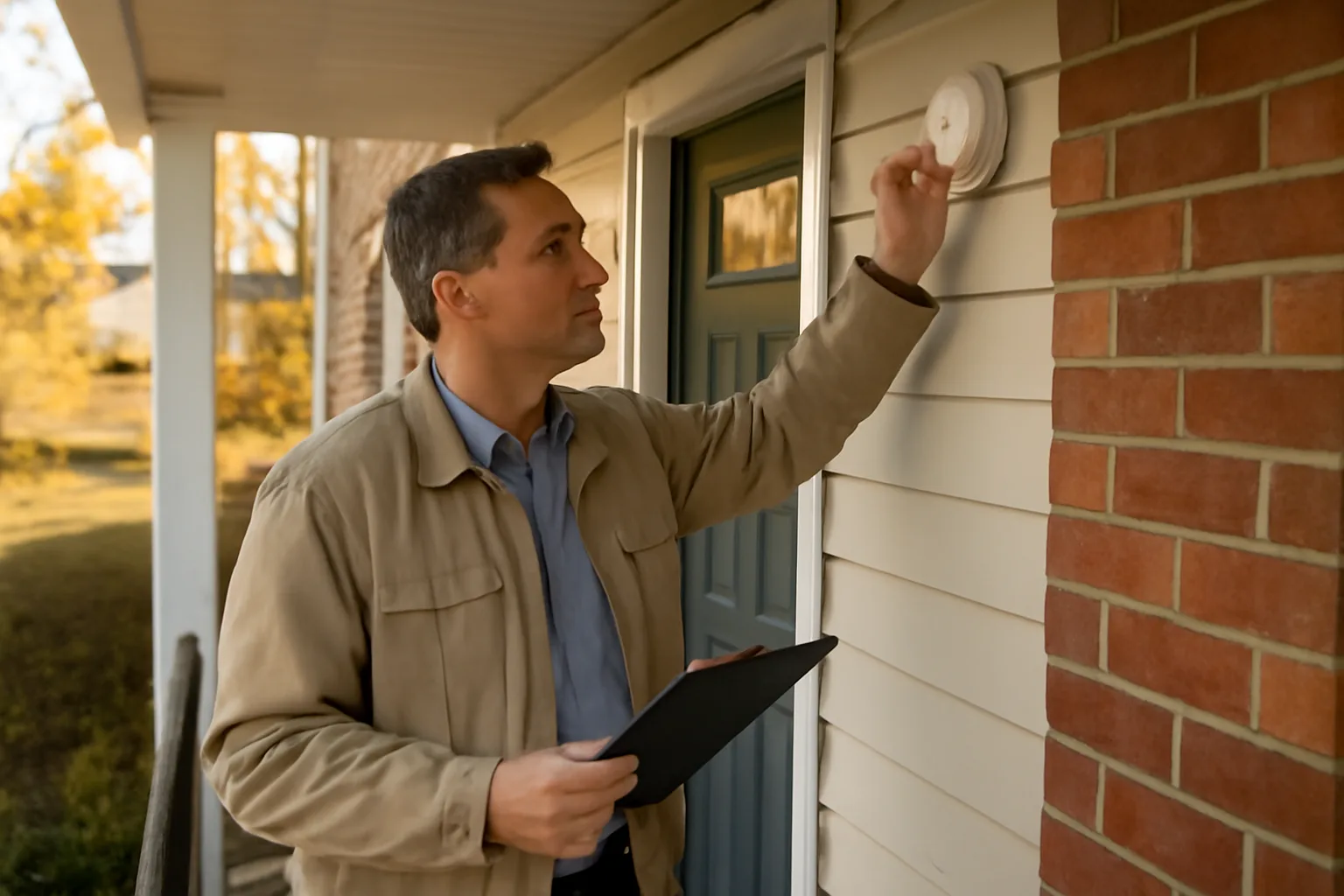
Three things usually trigger a visit from a county inspector: a new rental license application, a scheduled renewal inspection under the licensing cycle, or a complaint from a tenant, neighbor, or code enforcement referral. A fourth, less common trigger is a random or targeted sweep in a neighborhood with a history of code violations. If you're licensing a rental for the first time, expect the county to require an inspection before it issues the license. That inspection confirms basic things: working smoke alarms, functioning heat, no obvious structural or electrical hazards, adequate egress from bedrooms, and generally that the unit is fit to occupy. Renewal inspections on an existing license work similarly but tend to move faster since inspectors already have a file on the property. Complaint-driven inspections are the ones that catch landlords off guard. A tenant calls in a mold complaint, a downstairs neighbor reports a suspected illegal basement unit, or a former tenant reports the unit was never licensed at all. Any of these can trigger an unannounced or short-notice inspection, and if the inspector finds the rental was operating without a valid license, you're looking at a violation on top of whatever the underlying complaint was.
How often does Baltimore County inspect rental properties?
Baltimore County rental licenses are not permanent. Once a license is issued, it needs periodic inspection to renew, and the standard cycle for most licensing programs of this type runs on a multi-year schedule rather than annually. Because exact cycle length, renewal timing, and any owner-occupancy exemptions can change and differ by dwelling type (single-family rental versus multifamily, for example), confirm the current cycle length and renewal deadline directly with Baltimore County's rental licensing office before you plan around a specific interval. What you can plan around: the county will not simply forget about your property once it's licensed. A license that lapses without renewal, or a rental operating without ever getting one, is the single most common violation category in jurisdictions with mandatory rental licensing, because owners assume a one-time inspection is enough. It isn't. Treat the renewal date like a recurring bill, not a one-time hurdle.
What does a Baltimore County housing inspector actually check?
Inspectors are checking for baseline health and safety conditions, not cosmetic perfection. Typical items on a rental inspection checklist in a Maryland county program include: - Working smoke detectors and carbon monoxide detectors where required
- A functioning heating system capable of maintaining a minimum indoor temperature
- Safe electrical wiring, no exposed wires or overloaded panels
- Adequate window and door locks, and two means of egress where required by code
- No active leaks, mold, or significant water damage
- Structurally sound stairs, railings, and porches
- Proper trash storage and no pest infestation evidence
- Working plumbing fixtures with hot and cold water
- Interior and exterior generally free of hazards (loose flooring, broken steps, exposed insulation) Inspectors generally have the right to walk through common areas and, with reasonable notice, the interior of the unit itself. They are not there to grade your paint job or judge your furniture. They are there to confirm the property won't hurt someone. If you want a broader answer to what can a landlord look at during an inspection versus what a housing inspector checks, know these are different roles. A landlord's own unit walkthrough (move-in, move-out, or periodic) is about lease compliance and property condition. A government housing inspector is checking code compliance for licensing purposes. The scope, the notice rules, and who initiates the visit are all different, and mixing them up is a common landlord mistake.
How much does a Baltimore County rental license cost?
Rental license and inspection fees vary by jurisdiction and by number of units, and Baltimore County's current fee schedule should be confirmed directly with the Department of Permits, Approvals and Inspections before you budget for licensing. Fees for single-family rentals are typically lower than for multifamily buildings, and late renewal or reinstatement after a lapse usually costs more than an on-time renewal. Beyond the license fee itself, budget for the cost of actually passing inspection. A working smoke detector runs roughly $10 to $30 per unit at most hardware stores, a basic CO detector runs similarly, and if your heating system needs service to demonstrate it maintains minimum temperature, that's a separate cost entirely. Landlords who get surprised by fines almost always underestimate the second category, the repair costs to pass, not the license fee itself. If a property fails inspection, most programs allow a reinspection window, often with a reinspection fee attached. Confirm Baltimore County's specific reinspection fee and timeline with PAI, since these numbers change and vary by violation type.
What happens if you rent without a license or fail inspection in Baltimore County?
Operating a rental without a required license, or continuing to rent after a license lapses, exposes you to citations and fines under the county's code enforcement process. Fine amounts and escalation schedules (first violation versus repeat violation) are set by county ordinance and can change, so confirm current fine amounts with Baltimore County's code enforcement office rather than relying on a number you saw in an old forum post. Failing an inspection generally doesn't mean an automatic fine. Most programs give you a correction period to fix the cited items and schedule a reinspection. The real financial risk shows up when a landlord ignores the notice entirely, lets a violation sit unaddressed past the compliance deadline, or gets caught renting an entirely unlicensed unit after a tenant complaint. That's when fines stack, and in some jurisdictions, an unresolved rental violation can also complicate eviction filings or delay a landlord's ability to collect rent through the courts. Maryland's landlord-tenant statute itself, separate from local licensing law, governs baseline obligations like the requirement to keep a rental fit for habitation [1]. If you got a notice or a fine and aren't sure what triggered it, don't guess. Call the number on the notice. Code enforcement staff would rather walk you through the fix than watch a violation escalate into a hearing.
How to become a landlord in a county with mandatory rental licensing
Becoming a landlord in a jurisdiction like Baltimore County is a little more involved than just finding a tenant and collecting rent. Here's the realistic sequence: 1. Confirm your property is in scope for licensing (unincorporated county versus a municipality with its own ordinance). 2. Register the rental and apply for a license through the county's licensing office before advertising the unit. 3. Schedule and pass the initial inspection, fixing any cited items before the license issues. 4. Get any required business or personal property registrations in order (Maryland requires certain business owners to file annual personal property returns with the state, and some counties tie licensing to good standing with that filing) [2]. 5. Understand your obligations under Maryland's landlord-tenant law, including habitability and security deposit handling [1]. 6. Get renters insurance requirements sorted in your lease, and decide your own policy on requiring tenant renters insurance. 7. Set a calendar reminder for your license renewal date, more than the day you get the license. Skipping step 2 is the most common first-time landlord mistake in licensing jurisdictions. People buy a rental, fix it up, and start renting before realizing the county wanted a license first. That's an easy, avoidable fine. If you want a structured way to work through documentation before your first inspection, a packet built specifically for city rental licensing steps (like the $79 City Rental License & Inspection Prep Packet) can save you from missing a step, though the county's own checklist is always the authoritative source for what's required.
What is landlording, and what is a landlord, legally?
A landlord is the person or entity that owns a rental property and leases it to a tenant in exchange for rent, taking on legal obligations around habitability, security deposits, and lease enforcement in return for the right to collect rent and control the property. "Landlording" is the informal term for the ongoing work of managing that relationship: collecting rent, handling repairs, screening tenants, following notice rules, and staying compliant with local licensing and state landlord-tenant law. Legally, being a landlord means you've taken on statutory duties, more than a source of income. Maryland's landlord-tenant statute, for example, obligates landlords to maintain rental property in a condition fit for human habitation and sets rules for security deposit handling, including a cap on the deposit amount and required timelines for returning it after move-out [1]. Ignoring these duties because you think of yourself as a small, casual landlord doesn't reduce your legal exposure. A single-unit landlord renting out a basement apartment has the same basic statutory obligations as a company managing a 200-unit building, even if the enforcement intensity differs in practice.
How much notice does a landlord have to give before an inspection or entry?
Notice requirements depend on whether it's a government housing inspection or a landlord's own entry into a leased unit, and these follow different rules. For a landlord's routine entry to inspect the unit, most states require reasonable advance notice, commonly 24 to 48 hours, except in an emergency. Maryland doesn't set one uniform statutory notice period for every entry scenario the way some states do, so check your lease terms and any local ordinance in your jurisdiction, since notice requirements can be set at the local level or by lease. For a government rental license inspection, notice practices vary by program. Initial licensing inspections are typically scheduled with the owner in advance since the owner requested the license. Renewal inspections are also usually scheduled. Complaint-driven inspections may come with shorter notice, and inspectors generally have authority to inspect common areas without owner presence, though entering an occupied unit usually still requires either tenant consent, owner coordination, or, in unresolved cases, an administrative warrant. If you're unsure what notice period applies to your specific city, confirm with your city rental licensing office or check your local municipal code section on rental inspections directly, since this is one of the details that varies most from one jurisdiction to the next.
Who is responsible for a rental property walkthrough inspection?
The landlord (or their property manager) is responsible for conducting move-in and move-out walkthrough inspections, documenting the unit's condition with photos and a written checklist, and providing the tenant a copy. This is separate from government rental licensing inspections and separate from the question of who's responsible under California's specific move-out inspection rules, where state law gives tenants a right to an initial move-out inspection before the final deposit deduction decision, with the landlord required to provide notice of that right [3]. Outside California, most states don't mandate a formal pre-move-out inspection right, but doing one anyway is smart practice everywhere. It protects the landlord from disputed damage claims and protects the tenant from being blindsided by deductions they didn't see coming. A simple written checklist, dated and signed by both parties at move-in, is worth far more at deposit-return time than a memory of what the carpet looked like eighteen months ago. During an ordinary walkthrough or licensing inspection, what can a landlord look at? Generally: general condition of the unit, evidence of damage beyond normal wear, unauthorized occupants or pets, safety equipment (smoke detectors, working locks), and signs of lease violations like unauthorized subletting. A landlord's inspection is not a license to search personal belongings or go through closets and drawers unrelated to a maintenance concern.
What rights do tenants have without a written lease?
A tenant without a written lease still has legal protections. Most states, including Maryland, recognize oral or month-to-month tenancies as legally valid, meaning the tenant still has a right to habitable housing, proper notice before eviction, and lawful handling of any security deposit paid [1]. The absence of a written lease doesn't strip a tenant of rights; it just means the terms default to state law and any oral agreement that can be proven, rather than to specific written lease clauses. For landlords, this cuts both ways. No lease also means you can't point to a written clause to enforce something like a no-pets rule or a specific notice period beyond what state law defaults to. If you're renting without a written lease, in a licensing jurisdiction, you're still fully subject to rental licensing and inspection requirements. The county doesn't care whether you papered the tenancy properly. It cares whether the unit is licensed and safe.
Why do landlords require renters insurance?
Landlords require renters insurance mainly to shift liability for tenant personal property loss and certain injury claims off the landlord's own policy, and to reduce disputes after fires, water damage, or theft. A landlord's own property insurance covers the building and the landlord's own property; it typically does not cover a tenant's furniture, electronics, or clothing, and it may not fully cover injury claims that originate from the tenant's own negligence. Requiring renters insurance, often with a modest coverage minimum like $100,000 in liability, is common in leases and is legal in most states as a lease condition, though it isn't universally mandated by state law itself. It's cheap for tenants, commonly in the range of $15 to $30 a month depending on coverage and location, according to typical industry cost estimates, and it meaningfully reduces the odds a landlord eats an uninsured loss. If you're deciding whether to require it, the honest case for doing so is mostly downside protection: it costs you nothing to require, and it removes one entire category of dispute after a bad event.
What can't a landlord do, and how does this vary by state (Ohio example)?
Landlord restrictions vary by state, but common prohibitions include retaliating against a tenant for complaining to code enforcement, entering without proper notice except in an emergency, shutting off utilities to force a tenant out (a "self-help" eviction), and keeping a security deposit without an itemized reason. Ohio's landlord-tenant statute specifically requires landlords to maintain the property in a fit and habitable condition, keep common areas safe, and comply with applicable housing, health, and safety codes, and it prohibits retaliatory conduct against a tenant who has complained to a governmental agency about code violations [4]. Ohio law, like Maryland's, also restricts self-help evictions. A landlord in Ohio cannot lock a tenant out, remove a tenant's belongings, or shut off utilities to force them out without going through the court eviction process. This same general principle holds in Maryland and in Baltimore County specifically: if a tenant isn't paying rent or is violating the lease, the remedy is a court filing, not changing the locks.
How this connects to broader tenant and landlord rights
Rental licensing and inspection rules sit on top of, not instead of, the baseline landlord-tenant rights every state sets. A property can be fully licensed and up to code and still have a landlord who's violating a tenant's rights around notice, deposit handling, or retaliation, and vice versa: a landlord can be a model tenant relationship manager and still be operating an unlicensed rental subject to county fines. If you're trying to understand your full obligations as a Baltimore County landlord, it helps to look at both tracks separately: the local licensing and inspection track (this article), and the state and general tenants rights and tenant rights framework that governs notice, deposits, and habitability regardless of what city you're in. For a broader look at what it means to take on the landlord role responsibly, see our guides on landlord landlords obligations and renters rights more generally.
Frequently asked questions
How often does Baltimore County require rental license renewal inspections?
Baltimore County requires periodic renewal inspections tied to the rental license cycle, but the exact interval and any exemptions vary by property type and can change. Confirm the current renewal cycle length directly with Baltimore County's Department of Permits, Approvals and Inspections before assuming a specific number of years applies to your property.
How to become a landlord in Baltimore County step by step?
Confirm your property needs a rental license, apply through the county's licensing office before advertising the unit, pass the required initial inspection, understand Maryland landlord-tenant obligations around habitability and deposits, and set a recurring reminder for license renewal. Skipping the license application before renting is the most common early mistake.
Who is responsible for a rental property walkthrough inspection?
The landlord or property manager is responsible for conducting move-in and move-out walkthroughs and documenting condition, separate from government licensing inspections. Some states, including California, give tenants a statutory right to request an initial move-out inspection before final deposit deductions are decided, per California Civil Code Section 1950.5.
What is landlording, in plain terms?
Landlording is the ongoing work of owning and managing rental property: collecting rent, handling repairs, screening tenants, following legal notice rules, and staying compliant with local licensing and inspection requirements. It's a legal role with statutory duties, more than a passive income stream.
What rights do tenants have without a signed lease?
A tenant without a written lease still has rights to habitable housing, lawful notice before eviction, and proper security deposit handling under state law, since oral and month-to-month tenancies are still legally recognized in most states, including Maryland. No written lease just means terms default to state law rather than specific lease clauses.
Why do landlords require renters insurance from tenants?
Landlords require renters insurance because their own property policy generally doesn't cover a tenant's personal belongings or certain tenant-caused liability claims. Renters insurance is cheap, often in the range of $15 to $30 a month, and shifts that risk off the landlord's policy entirely.
How much notice does a landlord have to give before entering a unit?
Most states require reasonable advance notice for non-emergency entry, commonly 24 to 48 hours, though Maryland doesn't set one uniform statewide notice period the way some states do. Check your lease and local ordinance, since notice rules can also be set locally in jurisdictions with rental licensing programs.
What can a landlord look at during an inspection?
During a routine walkthrough, a landlord can check general unit condition, damage beyond normal wear, unauthorized occupants or pets, and working safety equipment like smoke detectors. A landlord cannot use an inspection as a pretext to search personal belongings unrelated to a maintenance or lease compliance concern.
What can't a landlord do in Ohio?
Ohio landlords cannot retaliate against tenants for reporting code violations, cannot perform self-help evictions like lockouts or utility shutoffs, and must keep the property in a fit and habitable condition under Ohio Revised Code Section 5321.04. Ohio Revised Code Section 5321.02 specifically bars retaliatory conduct.
What happens if a Baltimore County rental fails inspection?
A failed inspection typically triggers a correction period where the owner fixes the cited items and schedules a reinspection, often for an additional fee. Fines usually escalate only if the landlord ignores the notice or lets the violation sit past the compliance deadline; confirm current fees and timelines with Baltimore County's code enforcement office.
Does Baltimore County inspect owner-occupied rentals differently?
Some rental licensing programs exempt or reduce requirements for owner-occupied properties with a limited number of units, such as a homeowner renting a single room or accessory unit. Whether Baltimore County offers such an exemption, and its exact terms, should be confirmed with the county's licensing office directly since these carve-outs vary by jurisdiction and can change.
Can I rent out a unit in Baltimore County while a license application is pending?
This depends on the county's specific process and is not something to assume either way. Renting before a required license issues risks an unlicensed-rental violation if the application is delayed or denied, so confirm the county's rule on occupancy during the pending-application period before signing a lease.
Sources
- Maryland Real Property Code, Title 8, Landlord and Tenant: Maryland landlords must maintain rental property fit for human habitation and follow security deposit rules
- Maryland Department of Assessments and Taxation, Business Personal Property Filing Requirements: Certain business owners in Maryland, including rental property owners operating as registered entities, must file annual personal property returns with the state
- California Civil Code Section 1950.5: California tenants have a statutory right to an initial move-out inspection before final security deposit deductions
- Ohio Revised Code Section 5321.04: Ohio landlords must keep rental premises in a fit and habitable condition and comply with housing codes
- Ohio Revised Code Section 5321.02: Ohio law prohibits landlords from retaliating against tenants who report code violations to a governmental agency
- Maryland Real Property Code Section 8-203: Maryland law caps the security deposit a landlord may collect at two months' rent and sets timelines for its return after move-out