Last updated 2026-07-26
TL;DR
Becoming a landlord means more than buying a property and finding a tenant. Most cities with rental licensing require registration, a fee (often $50 to $300 per unit, confirm with your city), and sometimes an inspection before you can legally rent. You're also on the hook for habitability, notice rules, and tenant rights even without a signed lease.
what is landlording, and what is a landlord exactly?
A landlord is anyone who owns residential property and rents it to someone else in exchange for payment, whether that's a single room, a duplex unit, or a whole house. "Landlording" is the day-to-day work of running that arrangement: collecting rent, keeping the property habitable, handling repairs, managing turnover, and staying compliant with local law. It sounds simple until you're doing it. The legal side is where most new landlords get tripped up, not the property management side. You can be a great handyman and a terrible landlord if you don't understand notice periods, habitability codes, or your city's registration rules. Many U.S. states define "landlord" and "tenant" through their own residential landlord-tenant statutes, and these vary a lot by state. Ohio, for example, defines the relationship and the obligations of each side in its Landlords and Tenants chapter, Ohio Revised Code Chapter 5321 [1]. Other states have similar chapters under different numbers. If you're renting out property for the first time, read your state's version before you read anything else, because it overrides a lot of generic advice you'll find online.
how to become a landlord: the actual steps
There's no license required to buy a rental property in most places, but there often is one required to legally rent it out. Here's the realistic sequence, in order. 1. Buy or already own the property. Check your local zoning to confirm the property can legally be used as a rental (some single-family zones restrict short-term or multi-unit rentals). 2. Check whether your city requires rental registration or a rental license. A growing number of cities require landlords to register every rental unit annually or biennially, pay a fee, and sometimes pass an inspection before renting it out. This is separate from your state landlord-tenant law and is set at the city or county level, so the rules differ block by block in some metro areas. 3. Get the unit inspection-ready if your city requires one. This usually covers smoke and carbon monoxide detectors, working plumbing, safe electrical, no major structural issues, and proper egress from bedrooms (a window or door large enough to escape a fire). Confirm your city's exact inspection checklist with your city rental licensing office, since checklists vary. 4. Screen tenants legally. Federal fair housing law under the Fair Housing Act, 42 U.S.C. § 3601 et seq. [2], prohibits discrimination based on race, color, religion, sex, national origin, familial status, or disability in any rental decision. Many states and cities add protected classes on top of that (source of income, sexual orientation, age). 5. Draft a lease (or have one reviewed) that matches your state's landlord-tenant law, covering rent amount, due date, deposit terms, and maintenance responsibilities. 6. Get landlord insurance, more than a homeowner's policy, since standard homeowner policies typically exclude rental use. 7. Set up a system for maintenance requests, rent collection, and record-keeping before your first tenant moves in, not after. If your city is one of the (many) mandatory rental-licensing municipalities, steps 2 and 3 aren't optional extras, they're gatekeepers. You cannot legally collect rent in some cities until the unit is registered and, in some cases, has passed its first inspection. For a packet built around exactly what your local office asks for, RentalPermitPath's $79 City Rental License & Inspection Prep Packet walks through the paperwork and inspection prep line by line so you're not guessing at your city's checklist.
how to be a landlord day to day: what the job actually involves
Being a landlord long-term is mostly maintenance, communication, and paperwork, in roughly that order of time spent. Maintenance means responding to repair requests fast enough to stay compliant with your state's habitability standard. Most states require landlords to maintain heat, hot water, working plumbing, and structural safety, and many set specific response windows for urgent repairs (no heat in winter is treated differently than a leaky faucet). Communication means giving proper notice before you enter the unit, before you raise rent, and before you end a tenancy, and keeping that communication in writing so you have a record if a dispute comes up later. Paperwork means renewing your rental license or registration on schedule (annual renewals are common, some cities do it every two years), keeping the lease and any addenda on file, tracking security deposit deductions with receipts, and documenting the condition of the unit at move-in and move-out with photos or a signed checklist. Most new landlords underestimate the paperwork part. A missed license renewal deadline in a mandatory-licensing city can mean a fine, an inability to collect rent legally, or in some cities, a bar on filing eviction until you're back in compliance. Confirm your specific renewal cycle and grace period with your city rental licensing office; these details change often enough that any number we'd print here could be stale by the time you read it.
who is responsible for a rental property walk-through inspection in California?
In California, the responsibility for a move-in and move-out walk-through inspection is split between landlord and tenant, but the landlord has to initiate it. California Civil Code § 1950.5 requires that if a landlord intends to withhold any part of a security deposit at move-out, the tenant has a right to an initial inspection before they move out, so they get a chance to fix issues themselves and avoid deductions [3]. Under that statute, the landlord must notify the tenant of the right to request this initial inspection and, if requested, perform it within a reasonable time before the end of the tenancy, then give the tenant an itemized statement of any deficiencies noted. "The purpose of the initial inspection shall be to allow the tenant an opportunity to remedy identified deficiencies... in order to avoid deductions from the security" is the general framework the statute lays out [3]. Separately, many California cities with rental inspection ordinances (for habitability or licensing purposes, not deposit purposes) send their own code enforcement inspector to check the unit against local housing code. That's a different inspection than the move-out walk-through and is run by the city, not negotiated between landlord and tenant. If you're in a California city with a rental inspection program, check with your city rental licensing office to find out whether it's landlord-scheduled, tenant-scheduled, or city-scheduled, because all three models exist depending on the jurisdiction.
what can a landlord look at during an inspection?
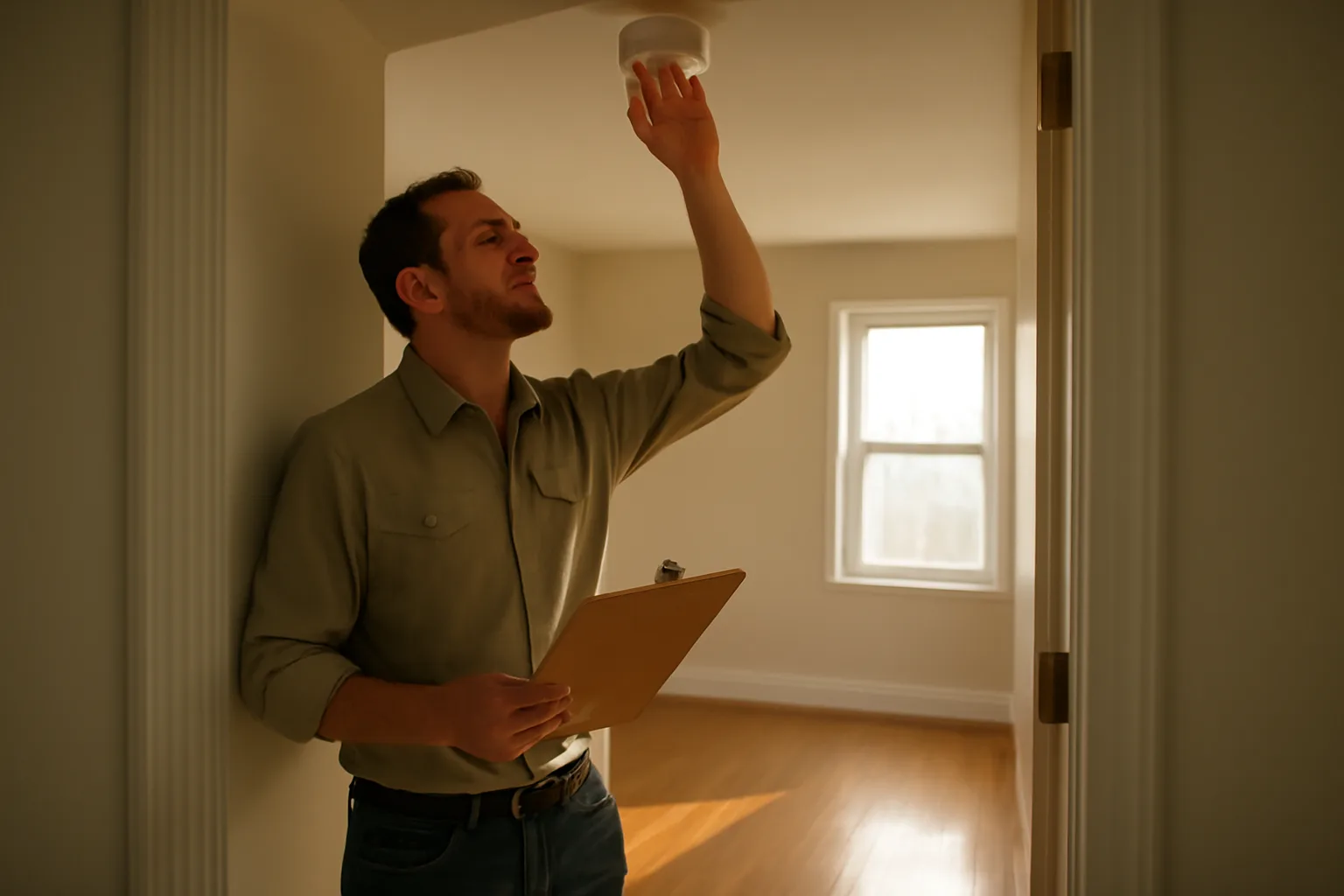
This depends heavily on which kind of inspection you mean, and landlords should be careful not to blur the two. A landlord's own property-condition inspection (checking on maintenance, verifying no lease violations like unauthorized pets or smoking) can look at general condition, safety issues, obvious damage, and compliance with lease terms. It should not turn into a search of the tenant's personal belongings, closets, or private areas without a specific, reasonable purpose (like an active pest issue). A city code enforcement inspection for rental licensing typically checks: smoke and carbon monoxide detectors and their placement, electrical panel condition and visible wiring hazards, plumbing leaks and water pressure, heating system function, window and door locks, egress windows in bedrooms, handrails on stairs, and general structural safety (no crumbling foundation, safe porches and decks). Some cities also check for proper occupancy limits and working exterior lighting. What inspectors generally are not there to judge is your décor, minor cosmetic wear, or how the tenant has arranged their furniture. The focus is safety and code compliance, not tidiness. In every case, entry requires proper notice under your state's law (see the notice section below), except in a genuine emergency.
how much notice does a landlord have to give before entering?
| Ohio | 24 hours ("reasonable notice") | ORC § 5321.05 [1] | |
|---|---|---|---|
| California | 24 hours (presumed reasonable) | Civ. Code § 1954 [4] | |
| Many other states | 24 to 48 hours | confirm your state code | Emergencies (fire, flooding, gas leak) are the standard exception to notice requirements in essentially every state, since the point of notice rules is to protect a tenant's right to quiet enjoyment of the home, not to block landlords from responding to a genuine safety threat. |
Notice requirements are set state by state, and they're one of the most commonly violated landlord-tenant rules simply because landlords don't check the specific number for their state. Ohio requires "reasonable notice," which the statute defines as at least twenty-four hours in most circumstances, under Ohio Revised Code § 5321.05(B) [1]. California requires "reasonable notice in writing," and Civil Code § 1954 states that 24 hours is presumed to be reasonable notice absent evidence to the contrary [4]. Many other states land somewhere in the 24 to 48 hour range, but a few differ, so check your specific state code rather than assuming a number. Here's a rough comparison of what's commonly required, though you should confirm your own state's exact statute before relying on any of it: | State (example) | Typical minimum notice | Statute |
why do landlords require renters insurance?
Landlords require renters insurance mainly to shift liability and personal-property risk off their own policy and onto the tenant's. A landlord's own insurance covers the building and the landlord's property; it generally does not cover a tenant's furniture, electronics, or clothing if there's a fire, burst pipe, or theft. Without renters insurance, a displaced tenant may look to the landlord (and the landlord's insurer) to cover losses, which drives up claims and premiums. Renters insurance also typically includes liability coverage, so if a tenant's dog bites a visitor, or a guest slips in the tenant's unit, the tenant's own policy responds first instead of the landlord's umbrella or liability coverage taking the hit. Cost-wise, renters insurance is cheap relative to what it protects: the Insurance Information Institute's 2022 data puts the average annual renters insurance premium at $148, or roughly $12 a month, though landlords should point tenants to actual quotes rather than relying on any single number, since rates vary by state and insurer [5]. Many landlords require it as a lease condition and ask for proof of an active policy annually. Whether you can legally require it, and how you enforce it, depends on your state and your lease language, so this is worth confirming with a local attorney or your state's landlord-tenant statute rather than assuming it's automatically enforceable everywhere.
what rights do tenants have without a lease?
A tenant without a signed lease still has real legal rights in every U.S. state; a lease is not what creates tenancy rights, actually living in and paying for the unit is. Without a written lease, most states treat the arrangement as a month-to-month tenancy at will, governed by the same state landlord-tenant statute that would apply if there were a written lease. That means the tenant still has a right to habitability (working plumbing, heat, safe structure), a right to proper notice before the landlord enters, a right to proper notice before the tenancy is ended (commonly 30 days for month-to-month tenancies, though some states and cities require more), and protection under fair housing law regardless of whether anything is in writing. What a tenant without a lease typically does not have is a fixed term of protection: a landlord can generally end a month-to-month tenancy with proper notice for any lawful, non-discriminatory reason, whereas a fixed-term lease usually can't be ended early without cause. "No lease" also does not mean "no rules": a tenant paying rent regularly, even with no paperwork at all, is still a tenant under the law and still owes rent and still has to follow reasonable, previously communicated rules like not damaging the property. For landlords, an oral or no-lease arrangement is a legal gray zone that mostly favors having a written lease in place, because state default rules can leave both sides uncertain about deposit terms, who pays for what repairs, and how much notice is really required. If you're renting without a written lease right now, getting one signed as soon as possible protects you more than it protects the tenant, since disputes without any written terms tend to get resolved in favor of whichever party has clearer records.
what a landlord cannot do in Ohio
Ohio Revised Code Chapter 5321 spells out specific things landlords are barred from doing, and it's worth knowing the actual list rather than a general sense of "be reasonable." A landlord in Ohio cannot enter the rental unit without reasonable notice and without a legitimate reason (inspection, repairs, showing the unit, in response to a request), except in an emergency, under ORC § 5321.04 and § 5321.05 [1][6]. A landlord cannot retaliate against a tenant for complaining to a government agency about a code violation, for joining a tenant organization, or for asserting rights under Chapter 5321; ORC § 5321.02 specifically addresses retaliation and voids retaliatory rent increases, terminations, or decreases in services [6]. A landlord cannot shut off utilities, remove doors or windows, or otherwise force a tenant out without going through the formal eviction (forcible entry and detainer) process in court; this is often called a "self-help eviction" and it's illegal in Ohio as in most states. A landlord also cannot ignore their own maintenance obligations under ORC § 5321.04, which requires keeping the premises in a fit and habitable condition, complying with building and housing codes, and keeping common areas safe and sanitary [1]. And, separately from state law, a landlord in an Ohio city with rental registration or licensing rules cannot legally rent out a unit that hasn't been registered or licensed if the local ordinance requires it; several Ohio cities and townships run their own rental registration or inspection programs on top of state law, so check with your specific city rental licensing office for local rules that go beyond Chapter 5321.
what to expect from mandatory rental-licensing programs generally
If your city requires a rental license or registration, the pattern tends to look similar across the country even though every city's specific fees and rules differ. Most programs require: an application per rental unit (or per property), a fee that commonly falls somewhere in the $30 to $300 range per unit depending on the city and unit count, a local contact person or registered agent if you don't live in the city, and either a self-certification or a scheduled inspection before or shortly after your first tenant moves in. Renewal is usually annual or every two years. Fines for operating an unlicensed rental vary widely by city, and can range from a modest reminder notice up to per-day penalties that add up fast if ignored. Some cities also bar landlords from filing an eviction case until the rental license is current, which can leave a landlord stuck if a tenant stops paying rent and the license lapsed months earlier without anyone noticing. Because the specifics (fee amount, inspection frequency, grace period, penalty structure) vary city to city and change periodically, the only reliable move is confirming current numbers directly with your city rental licensing office rather than trusting a number you found in an old blog post, including this one.
getting organized before your first tenant moves in
The single most common mistake first-time landlords make isn't legal, it's organizational: they don't have a system for tracking registration deadlines, inspection requirements, lease renewal dates, and maintenance requests, so things fall through the cracks quietly until a fine notice shows up. A basic setup that works for almost anyone with 1 to 10 units: a shared calendar with every license renewal date and inspection deadline, a folder (digital or physical) per unit with the lease, move-in checklist photos, and any code inspection reports, and a simple log of maintenance requests with dates completed. If your city just sent you an ordinance notice, an inspection date, or a violation fine, the fastest path back to compliance is usually: read the notice fully (including the specific code sections cited), call your city rental licensing office to confirm exactly what's required and by when, and fix the cited issues before the deadline rather than after. Cities are generally far more lenient with landlords who show up and ask questions than with ones who ignore the notice. For landlords managing this process across a first rental unit or a small portfolio, having a structured document set matters more than most people expect going in. That's the specific gap RentalPermitPath's $79 City Rental License & Inspection Prep Packet is built to close: a one-time packet that organizes the registration paperwork and inspection prep checklist so you're working from your city's actual requirements instead of piecing it together from forum posts.
Frequently asked questions
How do I become a landlord if I've never rented out property before?
Confirm your property is zoned for rental use, check whether your city requires rental registration or licensing (many do), get the unit inspection-ready if required, screen tenants under fair housing law, sign a lease that matches your state's landlord-tenant statute, and get landlord insurance. Then set up systems for rent collection, maintenance requests, and license renewal deadlines before your first tenant moves in.
What is landlording?
Landlording is the ongoing work of owning and renting out residential property: collecting rent, maintaining habitability, handling repairs, screening and communicating with tenants, and staying compliant with state landlord-tenant law and any local rental registration or licensing ordinance. It's less about the property and more about the legal and administrative obligations that come with renting to someone else.
What is a landlord, legally speaking?
Legally, a landlord is the party who owns or controls residential property and rents it to a tenant in exchange for payment, taking on specific duties defined by state statute (like Ohio Revised Code Chapter 5321) covering habitability, notice, and non-retaliation [1]. The tenant, in turn, owes rent and reasonable care of the property.
Who is responsible for scheduling a rental property walk-through inspection in California?
Under California Civil Code § 1950.5, the landlord must notify the tenant of their right to an initial move-out inspection and, if the tenant requests it, schedule and perform that inspection before the tenancy ends, then provide an itemized list of deficiencies [3]. Separate city code-enforcement inspections for licensing follow whatever schedule that specific city's ordinance sets.
What can a landlord look at during a rental inspection?
A landlord's own maintenance inspection can check general condition, safety issues, and lease compliance, but shouldn't extend to searching personal belongings without cause. A city code inspection for licensing typically checks smoke and carbon monoxide detectors, electrical and plumbing safety, heating, egress windows, stairs and handrails, and occupancy limits.
What rights does a tenant have without a signed lease?
A tenant without a lease is still a tenant under state law, usually treated as a month-to-month tenant. They keep the right to habitability, proper notice before entry, proper notice before the tenancy ends (often 30 days), and full protection under federal and state fair housing law, regardless of whether anything is in writing.
How much notice does a landlord have to give before entering the unit?
It depends on your state. Ohio requires "reasonable notice," defined as at least 24 hours under ORC § 5321.05 [1]. California presumes 24 hours' written notice is reasonable under Civil Code § 1954 [4]. Many other states use a similar 24 to 48 hour range, but always confirm your own state's statute.
Why do landlords require renters insurance if they already have their own policy?
A landlord's insurance covers the building, not the tenant's belongings, and typically doesn't cover a tenant's personal liability. Requiring renters insurance shifts that risk to the tenant's own policy, reducing claims against the landlord's coverage and giving the tenant real protection if there's a fire, theft, or liability incident in the unit.
What can a landlord not do in Ohio?
Under Ohio Revised Code Chapter 5321, a landlord can't enter without reasonable notice and a legitimate reason, can't retaliate against a tenant for reporting code violations, can't force a tenant out through self-help methods like shutting off utilities, and can't ignore statutory maintenance obligations to keep the unit fit and habitable [1][5].
Do all cities require a rental license or registration?
No. Rental licensing and registration requirements are set city by city (sometimes county by county), not nationwide, so plenty of cities have no such requirement at all. Where they do exist, fees commonly range from roughly $30 to $300 per unit, but you have to confirm the exact number with your specific city rental licensing office.
What happens if I miss my rental license renewal deadline?
Consequences vary widely by city: some send a grace-period reminder with a small late fee, others assess daily fines, and some bar landlords from filing eviction cases until the license is current. Because penalty structures differ so much city to city, contact your city rental licensing office immediately if you've missed a deadline rather than assuming a fixed penalty.
Can a landlord require renters insurance as a lease condition?
In most states, yes, landlords can generally require renters insurance as a lease condition, but enforceability depends on state law and how the lease is written. Confirm with your state's landlord-tenant statute or a local attorney whether you can deny renewal or pursue lease enforcement specifically over lack of proof of coverage.
Sources
- Ohio Revised Code, Chapter 5321 (Landlords and Tenants): Ohio's landlord-tenant obligations, notice requirements, and maintenance duties
- U.S. Department of Justice, Fair Housing Act overview (42 U.S.C. § 3601 et seq.): Federal fair housing protections applying to tenant screening
- California Civil Code § 1950.5: California's initial move-out inspection and security deposit itemization rules
- California Civil Code § 1954: California's 24-hour presumption of reasonable notice before landlord entry
- Ohio Revised Code § 5321.02 (Retaliatory conduct prohibited): Ohio's prohibition on landlord retaliation against tenants
- Insurance Information Institute, Facts + Statistics: Renters insurance (2022 data): Average annual and monthly cost of renters insurance