Last updated 2026-07-25
TL;DR
A business license for rental property is a city or county requirement that treats renting out a unit as operating a business, separate from any rental registration or inspection program. Rules, fees (often $50 to $300 per unit annually), and enforcement vary by city. Skipping it can mean fines, denied evictions, or trouble collecting rent in court.
what is a business license for rental property, exactly?
A business license for rental property is a local government requirement that says: if you rent out real estate for money, you're operating a business in that jurisdiction, and you have to register it and pay for the privilege. It's separate from your state LLC filing, separate from your property tax bill, and often separate from a rental registration or inspection program, though a lot of cities bundle two or three of these together under one form and one fee. The legal hook is usually a city's general business license ordinance, the same one that applies to a hair salon or a plumbing company, applied to landlords because leasing property counts as "engaging in business" under the local code. Some cities write a rental-specific version instead: a "rental dwelling license," a "certificate of occupancy for rental use," or a "residential rental permit." The name changes city to city. The function is close to the same: the city wants a record of who owns what rental property, a local contact for code enforcement, and usually a fee to fund inspections or a housing department. Don't assume your city doesn't have one just because you've never heard of it. Business license ordinances get enforced through utility records, tax assessor data matching non-owner-occupied addresses, and tenant complaints, not through landlords volunteering. Confirm with your city's business license office or rental licensing office directly, because the requirement, the fee, and the renewal cycle are all set locally and change without much notice.
is a rental business license the same thing as a rental registration or permit?
No, and this is where a lot of landlords get tripped up. A business license taxes and tracks the activity of renting. A rental registration or rental license usually adds housing-specific conditions on top: a habitability inspection, a cap on units per structure, lead paint disclosures, or a local contact requirement for tenants. Some cities run these as one combined program. Others run two or three separate systems that don't talk to each other, so you can hold a valid rental registration and still owe a business license fee, or vice versa. San Francisco, for example, requires most businesses operating in the city, including residential rentals in many cases, to register for a Business Registration Certificate through the Office of the Treasurer & Tax Collector, which is a distinct requirement from the city's short-term rental or unit-based housing programs [1]. The safest approach: call your city's business license division and separately call the housing or code enforcement department that handles rental registration. Ask each one directly whether a landlord with your unit count needs anything from their office. Get the answer in writing or note the date and the name of who told you, because "I called and they said no" is worth a lot less to a hearing officer than a confirmation email.
how to become a landlord (the practical steps, more than the paperwork)
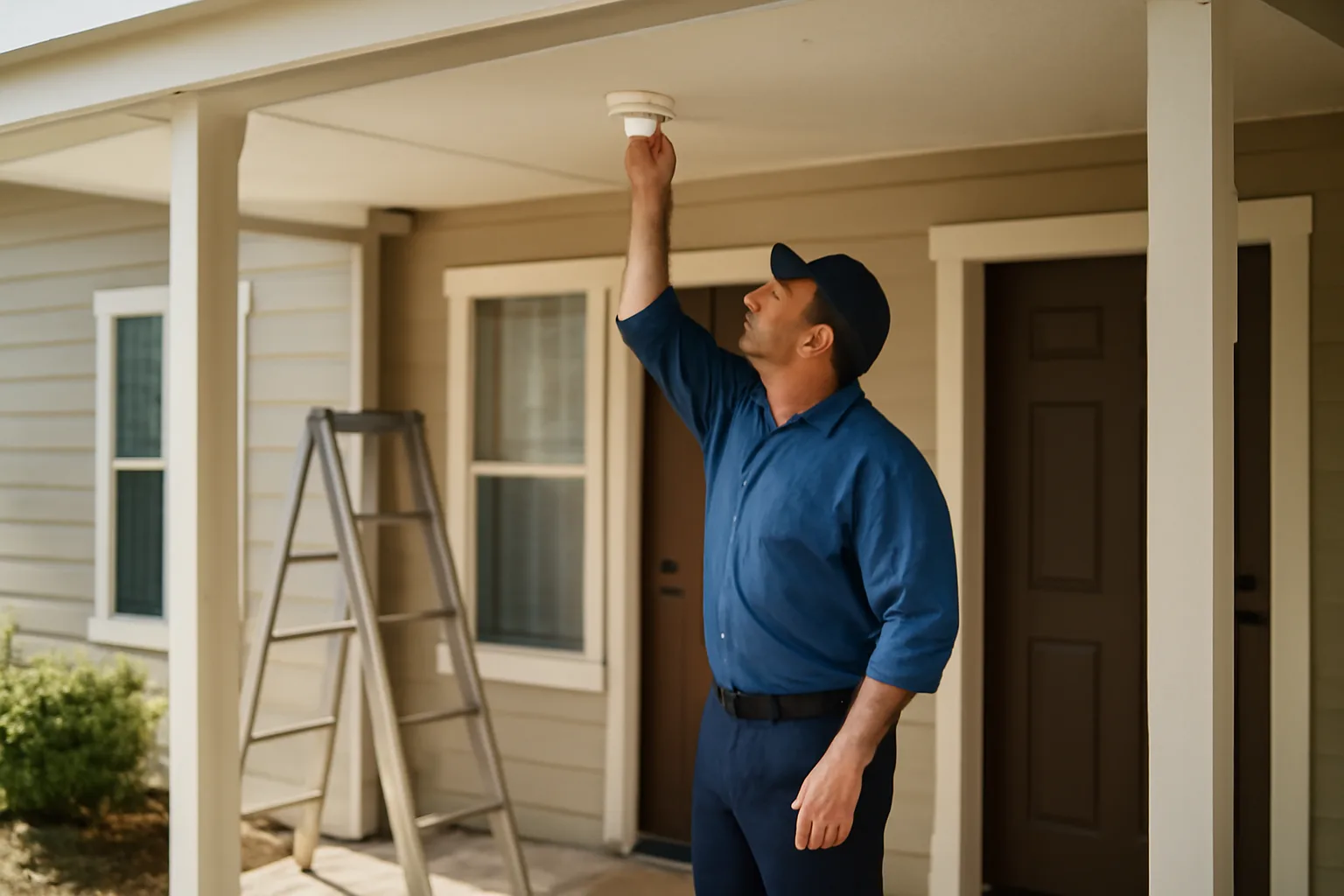
Becoming a landlord is mostly a legal and financial process, not a mysterious skill. Here's the realistic sequence, in the order most first-time landlords actually go through it. 1. Buy or convert a property, and check zoning first. Some residential zones restrict rentals, cap the number of unrelated occupants, or require owner-occupancy for certain unit types (accessory dwelling units, for instance, often have owner-occupancy rules tied to the primary lot). 2. Check your city's business license and rental licensing requirements before you list the unit. Many cities require the license or registration to be active before you can legally rent, not after. 3. Get the unit inspection-ready. Working smoke and carbon monoxide detectors, functioning locks, no obvious code violations. Many cities require a pre-rental or initial inspection as part of licensing. 4. Get landlord insurance (a landlord policy, not a standard homeowners policy) and decide your renters insurance policy for tenants. 5. Set up a lease that matches your state's landlord-tenant law on notice periods, security deposit limits, and disclosures. 6. Screen tenants consistently, following the Fair Housing Act's protections against discrimination based on race, color, national origin, religion, sex, familial status, and disability [2]. 7. Set up rent collection, a maintenance request system, and a separate bank account for security deposits if your state requires it. That's the honest checklist. The order can shift, but skipping the licensing step until after you've got a tenant in place is the single most common mistake that turns into a fine.
what is landlording, and what does a landlord actually do day to day?
Landlording is the ongoing work of owning and managing rental property: collecting rent, handling repairs, keeping the property compliant with local codes, and managing the tenant relationship. It's a mix of light bookkeeping, light property management, and being the person tenants call when the water heater dies at 11pm. A landlord, legally, is the party who owns or controls the property and leases it to a tenant in exchange for rent, taking on the obligations that come with that under state landlord-tenant law: maintaining habitability, following notice rules for entry and termination, and returning security deposits within the state's required timeframe. Most states set a specific number of days for deposit return, commonly 14 to 30 days, though the exact figure and any penalty for late return varies by state, so confirm your state's statute rather than assuming a number. Day to day, landlording with 1 to 10 units usually looks like: responding to maintenance requests within a reasonable window, doing periodic inspections (subject to notice requirements, covered below), renewing your business license or rental registration annually, budgeting for vacancy and repairs, and keeping records of everything, because in a dispute, the landlord with dated photos and written notices wins more often than the one who remembers things "pretty clearly."
who is responsible for the rental property walk-through inspection in California?
In California, the landlord is responsible for scheduling and conducting the move-out inspection, but the tenant has a right to be present. California Civil Code Section 1950.5 requires landlords to give tenants a written notice of their right to an "initial inspection" before the tenant moves out, if the landlord intends to make any deductions from the security deposit for repairs or cleaning [3]. The statute lays it out specifically: the landlord must notify the tenant in writing of the right to request an initial inspection, conducted no earlier than two weeks before the end of the tenancy. If the tenant requests it, the landlord and tenant work out a mutually convenient time, and the landlord must give at least 48 hours written notice of the date and time (or the tenant can waive that written notice). After the initial inspection, the landlord gives the tenant a written itemized statement of deductions the landlord proposes to make, and the tenant gets a chance to fix issues themselves before move-out to avoid those deductions. Separately from the move-out walk-through, California landlords also have inspection obligations tied to rental licensing in some cities (Los Angeles' Systematic Code Enforcement Program is one well-known example, run through the Los Angeles Housing Department) [4], and normal entry-for-repairs rules under Civil Code 1954, which generally requires 24 hours' written notice for non-emergency entry [5]. These are three different "inspections" that get confused: the move-out walk-through, the routine repair-access entry, and a city rental inspection program. Check which one you're dealing with before you assume the same notice rule applies.
what rights do tenants have without a lease?
Tenants without a written lease, sometimes called month-to-month or at-will tenants, still have real legal protections. The absence of a signed lease does not mean the absence of a tenancy or the absence of rights. Under most state law, an oral or implied rental agreement (someone pays rent, the landlord accepts it) creates a month-to-month tenancy with the same basic protections as a written lease: the right to habitable housing, protection from illegal lockouts or utility shutoffs, the right to proper notice before termination, and the right to the return of any security deposit under the same deposit-return rules that apply to written leases. The Department of Housing and Urban Development notes that Fair Housing Act protections against discrimination apply regardless of whether a lease is written [2]. What does change without a written lease is the notice period for ending the tenancy. Because it defaults to month-to-month, most states require the landlord to give a set number of days notice, commonly 30 days, sometimes tied to how long the tenant has lived there, before ending the tenancy or raising rent (see the notice section below for specifics). Without a lease, there's also more ambiguity about who's responsible for what, so disputes over verbal promises ("the landlord said he'd fix the fence") are harder to prove and harder to win. If you're renting month-to-month, get anything material in writing, even a text message thread, because it's the closest thing you'll have to a contract record.
how to be a landlord: staying compliant year over year
The first year of landlording is mostly setup. Every year after that is mostly maintenance: renewing licenses, keeping insurance current, and not letting small compliance gaps turn into fines. A few habits that keep landlords out of trouble: Calendar your renewal dates the day you get your license or registration, not the week before it expires. Many cities send a renewal notice, but plenty don't, and "the city never mailed me anything" is not a defense that holds up at a code enforcement hearing. Keep a paper trail on every notice you send: entry notices, rent increase notices, lease violation notices. Email or certified mail beats a phone call every time. Review your local ordinance annually, more than once when you started. Cities update rental registration fees, add inspection cycles, or add new disclosure requirements (lead paint, bed bug history, flood zone status) more often than landlords expect. Budget for the license and inspection cost as a real annual expense, not a surprise. If you're managing this across a couple of properties or a couple of cities with different rules, having a single organized file per property, license number, inspection date, renewal deadline, insurance policy, makes renewal season take twenty minutes instead of an afternoon of digging through email. A rental packet builder built for this exact purpose (a $79 one-time City Rental License & Inspection Prep Packet) is one way to keep that file straight without building a spreadsheet from scratch.
why do landlords require renters insurance?
Landlords require renters insurance mainly to shift liability and property-loss risk away from the landlord's own policy. A landlord's insurance covers the building; it does not cover a tenant's personal belongings, and in most states it does not automatically cover a tenant's liability if the tenant (or their guest, or their dog) causes an injury or damages someone else's property. The practical reasons landlords require it: if a tenant's negligence causes a fire or a burst pipe, the landlord's insurer often subrogates, meaning the insurer that pays the landlord's claim turns around and sues the party at fault (the tenant) to recover the cost. A tenant with a renters policy has liability coverage that protects both the tenant and, indirectly, the landlord's insurer's ability to recover damages without going after the tenant's personal assets directly. It also means a tenant whose stuff is destroyed in a covered loss doesn't come asking the landlord to replace it, since the landlord's policy was never going to cover tenant belongings in the first place. Requiring renters insurance is legal in most states as a lease condition, though a handful of jurisdictions regulate how it can be required or offered (some states let landlords enroll tenants in a liability policy automatically, for a monthly fee, if the tenant doesn't provide proof of their own). There's no federal renters insurance mandate; this is entirely a matter of state law and lease terms, so what a landlord can require and how depends on where the property sits.
how much notice does a landlord have to give?
| Entry for repairs/showing | 24 to 48 hours | State statute |
|---|---|---|
| End month-to-month tenancy (short tenancy) | 30 days (common) | State statute |
| End month-to-month tenancy (long tenancy) | 60 to 90 days in some states | State statute |
| Rent increase over a threshold (where capped) | 90 days in some states (e.g., California AB 1482 at 10%+) | State statute |
Notice requirements split into two very different buckets, and mixing them up is a common and expensive mistake: notice to enter the unit, and notice to end or change a tenancy. For entry to make repairs or show the unit, California requires "reasonable notice," which the statute defines as presumptively 24 hours for entry to make repairs, and the notice must state the date, approximate time, and purpose of entry [5]. Other states set different defaults: many require 24 to 48 hours, and a few default to a "reasonable time" standard without a fixed number. Emergency entry (fire, flooding, imminent danger) generally doesn't require advance notice anywhere. For ending a month-to-month tenancy or raising rent, notice periods are set state by state and sometimes city by city, and they often scale with how long the tenant has lived there or how large the rent increase is. As a general pattern, many states require 30 days notice for month-to-month terminations under a year of tenancy, with some jurisdictions requiring 60 or even 90 days for longer tenancies or larger rent increases (California's AB 1482, for example, requires 90 days notice for rent increases at or above 10% in covered properties) [6]. This is genuinely one of the most state-specific areas of landlord-tenant law, so treat any number you read online, including the ones above, as a starting point to verify against your specific state statute, not a final answer. | Notice type | Typical range | Where it's set |
what can a landlord look at during an inspection?
During a habitability or code enforcement inspection, an inspector generally has the right to check life-safety systems and general condition: smoke and carbon monoxide detectors, electrical panels and visible wiring, plumbing for leaks, heating systems, window and door locks, means of egress (fire escapes, exit paths), signs of mold or pest infestation, and structural issues like broken stairs or damaged flooring. City rental inspection programs typically publish a checklist; Los Angeles' Systematic Code Enforcement Program inspection, for instance, covers items tied to the state's Health and Safety Code habitability standards [4]. During a landlord's own routine entry (not a city inspection), the landlord can generally look at whatever is reasonably necessary to assess the condition of the unit and confirm lease compliance, but this is not a general search. A landlord entering to check a reported leak doesn't have a right to go through drawers, closets, or personal belongings unrelated to the repair. Entry rights and inspection rights come from two different sources: the lease and state entry statute for the landlord's own visits, and the local housing code for a city inspector's visit, and the scope of what can be looked at differs between the two. Tenants can typically decline to let a city inspector in without a warrant if there's no health or safety emergency, though most rental licensing ordinances make inspection access a condition of the landlord holding a valid license, which puts pressure on the landlord (not the tenant directly) to get access arranged. If a tenant refuses entry, cities generally allow for an administrative or judicial warrant process rather than forced entry.
what a landlord cannot do in Ohio
Ohio's landlord-tenant law is set out in Ohio Revised Code Chapter 5321, and it draws several clear lines around what a landlord cannot do. A landlord cannot enter the rental unit without giving reasonable notice of intent to enter, and entry must be at a reasonable time; Ohio courts and the statute generally treat 24 hours as reasonable notice, though the code itself uses the "reasonable" standard rather than a fixed number [7]. Ohio landlords also cannot use "self-help" eviction. Ohio Revised Code 5321.15 explicitly prohibits a landlord from removing a tenant, seizing a tenant's property, or shutting off utilities to force a tenant out, and requires the landlord to go through the court eviction process instead [5]. A landlord who locks a tenant out or shuts off the electricity to pressure them to leave is exposed to liability under this section regardless of how much rent is owed. Ohio law (Ohio Revised Code 5321.02) also prohibits retaliatory conduct, meaning a landlord cannot terminate a tenancy, refuse to renew, or otherwise retaliate against a tenant for complaining to a government agency about a building or health code violation, or for joining a tenant organization . And under Ohio Revised Code 5321.04, a landlord must comply with building, housing, and health codes affecting health and safety, keep common areas safe, and maintain the unit's plumbing, heating, and electrical systems in good working order . A landlord who ignores repair requests tied to those systems is more than risking a bad tenant relationship, they're potentially in violation of a specific statutory duty.
what happens if you don't get a required business license before renting?
Cities that catch unlicensed rental activity typically respond with escalating consequences: a warning and cure period first for a lot of programs, then fines, and in some jurisdictions a bar on using the courts to evict a nonpaying tenant until the license is obtained. Some cities go further and make an unlicensed rental unenforceable in rent collection. Los Angeles Municipal Code's rent escrow and registration provisions, for example, tie certain enforcement remedies to a landlord's compliance with registration requirements, which is one reason "I'll deal with the license later" is a genuinely bad plan there and in cities with similar structures. Fine amounts vary widely: a lapsed or missing rental business license commonly runs from roughly $100 to $1,000 per violation depending on the city, sometimes accruing per unit or per day of noncompliance, so confirm the exact fine schedule with your specific city's code enforcement or business license office rather than assuming a number. The fix is usually straightforward even after the fact: apply for the license, pay the fee plus any late penalty, and pass whatever inspection the city requires. It's just more expensive and slower than doing it before you ever advertised the unit, and in the meantime you may not be able to evict a tenant for nonpayment or enforce the lease in court, which flips the balance of power in a way that surprises a lot of first-time landlords.
Frequently asked questions
Do I need a business license to rent out one property?
Often yes. A lot of cities apply the same business license requirement to a single-unit rental as they do to a small business, since renting property for income counts as "engaging in business" under many local codes. It depends entirely on your city; some exempt owner-occupied duplexes or a single unit, others don't. Confirm with your city's business license office directly.
How much does a rental business license cost?
Costs vary widely by city, commonly landing somewhere between $50 and $300 per unit per year, sometimes with an additional inspection fee on top. Some cities charge a flat business license fee regardless of unit count; others scale by number of units. Confirm the current fee with your city's business license or rental registration office, since these change year to year.
How to become a landlord with no experience?
Start by checking zoning and licensing rules for your property before buying or listing it, get the unit inspection-ready, secure landlord insurance, and use a lease that matches your state's landlord-tenant statute. Screen tenants consistently under Fair Housing Act standards. Most first-time landlords learn the operational side (maintenance requests, rent collection) as they go; the legal and licensing steps are the ones worth getting right up front.
What is landlording?
Landlording is the ongoing work of owning and operating rental property: collecting rent, maintaining habitability, following notice and entry rules, renewing any required licenses, and managing the tenant relationship. It combines light bookkeeping, property maintenance, and legal compliance under your state's landlord-tenant law.
Who is responsible for the rental property walk-through inspection in California?
The landlord schedules and conducts the move-out inspection, but under California Civil Code 1950.5, the tenant has a right to request an initial inspection two weeks before move-out and to be present, with the landlord giving written notice of that right and at least 48 hours' notice of the scheduled time.
What rights do tenants have without a lease?
Tenants without a written lease still have a legal tenancy (usually month-to-month) with rights to habitable housing, protection from illegal lockouts, proper notice before termination or rent increases, and return of any security deposit under state law. What changes without a lease is mostly the difficulty of proving verbal agreements, not the existence of legal protections.
Why do landlords require renters insurance?
Landlords require renters insurance because a landlord's own policy doesn't cover a tenant's belongings or a tenant's liability for injuries or damage they cause. Requiring it shifts that risk to the tenant's policy and protects the landlord from being the fallback when a tenant's negligence causes a loss.
How much notice does a landlord have to give before entering?
Most states require 24 to 48 hours of written or verbal notice before entering for repairs or showings, stating the date, approximate time, and purpose. California's default is 24 hours under Civil Code 1954. Emergencies don't require advance notice. Always check your specific state statute, since defaults vary.
How much notice does a landlord have to give to end a tenancy?
It depends on the state and sometimes the length of tenancy or size of a rent increase. A common pattern is 30 days for month-to-month tenancies under a year, with some states requiring 60 to 90 days for longer tenancies or large rent increases. Confirm the exact figure under your state's landlord-tenant statute.
What can a landlord look at during an inspection?
A city habitability inspection typically covers smoke and CO detectors, electrical and plumbing systems, heating, locks, egress routes, and signs of pests or mold. A landlord's own routine entry is limited to what's reasonably necessary for the stated purpose (a repair or a lease compliance check), not a general search of the unit.
What a landlord cannot do in Ohio?
Under Ohio Revised Code Chapter 5321, a landlord cannot enter without reasonable notice, cannot use self-help eviction (lockouts, utility shutoffs, or seizing belongings under ORC 5321.15), cannot retaliate against tenants who report code violations (ORC 5321.02), and must maintain plumbing, heating, and electrical systems under ORC 5321.04.
What's the difference between a rental license and a business license?
A business license generally covers the fact that you're operating a rental as a business; a rental license or registration usually adds housing-specific conditions like inspections, unit caps, or local contact requirements. Some cities combine both into one program; others run them separately, so check with both your business license office and your housing or code enforcement department.
What happens if I rent without a required business license?
Consequences typically escalate from a warning and cure period to fines, commonly in the range of $100 to $1,000 per violation depending on the city, and in some jurisdictions the landlord loses the ability to evict a nonpaying tenant in court until the license is obtained. Confirm your city's specific fine schedule with its code enforcement office.
Sources
- HUD, Fair Housing Act Overview: Fair Housing Act protections against discrimination apply to tenant screening and apply regardless of whether a lease is written
- California Legislative Information, Civil Code Section 1950.5: California landlords must notify tenants of the right to an initial move-out inspection and give at least 48 hours written notice of the scheduled time
- California Legislative Information, Civil Code Section 1954: California requires landlords to give reasonable notice, presumptively 24 hours, before entering a rental unit for repairs
- California Legislative Information, Civil Code Section 1947.12 (AB 1482): California's statewide rent cap law requires 90 days notice for rent increases at or above certain thresholds in covered properties
- Ohio Legislative Service Commission, Ohio Revised Code 5321.04: Ohio landlords must give reasonable notice before entering a rental unit
- Ohio Legislative Service Commission, Ohio Revised Code 5321.15: Ohio law prohibits landlords from using self-help eviction methods like lockouts, utility shutoffs, or seizing tenant property
- Ohio Legislative Service Commission, Ohio Revised Code 5321.02: Ohio law prohibits landlords from retaliating against tenants who report code violations or join a tenant organization