Last updated 2026-07-25
TL;DR
A tenant portal is software (like Buildium, AppFolio, or RentRedi) that lets landlords collect rent, log maintenance requests, and store lease documents online. Boston doesn't require one, but the city does require rental registration under its Trust Act rules, and good portal records can help you prove compliance during an inspection or dispute.
What is a Boston property management tenant portal, exactly?
A tenant portal is an online account, usually part of a property management software package, where a tenant pays rent, submits maintenance requests, and downloads lease documents. The landlord side of the same software tracks payment history, stores photos of unit conditions, and time-stamps every maintenance ticket. Boston doesn't have a city-run tenant portal. There's no municipal login where you register units and tenants both talk to the city through one dashboard. Instead, "tenant portal" almost always refers to third-party software landlords choose on their own: Buildium, AppFolio, RentRedi, TenantCloud, Avail, and similar products. Boston's own rental registration system, required under the city's Rental Registration Trust Act rules, is separate and is where you actually register units with the city [1]. The confusion is understandable. Search "Boston property management tenant portal" and you'll get a mix of software vendor pages and city compliance pages. They're related but not the same thing. Your portal helps you run the property day to day. Your registration with the city is the legal box you have to check regardless of what software you use. For a landlord with one to three units, a full portal subscription might be overkill. Many small landlords just use a basic payment app plus email for maintenance requests. Once you're past four or five units, or you're self-managing a duplicate across multiple addresses, the record-keeping benefits of a real portal start to pay for themselves.
Does Boston require landlords to use a tenant portal or online system?
No. Boston does not mandate any specific tenant portal or property management software. What Boston does require is rental registration for most rental properties, tracked through the city, not through a private software vendor [1]. Massachusetts law separately requires that residential rental units meet the State Sanitary Code, and Boston's Inspectional Services Department enforces those standards through inspections, especially in licensed lodging houses and properties responding to tenant complaints [2]. None of that enforcement runs through a portal. It runs through paper or electronic forms filed with the city and physical inspections at the property. So the portal question and the compliance question are two separate tracks. You can run your rent collection and maintenance requests through any software you like, or through none at all, cash and paper receipts. What you cannot skip is registering the property with the city where registration is required and responding to any Sanitary Code inspection. If you want the software side automated, that's a business decision, not a legal one. If you want the compliance side handled correctly, confirm the current registration form and fee with your city rental licensing office, since Boston's own forms and portal login pages change periodically.
How do tenant portals help with Boston rental inspections and registration?
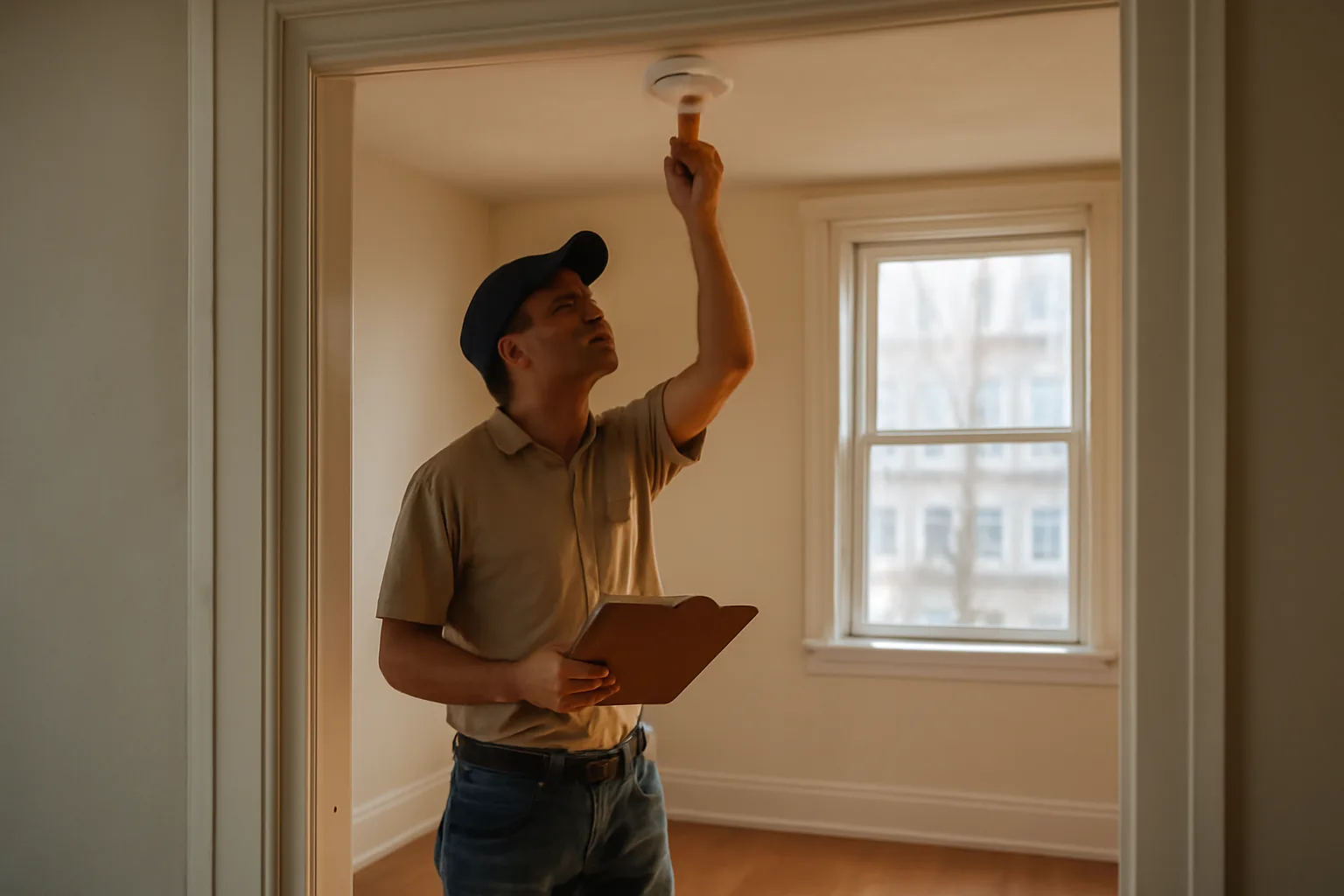
A portal earns its keep at the exact moment you least want to be searching your email: an inspection notice, a tenant complaint, or a violation letter. Good software gives you a paper trail that shows what you did and when. Think about what Inspectional Services actually asks for during a Sanitary Code inspection. Working smoke and carbon monoxide detectors, no active leaks, working heat, a functioning stove, no infestation, clear egress. If a tenant reported low heat in January and you logged a repair ticket showing a technician fixed the boiler on January 12, that record backs you up. Without it, you're arguing your word against theirs. A portal also helps with the registration side indirectly. It keeps your unit count, lease start and end dates, and tenant contact info in one place, which makes filling out the city's registration form faster each renewal cycle. It won't fill out the form for you. Boston's registration still goes through the city's own process, not your property management software [1]. The honest tradeoff: a portal costs money (subscriptions commonly run somewhere in the range of $1 to $2 per unit per month on the low end, up to $50-plus per month flat fee packages on the high end, depending on the vendor and features), and it takes setup time. For a single-unit landlord who knows every tenant personally, a shared spreadsheet and a folder of PDFs might do the same job for free. For someone running six or eight units with turnover every year, the portal usually saves more hours than it costs in fees.
How to become a landlord in Boston: the basic steps
Becoming a landlord in Boston, or anywhere in Massachusetts, isn't a licensing process for you personally. There's no landlord license exam. What you need to do is register the property, understand your legal obligations, and set up systems before you hand over keys. First, confirm whether your property needs to register with Boston's rental registration program. The city's ordinance covering rental registration traces back to the Rental Registration Trust Act at the state level, which Boston adopted locally [1]. Confirm the current registration form, fee, and renewal cycle with your city rental licensing office directly, since these details change. Second, get the unit up to code before you list it. That means working smoke detectors and carbon monoxide alarms per Massachusetts General Laws, no lead paint hazards if the property was built before 1978 (triggering obligations under the state's Lead Law), adequate heat, and a functioning kitchen and bathroom [3][4]. Massachusetts requires lead paint deleading or a compliance letter for rental units built before 1978 with a child under six residing there [4]. Third, get landlord-specific insurance, screen tenants consistently and legally (fair housing rules apply to every applicant, every time), and draft a lease that matches Massachusetts requirements around security deposits, last month's rent, and required disclosures. Fourth, set up your record-keeping system, whether that's a portal, a spreadsheet, or a filing cabinet. Massachusetts law requires landlords to provide a statement of condition and to handle security deposits under strict rules, including where you hold the money and what interest, if any, you owe [5]. Sloppy records here cause real financial exposure if a tenant sues over a deposit. If you want a structured way to gather what your specific city requires before your first inspection or registration deadline, rental packet builder at RentalPermitPath assembles a $79 one-time City Rental License & Inspection Prep Packet built around your city's actual requirements, which can save the guesswork on which form applies to your unit count and building type.
What is landlording, and what does a landlord actually do?
Landlording is the day-to-day work of owning and renting out residential property to tenants in exchange for rent. It covers everything from finding tenants and collecting rent to handling repairs, following eviction procedures when necessary, and staying current on local and state housing law. A landlord, legally, is the person or entity that owns the rental property and has agreed, usually through a lease, to let a tenant occupy it in exchange for payment. The landlord holds the legal obligations: keeping the unit habitable, respecting the tenant's right to quiet enjoyment, following the law on entry notice, and returning the security deposit under the rules that apply in that state. In Massachusetts, the landlord-tenant relationship is governed heavily by the State Sanitary Code (105 CMR 410), Chapter 186 of the Massachusetts General Laws (covering lease terms and landlord obligations), and Chapter 93A (the state's consumer protection law, which courts have applied to certain landlord practices) [2][3]. Landlording well means knowing these rules exist and building your systems, portal or no portal, around them rather than around guesswork. Most first-time landlords underestimate how much of the job is administrative. It's more than finding a tenant and cashing checks. It's tracking lease renewal dates, keeping insurance current, responding to repair requests within a reasonable time, and documenting everything in case a dispute ends up in housing court.
Who is responsible for a rental property walk-through inspection?
This question comes up a lot, often phrased around California, but the underlying logic applies in most states including Massachusetts. The landlord is generally responsible for conducting move-in and move-out walk-through inspections, and in several states this is a legal obligation, more than good practice. In California, Civil Code Section 1950.5 gives tenants the right to request an initial move-out inspection before the final move-out, specifically so they can fix issues themselves and avoid deposit deductions [6]. The landlord must give reasonable notice of that inspection and provide an itemized statement of proposed repairs or deductions. Massachusetts doesn't have an identical statute mandating a pre-move-out walk-through, but it does require landlords to provide tenants a statement of condition within ten days of the start of tenancy if the landlord holds a security deposit, listing the condition of the premises [5]. The tenant has a right to be present during that inspection and to sign or dispute the statement. Practically, that makes the landlord the one who schedules and documents the walk-through, with the tenant's participation built into the process. So the short answer: the landlord initiates and documents the walk-through, but the tenant has a right to be present and to challenge what's recorded. Photos, dated notes, and (for security deposits) the formal statement of condition are what protect you if a dispute over damage or deposit deductions ends up in court.
What can a landlord look at during a rental inspection?
A landlord conducting a routine inspection can generally check the condition of fixtures, appliances, smoke and CO detectors, plumbing, HVAC systems, and general habitability items like signs of leaks, pests, or mold. What a landlord cannot do is search personal belongings, closets, or drawers without a legitimate maintenance-related reason, and cannot use the inspection as pretext to harass a tenant. The list of what's fair game during a habitability-focused inspection typically includes: smoke detector and CO alarm function, visible mold or water damage, working locks and windows, functioning heat source, stove and refrigerator operation, and any structural hazards like exposed wiring or a broken staircase. In Massachusetts, these map directly onto the Sanitary Code's minimum standards under 105 CMR 410 [2]. What crosses the line is opening drawers, closets, or personal storage that has nothing to do with the maintenance issue at hand, or bringing people onto the property who have no legitimate reason to be there. Massachusetts also requires "reasonable notice" before non-emergency entry, discussed more below. A municipal inspector, separately, is checking for code compliance rather than tenant behavior: they're looking at the same physical conditions (detectors, egress, pest signs, structural issues) but through the lens of the Sanitary Code violation categories, and they can issue a formal violation notice with a correction deadline if something fails [2].
How much notice does a landlord have to give before entering?
Massachusetts law doesn't set one single statewide notice number in the way some states do, but the standard practiced under lease norms and case law is "reasonable notice," commonly treated as 24 hours in practice, except in a genuine emergency. Many Massachusetts leases specify 24 hours in writing, and many housing attorneys and tenant advocacy groups treat that as the practical floor for non-emergency entry, even though it's not spelled out as an exact number in the general landlord-tenant statute the way it is in some other states [3]. Emergencies (fire, burst pipe, gas leak) are the exception, where a landlord can enter without advance notice to prevent damage or protect safety. Contrast that with a state that has a hard number written into statute. California's Civil Code Section 1954 requires "reasonable notice," which the statute defines as 24 hours presumed reasonable, in writing, and it lists the specific purposes that justify entry (repairs, showings, inspections, court order) [7]. Massachusetts landlords should treat 24 hours' written notice as the safe default even without an identical statutory definition, because tenant remedies for unlawful entry (including a potential Chapter 93A claim) exist regardless of whether the exact number is codified [3]. When in doubt, put your entry policy in writing in the lease and stick to it consistently. Consistency matters more than the exact hour count if a dispute ever gets in front of a judge.
What rights do tenants have without a written lease?
A tenant without a written lease still has legal rights. In Massachusetts and most states, an oral or implied rental agreement creates a tenancy-at-will, which comes with the same basic protections against illegal lockout, the same habitability standards, and the same notice requirements for ending the tenancy as a written lease would. A tenancy-at-will in Massachusetts requires the landlord to give notice equal to one full rental period (typically 30 days for a month-to-month arrangement, or the length of the rent interval) before terminating, per Massachusetts General Laws Chapter 186, Section 12 [3]. The tenant owes the landlord the same notice back if they want to leave. Without a lease, tenants still get State Sanitary Code protections, meaning the unit still has to have working heat, hot water, smoke detectors, and no serious safety hazards, lease or no lease [2]. Security deposit rules under Chapter 186, Section 15B still apply if the landlord collected one, written lease or not [5]. What tenants without a lease do not get is any additional protection beyond what a written lease would provide. If anything, a written lease helps both sides by locking in specific terms (rent amount, renewal date, who pays for what). Without one, either party can end the tenancy with proper notice, and disputes tend to hinge more heavily on what can be proven through texts, receipts, and witness accounts.
Why do landlords require renters insurance?
Landlords require renters insurance mainly to shift liability. If a tenant's negligence causes damage (an unattended candle starts a fire, a bathtub overflow floods a downstairs unit), the landlord's own property insurance covers the building, but it typically doesn't cover the tenant's personal belongings, and it may not fully cover liability claims tied to the tenant's actions. Renters insurance policies commonly run $15 to $30 a month nationally according to industry data compiled by the Insurance Information Institute, covering personal property, liability, and additional living expenses if the unit becomes uninhabitable [8]. For the landlord, requiring it as a lease condition reduces the odds that a tenant-caused incident turns into an uninsured loss that lands back on the landlord's own policy or out of pocket. It also protects the tenant, which is the pitch worth making when a tenant balks at the requirement. If their laptop, furniture, and clothes get destroyed in a fire they didn't cause, or one they did, renters insurance is often the only thing standing between them and a total loss. Massachusetts law doesn't mandate that landlords require renters insurance, but it's increasingly common as a lease condition, and it's legal for a landlord to require proof of a policy as part of move-in paperwork, as long as the requirement is applied consistently across all tenants to avoid fair housing issues.
What can't a landlord do? A quick look at Ohio and other states
Landlord restrictions vary state by state, but the core prohibitions repeat almost everywhere: no discrimination based on protected classes, no retaliatory eviction, no illegal lockouts, and no ignoring habitability standards. In Ohio specifically, landlords cannot shut off utilities, change locks, or remove a tenant's belongings to force them out, a practice generally banned under Ohio Revised Code Chapter 5321, which governs landlord and tenant obligations [9]. Ohio law also requires landlords to make repairs that materially affect health and safety within a reasonable time after written notice from the tenant, and it bars retaliation against tenants who complain to code enforcement or join a tenant union [9]. Massachusetts landlords face a nearly identical list of prohibitions even though the statute numbers differ: no self-help eviction (meaning no changing locks or removing belongings without a court order), no shutting off utilities to force a tenant out, and no retaliation against a tenant who reports a Sanitary Code violation, which Massachusetts General Laws Chapter 186, Section 18 specifically penalizes with treble damages, attorney's fees, and costs in successful claims [3]. Across state lines, the pattern holds: the only lawful way to remove a tenant is through the court eviction process specific to that state. Landlords in every state we've reviewed, Massachusetts and Ohio included, lose in court fast when they try to bypass that process with a lockout or shutoff.
Boston-specific compliance quick reference
| Rental unit registration | City rental registration program (Trust Act-based) | Boston city registration office [1] | |
|---|---|---|---|
| Sanitary Code compliance | 105 CMR 410 | Boston Inspectional Services Department [2] | |
| Security deposit rules | MGL c. 186, § 15B | Massachusetts courts, tenant civil claims [5] | |
| Lead paint compliance | MGL c. 111, § 197 (Lead Law) | Mass. Dept. of Public Health [4] | |
| Tenant portal software | Vendor of your choice, not city-mandated | N/A, your own business decision | The takeaway: your tenant portal software is a tool you choose. Your registration and Sanitary Code compliance are legal obligations you cannot opt out of by using or not using any particular software. Confirm current registration fees, forms, and renewal timing with your city rental licensing office, since Boston updates these periodically and this article won't reflect a fee change made after publication. If you're trying to get organized before an inspection or a registration renewal, it helps to have a single checklist matched to your city and unit type rather than piecing together five different government pages. That's the gap the rental packet builder tool is built to close: a one-time $79 packet that organizes what your specific city typically asks for, so you're not guessing at the form the week before a deadline. |
Here's a compact summary of where the portal question and the compliance question intersect for Boston landlords specifically. | Requirement | Where it lives | Who enforces it |
Frequently asked questions
Does Boston have an official tenant portal for landlords?
No. Boston doesn't run a single official tenant portal. The city has its own rental registration process under its Trust Act-based ordinance, separate from any private property management software. Tenant portals (Buildium, AppFolio, RentRedi, and similar products) are software landlords choose independently for rent collection and maintenance tracking, not a city system.
How to become a landlord if I've never rented out a property before?
Register the property with your city if required, bring the unit up to code (smoke detectors, CO alarms, lead paint compliance if built before 1978), get landlord insurance, screen tenants consistently under fair housing law, and use a lease that matches your state's rules on deposits and notice. Massachusetts specifics run through MGL Chapter 186 and the State Sanitary Code.
Who is responsible for a rental property walk-through inspection in California?
The landlord schedules and conducts move-in and move-out walk-throughs, but California Civil Code Section 1950.5 gives tenants the right to request an initial move-out inspection before the final one so they can fix issues themselves and avoid deposit deductions. The landlord must give notice and an itemized list of proposed repairs or deductions.
What is landlording as a general term?
Landlording is the ongoing work of owning rental property and managing tenants: collecting rent, handling repairs, screening applicants, following eviction procedures when needed, and staying compliant with state and local housing law. It's more administrative than most first-time landlords expect, especially around lease deadlines and documentation.
What is a landlord, legally speaking?
A landlord is the property owner or entity that leases residential or commercial space to a tenant in exchange for rent. Legally, the landlord holds obligations around habitability, entry notice, security deposit handling, and non-discrimination that vary by state statute but exist in some form everywhere in the U.S.
What rights do tenants have without a signed lease?
A tenant without a written lease usually has a tenancy-at-will, which still comes with habitability protections, illegal-lockout protections, and a notice requirement (commonly 30 days in Massachusetts under MGL c. 186, § 12) before either side can end the tenancy. Lack of a written lease doesn't strip away basic tenant protections.
Why do landlords require renters insurance as a lease condition?
Landlords require it to shift liability for tenant-caused damage and to protect the tenant's own belongings, since the landlord's property policy usually doesn't cover a tenant's possessions. Renters insurance commonly costs $15 to $30 a month per Insurance Information Institute data, a small cost that avoids a much larger uninsured loss.
How much notice does a landlord have to give before entering a unit?
Massachusetts doesn't set one exact statutory number for routine entry, but 24 hours' written notice is the widely used practical standard, with emergencies as the exception. States like California codify 24 hours as presumptively reasonable under Civil Code Section 1954. Check your specific state's statute since the number varies.
What can a landlord look at during a routine inspection?
A landlord can check smoke and CO detectors, plumbing, heat, stove and refrigerator function, signs of leaks or pests, and general structural safety. A landlord generally cannot search personal belongings, closets, or drawers unrelated to a maintenance issue, and cannot use an inspection as pretext for harassment.
What can't a landlord do in Ohio specifically?
Ohio landlords cannot shut off utilities, change locks, or remove belongings to force a tenant out, under Ohio Revised Code Chapter 5321. They also cannot retaliate against a tenant who reports a code violation or joins a tenant union, and must make health-and-safety repairs within a reasonable time after written notice.
Do I need a tenant portal to comply with Boston's rental registration rules?
No. Boston's registration requirement is independent of any software. You register directly with the city under its rental registration ordinance regardless of whether you use a portal, a spreadsheet, or paper records. A portal can make record-keeping easier but isn't a substitute for actually filing the registration.
What's the difference between a tenant portal and a city registration system?
A tenant portal is private software for rent collection and maintenance requests. A city registration system, like Boston's, is a government process where you legally register the rental unit, pay any required fee, and stay in the city's compliance records. They serve different purposes and neither one replaces the other.
Sources
- City of Boston, Rental Registration information: Boston requires rental unit registration through a city program, separate from any private software
- Massachusetts State Sanitary Code, 105 CMR 410: Minimum habitability standards (heat, detectors, pest and structural conditions) enforced by Boston Inspectional Services
- Massachusetts General Laws Chapter 186: Tenancy-at-will notice requirements, retaliation protections, and general landlord-tenant obligations in Massachusetts
- Massachusetts General Laws Chapter 111, Section 197 (Lead Law): Lead paint deleading requirements for pre-1978 rental units with children under six
- Massachusetts General Laws Chapter 186, Section 15B: Security deposit handling rules and statement of condition requirements for Massachusetts landlords
- California Civil Code Section 1950.5: Tenant right to request an initial move-out inspection before final move-out in California
- California Civil Code Section 1954: 24-hour notice presumed reasonable for landlord entry into a rental unit in California
- Insurance Information Institute, Renters Insurance facts and statistics: Typical renters insurance costs roughly $15 to $30 per month
- Ohio Revised Code Chapter 5321: Ohio prohibits landlord self-help eviction tactics like lockouts, utility shutoffs, and removing tenant belongings