Last updated 2026-07-25
TL;DR
There is no such thing as a 'boating license for rentals' in residential landlord law. If you searched this while dealing with a city rental license notice, you're likely thinking of your property registration, not a boat. This article clears up the confusion and covers what landlords actually need to know about licensing, inspections, and tenant rights.
is there really a 'boating license for rentals' that landlords need
No. There is no state or municipal program that requires residential landlords to hold a boating license to rent out an apartment, house, or duplex. Boating licenses (sometimes called boater education cards) are issued by state wildlife or natural resources agencies and cover the operation of a motorboat or personal watercraft on public waterways, not the rental of real property. If you got a notice about a 'rental license' from your city and the phrase 'boating' popped up in your search results, the two topics got crossed somewhere, probably because both use the word 'license' and both involve renting something to someone else. If you actually rent out boats (a marina, a lake house with a pontoon boat included, a charter operation), that's a separate regulatory world entirely, run by agencies like the U.S. Coast Guard for vessel documentation and state parks or wildlife departments for operator education requirements. That is not what this site covers, and it's genuinely a different set of rules than anything a city rental-housing office enforces. What we do cover, and what you almost certainly need if you're a residential landlord, is rental property licensing: the registration, inspection, and permit systems that hundreds of U.S. cities run for landlords who rent out houses, condos, or apartment units. That's the real fire you're probably trying to put out. Let's walk through it.
what is a landlord, exactly, in legal terms
A landlord is the party who owns or controls a rental property and leases it to a tenant in exchange for rent, taking on a bundle of legal duties in return. Under most state landlord-tenant statutes, a landlord has an implied duty to keep the unit habitable, meaning it has working plumbing, heat, and structural safety, even if the lease doesn't spell that out [1]. Being a landlord isn't just collecting a check. It comes with statutory obligations: providing notice before entry, maintaining the property to code, returning security deposits within a set window, and in many cities now, registering the property and passing a safety inspection before you're legally allowed to collect rent at all. Cities like Los Angeles (Systematic Code Enforcement Program), Baltimore, and Minneapolis all require rental licensing before a unit can be leased [2] [3].
what is landlording, and how is it different from just owning rental property
'Landlording' is the informal, working term for the day-to-day job of managing a rental: screening tenants, collecting rent, coordinating repairs, handling notices, and staying on top of local licensing and inspection requirements. Owning a rental property is passive; landlording is active. You can own a rental and pay a property manager to do the landlording. But if you're self-managing, the landlording tasks are yours. The landlording workload that trips people up most isn't the tenant relationship, it's the compliance side: knowing your city requires an annual rental registration, knowing when the inspection window opens, knowing which repairs get flagged. A lot of first-time landlords find out about these requirements the hard way, from a violation notice, rather than proactively.
how do you become a landlord, step by step
Becoming a landlord legally involves more steps than just buying a property and putting up a listing. Here's the realistic sequence: 1. Confirm zoning allows rental use. Some single-family zones restrict rentals or cap the number of unrelated occupants. 2. Check whether your city requires rental registration or licensing. As of recent counts, dozens of major U.S. cities, including Baltimore, Los Angeles, Minneapolis, and Rockford, IL, require landlords to register or license every rental unit before renting it out [2] [3] [4]. 3. Get a rental inspection scheduled if your city requires one before occupancy or license renewal. 4. Get landlord liability insurance (a standard homeowner's policy usually excludes rental use). 5. Draft a lease compliant with your state's landlord-tenant statute, covering security deposit limits, notice periods, and habitability language. 6. Screen tenants under the Fair Housing Act, which prohibits discrimination based on race, color, national origin, religion, sex, familial status, or disability [5]. 7. Collect the deposit and first rent payment, following your state's rules on how deposits must be held (many states require a separate account or written notice of where it's kept). Missing step 2 is the single most common expensive mistake. Cities that require rental licensing typically charge a fine for operating without one, and fines can run from roughly $100 to $1,000+ per violation depending on the city and whether it's a repeat offense (confirm with your city rental licensing office for the exact fee schedule, since these change often and vary block by block in some cities).
how do you actually be a good landlord, beyond just the paperwork
Being a landlord well means treating the lease and local code as the floor, not the ceiling. Respond to repair requests fast, especially anything touching heat, water, or safety. Put entry notice in writing even if your state's statute only requires verbal notice. Keep a paper trail on everything: move-in condition photos, repair requests, communications about rent. The landlords who get hit hardest by violation fines are usually the ones who didn't know a licensing deadline existed, not the ones who broke a rule on purpose. If you manage 1 to 10 units yourself, the annual or biennial licensing cycle is easy to lose track of amid everything else. A simple calendar reminder tied to your city's specific renewal date solves most of this problem. If you want a structured way to track your license status, inspection prep checklist, and renewal dates across cities, RentalPermitPath's $79 one-time City Rental License & Inspection Prep Packet is built for exactly this: a one-time reference packet, not a subscription, for landlords self-managing a handful of units.
who is responsible for the rental property walk-through inspection in california
In California, the landlord is responsible for conducting move-in and move-out walk-through inspections under California Civil Code Section 1950.5, though the tenant has the right to be present. The law requires landlords to notify tenants of their right to an initial inspection before move-out, conducted no earlier than two weeks before the tenancy ends, so the tenant gets a chance to fix any deductible damage before losing part of their deposit [6]. The statute states the landlord must give the tenant "reasonable notice of the date and time of the initial inspection" and, upon completion, provide an itemized statement of anticipated deductions [6]. If the tenant declines the inspection or can't be present, the landlord still must eventually provide an itemized list of deductions within the state's deposit-return window, which is 21 days after the tenant vacates under the same statute [6]. This is separate from any government-run rental housing inspection some California cities require for licensing (Los Angeles's Systematic Code Enforcement Program, for instance, involves city inspectors, not the landlord, checking habitability standards on a set cycle) [2]. Don't confuse the two: one is a private landlord-tenant walk-through about deposit deductions, the other is a municipal code inspection about occupancy licensing.
what can a landlord look at during an inspection
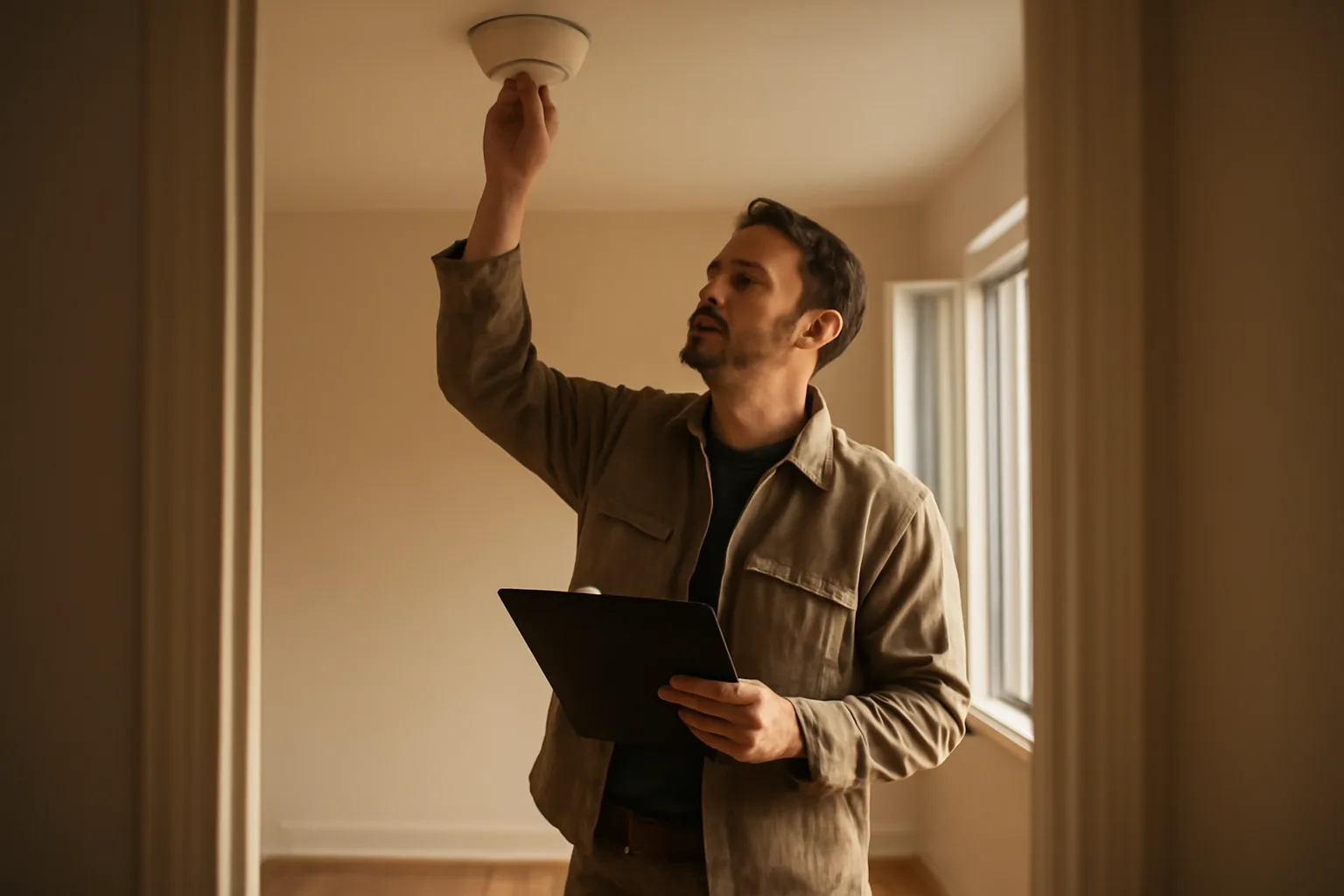
During a routine or move-out inspection, a landlord can generally look at anything relevant to the condition of the property and compliance with the lease: walls, floors, appliances, plumbing fixtures, smoke and carbon monoxide detectors, signs of unauthorized pets, unauthorized occupants, or unauthorized alterations. A landlord cannot use an inspection as a pretext to search personal belongings, go through drawers, or photograph a tenant's possessions beyond what's needed to document property condition. Most states require advance notice for a landlord to enter for a non-emergency inspection. California requires at least 24 hours' written notice for entry to make repairs or show the unit, per Civil Code Section 1954 [7]. Many other states set 24 to 48 hours as the standard, though a few, like Alabama, only require 'reasonable notice' without a fixed number attached to it, and some cities layer their own local notice rules on top of state law [8]. Government rental inspections (for licensing, not landlord-tenant walk-throughs) typically check different things: working smoke and CO detectors, secure handrails, no exposed wiring, functioning heat, no active leaks, adequate egress from bedrooms, and pest-free conditions. These are code-compliance checks tied to your rental license, not deposit-related documentation.
how much notice does a landlord have to give before entering or ending a tenancy
Notice requirements split into two very different categories: notice to enter the unit, and notice to end a tenancy. They get confused constantly. For entry, most states require 24 to 48 hours' advance notice for non-emergency entry (repairs, inspections, showings). California sets this at 24 hours under Civil Code Section 1954 [7]. Emergency entry (fire, flooding, gas leak) doesn't require advance notice in any state. For ending a month-to-month tenancy, notice periods are usually longer and vary a lot by state and by how long the tenant has lived there. California requires 30 days' notice to end a tenancy under one year, and 60 days if the tenant has lived there a year or more, under Civil Code Section 1946.1 [9]. Many other states set 30 days as the standard baseline for month-to-month terminations, but always check your specific state statute since terms for nonpayment or lease violations are usually shorter (3 to 14 days is common for a pay-or-quit notice, depending on the state).
why do landlords require renters insurance
Landlords require renters insurance mainly to shift liability and personal property risk off their own policy. A landlord's property insurance covers the building itself, not a tenant's furniture, electronics, or clothing, and it generally doesn't cover a tenant's liability if a guest gets hurt in the unit or the tenant accidentally causes a fire. Requiring renters insurance (commonly $15 to $30 a month in premium, though this varies by coverage amount and region) means the tenant's own policy pays out first for their belongings and personal liability, instead of the landlord's insurer, or the landlord personally, absorbing the claim. It also reduces the odds of a costly dispute over whose insurance should have covered water damage from a tenant's overflowing bathtub or an electrical fire that started with a tenant's space heater. Requiring it is generally legal; most states let landlords set renters insurance as a lease condition as long as it's disclosed and applied consistently to all tenants (a few jurisdictions have specific notice requirements about how the requirement must be worded in the lease, so check your state's landlord-tenant statute before adding the clause).
what rights do tenants have without a lease
A tenant without a written lease still has real legal protections, typically as a month-to-month tenant under state law. Even with no signed lease, the tenant has the right to habitable housing, the right to advance notice before the landlord enters, the right to advance notice before the tenancy is terminated, and protection from retaliatory or discriminatory eviction under the Fair Housing Act [5]. An oral or implied lease (where a tenant moves in and starts paying rent, and the landlord accepts it) generally creates a month-to-month tenancy governed by the same state statute that would apply if there were a written lease, just without the specific terms (rent amount, who pays utilities) spelled out on paper. That ambiguity is exactly why disputes over an unwritten lease tend to be messier and slower to resolve; there's no document to point to for who agreed to what. A tenant without a lease cannot simply be removed without notice or with self-help methods like changing the locks or shutting off utilities. Every state requires a formal notice and, if the tenant doesn't leave, a court eviction process, lease or no lease [1].
what a landlord cannot do in ohio
Ohio law, under Ohio Revised Code Chapter 5321 (the Ohio Landlord-Tenant Act), sets specific things a landlord cannot do. A landlord cannot shut off utilities, remove doors or windows, or change locks to force a tenant out without going through the eviction process in court; this is commonly called a 'self-help eviction' and it's illegal in Ohio as in nearly every state . A landlord in Ohio also cannot retaliate against a tenant for exercising a legal right, such as complaining to a housing authority about code violations or joining a tenant union; Ohio Revised Code Section 5321.02 specifically prohibits retaliatory conduct including raising rent, decreasing services, or threatening eviction in response to a tenant's complaint . Ohio landlords also cannot enter the rental unit without giving reasonable notice, which the statute sets at 24 hours in most circumstances, except in genuine emergencies . And a landlord cannot refuse to make repairs that affect habitability once properly notified; Section 5321.04 requires landlords to comply with building and housing codes, keep common areas safe, and maintain electrical, plumbing, heating, and sanitary systems in good working order .
how does rental licensing connect to all of this
Rental licensing is the piece that sits on top of everything above: your habitability duties, your inspection obligations, your notice rules. A growing number of U.S. cities require landlords to register every rental unit with the city, pay an annual or biennial fee, and pass a habitability and safety inspection before renting or renewing. Baltimore requires a rental license for most residential rental units, renewed periodically, with lead paint registration required separately for pre-1978 housing under Maryland's Lead Poisoning Prevention Program [3] . Los Angeles runs its Systematic Code Enforcement Program (SCEP), inspecting units on a roughly 4-year cycle and charging an annual per-unit fee (confirm the current fee with the LA Housing Department, since SCEP fees are adjusted periodically) [2]. Minneapolis requires a rental license renewed on a 1, 2, or 3-year cycle depending on the property's inspection history and violation record [4]. The penalty structure in most of these cities follows the same pattern: operate without a license, and you risk a fine per unit per violation, sometimes escalating for repeat offenses, and in some cities you can be barred from collecting rent or from evicting a tenant for nonpayment until the unit is properly licensed. This is the actual compliance risk that landlords searching around licensing topics are usually worried about, not a boating credential.
what should a landlord actually do after getting a rental licensing notice
First, read the notice carefully for the specific code section and deadline cited; cities vary wildly in how they phrase these and what they require. Second, contact your city's rental licensing office directly (every city with a program has one, usually under Housing, Code Enforcement, or Building Safety) to confirm the exact fee, required documents, and inspection scheduling process, since these details are genuinely different city to city and change over time. Third, get your unit inspection-ready before the city arrives: working smoke and CO detectors on every level, no active leaks, secure handrails, GFCI outlets near water sources, clear egress from every bedroom window. These are the most commonly cited violations across residential rental inspection programs nationally. Fourth, keep your paperwork organized: past inspection reports, lease copies, proof of insurance, and your license renewal date, all in one place. If you're managing this across multiple units or need a reference checklist that walks through prepping for a city inspection and tracking your renewal dates, that's the specific gap RentalPermitPath's $79 Rental License & Inspection Prep Packet is built to fill. It's a one-time purchase, not a subscription, meant for landlords self-managing 1 to 10 units who don't want to hire a compliance consultant for something they can track themselves. For more on tenant-facing rights that interact with your licensing obligations, see our guides on tenants rights and renters rights.
Frequently asked questions
Is there an actual boating license required to rent out a boat with my rental property?
If your rental property includes a boat (a lake house with a included pontoon, for example), operator education requirements come from your state's wildlife or natural resources agency, not from city rental housing licensing. Check your state boating law administrator's page for operator card requirements; this is unrelated to residential rental licensing rules.
How do you become a landlord if you've never rented out property before?
Confirm zoning allows rental use, check whether your city requires rental registration or licensing, schedule any required inspection, get landlord liability insurance, draft a lease compliant with your state's landlord-tenant statute, and screen tenants under the Fair Housing Act. Missing the city licensing step is the most common costly mistake for first-timers.
Who is responsible for the rental property walk-through inspection in California?
The landlord is responsible for conducting the walk-through inspection under California Civil Code Section 1950.5, though the tenant has the right to be present. Landlords must give reasonable notice and, for move-out inspections, must offer the inspection no earlier than two weeks before the tenancy ends so tenants can fix deductible issues first.
What is landlording?
Landlording is the day-to-day work of managing a rental property: screening tenants, collecting rent, handling repairs, giving proper notices, and staying current on local licensing and inspection requirements. It's the active job side of owning rental property, distinct from passive ownership.
What is a landlord, legally speaking?
A landlord is the person or entity who owns or controls a rental property and leases it to a tenant for rent, taking on statutory duties like maintaining habitability, giving entry notice, and returning deposits under state landlord-tenant law.
What rights do tenants have without a signed lease?
A tenant without a lease is typically a month-to-month tenant under state law, with the right to habitable housing, advance notice before entry, advance notice before termination, and protection from discrimination under the Fair Housing Act. An unwritten lease still creates a legally enforceable tenancy.
How do you be a good landlord beyond just following the law?
Respond fast to repair requests involving heat, water, or safety, put entry notice in writing even where not strictly required, keep move-in photos and a communication paper trail, and track your city's licensing renewal date so you never lapse into an unlicensed rental status.
Why do landlords require renters insurance?
Renters insurance covers the tenant's personal belongings and personal liability, which the landlord's property policy doesn't cover. Requiring it (usually $15 to $30 a month for the tenant) reduces disputes over who pays when a tenant's negligence causes damage, like an overflowing tub or a space heater fire.
How much notice does a landlord have to give before entering the unit?
Most states require 24 to 48 hours' advance notice for non-emergency entry. California sets this at 24 hours under Civil Code Section 1954. Emergency entry, like a gas leak or active flooding, doesn't require advance notice anywhere.
What can a landlord look at during an inspection?
A landlord can inspect anything tied to property condition and lease compliance: appliances, plumbing, smoke detectors, signs of unauthorized pets or occupants. A landlord cannot search personal belongings or use the visit as a pretext to go through drawers or private items.
What a landlord cannot do in Ohio?
Under Ohio Revised Code Chapter 5321, a landlord cannot shut off utilities or change locks to force a tenant out (self-help eviction is illegal), cannot retaliate against a tenant for reporting code violations, and cannot enter without reasonable notice except in emergencies.
How much notice does a landlord have to give to end a month-to-month tenancy?
This varies by state. California requires 30 days' notice for tenancies under one year and 60 days for tenancies of a year or more, under Civil Code Section 1946.1. Many states use 30 days as a baseline, but always confirm your specific state's statute.
What happens if a landlord operates a rental without the required city license?
Most cities with rental licensing programs issue fines per unit per violation, and some bar the landlord from collecting rent or pursuing an eviction for nonpayment until the unit is properly licensed. Fee and penalty amounts vary widely by city, so confirm current figures with your city rental licensing office.
Sources
- Cornell Legal Information Institute, Landlord-Tenant Law overview: Landlords have an implied duty to maintain habitable housing under state landlord-tenant law
- U.S. Department of Housing and Urban Development, Fair Housing Act overview: The Fair Housing Act prohibits discrimination in tenant screening based on race, color, national origin, religion, sex, familial status, or disability
- California Civil Code Section 1950.5: California landlords must offer an initial move-out inspection and return deposits with itemized deductions within 21 days
- California Civil Code Section 1954: California requires 24 hours' notice before landlord entry for non-emergency purposes
- Alabama Uniform Residential Landlord and Tenant Act, Code of Alabama Section 35-9A-303: Alabama requires reasonable notice for landlord entry without specifying a fixed hour requirement
- California Civil Code Section 1946.1: California requires 30 or 60 days' notice to terminate a month-to-month tenancy depending on tenancy length
- Ohio Revised Code Section 5321.04: Ohio landlords must comply with housing codes and maintain electrical, plumbing, heating, and sanitary systems, and must give reasonable entry notice
- Ohio Revised Code Section 5321.02: Ohio law prohibits landlord retaliation against tenants who exercise legal rights such as reporting code violations
- Maryland Department of the Environment, Lead Poisoning Prevention Program: Pre-1978 rental housing in Maryland must be registered under the state's lead poisoning prevention program