Last updated 2026-07-26
TL;DR
Detroit requires every landlord to register rental property with the Buildings, Safety Engineering and Environmental Department (BSEED) and pass a rental inspection, per Detroit City Code Chapter 9, Article IV. Unregistered rentals can draw civil fines and blight tickets, and landlords can't file eviction cases (nonpayment claims) in Michigan courts without a current certificate of compliance. Confirm current fees and deadlines with BSEED before you file.
What is Detroit's rental property registration requirement, exactly?
Detroit requires the owner of any rental dwelling, meaning any property leased or offered for lease including single-family homes, duplexes, and units inside larger buildings, to register that property with the city and keep it certified through periodic inspection. This isn't a Detroit quirk. It comes out of Chapter 9, Article IV of the Detroit City Code, which governs the maintenance and inspection of rental property [1]. The registration itself is the easy part: you tell the city who owns the property, who manages it, and how to reach you. The harder part is the inspection cycle that follows. Detroit's rule ties registration to an active certificate of compliance, and that certificate only comes after a Buildings, Safety Engineering and Environmental Department (BSEED) inspector has walked the unit and signed off on it [1]. If you own a rental in Detroit right now and you haven't registered it, you're not alone, and you're not off the hook either. The city has run periodic sweeps and public awareness pushes tied to the rental registration ordinance because a large share of the city's estimated rental stock was operating without a current certificate. Confirm your property's registration status directly with BSEED before you do anything else, because compliance history follows the parcel, more than the current owner.
How do I register a rental property in Detroit?
You start by creating or logging into an account through Detroit's Buildings, Safety Engineering and Environmental Department portal and submitting the rental registration application for each parcel you rent out. Expect to provide the property address, your ownership documentation, a local or in-state contact (Michigan law and many city ordinances require an agent who can be served/contacted if the owner lives out of state), and payment of the registration fee. After you submit the application, BSEED schedules an initial inspection. This is the point where landlords get tripped up: registration alone does not equal compliance. You need the inspection completed and a certificate of compliance issued before the property is considered legally rented in the city's eyes. A few practical notes from how the process actually runs: - Register every unit separately if your property has multiple units under one parcel; Detroit's rental ordinance applies per dwelling unit, not per building.
- Keep your registration current even between tenants. A vacant unit you intend to re-rent still needs a valid registration and certificate before you sign a new lease.
- If you buy a property that already has tenants in place, you generally need to re-register under your name as the new owner within a set window after closing. Confirm the exact re-registration deadline with your city rental licensing office, since municipalities vary on this and Detroit's own administrative timelines have shifted over the past several ordinance updates. For a structured way to organize what BSEED will ask for before you file, a lot of landlords use a rental packet builder to assemble ownership docs, unit counts, and inspection prep notes in one place rather than hunting through email threads at deadline.
What does the Detroit rental inspection actually check?
| Smoke/CO alarms | Missing, dead battery, wrong placement | |
|---|---|---|
| Electrical | Exposed wiring, overloaded panels, missing GFCI near water | |
| Heating | No working furnace/heat source, unsafe space heaters as primary heat | |
| Structural | Rotted stairs, unstable railings, foundation issues | |
| Plumbing | Active leaks, no hot water, sewage backup risk | |
| Egress | Blocked or painted-shut windows in bedrooms, no second exit | |
| Exterior | Broken steps, unsecured doors, pest entry points | If you want a sense of how this compares to inspections in other contexts, like a pre-purchase walkthrough, see [what a landlord can look at during an inspection](#) further down. And if you're trying to figure out who's actually responsible for showing up to these walkthroughs when a property changes hands or a tenant disputes access, that question comes up constantly and gets its own section below. |
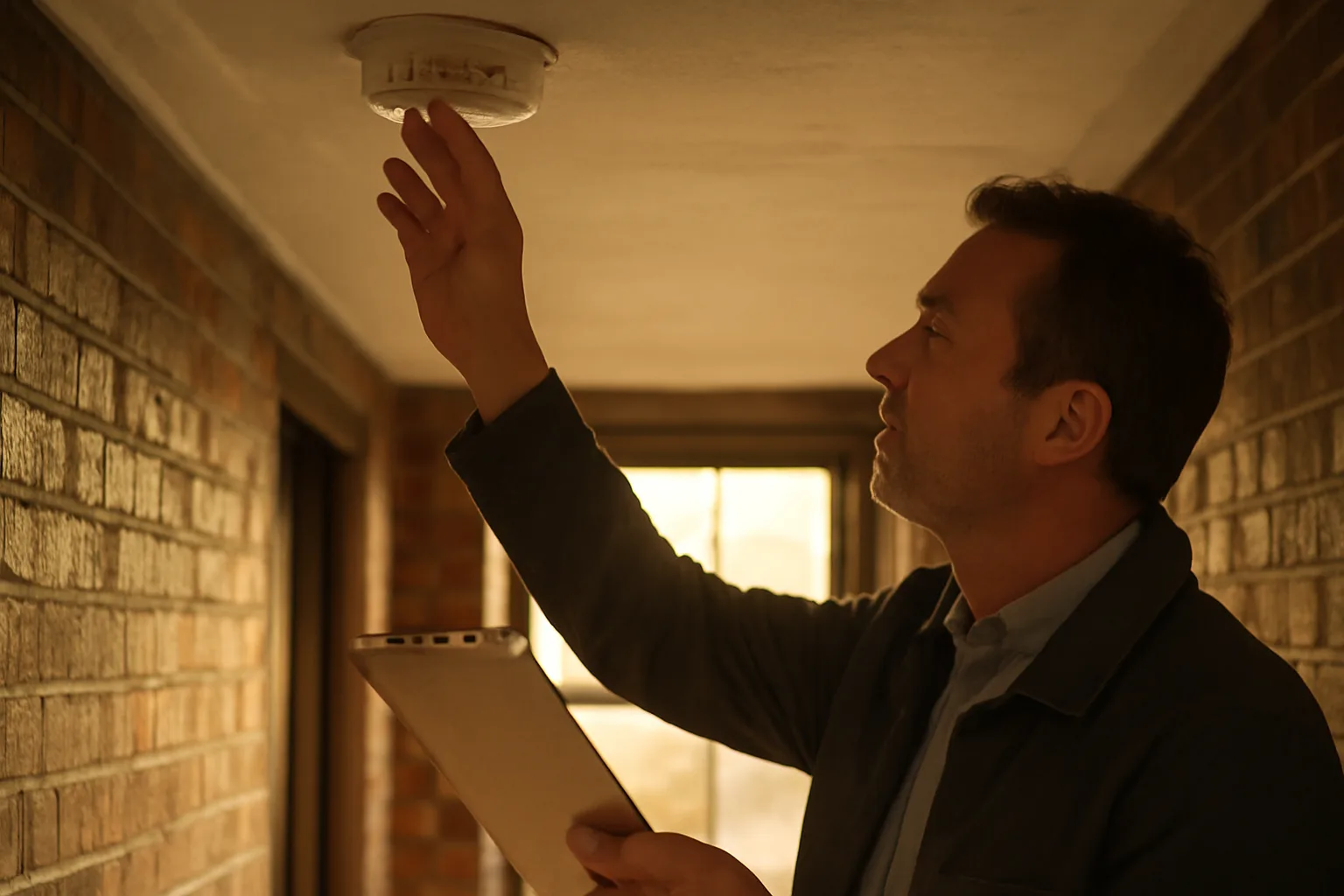
A Detroit rental inspection looks at the same core life-safety and habitability items that most municipal rental codes cover: working smoke alarms and carbon monoxide detectors, safe electrical wiring, functioning heat, no active plumbing leaks, secure windows and doors, proper egress from bedrooms, and the general structural condition of the unit. Detroit's rental code works alongside the state's adopted building and property maintenance standards to set the baseline for these systems. Inspectors are checking whether the unit is safe to occupy, not whether it's pretty. A cracked driveway or dated kitchen won't fail you. A missing smoke detector, blocked emergency exit, or exposed wiring will. Here's roughly what an inspector walks through: | Area checked | Typical issue that fails inspection |
Who is responsible for a rental property walk-through inspection?
For Detroit's municipal rental inspection, the property owner (or the owner's registered agent) is responsible for scheduling access and being present, or arranging for a tenant or property manager to let the inspector in. The inspection is between the city and the landlord; the tenant's job is just to allow reasonable access, which Michigan's landlord-tenant statute addresses through notice requirements (more on that below). This question also gets asked in a different context: who handles a walk-through inspection tied to move-in or move-out, or a property condition check before a sale. That's a separate matter from Detroit's licensing inspection, and the answer depends on the state and the type of transaction. In California, for example, pre-purchase and move-out walk-throughs are typically the buyer's or landlord's responsibility to request, and specific statutory walk-through rights (like the initial move-out inspection under California Civil Code Section 1950.5) belong to the tenant, who can request an inspection before vacating so they have a chance to fix deficiencies before final deposit deductions [2]. That's a landlord-tenant deposit law question, not a municipal rental-licensing question, and it's specific to California; Michigan's rules on deposit walk-throughs differ and are covered under the state's own security deposit statute. Back in Detroit specifically: if you're an out-of-state owner, you cannot simply skip the inspection because you're not local. You need to designate a local agent or property manager who can meet the inspector, and that contact needs to be listed on your registration.
What happens if I don't register my Detroit rental property?
Operating an unregistered or uncertified rental in Detroit exposes you to a few real consequences, and they compound the longer you wait. The city can issue blight tickets and civil fines for code violations tied to unregistered rental property, and unresolved tickets attach to the property and can complicate refinancing or resale. The consequence that catches the most landlords off guard is on the eviction side. Michigan law and Detroit's own rental certification requirement have been interpreted by Michigan courts to bar landlords from pursuing certain eviction actions, specifically nonpayment of rent cases, when the rental unit lacks a current certificate of compliance. This comes out of a body of Michigan case law interpreting the interaction between local rental certification ordinances and the state's summary proceedings act for landlord-tenant matters, which governs eviction procedure under MCL 600.5701. In practice, that means an uncertified rental can leave you unable to evict a nonpaying tenant through the normal court process until you get compliant, which is a brutal position to be in if you're already dealing with lost rent. Confirm current fine amounts and the specific eviction-defense case law with a Michigan landlord-tenant attorney or your city rental licensing office, since fine schedules get updated by ordinance amendment and courts continue to refine how the certification defense applies case by case. This is exactly the kind of gap where a landlord who registers late, pays a fine, and then still has to wait weeks for an inspection slot ends up losing more in unpaid rent than the registration fee would have ever cost.
How much notice does a landlord have to give before entering a rental unit?
Michigan does not have a single statute spelling out a specific number of hours or days of notice for routine landlord entry, unlike some states that set a fixed 24-hour or 48-hour standard by law. Michigan's approach leans on the lease terms and on general "reasonable notice" principles, and most Michigan leases (including many standard forms used across the state) specify a notice period, commonly 24 hours, for non-emergency entry. For Detroit's municipal rental inspection specifically, BSEED schedules the inspection appointment directly with the owner or the owner's agent, so the notice question there is really about scheduling logistics rather than a statutory notice clock. The landlord's job is to then give the tenant enough notice, consistent with the lease and with general reasonableness, that the inspector can access the unit. A few things worth doing regardless of what the lease says: - Put entry notice terms in writing in the lease itself, since Michigan doesn't backstop you with a specific statutory number.
- Give more notice than you think you need for a city inspection; tenants who feel ambushed are far more likely to refuse access or complain, which delays your certificate.
- Document notice in writing (text or email), more than a verbal heads-up, in case access becomes a dispute later. This notice question overlaps with broader tenant rights and tenants rights topics that vary significantly by state, so if you own property outside Michigan too, don't assume the same notice rule applies there.
What can a landlord look at during an inspection?
During a routine rental inspection, whether it's Detroit's municipal certification inspection or a landlord's own periodic unit check under the lease, the landlord (or city inspector) can look at the condition and safety of the unit itself: working systems, general cleanliness as it relates to habitability and pest risk, damage beyond normal wear, unauthorized alterations, and compliance items like smoke detectors and egress. What a landlord generally cannot do, even during a legitimate inspection, is search through personal belongings, go through drawers or closets unrelated to a stated maintenance purpose, or use the inspection as pretext to harass a tenant or retaliate against one who filed a complaint. Most state landlord-tenant statutes, and the general body of law around implied covenants of quiet enjoyment, treat pretextual or excessive entry as a separate violation from any lease terms about access. If you're a Michigan landlord doing your own periodic unit check outside the official city inspection, keep the visit focused on the same categories BSEED checks: smoke alarms, obvious safety hazards, signs of unauthorized pets or occupants if that's a lease violation you're investigating, and property damage. Keep a written record of what you observed and when, since that documentation matters if you ever need to show a pattern of damage in a security deposit dispute or a lease enforcement matter.
What can't a landlord do in Ohio (and how does that compare to Michigan)?
This question comes up a lot from Detroit-area landlords who also own property across the state line in Ohio, since the Detroit metro area sits close to the Ohio border and plenty of investors hold units in both states. Ohio's landlord-tenant law is a separate statute (Ohio Revised Code Chapter 5321) and it's not the same rulebook as Michigan's, so you cannot apply Detroit's registration process or Michigan's eviction procedure to an Ohio property. Under Ohio law, a landlord generally cannot: shut off utilities to force a tenant out, change the locks without a court order (self-help eviction is prohibited), enter the unit without reasonable notice except in an emergency, retaliate against a tenant for reporting a code violation, or refuse to make repairs that affect health and safety after receiving proper notice, per Ohio Revised Code Section 5321.04 and 5321.15 [3] [4]. Ohio law does specify that landlords must give "reasonable notice" (generally interpreted as 24 hours in practice, though the statute itself uses the reasonableness standard rather than a fixed number) before entering for non-emergency purposes [3]. If you're a multi-state landlord, the practical takeaway is: don't assume any rule, notice period, registration requirement, or eviction process transfers across a state line, even a short one. Michigan's Detroit-specific rental certification requirement has no Ohio equivalent statewide, though some Ohio cities (Cleveland, Toledo, and others) run their own separate rental registration programs under their own municipal codes.
How do I become a landlord in Detroit (or anywhere), and what does landlording actually involve?
Becoming a landlord doesn't require a license from the state in most of Michigan (or most states generally); what it requires is buying or already owning a rental property, then meeting your city's and state's landlord obligations before you put a tenant in the unit. In Detroit that specifically means: register the rental with BSEED, pass the certification inspection, carry appropriate property insurance, and follow Michigan's landlord-tenant statute for leases, security deposits, and eviction procedure. "Landlording" is the ongoing job of managing that relationship and that asset: collecting rent, handling maintenance requests, keeping the property compliant with local code, managing turnover between tenants, and staying current on registration and inspection cycles so the unit stays legally rentable. A landlord, formally, is the party who owns or controls a property and leases it to a tenant in exchange for rent, under an agreement that creates specific rights and obligations for both sides under state law. If you're starting from zero, the realistic sequence looks like this: 1. Buy or convert the property, and check zoning to confirm rental use is allowed at that address. 2. Register with your city's rental licensing office (BSEED, in Detroit) before you advertise the unit for rent. 3. Get the required inspection scheduled and passed; budget real time for this, since inspection backlogs in busy cities can run weeks. 4. Get landlord/rental property insurance in place (see next section on why this matters beyond just your own protection). 5. Draft a compliant lease under your state's landlord-tenant law, or work with an attorney to review one. 6. Screen tenants consistently and legally under the Fair Housing Act and state-level protected classes. A lot of first-time landlords underestimate step 3. Detroit's inspection process, like most municipal rental inspection programs, isn't instant, and a property that fails on a fixable item (a missing detector, an outdated panel cover) has to be re-inspected before the certificate issues. Building in a few weeks of buffer before your intended move-in date saves a lot of stress. This is the exact gap the $79 City Rental License & Inspection Prep Packet is built for: organizing what an inspector will actually check before the appointment, so you're not fixing things the morning of.
Why do landlords require renters insurance, and what rights do tenants have without a lease?
Landlords require renters insurance mainly to shift liability. A landlord's own property insurance covers the building and the landlord's belongings, but it generally does not cover a tenant's personal property or the tenant's liability if, say, their negligence causes a fire or a guest gets hurt in their unit. Requiring renters insurance (often with a modest coverage minimum, commonly in the $100,000 liability range, though this varies by lease) pushes that risk onto a policy the tenant pays for, which protects both sides: the tenant recovers for their own losses, and the landlord has one less exposure if the tenant's negligence causes damage. On the second question: a tenant without a written lease still has real rights. In most states, including Michigan, a tenant paying rent without a signed lease is generally treated as a month-to-month tenant under an oral or implied agreement, and that tenant still gets the protections of the state's landlord-tenant statute, including the right to habitable premises, protection from illegal lockouts or utility shutoffs, and a required notice period before the landlord can terminate the tenancy (commonly 30 days for month-to-month arrangements, though this varies by state and by the reason for termination). No lease does not mean no rights, and it does not mean a landlord can force someone out without following the same court eviction process required for a written-lease tenant. If you're building out your own landlord basics beyond Detroit's registration process specifically, our related coverage on tenant rights, renters rights, and the general landlord role breaks down state-by-state variation in more depth.
Frequently asked questions
How much does Detroit rental property registration cost?
Detroit charges a registration fee per rental unit through BSEED, and separate inspection-related fees may apply depending on unit count and whether a re-inspection is needed. Fee schedules get updated periodically by ordinance amendment, so confirm the current amount directly with BSEED or your city rental licensing office before you file, rather than relying on an old number.
Do I need to register a Detroit rental if I only have one unit?
Yes. Detroit's rental registration and inspection requirement applies to any dwelling unit offered for rent, including single-family homes and single units inside owner-occupied duplexes where the other unit is rented out. Owner-occupied buildings where every unit is occupied by the owner and immediate family are generally treated differently, so confirm your specific situation with BSEED.
How long does a Detroit rental inspection take to schedule?
Timelines vary with BSEED's inspection backlog, which has fluctuated significantly over recent years as the city has pushed compliance sweeps. Build in several weeks of buffer between registration and your intended rent-ready date, and confirm current scheduling windows directly with BSEED rather than assuming a fixed timeline.
Can I rent out a property in Detroit while my registration is pending?
No. The safest and legally correct approach is to have your certificate of compliance issued before you sign a lease or collect rent on a unit. Renting before certification exposes you to fines and, under Michigan case law, can bar you from pursuing certain eviction actions until the unit is certified.
What happens if my Detroit rental fails inspection?
BSEED will document the specific violations found, and you'll need to correct them and schedule a re-inspection before the certificate issues. Common fail points are missing smoke or CO detectors, electrical hazards, and blocked egress. Confirm current re-inspection fees and timelines with BSEED, since repeat failures may cost more each round.
How to become a landlord if I've never rented out property before?
Buy or convert a property, confirm zoning allows rental use, register with your city's rental licensing office before advertising it, pass any required inspection, get landlord insurance, and use a lease compliant with your state's landlord-tenant statute. Screen tenants consistently under the Fair Housing Act and any applicable state protected classes.
What is landlording, in plain terms?
Landlording is the ongoing work of owning and managing a rental property: collecting rent, handling repairs, keeping the unit legally compliant with local registration and inspection rules, managing tenant turnover, and following your state's landlord-tenant law for leases, deposits, and evictions.
What rights do tenants have without a signed lease?
A tenant paying rent without a written lease is generally treated as a month-to-month tenant under an oral or implied agreement in most states, including Michigan. They still get habitability protections, protection against illegal lockouts, and a required notice period, commonly around 30 days, before the landlord can end the tenancy.
Who is responsible for a rental property walk-through inspection in California?
For a pre-move-out inspection in California, the tenant has the right to request one under California Civil Code Section 1950.5, giving them a chance to fix issues before the landlord makes final deposit deductions. The landlord is responsible for scheduling it once requested and for providing written notice of the results.
Why do landlords require renters insurance?
Renters insurance covers the tenant's personal belongings and personal liability, which the landlord's own building insurance typically does not cover. Requiring it shifts risk off the landlord's policy and reduces disputes over who pays when a tenant's negligence, like an unattended stove, causes damage.
What can't a landlord do in Ohio?
Under Ohio Revised Code Chapter 5321, a landlord cannot shut off utilities to force a tenant out, change locks without a court order, enter without reasonable notice except in an emergency, retaliate against a tenant for reporting code violations, or ignore required health-and-safety repairs after proper notice.
How much notice does a Detroit landlord have to give before entering a unit?
Michigan has no single fixed statutory notice period for routine entry; it's governed largely by the lease terms and a general reasonableness standard. Most Michigan leases specify 24 hours for non-emergency entry, and that same practice applies when coordinating access for a city rental inspection.
Sources
- City of Detroit, Detroit City Code Chapter 9, Article IV (Rental Property): Detroit requires registration and certification of rental dwelling units under Chapter 9, Article IV
- California Legislative Information, California Civil Code Section 1950.5: Tenants in California have the right to request a pre-move-out inspection before final security deposit deductions
- Ohio Legislative Service Commission, Ohio Revised Code Section 5321.04: Ohio law sets landlord obligations including reasonable notice before entry and prohibits self-help eviction tactics
- Ohio Legislative Service Commission, Ohio Revised Code Section 5321.15: Ohio law prohibits landlords from using self-help remedies like lockouts or utility shutoffs to remove tenants
- Ohio Legislature: Ohio tenants' obligations, which contrast with Michigan landlord-tenant rules
- Ohio Legislature: Landlord remedies and prohibitions for noncompliance in Ohio
- Michigan Legislature: Michigan Truth in Renting Act governing landlord-tenant lease terms
- Michigan Legislature: Michigan security deposit law provisions relevant to landlord obligations