Last updated 2026-07-25
TL;DR
Landlords can inspect for safety, maintenance, and lease compliance, but not to snoop through belongings or retaliate. Most states require 24 to 48 hours notice for non-emergency entry. Tenants without a written lease still have full legal protections under a month-to-month tenancy created by state law. Requirements vary by city and state, so confirm specifics with your local rental licensing office.
What is landlording, and what does a landlord actually do?
Landlording is the business of owning residential property and renting it to tenants in exchange for regular payment. A landlord is the person or entity that holds title to the property (or has legal authority to lease it) and takes on the legal duties that come with that, keeping the unit habitable, following state and local landlord-tenant law, and respecting tenant rights. It sounds simple until you're doing it. In practice, landlording means screening applicants, drafting or reviewing leases, collecting rent, handling maintenance requests, scheduling inspections, filing local rental registrations, paying property taxes, and sometimes navigating an eviction process when things go wrong. Some landlords self-manage one duplex. Others own ten single-family homes and outsource everything to a property manager. The legal responsibilities don't change much based on size, though many cities scale license fees and inspection frequency by unit count. Most U.S. households rent from small-scale landlords rather than big institutional owners. Census Bureau data from the Rental Housing Finance Survey shows that individual investors, not corporations or REITs, own the majority of rental properties nationwide [1]. If you own one to ten units, you're the norm, not the exception.
How to become a landlord, step by step
Becoming a landlord starts before you own a rental unit. It means understanding the legal obligations you're taking on, more than the income potential. Here's the realistic sequence: 1. Buy or convert a property into a rental. Check local zoning first. Some municipalities restrict rentals in certain zones or cap the number of non-owner-occupied units on a block. 2. Register the rental with your city or county if required. Many cities with mandatory rental licensing (Minneapolis, Los Angeles, Baltimore, and dozens of others) require registration before you can legally lease the unit at all. 3. Get the property inspection-ready. This usually means working smoke and carbon monoxide detectors, functioning locks, no exposed wiring, adequate egress from bedrooms, and a working heating system as a baseline. Requirements differ by city, so confirm specifics with your city rental licensing office. 4. Get landlord-specific insurance (not a standard homeowner's policy) and consider requiring tenant renters insurance in the lease. 5. Screen tenants consistently and legally under the Fair Housing Act, which prohibits discrimination based on race, color, national origin, religion, sex, familial status, or disability [2]. 6. Sign a lease that complies with your state's landlord-tenant statute, covering security deposit limits, notice periods, and disclosures (lead paint disclosure is federally required for pre-1978 housing under 42 U.S.C. § 4852d [3]). 7. Set up a system for maintenance requests, rent collection, and inspection compliance going forward. A lot of new landlords skip step 2 or step 3 and find out the hard way when a neighbor complains or a city inspector shows up. If your city requires a rental license, operating without one can mean fines that start in the hundreds of dollars and climb with each violation, sometimes with the city voiding your ability to collect rent or evict until you're compliant. If you're building out your compliance paperwork from scratch, a rental license and inspection prep packet can save you from re-inventing city-specific checklists every renewal cycle.
What is a landlord, legally speaking?
Legally, a landlord (also called a lessor) is the party that grants a tenant the right to occupy real property under a lease or rental agreement, in exchange for rent. That's it at the core. Everything else, habitability duties, security deposit rules, entry notice requirements, is added by state statute and local ordinance on top of that basic relationship. State law defines the floor. For example, California's Civil Code requires landlords to maintain rental units in a habitable condition, covering effective waterproofing, working plumbing, hot and cold water, and functioning heating [4]. Ohio's landlord obligations are codified in Ohio Revised Code 5321.04, which requires landlords to comply with building and housing codes materially affecting health and safety, keep common areas safe, maintain electrical, plumbing, and heating systems, and supply running water and reasonable heat [5]. A landlord can be an individual owner, a married couple who co-own a property, an LLC, a trust, or a corporation. Local rental registration usually attaches to the property address regardless of how the ownership is structured, but the license itself is often issued to a named responsible party or local agent, especially if the owner lives out of state.
What rights do tenants have without a lease?
Tenants without a written lease still have real, enforceable rights. Occupying a rental unit and paying rent, even with no signed paperwork, generally creates a month-to-month tenancy under state law. That tenant is entitled to the same habitability protections, the same notice-before-entry rules, and the same protection from illegal lockouts or utility shutoffs as someone with a twelve-month lease. What changes without a written lease is mostly about proof and termination timing. Without a lease specifying rent amount, due date, or house rules, disputes get harder to resolve, and either party can typically end the tenancy with proper notice (commonly 30 days, though this varies by state and by how long the tenant has lived there). California law, for instance, requires 60 days notice to terminate a tenant who has lived in a unit for a year or more, and 30 days for shorter tenancies, under Civil Code Section 1946.1 [6]. A landlord still cannot evict a tenant without a lease by just changing the locks or shutting off power. Every state requires formal legal process for eviction, lease or no lease. If you're operating without written agreements as a matter of habit, that's a real risk. Verbal terms are hard to enforce and even harder to defend in front of a judge.
Who is responsible for the rental property walk-through inspection in California?
In California, the landlord is responsible for offering an initial move-out inspection to the tenant, but the tenant decides whether to participate. Under California Civil Code Section 1950.5(f), when a tenancy is ending, the landlord must notify the tenant in writing of the right to request an initial inspection, conducted no earlier than two weeks before the end of the tenancy, and give the tenant an itemized statement of any deficiencies found so the tenant has a chance to fix them before move-out [7]. If the tenant requests the walk-through, the landlord (or their agent, like a property manager) must schedule it at a mutually agreeable time and give at least 48 hours written notice before the actual inspection, unless the tenant waives that notice [7]. The landlord then has to provide an itemized list of anything that could result in a deduction from the security deposit. After the tenant moves out, California law separately requires landlords to send an itemized statement of deposit deductions within 21 days, per the same Civil Code section [7]. Skipping the pre-move-out inspection offer doesn't void that 21-day requirement; it's a separate obligation. For routine (non-move-out) inspections during the tenancy, responsibility works differently. The landlord initiates those to check on maintenance issues, verify smoke detector function, or confirm lease compliance, and California's standard notice requirement of 24 hours applies (see below).
What can a landlord look at during an inspection?
| Routine maintenance check | Landlord or property manager | Detectors, leaks, HVAC, general condition | 24 to 48 hours, per state law |
|---|---|---|---|
| Move-out walk-through | Landlord, tenant-requested | Damage beyond normal wear, deposit deductions | 48 hours (CA), varies elsewhere |
| City rental license inspection | Municipal inspector | Code compliance: egress, electrical, detectors, structure | Scheduled appointment, city-set |
| Emergency entry | Landlord | Active hazard (fire, flood, gas leak) | No notice required |
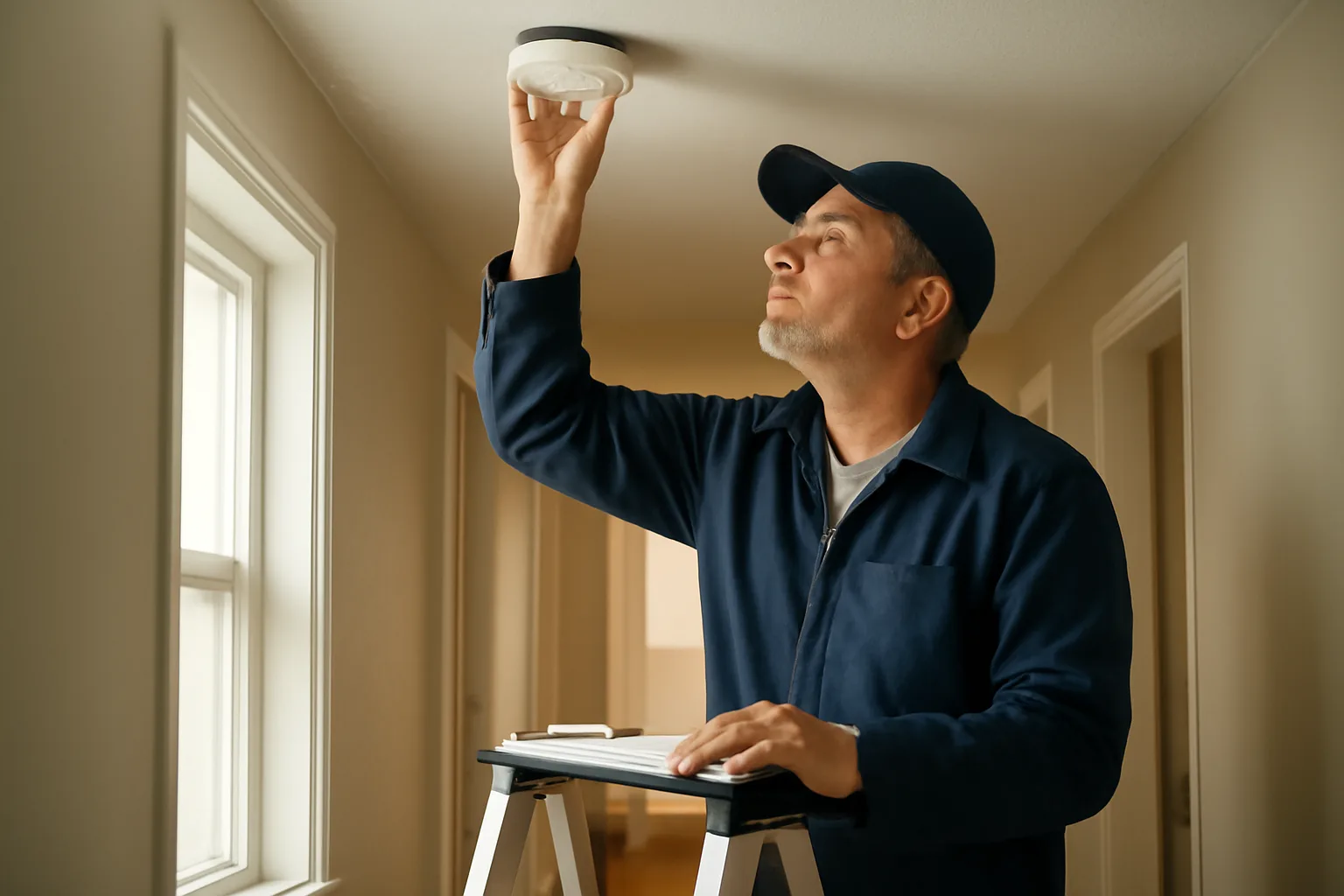
A landlord doing a routine inspection can generally check for things tied to safety, maintenance, and lease compliance: working smoke and carbon monoxide detectors, signs of water damage or mold, pest activity, HVAC function, plumbing leaks, electrical hazards, unauthorized occupants, unauthorized pets, and general condition of the unit relative to move-in. What a landlord generally cannot do is use an inspection as a pretext to search through personal belongings, drawers, closets, or private areas that have nothing to do with the stated purpose of the visit. Courts and state statutes generally treat entry rights as limited to the purpose given in the notice, whether that's a repair, a required city inspection, or a lease-violation check. If the notice says the visit is for a smoke detector check, the landlord doesn't get to open the tenant's dresser. City-mandated rental license inspections add another layer. These are usually conducted by a municipal inspector, not the landlord directly, and focus narrowly on code compliance items: egress windows, handrails, smoke and CO detector placement, electrical panel condition, and structural issues. The landlord typically has to schedule and be present for these, and failing to pass can mean a re-inspection fee and a compliance deadline, often 30 to 60 days depending on the city, confirm the exact window with your city rental licensing office. Here's a rough comparison of inspection types landlords run into: | Inspection type | Who conducts it | What it typically covers | Typical notice required |
How much notice does a landlord have to give before entering?
Most states require landlords to give at least 24 hours notice before entering an occupied rental unit for non-emergency reasons, though the exact figure and the accepted delivery method for that notice vary by state. California sets the standard at 24 hours as "reasonable notice," per Civil Code Section 1954, and specifies that notice can be by personal delivery, leaving it with someone of suitable age at the residence, or posting and mailing it [8]. Other states set slightly different windows: some use 24 hours, some use 48 hours for specific circumstances like move-out inspections, and a few states don't specify an exact number of hours in statute at all, just requiring "reasonable notice." No notice is required in a genuine emergency, meaning an active hazard like a fire, a burst pipe actively flooding the unit, or a gas leak. Landlords sometimes stretch the definition of "emergency" to cover routine problems, and that's a real source of tenant complaints and, in some jurisdictions, statutory penalties. Entry also generally has to happen during normal business hours unless the tenant agrees otherwise, and it has to be for a legitimate purpose, repairs, showings to prospective tenants or buyers, inspections, or agreed services. Entering repeatedly without proper notice, or using entry to harass a tenant, can expose a landlord to a retaliation or harassment claim in many states, separate from any lease violation.
Why do landlords require renters insurance?
Landlords require renters insurance mainly to shift liability risk off themselves and to make sure tenants have a way to cover their own losses without expecting the landlord's insurance to pay for it. A landlord's own property insurance covers the building and the landlord's own liability, not the tenant's personal belongings, and typically not a tenant's liability if the tenant accidentally causes damage (a kitchen fire, an overflowing bathtub that damages the unit below). Requiring renters insurance, often with a modest liability minimum like $100,000 to $300,000, gives the landlord a second layer of protection if a tenant's negligence causes a loss. It also protects the tenant: without it, a tenant whose belongings are destroyed in a fire or burst pipe has no coverage at all unless the landlord's policy happens to name them, which is unusual. There's no federal law requiring renters insurance, and state law rarely mandates it either, but a lease can require it as a condition of tenancy in nearly every state, as long as the requirement is disclosed clearly in the lease and applied consistently. Landlords who require it as a blanket lease term should apply that requirement to every tenant equally to avoid a fair housing complaint alleging inconsistent enforcement.
What can a landlord not do in Ohio?
Ohio landlord obligations and restrictions are set out mainly in Ohio Revised Code Chapter 5321, the Ohio Landlords and Tenants Act. A few restrictions come up constantly for landlords operating in Ohio cities with rental licensing programs (Cleveland, Columbus, Toledo, and others each have their own registration or inspection rules layered on top of state law). Under Ohio Revised Code 5321.04, a landlord cannot ignore code violations that materially affect health and safety, cannot let common areas fall into unsafe condition, and must keep the unit's electrical, plumbing, heating, and other facilities in good working order [5]. A landlord also cannot enter the unit without giving reasonable notice, defined in practice (and by many Ohio courts) as 24 hours except in emergencies, and cannot enter at unreasonable times [5]. Ohio Revised Code 5321.15 specifically prohibits landlords from using self-help evictions: a landlord cannot lock a tenant out, shut off utilities, or remove a tenant's belongings to force them out without going through the court eviction process [9]. Doing so exposes the landlord to statutory damages the tenant can recover in court. Ohio landlords also cannot retaliate against a tenant for complaining to a housing authority or joining a tenant union, and cannot include lease clauses that waive a tenant's statutory rights under Chapter 5321, since Ohio Revised Code 5321.13 voids such clauses [10]. If your rental sits in a city with its own registration or inspection ordinance on top of these state rules, check with that city's building or housing department directly, ordinance details and fee schedules aren't standardized statewide.
What does mandatory rental licensing actually require, city to city?
Mandatory rental licensing means a city requires landlords to register each rental unit with a city department, pay a fee, and often pass a habitability or safety inspection before renting or renewing a lease. The specifics vary enormously. Some cities require registration only, no in-person inspection, just a form and a fee, renewed annually or every two years. Others require a full inspection by a city code officer before the first tenant moves in and periodically afterward, sometimes every one to three years depending on the property's inspection history. Fee amounts, inspection cycles, and penalty structures differ so much by city that there's no honest single number to quote here; confirm current fees and inspection intervals with your city rental licensing office before budgeting or before a renewal deadline. What's consistent across most of these programs: missing a renewal deadline usually triggers a late fee first, then escalates to a formal violation notice, and in a lot of cities, an unlicensed or non-compliant rental can't legally collect rent or pursue eviction until the license is current. That last part catches landlords off guard constantly. A tenant stops paying rent, the landlord tries to file eviction, and the court dismisses the case because the rental license lapsed eight months earlier and nobody noticed. If you manage a handful of units across one or two cities, the paperwork burden is manageable with a checklist. If you're juggling five or more units across different municipalities, each with its own renewal date and inspection checklist, that's where a lot of small landlords fall behind, not from ignoring the rules, but from losing track of which city wants what and when.
How to be a landlord day-to-day: the parts nobody mentions upfront
Being a landlord day-to-day is mostly administrative, not glamorous. It's responding to maintenance requests within a reasonable window (some states set a specific number of days for urgent repairs like no heat or no water), keeping records of every notice and communication, and tracking renewal dates for insurance, licenses, and lease terms. A few habits separate landlords who avoid fines and disputes from those who don't. Keep every entry notice in writing, even when a text message feels sufficient, because a paper trail matters if a tenant disputes what happened. Do a walk-through at move-in with photos and a signed condition report, since this is what protects both sides at move-out. Respond to repair requests fast, particularly anything touching heat, water, or safety, since delayed response is one of the most common triggers for a tenant to withhold rent or file a habitability complaint. Budget for the license and inspection cycle the same way you budget for property tax. If your city requires periodic inspection, don't wait for the notice to show up before checking smoke detector batteries, testing the water heater relief valve, and looking at the electrical panel for anything an inspector would flag on sight. Landlords who treat the inspection as a surprise event tend to get a re-inspection fee. Landlords who treat it as a predictable annual task usually pass on the first visit.
Frequently asked questions
How to become a landlord with just one rental property?
Buy or convert a property, check zoning restrictions, register with your city if it requires rental licensing, make sure the unit meets local safety code (detectors, egress, working systems), get landlord insurance, and use a lease compliant with your state's landlord-tenant statute. Even one unit in a licensing city needs registration before you can legally rent it out.
Who is responsible for the rental property walk-through inspection in California?
The landlord must offer the tenant an initial move-out inspection under California Civil Code Section 1950.5(f), but the tenant chooses whether to accept it. If accepted, the landlord gives 48 hours notice, does the walk-through, and provides an itemized list of deficiencies the tenant can fix before the final move-out inspection.
What is landlording, in plain terms?
Landlording is running a rental property business: leasing units, collecting rent, maintaining habitability, following state and city landlord-tenant law, and handling tenant relationships. It applies whether you own one duplex or ten single-family rentals; the legal duties don't shrink just because the portfolio is small.
What is a landlord, legally?
A landlord is the person or entity that owns or controls a rental property and grants a tenant the right to occupy it under a lease, in exchange for rent. State statutes then layer on specific duties like habitability, notice-before-entry rules, and security deposit handling.
What rights do tenants have without a lease?
A tenant paying rent without a written lease usually has a month-to-month tenancy under state law, with the same habitability, entry-notice, and eviction protections as a tenant with a signed lease. What's missing is written proof of specific terms like rent amount or house rules, which makes disputes harder to resolve.
How to be a landlord without getting fined by the city?
Register the rental if your city requires it, renew the license on time, keep smoke and CO detectors working, fix code violations before the inspection date, and keep a paper trail of every notice sent to tenants. Most fines come from missed renewal deadlines or ignored inspection notices, not surprise violations.
Why do landlords require renters insurance?
Renters insurance covers the tenant's belongings and personal liability, which the landlord's own property policy doesn't cover. Requiring it protects the landlord from tenant-caused damage claims and protects the tenant from an uncovered loss like a fire or burst pipe. It's a lease requirement in most states, not a legal mandate.
How much notice does a landlord have to give before entering a rental unit?
Most states require at least 24 hours notice for non-emergency entry; California sets this at 24 hours under Civil Code Section 1954. Some states or specific situations (like move-out inspections) require 48 hours. No notice is required for a genuine emergency like a fire or active flooding.
What can a landlord look at during an inspection?
A landlord can check items tied to safety and lease compliance: smoke and CO detectors, signs of leaks or mold, pest issues, HVAC function, and unauthorized occupants or pets. A landlord generally cannot search personal belongings or areas unrelated to the stated purpose of the inspection.
What can a landlord not do in Ohio?
Under Ohio Revised Code Chapter 5321, a landlord cannot ignore health and safety code violations, cannot enter without reasonable notice (generally 24 hours), cannot use self-help evictions like lockouts or utility shutoffs under ORC 5321.15, and cannot retaliate against tenants for reporting code violations.
Do all cities require a rental license or registration?
No. Rental licensing is set city by city or county by county, not federally or in most cases statewide. Some cities require only registration and a fee, others require a full safety inspection before renting. Confirm requirements with your specific city's rental licensing or housing office.
What happens if a landlord misses a rental license renewal deadline?
Most cities issue a late fee first, followed by a formal violation notice if the license stays lapsed. In many cities, an expired rental license also blocks the landlord from legally collecting rent or filing an eviction until the license is renewed and, if required, the unit passes inspection.
Sources
- U.S. Census Bureau, Rental Housing Finance Survey: Most U.S. rental properties are owned by individual investors rather than corporations or institutions
- HUD, Fair Housing Act protected classes: Federal Fair Housing Act prohibits discrimination based on race, color, national origin, religion, sex, familial status, and disability
- 42 U.S.C. § 4852d, Cornell LII: Federal law requires lead paint disclosure for housing built before 1978
- California Civil Code Section 1941.1: California landlords must maintain habitability standards including plumbing, heating, and waterproofing
- Ohio Revised Code 5321.04: Ohio landlords must comply with health and safety codes and maintain electrical, plumbing, and heating systems
- California Civil Code Section 1946.1: California requires 60 days notice to terminate tenancies of one year or more, 30 days for shorter tenancies
- California Civil Code Section 1950.5: California landlords must offer an initial move-out inspection and provide itemized deposit deductions within 21 days
- California Civil Code Section 1954: California requires 24 hours reasonable notice before landlord entry for non-emergency purposes
- Ohio Revised Code 5321.15: Ohio law prohibits landlords from using self-help evictions like lockouts or utility shutoffs
- Ohio Revised Code 5321.13: Ohio law voids lease clauses that waive a tenant's statutory rights under Chapter 5321